

Choosing commercial bowling alley equipment requires understanding more than product names. The bowling format, available space, venue type, maintenance access, and contract scope all determine whether equipment will fit and operate as intended. Establishing these requirements before requesting proposals helps buyers compare systems fairly and identify responsibilities that might otherwise remain unclear.
Quick Answer: What Does Commercial Bowling Alley Equipment Include?
The core systems in a commercial bowling installation
Commercial bowling alley equipment is a coordinated system built around four main components: lane assemblies, pinsetting equipment, ball-return mechanisms, and scoring systems. Depending on the format and package, installations may also include player-facing elements such as bowling balls, pins, overhead displays, and synchronized lighting. The exact configuration depends on the bowling format selected, the venue environment, available space, and the scope of supply defined in the contract.
A complete commercial bowling alley equipment list can help teams identify component categories and subsystems when building an initial scope of supply.
Why equipment selection depends on venue and format
A full-size ten-pin center has different lane dimensions, ball specifications, pin requirements, and room clearances than a compact medium-bowling or duckpin installation. The venue's intended users and operating concept matter equally: a dedicated bowling center may prioritize a regulation ten-pin experience, while a hotel bar or shopping mall may need a format that fits within a smaller footprint and requires less operational oversight. When evaluating options, buyers should also consider whether new or refurbished equipment better suits the project budget and timeline by reviewing new vs used bowling alley equipment comparisons.
Bowling Alley Equipment: Definition, System Context, and Main Functions
How the main equipment systems work together
The lane assembly provides the playing surface and structural foundation. The pinsetter resets pins between deliveries using either string-based or free-fall mechanisms. The ball-return system routes balls back to players automatically. Scoring equipment records play data and displays results to customers. Because these systems operate as an integrated set, specifying them separately without confirming their intended format and mechanical interfaces can leave gaps in the overall package and create compatibility problems during installation.
Format determines player-facing equipment specifications. Ten-pin, medium bowling, and duckpin use different lane lengths, ball weights, pin sizes, and scoring rules; buyers should confirm the proposed system's format and all included components rather than rely on generic product labels. Planning for ongoing operation should include clear access routes to pinsetting and ball-return mechanisms for routine maintenance, supported by a practical bowling alley equipment maintenance checklist.
Three main bowling formats and their differences
Standard ten-pin is the full-size format used in dedicated bowling centers and larger entertainment venues. Medium bowling and duckpin are compact alternatives designed for space-constrained environments, but they are not interchangeable: lane dimensions, balls, pins, and gameplay differ significantly between formats. A format decision affects both the equipment specification and how the attraction will serve the venue's intended user group.
Equipment scope versus total venue fit-out
An equipment quotation does not automatically cover the complete venue project. Building works, local permitting, shipping, installation labor, electrical coordination, and other site responsibilities must be stated explicitly in the contract. Buyers comparing commercial bowling alley equipment manufacturers should evaluate the defined scope and project responsibilities, not just the product names or package titles in a proposal.
Application Requirements: Start With the Venue and Operating Model
Venue type and intended users
Record whether the project is a dedicated bowling center, family entertainment center (FEC), bar, hotel, resort, shopping mall, or another social venue. Note the expected customer mix and whether bowling is the primary attraction or one element among several activities. These inputs help suppliers assess whether a full-size or compact format aligns with the intended experience and operational model.
Available floor area, ceiling height, columns, and access
Prepare a current floor plan or computer-aided design (CAD) drawing showing room dimensions, ceiling clearances, structural columns, doors, entrances, exits, and equipment access routes. A room measurement alone may miss obstructions or access constraints that affect the final layout. For detailed coordination on dimensions and building interfaces, consult commercial bowling equipment technical specifications.
Planned lane count, format preference, and maintenance access
State the target lane count and preferred format, even if provisional. Identify how staff will access the pinsetting and ball-return mechanisms for routine service and repairs. A layout that fits the equipment but blocks operational access creates practical problems after opening; service routes should be considered during planning, not added as an afterthought.
| Information to prepare | Why it matters |
|---|---|
| Venue type, location, and intended users | Clarifies the operating environment and desired player experience. |
| Floor plan, dimensions, ceiling height, and columns | Allows the proposed layout to be checked against actual building conditions. |
| Entrances, exits, and access routes | Identifies potential constraints for moving equipment and servicing it. |
| Lane count and preferred format | Defines the basis for comparing equipment configurations and quotations. |
| Known project and service scope | Helps distinguish equipment supply from site works and other responsibilities. |
Common Buyer Pain Points When Planning Bowling Equipment
Selecting a format before validating the space
Choosing a format from a product description before reviewing the building can result in a layout that does not suit the available room or intended audience. Compare the project's space and operating concept against format-specific layout assumptions first; then request a site-informed proposal from the supplier.
Overlooking clearances and service access
Equipment footprint dimensions do not represent the complete room requirement. Approaches, player seating areas, mechanical systems, and maintenance aisles all consume space outside the core equipment dimensions. If those areas are omitted from early planning, the final arrangement may require costly changes to seating, circulation, or equipment positioning.
Unclear package boundaries and scope ambiguity
Terms such as "complete package" and "turnkey" do not automatically identify what a supplier has contracted to deliver. Clarify whether the scope includes layout planning, shipping coordination, installation guidance, technical commissioning, or staff training. Ask who is responsible for local works, permits, customs clearance, and any on-site labor not expressly included. A clearly defined turnkey bowling alley equipment package should state both inclusions and exclusions in writing.
Comparing quotations with different scopes
A lower quoted total is not a meaningful comparison if one proposal omits components, services, or documentation included in another. Before comparing commercial terms, normalize the format, lane count, equipment list, stated dimensions, delivery terms, and responsibilities across all proposals.
Recommended Product and Process Fit by Venue and Bowling Format
Format comparison and selection guidance
The following table summarizes the three main commercial bowling formats, their typical applications, and key specifications. Use this as a starting point for format selection; final equipment choice should be validated against your specific venue requirements and site constraints.
| Format | Best for | Typical 2-Lane Footprint | Lane Length | Ball / Pin Specifications | Key Consideration |
|---|---|---|---|---|---|
| Standard Ten-Pin | Dedicated bowling centers, large FECs, resorts | Reference: 25.6 m L × 6.9 m W × 3.2 m H (4-lane example) | 60 ft (18.28 m) foul line to headpin | 10–16 lb balls; standard pins | Requires full room depth; regulation format; USBC-certified pinsetters available |
| Medium Bowling | Bars, cafés, boutique hotels, shopping malls, social venues | Typical: 12 m L × 3.05 m W × 2.13 m H | 9.6–18 m (customizable) | 4–6 lb balls with two finger holes | Space-constrained venues; compact footprint; lower operational overhead |
| Duckpin Bowling | Family entertainment centers, hospitality hubs, bars, cinema complexes | Typical: 9.13 m L × 3.48 m W × 2.25 m H | 9.13 m (standard) | 1.25 kg handheld ball; duckpin-sized pins | Most compact option; no USBC certification; unique gameplay appeal |
Important note: Equipment footprint dimensions shown above represent the equipment only, not the total required room size. Additional clearance must be calculated for approaches, seating, mechanical access, and maintenance aisles based on your specific venue layout.
Matching format to venue scenarios
Dedicated bowling centers typically prioritize standard ten-pin format to deliver a regulation bowling experience. The decision should begin with available depth and width, desired player capacity, and staff access requirements—not with lane count alone.
Family entertainment centers can consider standard lanes where full-size bowling is central to the concept, or a compact format when bowling needs to fit alongside other attractions. The choice should reflect the expected user group and how bowling will share space with circulation, seating, and adjacent activities.
Bars, hotels, and social venues often benefit from medium bowling or duckpin formats, where compact equipment is part of a broader guest experience. The format choice should be based on user expectations and available footprint rather than defaulting to standard ten-pin.
Multi-attraction and hospitality projects should coordinate the equipment layout with guest routes, dining areas, seating, and operational access. A format that fits within a floor plan may still compete with other functions; confirm the overall room arrangement before approving the equipment configuration.
Aligning delivery scope to project model
Whether the project uses standard bowling, medium bowling, or duckpin, agree on delivery stages and ownership of each phase. Layout planning, equipment configuration, shipping coordination, installation guidance, technical commissioning, and staff training may be handled under different arrangements. Contract language should identify which activities are included and which remain with the venue team or local contractor.
Design and Specification Considerations for a Commercial Bowling Project
Lane layout and room clearances
Ask the supplier to provide a plan showing the equipment footprint in relation to the room, approaches, seating, and maintenance aisles. For standard ten-pin, the foul line to headpin distance is 60 ft (18.28 m)—a regulatory requirement that cannot be adjusted. A representative four-lane layout is 25.6 m long, 6.9 m wide, and 3.2 m high, but this is a reference configuration, not a universal room requirement. Request dimensions for the proposed product and site-specific layout.
Building coordination and technical interfaces
Share available architectural and MEP drawings with the supplier and ask them to identify layout assumptions, required clearances, and equipment interfaces that the project team must coordinate. Electrical power, water, drainage, HVAC, and structural support should be reviewed by qualified project professionals against the selected system documentation. This prevents a quotation from being mistaken for complete building or engineering instructions.
Player experience, finishes, and lighting
Coordinate finishes, lighting, displays, and seating with the venue concept and user group. These choices shape how the bowling area reads within a bar, hotel, or FEC, but should be resolved alongside circulation and visibility rather than treated as decoration after the lane layout is fixed. Specify the intended finish and any player-facing options in the request for quotation so proposals can be compared consistently.
Maintenance access and documentation
Request the technical documentation, operation manuals, and maintenance schedules staff will need to operate and service the equipment. Verify that maintenance access remains clear in the proposed plan and that service routes do not conflict with player areas or emergency exits. The supplier should identify the documentation supplied for the exact configuration; the venue team should confirm how it will be stored, accessed, and used for operation, service, and future troubleshooting.
Buyer Decision Process: Compare Options and Prepare a Specification Brief
Define the operating concept and user group
Write down whether bowling is a primary attraction or an added amenity, who is expected to use it, and what format experience the venue intends to deliver. This provides a consistent basis for evaluating proposals and helps suppliers understand the project context.
Compare format and footprint assumptions
For each quotation received, record the format, lane count, stated equipment dimensions, and the clearances assumed around the equipment. Confirm that proposals use comparable room and scope assumptions; otherwise, apparent layout advantages may not be real when site conditions are considered.
Align quotation scope and responsibilities
Create a comparison checklist covering the following items for each proposal:
- Format and lane count
- Equipment components and specifications
- Stated dimensions and layout assumptions
- Inclusions: layout planning, CAD drawings, shipping, installation guidance, commissioning, training
- Exclusions: local works, permits, on-site labor, electrical coordination
- Delivery timeline and responsibilities
- Warranty terms and duration
- Documentation provided
- Support and service availability
Ask suppliers to list exclusions explicitly rather than relying on general package descriptions.
Record open technical and commercial questions
Maintain a register of unresolved items, including building interfaces, service access, local responsibilities, warranty scope, and any contract terms needing clarification. Resolve these before approval so the order reflects the site and delivery plan both parties have actually agreed to.
How to Evaluate Supplier Fit for a Bowling Project
Evidence that the proposed system matches the application
Request product information for the exact format and models proposed, along with layout assumptions and a detailed component schedule. If a certification or approval matters to the project, verify that it applies to the exact model and intended use. For example, the Aeropin Pinsetter model was listed on the USBC Approved String Pinsetters list on January 21, 2026; that specific listing does not extend to every bowling system, other pinsetter models, duckpin systems, or complete bowling centers. Ask the supplier to provide certification documentation relevant to the exact equipment proposed.
Engineering and customization process
Ask how the supplier reviews floor plans, identifies site constraints, and confirms the equipment configuration before finalizing an order. A transparent review process makes assumptions visible—especially around dimensions, access, and building interfaces—so the buyer can coordinate them with the project team and local contractors.
Scope, installation, commissioning, and training responsibilities
Request a written workflow and responsibility schedule. Confirm whether the contract covers layout planning, export packing, shipping coordination, installation guidance, technical commissioning, or staff training. Identify any on-site installation or local works that are excluded. Do not assume that a "turnkey" label includes obligations not stated in the contract.
Warranty, documentation, and support
Compare the written warranty terms (including duration and coverage), available product documents, support process, and verifiable project references. For projects requiring specific standards or documentation sets, ask for evidence relevant to the proposed system rather than accepting general claims about a product range.
Share Your Application Scenario
To evaluate a bowling equipment project, venue developers and operators should prepare key information about the venue environment, space constraints, intended users, and operating concept. Suppliers use this information to recommend suitable formats, estimate layout dimensions, and clarify delivery scope.
Gather the project location, CAD or floor plan, available room dimensions and ceiling height, preferred bowling format, planned lane count, and any known columns, access constraints, or structural limitations. Document the intended users and whether bowling is the primary attraction or one element among other entertainment offerings. This information enables suppliers to discuss the equipment layout, delivery process, and quotation assumptions against your actual venue.
Frequently Asked Questions About Bowling Alley Equipment
More Articles

Let’s Build a center Together
Partner With a Trusted Bowling Alley Design, One-Stop Solution Manufacturer.
Flying has successfully built ideal bowling alleys for more than 3,000 customers.

Technical Expert
You may also like our products
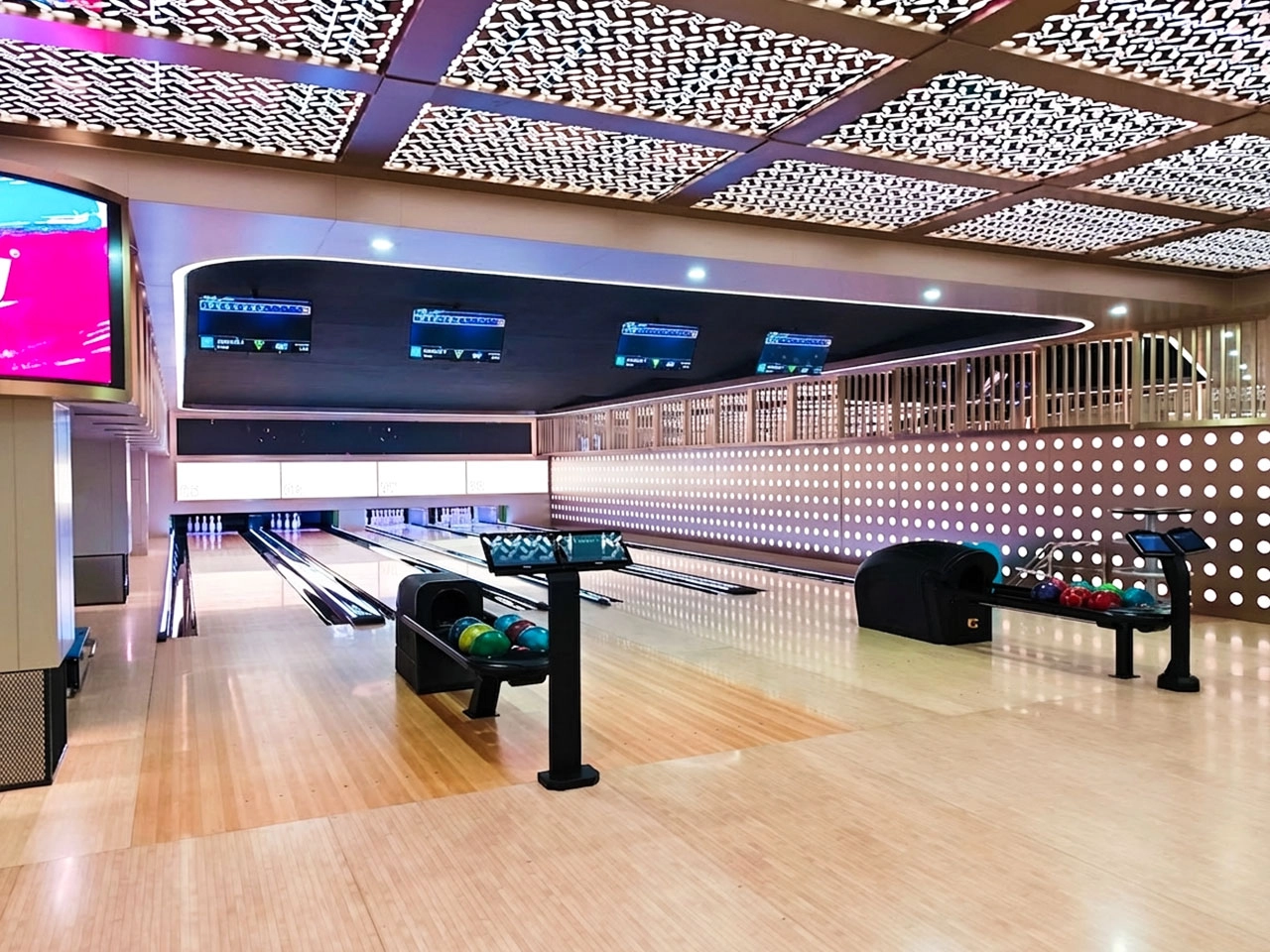
Build a commercial bowling venue with Flying’s complete string pinsetter bowling alley equipment package. The system includes the AEROPIN™ USBC-certified string pinsetter, customizable lanes, automatic scoring, ball return, lane lighting, pins, control hardware, and overseas installation support.
Designed for commercial bowling centers, family entertainment venues, hotels, resorts, bars, and premium private projects, this turnkey bowling system helps operators reduce sourcing complexity and prepare for reliable long-term operation.
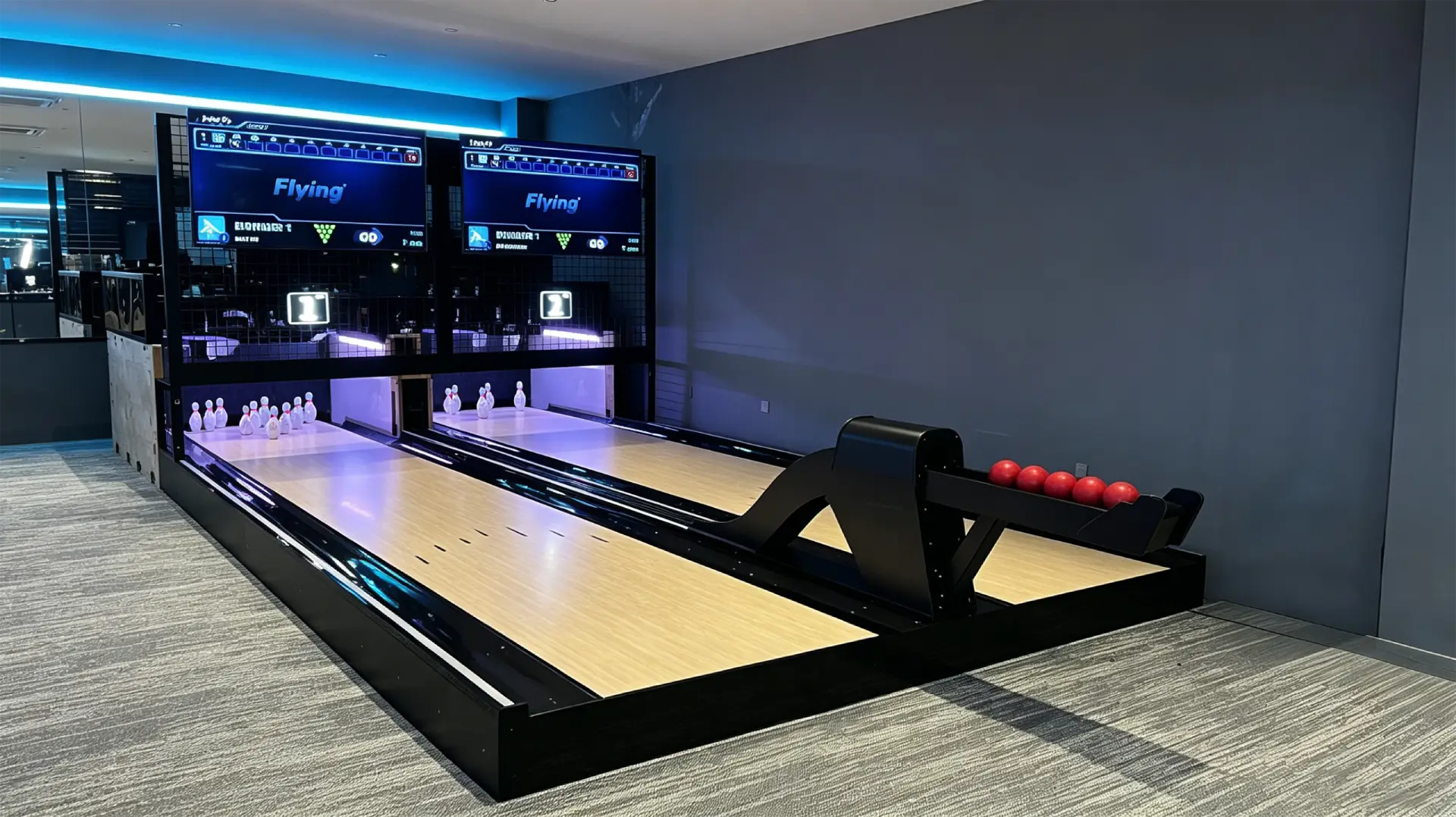
Flying Smart Duckpin Bowling is a compact duckpin bowling equipment system designed for bars, family entertainment centers, hotels, resorts, cinemas, boutique bowling alleys, and social entertainment venues. With a standard 9.13m duckpin bowling lane, 1.25kg lightweight balls, automatic scoring, ball return, LED lighting, and a smart string pinsetter, it creates a fast-paced and easy-to-play bowling experience in a smaller footprint than traditional bowling.
The system is available as a turnkey duckpin bowling package, including lane equipment, a string pinsetter system, scoring hardware, control software, global shipping, installation guidance, and technical support.
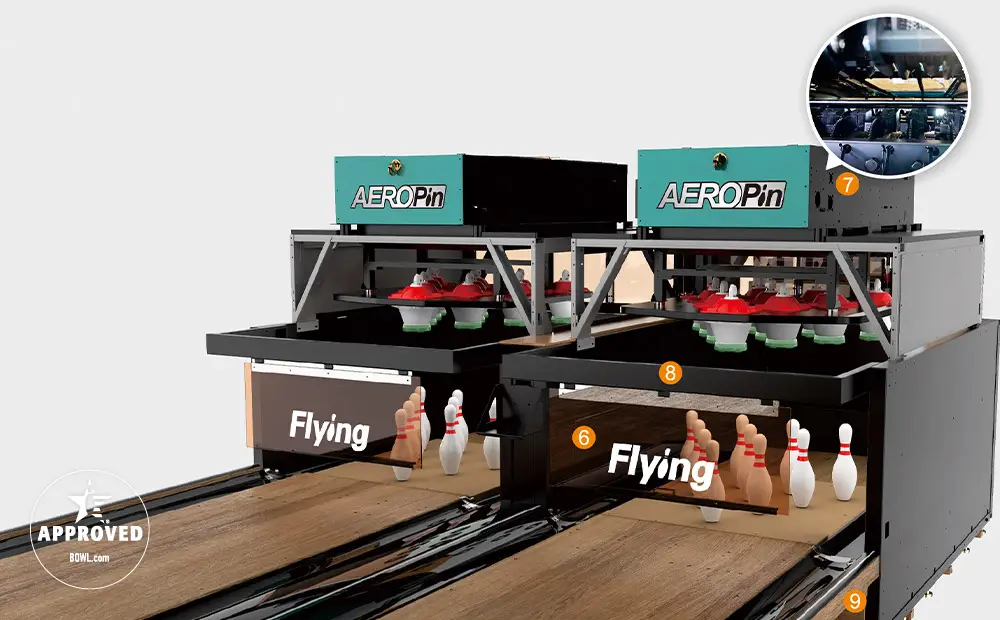
AEROPIN is Flying Bowling’s USBC-certified string pinsetter system for modern commercial bowling centers. Designed for fast pin setting, smooth ball return, low maintenance, and stable daily operation, it helps venue operators build league-ready and entertainment-focused bowling projects with confidence.
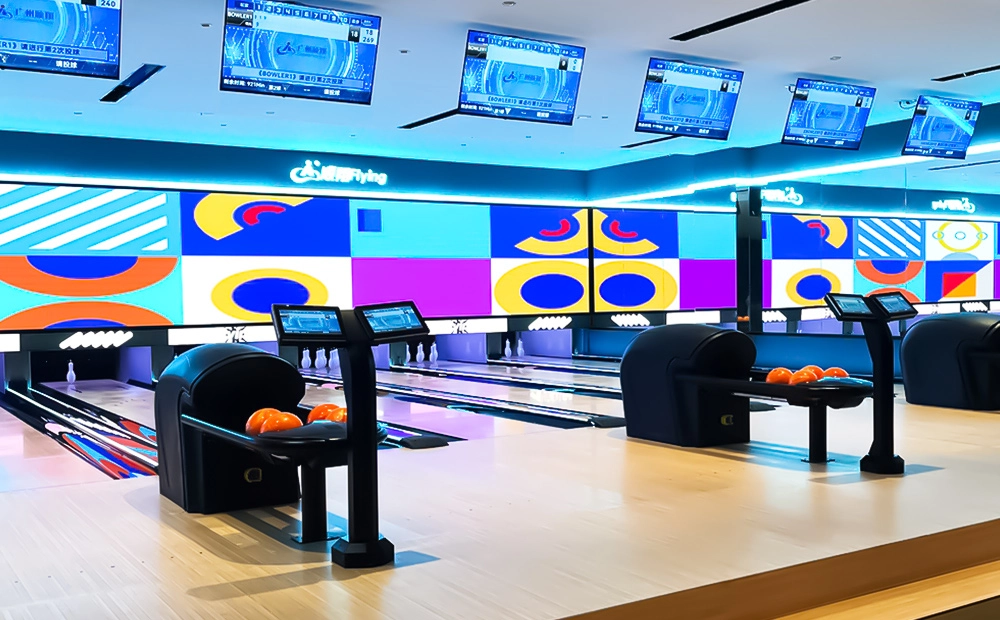
Flying Social Medium Bowling is a compact medium bowling equipment system designed for bars, cafes, family entertainment centers, community leisure venues, hotels, resorts, and small indoor entertainment spaces. With customizable lane lengths from 9.6m to 18m, small balls, lighter pins, string pinsetter technology, ball return, and automatic scoring, it creates an easy-to-play social bowling experience for players of different ages and skill levels.
Compared with full-size standard bowling, medium bowling requires less space and offers a more casual, interactive format. It is a practical choice for venues that want to add a bowling attraction without building a full commercial bowling alley.
Contact Flying
Start Your Custom Bowling Alley Project
If you contact us now for more details, we can provide you with a custom bowling alley service. Our service team will get back to you within 24 hours normally!
© 2026 Flying BOWLING. Designed by gooeyun.
FOLLOW US:

Flying Bowling
Flying Bowling
Flyingbowling
Flyingbowling