

A commercial bowling alley equipment list is not one fixed package. The core machinery and hardware depend on whether the project is standard ten-pin, duckpin, or medium bowling, while the final scope also depends on the venue layout and what the supplier's contract includes.
Quick Answer: What Equipment Does a Commercial Bowling Alley Need?
Core equipment categories
For a commercial ten-pin installation, the core list typically includes lane assemblies, a pinsetter, a ball return system, scoring hardware, overhead displays, bowling balls, and pins. Synchronized lighting may be part of the equipment package, but buyers should confirm whether it is included. Seating and broader venue systems should also be scoped separately unless the proposal lists them explicitly.
A component list is a starting point, not a complete project scope. Ask for a package schedule showing quantities, interfaces, exclusions, and who is responsible for each project activity. For broader planning context, the complete commercial bowling alley equipment guide connects equipment selection with overall venue planning.
Why the list changes by bowling format
Ten-pin, duckpin, and medium bowling use different lane configurations, balls, pins, and equipment footprints. A package schedule for one format should not be treated as interchangeable with another. Project-specific items—such as seating, displays, and installation or commissioning support—also vary by supplier and contract. Buyers assessing scope boundaries can compare these details with guidance on turnkey bowling alley equipment packages.
How Commercial Bowling Equipment Systems Work
A commercial bowling installation integrates several coordinated subsystems. Players approach the lane and deliver the ball; the ball travels down the lane toward the pins. The pinsetter automatically resets fallen pins between frames. The ball return mechanism retrieves the ball and returns it to the player area. Simultaneously, scoring hardware records frame results and displays game information on overhead screens. This workflow repeats for each frame and each lane, with all systems synchronized to provide a seamless guest experience.
Commercial Bowling Equipment: System Context and Formats
The following table summarizes the three primary commercial bowling formats, their typical applications, reference equipment footprints, and key project-confirmation items:
For more context on this related topic, see bowling alley equipment manufacturers.
| Format | Typical Venues | Reference Equipment Footprint (2 lanes) | Key Specifications | Must Confirm with Supplier |
|---|---|---|---|---|
| Standard Ten-Pin | Dedicated bowling centers, large FECs, resorts | 4-lane reference: 25.6 m L × 6.9 m W × 3.2 m H | Foul line to headpin: 60 ft (18.28 m); layout depth: 15–25.6 m | Total room dimensions, approach clearance, seating area, mechanical access, maintenance aisles |
| Duckpin | Family entertainment centers, bars, cinema complexes, hospitality hubs | 2-lane reference: 9.13 m L × 3.48 m W × 2.25 m H | Standard lane length: 9.13 m; uses 1.25 kg handheld ball and duckpin-sized pins | Total room dimensions, approach clearance, seating area, mechanical access, maintenance aisles |
| Medium Bowling | Bars, cafes, boutique hotels, shopping malls, social venues | 2-lane reference: 12 m L × 3.05 m W × 2.13 m H | Customizable lane length: 9.6–18 m; uses 4–6 lb small balls with two finger holes | Total room dimensions, approach clearance, seating area, mechanical access, maintenance aisles |
Important: Equipment footprint dimensions describe the physical space occupied by the bowling system itself. They do not represent total room requirements. Buyers must add space for player approach areas, guest seating, mechanical equipment access, staff maintenance aisles, and circulation. Confirm all dimensions against measured site drawings or CAD plans before finalizing a layout.
Application Requirements: Start With the Venue and Project Brief
Venue type and operating environment
Begin by describing how bowling will be used: a dedicated bowling center, family entertainment center (FEC), bar, hotel, resort, or another hospitality venue. A center focused on standard ten-pin play has different format requirements from a bar adding a compact social attraction. Intended users, expected operating pattern, and adjacent activities help the project team assess which configuration to quote.
For operational context, buyers can consult the BPAA Proprietor Resource Center. FEC developers can also use relevant research and resources from IAAPA when considering the wider entertainment-venue setting. These sources inform venue planning, not the specifications or inclusions of a particular equipment package.
Preferred bowling format and lane count
Record the preferred format and planned lane count before requesting proposals. If the format is not yet settled, ask suppliers to identify the assumptions behind each alternative. This keeps quotes comparable and helps expose a mismatch between the available space and the intended guest experience before the project is committed.
Site information to gather
Provide the project location and measured dimensions or CAD drawings, including ceiling height, columns, entrances, and exits. Mark the intended approach, seating area, mechanical access, and maintenance aisles as well as the equipment zone. These details help reveal obstructions and access constraints that a simple lane footprint does not show.
Commercial Bowling Alley Equipment List by Subsystem
Lane assemblies and approach
Lane assemblies form the playing surface and must be specified for the selected format and lane count. Treat the approach as a coordinated layout area rather than assuming it is covered by the lane footprint. Confirm the drawing dimensions, equipment boundaries, and any site preparation responsibilities with the supplier.
Pinsetter
The pinsetter resets pins between frames. For standard commercial lanes, a string pinsetter is one available equipment type. The AEROPIN Pinsetter was listed on the USBC Approved String Pinsetters list on January 21, 2026; that listing applies to the specified model only, not to other bowling formats, scoring equipment, or an entire venue.
Ball return system
The ball return moves balls back toward the player area after delivery. Confirm how the proposed return is arranged in relation to the lanes, player access, and equipment layout. The supplier schedule should identify the supplied return components and relevant interfaces rather than relying on a generic package description.
Scoring hardware and overhead displays
Scoring hardware records play, while overhead displays present game information to guests. Document the intended display arrangement and scoring requirements in the project brief. Ask which hardware and displays are included and what connections or other interfaces must be coordinated by the project team.
Balls and pins
Bowling balls and pins must correspond to the selected format. A ten-pin inventory is not a substitute for duckpin or medium-format equipment. Confirm the supplied ball and pin types and quantities against the intended lane configuration and use.
Lighting and optional venue elements
Synchronized lighting can be part of a ten-pin equipment package, but its inclusion should be stated in the schedule. Seating, decorative finishes, projection or other media elements, and broader venue systems may be optional or separately scoped. List each desired feature and ask the supplier to classify it as included, optional, or excluded.
Design and Specification Considerations
Layout dimensions and clearances
Confirm format, lane count, and equipment arrangement against measured drawings. The standard ten-pin foul-line-to-headpin distance and compact-format footprint references describe specific equipment or layout details; they do not replace a full room plan. Show the approach, seating, mechanical access, and maintenance aisles before approving the layout. The facility technical specifications and clearance dimensions guide should be consulted when coordinating the equipment plan with the building layout.
Scoring and display requirements
Specify the scoring hardware and overhead display arrangement expected for the venue. If the project includes synchronized lighting or other visual features, identify these as separate line items so their scope is clear. Require written confirmation of the equipment, interfaces, and any site-side connections needed.
Access for operation and maintenance
Review the route to equipment access points and the space available for servicing. Ask the supplier to identify the clearance and access assumptions for the proposed configuration. Separately confirm which party handles installation guidance, commissioning, training, and ongoing support under the contract.
Specification checklist
- Venue type, project location, bowling format, and planned lane count.
- CAD or measured plans showing dimensions, ceiling height, columns, entrances, and exits.
- Approach, seating, mechanical access, and maintenance clearances.
- Format-specific lane, pinsetter, ball return, scoring, display, ball, and pin schedule.
- Lighting and other optional items, marked as included, optional, or excluded.
- Written interfaces, project responsibilities, documentation, commissioning, training, and warranty terms.
Common Buying Mistakes and a Practical Decision Process
Treating a sample layout as a guaranteed fit
A reference drawing is useful for early screening, but site conditions determine whether a configuration fits. First compare it with measured or CAD plans; then have the supplier confirm clearances and assumptions for the actual venue.
Comparing quotations with different scopes
Two proposals can list the same headline components while differing in quantities, displays, lighting, services, or exclusions. Build one common schedule and ask each supplier to mark inclusions, exclusions, assumptions, and responsibilities. Compare the documented scope rather than price alone.
Omitting site and service responsibilities
Unassigned responsibilities can surface late in the project. Define who coordinates the layout review, installation guidance, commissioning, staff training, and any local site or regulatory requirements. Confirm local responsibilities with the relevant project professionals; do not assume they fall within an equipment package.
Confirming the project before issuing an RFQ
Before issuing a request for quotation (RFQ), settle the preferred format or request clearly distinguished alternatives, provide the site information, and issue the same component checklist to each supplier. This gives bidders a consistent basis for preparing proposals and gives the buyer a more reliable comparison.
How to Evaluate Supplier Fit for This Application
Relevant format and project experience
Ask for format-specific equipment schedules, layout drawings, and relevant project references. A supplier's experience with one bowling format does not by itself establish fit for another. Check that examples relate to a comparable venue and configuration.
Equipment documentation and certification scope
Review model-specific product documentation and confirm any certification claim against the exact model and intended use. The USBC listing cited here is for the AEROPIN Pinsetter only. Request original supporting documentation for any broader compliance statement rather than inferring certification for associated equipment or a complete venue.
Project coordination and handover
Suppliers typically manage layout planning, CAD floor plan assessment, equipment configuration, manufacturing, specialized packing, shipping coordination, installation guidance, technical commissioning, and staff operational training. Verify which of these services are included in the proposal and which require separate arrangements. Standard warranty coverage on supported equipment is typically one year; confirm the warranty terms and any conditions in writing.
Supplier evaluation checklist
- Does the schedule match the selected bowling format and lane count?
- Do the drawings show the equipment footprint and the clearances the project must provide?
- Which components, interfaces, and optional items are included or excluded?
- What documentation supports any model-specific certification claim?
- Which layout review, CAD assessment, configuration, shipping, installation guidance, commissioning, training, and warranty responsibilities are included in the contract?
- What is the standard warranty period and coverage for the supplied equipment?
- Does the supplier provide technical support and staff training as part of the delivery scope?
Discuss Your Project Requirements
To move forward with a format-specific equipment discussion, prepare the following project information: venue type and location, CAD or floor plans, available dimensions, preferred bowling format, and planned lane count. Include operating needs, expected usage, and any material or finish requirements.
Frequently Asked Questions
References
More Articles

Let’s Build a center Together
Partner With a Trusted Bowling Alley Design, One-Stop Solution Manufacturer.
Flying has successfully built ideal bowling alleys for more than 3,000 customers.

Technical Expert
You may also like our products
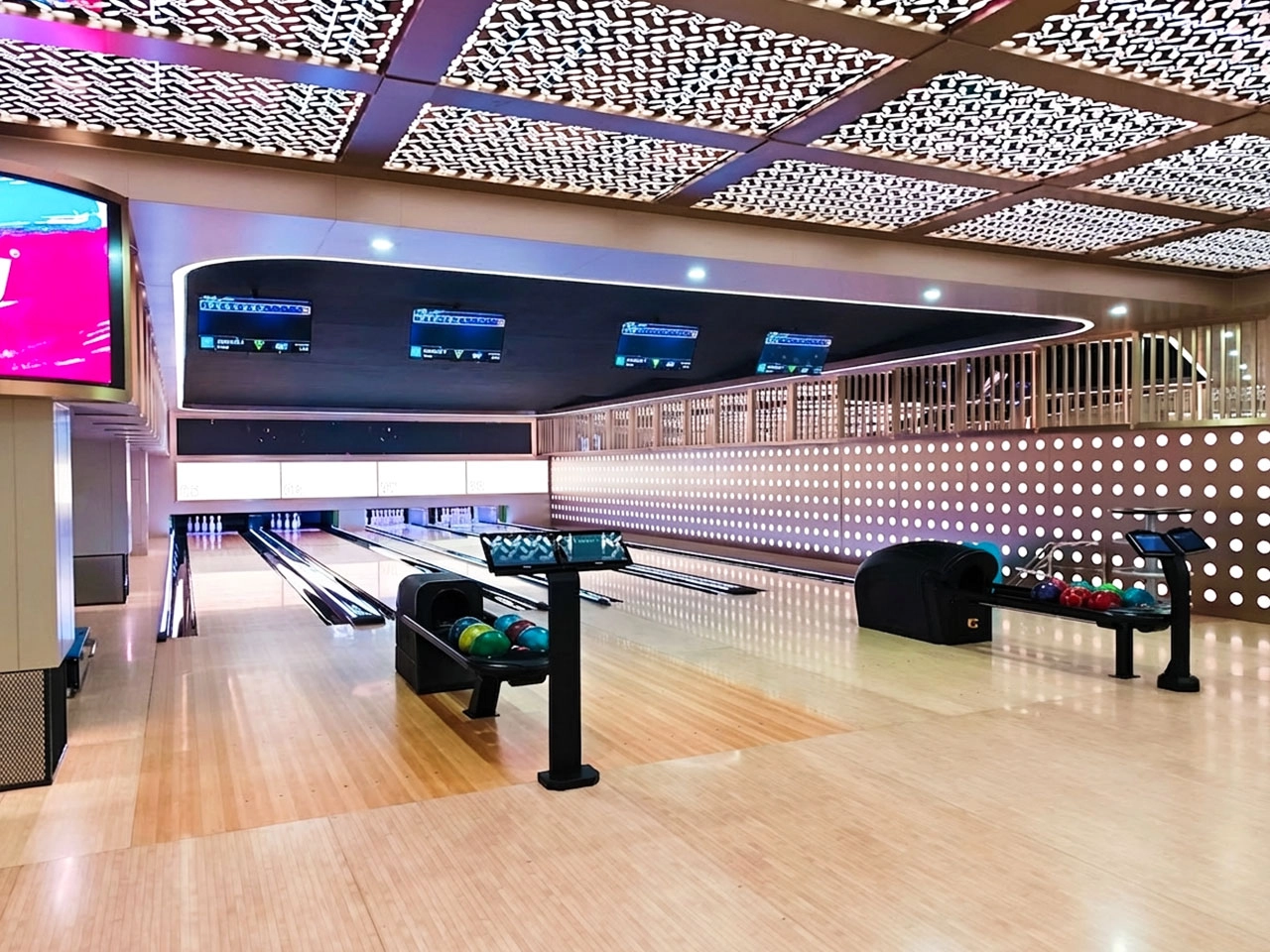
Build a commercial bowling venue with Flying’s complete string pinsetter bowling alley equipment package. The system includes the AEROPIN™ USBC-certified string pinsetter, customizable lanes, automatic scoring, ball return, lane lighting, pins, control hardware, and overseas installation support.
Designed for commercial bowling centers, family entertainment venues, hotels, resorts, bars, and premium private projects, this turnkey bowling system helps operators reduce sourcing complexity and prepare for reliable long-term operation.
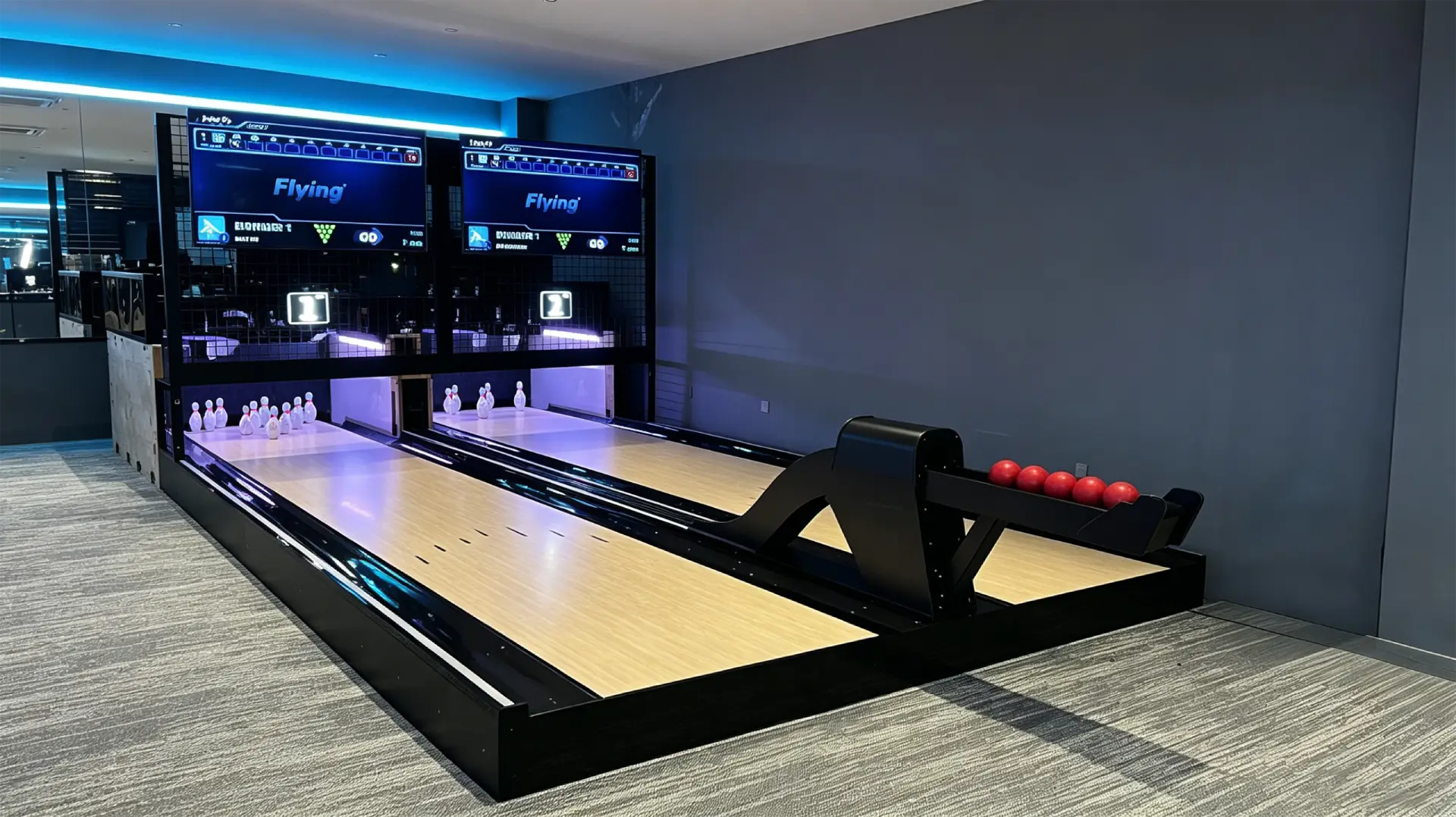
Flying Smart Duckpin Bowling is a compact duckpin bowling equipment system designed for bars, family entertainment centers, hotels, resorts, cinemas, boutique bowling alleys, and social entertainment venues. With a standard 9.13m duckpin bowling lane, 1.25kg lightweight balls, automatic scoring, ball return, LED lighting, and a smart string pinsetter, it creates a fast-paced and easy-to-play bowling experience in a smaller footprint than traditional bowling.
The system is available as a turnkey duckpin bowling package, including lane equipment, a string pinsetter system, scoring hardware, control software, global shipping, installation guidance, and technical support.
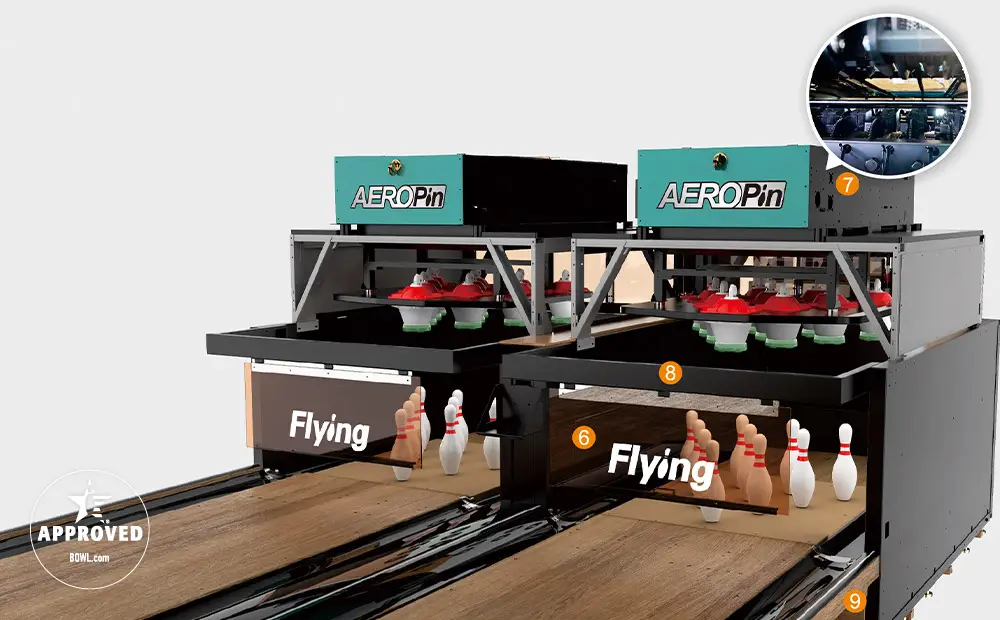
AEROPIN is Flying Bowling’s USBC-certified string pinsetter system for modern commercial bowling centers. Designed for fast pin setting, smooth ball return, low maintenance, and stable daily operation, it helps venue operators build league-ready and entertainment-focused bowling projects with confidence.
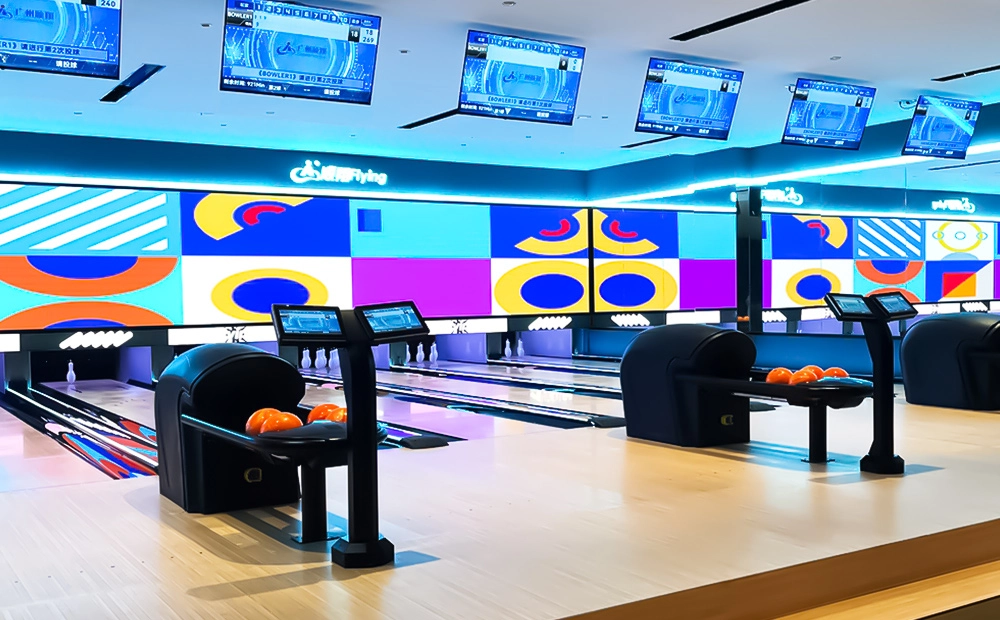
Flying Social Medium Bowling is a compact medium bowling equipment system designed for bars, cafes, family entertainment centers, community leisure venues, hotels, resorts, and small indoor entertainment spaces. With customizable lane lengths from 9.6m to 18m, small balls, lighter pins, string pinsetter technology, ball return, and automatic scoring, it creates an easy-to-play social bowling experience for players of different ages and skill levels.
Compared with full-size standard bowling, medium bowling requires less space and offers a more casual, interactive format. It is a practical choice for venues that want to add a bowling attraction without building a full commercial bowling alley.
Contact Flying
Start Your Custom Bowling Alley Project
If you contact us now for more details, we can provide you with a custom bowling alley service. Our service team will get back to you within 24 hours normally!
© 2026 Flying BOWLING. Designed by gooeyun.
FOLLOW US:

Flying Bowling
Flying Bowling
Flyingbowling
Flyingbowling