

Commercial Bowling Alley Equipment for High-Traffic Venues
Quick Overview
Commercial bowling equipment for high-traffic venues should be selected around reliability, maintainability, system compatibility, serviceability, and operational continuity rather than individual product features alone.
A commercial bowling configuration typically combines lane systems, pinsetters, ball returns, scoring and lane-management technology, and supporting control systems. Dedicated bowling centers, Family Entertainment Centers (FECs), premium entertainment venues, shopping malls, hotels, and turnkey projects may use similar core equipment, but their priorities differ according to customer volume, operating model, building conditions, and service requirements.
For a commercial project, the key question is therefore not simply “What bowling equipment do I need?” but:
“Which equipment configuration best fits the way this venue is expected to operate?”
For a complete item-by-item equipment checklist, see the Complete Bowling Alley Equipment List .
What Makes Bowling Equipment Commercial-Grade?
Commercial-grade bowling equipment is intended for sustained venue operation rather than occasional private use.
For buyers, this means equipment quality should not be judged only by appearance or individual features. A system can perform well initially but still create operational problems if it is difficult to maintain, replacement parts are difficult to manage, or connected equipment cannot be serviced efficiently.
For commercial venues, the most important considerations usually include equipment reliability, maintenance accessibility, compatibility between systems, technical support requirements, and the ability to restore operation after a fault.
This becomes increasingly important as venue traffic grows.
A high-traffic bowling center cannot evaluate a lane, pinsetter, ball return, and scoring system as unrelated products. They function as one operating environment, and the weakest part of that environment can affect lane availability.
Commercial Bowling Equipment Configuration at a Glance
The major equipment systems in a commercial venue have different roles, but they must work together.
| Equipment System | Role in Commercial Operation | What Buyers Should Evaluate |
|---|---|---|
| Bowling Lane System | Provides the playing surface and lane environment | Durability, consistency, maintenance and compatibility |
| Pinsetter System | Resets pins and supports continuous lane operation | Reliability, maintenance complexity and service access |
| Ball Return System | Returns balls and supports game flow | Stability, accessibility and system integration |
| Scoring & Lane Management | Manages scores, lanes and customer interaction | Usability, integration and operational visibility |
| Control & Technical Systems | Connects equipment and supports venue operation | Compatibility, serviceability and installation requirements |
This page focuses on commercial system configuration.
Buyers who need a broader list covering bowling balls, bowling pins, bowling shoes, furniture, and other supporting items should refer to the dedicated Complete Bowling Alley Equipment List .
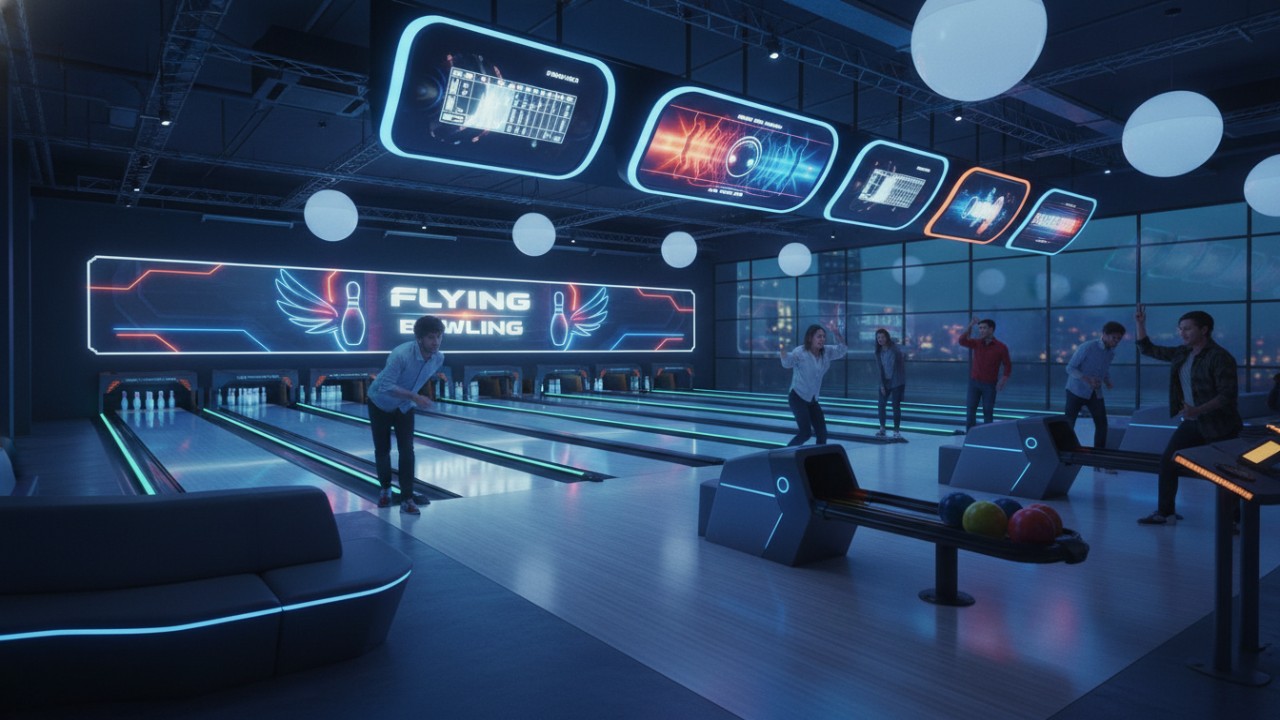
Bowling Lane Systems for High-Traffic Venues
The bowling lane system forms the physical foundation of the venue, but commercial buyers should evaluate it as part of the wider equipment environment.
In a high-use facility, the lane system needs to support repeated operation while remaining practical to inspect and maintain. Consistent lane conditions also contribute to a predictable customer experience.
The lane package should therefore be reviewed together with the approach, gutters, pinsetter, ball return, and installation requirements.
For project engineers, building conditions matter as well. Available dimensions, structural conditions, equipment access, and future maintenance space can influence which configuration is practical.
A technically suitable lane system is not simply one that fits the floor plan. It should fit the long-term operating model of the venue.
Pinsetter Systems for Commercial Operation
The pinsetter is one of the most operationally important systems in a bowling center because a pinsetter fault can make an otherwise usable lane unavailable.
Commercial projects may consider different pinsetter technologies according to venue requirements, maintenance strategy, and operating expectations.
Free-fall systems have a long history in traditional bowling environments. String pinsetter systems use a different resetting mechanism and may be considered by commercial projects where mechanical simplicity, maintenance planning, or operating requirements make that configuration suitable.
The decision should not be reduced to a universal claim that one technology is always better.
Buyers should compare:
expected operating intensity, maintenance capability, service access, compatibility with scoring and lane systems, and long-term operational requirements.
For manufacturer-level comparison rather than equipment configuration, see the Bowling Pinsetter Manufacturers Guide .
Ball Return Systems and Game Flow
Ball return systems are sometimes treated as secondary equipment, but in a high-traffic venue they directly affect game continuity and customer experience.
A stable ball return allows players to continue bowling without unnecessary interruptions and helps maintain predictable lane flow.
Commercial buyers should consider maintenance accessibility, compatibility with the lane and pinsetter systems, and how the return unit fits within the player area.
In projects with restricted floor space or existing-building constraints, ball-return planning should happen during the layout stage rather than after the main lane configuration has already been finalized.
Scoring and Lane Management Technology
Modern commercial bowling centers rely increasingly on software and control systems alongside mechanical equipment.
A scoring system does more than calculate scores. It can influence player interaction, lane control, staff workflows, and the way multiple lanes are managed during busy periods.
For high-traffic venues, the priority should be dependable integration between scoring, lane controls, and the other connected bowling systems.
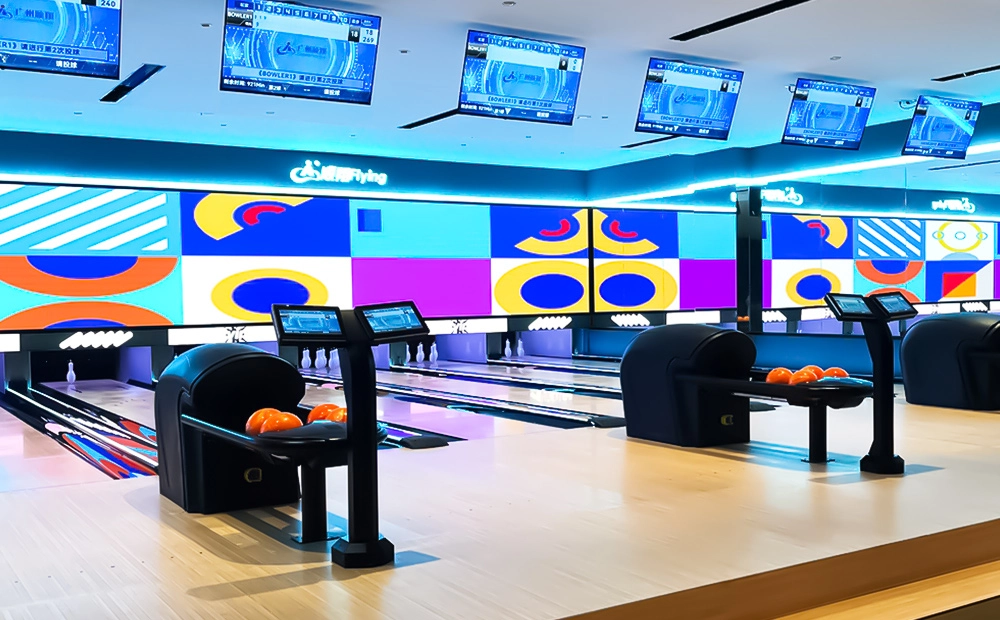
Entertainment-oriented venues may also place greater emphasis on visual presentation and customer-facing interaction. These features can support the venue experience, but they should still be evaluated together with system reliability and support requirements.
The scoring platform should therefore be treated as both a customer-experience system and part of the venue's operational infrastructure.
How Equipment Requirements Change by Venue Type
Commercial bowling equipment should be configured according to the operating environment rather than copied from another project.
A dedicated bowling center, an FEC, and a premium social venue may all require lanes, pinsetters, and scoring systems, but they do not necessarily need the same priorities.
High-Traffic Commercial Bowling Centers
High-traffic bowling centers depend heavily on equipment availability.
For these venues, reliability, maintenance accessibility, and operational continuity usually matter more than adding unnecessary features.
The equipment configuration should support practical servicing and stable interaction between lanes, pinsetters, ball returns, and scoring systems.
Operators should also consider what happens when a fault occurs: how easily can the affected system be accessed, diagnosed, and returned to operation?
That question is often more commercially meaningful than comparing specification sheets alone.
FEC and Entertainment Center Projects
In a Family Entertainment Center, bowling is usually one part of a broader entertainment environment.
Equipment therefore needs to support both customer experience and efficient operation.
Ease of use, scoring interaction, customer turnover, and coordination with other attractions may receive more attention than in a traditional bowling-only venue.
Because staff may be responsible for multiple entertainment systems, practical operation and clear system management are particularly important.
The goal is not simply to install bowling equipment, but to configure bowling so that it fits naturally into the wider entertainment venue.
Premium Social Bowling Venues
Premium social bowling concepts place greater emphasis on atmosphere and guest experience.
Scoring displays, lane presentation, and customer-facing technology may therefore have greater importance.
However, visible experience features should still be supported by reliable underlying systems.
A premium venue can be particularly sensitive to technical disruption because equipment problems affect both lane availability and the overall guest experience.
The configuration should balance presentation, usability, and serviceability rather than optimizing only one of those factors.
Shopping Mall and Existing-Building Projects
Bowling projects inside shopping malls or existing commercial buildings require additional coordination between equipment selection and site conditions.
The project team may need to consider structural conditions, available dimensions, columns, electrical systems, HVAC, acoustics, delivery routes, and installation access.
Large bowling equipment must physically reach the installation area, so logistics should be evaluated before final configuration.
Equipment selection and site qualification should be treated as one planning process.
A technically attractive equipment package may still be unsuitable if it conflicts with the actual building environment.
Hotel and Resort Applications
Hotels and resorts may use bowling as part of a broader guest recreation experience.
Their equipment priorities may differ from dedicated high-volume bowling centers because operating frequency, staffing arrangements, and customer expectations can be different.
Equipment selection should therefore match the hospitality concept rather than simply copying a conventional bowling-center configuration.
Detailed hotel or resort ROI, project cost, and investment analysis should remain on dedicated hospitality or investment pages rather than being expanded within this commercial equipment guide.
How Equipment Decisions Affect Lane Availability and Revenue Capacity
Bowling equipment does not guarantee revenue.
However, equipment availability affects how much usable lane time a venue can offer customers.
If a lane becomes unavailable because of repeated mechanical or technical problems, the venue temporarily loses sellable operating capacity. Interruptions may also affect group reservations, customer satisfaction, and staff workload.
This is why equipment should be evaluated partly according to its effect on operational continuity.
Equipment reliability does not create revenue by itself, but equipment availability affects the venue's ability to sell and deliver lane time consistently.
For high-traffic venues, this makes maintenance planning, service access, and spare-parts strategy commercially relevant equipment considerations.
The objective is not to promise higher revenue from a particular machine. It is to reduce avoidable operational constraints that can limit available lane time.
Equipment Planning for Turnkey Bowling Projects
Turnkey bowling projects require stronger system coordination because the project involves more than selecting individual products.
A complete equipment scope may include lanes, pinsetters, ball returns, scoring technology, control systems, installation coordination, and commissioning.
The important question is therefore not simply whether a supplier uses the term “turnkey.”
The project team should clarify exactly who is responsible for each part of the delivery.
Before finalizing a configuration, buyers should understand responsibility for equipment supply, building preparation, electrical and data connections, installation, commissioning, and handover.
This is especially important when an equipment supplier and a local construction contractor are working on the same project.
Clear responsibility boundaries can reduce gaps between the equipment scope and the construction scope.
For buyers specifically researching turnkey project pricing, see How Much Does a Turnkey Bowling Equipment Solution Cost?
This allows this page to stay focused on configuration, while the cost page owns budgeting and quotation intent.
Commercial Bowling Equipment for International Projects
International projects add further considerations because equipment configuration needs to remain practical beyond delivery.
Technical documentation, installation coordination, commissioning responsibilities, replacement parts, and communication procedures can all affect the project after the equipment arrives at the destination.
For international buyers, the evaluation should therefore include not only whether the system can be installed, but whether it can be supported after the bowling venue begins operating.
A well-planned configuration should consider technical compatibility, installation requirements, support responsibilities, and future maintenance needs.
The specific requirements will vary by project, so these factors should be confirmed before equipment selection is finalized.
What to Confirm Before Finalizing a Commercial Equipment Configuration
Before an equipment order is finalized, the project team should be able to answer several practical questions.
Does the configuration fit the building and venue concept? Are the lane, pinsetter, ball return, and scoring systems compatible? Who is responsible for installation and commissioning? What maintenance capability will be required after opening? How will replacement parts and technical issues be handled?
If these questions remain unclear, comparing quotations alone is unlikely to produce a strong equipment decision.
Venue Requirements → System Configuration → Technical Confirmation → Supplier Evaluation → Budget and Quotation
That sequence also explains why equipment-list, configuration, buyer-guide, and cost pages should remain separate.
Equipment Configuration vs Equipment Buying Decision
Choosing the right configuration and choosing the right supplier are related, but they are not the same decision.
This page focuses on determining what type of commercial equipment system fits the venue.
Once that configuration has been defined, buyers can separately evaluate suppliers according to lifecycle cost, technical support, parts availability, service capability, and other procurement factors.
For that stage, see the Bowling Equipment Buyers Guide .
This separation helps buyers avoid comparing suppliers before the technical requirements of the project are clear.
Conclusion
Commercial bowling equipment should be configured around the way the venue will actually operate.
High-traffic bowling centers need systems that support reliability and practical maintenance. FECs need configurations that fit a broader entertainment environment. Premium venues must balance guest experience with dependable operation, while shopping mall and international projects require additional coordination with building and installation conditions.
The strongest commercial configuration is not necessarily the one with the longest feature list.
It is the combination of lane systems, pinsetters, ball returns, scoring technology, and technical infrastructure that best fits the venue's operating model, maintenance capability, and project conditions.
Defining that configuration before comparing suppliers and quotations gives commercial buyers a clearer foundation for the next stage of the project.
Planning a Commercial Bowling Project?
If you are evaluating equipment for a new bowling center, FEC, entertainment venue, or other commercial project, define the venue requirements and equipment configuration before moving to final supplier and quotation comparisons.
Discuss Your Bowling Project Explore Bowling EquipmentFAQ
1. What commercial bowling equipment is needed for a high-traffic venue?
A high-traffic bowling venue typically requires an integrated system that includes bowling lanes, pinsetters, ball return systems, scoring and lane-management technology, and supporting control systems. The final configuration should be selected according to operating intensity, maintenance capability, venue type, and technical requirements.
2. How should commercial bowling equipment be selected for an FEC?
Bowling equipment for a Family Entertainment Center should support efficient operation, easy customer interaction, and integration with the wider entertainment environment. FEC operators should evaluate system reliability, ease of use, scoring experience, maintenance requirements, and how bowling fits with other attractions.
3. What makes bowling equipment suitable for high-traffic commercial use?
Commercial bowling equipment should be evaluated for reliability, maintainability, service access, system compatibility, and operational continuity. High-traffic venues need equipment that can support sustained use while remaining practical to inspect, maintain, and restore after a fault.
4. How does bowling equipment configuration affect revenue per lane?
Bowling equipment does not guarantee revenue, but equipment reliability affects lane availability. Frequent mechanical or technical interruptions can reduce sellable lane time, disrupt bookings, and affect customer experience. For commercial venues, reliable equipment and practical maintenance planning help protect usable operating capacity.
5. What should be included in a turnkey bowling equipment project?
A turnkey bowling equipment project may include lane systems, pinsetters, ball returns, scoring technology, control systems, installation coordination, commissioning, and project handover. Buyers should clearly confirm which responsibilities belong to the equipment supplier and which remain with the local construction or engineering team.
6. What should buyers confirm before finalizing a commercial bowling equipment configuration?
Before finalizing a configuration, buyers should confirm that the equipment fits the building and venue concept, that major systems are compatible, and that installation, commissioning, maintenance, technical support, and replacement-part responsibilities are clearly defined.
More Articles

Let’s Build a center Together
Partner With a Trusted Bowling Alley Design, One-Stop Solution Manufacturer.
Flying has successfully built ideal bowling alleys for more than 3,000 customers.

Technical Expert
You may also like our products
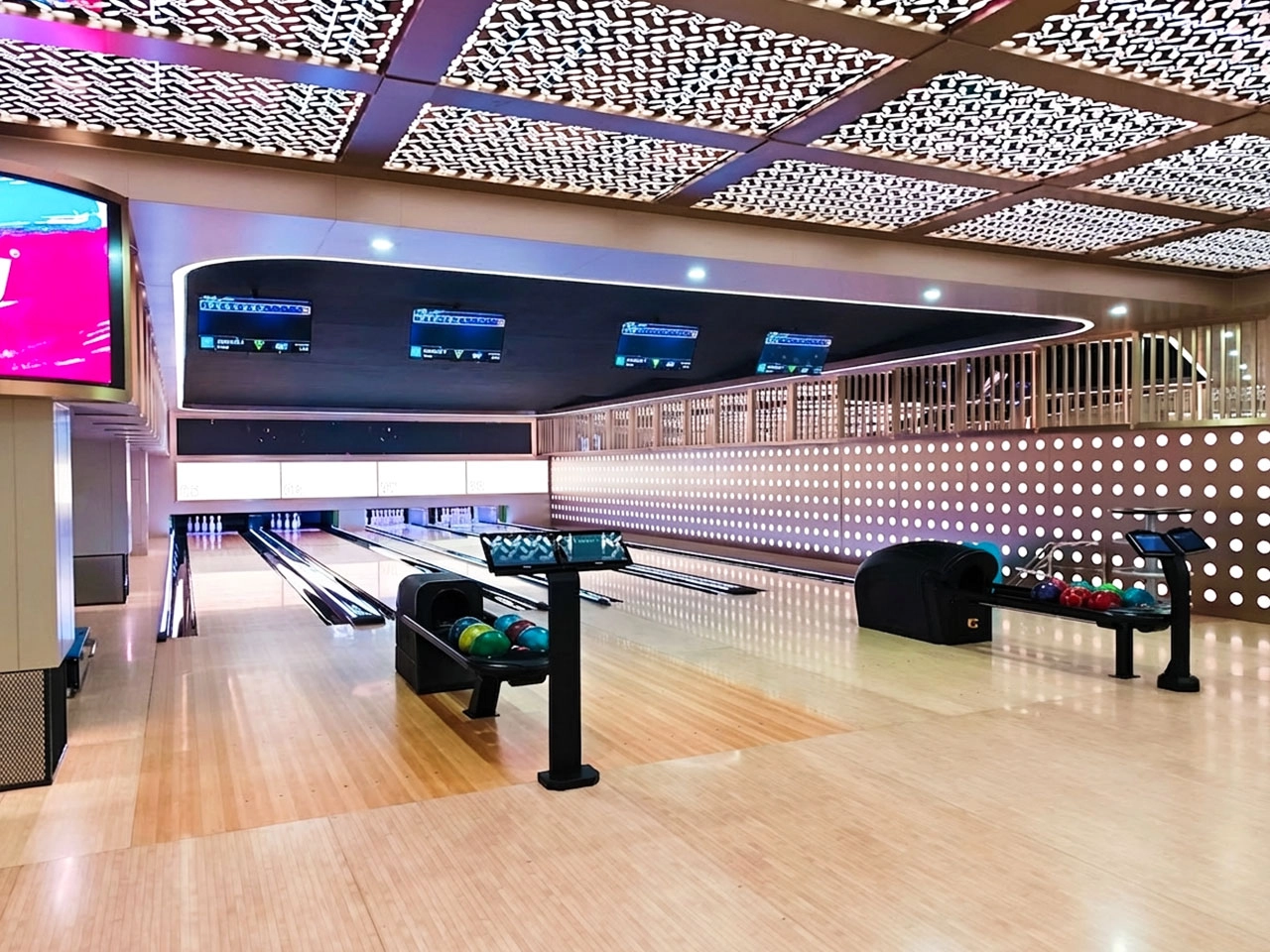
Build a commercial bowling venue with Flying’s complete string pinsetter bowling alley equipment package. The system includes the AEROPIN™ USBC-certified string pinsetter, customizable lanes, automatic scoring, ball return, lane lighting, pins, control hardware, and overseas installation support.
Designed for commercial bowling centers, family entertainment venues, hotels, resorts, bars, and premium private projects, this turnkey bowling system helps operators reduce sourcing complexity and prepare for reliable long-term operation.
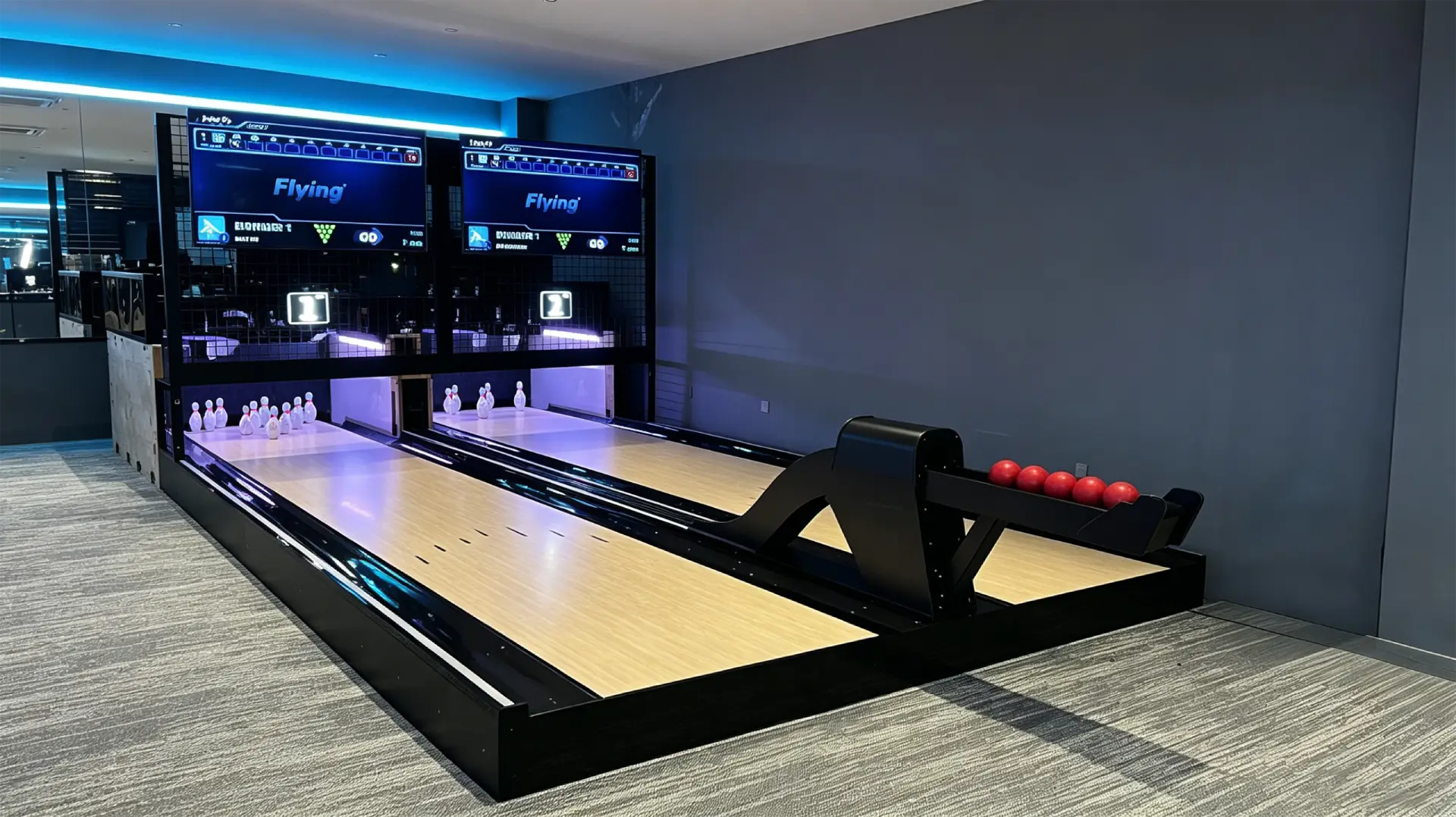
Flying Smart Duckpin Bowling is a compact duckpin bowling equipment system designed for bars, family entertainment centers, hotels, resorts, cinemas, boutique bowling alleys, and social entertainment venues. With a standard 9.13m duckpin bowling lane, 1.25kg lightweight balls, automatic scoring, ball return, LED lighting, and a smart string pinsetter, it creates a fast-paced and easy-to-play bowling experience in a smaller footprint than traditional bowling.
The system is available as a turnkey duckpin bowling package, including lane equipment, a string pinsetter system, scoring hardware, control software, global shipping, installation guidance, and technical support.
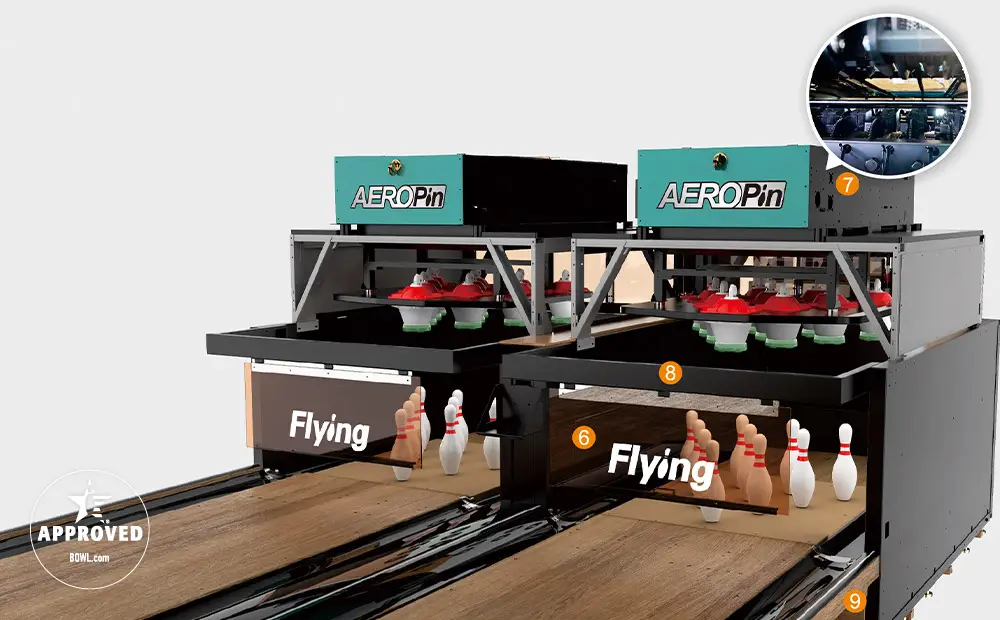
AEROPIN is Flying Bowling’s USBC-certified string pinsetter system for modern commercial bowling centers. Designed for fast pin setting, smooth ball return, low maintenance, and stable daily operation, it helps venue operators build league-ready and entertainment-focused bowling projects with confidence.
Flying Social Medium Bowling is a compact medium bowling equipment system designed for bars, cafes, family entertainment centers, community leisure venues, hotels, resorts, and small indoor entertainment spaces. With customizable lane lengths from 9.6m to 18m, small balls, lighter pins, string pinsetter technology, ball return, and automatic scoring, it creates an easy-to-play social bowling experience for players of different ages and skill levels.
Compared with full-size standard bowling, medium bowling requires less space and offers a more casual, interactive format. It is a practical choice for venues that want to add a bowling attraction without building a full commercial bowling alley.
Contact Flying
Start Your Custom Bowling Alley Project
If you contact us now for more details, we can provide you with a custom bowling alley service. Our service team will get back to you within 24 hours normally!
© 2026 Flying BOWLING. Designed by gooeyun.
FOLLOW US:

Flying Bowling
Flying Bowling
Flyingbowling
Flyingbowling
Flyingbowling