

Bowling Equipment Buyers Guide: 5 Criteria That Separate Good Investments from Costly Mistakes (2026)
Most bowling equipment decisions are made by comparing brand names and sticker prices. Most costly mistakes happen for exactly this reason. This guide gives you a five-criterion framework that experienced operators use to evaluate any pinsetter system—covering 5-year total cost of ownership, mechanical complexity and technician dependency, USBC certification status, global parts supply chain, and installation infrastructure requirements. Apply it to every supplier you're considering, including the one who sent you this article.
Every year, bowling venue operators and FEC investors make expensive equipment decisions based on incomplete information. They compare brand names and sticker prices, sign contracts, and then spend years dealing with the consequences of not asking the right questions upfront.
This guide gives you a structured evaluation framework—five criteria that experienced operators use to assess any pinsetter system, regardless of manufacturer. Apply these criteria to every supplier you're considering: the results will tell you far more than any brand's marketing material.
This framework is based on Flying Bowling's experience advising 3,000+ venue projects across 40+ countries. Where applicable, we include specific data points from installations using different equipment origins—Chinese, European, and US-manufactured systems.
Why Sticker Price Is the Wrong Starting Point
The first mistake most first-time buyers make is leading with equipment purchase price. It's understandable — it's the largest single line item in the budget, and it's easy to compare.
But purchase price typically represents only 40–60% of what you'll actually spend on equipment over a 5-year operating period. The remainder comes from maintenance, parts, technician labor, downtime costs, and the hidden cost of waiting for service in markets where qualified support is scarce.
A system that costs $50,000 more at purchase but saves $15,000 per year in maintenance is the cheaper option by year four. A system that costs $30,000 less but requires a specialist technician who charges $800/day and needs to fly in from another country is not actually the budget choice.
The framework below forces you to evaluate all five cost and risk dimensions before making a decision.
Criterion 1: 5-Year Total Cost of Ownership
What TCO Includes
For a commercial bowling pinsetter system, the full 5-year TCO calculation includes:
- Equipment purchase price (FOB or landed, clearly specified)
- International freight and import duties (if sourcing from abroad)
- On-site installation labor
- Annual preventive maintenance cost (parts + labor)
- Average annual unplanned repair cost (based on system failure rate)
- Technician training and certification cost
- Downtime cost (revenue lost when lanes are offline for repair)
- Consumables replacement (belts, sensors, wear items)
- TCO Comparison: String vs. Free-Fall Systems (8-Lane Standard Tenpin)
| Cost Category | Free-Fall Pinsetter | String Pinsetter | 5-Year Difference |
|---|---|---|---|
| Equipment purchase (FOB) | $200,000–$320,000 | $110,000–$180,000 | String saves $90K–$140K |
| Annual preventive maintenance | $12,000–$22,000 | $4,300–$8,200 | String saves $39K–$70K |
| Annual unplanned repairs | $3,000–$6,000 | $800–$2,000 | String saves $11K–$20K |
| Technician training | $1,500–$3,000 | $500–$1,000 | String saves $5K–$10K |
| 5-year maintenance total | $82,500–$155,000 | $27,750–$56,000 | String saves $55K–$99K |
| 5-year TCO (equipment + maintenance) | $282,500–$475,000 | $137,750–$236,000 | String saves $145K–$239K |
These ranges reflect real operator data from installations across multiple markets. The wider range within each category reflects variation between high-cost (US/EU) and lower-cost (Southeast Asia, Middle East) markets.
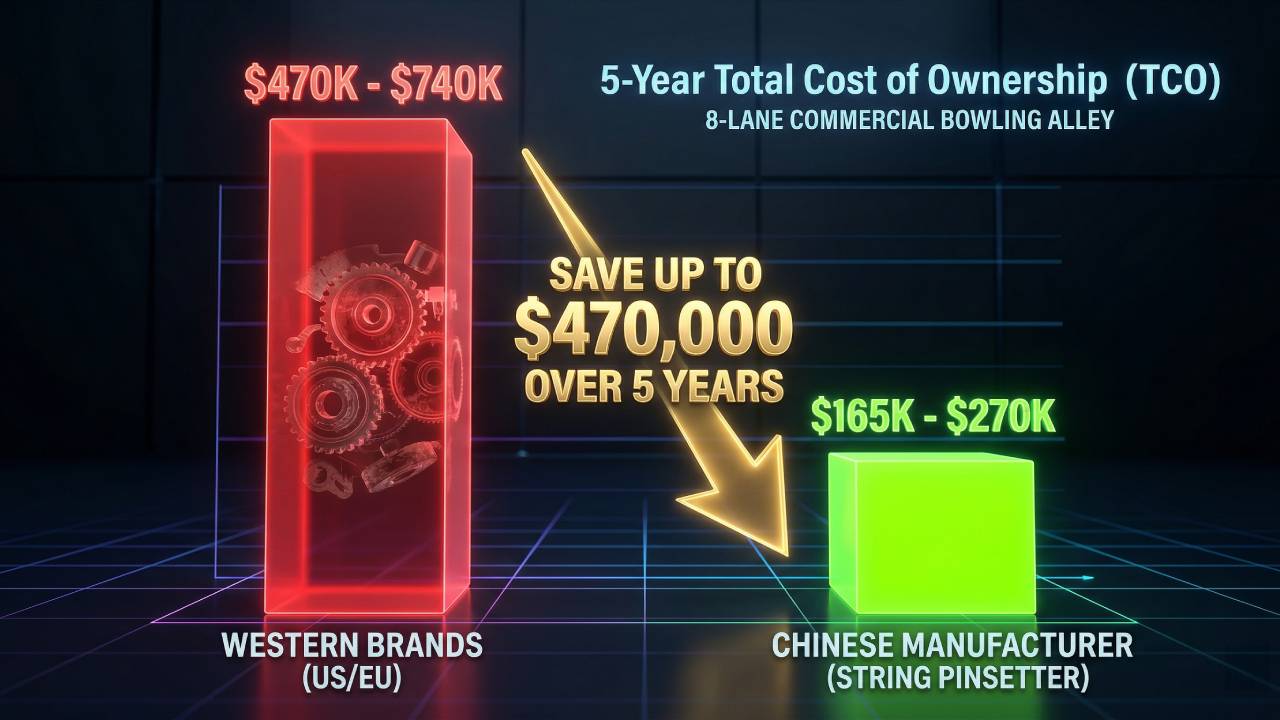
Visualizing the data: The initial sticker price is just the tip of the iceberg. The true financial advantage lies in the drastically reduced 5-year maintenance and operational costs of modern string pinsetter systems.
TCO by Equipment Origin: Chinese vs. Western-Manufactured
Within the same system type (string pinsetter), equipment origin significantly affects TCO:
| Cost Category | Western Brand (US/EU) | Chinese Manufacturer | Difference |
|---|---|---|---|
| Equipment (8-lane Tenpin, FOB) | $350,000–$570,000 | $110,000–$180,000 | Chinese saves $240K–$390K |
| Annual maintenance (parts cost) | Higher (proprietary parts, limited suppliers) | Lower (standardized parts, broader supply) | Chinese typically 20–35% lower |
| Technician availability | Specialist network (limited in emerging markets) | General mechanical + factory training | Chinese lower dependency on specialists |
| 5-year TCO | $470,000–$740,000 | $165,000–$270,000 | Chinese saves $305K–$470K |
What to ask every supplier:
- What is the total landed cost to my specific market (freight + duties + installation)?
- What is the average annual maintenance cost for an 8-lane installation of this model at 8 hrs/day utilization?
- What is the average technician visit cost (travel + labor) for an emergency service call in my market?
- What is the mean time between unplanned maintenance events for this model?
Criterion 2: Mechanical Complexity and Maintenance Dependency
Why This Criterion Matters More Than Brand Reputation
A pinsetter's brand reputation is built on decades of Western market installations. But brand reputation doesn't tell you how long a repair call will take in Jakarta, Lagos, or Guadalajara. Mechanical complexity does.
The core metric: active mechanical components per lane.
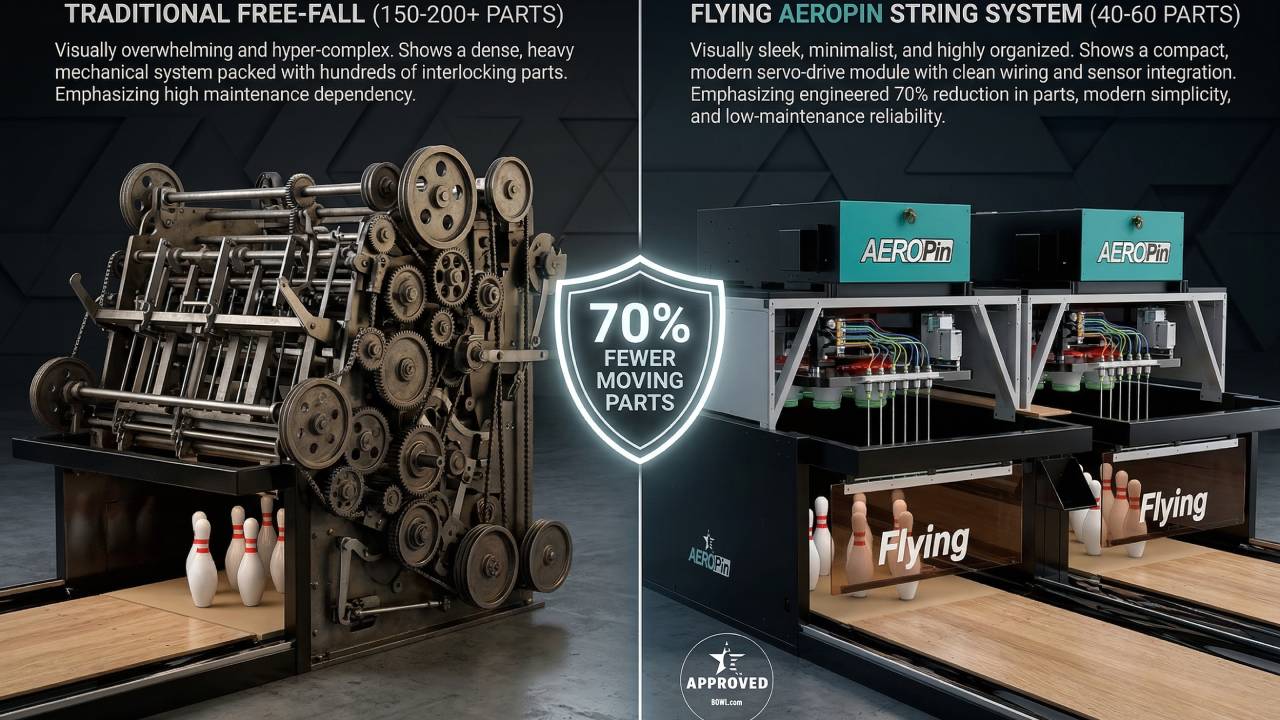
| Visual Proof: Why our operators rarely wait for specialized mechanics. By eliminating the elevator and distributor mechanics of free-fall systems, the Flying AEROPIN operates with ~70% fewer parts, allowing your in-house staff to handle routine servicing after just 1-2 days of basic training. |
| System Type | Active Components (per lane) | Maintenance Frequency | Technician Skill Required |
|---|---|---|---|
| Free-fall pinsetter | 150–200+ | Quarterly service | Certified specialist |
| String pinsetter | 40–60 | Semi-annual service | General mechanical + system training |
| Reduction | ~70% fewer parts | ~50% less frequent | Significantly lower skill barrier |
Fewer components means:
- Fewer failure points (statistically fewer breakdowns per operating hour)
- Faster fault diagnosis (less complexity to troubleshoot)
- Lower skill requirement for routine maintenance (critical in markets with limited specialist availability)
- Shorter parts inventory needed on-site
- The Technician Availability Problem
This is the single most underestimated risk factor in equipment decisions, particularly for operators in emerging markets.
Free-fall pinsetter systems — including the major Western brands — require certified technicians trained on that specific manufacturer's system. In markets across Southeast Asia, the Middle East, Africa, and Latin America, the density of these certified technicians is low. A lane breakdown can mean waiting 3–7 days for a technician to arrive. At typical commercial lane revenue of $150–$300 per lane per day, each day of downtime on a single lane costs real money.
String pinsetter systems reduce this risk substantially. The simpler mechanism means a technician with general mechanical competence can, with 1–2 days of system-specific training, handle most routine maintenance and common fault resolution without waiting for a specialist.
Questions to ask every supplier:
- How many certified service technicians do you have within 200km of my venue?
- What is your average response time for an emergency service call in my market?
- Can in-house maintenance staff be trained to handle routine servicing? What does the training program look like?
- What percentage of service calls in the past 12 months were resolved remotely (without a technician visit)?
Criterion 3: Certification Status and Competitive Eligibility
USBC Certification: What It Means and Why It Matters
The United States Bowling Congress (USBC) is the primary governing body for competitive bowling in North America and internationally recognized for competitive standards. USBC certification for a pinsetter system means:
- The system has been tested and confirmed to produce pin action within defined competitive tolerance ranges
- Scores achieved on the certified system count toward official USBC averages
- The venue can host USBC-sanctioned league play and tournaments
Historically, USBC certification was exclusive to free-fall systems — this was the primary argument against string pinsetters for venues with competitive ambitions. This is no longer categorically true.
As of the 2023–2024 USBC season, string pinsetter systems have been evaluated under an independent certification category. Select string pinsetter models — specifically those meeting the USBC's defined cord geometry and tension parameters — have achieved certification. This means a properly certified string pinsetter can now legally host sanctioned competitive play.
Practical Implications by Venue Type
| Venue Type | USBC Certification Required? | Implication for Equipment Choice |
|---|---|---|
| Pure entertainment FEC | No | Any commercial-grade string pinsetter qualifies |
| Social bowling, bars, hotels | No | String pinsetter — optimized for throughput and noise |
| Community recreational center | Depends on whether leagues are hosted | Confirm with local USBC affiliate |
| Competitive league venue | Yes | Specify USBC-certified string or free-fall |
| Tournament hosting venue | Yes (higher standard) | Confirm specific tournament requirements |
What to ask every supplier:
- Does this specific model hold current USBC certification? (Ask for the certification document, not just a verbal claim)
- If USBC certified, what are the maintenance parameters that must be maintained to preserve certification validity?
- What is the process if I need to host a USBC-sanctioned event?
Beyond USBC: International Certification
For venues outside North America, USBC certification is not the only relevant standard. International Bowling Campus (IBC) and national governing bodies in Europe, Asia, and Australia have their own equipment standards. Before specifying equipment for a competitive venue in any market, confirm which governing body's standards apply to your target league or tournament format.
Criterion 4: Global Parts Supply and Service Response Time
The Hidden Vulnerability of Long Supply Chains
Every pinsetter system will eventually need a part replaced. The critical question is: how long will it take to get that part, and how much will it cost?
For Western-manufactured systems serviced in North America or Western Europe, parts supply is straightforward. For the same systems installed in Indonesia, Nigeria, or Peru, the supply chain looks very different:
- Parts must be ordered from the manufacturer or a regional distributor
- Shipping time: 2–6 weeks for air freight, 6–12 weeks for sea freight
- Import duties may apply on replacement parts
- Minimum order quantities may apply if only one or two components are needed
During the wait for parts, affected lanes sit idle. For a venue with 8 lanes, losing 2 lanes for 4 weeks while waiting for a pinsetter component represents a meaningful revenue impact.
Parts Supply Assessment Framework
Rate each supplier on the following:
Parts availability score:
- Parts available from local/regional stock: ★★★★★ (2–5 day delivery)
- Parts available from manufacturer with standard lead time: ★★★ (2–4 weeks)
- Parts must be specially ordered, limited inventory: ★ (4–12 weeks, high risk)
Service response commitment:
- Remote diagnosis available within 24 hours: Strong positive
- On-site technician available within 48–72 hours: Acceptable
- On-site technician requires scheduling 1–2 weeks in advance: High risk for emergency faults
Spare parts inventory guidance: Ask every supplier to provide a recommended on-site spare parts list for your installation. A responsible supplier will give you a specific list of high-wear items (belts, sensors, rollers, specific circuit boards) that you should keep on-site to handle 80–90% of common faults without waiting for shipment.
What to ask every supplier:
- Where are replacement parts stocked for my market?
- What is the typical delivery time for the 10 most commonly replaced parts in this model?
- Can you provide a recommended on-site spare parts inventory list and cost estimate?
- What is your remote technical support availability (hours, languages, response time)?
Criterion 5: Installation Infrastructure Requirements
Why Infrastructure Matters Before Equipment Selection
Equipment choice determines what you need to build — not the other way around. Finalizing your equipment decision before understanding the infrastructure requirements is one of the most common causes of budget overruns in bowling venue projects.
Key Infrastructure Variables by System Type
Floor and sub-floor:
| System Type | Sub-Floor Requirement | Pit Required | Floor Preparation |
|---|---|---|---|
| Free-fall pinsetter | Pit excavation below pin deck (0.8–1.2m deep) | Yes | Significant |
| String pinsetter | Level floor within ±3mm over lane length | No | Minimal |
The absence of a pit requirement in string systems is significant. Pit construction adds $15,000–$40,000 per lane pair to the construction budget for new builds, and makes retrofitting existing spaces (retail units, hotel floors, second-floor venues) either expensive or impossible.
Ceiling clearance:
| System Type | Minimum Ceiling Height | Recommended |
|---|---|---|
| Free-fall pinsetter | 3.0m (absolute minimum) | 3.5m+ |
| String pinsetter | 2.8m (absolute minimum) | 3.2m+ |
String systems require 20cm less ceiling clearance — a meaningful advantage in existing building conversions where ceiling height is fixed.
Electrical supply:
| System | Supply per Lane | Phase |
|---|---|---|
| Free-fall pinsetter | Higher draw, typically 380V 3-phase | 3-phase required |
| String pinsetter | 220V / 10A per lane | Single phase |
The single-phase requirement of string systems eliminates the need for 3-phase electrical infrastructure in most markets — a meaningful cost and complexity reduction for new installations and conversions.
Construction timeline comparison (8-lane venue):
| Phase | Free-Fall System | String System |
|---|---|---|
| Pit construction | 2–4 weeks | Not required |
| Electrical infrastructure | 1–2 weeks (3-phase) | 3–5 days (single phase) |
| Equipment installation | 3–5 days/lane | 1–2 days/lane |
| Total on-site installation | 4–6 weeks | 10–14 days |
What to ask every supplier:
- What are the exact ceiling clearance requirements for this system?
- Does this system require pit construction below the pin deck?
- What is the electrical supply specification per lane?
- What floor preparation is required (levelness tolerance, load capacity)?
- Can you provide a pre-installation requirements document before we sign?
Criterion 6: How to Apply This Framework — A Worked Example
Scenario: 8-Lane FEC Bowling Center, Shopping Mall Integration, Southeast Asia
Project parameters: 8-lane Standard Tenpin, shopping mall second floor, 260V single-phase available, budget $500,000 total investment, no competitive league play required, technician availability in market is limited.
Applying the 5 criteria:
- Criterion 1 — TCO: With $500,000 total budget and no premium requirement for Western brand recognition, the $145K–$239K 5-year TCO of a Chinese string pinsetter leaves more budget for construction and fit-out. Western free-fall would consume $282K–$475K in TCO alone over 5 years, creating budget pressure.
- Criterion 2 — Maintenance: Limited technician availability in the market strongly favors string over free-fall. Fewer parts, lower skill requirement for maintenance, remote support capacity = significantly lower operational risk.
- Criterion 3 — Certification: No USBC certification required (entertainment FEC, no leagues). Any commercial-grade string pinsetter qualifies.
- Criterion 4 — Parts supply: Verify that the shortlisted manufacturer has either local parts stock or demonstrated air freight capability to the specific market within 5–7 business days. Request reference contacts from existing installations in the region.
- Criterion 5 — Infrastructure: Second-floor installation eliminates free-fall as a practical option (pit excavation on a second floor is structurally complex and costly). String system's 2.8m minimum ceiling clearance and single-phase electrical requirement are compatible with standard mall unit specifications.
Conclusion from framework: For this scenario, a string pinsetter from a qualified manufacturer (USBC certification not required, local service network confirmed, parts supply demonstrated) is the clear specification — regardless of which specific brand manufactures it.
Free B2B Tool: The Bowling Equipment Vendor Scorecard (Excel Template)
Don't make a $200,000+ decision based on a sales pitch. We've turned the 5 critical criteria from this guide into a plug-and-play Excel scorecard.
Download this free evaluation matrix to objectively score and compare any pinsetter manufacturer before you sign a contract.
What's inside the Scorecard:
- Automated TCO Calculator: Input the vendor's FOB quotes, freight, and maintenance estimates, and the sheet automatically calculates the true 5-Year Total Cost of Ownership.
- Risk Assessment Matrix: Objectively score each vendor on mechanical complexity, local parts availability, and infrastructure demands.
- The Baseline Benchmark: We’ve pre-filled Flying Bowling’s verified commercial metrics (including our $165K–$270K 5-year TCO and USBC certification status) so you have a proven industry standard to compare others against.
Use this exact checklist to evaluate Brunswick, AMF, Flying Bowling, or any other global supplier.
click: Free Excel Scorecard Now
Common Mistakes Operators Make When Comparing Equipment
- Mistake 1: Comparing FOB prices without adding freight and duties A $50,000 price difference between manufacturers disappears quickly when one quote is FOB China and the other is delivered-and-installed. Always request a landed cost quote for your specific destination.
- Mistake 2: Accepting verbal assurances on service response time Ask for the service SLA in writing, including maximum response time guarantees and the escalation process if the SLA is breached. If a supplier won't provide this in writing, the verbal assurance has no value.
- Mistake 3: Not visiting a reference installation before ordering For a $200,000+ equipment investment, a site visit to an existing installation of the same model — ideally in a comparable operating environment — is a reasonable due diligence step. Any credible supplier will facilitate this. If they can't provide references in your region, that itself is relevant information.
- Mistake 4: Specifying equipment before confirming infrastructure compatibility Confirm ceiling clearance, floor load capacity, pit feasibility, and electrical supply before shortlisting equipment. Finding out your venue can't support your chosen system after signing the purchase contract is an expensive mistake.
- Mistake 5: Evaluating maintenance cost as a fixed percentage of purchase price Maintenance cost varies much more by system type (string vs. free-fall) than by manufacturer within the same system type. A $15,000 string pinsetter and a $25,000 string pinsetter will have similar maintenance profiles. A $25,000 string pinsetter and a $25,000 free-fall pinsetter will have very different maintenance profiles.
- Mistake 6: Not asking about the warranty claims process specifically "12-month warranty" sounds reassuring. Ask: what is the claims process? Who bears the cost of technician travel to my venue for warranty repairs? What is the average resolution time for a warranty claim in my market? The answers will tell you more than the warranty headline.
FAQ: 8 Questions Every Buyer Should Ask Before Signing
Q1: How do I compare pinsetter systems from different manufacturers fairly?
Use TCO over 5 years as your primary comparison metric, not purchase price. Build a comparison spreadsheet that includes: landed cost (FOB + freight + duties + installation), annual maintenance budget (parts + labor), expected downtime cost (annual hours offline × revenue per lane per hour), and technician travel cost for emergency service. The system with the lowest 5-year TCO for your specific market and use case is the economically rational choice, regardless of brand heritage.
Q2: Is it safe to buy bowling equipment from a Chinese manufacturer?
The relevant questions are not about country of origin but about specific criteria: Does the manufacturer hold relevant certifications (USBC for pinsetters, ISO 9001 for manufacturing quality)? Can they provide references from verified installations in comparable markets? Do they have a documented parts supply chain and service support network for your region? What are the warranty terms in writing? A Chinese manufacturer that satisfies all of these criteria presents lower risk than a Western brand that satisfies none of them — and vice versa.
Q3: QubicaAMF vs. Brunswick — which is better?
Both are established manufacturers with long histories in free-fall pinsetter technology. The more useful question for most new venue operators today is not "QubicaAMF or Brunswick" but "free-fall or string, and which specific model fits my market, budget, and venue requirements?" The string-vs-free-fall decision typically has more impact on 5-year TCO and operational risk than the choice between major Western free-fall brands. For venues that specifically require the traditional free-fall experience, both QubicaAMF and Brunswick offer proven products with established service networks in major markets.
Q4: Can I mix equipment from different manufacturers in the same venue?
Technically yes, but practically inadvisable. Mixed systems create complications in scoring system integration, maintenance scheduling, parts inventory, and technician training. For a new build, specifying a single supplier for all lane equipment significantly reduces operational complexity. For a renovation where some existing equipment is being retained, discuss compatibility requirements with your new equipment supplier before ordering.
Q5: What should be included in a complete equipment package quote?
A complete quote for a new installation should include: lane surfaces (channel, approach, pin deck), pinsetter mechanism, ball return system, automatic scoring system with overhead displays, masking unit and pin deck lighting, lane management software, on-site installation labor, technician training, and a recommended spare parts kit. Any quote that excludes scoring, ball returns, or installation is presenting an incomplete cost picture.
Q6: How long does bowling alley equipment last?
Commercial-grade pinsetter systems operating at 8+ hours per day typically have a functional lifespan of 10–15 years before major overhaul is required. Lane surfaces (synthetic) last 10–15 years with proper maintenance. Scoring system hardware typically needs replacement or significant upgrade every 7–10 years as software and display technology evolves. When evaluating a quote, ask the supplier for the expected component replacement schedule over a 10-year period — not just the purchase price.
Q7: What is a reasonable warranty for commercial bowling equipment?
A standard commercial warranty for a new pinsetter system is 12–18 months on parts and labor. For equipment purchases from international manufacturers, clarify: who bears the cost of technician travel for warranty repairs, whether warranty parts are shipped at the manufacturer's cost, and what the documented process is for a warranty claim. Warranties that shift travel and shipping costs to the buyer for international installations have significantly less practical value than the headline terms suggest.
Q8: How do I verify a supplier's installation references?
Ask for 3–5 specific installation references in markets comparable to yours (similar geography, similar venue type). Request direct contact details for the venue operator — not just the name of the venue. When you contact the reference, ask specifically: how long did installation take vs. quoted timeline, how quickly are maintenance requests resolved, have there been any parts availability issues, and would they buy from this supplier again. A credible supplier will facilitate this process readily.
Ready to Apply This Framework to Your Project?
The five criteria in this guide give you a structured basis for evaluating any equipment supplier — including Flying Bowling. We encourage you to apply the same framework to every manufacturer you're considering.
For Flying Bowling's equipment specifications, certifications, and reference contacts:
→ View Flying's complete pinsetter product range
→ Request a TCO analysis for your specific market and lane count
Further reading:
→ String Pinsetter vs. Free-Fall: Technical comparison with 5-year cost data
→ Cost of Building a Bowling Alley in 2026: Full breakdown by format and market
→ How a String Pinsetter Works: Complete mechanical breakdown
Flying Bowling has manufactured and installed bowling equipment across 40+ countries since 2005, with over 3,000 commercial lane installations completed. Our AEROPIN string pinsetter holds USBC certification.
More Articles
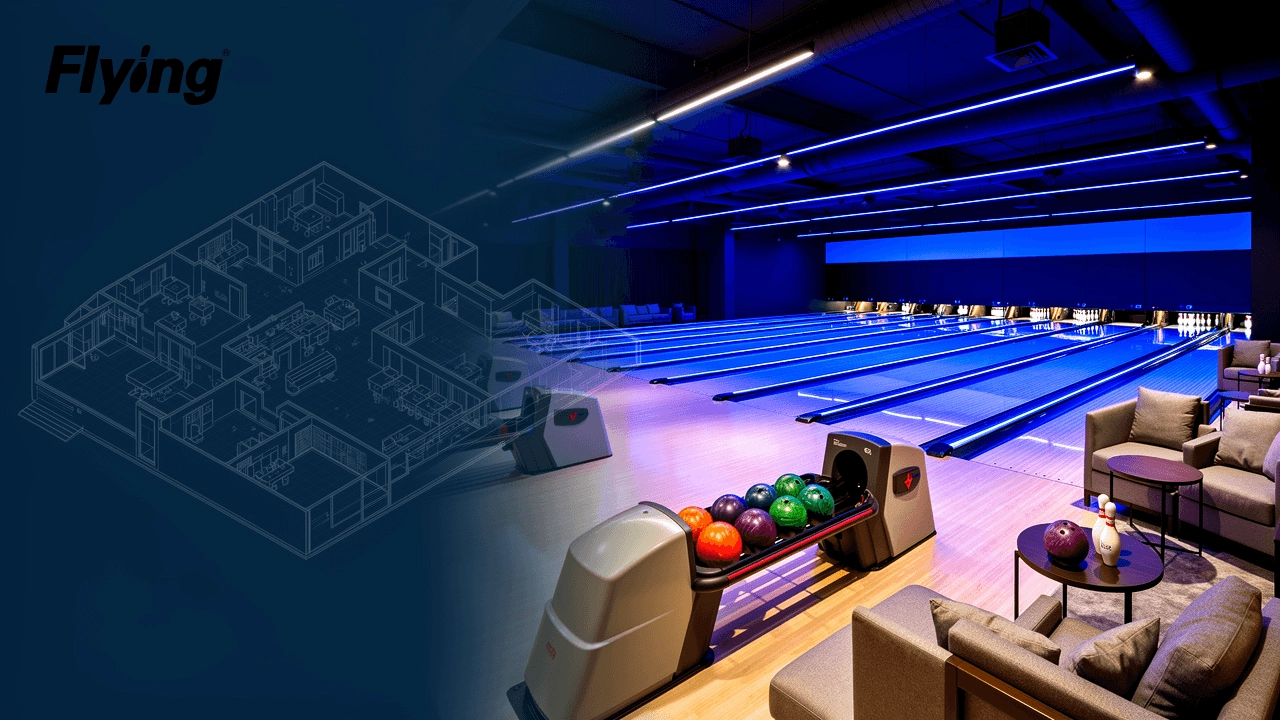

Let’s Build a center Together
Partner With a Trusted Bowling Alley Design, One-Stop Solution Manufacturer.
Flying has successfully built ideal bowling alleys for more than 3,000 customers.
Technical Expert
You may also like our products
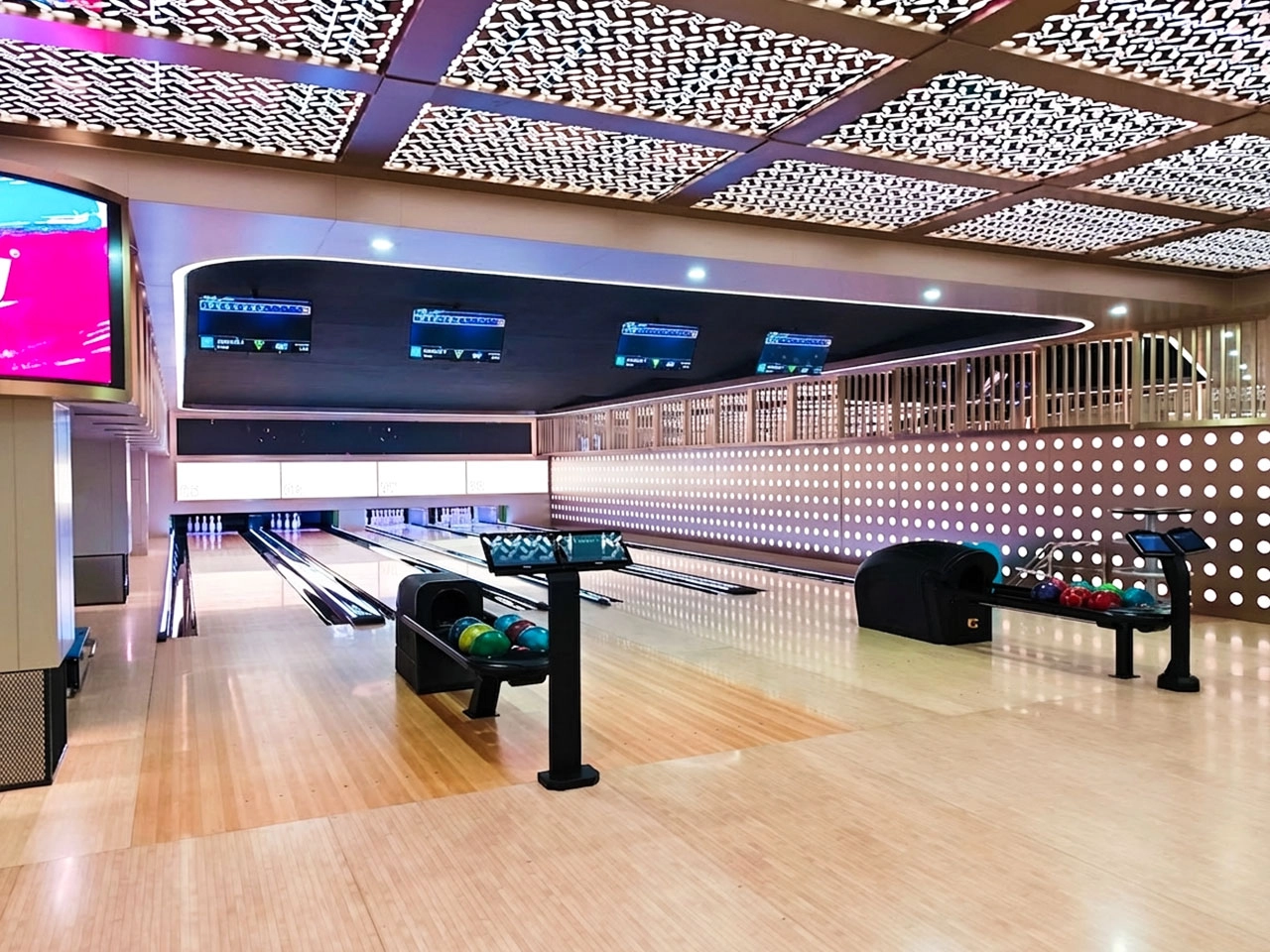
Build a commercial bowling venue with Flying’s complete string pinsetter bowling alley equipment package. The system includes the AEROPIN™ USBC-certified string pinsetter, customizable lanes, automatic scoring, ball return, lane lighting, pins, control hardware, and overseas installation support.
Designed for commercial bowling centers, family entertainment venues, hotels, resorts, bars, and premium private projects, this turnkey bowling system helps operators reduce sourcing complexity and prepare for reliable long-term operation.
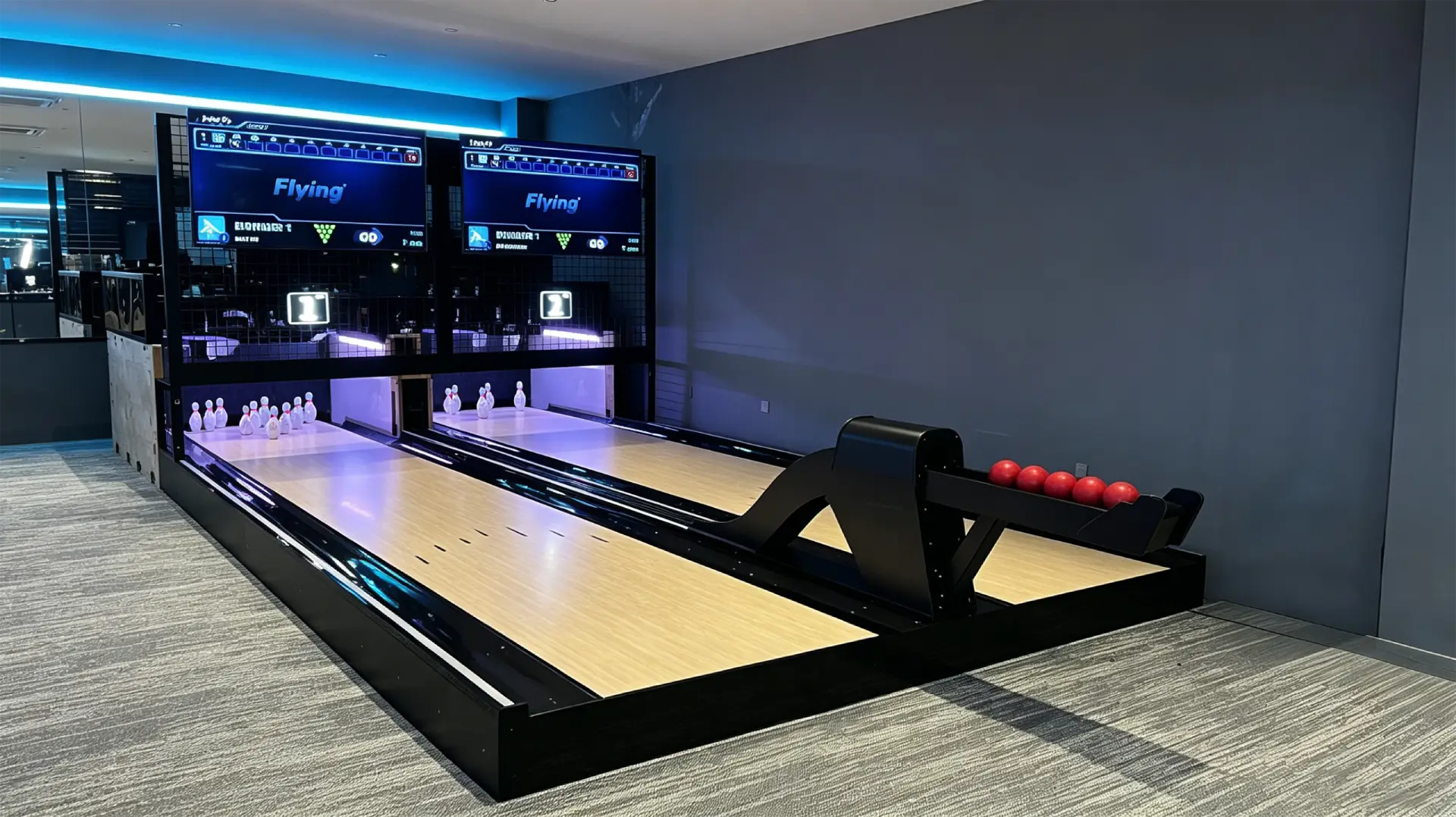
Flying Smart Duckpin Bowling is a compact duckpin bowling equipment system designed for bars, family entertainment centers, hotels, resorts, cinemas, boutique bowling alleys, and social entertainment venues. With a standard 9.13m duckpin bowling lane, 1.25kg lightweight balls, automatic scoring, ball return, LED lighting, and a smart string pinsetter, it creates a fast-paced and easy-to-play bowling experience in a smaller footprint than traditional bowling.
The system is available as a turnkey duckpin bowling package, including lane equipment, a string pinsetter system, scoring hardware, control software, global shipping, installation guidance, and technical support.
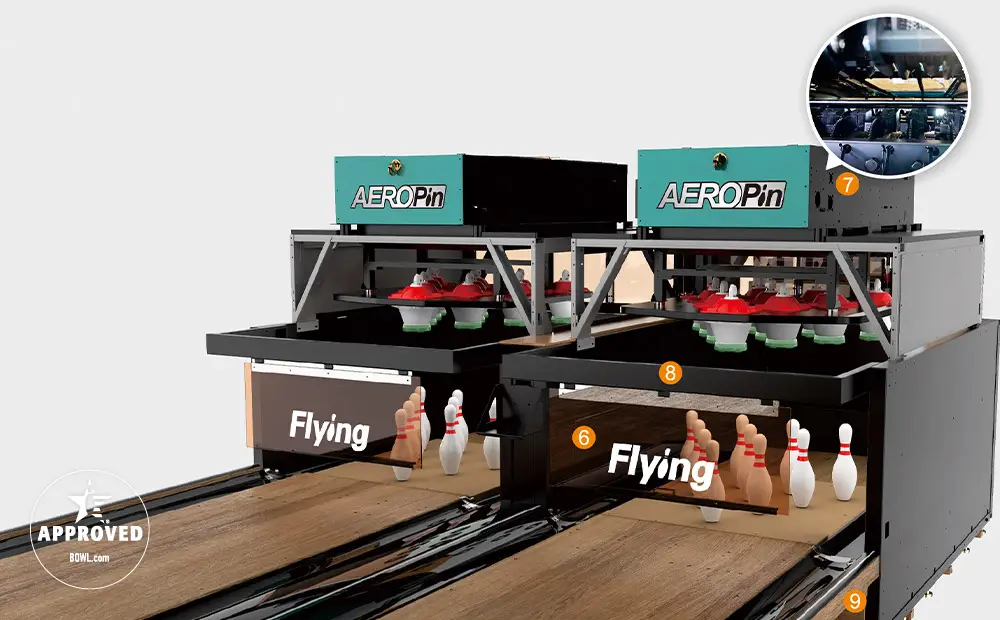
AEROPIN is Flying Bowling’s USBC-certified string pinsetter system for modern commercial bowling centers. Designed for fast pin setting, smooth ball return, low maintenance, and stable daily operation, it helps venue operators build league-ready and entertainment-focused bowling projects with confidence.
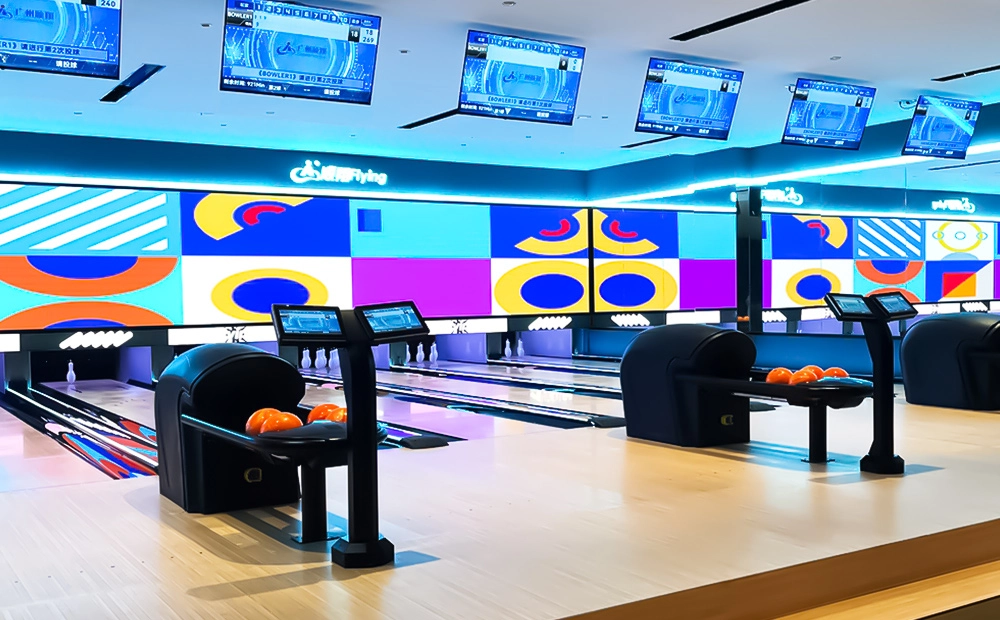
Flying Social Medium Bowling is a compact medium bowling equipment system designed for bars, cafes, family entertainment centers, community leisure venues, hotels, resorts, and small indoor entertainment spaces. With customizable lane lengths from 9.6m to 18m, small balls, lighter pins, string pinsetter technology, ball return, and automatic scoring, it creates an easy-to-play social bowling experience for players of different ages and skill levels.
Compared with full-size standard bowling, medium bowling requires less space and offers a more casual, interactive format. It is a practical choice for venues that want to add a bowling attraction without building a full commercial bowling alley.
Contact Flying
Start Your Custom Bowling Alley Project
If you contact us now for more details, we can provide you with a custom bowling alley service. Our service team will get back to you within 24 hours normally!
© 2026 Flying BOWLING. Designed by gooeyun.
FOLLOW US:

Flying Bowling
Flying Bowling
Flyingbowling
Flyingbowling
Flyingbowling