

String Pinsetter vs Free-Fall Pinsetter: Cost, Maintenance & USBC Guide 2026
This guide compares string pinsetters and free-fall pinsetters for bowling venue operators, including how each system works, maintenance cost, noise, reset speed, pin action, USBC certification, conversion planning, venue fit and Flying Bowling string pinsetter options.
Quick Answer: String Pinsetter vs Free-Fall Pinsetter
A string pinsetter is usually the better choice for new entertainment-focused bowling venues, family entertainment centers, hotels, resorts, compact bowling bars, and operators that prioritize lower maintenance complexity, simpler installation, lower noise, and faster reset times.
A free-fall pinsetter may still make sense for venues built around traditional bowling identity, existing free-fall infrastructure, established in-house technicians, or competitive markets where a specific certified string system has not been accepted by the venue’s leagues, tournaments, or governing bodies.
For sanctioned league or tournament play, the key question is not simply “string or free-fall.” Operators must confirm whether the specific string pinsetter model, installation, and lane certification meet the applicable rules. USBC-certified string pinsetters are treated differently from older or non-certified string machines.
Key Takeaways
- String pinsetters use cords attached to each pin and a simpler overhead reset mechanism.
- Free-fall pinsetters use a more complex mechanical system to sweep, lift, distribute, and reset pins.
- String pinsetters usually have fewer moving parts, lower technician dependency, faster reset times, and lower ambient mechanical noise.
- Free-fall pinsetters remain the traditional standard in many competitive bowling markets and may be preferred by venues built around classic bowling identity.
- Pin action is not identical across all machines. Certified modern string systems are designed to meet specific competition standards, while older or non-certified string machines may not.
- USBC certification applies to specific string pinsetter machines and certified installations, not all string systems automatically.
- Maintenance cost comparisons should be treated as planning models, not guaranteed savings.
- The best pinsetter is the one that fits your venue format, customer expectations, technician resources, league requirements, and operating model.
Decision Table: Which Pinsetter Should You Choose?
| Venue situation | Better fit | Why |
|---|---|---|
| New family entertainment center | String pinsetter | Lower maintenance complexity, faster reset, and lower noise are usually more valuable than traditional machine identity. |
| Hotel, resort, or mixed-use building | String pinsetter | Lower ambient mechanical noise can make the venue easier to integrate near dining rooms or other attractions. |
| Compact bowling bar or social venue | String pinsetter | Space efficiency, simpler operation, and fast reset support recreational play. |
| Emerging market with limited pinsetter technicians | String pinsetter | Fewer moving parts and simpler maintenance can reduce downtime risk. |
| Existing free-fall center with trained technicians | Depends | Keeping free fall may make sense if infrastructure and staff are already in place. |
| Traditional league center | Depends | USBC-certified string systems may be viable, but operators should confirm league rules, center certification, and customer expectations. |
| A venue focused on heritage bowling experience | Free-fall pinsetter | Traditional machine sound, pin action, and authenticity may be part of the brand. |
| Multi-format venue with mini or duckpin lanes | String pinsetter | Compact formats usually fit string systems more naturally. |
How Free-Fall Pinsetters Work
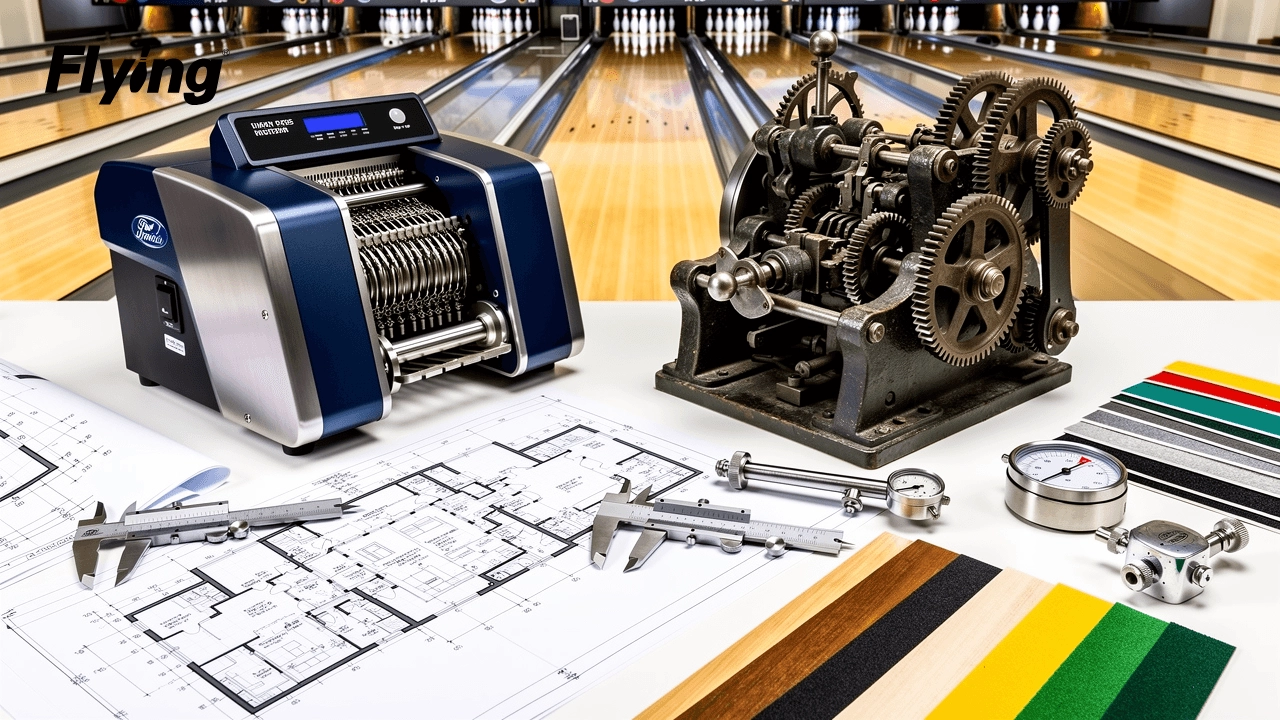
A free-fall pinsetter is the traditional mechanical system used in many commercial tenpin bowling centers. It is sometimes called a mechanical pinsetter or gravity pinsetter because the pins are not attached to strings.
After each ball delivery, the machine performs several steps:
- Detects the ball and pinfall
- Sweeps fallen pins into the pit
- Lifts or protects standing pins
- Clears the pin deck
- Cycles fallen pins through a distributor system
- Places pins back into formation
- Returns the ball through the ball return system
This process requires many coordinated mechanical parts, including motors, belts, cams, elevators, distributor wheels, sweep bars, pin tables, sensors, and timing mechanisms.
Typical moving parts per lane: approximately 150–200+, depending on the model and configuration. The advantage of a free-fall system is its traditional playing experience and deep acceptance in established bowling markets. The disadvantage is mechanical complexity.
How String Pinsetters Work
A string pinsetter takes a simpler mechanical approach. Each pin is attached by a thin, high-tensile cord to an overhead mechanism above the pin deck.
When the ball hits the pins, the pins still fall and interact on the deck. After the delivery, the overhead system raises the strings to lift fallen pins. Standing pins remain in play for the second ball when appropriate. After the second delivery, or after a strike, the system lifts and resets the full pin formation.
Typical moving parts per lane: approximately 40–60, depending on the model and configuration.
The main operational advantage is that string systems remove much of the pin-collection, pin-distribution, and pin-placement machinery used by free-fall pinsetters. This can reduce maintenance complexity, technician dependency, and mechanical noise.
Side-by-Side Comparison: String vs Free-Fall Pinsetter
| Factor | Free-Fall Pinsetter | String Pinsetter | Operator takeaway |
|---|---|---|---|
| Mechanical complexity | Higher | Lower | String systems usually have fewer failure points. |
| Approx. moving parts per lane | 150–200+ | 40–60 | Actual count varies by model. |
| Pin reset time | Often around 8–12 seconds | Often around 3–5 seconds | A faster reset can improve lane throughput. |
| Ambient mechanical noise | Often higher | Often lower | Important for hotels, malls, restaurants, and mixed-use buildings. |
| Technician requirement | Specialized pinsetter technician often preferred | A general mechanical technician may handle more routine tasks after training | Depends on system and service model. |
| Traditional bowling feel | Strongest | Depends on system quality and certification | Competitive players may notice differences. |
| League play | Widely accepted | Only when certified and accepted under applicable rules | Confirm certification and league requirements. |
| Best venue fit | Traditional bowling centers, established league venues | FECs, hotels, resorts, bars, compact venues, many new builds | Choose by business model. |
Comparison note: These comparisons are general planning references. Actual performance, maintenance needs, and playing experience depend on the specific equipment model, installation quality, lane certification, maintenance discipline, and venue conditions.
Pin Action and Scoring Difference
The most common question from serious bowlers is, "Do string pinsetters affect pin action?"
The honest answer is they can, but the effect depends heavily on the machine design, certification status, string geometry, pit layout, pin setup, and scoring system.
In a free-fall system, pins are not attached to anything. Once a pin is hit, it can travel naturally across the pin deck or into the pit. In a string system, each pin is attached by a cord, so secondary movement may be affected by string tension, string length, and pin direction.
Where string systems may differ:
- Messenger pins
- Light hits
- Split conversions
- Pins sliding off spot
- Pins rebounding from the pit area
- Late-falling pins
- Unusual string-assisted pinfall
For recreational players, the difference between a high-quality string pinsetter and a well-maintained free-fall system may be less noticeable. For competitive bowlers, league operators and tournament organizers, certification and rules matter.
USBC Certification: What Operators Must Confirm
USBC has recognized certified string pinsetters and string pin bowling as a certified equipment and competition category. However, this does not mean every string pinsetter is automatically approved for every league or tournament situation.
Operators should confirm:
- Is the specific string pinsetter model USBC certified?
- Does the installation meet the required certification specifications?
- Has the center completed the required certification process?
- Do local leagues, associations, or tournaments accept play on that equipment?
- Are the lanes standard-certified lanes or a non-standard recreational format?
- Are scores and averages handled under current league and tournament rules?
USBC research has evolved over time. In 2023, USBC reported no statistically significant difference in scoring pace between USBC-certified string pinsetters and traditional free-fall machines under its testing conditions. However, the 2025 String Pinsetter Scoring Report, based on averages from centers that converted to approved string pinsetters, found scoring on string pinsetters trending about 3.4 pins lower overall, with higher-average bowlers affected more.
For operators, the practical takeaway is clear:
- For casual entertainment venues, USBC certification may not be necessary.
- For league-focused venues, certification can be a major decision factor.
- For serious tournament positioning, confirm current rules with the relevant governing body before purchasing equipment.
- For mixed-use venues, a certified string option may help support both recreational play and competitive programs.
Example 5-Year Maintenance Cost Model for an 8-Lane Venue
Maintenance cost is one of the strongest business arguments for string pinsetters, but savings should be modeled carefully. Costs vary by country, labor rate, usage intensity, spare parts availability, service contract, and technician skill.
| Cost category | Free-fall system, 8 lanes | String system, 8 lanes |
|---|---|---|
| Annual preventive maintenance | $6,000–$9,600 | $2,400–$4,000 |
| Average annual emergency service calls | $3,000–$6,000 | $800–$2,000 |
| Parts replacement, annual average | $2,000–$4,000 | $600–$1,200 |
| Technician training / support | $1,500–$3,000 | $500–$1,000 |
| Estimated annual total | $12,500–$22,600 | $4,300–$8,200 |
| Estimated 5-year total | $62,500–$113,000 | $21,500–$41,000 |
| Example 5-year difference | — | $21,000–$72,000 lower in this model |
Maintenance cost note: These figures are planning estimates only. They are not guaranteed savings and are not a formal operating-cost promise. Actual maintenance cost depends on usage intensity, technician availability, local labor cost, spare parts, service contract, equipment model, operator training, and maintenance discipline.
Why string systems may cost less to maintain:
- Fewer moving parts
- Fewer pin-handling mechanisms
- Simpler reset mechanism
- Less mechanical synchronization
- Lower technician specialization in many routine tasks
- Fewer wear points in some designs
This does not mean free-fall systems are always uneconomical. A well-maintained free-fall center with trained in-house technicians and existing spare parts may operate efficiently. The cost advantage of string systems is usually strongest for new venues, emerging markets, and operators without specialized mechanical teams.
Technician Dependency and Downtime Risk
Maintenance cost is only one part of the decision. Downtime risk may be even more important.
A bowling lane that is down during peak hours creates several problems:
- Lost lane revenue
- Disrupted party bookings
- Customer complaints
- Staff stress
- Refunds or compensation
- Lower repeat visits
- Emergency service expense
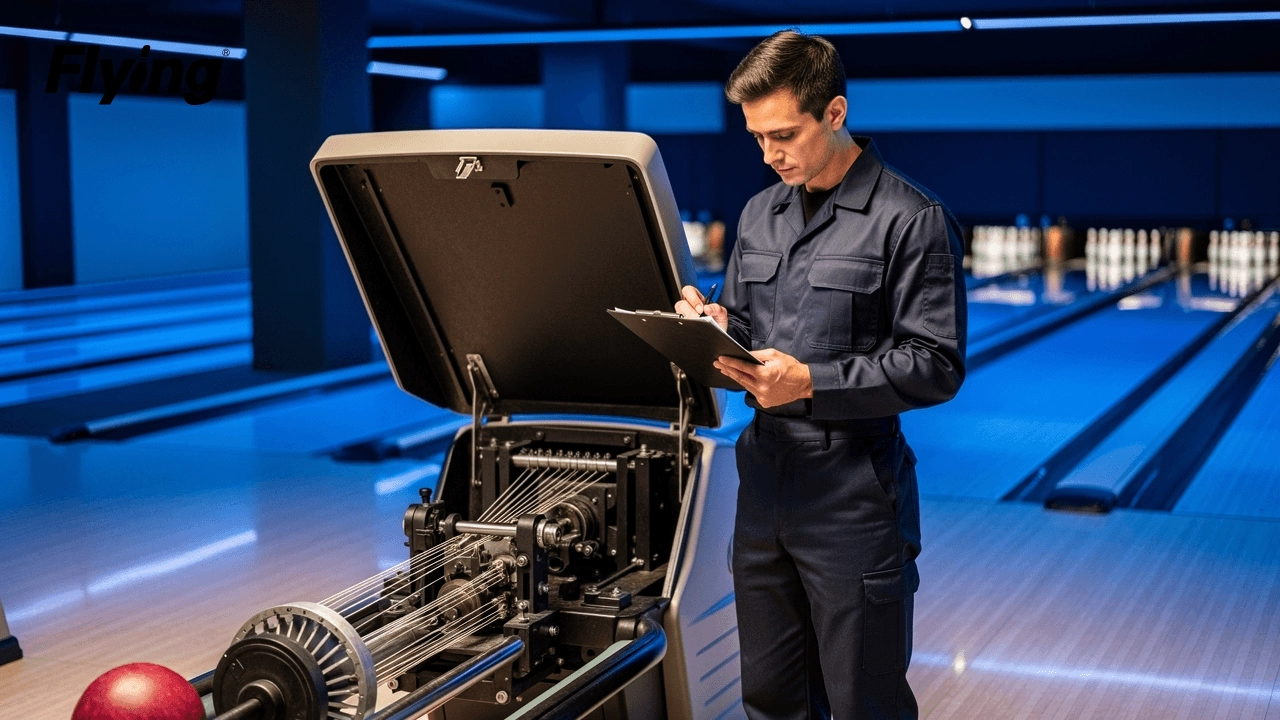
Free-fall pinsetters often require technicians who understand a specific manufacturer’s system. In markets where traditional pinsetter technicians are limited, a malfunction can leave a lane idle until the right specialist is available.
String pinsetters can reduce this dependency because the mechanism is simpler. After system-specific training, many routine checks and adjustments may be handled by a general mechanical technician or trained venue maintenance staff. A simpler system is not a maintenance-free system, so staff training and scheduled inspection still matter.
Noise, Reset Speed, and Player Experience
Noise matters more than many investors expect. Bowling venues are often placed in malls, hotels, mixed-use buildings, entertainment complexes, and F&B environments where mechanical noise can affect customer comfort and neighboring tenants.
Planning noise ranges:
- Free-fall pinsetter: often around 75–85 dB in mechanical operation
- String pinsetter: often around 55–65 dB in mechanical operation
Actual noise depends on building acoustics, lane layout, ceiling treatment, machine condition, enclosure design, and measurement position.
Typical reset speed planning ranges:
- Free-fall reset time: around 8–12 seconds
- String reset time: around 3–5 seconds
A few seconds may sound minor, but in a busy venue, faster resets can improve lane throughput. For venues charging by time, faster resets may increase customer satisfaction because guests spend more of their session bowling and less time waiting.
Best System by Venue Type
| Venue type | Recommended fit | Reason |
|---|---|---|
| Family entertainment centers | String pinsetter | Lower maintenance complexity, lower noise, and faster reset support recreational play. |
| Hotels and resorts | String pinsetter | Easier integration into recreation areas where noise and maintenance access matter. |
| Bowling bars and social venues | String pinsetter | Works well with food, drinks, music, and social play. |
| Traditional league centers | Depends | Certification, league acceptance, and customer expectations must be checked. |
| Existing free-fall centers | Depends | Conversion may help if machines are aging, but current infrastructure and technician support matter. |
| Mini bowling and duckpin venues | String pinsetter | Compact bowling formats usually work naturally with string systems. |
Upgrading from Free-Fall to String Pinsetters
Converting an existing free-fall pinsetter installation to string is possible in many venues, but it should be treated as a project rather than a simple equipment swap.
What may change during conversion:
- Above-lane infrastructure: A string reset mechanism must be mounted above the pin deck. This requires a review of ceiling height, overhead structure, mounting points, and maintenance access.
- Below-lane infrastructure: Free-fall systems use pit and pin-handling infrastructure. String systems do not need the same pin-distribution machinery.
- Power and controls: String pinsetters may require different control wiring, electrical planning, and scoring integration.
- Lane surface and scoring: Lane surfaces and scoring systems do not always need replacement, but compatibility should be confirmed before the conversion plan is finalized.
Typical Conversion Timeline for an 8-Lane Venue
| Phase | Planning duration |
|---|---|
| Site assessment and quotation | 1–2 weeks |
| Equipment manufacturing and shipping | 6–10 weeks |
| On-site installation for 8 lanes | 5–8 days |
| Calibration, test play, and staff training | 1–2 days |
| Total decision-to-reopening planning window | 10–14 weeks |
Timeline note: These figures are planning estimates only. Actual conversion time depends on equipment production, shipping schedule, customs, site readiness, contractor coordination, landlord rules, electrical works, and installation complexity.
Conversion checklist:
- Current pinsetter model
- Lane count
- Ceiling clearance above pin deck
- Pit structure
- Access route for equipment
- Electrical capacity
- Scoring system compatibility
- Local technician availability
- Downtime window
- League and customer communication plan
- Budget for contingency
Flying Bowling String Pinsetter Options
Flying Bowling offers string pinsetter systems for multiple bowling formats. The right model depends on lane format, venue type, customer profile, and certification needs.
AEROPIN
Standard tenpin string pinsetter option for venues that need certified-play positioning where applicable.
View AEROPIN string pinsetterFSDB
Duckpin bowling equipment option for compact bars, lounges, FECs, and social entertainment venues.
View duckpin bowling systemFCMB / Mini Bowling
Mini bowling equipment option for children’s zones, shopping mall attractions, and family entertainment spaces.
View mini bowling equipmentProduct selection should be based on lane count, venue format, available space, player profile, certification needs, operating hours, target market, and installation conditions. For broader planning, review the bowling alley equipment guide.
Conclusion: Choose the Pinsetter That Fits Your Venue Model
The string pinsetter vs. free-fall pinsetter decision should not be based only on tradition or purchase price. It should be based on the venue’s operating model, customer expectations, maintenance resources, certification needs, lane count, and long-term cost profile.
Free-fall pinsetters remain important for traditional bowling centers and venues where classic machine identity matters. They may also make sense when existing infrastructure, trained staff, and local customer expectations already support them.
String pinsetters are often the practical choice for new commercial venues, FECs, hotels, resorts, bowling bars, compact formats, and markets where operators want simpler maintenance, lower technician dependency, faster resets, and lower ambient mechanical noise.
For competitive play, certification matters. Operators should verify the specific model, installation, and league requirements before making a final decision.
Planning a New Bowling Venue or Pinsetter Upgrade?
Share your planned lane count, venue type, operating hours, target players, country, ceiling clearance, whether league play is required, and current pinsetter model if you are upgrading. Flying Bowling can help review suitable string pinsetter options, compare equipment formats, and prepare a project-specific quotation or conversion feasibility review.
Frequently Asked Questions
What is the difference between a string pinsetter and a free-fall pinsetter?
A string pinsetter uses cords attached to each pin and an overhead mechanism to lift and reset pins. A free-fall pinsetter uses a mechanical system to sweep, lift, distribute and reset pins without strings. String systems are usually simpler mechanically, while free-fall systems provide the traditional bowling machine experience.
distribute,Are string pinsetters USBC-approved?
Some string pinsetters are USBC certified, but not all string pinsetters are automatically approved. Operators must confirm the specific model, installation, lane certification and current league or tournament rules before promoting a string-equipped venue for sanctioned play.
certification,Do string pinsetters affect scoring?
String pinsetters can affect pin action if the system is not designed or certified properly. Certified modern string systems are designed to meet specific standards, but operators should still review certification, lane approval, league rules and current scoring research before positioning a venue for competitive play.
rules,Are string pins harder to strike on?
Not always. The experience depends on the specific machine, string length, cord tension, pin setup, pit design, lane condition and bowler style. Certified systems are designed to reduce scoring differences, but older or non-certified string machines may play differently.
condition,How much does a string pinsetter cost compared with a free-fall pinsetter?
String pinsetters may cost less to install and maintain in many new-venue scenarios, but exact pricing depends on lane count, format, equipment model, destination, freight, installation and project requirements. Operators should request a project-specific quotation rather than relying on general price ranges.
installation,What is the maintenance cost difference between string and free-fall pinsetters?
String systems often have lower maintenance complexity because they use fewer moving parts. In an example 8-lane planning model, string systems may show lower 5-year maintenance costs than free-fall systems. Actual savings depend on usage, local labor cost, technician availability, spare parts and maintenance discipline.
parts,Are string pinsetters suitable for league bowling?
They can be, if the specific string pinsetter and center meet the applicable certification requirements and local league rules. Operators should confirm certification status before planning a league-focused venue.
be ifCan a bowling center convert from free-fall to string pinsetters?
Yes, many existing free-fall installations can be evaluated for conversion. The main requirements include ceiling clearance, overhead mounting feasibility, site access, scoring compatibility, electrical review and a planned downtime window.
review,How long does string pinsetter installation take?
For new venues with prepared spaces, installation may take around 1–2 days per lane, depending on site conditions and technician resources. For an 8-lane conversion, the total project window from assessment to reopening may be around 10–14 weeks, including manufacturing, shipping, installation and commissioning.
installation,Are string pinsetters quieter than free-fall machines?
String pinsetters are usually quieter in ambient mechanical operation because they use a simpler reset mechanism. Actual noise levels depend on the equipment model, building acoustics, machine enclosure, ceiling treatment and maintenance condition.
treatment,Which pinsetter is better for family entertainment centers?
String pinsetters are usually the practical choice for family entertainment centers because they can reduce maintenance complexity, support faster reset times, operate with lower mechanical noise and fit recreational bowling formats such as mini bowling or duckpin bowling.
noise,Which Flying Bowling string pinsetter model should I choose?equipment,FCMB,, format,
Choose based on venue format and business goal. AEROPIN is for standard tenpin venues that need certified-play positioning. FUSB is for entertainment-focused standard bowling. FSDB is for duckpin bowling. FCMB or mini bowling equipment is for family entertainment formats. A project review is recommended before final selection.
More Articles

Let’s Build a center Together
Partner With a Trusted Bowling Alley Design, One-Stop Solution Manufacturer.
Flying has successfully built ideal bowling alleys for more than 3,000 customers.
Technical Expert
You may also like our products
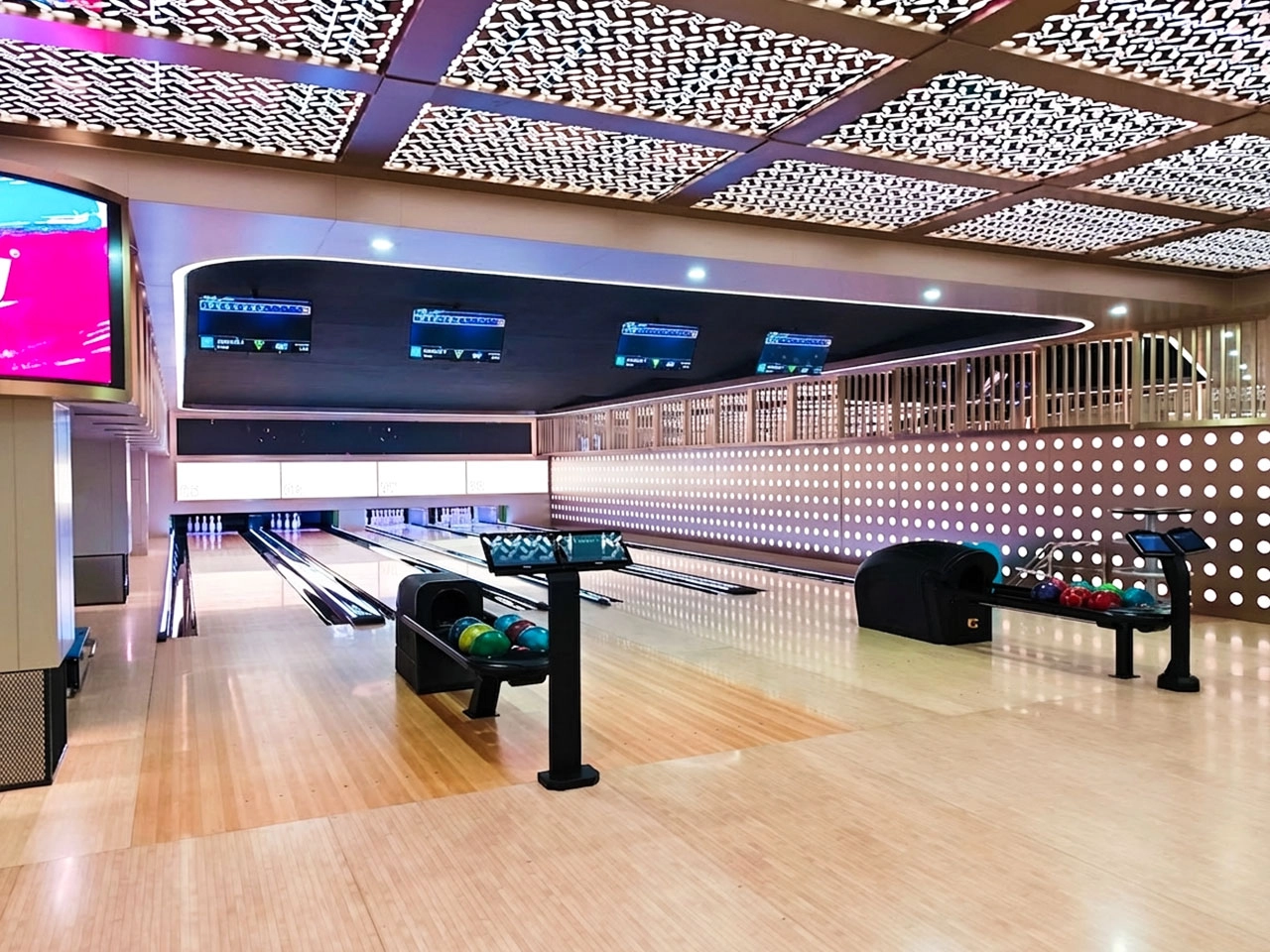
Build a commercial bowling venue with Flying’s complete string pinsetter bowling alley equipment package. The system includes the AEROPIN™ USBC-certified string pinsetter, customizable lanes, automatic scoring, ball return, lane lighting, pins, control hardware, and overseas installation support.
Designed for commercial bowling centers, family entertainment venues, hotels, resorts, bars, and premium private projects, this turnkey bowling system helps operators reduce sourcing complexity and prepare for reliable long-term operation.
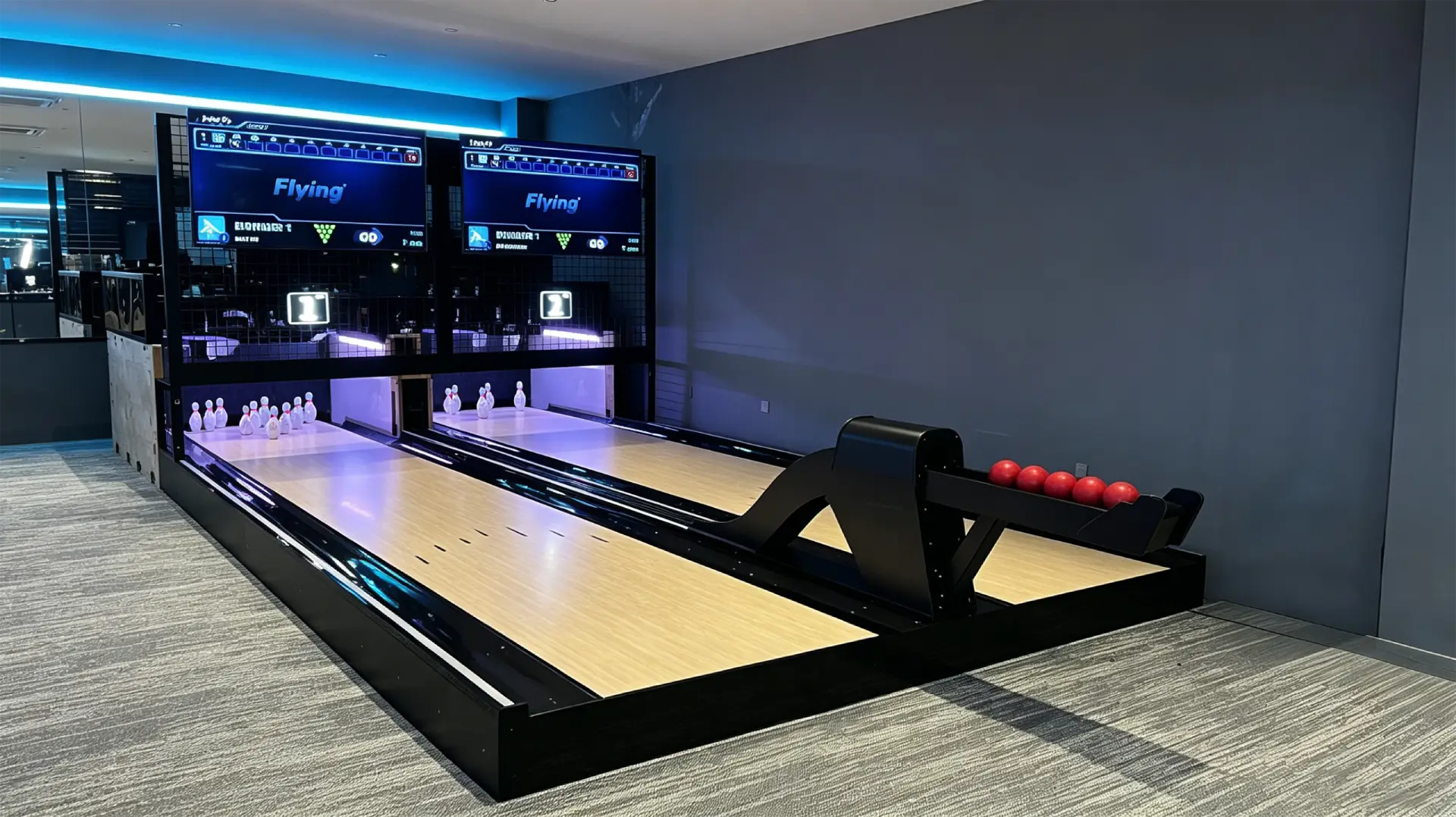
Flying Smart Duckpin Bowling is a compact duckpin bowling equipment system designed for bars, family entertainment centers, hotels, resorts, cinemas, boutique bowling alleys, and social entertainment venues. With a standard 9.13m duckpin bowling lane, 1.25kg lightweight balls, automatic scoring, ball return, LED lighting, and a smart string pinsetter, it creates a fast-paced and easy-to-play bowling experience in a smaller footprint than traditional bowling.
The system is available as a turnkey duckpin bowling package, including lane equipment, a string pinsetter system, scoring hardware, control software, global shipping, installation guidance, and technical support.
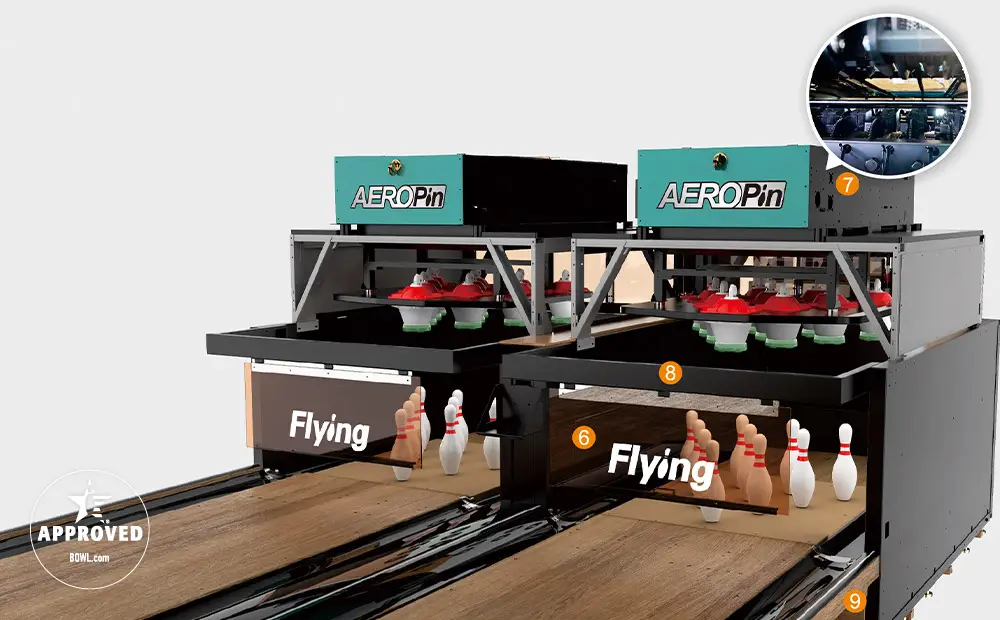
AEROPIN is Flying Bowling’s USBC-certified string pinsetter system for modern commercial bowling centers. Designed for fast pin setting, smooth ball return, low maintenance, and stable daily operation, it helps venue operators build league-ready and entertainment-focused bowling projects with confidence.
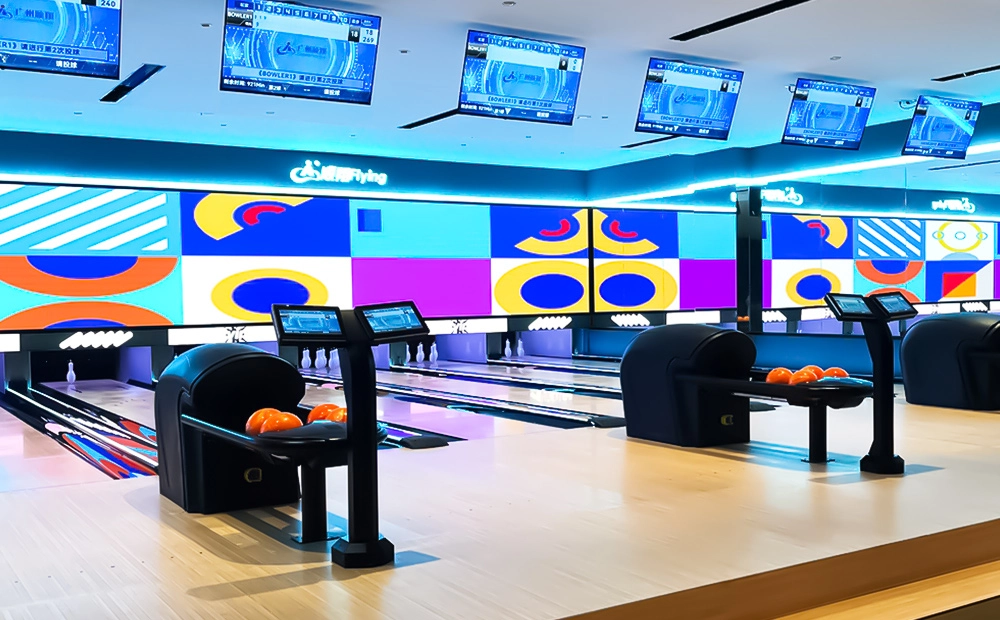
Flying Social Medium Bowling is a compact medium bowling equipment system designed for bars, cafes, family entertainment centers, community leisure venues, hotels, resorts, and small indoor entertainment spaces. With customizable lane lengths from 9.6m to 18m, small balls, lighter pins, string pinsetter technology, ball return, and automatic scoring, it creates an easy-to-play social bowling experience for players of different ages and skill levels.
Compared with full-size standard bowling, medium bowling requires less space and offers a more casual, interactive format. It is a practical choice for venues that want to add a bowling attraction without building a full commercial bowling alley.
Contact Flying
Start Your Custom Bowling Alley Project
If you contact us now for more details, we can provide you with a custom bowling alley service. Our service team will get back to you within 24 hours normally!
© 2026 Flying BOWLING. Designed by gooeyun.
FOLLOW US:

Flying Bowling
Flying Bowling
Flyingbowling
Flyingbowling
Flyingbowling