


Quick Overview
There is no single best bowling business model for every investor. The right choice depends on available space, target customers, existing operations, revenue strategy, staffing capacity, and the bowling format that fits the venue.
Common models include a duckpin bar or restaurant concept, boutique social bowling lounge, family entertainment center, standard commercial or league bowling center, and resort or hotel amenity.
Each model creates value differently. Some rely on direct lane revenue, while others use bowling to support food and beverage sales, event bookings, longer guest stays, or broader entertainment spending.
The equipment decision should therefore follow the business model—not the other way around.
What Is a Bowling Business Model?
A bowling business model describes how a venue uses bowling to create commercial value.
It is broader than choosing between standard bowling, duckpin bowling, or medium bowling. The bowling format is only one part of the operating concept.
A business model also defines:
- who the target customer is,
- how much of the venue is dedicated to bowling,
- which additional services support revenue,
- how lanes are utilized,
- how much staffing and maintenance the operation requires,
- whether bowling generates direct revenue or supports a larger hospitality or entertainment business.
For example, the same bowling format can play very different commercial roles in a standalone bowling center and in a hotel recreation area.
Bowling Business Models Comparison
| Business Model | Suitable Bowling Format | Main Revenue Logic | Space Profile | Main Investor Priority |
|---|---|---|---|---|
| Duckpin Bar & Restaurant | Duckpin | F&B + lane play + events | Compact to medium | Hospitality integration |
| Boutique Social Bowling Lounge | Medium / Duckpin | Experience + F&B + private events | Flexible | Spend per visit |
| Family Entertainment Center | Standard / Medium / Duckpin mix | Multi-attraction revenue | Medium to large | Attraction utilization |
| Commercial / League Bowling Center | Standard | Open play + leagues + events + F&B | Full-scale | Repeat traffic |
| Resort / Hotel Amenity | Medium / Standard | Guest value + events + indirect revenue | Project-specific | Amenity value |
This is a planning framework rather than a universal formula. Actual venue design depends on the building, customer market, equipment configuration, and local operating conditions.
1. Duckpin Bar & Restaurant Integration
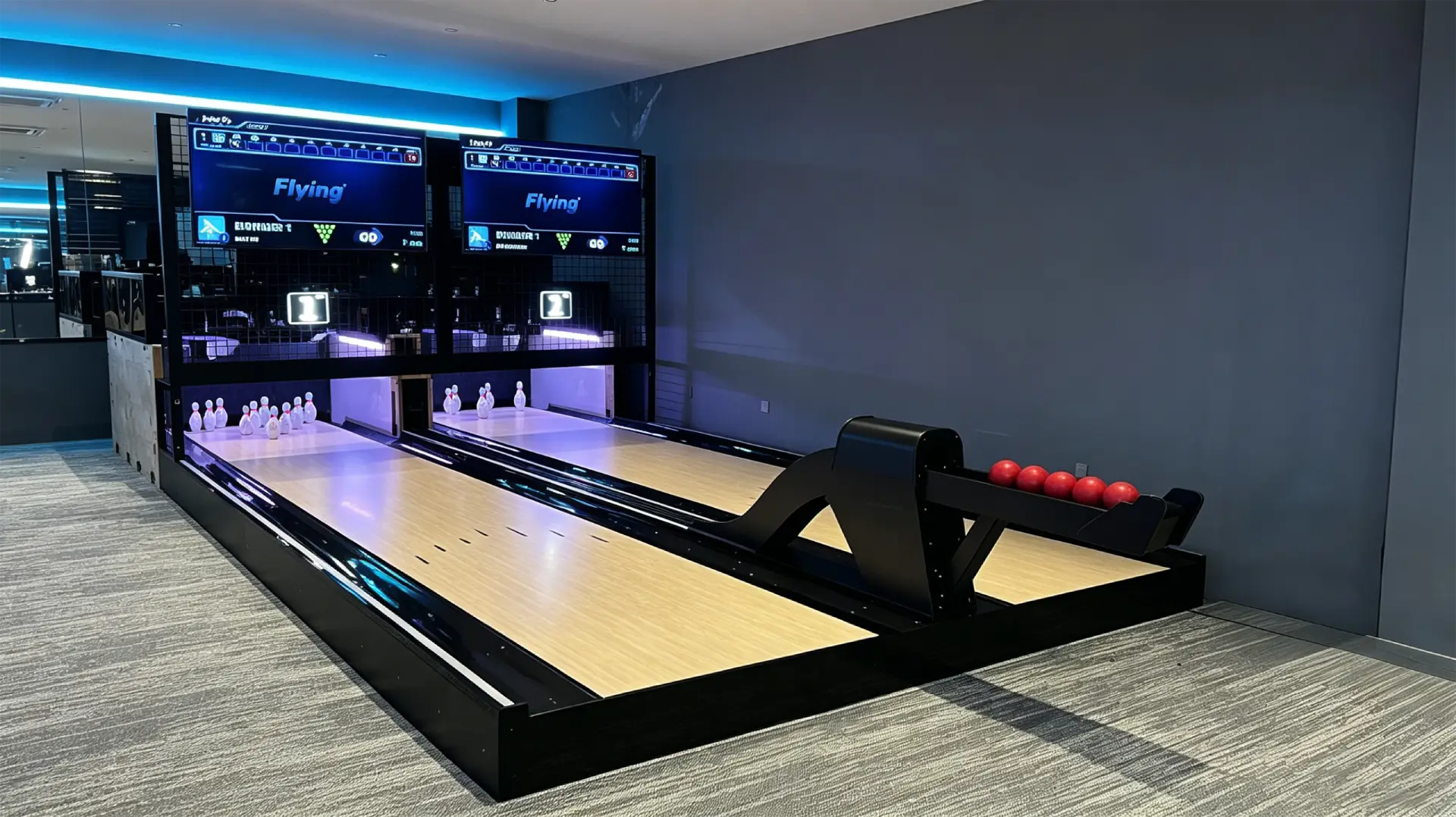
Duckpin bowling can fit naturally into bars, restaurants, breweries, lounges, and other social hospitality concepts where bowling is intended to complement rather than replace the core business.
Its role is usually to give groups another reason to stay in the venue, interact, order food and drinks, and book private events.
Main Revenue Drivers
A duckpin hospitality model may combine:
- lane play,
- food and beverage,
- private parties,
- corporate groups,
- social events.
The value of the lanes should not be measured only by lane fees. If bowling increases dwell time or strengthens event demand, the effect on food, beverage, and group spending can be equally important.
Best Fit
This model can be worth evaluating for:
- existing bar or restaurant operators,
- breweries,
- social entertainment concepts,
- smaller hospitality-led venues.
The key question is whether bowling can be integrated into the current operation without creating excessive new space, staffing, or service complexity.
2. Boutique Social Bowling Lounge
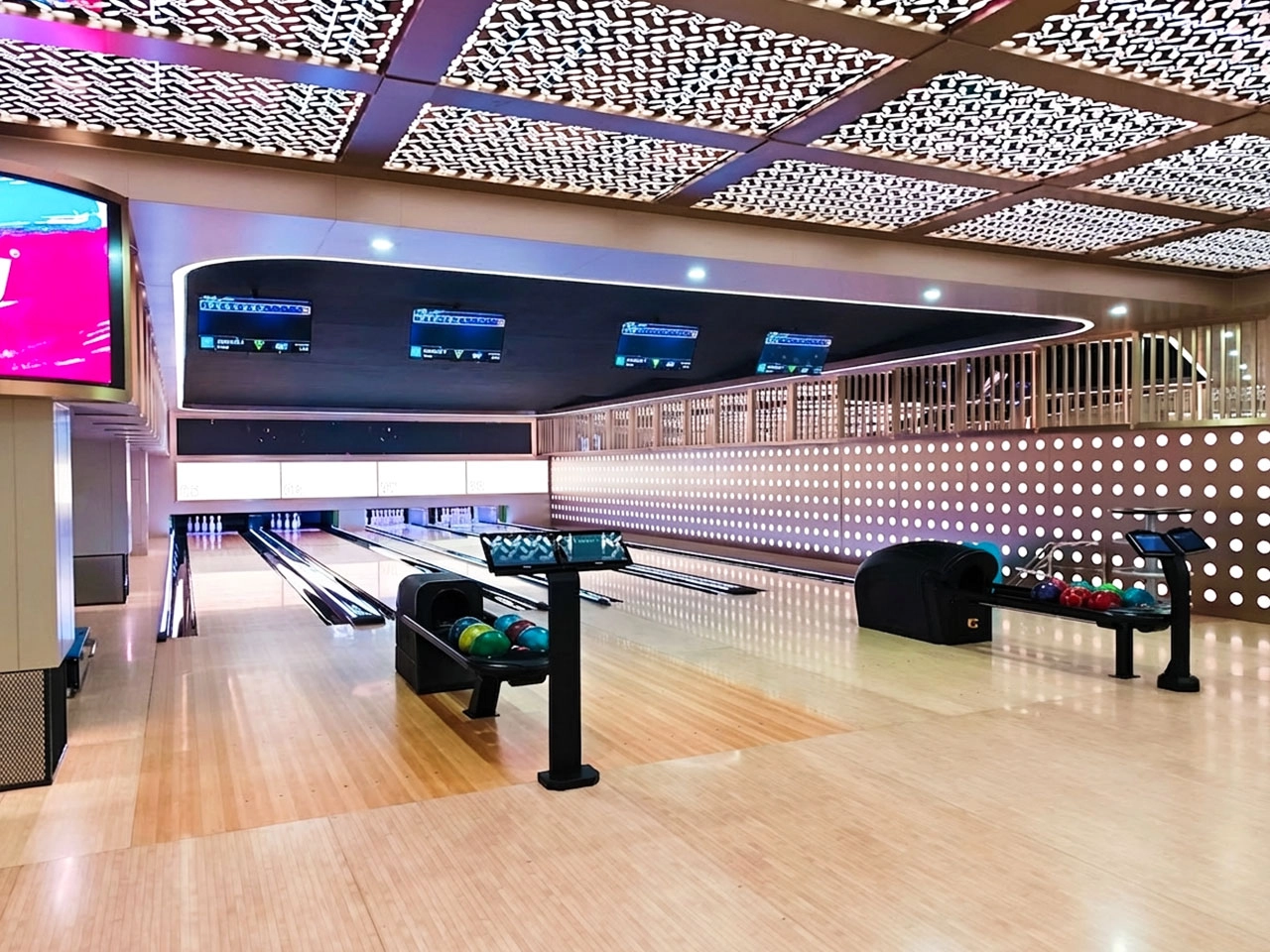
Boutique bowling focuses on the overall entertainment experience rather than sport-only bowling.
A typical concept may combine bowling with lounge seating, music, food, beverages, private event areas, and a more design-led interior.
Depending on the available space and intended experience, medium bowling or duckpin bowling may be suitable.
Main Revenue Drivers
Revenue can come from:
- lane reservations,
- food and beverage,
- corporate events,
- private parties,
- group packages,
- premium entertainment experiences.
This model depends heavily on customer spend per visit rather than bowling volume alone.
Investor Priorities
Investors should pay attention to:
- target customer profile,
- local nightlife and hospitality demand,
- event-booking potential,
- seating and F&B capacity,
- lane-to-social-space balance,
- the overall customer journey.
A strong visual concept still needs to support efficient service, lane turnover, events, and maintenance.
3. Family Entertainment Center With Bowling
A family entertainment center uses bowling as one part of a larger attraction mix.
The venue may combine bowling with arcade games, party rooms, food and beverage, redemption games, and other entertainment activities.
Depending on the project, standard bowling, medium bowling, duckpin bowling, or a combination of formats may be considered.
Main Revenue Logic
Revenue may come from:
- bowling,
- arcade or attraction spending,
- birthday parties,
- food and beverage,
- group bookings,
- memberships,
- bundled packages.
Bowling can function as an anchor attraction that helps keep customers in the venue longer and connect different parts of the entertainment offer.
Investor Priorities
FEC operators should evaluate attraction mix, peak-hour capacity, lane count, party demand, F&B flow, staffing, maintenance requirements, and how bowling interacts with other attractions.
A larger project can support more revenue streams, but it also creates more operating complexity.
4. Standard Commercial & League Bowling Center
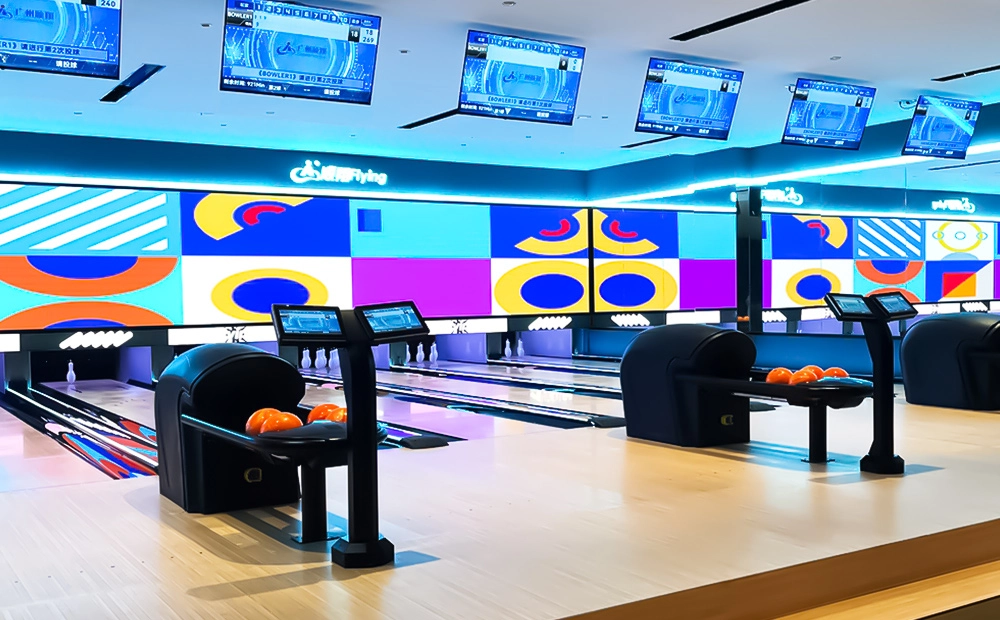
The traditional commercial bowling center places bowling at the center of the operation.
It may serve recreational open play, leagues, tournaments, corporate groups, schools, families, and organized events.
Standard bowling is the natural fit where the venue intends to support the traditional full-lane experience.
Main Revenue Drivers
Typical revenue sources can include open play, league fees, events, shoe rental where applicable, food and beverage, and recurring customer programs.
League activity can be useful because it may create repeat visits during periods when casual traffic is weaker.
Operational Priorities
Investors should focus on lane utilization, equipment reliability, maintenance access, repeat customer programming, parts support, staffing, and long-term operating requirements.
This model depends less on novelty and more on reliable operation and repeat use.
5. Resort, Hotel & Amenity Bowling
Bowling can also be used as an amenity rather than a standalone profit center.
Hotels, resorts, private clubs, residential developments, and corporate facilities may install bowling to improve the overall guest or member experience.
Medium or standard bowling may be considered depending on space, expected use, and the desired experience.
Revenue Is Often Indirect
For these projects, the lanes may support guest retention, longer on-property stays, private events, group bookings, membership value, and corporate recreation.
The return should therefore not always be measured only by lane revenue.
Investor Priorities
The main questions are:
- How often will the lanes be used?
- Who will operate them?
- Will they support events?
- How much space can the property dedicate?
- How easy will the equipment be to access and maintain?
- Is bowling expected to generate direct revenue or support another business objective?
Which Bowling Equipment Fits Different Business Models?
Equipment selection should follow the commercial role of the venue.
Duckpin Bowling
Duckpin can be relevant where space efficiency, casual social play, and hospitality integration matter.
It may suit bars, restaurants, social entertainment venues, and other concepts where bowling is one part of a wider customer experience.
Medium Bowling
Medium bowling can be considered for projects that need more layout flexibility than a full standard bowling installation.
It may fit boutique venues, hotels, social spaces, and other projects where the available room influences the configuration.
Standard Bowling
Standard bowling is generally the strongest fit for full commercial centers, league-focused venues, larger FECs, and projects where the traditional bowling experience is important.
The correct choice should be based on project-specific space, customer expectations, equipment requirements, and operating goals rather than on one format being universally superior.
Which Bowling Business Models Suit Small Businesses?
Small businesses should focus first on whether bowling can strengthen an existing operation.
A bar, restaurant, brewery, or compact social venue may benefit from a model where bowling supports F&B, events, and dwell time rather than acting as the only source of revenue.
Key questions include:
- Can the lanes fit the existing premises?
- Can current staff support the operation?
- Does the venue already have customer traffic?
- Can bowling strengthen another revenue stream?
- How much new construction and technical infrastructure is required?
The answer to those questions is usually more useful than comparing equipment price alone.
Which Models Suit Larger Investors?
Larger investors may have more flexibility to consider FECs, boutique social bowling venues, full commercial bowling centers, or hospitality developments with integrated bowling.
The decision should still match capital intensity with realistic demand and operating capability.
More floor space and more attractions can create more revenue opportunities, but they can also increase staffing, construction, maintenance, and working-capital requirements.
What Should Entrepreneurs Compare Before Investing?
Before choosing a model, investors should compare five core areas.
Target Customer
Is the main customer families, young adults, league players, corporate groups, hotel guests, bar customers, or mixed entertainment traffic?
Available Space
Evaluate the real building conditions, including usable room length, width, columns, ceiling conditions, approach and seating areas, equipment access, and customer circulation.
Revenue Strategy
Determine whether the venue depends mainly on lane revenue, food and beverage, events, multi-attraction spending, memberships, or indirect property value.
Operating Capability
Compare staffing, service, programming, maintenance, and management requirements.
Equipment Fit
Confirm that the bowling format and equipment match the intended use, available space, expected utilization, and long-term operating model.
What Should a Bowling Business Plan Include?
A bowling business plan should begin with assumptions that can be tested rather than a fixed ROI target.
| Planning Area | Questions to Answer |
|---|---|
| Target Market | Who will use the venue and why? |
| Business Model | Is bowling the main business or a supporting attraction? |
| Venue | How much usable space is available? |
| Bowling Format | Standard, Medium, Duckpin, or a combination? |
| Lane Count | How many lanes can the market and space support? |
| Revenue Streams | Lane play, F&B, events, leagues, packages, other attractions? |
| Staffing | What skills and coverage are required? |
| Equipment | What system fits the venue and business model? |
| Maintenance | How will routine service and spare parts be managed? |
| Capital Plan | Equipment, construction, fit-out, utilities, working capital? |
| Operating Assumptions | Utilization, pricing, staffing, rent, utilities, maintenance? |
This framework is more useful than copying a generic payback period from another venue because each project operates under different conditions.
How to Evaluate a Bowling Equipment Profit Model
A practical profit model should separate revenue, operating cost, and capital assumptions.
Revenue Side
Consider expected lane utilization, pricing structure, F&B sales, private events, league or repeat bookings, other attraction revenue, and seasonal demand.
Operating Cost Side
Consider rent, staffing, utilities, routine maintenance, replacement parts, cleaning, software or service requirements, insurance, and local operating costs.
Capital Side
Consider bowling equipment, freight, installation, construction, interior fit-out, electrical work, F&B build-out, permits where applicable, and working capital.
The strongest profit model is not necessarily the one with the lowest equipment price. It is the one where the venue, equipment, customer demand, and revenue structure work together without creating excessive operating complexity.
How Equipment Choice Affects the Business Model
Equipment affects operating economics, but one product or technology should not be treated as a guaranteed route to higher ROI.
Investors should evaluate equipment according to:
- mechanical complexity,
- energy requirements,
- maintenance needs,
- replacement-parts availability,
- staff training,
- downtime risk,
- compatibility with the intended format,
- technical documentation.
Equipment cost should also be viewed as one part of the total project rather than the entire investment decision.
Common Bowling Business Model Mistakes
Choosing a Model Before Understanding the Customer
A nightlife-oriented social bowling lounge and a suburban family entertainment center depend on different customer behavior.
The business model should follow local demand rather than a trend alone.
Selecting Equipment Based Only on Purchase Price
A lower initial equipment price does not automatically mean a lower total operating cost.
Serviceability, maintenance, parts availability, operating requirements, and compatibility also matter.
Signing a Property Before Checking Technical Feasibility
A venue can appear large enough but still create problems because of room proportions, columns, ceiling conditions, equipment access, utilities, or customer circulation.
Technical layout review should happen early.
Treating Bowling Revenue as the Only Revenue
In many modern concepts, the financial model depends on more than lane rental.
F&B, events, parties, repeat visits, and other attractions may all contribute.
Using Generic ROI Assumptions
A payback estimate from another market cannot automatically be applied to a new project.
Rent, wages, utilization, pricing, construction costs, taxes, customer behavior, and financing can all change the result.
How to Choose Between Bowling Business Models
1. Define the customer.
Who will actually use the venue?
2. Define the commercial role of bowling.
Is bowling the main business, a hospitality add-on, a social attraction, or an amenity?
3. Confirm the available space.
Make sure the building can support the intended concept.
4. Choose the bowling format.
Compare Standard, Medium, and Duckpin based on the project.
5. Build the revenue model.
Identify the income streams that matter most.
6. Estimate the operating model.
Include staffing, maintenance, F&B, utilities, marketing, and working capital.
7. Compare equipment configurations.
Equipment selection should come after the business model is clear.
Conclusion
Choosing a bowling business model is not simply a choice between different types of bowling equipment.
The stronger decision starts with customer demand, space, revenue strategy, operating capability, and the commercial role bowling will play within the venue.
Duckpin can fit hospitality-led concepts, medium bowling can support flexible social or amenity projects, and standard bowling remains important for full commercial and league-oriented centers. Family entertainment centers may combine formats depending on the wider attraction strategy.
For entrepreneurs and investors, the key is to evaluate the complete business model before committing to equipment.
A bowling project is more commercially coherent when the venue, customer, bowling format, revenue streams, equipment, and operating plan are designed together.
Planning a Bowling Business Project?
Explore Flying Bowling’s equipment solutions or discuss your venue concept, bowling format, equipment configuration, and project requirements with our team.
Explore Bowling Solutions Discuss Your Project


Flying Bowling
Flying Bowling
Flyingbowling
Flyingbowling