

Evaluating Bowling Alley Equipment Manufacturers: A Global B2B Sourcing Guide
When comparing bowling alley equipment manufacturers, buyers should evaluate each proposal against the venue's format and layout, itemized equipment scope, model-specific documentation, delivery responsibilities, and support available in the project region. Request evidence and written commitments rather than choosing on headline price or broad quality and certification claims alone.
Quick Answer: What Should Buyers Look for in a Bowling Equipment Manufacturer?
The short answer
Shortlist suppliers that can configure equipment for the intended venue and bowling format, explain which party manufactures and supplies each component, and provide documents tied to the specific models quoted. Compare their quality checks, shipping and installation responsibilities, warranty terms, and regional service arrangements in the contract. A clear scope helps expose gaps that a low total price can conceal.
The right bowling alley equipment package depends on more than the lane surface: pinsetting, ball return, scoring, displays, and other included items must work within the agreed configuration and project responsibilities.
Evidence to request before comparing proposals
Ask for an itemized equipment list, configuration drawings, relevant technical documents, quality inspection procedures, and written delivery and support terms. If a supplier describes a complete project package, check what "complete" includes: equipment supply is not automatically the same as export, customs clearance, local construction, permitting, on-site installation, commissioning, or staff training. Buyers comparing end-to-end turnkey bowling alley equipment packages should check these boundaries line by line.
What Does "Bowling Alley Equipment Manufacturer" Mean?
Manufacturer, distributor, and project contractor roles
"Manufacturer" may refer to the company making equipment, but a buyer may instead be dealing with a distributor, an exporter, a project contractor, or a supplier combining several roles. A distributor can sell equipment made by another company; a project contractor may coordinate equipment procurement alongside other work. None of these roles, by itself, establishes who is accountable for the complete project.
Ask each supplier to identify the legal contracting party and the origin of each major component. Then record who handles configuration, product documentation, export packing, transport coordination, technical guidance, commissioning, and after-sales support. If a subcontractor or local partner is involved, clarify who remains responsible when a deliverable is incomplete.
Equipment package versus project scope
An equipment package describes the products included in the quotation. Project scope describes the broader work and responsibilities around those products. The two may overlap, but buyers should not assume that a package includes site preparation, building work, local approvals, customs, or installation crews unless the contract says so.
Why role clarity matters in procurement
When roles are unclear, a site issue can fall between the equipment supplier and the local contractor. Define handoffs early, especially for site dimensions, utility requirements, delivery access, and readiness for installation. Buyers assessing commercial bowling equipment technical specifications should ensure the proposed layout and technical assumptions are consistent with the venue information supplied.
How to Match Equipment and Supplier Scope to the Venue
Standard ten-pin bowling centers
A dedicated bowling center typically needs a standard ten-pin configuration, with the lane assemblies, pinsetter, ball return, scoring, displays, and accessories stated clearly in the proposal. Confirm whether the intended use includes competitive play and what model-specific approvals or other requirements apply. Do not assume that a document for one component covers the full equipment package.
Family entertainment centers
Family entertainment centers (FECs) may prioritize a combination of lane formats, interactive features, throughput, and fit with other attractions. Decide whether the project calls for standard ten-pin lanes, a compact format, or both before asking suppliers to price options. A format change can alter the customer experience and the equipment configuration, so the alternatives should be quoted as distinct scopes.
Bars, hotels, and other compact social venues
Medium bowling and duckpin bowling are possible formats for venues where the room footprint and social setting differ from a dedicated bowling center. Compact systems are designed for space-constrained environments: medium bowling lanes are customizable between 9.6 m and 18 m in length, while duckpin bowling lanes are typically 9.13 m long. These are product specifications, not universal room-planning dimensions.
Equipment footprint is not total room size. The layout also needs to account for approach space, seating, the mechanics area, clearances, and maintenance access. Request a drawing review using actual site dimensions before treating any quoted footprint as a fit. Operating routines matter too; a bowling alley equipment maintenance checklist can help buyers discuss access and routine service needs during planning.
Distributors and project contractors
For distributors and contractors, supplier fit includes repeatable product documentation, clarity on the party responsible for technical questions, and a workable route for warranty and service requests. Confirm what information can be shared with the end customer and who will respond if a project requires configuration changes or replacement parts.
What Should Buyers Verify in Equipment Specifications and Documentation?
Lane and system configuration
Require an itemized configuration that identifies the lane format, lane assemblies, lane count, and included accessories. If lighting or interactive elements are proposed, make them explicit rather than relying on a general package description. Any drawings should correspond to the actual quotation and site plan, not just a reference layout.
Pinsetter and ball return
Ask for the make and exact model of the pinsetter and ball return, plus applicable operating and maintenance information. Confirm which equipment is included for each lane and whether the proposed systems are intended for the chosen bowling format. A supplier should be able to distinguish model-specific claims from features or documents that apply to other products.
Scoring and displays
Specify the scoring system, player-facing controls, overhead displays, and any included lighting or media features. Request confirmation of the proposed configuration and how the equipment will be coordinated with the rest of the package. If integration or compatibility is important to the venue, ask for the relevant details in writing rather than inferring them from product names.
Model-specific certification and compliance documents
Ask for current documents that name the exact product or model, identify the issuing organization, and state the scope of the approval or certification. Certification claims must be matched to the specific equipment model. For example, string pinsetter models may carry third-party approvals that do not apply to duckpin systems, scoring equipment, or entire bowling centers. Request any other compliance documents that apply to the destination market and the quoted components. A broad statement that equipment is "certified" is not a substitute for the underlying records.
Layout and site information
Provide CAD drawings or floor plans that show available length, width, ceiling clearances, columns, entrances, and exits. Ask the supplier to identify assumptions and constraints in its layout response. This helps uncover conflicts before equipment is ordered, when changing the configuration can disrupt procurement and site work.
How to Compare Bowling Equipment Suppliers
Product and format fit
Compare proposals against the same venue brief. Check whether each supplier has quoted the requested format and lane count, and whether the equipment configuration supports the intended operating model. An alternative format may be worth considering, but it should not be substituted without your approval.
Quality assurance evidence
Ask what inspection steps are performed and what records are available for the equipment being quoted. Useful evidence may include inspection procedures, component identification, and the checks performed before packing. Focus on the supplier's process and the records it can provide for the actual order, rather than relying on unsupported quality adjectives.
Engineering and customization process
Find out how the supplier reviews site plans, resolves layout questions, and documents configuration changes. Confirm who approves the final drawings and what information is needed before the configuration is fixed. A documented review process reduces the chance that a quotation is based on incomplete room details.
Export packing and delivery coordination
For cross-border projects, clarify the packing method, shipment coordination, delivery point, and the party responsible for transport arrangements and customs-related work. These items affect what the buyer must arrange locally. Confirm the proposed delivery responsibilities and assumptions in the quotation rather than inferring them from a supplier's export experience.
Installation, commissioning, and training scope
Separate installation guidance from on-site installation. Also distinguish commissioning—the checks and setup needed to put the equipment into operation—from staff training. Confirm which of these are included, whether they are remote or on site, and what must be ready at the venue before they can occur. Local construction and permitting should be assigned separately unless explicitly included by contract.
Warranty and after-sales support
Compare warranty duration, covered products, exclusions, claim procedures, and the start date. Ask how technical issues are reported, what support is available in the buyer's region, and whether parts or local service are addressed in the agreement. A verbal assurance is difficult to enforce if the written terms differ.
Buyer Requirements and RFQ Checklist
Project and venue details
A request for quotation (RFQ) should begin with enough information for suppliers to assess fit:
- Project location and venue type, such as a bowling center, FEC, bar, or hotel.
- Preferred bowling format and planned lane count.
- Available CAD drawings or floor plans, including dimensions and ceiling clearances.
- Column locations and entrance and exit positions.
- Expected operating context and any known site constraints.
Technical and layout information
List the equipment requested, such as lane assemblies, pinsetter, ball return, scoring, displays, lighting, and accessories. Identify which elements are mandatory and which are optional. Ask suppliers to show the proposed configuration on a project drawing and flag any missing inputs they need to complete the review.
Commercial scope and exclusions
Ask suppliers to separate equipment, packing, shipping coordination, installation guidance, commissioning, and training in their proposals. Request a clear list of exclusions, including local construction, permits, customs, and on-site labor where these are not included. This makes quotations easier to compare and clarifies which costs and tasks remain with the buyer or local contractor.
Documentation and acceptance requirements
State which technical documents, model-specific certificates, inspection records, operating information, and warranty terms are required before order approval. Define how the delivered equipment will be checked against the agreed scope, and identify who signs off on configuration changes. This converts general expectations into deliverables that can be tracked.
Common Supplier Selection Mistakes and Procurement Risks
Comparing headline prices without matching scope
A lower quote may omit scoring displays, accessories, shipping coordination, commissioning, or training. Compare itemized proposals on the same equipment and service basis; otherwise the apparent saving may reappear as a later purchase or an unassigned project task.
Accepting broad certification claims
Ask to see the certificate or listing and confirm the model, scope, and status. If a supplier uses one model's approval to describe a broader product line, request clarification before treating that claim as relevant to your order.
Treating equipment dimensions as total room dimensions
A compact equipment footprint does not include every space needed for play, seating, mechanics, circulation, and service access. Have the supplier review the site plan and identify required clearances before approving the layout.
Leaving installation and local responsibilities unclear
Unassigned customs, permitting, civil works, delivery access, or installation tasks can delay readiness even when equipment is supplied as quoted. Put a named party beside each responsibility, including any local contractor or partner.
Relying on verbal service or warranty promises
Record warranty coverage, support channels, response process, and any regional service arrangement in the contract or an attached service document. If a promise is important to the project, it should be verifiable after the sales discussion ends.
How to Choose and Verify a Bowling Equipment Supplier
A staged supplier decision process
- Set the project brief. Define venue type, bowling format, lane count, room constraints, and requested scope.
- Shortlist for fit. Remove suppliers that cannot address the required format or provide a clear response to the site information.
- Verify the evidence. Review model-specific documents, quality procedures, project references, and delivery responsibilities.
- Compare final proposals. Check scope, exclusions, warranty, and support against the same RFQ before approving the contract.
Questions to ask before shortlisting
Ask whether the supplier manufactures the quoted equipment or sources it from another party; which exact models are proposed; what records support quality and compliance statements; and what project work is included. For references, request permission to verify comparable project scope and the supplier's role directly. Do not infer that a reference proves results for a different format or project.
What to verify in the final proposal
Before signing, confirm that the final equipment list and drawings match the negotiated configuration. Check that delivery, installation guidance, commissioning, training, exclusions, warranty, and support responsibilities are documented. Resolve any discrepancy between the quotation, technical documents, and contract in writing.
Evaluating a supplier's operational capability
When evaluating a supplier, assess how the company handles project intake, site planning, equipment configuration, quality control, and delivery coordination. For example, suppliers serving multiple markets typically maintain documented processes for reviewing CAD floor plans, identifying site constraints, and coordinating export packing and shipping. A supplier founded in 2006 with independent equipment development since 2015 may have established these workflows, but the quality and applicability of those processes to your specific project should be confirmed through documentation and references rather than assumed from company age or scale.
Discuss Your Project Requirements
A useful supplier evaluation starts with an accurate site brief and clear project scope. Share the following information with potential suppliers to receive comparable, detailed proposals:
- Project location and venue type (bowling center, FEC, bar, hotel, etc.)
- CAD drawings or floor plans with available dimensions
- Ceiling height clearances, column locations, and entrance/exit positions
- Preferred bowling format (standard ten-pin, medium, or duckpin)
- Planned lane count
- Expectations for delivery, installation, commissioning, training, warranty, and regional support
Suppliers can use these details to review the proposed configuration, identify missing information, and provide evidence-based proposals that can be compared fairly.
Frequently Asked Questions
References
More Articles

Let’s Build a center Together
Partner With a Trusted Bowling Alley Design, One-Stop Solution Manufacturer.
Flying has successfully built ideal bowling alleys for more than 3,000 customers.

Technical Expert

You may also like our products
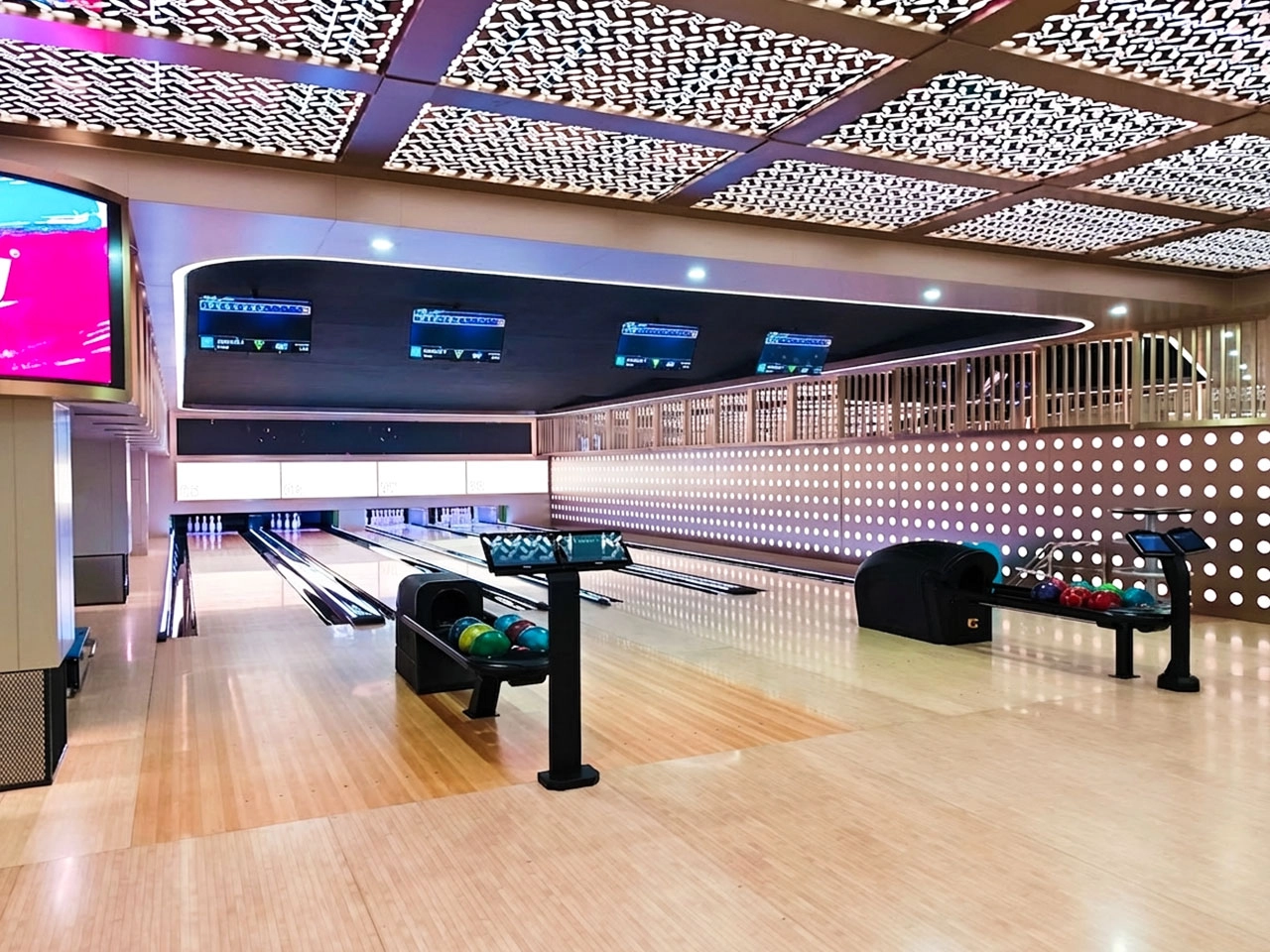
Build a commercial bowling venue with Flying’s complete string pinsetter bowling alley equipment package. The system includes the AEROPIN™ USBC-certified string pinsetter, customizable lanes, automatic scoring, ball return, lane lighting, pins, control hardware, and overseas installation support.
Designed for commercial bowling centers, family entertainment venues, hotels, resorts, bars, and premium private projects, this turnkey bowling system helps operators reduce sourcing complexity and prepare for reliable long-term operation.
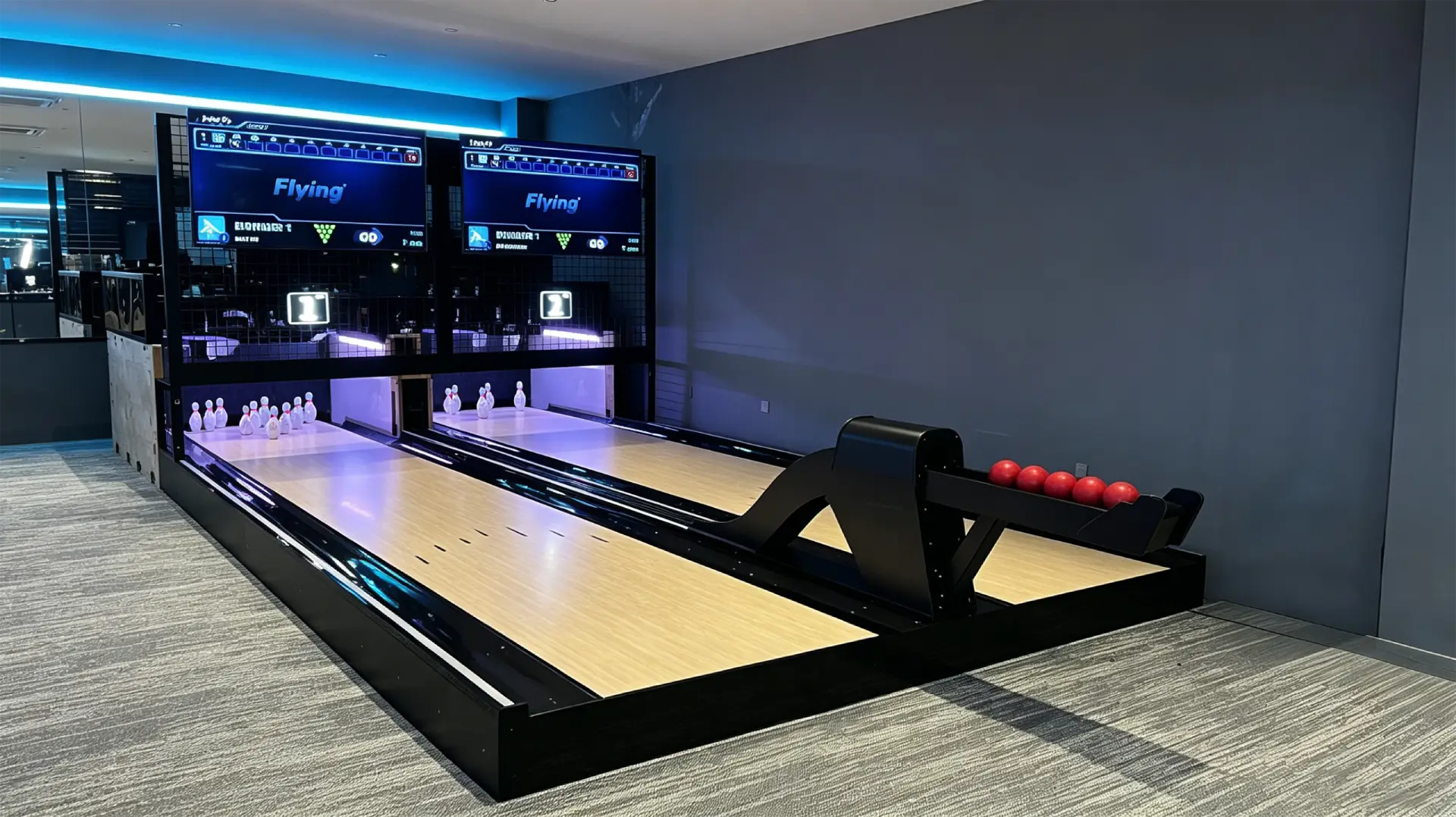
Flying Smart Duckpin Bowling is a compact duckpin bowling equipment system designed for bars, family entertainment centers, hotels, resorts, cinemas, boutique bowling alleys, and social entertainment venues. With a standard 9.13m duckpin bowling lane, 1.25kg lightweight balls, automatic scoring, ball return, LED lighting, and a smart string pinsetter, it creates a fast-paced and easy-to-play bowling experience in a smaller footprint than traditional bowling.
The system is available as a turnkey duckpin bowling package, including lane equipment, a string pinsetter system, scoring hardware, control software, global shipping, installation guidance, and technical support.
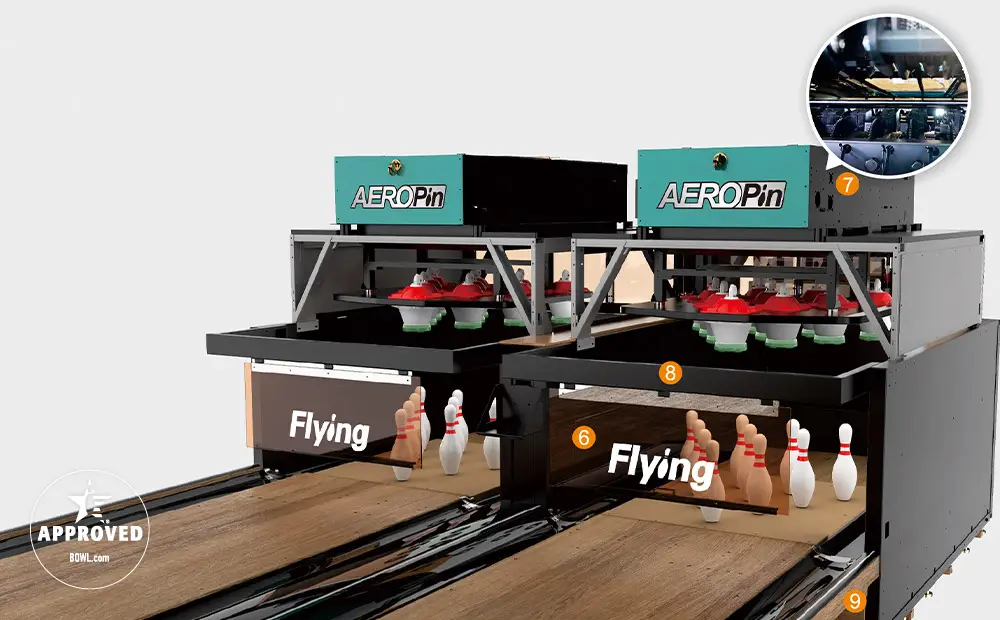
AEROPIN is Flying Bowling’s USBC-certified string pinsetter system for modern commercial bowling centers. Designed for fast pin setting, smooth ball return, low maintenance, and stable daily operation, it helps venue operators build league-ready and entertainment-focused bowling projects with confidence.
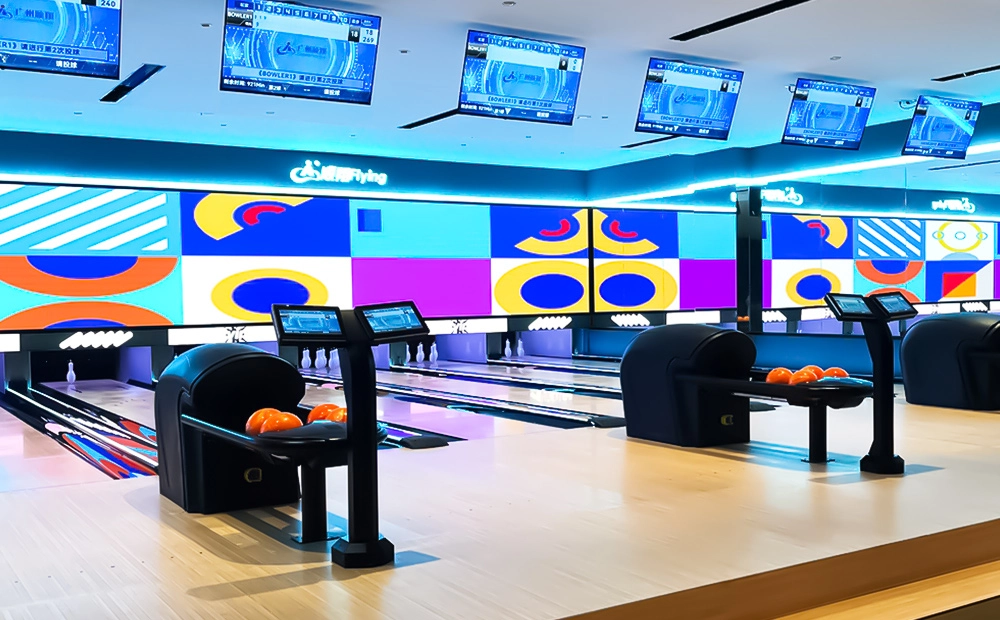
Flying Social Medium Bowling is a compact medium bowling equipment system designed for bars, cafes, family entertainment centers, community leisure venues, hotels, resorts, and small indoor entertainment spaces. With customizable lane lengths from 9.6m to 18m, small balls, lighter pins, string pinsetter technology, ball return, and automatic scoring, it creates an easy-to-play social bowling experience for players of different ages and skill levels.
Compared with full-size standard bowling, medium bowling requires less space and offers a more casual, interactive format. It is a practical choice for venues that want to add a bowling attraction without building a full commercial bowling alley.
Contact Flying
Start Your Custom Bowling Alley Project
If you contact us now for more details, we can provide you with a custom bowling alley service. Our service team will get back to you within 24 hours normally!
© 2026 Flying BOWLING. Designed by gooeyun.
FOLLOW US:

Flying Bowling
Flying Bowling
Flyingbowling
Flyingbowling