

Initial Inventory Costs for Bowling House Balls, Rental Shoes, and Spare Parts
There is no defensible universal figure for a bowling alley’s opening stock of house balls, rental shoes, and spare parts. The budget is built from the venue’s bowling format and planned use, the assortment and quantities required, compatibility with the installed equipment, and the agreed packaging and shipping scope. An itemized, project-specific quotation is the reliable way to establish the cost.
Quick Answer
Why there is no universal opening inventory price
A lane count alone does not determine how many balls, shoes, or mechanical spares a venue should purchase. A busy family entertainment center, a hotel with occasional guest use, and a bar offering a compact bowling format can have different operating patterns and guest needs—even if their lane counts are similar. The supplied information does not establish a universal lane-to-accessory ratio, standard stock count, or fixed price.


Inventory also combines two different purchasing problems. House balls and rental shoes are guest-use items that need an appropriate assortment. Mechanical spares are equipment-specific: the correct part depends on the installed system, its configuration, and the part identification. Treating them as one generic “opening stock” allowance can leave a venue with unusable parts or too few guest items.
The project details needed to estimate the inventory budget
Prepare the venue type and location, lane count and format, expected operating pattern, desired ball and shoe assortment, equipment model or configuration, spare-parts scope, and delivery destination. Ask suppliers to price each category separately and state assumptions, exclusions, packaging, and freight. For the broader capital and startup picture, place this inventory allowance alongside the other items in a bowling alley setup cost assessment.
What Determines the Cost of Initial Bowling Inventory?
House-ball assortment and intended users
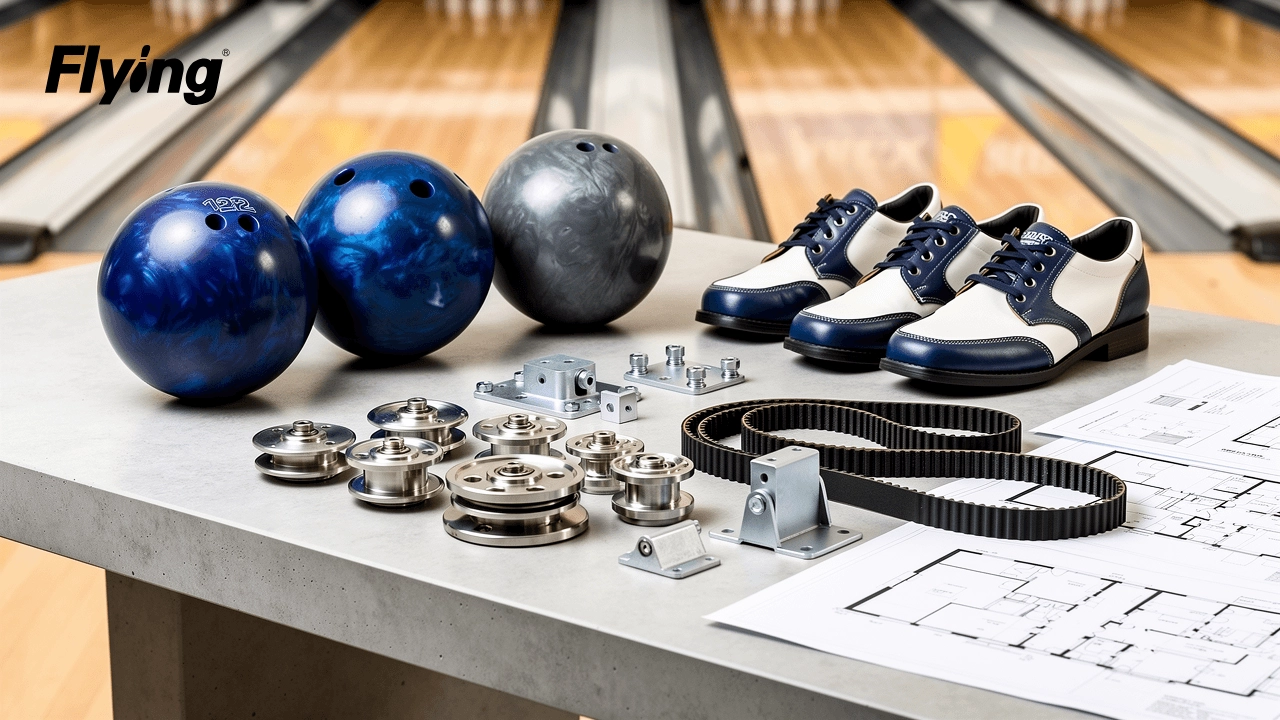
House-ball requirements depend on the bowling format and the guests expected to use it. Buyers should specify the intended ball weights or sizes and request the supplier’s recommendation for quantities by category. Do not assume that a standard ten-pin assortment applies to every installation: compact formats can use different balls. For example, the supplied product information for Flying Social Medium Bowling specifies 4-pound and 6-pound balls, while Flying Smart Duckpin Bowling uses a 1.25 kg handheld ball. Those are product-specific examples, not universal inventory rules.
Rental-shoe size coverage and venue operations
The shoe order should identify the size range and quantity requested, along with any sizing convention needed for the market where the venue operates. A broader range or multiple sizing systems changes the assortment being quoted; the right mix should be based on the expected guest profile and supplier guidance, not a generic lane ratio. Buyers should also state whether they expect a replacement or replenishment policy to be included in the quotation. An opening purchase and later replacement orders are separate budget decisions.
Spare-parts compatibility with installed equipment
Mechanical spares are not interchangeable by default. A part that appears similar may not fit a different model or equipment configuration. Ask for a model-specific recommendation with descriptions, part identifiers where available, and written compatibility confirmation. There is no verified universal “mandatory spare-parts list” for all bowling systems; the supplier should tie the recommended list to the selected equipment and the service requirements agreed for the project.
Ordering, packaging, and shipping scope
Confirm whether the quote covers goods only or also packing, freight, shipping coordination, or other services. Packaging requirements and the named destination matter because a price that excludes those items is not comparable with a delivered or specially packed offer. Keep the accessory and spare-parts budget distinct from lane equipment, venue construction, installation, and other startup costs. A broader commercial bowling alley startup budget checklist can help organize those separate budget lines.
Key Cost Factors to Confirm Before Building the Inventory
Planned lane count and bowling format
Provide the planned lane count and state whether the project is standard bowling, medium bowling, or duckpin bowling. Format matters because ball requirements and mechanical configurations differ. The lane count is a planning input—not a sufficient basis for calculating stock on its own.
Expected guest profile and operating pattern
Describe the venue type, likely guest mix, and how the attraction is expected to operate. A hospitality venue, a family entertainment center, and a dedicated bowling center may have different patterns of guest use. Suppliers can use that context to discuss assortment and replenishment assumptions, but buyers should request the reasoning rather than accept an unexplained quantity recommendation.
Ball weights, shoe sizes, and existing equipment
List the ball weights or sizes and shoe-size coverage you want priced. For mechanical spares, provide the equipment make, model, configuration, and part identifiers or photographs where available. If equipment is not yet selected, ask the supplier to identify which spare recommendations depend on the final configuration instead of treating them as confirmed.
Order scope, destination, and packaging
Specify which items are included in the order and what is excluded. Give the delivery destination and state the packaging requested. When comparing project budgets, keep other venue costs separate; for example, the requirements behind bowling alley acoustic soundproofing and vibration isolation cost are not part of an accessory inventory quotation.
Cost Impact Table: How Inventory Choices Affect the Quote
The categories below describe quote sensitivity, not market prices or a prediction of the final total. “Low” means the scope is relatively defined; “Medium” indicates meaningful assortment or quantity choices; “High” indicates several inputs require confirmation; “Very High” indicates the quote could remain difficult to compare until key information is resolved. Actual pricing must come from a supplier quotation.
| Inventory category | Cost drivers | Buyer inputs to confirm | Quote sensitivity and risk |
|---|---|---|---|
| House balls | Format, requested weights or sizes, assortment, and quantities | Guest profile, intended format, and supplier-confirmed quantities | Medium to High when the assortment or quantity is not defined; a generic mix may not suit the format. |
| Rental shoes | Size coverage, quantities, sizing convention, and replacement scope | Required size range, quantities by size if known, and whether replacement stock is included | Medium to High when size coverage or replenishment assumptions are open. |
| Mechanical spare parts | Equipment model, configuration, part identification, and documentation | Equipment details and part numbers or images where available | Low to High: clearer identification narrows the scope; unknown models or parts can leave compatibility unresolved. |
| Packaging and shipping | Destination, requested packaging, freight scope, and quoted services | Delivery location and written inclusions or exclusions | Low to Very High depending on how clearly packing and delivery responsibilities are specified. |
Cost Breakdown by Inventory Component
House balls and guest-use requirements
Request the ball format, weight or size, quantity, and unit price as separate line items. If the supplier recommends a mix, ask them to show the quantities by category and explain which venue assumptions informed the recommendation. This lets you adjust the assortment without having to reinterpret a single bundled figure.
Rental shoes and size assortment
Ask for a size-by-size or size-range breakdown, quantities, sizing convention, and unit pricing. Confirm whether the offer includes only opening stock or also a separately identified replenishment allowance. If the supplier cannot recommend a final size mix without more information, record that as an open assumption rather than treating an unverified mix as a firm requirement.
Critical mechanical spares
Request a parts list tied to the selected equipment configuration. Each line should identify the part, quantity, relevant model or system, price, and any available compatibility documentation. Ask whether recommendations are based on the exact equipment being quoted or on a provisional configuration. A generic spares allowance is not a substitute for confirming fit.
Packing, freight, and other quoted line items
Separate the cost of goods from packaging, freight, and any other quoted service. Confirm the shipping destination, the packaging scope, and who is responsible for each agreed delivery step. A low item price can obscure a scope difference if another quotation includes packing or shipping coordination and the first does not.
How to Get an Accurate Quote
Quote information checklist
Include the following information in the request for quotation (RFQ). Mark items that are not yet known as open questions so suppliers can identify what prevents a firm recommendation.
- Project location and venue type, such as a bowling center, family entertainment center, bar, or hotel.
- Preferred bowling format and planned lane count.
- CAD or floor plans, available dimensions, ceiling height, columns, entrances, and other relevant layout constraints.
- Expected operating pattern and guest profile.
- Desired ball format and weight or size assortment, plus rental-shoe size coverage and quantities if already defined.
- Equipment make, model, configuration, and available part numbers or photographs for existing systems.
- Requested spare-parts scope and any service requirements the supplier should consider.
- Packaging expectations, delivery destination, and required quotation inclusions and exclusions.
- For custom or replacement components only: application, drawings, material, surface finish, quantity, and required tolerances.
Drawings and equipment details
Drawings are not normally needed to price standard guest-use accessories. They become relevant when a buyer is asking about a custom or replacement mechanical component. In that case, incomplete drawings or unspecified material, finish, and tolerance requirements can leave the supplier unable to confirm scope or fit. Provide the current drawing revision and ask the supplier to flag any missing dimensions or unclear requirements before approval.
How to request comparable itemized offers
Ask every supplier to return the same basic fields: item description, specification, quantity, unit price, extended price, compatibility confirmation for mechanical parts, packaging and freight, exclusions, assumptions, and quote validity. Request that suppliers identify any information still needed. Compare like with like; if one offer uses a different shoe-size range or a different spares list, resolve the difference before comparing totals.
Common Quoting Mistakes That Increase Procurement Risk
Ordering without confirming format or equipment model
House-ball requirements can differ by bowling format, while mechanical spares depend on equipment configuration. Naming only “bowling balls” or “pinsetter spares” leaves a supplier to make assumptions. Confirm the format and equipment identity before approving the order.
Using assumed accessory ratios
A generic lane-to-ball or lane-to-shoe ratio can make an initial estimate look precise without reflecting actual guest demand or operating patterns. Use lane count as context, then validate quantities and assortment with venue requirements and supplier recommendations. Record how the final quantities were decided.
Requesting a lump-sum quote without itemization
A single total conceals differences in specifications, quantities, and exclusions. It also makes later adjustments difficult: buyers cannot readily see whether a revised shoe mix or spare-parts list changed the price. Require separate itemized lines before using the offer for budget approval.
Omitting packaging, freight, or scope clarifications
Unspecified packaging or delivery terms create budget gaps and complicate supplier comparisons. Incomplete equipment details, missing size ranges, unclear part names, and outdated or incomplete drawings can create similar uncertainty. Ask suppliers to put assumptions and exclusions in writing rather than treating silence as inclusion.
Cost Reduction Strategies Without Compromising Operational Readiness
Right-size the assortment using venue requirements
Start from the guest profile and operating plan, then ask the supplier to explain how those inputs translate into a recommended ball and shoe mix. Remove quantities that are unsupported by the planned use, but do not cut an entire size or weight category without considering who the venue expects to serve.
Consolidate compatible procurement items
Ask whether compatible accessories and confirmed spares can be included in one quotation or shipment. Consolidation can simplify scope and logistics, but only compare the result after checking item descriptions, quantities, and delivery terms. Combining orders does not make mechanically incompatible parts suitable.
Use engineering review for custom components
For a custom or replacement part, review the drawing and application with the supplier before ordering. Confirm material, surface finish, critical dimensions, and tolerances that affect fit or function. A design-for-manufacture (DFM) review can identify an unclear or unnecessarily demanding requirement before it is priced or made. These checks apply to engineered components, not ordinary house balls or shoes.
Confirm packaging and shipping requirements early
State the destination and packaging needs in the first RFQ. That gives suppliers a consistent basis for quoting and helps reveal whether packing and freight are included. Compare the total stated scope—not just the unit price—and avoid assuming that shipping coordination, customs-related charges, or other services are covered unless the supplier expressly lists them.
How to Choose the Right Supplier for Cost Optimization
Equipment and part compatibility
Ask how the supplier checks spare parts against the equipment model and configuration. Request written confirmation of compatibility and find out what part documentation is supplied. Agree how substitutions will be identified and approved; a substitute should not be accepted solely because it has a similar description or appearance.
Quote transparency and technical review
A useful quotation makes it possible to trace the total back to specifications, quantities, unit prices, exclusions, and assumptions. For unclear requirements or replacement-component drawings, ask whether the supplier will review the information before production or ordering and identify gaps that need resolution.
Packaging, shipping, and responsibility boundaries
Confirm what the supplier is responsible for and what remains outside the quoted scope. Flying Bowling Co., Ltd. describes project planning that can consider venue type, location, lane count, format, and floor plans, with packing and shipping coordination defined within the project scope. For any supplier, verify the specific deliverables and responsibilities in the quotation or contract rather than relying on a general service description.
Questions to ask before approval
- Are the ball and shoe specifications, quantities, and pricing itemized?
- Which equipment model and configuration support the spare-parts recommendation?
- What compatibility information and part documentation will be supplied?
- Are packaging and freight included, and which responsibilities are excluded?
- Are any assumptions, substitutions, or unresolved technical details still open?
Conclusion and Next Steps
The sound basis for an opening inventory budget is a defined assortment and a verified equipment configuration—not a generic lane ratio or an unsupported price benchmark. Specify guest-use needs separately from mechanical spares, require itemized pricing, and resolve compatibility and delivery scope before approval.
When clients discuss a venue project with us, location, available plans and dimensions, preferred bowling format, and lane count help establish the wider project context for the inventory discussion. Sharing those details alongside the desired ball and shoe assortment and equipment information makes it easier to identify what can be quoted and what still needs confirmation.
Discuss Your Project Requirements
Share your project location, CAD or floor plans, available dimensions, preferred bowling format, planned lane count, and any known ball, shoe, or spare-parts requirements. We can review the information and identify the details needed for an itemized, project-specific quotation.
Frequently Asked Questions
More Articles

Let’s Build a center Together
Partner With a Trusted Bowling Alley Design, One-Stop Solution Manufacturer.
Flying has successfully built ideal bowling alleys for more than 3,000 customers.

Technical Expert

You may also like our products
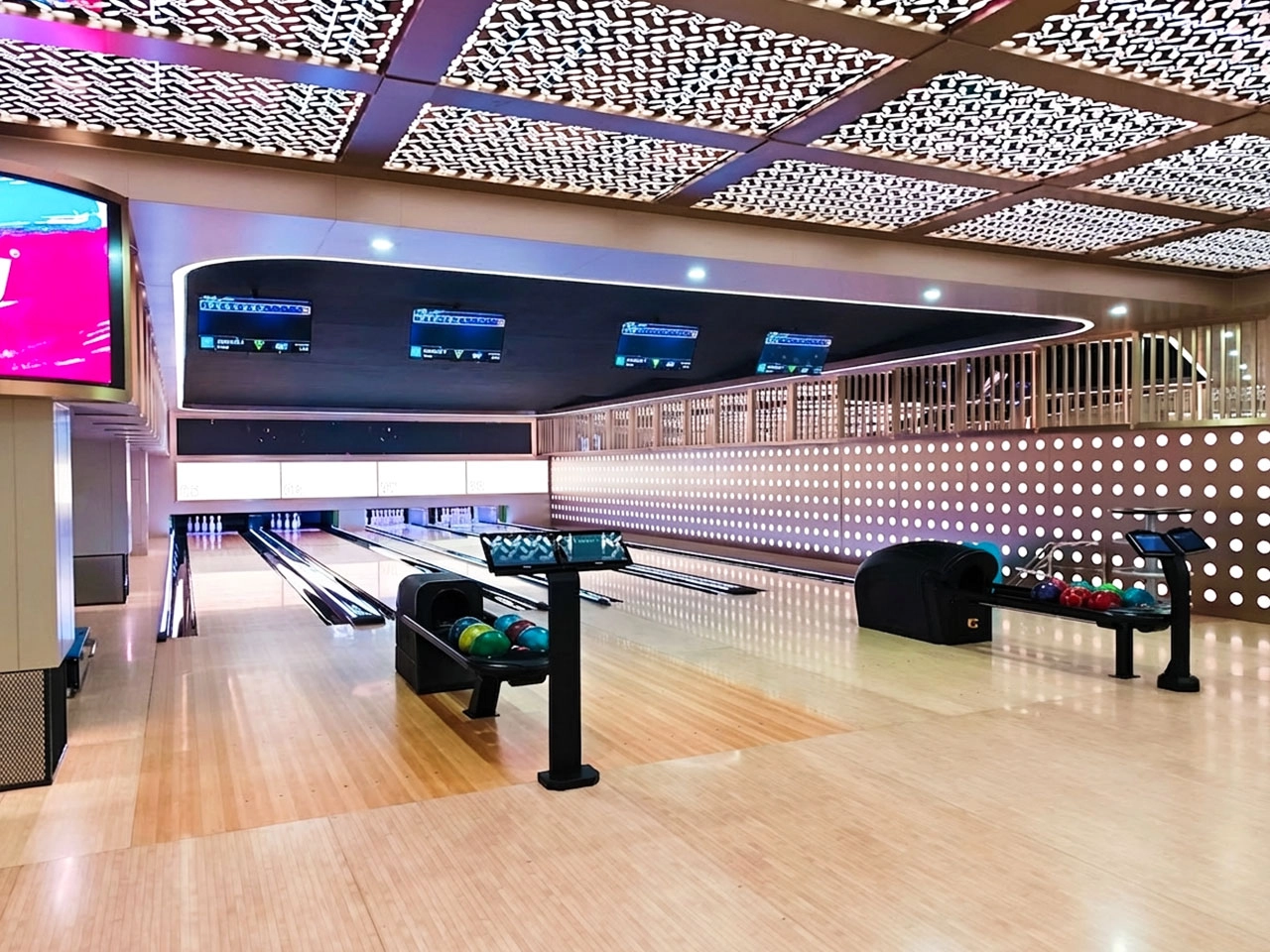
Build a commercial bowling venue with Flying’s complete string pinsetter bowling alley equipment package. The system includes the AEROPIN™ USBC-certified string pinsetter, customizable lanes, automatic scoring, ball return, lane lighting, pins, control hardware, and overseas installation support.
Designed for commercial bowling centers, family entertainment venues, hotels, resorts, bars, and premium private projects, this turnkey bowling system helps operators reduce sourcing complexity and prepare for reliable long-term operation.
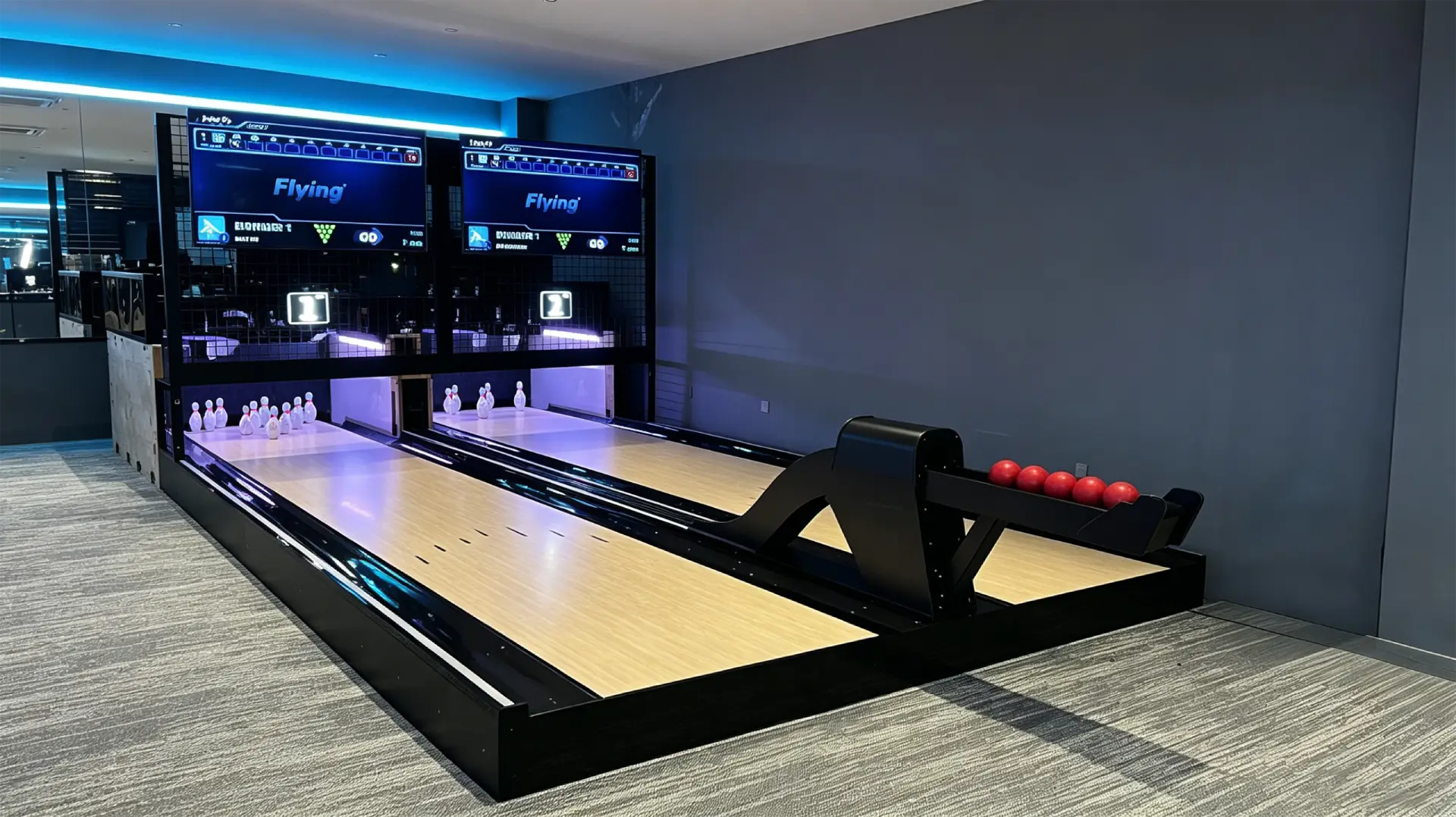
Flying Smart Duckpin Bowling is a compact duckpin bowling equipment system designed for bars, family entertainment centers, hotels, resorts, cinemas, boutique bowling alleys, and social entertainment venues. With a standard 9.13m duckpin bowling lane, 1.25kg lightweight balls, automatic scoring, ball return, LED lighting, and a smart string pinsetter, it creates a fast-paced and easy-to-play bowling experience in a smaller footprint than traditional bowling.
The system is available as a turnkey duckpin bowling package, including lane equipment, a string pinsetter system, scoring hardware, control software, global shipping, installation guidance, and technical support.
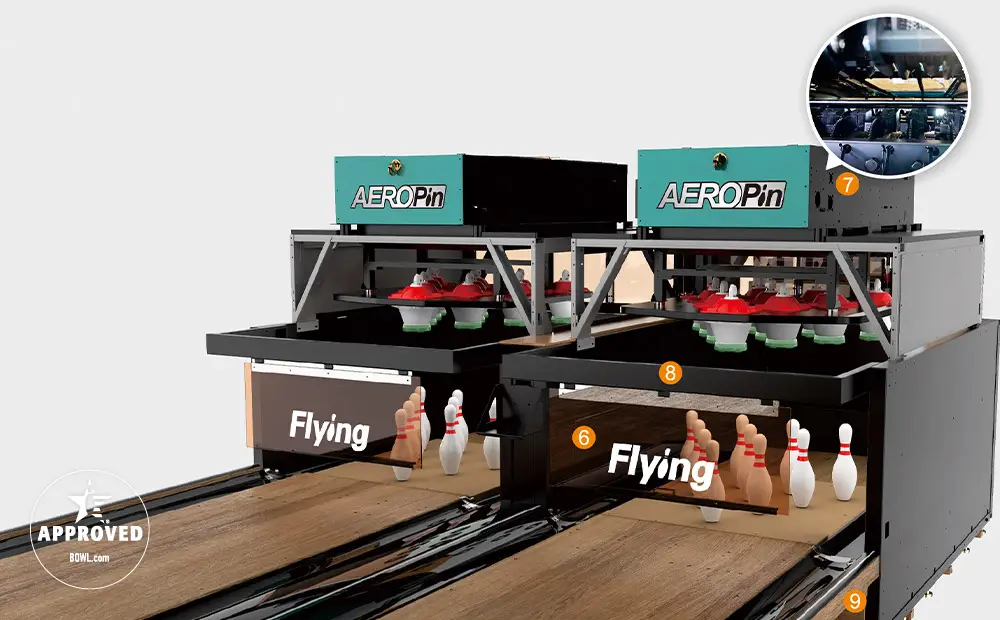
AEROPIN is Flying Bowling’s USBC-certified string pinsetter system for modern commercial bowling centers. Designed for fast pin setting, smooth ball return, low maintenance, and stable daily operation, it helps venue operators build league-ready and entertainment-focused bowling projects with confidence.
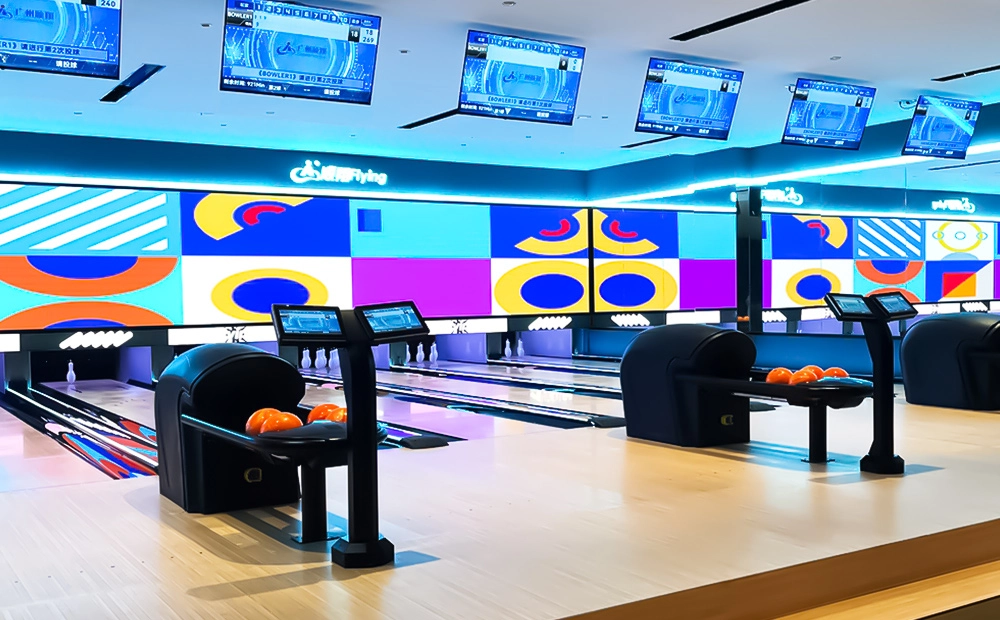
Flying Social Medium Bowling is a compact medium bowling equipment system designed for bars, cafes, family entertainment centers, community leisure venues, hotels, resorts, and small indoor entertainment spaces. With customizable lane lengths from 9.6m to 18m, small balls, lighter pins, string pinsetter technology, ball return, and automatic scoring, it creates an easy-to-play social bowling experience for players of different ages and skill levels.
Compared with full-size standard bowling, medium bowling requires less space and offers a more casual, interactive format. It is a practical choice for venues that want to add a bowling attraction without building a full commercial bowling alley.
Contact Flying
Start Your Custom Bowling Alley Project
If you contact us now for more details, we can provide you with a custom bowling alley service. Our service team will get back to you within 24 hours normally!
© 2026 Flying BOWLING. Designed by gooeyun.
FOLLOW US:

Flying Bowling
Flying Bowling
Flyingbowling
Flyingbowling
Flyingbowling