

Interactive Bowling Lane Projection and LED Lighting Systems: Cost and ROI Factors
Interactive bowling lane projection and lighting systems cannot be priced reliably from general information. The budget depends on the equipment and content selected, the number of lanes covered, venue and mounting conditions, controls and integration, and who is responsible for installation, commissioning, and delivery. Buyers who define the guest experience and the site conditions first can request quotations that are comparable.
Quick Answer: What Does an Interactive Bowling Projection and Lighting System Cost?
No universal price can be supported for this system type. A preliminary budget can show whether a concept is feasible, but it is not a supplier quotation. Before comparing totals, confirm each proposal's scope: projection equipment, visual content, LED fixtures, controls, mounts, cabling, integration, installation, commissioning, packing, shipping, and any local site work. Proposals that differ in any of these areas are not equivalent, even when the lane count is the same.
Why a single price rarely fits every venue
Two venues with the same number of lanes can require very different work. Ceiling height, column positions, sightlines, access routes, existing electrical and low-voltage provisions, and whether the venue is new or operating all change the design and the responsibilities. A system that adds projection to a few lanes is also not comparable with a coordinated package covering the whole bowling area. The wider venue budget is covered in the bowling alley setup cost guide, and projection and lighting should be budgeted as a defined scope within that overall plan.
What to ask for in an itemized quotation
Request quantities and descriptions for each supplied component. Separate drawing review, software or content, installation, commissioning, training, warranty, support, packing, and shipping. Ask the supplier to list exclusions and to name the party responsible for electrical work, permits, customs, structural work, and other local tasks. An itemized quotation makes a preliminary budget more useful and makes missing scope visible before approval.
What Are Interactive Projection and Synchronized Lane Lighting Systems?
These systems combine visual effects around the bowling lanes. Three elements are usually specified separately: projection hardware that displays images or animation, LED fixtures that light lanes or surrounding areas, and the controls that trigger and coordinate them. The elements can be purchased independently or designed as one guest-facing experience. Exact functions and compatibility depend on the equipment offered and must be confirmed in writing with the supplier.
Projection and visual effects
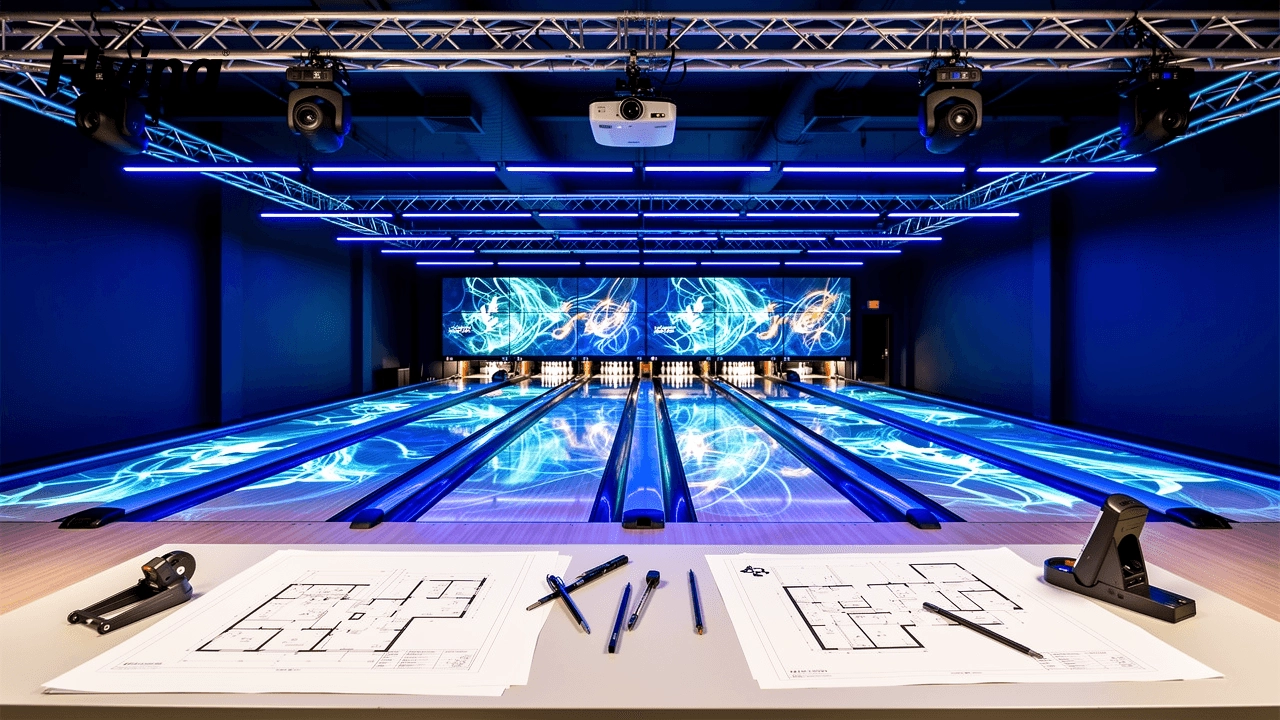
A projection configuration uses projectors and associated equipment to display content on specified surfaces. The proposal should state the target areas, the content included, how the image is aligned to the lane area, and whether content can be changed or customized. Room lighting, mounting positions, and viewing angles all affect how the image appears, so they should be reviewed with the drawings.
Lane and venue LED lighting
LED fixtures can illuminate lanes, approaches, or other parts of the room. The quotation should identify fixture locations, the control method, and whether the lighting operates independently or in coordination with projection. The phrase "synchronized lighting" is not sufficient for comparison. Ask the supplier which components are synchronized and how that behavior is set up.
Controls and integration
Controls determine how operators trigger effects and how projection and lighting respond together. Confirm which controls are included, what an operator can change, and whether the system must connect to scoring, audio, or other venue systems. Compatibility should not be assumed from product descriptions. Request written confirmation for the proposed configuration.
How these elements affect the guest experience
Projection adds changing visual content, while lighting shapes the appearance of lanes and the room. The commercial value depends on the role the system plays: a feature for events, a regular part of the bowling experience, or a visual attraction for guests who are not bowling. Room-level planning may also need sound and vibration coordination, which is a separate scope covered in the bowling alley acoustic soundproofing and vibration isolation cost discussion.
What Determines the Cost?
Several project variables shape the quotation. Lane count is only one of them, and it is not reliable on its own as a cost indicator.
Number of lanes and coverage
A proposal should specify whether each lane receives the same coverage, whether projection is shared across a group of lanes, and which areas receive lighting effects. A lane-by-lane scope or layout allows quantities and coverage to be reconciled against each price. Without it, two quotations with the same lane count may describe different systems.
New installation versus retrofit
In a new venue, projection and lighting positions can be coordinated with the original layout, ceiling plan, and service routes. A retrofit must work around existing ceilings, wiring, equipment, operating hours, and access limits. If these conditions are not documented or confirmed during a site review, the quotation may depend on assumptions that later add work.
Venue layout and mounting conditions
Ceiling height, columns, structural support, sightlines, service access, and the route from delivery access to the installation area all affect equipment placement. Existing electrical and low-voltage provisions should be documented rather than assumed. The low-voltage wiring and electrical load provisions required for projection and lighting should be confirmed before ordering. Venue format also affects the design envelope. Buyers comparing layouts can review medium bowling vs regulation ten pin bowling setup cost before fixing lane coverage and room assumptions.
Integration and commissioning scope
Equipment supply is not the same as installation or commissioning. Confirm whether the quotation covers mounting and connection, control configuration, functional testing, operator training, and handover documentation. Identify which tasks the supplier performs and which must be completed by the venue's electrician, contractor, or local installation team.
Industry associations publish venue-level benchmarks that can support general planning. The Bowling Proprietors' Association of America provides proprietor resources on bowling center operations and capital planning, and IAAPA's research resources include investment benchmarks for family entertainment centers. These sources describe venue investment in general. They do not establish prices for projection or lighting systems, so they should be used only as context for the wider budget.
Key Cost Factors to Specify Before Comparing Quotes
Send the same scope sheet to every bidder. It should separate hardware, content, software, and services so that each line item can be compared.
- Projection and content: coverage area, equipment quantities, content supplied, customization expectations, and the content update process.
- LED fixtures and controls: fixture locations, control hardware, operating modes, and what "synchronized" means for the proposed system.
- Mounts, cabling, and interfaces: standard or custom mounts, cable routes, terminations, and connections to other venue equipment, with the responsible party for each.
- Software, licensing, and updates: whether software is included, what the license covers, whether recurring fees apply, and how updates and support are handled.
- Installation, commissioning, and training: whether on-site labor is included, or whether the supplier provides installation guidance only.
- Warranty and support: written warranty terms for each quoted component, the fault-reporting process, and post-handover support.
Cost Impact Table: Compare Scope, Impact, and Questions to Ask
The impact labels below are a screening framework, not price estimates. "Low" indicates a defined, standard requirement with few interfaces. "Medium" indicates added coverage or coordination. "High" indicates custom design, substantial site work, or several interfaces. Ask each supplier to validate these ratings against the project.
| Cost area | Potential scope impact | Information needed | RFQ question |
|---|---|---|---|
| Equipment and lane coverage | Low to High, depending on coverage and configuration | Lane count, layout, covered areas, fixture quantities | Which lanes and zones are included, and what equipment is allocated to each? |
| Site readiness and installation | Low to High, depending on mounting access and site work | Ceiling and structural details, access routes, existing power and cabling | Which site conditions are assumed, and which installation work is excluded? |
| Controls and software | Low to High, depending on required functions and interfaces | Operating modes, licensing, updates, connections to other systems | What is included in controls and software, and are there recurring fees? |
| Commissioning and training | Low to High, depending on handover requirements | Testing scope, operator training, installation model | Who configures and tests the system, and what training is provided? |
| Shipping and responsibilities | Low to High, depending on destination and delivery terms | Delivery point, packing method, customs and local work responsibilities | Which packing, shipping, customs, and site tasks are included? |
Cost Breakdown by System Component and Project Stage
An itemized quotation should show what is being supplied and who performs each task. The categories below help reveal gaps. They are not a standard list of charges.
Projection and visual content
Separate projection equipment from content, software, and customization. A proposal that includes only hardware should not be compared directly with one that also covers content and configuration.
LED lighting and controls
Ask the supplier to show which fixtures operate together and how they are controlled. This confirms that the quotation covers the visual effect specified, not only a count of fixtures.
Mounting and electrical interfaces
Identify standard versus custom mounts, cabling, connection points, and any site preparation. Custom mounts add design and coordination steps. Incomplete ceiling or mounting drawings make it harder to confirm clearances before approval. Local electrical and structural work should be listed separately if it is not supplied.
Integration, testing, and delivery
Engineering coordination, configuration, functional testing, commissioning, and training should appear as separate items. Packing, shipping, customs, unloading, and permits should also be assigned to a named party. Do not assume these are included because a proposal is described as turnkey.
Compare Projection, LED Lighting, and Combined-System Approaches
The right approach depends on the guest experience the venue needs and the constraints of the room.


- Projection-focused: suits a venue where changeable visual content is the main feature. The RFQ should concentrate on projection coverage, content, control method, and room conditions, including viewing angles and room lighting.
- Lighting-focused: emphasizes lane and room atmosphere with fewer content requirements. Specify control modes, fixture locations, and whether lighting must coordinate with other systems.
- Integrated projection and lighting: coordinates both elements for a unified experience. It usually requires more control and integration work, so essential effects should be defined before proposals are requested, and optional functions should be priced separately.
Three questions help match the option to the venue: What should guests notice? Which functions are essential and which are optional? What can the room, mounting positions, and project schedule support? A bar or hotel may need a distinct atmosphere in a compact room, while an entertainment center may want a feature that serves several lanes or event formats. These considerations shape scope and complexity; they do not predict attendance or revenue.
How to Get an Accurate Quote
Send the same project brief and drawings to every supplier. Incomplete information leads to assumptions, and assumptions make proposals hard to compare. Include the following:


- Project location, venue type, and target opening date.
- CAD or floor plans with room dimensions, ceiling height, columns, entrances, and exits.
- Planned lane count, bowling format, and the lanes or zones to be covered.
- Existing electrical and low-voltage provisions, with known connection locations.
- Required projection effects, lighting functions, control requirements, and integration needs.
- Installation, commissioning, and training expectations, including who performs local work.
- Packing, shipping, delivery destination, and customs or receiving arrangements.
- Warranty, software, update, and support questions.
- For custom mounts or supplied components: drawings, material, finish, quantity, tolerances, and environmental conditions.
Mark uncertain dimensions on preliminary drawings. A supplier can then identify what must be verified before final pricing and approval, rather than pricing around unknown conditions.
Common Quoting Mistakes That Lead to Budget Gaps
Comparing different scopes
A lower total is not necessarily a lower-cost equivalent. One bidder may include content, controls, and commissioning, while another prices hardware only. Reconcile quantities, coverage, and inclusions before ranking totals.
Omitting site and electrical work
Missing ceiling information or unknown cable routes can leave mounting, wiring, power provisions, and access work outside the quotation. Share available drawings early and ask suppliers to list every assumption that depends on site confirmation.
Leaving software and recurring terms unclear
Unspecified licensing, content updates, or support terms can create later costs or operational limits. Ask for these terms in writing, including what is included at purchase and what requires additional payment.
Assuming installation or local work is included
Terms such as "turnkey" do not define the division of work. Confirm whether shipping, customs, permits, civil or structural work, local electrical work, and on-site labor are included. Any excluded task should be assigned to a responsible party and budgeted separately.
Treating projected returns as guaranteed
Projection and lighting do not establish a guaranteed revenue increase or payback period. If a supplier or internal proposal includes a return estimate, ask for the assumptions behind it, including utilization, pricing, operating costs, and the period assessed. Test those assumptions against your own venue data before relying on them.
Cost Reduction Strategies: Optimize the Design Before Ordering
Most avoidable cost comes from unresolved design questions discovered after approval. Four early checks are worth making.
- Separate essential functions from optional effects: define the minimum experience that meets the project goal, and price additional effects as separate items so each can be assessed.
- Check drawings against interfaces: align projection positions, fixture locations, mounting points, cable routes, and control connections against the same venue drawings. Confirm tolerances at each interface before approval. A mounting point that moves late can affect connected equipment and site services.
- Review custom mounts for manufacturability: confirm material, finish, fixing method, and tolerance requirements. Specify a surface finish only where the environment or appearance requires it, and check that any simplification still meets mounting and operating requirements.
- Standardize where practical: common components can simplify spare parts and coordination, but only after compatibility, mounting conditions, and the intended guest experience are confirmed.
Packing should also be planned with the shipment route and receiving conditions in mind. Clarify how components are protected for handling and storage, and who is responsible for unpacking and inspection. Settling these points before production reduces the risk of mismatched delivery assumptions, which often surface only at the venue.
How to Choose the Right Supplier for Cost Optimization
Judge suppliers by the completeness and verifiability of the proposal, not by the headline total. A useful proposal states the configuration, quantities, assumptions, exclusions, compatibility checks, installation model, and the process for resolving technical questions.
- Scope transparency: does the supplier document exclusions and assumptions, and identify missing measurements rather than pricing around them?
- Drawing and integration review
Discuss Your Project Requirements
Contact our team to discuss your specifications, purchasing requirements, and next steps.
More Articles

Let’s Build a center Together
Partner With a Trusted Bowling Alley Design, One-Stop Solution Manufacturer.
Flying has successfully built ideal bowling alleys for more than 3,000 customers.

Technical Expert
You may also like our products
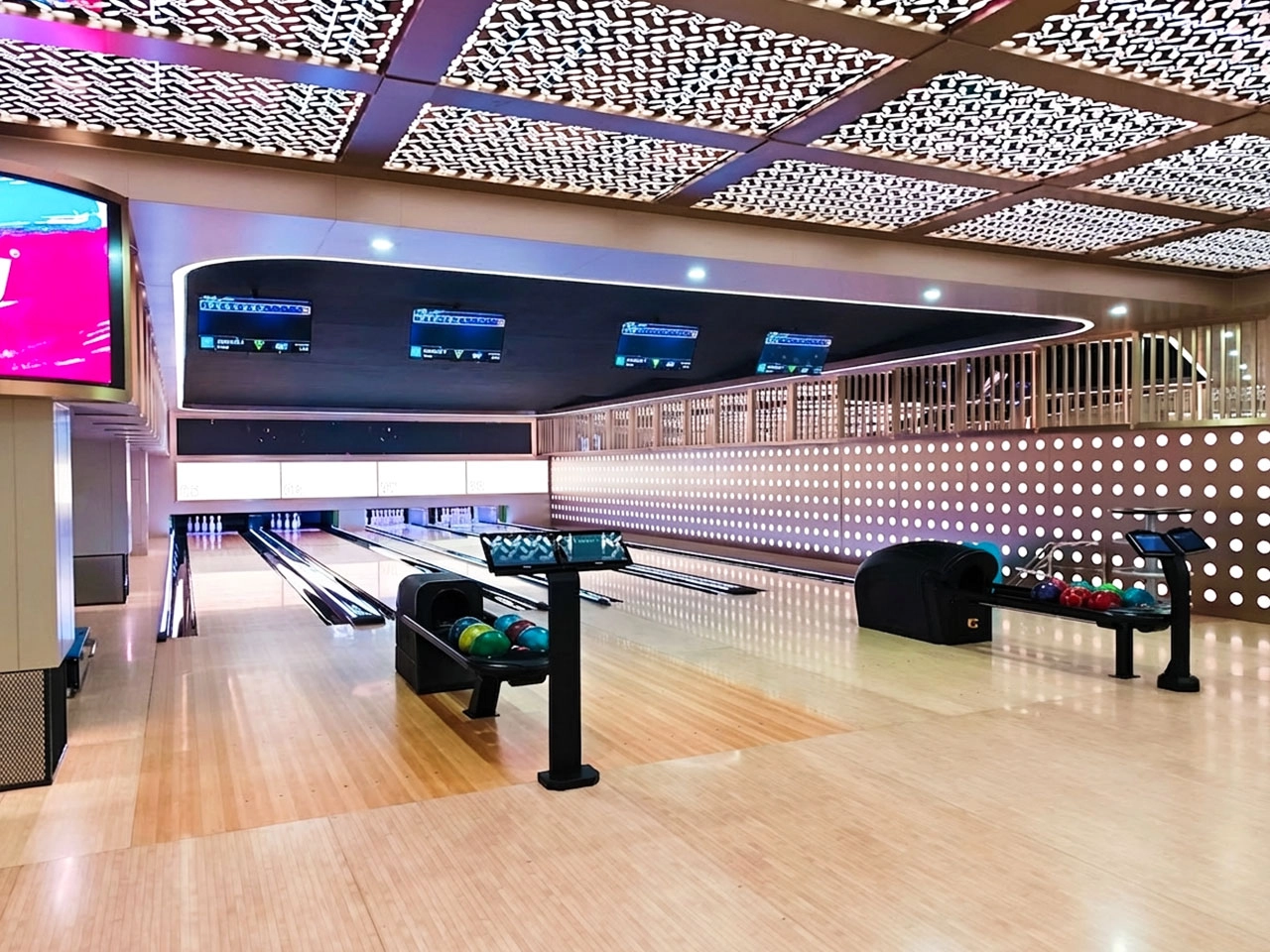
Build a commercial bowling venue with Flying’s complete string pinsetter bowling alley equipment package. The system includes the AEROPIN™ USBC-certified string pinsetter, customizable lanes, automatic scoring, ball return, lane lighting, pins, control hardware, and overseas installation support.
Designed for commercial bowling centers, family entertainment venues, hotels, resorts, bars, and premium private projects, this turnkey bowling system helps operators reduce sourcing complexity and prepare for reliable long-term operation.
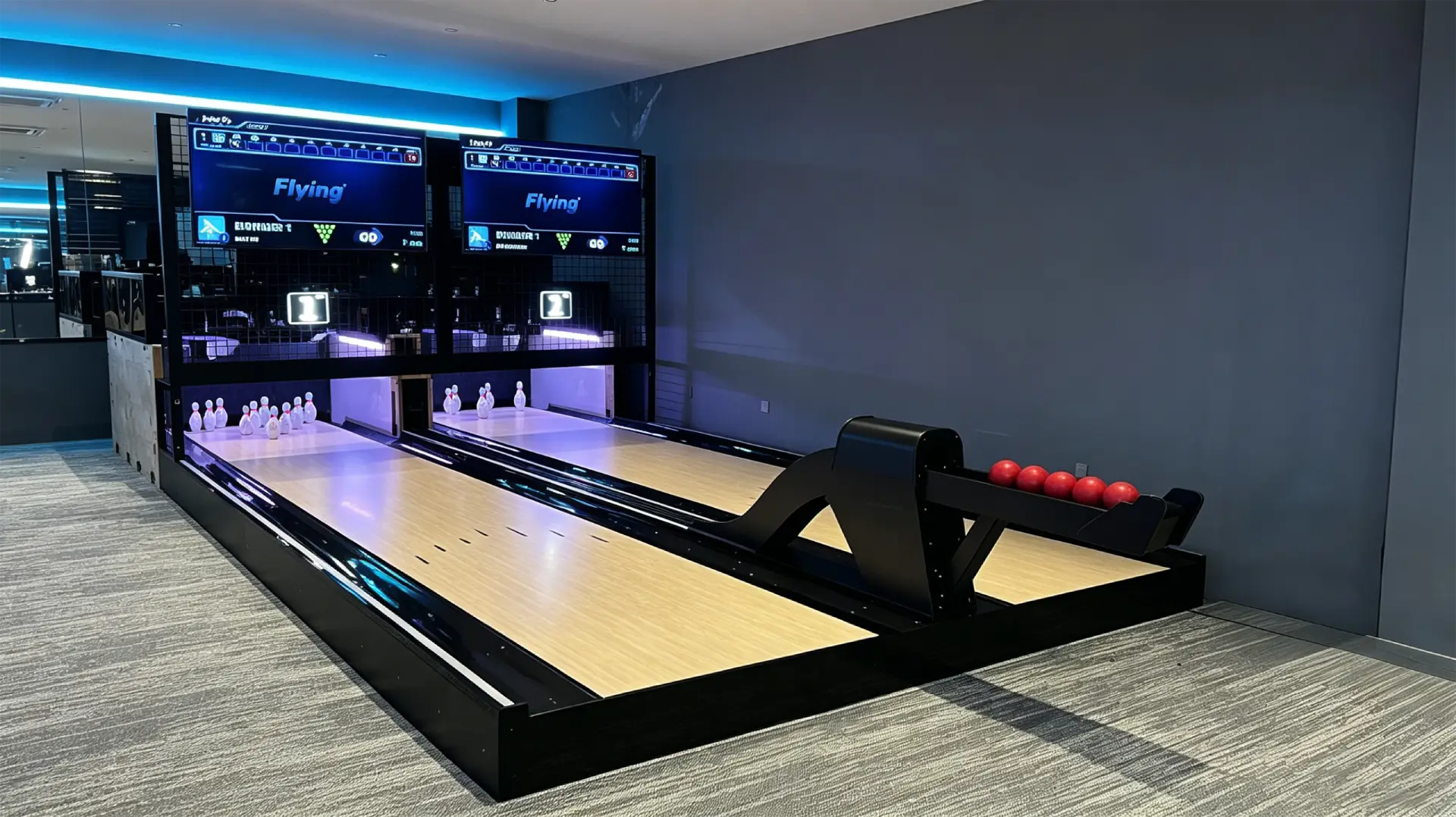
Flying Smart Duckpin Bowling is a compact duckpin bowling equipment system designed for bars, family entertainment centers, hotels, resorts, cinemas, boutique bowling alleys, and social entertainment venues. With a standard 9.13m duckpin bowling lane, 1.25kg lightweight balls, automatic scoring, ball return, LED lighting, and a smart string pinsetter, it creates a fast-paced and easy-to-play bowling experience in a smaller footprint than traditional bowling.
The system is available as a turnkey duckpin bowling package, including lane equipment, a string pinsetter system, scoring hardware, control software, global shipping, installation guidance, and technical support.
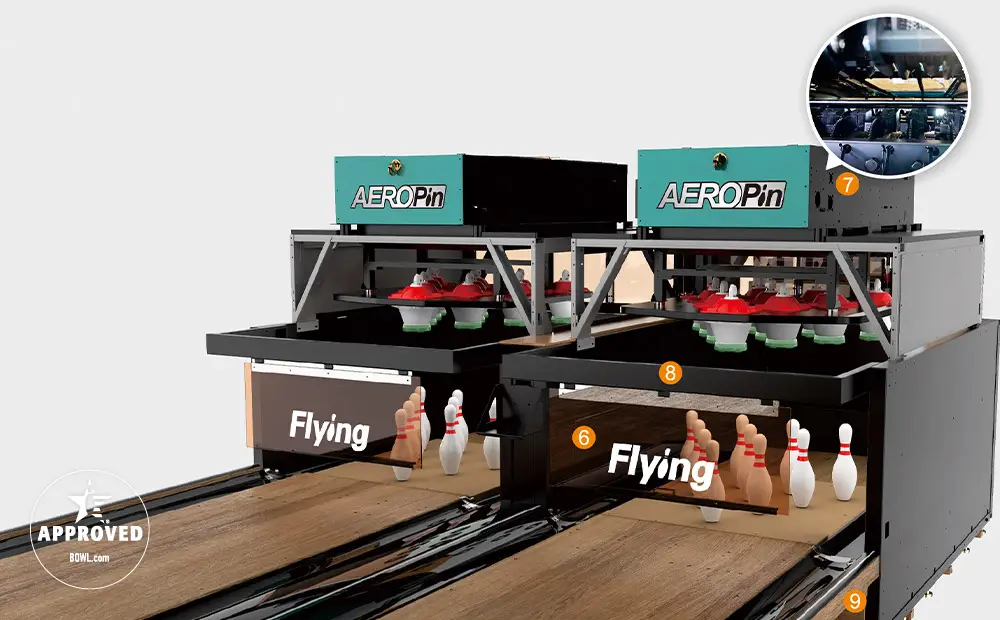
AEROPIN is Flying Bowling’s USBC-certified string pinsetter system for modern commercial bowling centers. Designed for fast pin setting, smooth ball return, low maintenance, and stable daily operation, it helps venue operators build league-ready and entertainment-focused bowling projects with confidence.
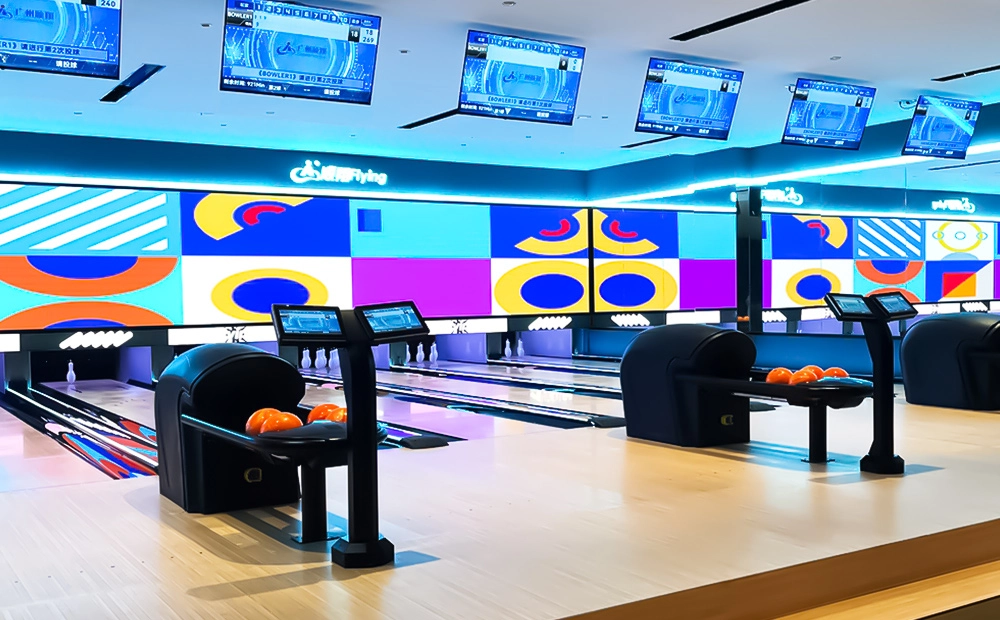
Flying Social Medium Bowling is a compact medium bowling equipment system designed for bars, cafes, family entertainment centers, community leisure venues, hotels, resorts, and small indoor entertainment spaces. With customizable lane lengths from 9.6m to 18m, small balls, lighter pins, string pinsetter technology, ball return, and automatic scoring, it creates an easy-to-play social bowling experience for players of different ages and skill levels.
Compared with full-size standard bowling, medium bowling requires less space and offers a more casual, interactive format. It is a practical choice for venues that want to add a bowling attraction without building a full commercial bowling alley.
Contact Flying
Start Your Custom Bowling Alley Project
If you contact us now for more details, we can provide you with a custom bowling alley service. Our service team will get back to you within 24 hours normally!
© 2026 Flying BOWLING. Designed by gooeyun.
FOLLOW US:

Flying Bowling
Flying Bowling
Flyingbowling
Flyingbowling
Flyingbowling