

Commercial Bowling Alley Setup Cost: A Comprehensive Investment Guide
There is no single reliable bowling alley setup cost. The total depends on the bowling format and lane count, the equipment configuration, the condition of the venue, building and utility work, freight, and the services included in the contract. A defensible budget starts with a defined project scope and an itemized quotation that separates equipment from site work and states assumptions, exclusions, and local charges.
Quick Answer: What Does a Bowling Alley Setup Cost Depend On?
Why a single price is not reliable
A price without a defined scope does not show whether it covers only lane equipment or a venue ready to open. Two projects with the same lane count can differ widely: one may use a prepared space, while the other needs floor work, electrical upgrades, acoustic treatment, freight coordination, and on-site installation support. Format also changes the equipment and space plan. Standard ten-pin, medium bowling, and duckpin each use different equipment, and a general price cannot reflect those differences.
What a project-level estimate should include
Build the estimate as separate lines for the bowling equipment package, venue preparation, electrical and MEP work, acoustic treatment, freight and customs, installation and commissioning, staff training, opening inventory, and contingency. Mark each line as supplier-quoted, locally procured, or still unconfirmed. This shows gaps before budget approval. A commercial bowling alley startup budget checklist can help organize capital expenditure and initial working capital, but it complements a project-specific equipment quotation rather than replacing it.
Floor condition is a common source of scope outside the equipment package. Verify levelness and load-bearing requirements with qualified project professionals before the layout is finalized. The bowling alley subfloor leveling and load bearing preparation cost is a site-work topic worth assessing early.
What Determines the Cost of a Commercial Bowling Alley?
Project scope and venue type
Separate three budget boundaries: equipment supply, venue construction or renovation, and operating readiness. A dedicated bowling center may require a broader lane and guest-area plan. A family entertainment center (FEC), hotel, or bar may fit bowling into a mixed-use floor plan that shares existing services and circulation. The budget changes according to what the building already provides and what the contract assigns to the equipment supplier, contractor, or owner.
Bowling format and lane count
Lane count affects more than the number of lane assemblies. It also influences layout, pinsetting and ball-return configuration, scoring hardware, seating, clearances, and service access. Format determines the equipment footprint and the play experience, so it should be selected before equipment or construction costs are estimated.
Published product dimensions illustrate how much format matters. A typical two-lane Flying Social Medium Bowling equipment dimension is L12 m × W3.05 m × H2.13 m, with customizable lane length between 9.6 m and 18 m. A typical two-lane Flying Smart Duckpin Bowling equipment dimension is L9.13 m × W3.48 m × H2.25 m, with a standard lane length of 9.13 m. A representative 4-lane standard package is L25.6 m × W6.9 m × H3.2 m. These figures describe equipment footprint only. They do not establish the room size, because approaches, guest seating, pinsetter and mechanical access, and maintenance aisles must be added. For space-constrained venues, compare comparative setup costs between medium and regulation bowling using the same assumptions for room layout, equipment, and included work.
Existing building condition and project location
An existing building reduces new construction scope only if its floor, access routes, ceiling clearances, electrical capacity, and other building services suit the design. A column in the lane area or a delivery route too narrow for equipment packages can force redesign or additional handling. Project location also affects freight, customs or duties, local labor, permits, and locally contracted work. Confirm these items with the supplier, freight provider, contractor, and local authorities rather than assuming an equipment quotation includes them.
Electrical and mechanical, electrical, and plumbing (MEP) requirements should be coordinated against the equipment configuration and venue drawings early in the project. The bowling alley electrical wiring and MEP infrastructure cost belongs in that coordination, not in a late allowance added after equipment selection.
Key Cost Factors Buyers Should Assess
Equipment configuration and scoring options
Ask each supplier to list the components in its quoted package: lane assemblies, pinsetters, ball returns, scoring hardware, displays, lighting, balls, and pins. Record the quantity and configuration of each item, along with any optional interactive lighting or projection. A package with different displays or guest-facing features is not directly comparable with a basic equipment scope.

For a standard ten-pin project, the AEROPIN string pinsetter is the only active product with a USBC listing: the Aeropin Pinsetter model was added to the USBC Approved String Pinsetters list on January 21, 2026. That listing applies only to the specified model. Do not assume it extends to duckpin systems, medium bowling, scoring equipment, or a complete bowling center. Confirm the current status through the USBC certified resources before relying on it in a specification.
Building works and technical infrastructure
Confirm floor and subfloor readiness, equipment clearances, ceiling constraints, electrical supply, and other required MEP work. Treat seating and guest areas as venue budget items, not lane equipment. In mixed-use buildings, acoustic treatment may be needed to control sound transmission or vibration to adjacent spaces. The design should follow the building conditions and the operator’s requirements; a focused review of acoustic soundproofing and vibration dampening costs can identify this scope before construction is finalized.
Logistics, installation, and pre-opening needs
List freight, export packaging, customs or duties, unloading, installation guidance or on-site work, commissioning, and staff training as distinct quotation lines. Opening inventory should be estimated separately. Balls, rental shoes, pins, and spare parts depend on the venue’s operating plan, and an allowance for them can be planned with reference to bowling alley shoe ball and spare parts initial inventory cost.
A supplier may coordinate export packing or provide installation guidance without including customs clearance, local civil works, permits, or an on-site installation crew. The written proposal, not a general description of services, defines responsibility.
Bowling Alley Cost Impact Table: Which Choices Can Change the Budget?
The table below is a qualitative planning tool. The “potential scope coordination level” column describes how many project packages a decision can affect: Low generally applies to a defined equipment or inventory choice; Medium can require coordination or limited additional work; High can involve substantial trade or site scope; Very High can reshape several packages at once. These are editorial classifications for planning, not market statistics or price indicators. Actual costs require current supplier quotations and local assessment.
| Cost area | Scope or decision | Potential scope coordination level | Information needed to estimate | Confirmation owner |
|---|---|---|---|---|
| Format and lane count | Standard, medium, or duckpin; number and arrangement of lanes | High | Venue plan, lane target, format, clearances, guest-area concept | Owner and equipment supplier |
| Equipment configuration | Lane system, pinsetting, ball return, scoring, displays, accessories | Medium | Itemized configuration and optional-feature list | Equipment supplier |
| Venue readiness | Floor, access, columns, ceiling, and required civil works | Very High | Measured drawings and site-condition review | Owner and local project professionals |
| MEP and electrical work | Existing capacity, routing, and new services | High | Building-service information and equipment electrical requirements | Local MEP contractor and supplier |
| Acoustics | Sound isolation or vibration treatment for the actual building | Medium | Adjacent uses, building construction, performance brief | Owner and acoustic consultant |
| Interactive lighting or projection | Optional lane lighting and projection features | Medium | Selected system scope and supporting infrastructure | Owner and supplier |
| Freight and customs | Packaging, destination, duties, clearance, and delivery terms | High | Delivery address, shipping terms, packaging assumptions | Supplier, freight provider, and importer |
| Installation and commissioning | Guidance, on-site services, technical checks, and training | High | Required service scope, site access, local responsibilities | Owner and supplier |
| Opening inventory | Balls, shoes, pins, and operational spares | Low | Operating plan and inventory quantities | Venue operator |
Questions to resolve before budget approval
For each row, decide whether the cost is measured, quoted, or still an allowance. Assign an owner and a date for the next estimate. Venue condition and shipping assumptions should be resolved before the total is treated as a committed budget. If interactive features are included, specify them as a defined package rather than a general allowance; the interactive bowling lane projection and lighting system cost should be estimated separately from the core lane equipment.
Cost Breakdown by Process or Component
Bowling equipment package
Request an equipment schedule that names each included component, its quantity, its configuration, and any optional features. This is the supplier-quoted portion of the budget. It does not include the cost of completing the venue, and it should not be compared with a whole-project proposal without adjustment.
Venue preparation and civil works
Use a separate local-construction allowance for floor preparation, structural or access-related changes, partitioning, guest areas, and other building work identified during site review. The scope depends on the existing space and the approved layout. A qualified local professional should assess building conditions and applicable permit requirements.
Electrical, MEP, and acoustic work
Budget utilities and acoustic work as separate trade packages. The building contractor or relevant specialist should verify existing services and define upgrades against the final equipment and layout information. General venue electrical work does not automatically include every connection a selected bowling component requires.
Shipping, installation, and commissioning
Show packaging, freight, customs-related charges, delivery to site, installation responsibilities, commissioning, and training as distinct lines where they apply. Confirm the delivery term, the destination, and what happens after arrival. Shipping coordination alone does not establish that customs clearance or local installation labor is included.
Opening inventory and contingency planning
Opening inventory supports operations and is not necessarily included in an equipment supply. Estimate balls, rental shoes, pins, and maintenance spares according to the operating plan. Keep contingency separate, state which uncertainty it covers, and do not use it to conceal missing quotations.
Industry resources can help frame how operators structure a capital budget. The BPAA (Bowling Proprietors’ Association of America) – Industry Resources is relevant for U.S. bowling center operators, and the IAAPA (International Association of Amusement Parks and Attractions) Research & Resources covers attraction-sector research. Neither replaces current supplier quotations, local construction estimates, or project-specific verification.
How to Get an Accurate Bowling Alley Setup Quote
Quote information checklist
Send every supplier the same project brief so their proposals can be compared on equal terms. Include:

- Project location and shipping destination (required for freight, customs, and local service assumptions).
- Venue type and intended operation, such as a dedicated bowling center, FEC, hotel, or bar.
- CAD or floor plans with available length, width, ceiling height, columns, entrances, exits, and access routes.
- Target lane count and preferred bowling format.
- Existing building and utility information, plus known floor or site constraints.
- Requested equipment configuration, the configuration version or revision number, and any optional scoring, display, lighting, or projection features.
- Packaging, documentation, installation, commissioning, and staff-training expectations.
- Opening inventory assumptions and the operating plan they are based on.
Drawings and site details
Provide the latest measured plan and identify which dimensions are confirmed and which are preliminary. Mark columns, ceiling obstructions, doors, access paths, and areas reserved for seating or maintenance. A CAD floor-plan review can reveal layout clashes before equipment configuration is finalized. Incomplete drawings lead suppliers to make assumptions, and those assumptions can later require redesign. Where tolerances, interface dimensions, material requirements, or surface finishes matter, state them in the drawing set rather than leaving them to the quotation stage.
Confirming inclusions, exclusions, and assumptions
Request an itemized proposal that states quantities, selected options, shipping basis, service scope, and any dependency on site readiness. Ask for a written exclusions list covering civil works, permits, customs, local labor, and on-site services. For each uncertain measurement or site condition, ask the supplier to state the assumption used, the quotation validity period, and what must be verified before order approval. Confirm the warranty coverage and duration for the quoted equipment in the proposal itself.
Common Quoting Mistakes That Lead to Budget Gaps
Comparing equipment-only and whole-project quotes
A lower equipment price is not a lower project cost if it excludes freight, installation, commissioning, or building work that another proposal includes. Align lane count, format, configuration, delivery basis, and service scope before comparing totals. Quotes with different lane counts or formats should not be compared directly.
Sending incomplete or inconsistent drawings
Plans missing dimensions, ceiling information, access constraints, or column locations produce estimates built on assumptions. If suppliers receive different drawing versions, their proposals may describe different layouts.
Discuss Your Project Requirements
Contact our team to discuss your specifications, purchasing requirements, and next steps.
References
More Articles

Let’s Build a center Together
Partner With a Trusted Bowling Alley Design, One-Stop Solution Manufacturer.
Flying has successfully built ideal bowling alleys for more than 3,000 customers.

Technical Expert
You may also like our products
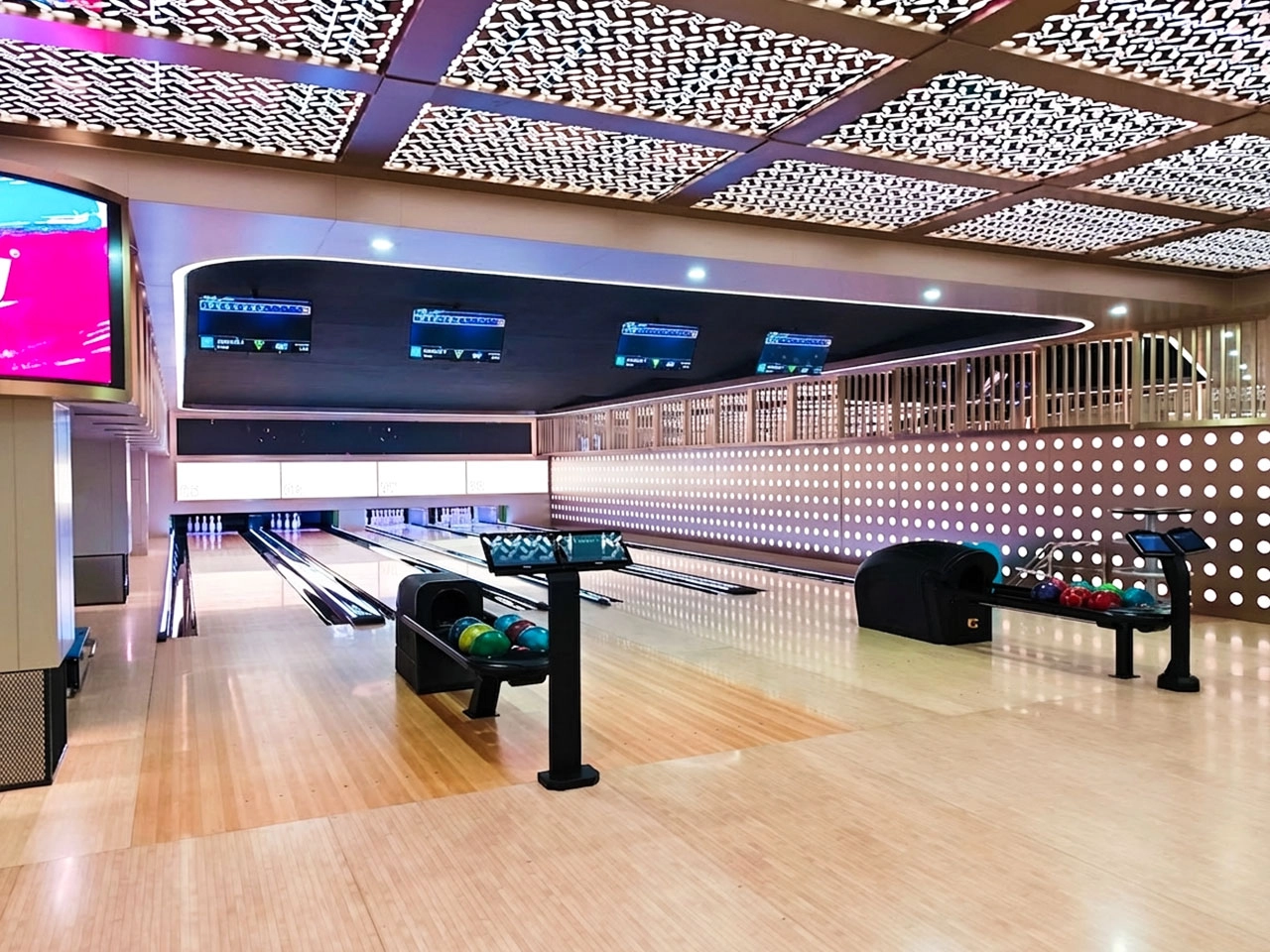
Build a commercial bowling venue with Flying’s complete string pinsetter bowling alley equipment package. The system includes the AEROPIN™ USBC-certified string pinsetter, customizable lanes, automatic scoring, ball return, lane lighting, pins, control hardware, and overseas installation support.
Designed for commercial bowling centers, family entertainment venues, hotels, resorts, bars, and premium private projects, this turnkey bowling system helps operators reduce sourcing complexity and prepare for reliable long-term operation.
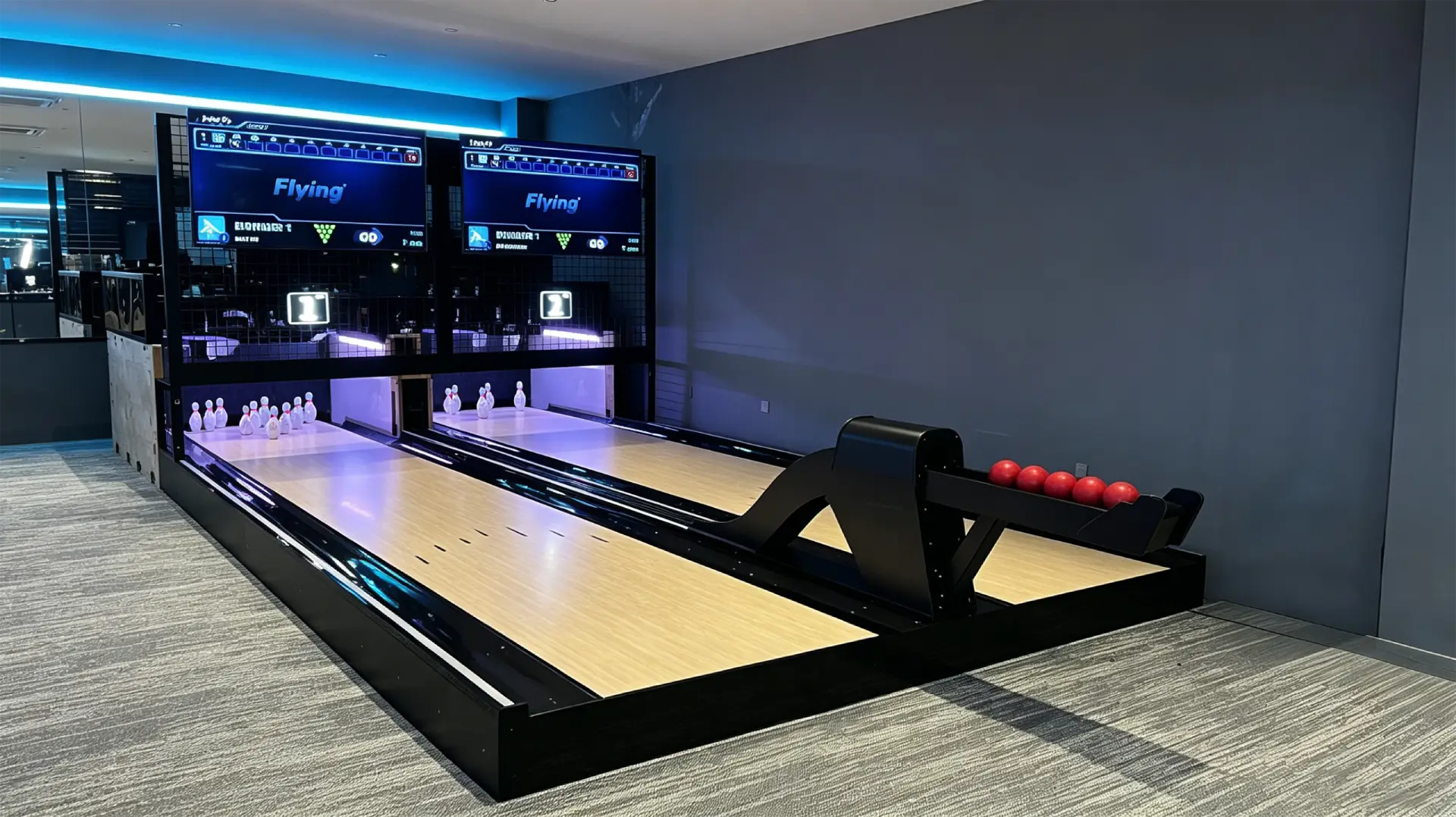
Flying Smart Duckpin Bowling is a compact duckpin bowling equipment system designed for bars, family entertainment centers, hotels, resorts, cinemas, boutique bowling alleys, and social entertainment venues. With a standard 9.13m duckpin bowling lane, 1.25kg lightweight balls, automatic scoring, ball return, LED lighting, and a smart string pinsetter, it creates a fast-paced and easy-to-play bowling experience in a smaller footprint than traditional bowling.
The system is available as a turnkey duckpin bowling package, including lane equipment, a string pinsetter system, scoring hardware, control software, global shipping, installation guidance, and technical support.
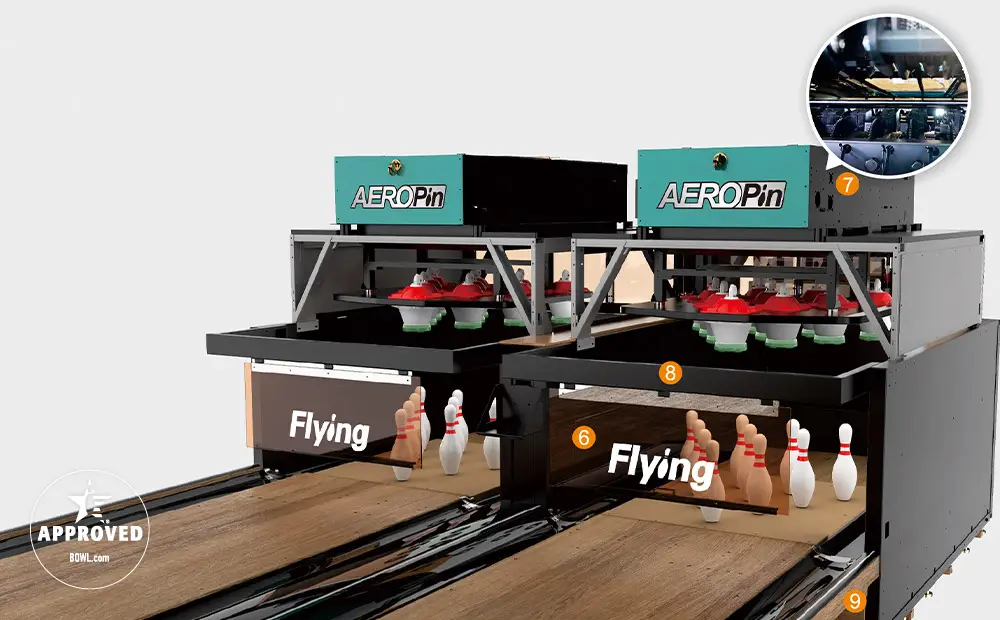
AEROPIN is Flying Bowling’s USBC-certified string pinsetter system for modern commercial bowling centers. Designed for fast pin setting, smooth ball return, low maintenance, and stable daily operation, it helps venue operators build league-ready and entertainment-focused bowling projects with confidence.
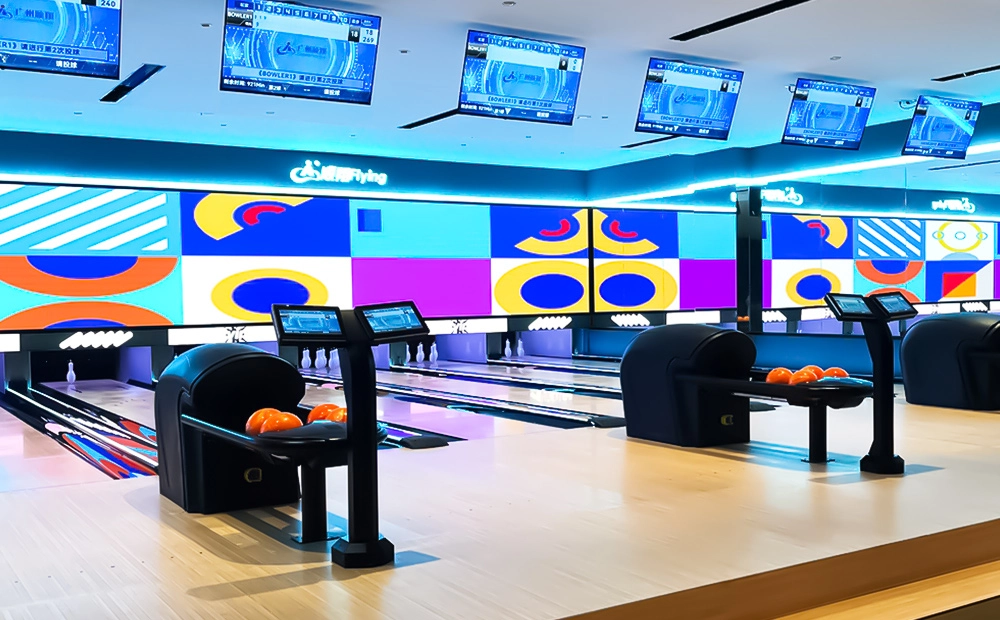
Flying Social Medium Bowling is a compact medium bowling equipment system designed for bars, cafes, family entertainment centers, community leisure venues, hotels, resorts, and small indoor entertainment spaces. With customizable lane lengths from 9.6m to 18m, small balls, lighter pins, string pinsetter technology, ball return, and automatic scoring, it creates an easy-to-play social bowling experience for players of different ages and skill levels.
Compared with full-size standard bowling, medium bowling requires less space and offers a more casual, interactive format. It is a practical choice for venues that want to add a bowling attraction without building a full commercial bowling alley.
Contact Flying
Start Your Custom Bowling Alley Project
If you contact us now for more details, we can provide you with a custom bowling alley service. Our service team will get back to you within 24 hours normally!
© 2026 Flying BOWLING. Designed by gooeyun.
FOLLOW US:

Flying Bowling
Flying Bowling
Flyingbowling
Flyingbowling
Flyingbowling