

Commercial Bowling Alley Startup Budget Checklist: CapEx and Initial Working Capital
A reliable commercial bowling alley startup budget starts with a defined project scope, not a generic cost per lane. Separate site preparation and installed equipment from freight, installation or commissioning, opening inventory, and post-opening operating cash. Then request itemized quotations against the same plans and inclusions so that the comparison reflects equivalent projects.
Quick Answer: What Should a Bowling Alley Startup Budget Include?
Separate one-time project costs from opening and operating reserves
Build the capital expenditure (CapEx) budget around the venue work and equipment required to open: site and civil preparation; lanes; pinsetters; ball returns; scoring; displays; selected lighting; and the associated delivery, packing, installation guidance, commissioning, or training scope stated in the quotation. Keep rental inventory, spare parts, and the operating reserve in separate budget lines. They are not the same as installed equipment.


Build the checklist around venue scope and bowling format
Use the project location, building condition, lane count, chosen format, and responsibility split to determine what each supplier should quote. Standard bowling, medium bowling, and duckpin bowling use different equipment and space configurations, so a per-lane figure without those details is not a dependable project budget. For the wider capital allocation context, see this overall bowling alley setup cost framework; the checklist below focuses on how to assemble and validate the budget lines.
For example, Flying Social Medium Bowling and Flying Smart Duckpin Bowling have different equipment dimensions and ball formats. Neither equipment footprint alone nor a sample layout establishes the complete room requirement: approaches, seating, circulation, and maintenance access also need to be planned. Buyers comparing formats can review medium bowling vs regulation ten pin bowling setup cost.
What Determines a Commercial Bowling Alley Startup Budget?
Venue type and target customer
A dedicated bowling center, a family entertainment center (FEC), and a bar or hotel attraction have different operating concepts. A venue designed for league or regular ten-pin play may prioritize standard lanes and associated systems; a hospitality or social venue may consider medium or duckpin bowling where a compact configuration better fits the space and customer experience. The format decision affects the equipment package, layout, and opening inventory—not just lane length.
Bowling format and lane count
Lane count determines the quantities of lane assemblies and related equipment, while the format defines which components and accessories are required. Interactive displays or selected lighting options also need to be specified rather than assumed to be included. Confirm both the lane count and the exact package contents before using a quote as a budget baseline.
Existing building condition and project boundaries
An existing room may need floor preparation or other venue work before equipment can be installed. The condition of the subfloor, available clearances, and the layout around columns and access points can change the work required. A focused review of bowling alley subfloor leveling and load bearing preparation cost can help identify this site-specific budget line. Equipment footprint dimensions are not a substitute for a room plan that includes customer and service areas.
Define Project Scope Before Building the Budget
Confirm the bowling format and lane count
Write down the venue type, preferred format, planned lane count, and requested options. If the format or count is still provisional, mark it as such in the budget; otherwise, early quotes may price different projects while appearing comparable.
Map customer areas and circulation
Use a current floor plan to locate lanes, approaches, seating, entrances, exits, columns, and maintenance access. Record available room dimensions and ceiling height. Confirm the equipment arrangement against how customers and staff will move through the venue, rather than treating the equipment footprint as the finished layout.
Set responsibilities for landlord, contractor, and equipment supplier
Create a written responsibility split for civil works, permits, local contractors, customs clearance, freight, installation crews, and commissioning. Do not assume that a supplier’s project or turnkey scope includes local structural work, permits, customs, or on-site crews. List every assumption and exclusion so that the project team can assign each cost once—and avoid leaving it unbudgeted.
Cost Impact Table: Which Budget Items Can Change the Estimate Most?
The table is a scope-control tool, not a universal cost ranking. For each row, assign a relative potential impact—Low, Medium, High, or Very High—only after reviewing the project information. Mark its quote status as confirmed, provisional, or not included.
| Budget category | What changes the scope | Buyer information to confirm | Impact rating and quote status |
|---|---|---|---|
| Site and civil preparation | Existing floor and building readiness; required preparation | Site condition, dimensions, and contractor responsibility | Low / Medium / High / Very High; Confirmed / Provisional / Not included |
| Format, lane count, and core equipment | Bowling format, number of lanes, and selected system options | Lane schedule and itemized equipment list | Low / Medium / High / Very High; Confirmed / Provisional / Not included |
| Building services and layout | Site-specific requirements and equipment arrangement | Available plans and the division of work between project parties | Low / Medium / High / Very High; Confirmed / Provisional / Not included |
| Delivery and project services | Packing, freight, installation, commissioning, and training scope | Destination, delivery terms, and named responsibilities | Low / Medium / High / Very High; Confirmed / Provisional / Not included |
| Opening inventory and reserve | Operating plan, rental needs, spares, and cash assumptions | Buyer-defined quantities and reserve model | Low / Medium / High / Very High; Confirmed / Provisional / Not included |
Read the table by project dependency
Resolve upstream information first: format, lane count, drawings, and building condition underpin equipment configuration and site work. Delivery and opening needs can then be assessed against a more stable scope.
Mark each line item as confirmed, provisional, or not included
Use “confirmed” when the scope and responsibility are documented, “provisional” when a site detail or decision remains open, and “not included” when the buyer must budget for the item elsewhere. Do not treat an unpriced exclusion as a zero-cost item.
Cost Breakdown by Process or Component
Site and civil preparation
Keep venue work separate from the bowling equipment quotation. Record any required floor preparation and identify who will assess, specify, and complete it. The buyer’s contractor or project team should confirm the work from site conditions rather than relying on an equipment-only layout.
Lanes and pinsetting equipment
Request separate quantities and descriptions for lane assemblies and pinsetters. For a standard commercial package, the listed system components can include lane assemblies and AEROPIN string pinsetters; confirm the exact model and package scope in the quote. Certification claims should be checked against the named model and application rather than generalized to all bowling equipment.
Ball return, scoring, displays, and lighting
List ball return mechanisms, scoring hardware, overhead displays, and selected lighting as distinct lines or clearly identified package components. State which options are required and which are optional. This prevents a lower headline quote from appearing equivalent when a system, display, or lighting element is absent.
Freight, packing, installation, and commissioning
Ask the supplier to state packing and shipping coordination scope, delivery destination assumptions, installation guidance or crew scope, technical commissioning, and staff training separately. These responsibilities vary by contract. Check which local services, customs charges, or site works remain outside the equipment offer.
Opening supplies and spare parts
Keep installed equipment distinct from balls, pins, rental shoes, and spare parts intended for opening operations. Record quantities, what is included in the equipment package, and what is quoted separately. A dedicated breakdown of initial inventory requirements for shoes, balls, and spares supports the separate inventory allowance.
Plan Initial Working Capital and Opening Inventory Separately
Opening-day consumables and rental inventory
Estimate rental and opening inventory from the venue’s operating plan, customer mix, and service assumptions. The buyer should set quantities for items such as rental shoes and house balls; a supplier cannot infer the operating model from lane count alone. Keep these purchases out of the installed-equipment total.
Spare parts and replenishment planning
Ask which spare parts are included, which are optional, and how replenishment is handled. Record the parts, quantities, and any restocking assumptions as separate lines. This clarifies what the opening package covers without assuming future availability or service terms that are not documented.
Post-opening operating reserve
Set the reserve using the operator’s actual cash-flow plan, opening schedule, and local operating obligations. Do not apply a universal percentage or amount: the reserve depends on the venue’s own expense assumptions and funding plan. Keep it separate from both CapEx and opening inventory so decision-makers can see what is committed to equipment and what remains available for operations.
How to Get an Accurate Quote: Buyer Information Checklist
Project and site details
- Project location and venue type.
- CAD or floor plans with available dimensions, ceiling height, columns, entrances, and exits.
- Preferred bowling format and planned lane count.
- Known building conditions or site-preparation requirements.
Drawings and equipment scope
- Requested lane assemblies, pinsetter, ball return, scoring, displays, lighting, and options.
- Opening inventory and spare parts requested as separate lines.
- Material, finish, or interface requirements where relevant to the selected equipment.
- Current drawings with dimensions and any unresolved assumptions identified.
Commercial and delivery assumptions
- Delivery destination and packaging or receiving constraints.
- Requested installation, commissioning, and staff training scope.
- Required documentation and any items to be excluded from the quotation.
- Quote validity assumptions, warranty scope, and the party responsible for local services.
Providing the same information to each bidder makes differences in equipment, service, and exclusions visible instead of burying them in different quote formats.
Common Quoting Mistakes That Create Budget Gaps
Comparing quotes with different inclusions
A headline total is not a like-for-like comparison. Check that format, lane count, accessories, scoring, displays, lighting, and service scope match. Confirm civil works, permits, customs, freight, installation, and commissioning exclusions in writing.
Using equipment footprint as total room size
A sample equipment layout does not automatically include approach space, seating, circulation, or maintenance access. If those areas are omitted from the room plan, the project may require redesign or additional site work after the budget has been set.
Omitting freight, site work, or opening inventory
An equipment quotation may not cover local floor preparation, delivery charges, installation crews, customs, rental inventory, or post-opening cash needs. Treat each as a separate budget line until the responsible party and inclusion are documented. Confirm warranty terms and service responsibilities in the contract rather than relying on an assumption made during quotation.
Cost Reduction Strategies: Improve Scope Before Cutting Requirements
Use DFM and drawing review early
Request an early design-for-manufacturability (DFM) and layout review while the scope can still be coordinated. Incomplete plans or unresolved dimensions can lead to revised configurations, rework, and quote changes. Ask the reviewer to list missing information and assumptions rather than treating an incomplete drawing as final.
Coordinate tolerances and interfaces
Confirm the dimensions and interfaces that affect how equipment relates to the venue and adjacent systems. Unclear tolerances can produce site fit issues; resolving them before production is more practical than discovering a mismatch during installation.
Choose materials and finishes for the application
Specify material and surface finish according to the equipment’s application and documented operating requirements. Unneeded finish requirements can add scope, while underspecified requirements leave room for suppliers to quote different outcomes. Ask bidders to state their assumptions so alternatives can be compared fairly.
Consolidate packaging and shipment planning
Share delivery access, receiving limitations, and the project sequence before packing is finalized. Coordinating packaging with the destination and shipment plan can prevent avoidable handling problems and clarify what shipping coordination the quote includes. Prioritize optional lighting or display features against the venue concept instead of cutting requirements that affect fit or operation.
How to Choose the Right Supplier for Cost Optimization
Evaluate scope transparency and engineering coordination
Choose suppliers that itemize equipment and services, identify assumptions and exclusions, and review the actual floor plan before finalizing the configuration. A useful cost review explains what drives each line and what information could change it; a low total without that detail is difficult to evaluate.
Confirm delivery, commissioning, and training responsibilities
Ask who coordinates packing and shipping, what installation guidance or on-site work is included, who commissions the system, and whether staff training is part of the quoted scope. Confirm local contractor, customs, and permit responsibilities separately. The written agreement should match the project’s actual division of work.
Ask for project-specific documentation and warranty terms
Request the equipment schedule, layout assumptions, exclusions, and documentation relevant to the selected system. Confirm the warranty scope and local service responsibilities in the contract; do not assume that identical terms apply to every component or project.
Request a structured cost review
At Flying Bowling Co., Ltd., we review project layouts, assess floor plans, and configure equipment; our project workflow can also include specialized packing, shipping coordination, installation guidance, commissioning, and operational training, as defined in the quotation and contract. Send the same site details and requested inclusions to any prospective supplier so the resulting proposals can be compared against a common brief.
Conclusion and Next Steps
The most useful startup budget is the one that exposes scope and responsibility—not the one that offers a seemingly universal per-lane figure. Confirm the bowling format, lane count, site condition, room plan, and service boundaries; then separate installed equipment from opening inventory and operating reserve. Before approving a budget or purchase order, close provisional items and assign every exclusion to a responsible party.
We can review project information against the requested bowling format and equipment scope. A project-specific assessment starts with the location, floor plan, available dimensions, and planned lane count.
Discuss Your Project Requirements
To prepare a relevant review, share the project location, CAD or floor plans, available dimensions, preferred bowling format, and planned lane count. Include known site conditions and the installation or commissioning scope you expect suppliers to price.
Frequently Asked Questions
More Articles

Let’s Build a center Together
Partner With a Trusted Bowling Alley Design, One-Stop Solution Manufacturer.
Flying has successfully built ideal bowling alleys for more than 3,000 customers.

Technical Expert
You may also like our products
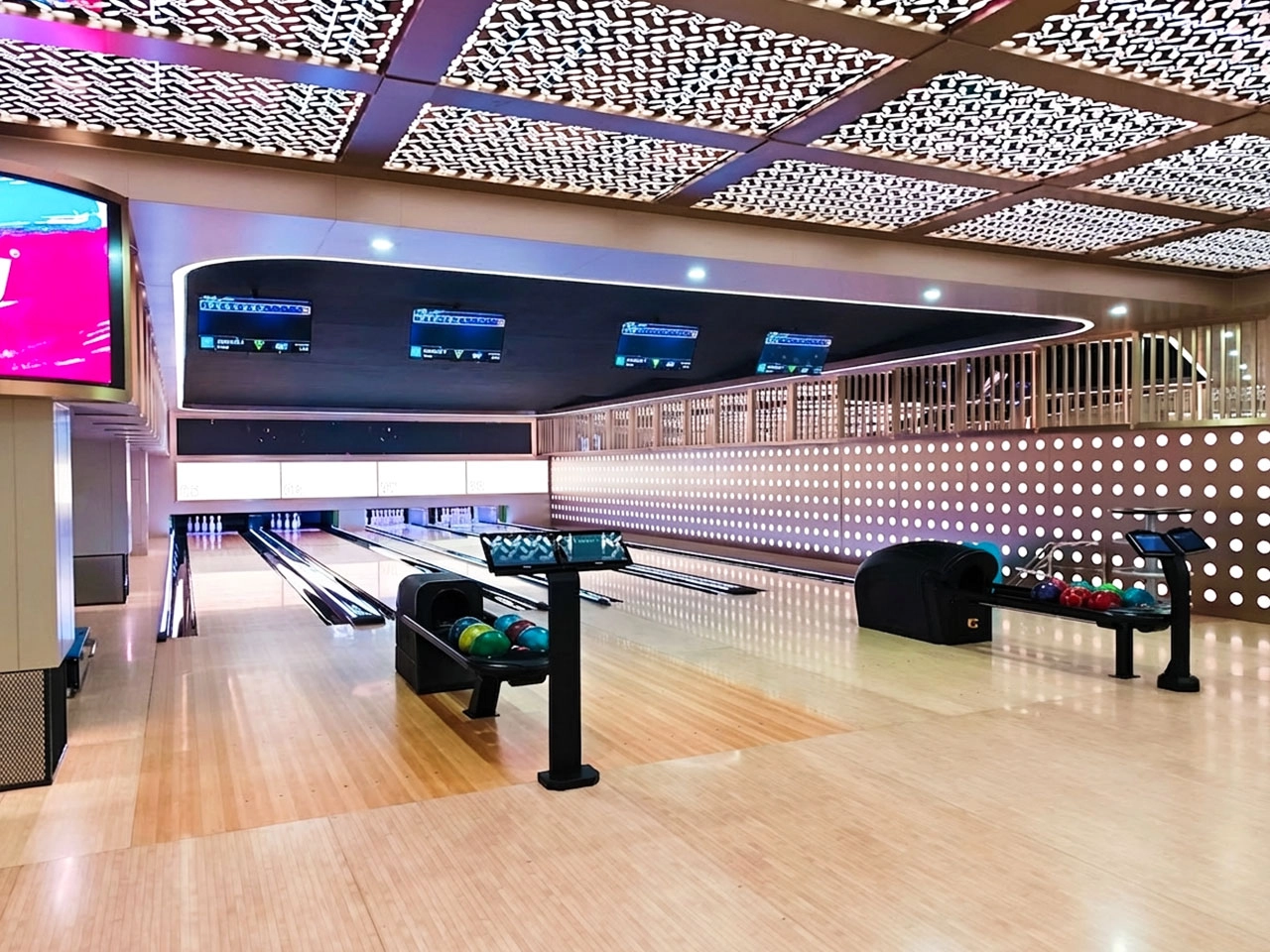
Build a commercial bowling venue with Flying’s complete string pinsetter bowling alley equipment package. The system includes the AEROPIN™ USBC-certified string pinsetter, customizable lanes, automatic scoring, ball return, lane lighting, pins, control hardware, and overseas installation support.
Designed for commercial bowling centers, family entertainment venues, hotels, resorts, bars, and premium private projects, this turnkey bowling system helps operators reduce sourcing complexity and prepare for reliable long-term operation.
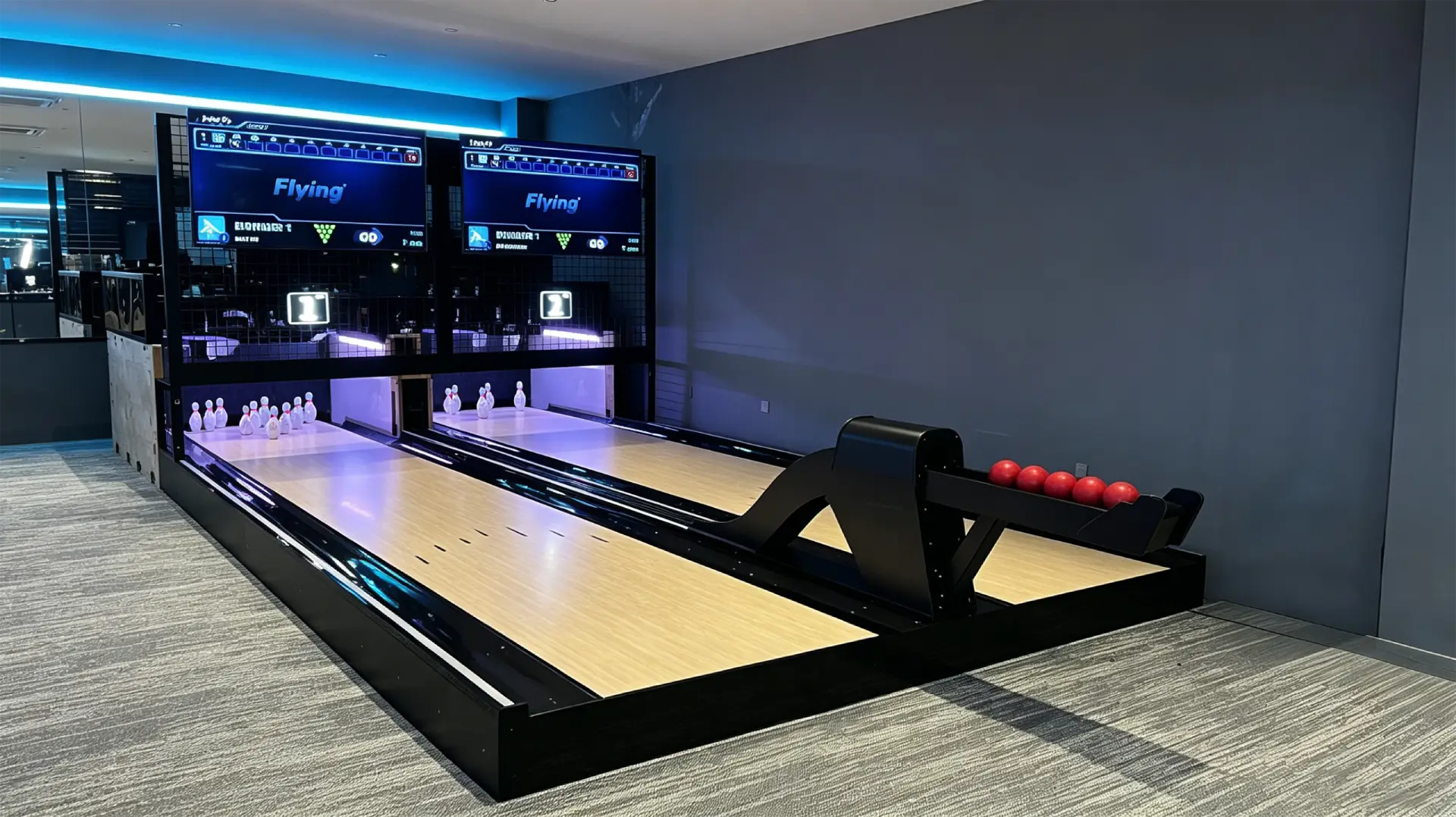
Flying Smart Duckpin Bowling is a compact duckpin bowling equipment system designed for bars, family entertainment centers, hotels, resorts, cinemas, boutique bowling alleys, and social entertainment venues. With a standard 9.13m duckpin bowling lane, 1.25kg lightweight balls, automatic scoring, ball return, LED lighting, and a smart string pinsetter, it creates a fast-paced and easy-to-play bowling experience in a smaller footprint than traditional bowling.
The system is available as a turnkey duckpin bowling package, including lane equipment, a string pinsetter system, scoring hardware, control software, global shipping, installation guidance, and technical support.
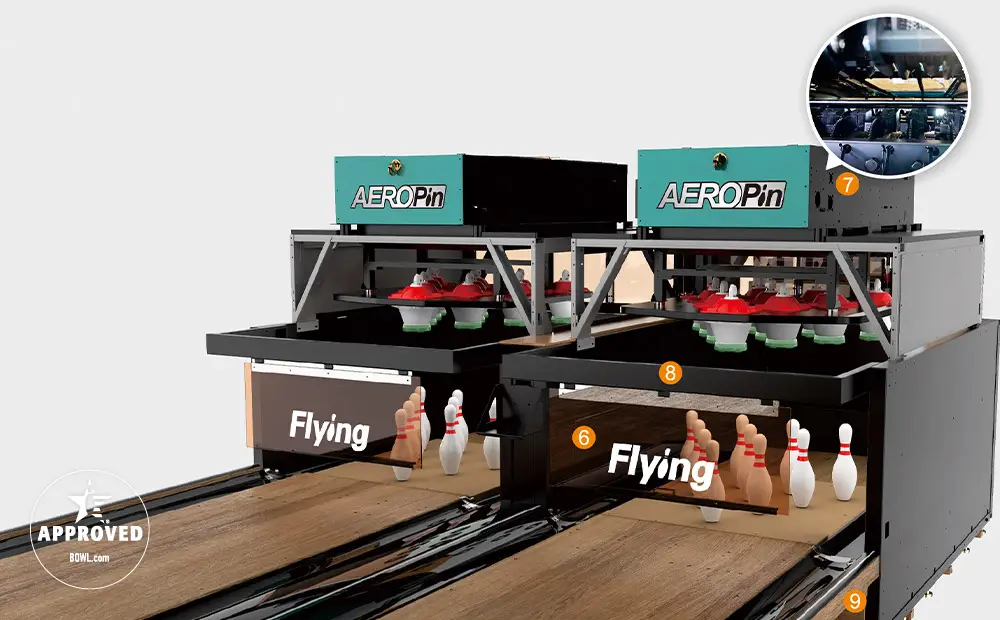
AEROPIN is Flying Bowling’s USBC-certified string pinsetter system for modern commercial bowling centers. Designed for fast pin setting, smooth ball return, low maintenance, and stable daily operation, it helps venue operators build league-ready and entertainment-focused bowling projects with confidence.
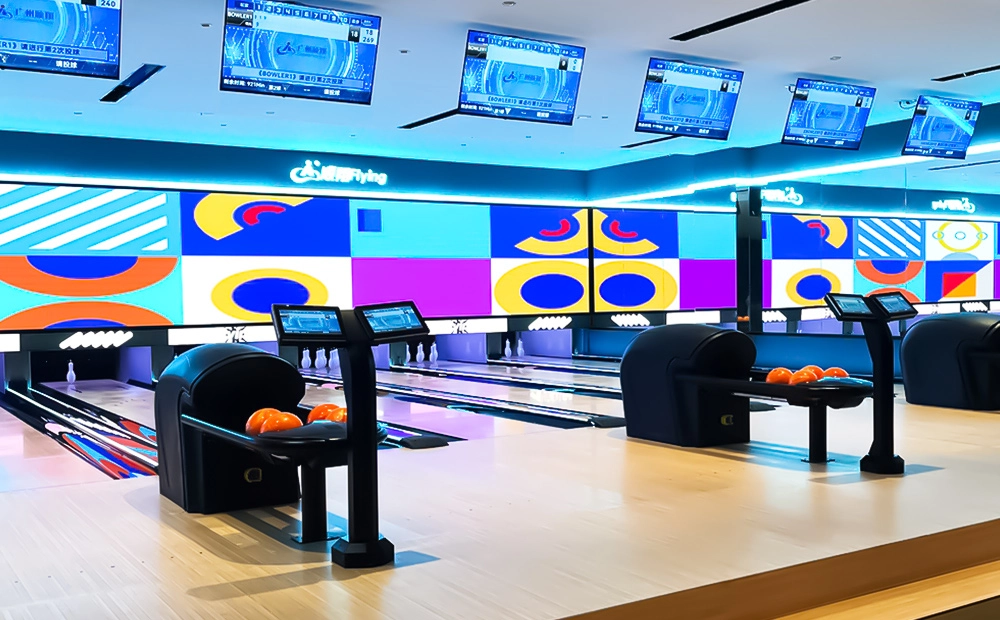
Flying Social Medium Bowling is a compact medium bowling equipment system designed for bars, cafes, family entertainment centers, community leisure venues, hotels, resorts, and small indoor entertainment spaces. With customizable lane lengths from 9.6m to 18m, small balls, lighter pins, string pinsetter technology, ball return, and automatic scoring, it creates an easy-to-play social bowling experience for players of different ages and skill levels.
Compared with full-size standard bowling, medium bowling requires less space and offers a more casual, interactive format. It is a practical choice for venues that want to add a bowling attraction without building a full commercial bowling alley.
Contact Flying
Start Your Custom Bowling Alley Project
If you contact us now for more details, we can provide you with a custom bowling alley service. Our service team will get back to you within 24 hours normally!
© 2026 Flying BOWLING. Designed by gooeyun.
FOLLOW US:

Flying Bowling
Flying Bowling
Flyingbowling
Flyingbowling
Flyingbowling