

New vs Used Bowling Alley Equipment: How to Compare String Pinsetters and Free-Fall Machinery
Choosing between new and used bowling alley equipment requires more than comparing purchase prices. A used machine may require inspection, refurbishment, compatibility verification, or parts replacement; new equipment still needs a complete documented scope, shipping logistics, installation planning, and clear support terms. The fair comparison is the total documented project cost and operational fit of each option over the same scope and evaluation period.
Quick Answer: Is New or Used Bowling Alley Equipment the Better Buy?
The short answer
Neither option is automatically the better value. New equipment may offer a more clearly defined configuration and condition documentation, while used or refurbished machinery may suit a project when its condition, required work, parts access, and support are thoroughly documented. The better choice is the option whose verified scope, documented condition, support terms, and likely operating requirements fit the venue, budget, schedule, and risk tolerance.
What buyers should compare first
Compare lane count and included equipment scope, not just the pinsetter purchase price. Then verify condition and inspection records, refurbishment work completed, warranty and service terms, freight and installation responsibilities, commissioning and training scope, and the maintenance assumptions behind each quotation. Separate confirmed supplier figures from estimates that still require site verification or technical review.
For a broader view of how machinery fits into a complete venue specification, see the guide to commercial bowling alley equipment. Supplier documentation and project coordination also matter; these are useful evaluation criteria when assessing bowling alley equipment manufacturers.
What Counts as New, Used, and Refurbished Bowling Equipment?
New equipment
"New" typically means the equipment is supplied in unused condition rather than previously installed or operated. The label alone does not define the complete package. Ask whether the quotation includes lane assemblies, pinsetters, ball return mechanisms, scoring hardware, digital displays, lighting, bowling balls, pins, installation guidance, commissioning, and operator training—or only selected machinery components.
Used equipment
Used equipment has been operated or installed before. Equipment age alone does not establish its condition: service history, operating environment, storage conditions, previous repairs, component availability, and maintenance records all matter significantly. Request model and component identification, available service records, documented maintenance history, known defects, and current inspection evidence before making a decision.
Refurbished equipment
"Refurbished" is not a complete condition report. One seller may mean cleaned and tested; another may have replaced or repaired specified components. Require a detailed, itemized refurbishment scope and written inspection findings, including work not performed, remaining defects, and any parts or adjustments still required before operation.
Why the label alone is not enough
Compare a machine-only purchase with a complete lane-equipment package only after listing what each includes. Also distinguish equipment age from pinsetter technology: new equipment is not synonymous with string operation, and used equipment is not necessarily free-fall. For routine servicing considerations, review bowling equipment preventative maintenance routines. Buyers comparing a full project scope can also reference turnkey bowling alley equipment packages to understand what integration and support should be included.
What Determines the Total Cost of New vs Used Bowling Alley Equipment?
Purchase scope and configuration
Lane count, pinsetter type, ball return mechanism, scoring system, displays, and other included components determine what the quotation actually covers. Missing or incompatible components can turn an apparently lower equipment price into additional sourcing, adaptation, or replacement work. Always compare equivalent lane counts, component lists, and operating functions before evaluating cost.
Condition and refurbishment
Used machinery requires documented condition evidence before buyers can estimate corrective work with confidence. Inspection fees, parts replacement, repairs, and refurbishment may be separate charges—or may be excluded from the quoted price. Request itemized estimates for each category rather than assuming the equipment is ready to install.
Site and project requirements
Venue dimensions, lane arrangement, delivery access, and the relationship between new and existing equipment affect the total project scope. A layout that has not been verified against actual site information can prompt redesign or installation changes. Include local building work and permitting in the project budget, but do not assume an equipment supplier includes these items in their quotation.
Shipping, installation, and support
Freight and handling costs depend on the shipment origin, destination, and delivery terms; installation responsibilities depend on the contract and local conditions. Verify whether commissioning, staff training, technical support, and service visits are included, optional, or excluded. Record customs clearance, local labor, and site preparation separately when they are not part of the supplier's offer.
New vs Used Bowling Alley Equipment: Side-by-Side Comparison
Use this table as a quotation review tool to ensure you request and compare the same information from each supplier. Ask for documented evidence against each line item, and verify warranty and service terms specific to the equipment and seller.
| Comparison point | New equipment: verify | Used or refurbished equipment: verify |
|---|---|---|
| Condition and records | New status, equipment specification, included components, and manufacturing date | Age, model identification, operating history, inspection findings, known defects, and refurbishment record |
| Initial quotation | Whether the price covers a complete package or selected equipment only | Whether inspection, repairs, missing parts, or compatibility work are additional charges |
| Warranty and service | Coverage period, start date, covered parts, exclusions, and claim process | Whether any coverage is offered, what it covers, duration, and how claims are handled |
| Parts and technical support | Parts identification, availability, and support arrangements for the quoted model | Whether parts can be sourced and whether technical support applies to the specific model |
| Project fit | Compatibility with the venue, schedule, and selected bowling format | Compatibility with planned lanes and supporting systems, plus documented corrective work needed |
Cost Breakdown: Build a Like-for-Like Total Cost of Ownership
Build a comparison worksheet in one currency and use the same evaluation period for both options. Mark each entry as supplier-quoted, buyer estimate, or unconfirmed; this prevents assumptions from appearing as contracted costs. Include one-time costs, recurring costs, and items that require further verification.
Equipment and included components
List each lane and system component, quantity, model where available, and whether it is included in the quoted price. A full commercial package may involve lane assemblies, pinsetters, ball returns, scoring hardware, displays, bowling balls, and pins. Confirm scope line by line rather than relying on a package label.
Assessment and refurbishment
For used machinery, record inspection fees, repairs, replacement parts, and any work required before commissioning. If the seller cannot assess a component, keep the amount unconfirmed and identify who will inspect it and when before approval.
Freight and handling
Compare packaging, loading, freight, unloading, and any destination charges as separate entries. Different shipping terms can shift costs and responsibilities between buyer and seller, so record the quoted delivery point and what happens after arrival at your facility.
Installation and commissioning
Identify whether installation is performed by the supplier, a local contractor, or your team. Include travel, labor, commissioning, and training only where quoted or separately estimated. Confirm which local works and site preparations remain outside the equipment contract.
Maintenance, parts, and support
Use documented service requirements and parts information rather than assuming that equipment age or pinsetter design alone predicts maintenance costs. Ask what routine work operators can perform, which issues require specialist support, and whether parts and technical assistance are available for the specific system. Industry resources such as BPAA's industry resources for bowling proprietors provide operator context and best practices; they should not be treated as supplier-specific equipment quotations. Family entertainment center planners can consult IAAPA research and resources for broader attractions-sector investment context, not as a substitute for your project cost estimates.
Technical and Condition Checks Before Buying Used Machinery
Use this checklist to gather and verify the information needed to assess used or refurbished equipment before purchase.
Request an equipment inventory and service history
Ask the seller for a list identifying each machine and major component, available maintenance records, refurbishment work performed, known defects, and written exclusions. Request dated photographs or inspection documentation where available, and confirm that the evidence relates to the exact equipment being sold.
Confirm compatibility with the planned lanes and systems
Do not assume a used pinsetter will connect or operate as required with your planned lane configuration, ball return, scoring, controls, and venue layout. Have the supplier and your project team identify compatibility requirements and any necessary changes in writing. String and traditional free-fall pinsetters use different pin-handling arrangements and interfaces; do not treat them as interchangeable without a detailed project-specific review.
Document inspection findings
Agree with the seller who inspects the equipment, what components are checked, and how defects or corrective work will be recorded. A useful inspection outcome distinguishes confirmed condition from items that could not be tested, and assigns clear responsibility for unresolved work before acceptance.
Verify parts and technical support
Ask who can supply replacement parts for the specific model, whether support covers the exact equipment, and what response time or service process is contractually available. A low purchase price is difficult to assess if parts access or repair responsibility remains unclear.
Which Option Fits Your Bowling Project?
New equipment for a planned installation
New equipment can be a practical fit when the project needs a clearly defined configuration and the supplier can document scope, warranty, support, and delivery responsibilities in writing. Confirm that the commercial terms and venue requirements work together; "new" alone does not guarantee an installation-ready package.
Used or refurbished equipment for a constrained procurement
Used machinery can fit when you have a clear condition report, verified compatibility with your lanes and systems, an itemized allowance for required work, and a realistic support plan. If inspection is incomplete or essential parts and service access are uncertain, the purchase carries unresolved cost and operational exposure.
Retrofit and replacement projects
For a retrofit, evaluate retained lanes and supporting systems before selecting a replacement pinsetter. Existing interfaces, available space, and your operating requirements can constrain the choice. A new machine may still require adaptation, while used equipment may be unsuitable despite matching the previous system in name or appearance.
Questions that determine fit
- Is this a new venue, renovation, or equipment replacement project?
- How much budget certainty is needed before ordering?
- Can you inspect the machinery and verify its condition before purchase?
- Does the chosen pinsetter match your lane and support-system configuration?
- Who will handle installation, commissioning, maintenance, and technical service?
How to Get an Accurate, Comparable Quote
Quote information checklist
Send each supplier the same project brief to ensure comparable quotations. Include:
- Project location and venue type
- CAD or floor plans and available dimensions
- Ceiling height, column locations, entrances, and exits
- Preferred bowling format and planned lane count
- Whether the request is for new, used, or refurbished equipment
- Required lanes, pinsetters, ball returns, scoring, displays, and other components
- For used equipment: model identification, condition records, inspection needs, and known defects
Plans and site details
Use current, accurate drawings and identify dimensions that have not been confirmed on site. Incomplete or conflicting plans can produce a quote based on assumptions that later require layout or scope changes. Ask the supplier to flag missing information rather than silently treating it as resolved.
Equipment scope and commercial terms
Request itemized equipment, exclusions, condition documentation, warranty, parts and support terms, packaging, shipping, installation, commissioning, and training. Ask which prices are firm quotations and which depend on inspection, final plans, or local contractor estimates.
Common Quoting and Procurement Mistakes
Comparing unlike equipment packages
Different lane counts or component inclusions make headline totals misleading. Align the equipment list and project scope before comparing suppliers.
Treating "refurbished" as a complete condition report
The label does not explain which parts were replaced, what was tested, or what remains defective. Require a written refurbishment scope and inspection findings.
Overlooking exclusions
Freight, unloading, installation, commissioning, training, customs, and local works may be handled by different parties. Assign each responsibility clearly before contract approval.
Relying on incomplete drawings or assumptions
Unconfirmed dimensions or access routes can affect equipment layout and delivery planning. Resolve conflicts between site information and the proposed configuration before the order is finalized.
Cost Reduction Strategies Without Increasing Project Risk
Standardize scope across supplier quotations
Use one equipment schedule and one list of required services for every bidder. This reduces the chance that a low total simply reflects omitted components or shifted responsibilities.
Complete the engineering review early
Ask suppliers to review your plans for layout fit, interfaces, and installation constraints before equipment configuration is approved. Resolve equipment-to-lane questions early; late changes can require rework to the quote or site plan.
Confirm materials, finishes, tolerances, and packaging requirements
Specify only the materials and finishes required for your project, and clarify interface dimensions and tolerances where components must align. Agree packaging and handling needs before shipping is arranged, especially when the delivery route or site access imposes constraints.
Avoid unnecessary specification changes
Once the scope is agreed, control revisions to lane count, configuration, or included features. Evaluate proposed savings against compatibility, maintenance, parts access, and support terms—not purchase price alone.
How to Choose the Right Supplier for Cost Optimization
Verify scope and equipment condition
Look for a clear bill of scope and, for used equipment, component identification, inspection records, refurbishment details, known defects, and written exclusions. Ask suppliers to put open questions and the answers into the quotation or contract.
Evaluate engineering and project coordination
Check how the supplier reviews plans, confirms equipment configuration, coordinates shipping, and handles installation guidance, commissioning, and training. These responsibilities should be described clearly rather than implied by terms such as "complete" or "turnkey."
Review warranty and after-sales terms
Confirm coverage period, start date, covered equipment, exclusions, parts, and the process for raising a claim. Verify that warranty terms are specific to the equipment model and contract, not assumed to apply uniformly across all systems.
Ask for written answers to open questions
Before ordering, close out questions about compatibility, inspection, corrective work, parts, support, freight, and local responsibilities. If certification matters to your project, verify the precise model and supporting documentation; do not assume a claim for one model applies to other equipment.
Conclusion and Next Steps: Make the Decision on Documented Project Cost
The useful comparison is not "new versus used" in isolation. It is a complete, comparable scope with documented condition, corrective work, shipping, installation, warranty, support, and maintenance assumptions made visible. Choose new equipment when its verified scope and commercial terms fit your project; choose used equipment when condition and support risks are documented well enough to price and manage.
Before approval, send suppliers the same current plans and equipment schedule, resolve unknowns, and record exclusions. This makes both the purchase decision and the handover to installation and operations more predictable.
Discuss Your Project Requirements
For a project-specific equipment comparison and quotation, prepare your venue location, CAD or floor plans, available dimensions, preferred bowling format, and planned lane count. Include the equipment scope you need and any existing machinery you intend to retain or replace.
Frequently Asked Questions
References
More Articles

Let’s Build a center Together
Partner With a Trusted Bowling Alley Design, One-Stop Solution Manufacturer.
Flying has successfully built ideal bowling alleys for more than 3,000 customers.

Technical Expert
You may also like our products
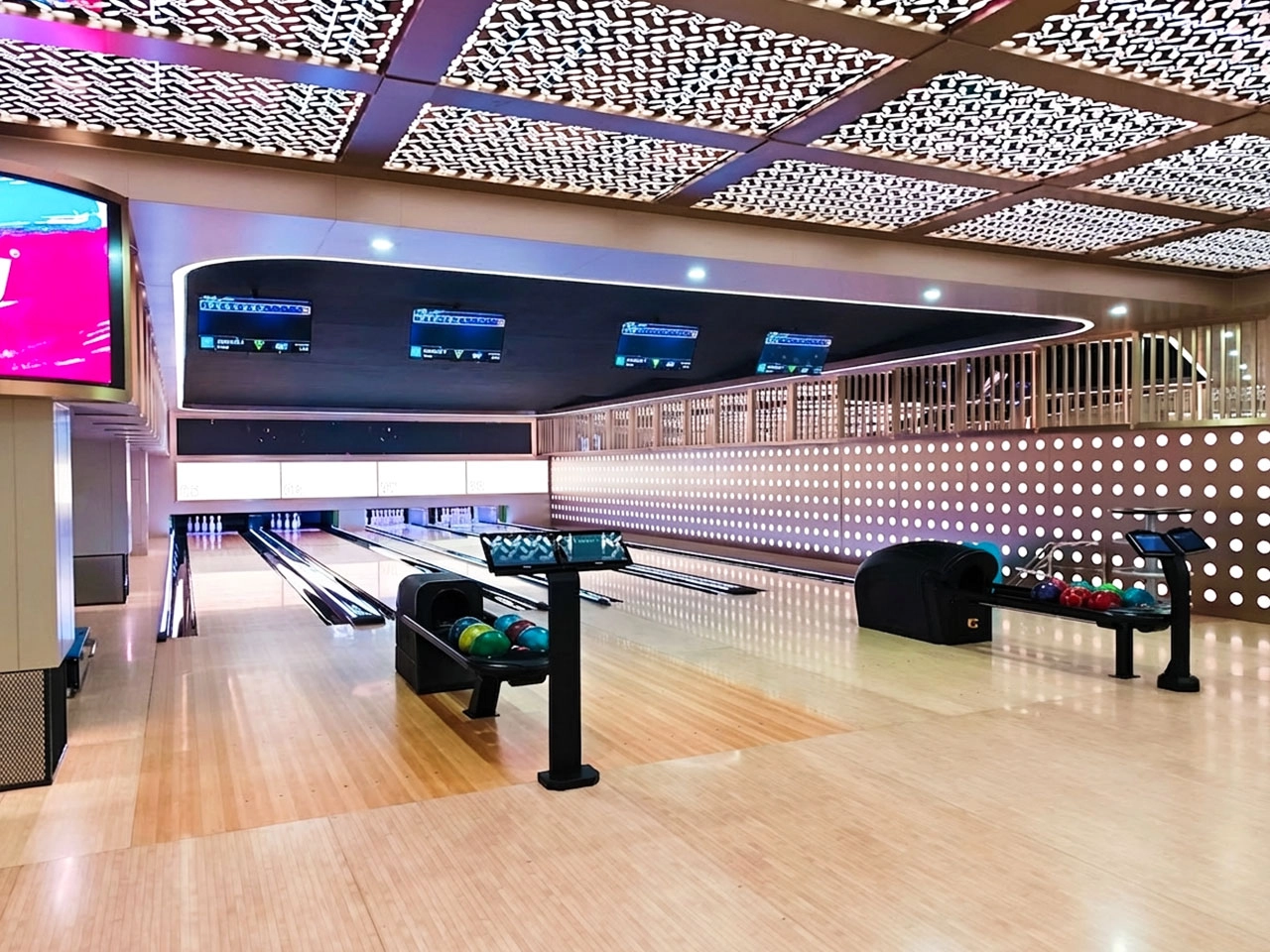
Build a commercial bowling venue with Flying’s complete string pinsetter bowling alley equipment package. The system includes the AEROPIN™ USBC-certified string pinsetter, customizable lanes, automatic scoring, ball return, lane lighting, pins, control hardware, and overseas installation support.
Designed for commercial bowling centers, family entertainment venues, hotels, resorts, bars, and premium private projects, this turnkey bowling system helps operators reduce sourcing complexity and prepare for reliable long-term operation.
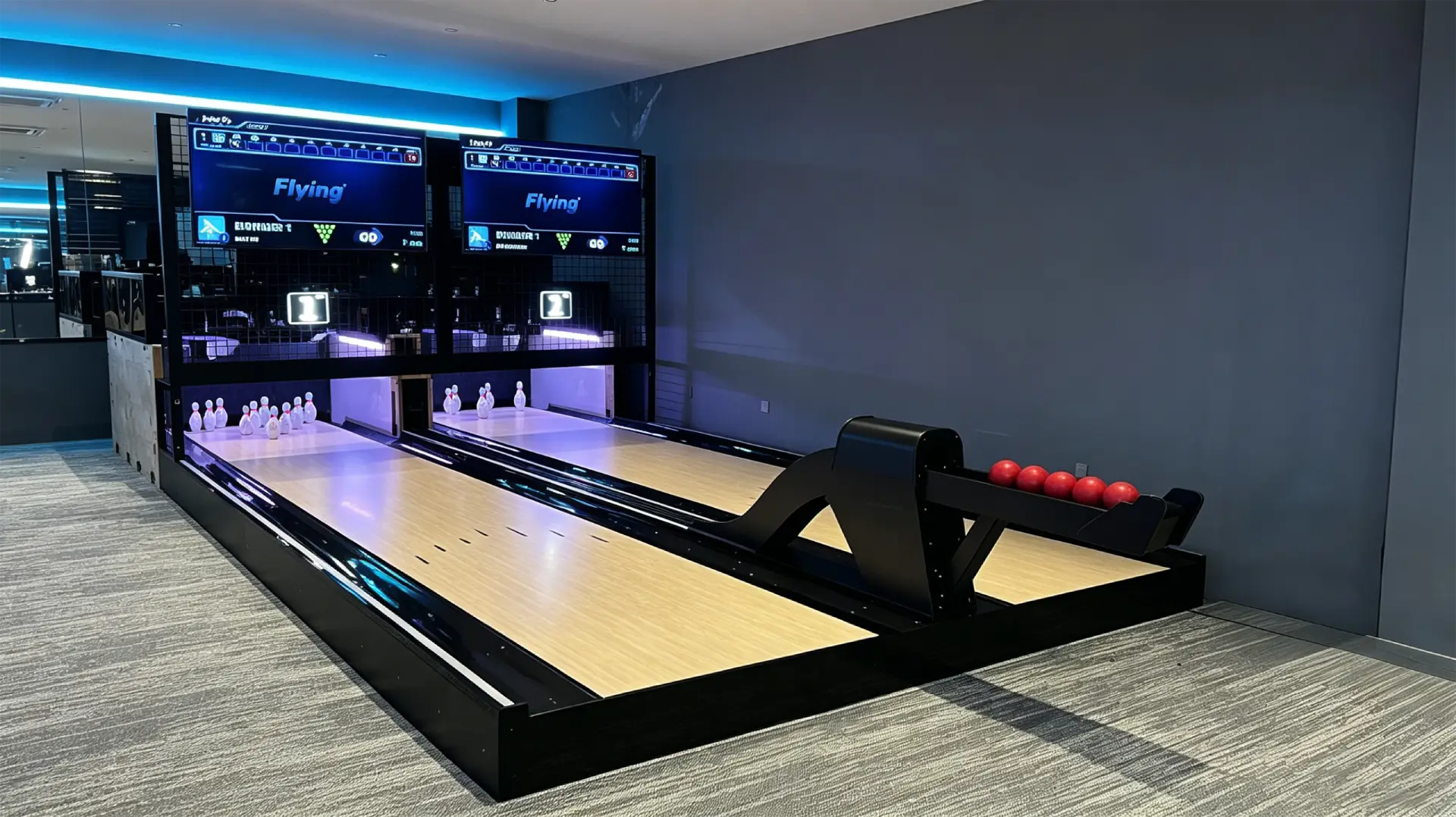
Flying Smart Duckpin Bowling is a compact duckpin bowling equipment system designed for bars, family entertainment centers, hotels, resorts, cinemas, boutique bowling alleys, and social entertainment venues. With a standard 9.13m duckpin bowling lane, 1.25kg lightweight balls, automatic scoring, ball return, LED lighting, and a smart string pinsetter, it creates a fast-paced and easy-to-play bowling experience in a smaller footprint than traditional bowling.
The system is available as a turnkey duckpin bowling package, including lane equipment, a string pinsetter system, scoring hardware, control software, global shipping, installation guidance, and technical support.
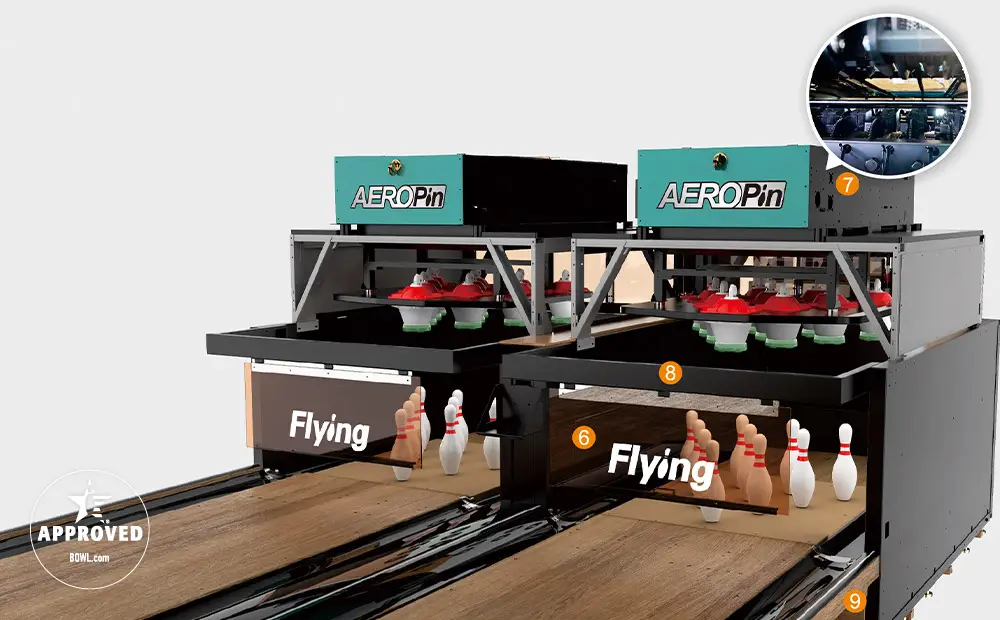
AEROPIN is Flying Bowling’s USBC-certified string pinsetter system for modern commercial bowling centers. Designed for fast pin setting, smooth ball return, low maintenance, and stable daily operation, it helps venue operators build league-ready and entertainment-focused bowling projects with confidence.
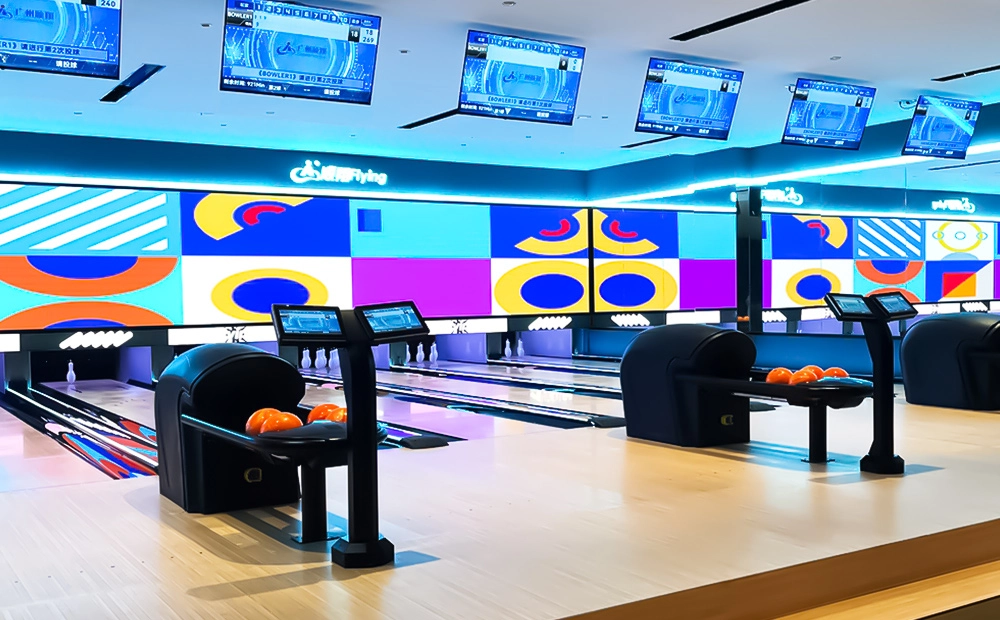
Flying Social Medium Bowling is a compact medium bowling equipment system designed for bars, cafes, family entertainment centers, community leisure venues, hotels, resorts, and small indoor entertainment spaces. With customizable lane lengths from 9.6m to 18m, small balls, lighter pins, string pinsetter technology, ball return, and automatic scoring, it creates an easy-to-play social bowling experience for players of different ages and skill levels.
Compared with full-size standard bowling, medium bowling requires less space and offers a more casual, interactive format. It is a practical choice for venues that want to add a bowling attraction without building a full commercial bowling alley.
Contact Flying
Start Your Custom Bowling Alley Project
If you contact us now for more details, we can provide you with a custom bowling alley service. Our service team will get back to you within 24 hours normally!
© 2026 Flying BOWLING. Designed by gooeyun.
FOLLOW US:

Flying Bowling
Flying Bowling
Flyingbowling
Flyingbowling