


There is no universal duckpin bowling alley cost. Total investment depends on lane quantity, venue condition, equipment configuration, shipping route, installation access, local approvals, utilities, and fit-out requirements. Buyers should compare complete project scopes rather than headline equipment prices.
Quick Answer: What Does a Duckpin Bowling Alley Cost?
A commercial duckpin bowling project normally combines equipment, site preparation, construction and fit-out, logistics, installation and commissioning, local approvals and utilities, and pre-opening costs. For preliminary planning, separate the budget into these categories; suppliers can then convert the defined scope into a project-specific quotation.
Industry resources from IAAPA Research & Resources and the BPAA Proprietor Resource Center may provide broader context for entertainment-venue investment and bowling-center planning. They should not be used to create an unsupported fixed price for a specific duckpin project.
A practical planning formula is:
Total project cost = equipment package + site preparation + construction and fit-out + logistics + installation and commissioning + permits and utilities + pre-opening costs.
This is a budgeting structure, not a price estimate. The most reliable next step is to request an itemized quotation that states inclusions, exclusions, assumptions, optional items, taxes, duties, delivery terms, and installation responsibilities. A broader duckpin bowling alley cost breakdown can help organize these categories before an RFQ is issued.
What Determines Duckpin Bowling Alley Cost?
Lane quantity, layout, and venue capacity
Lane count affects equipment quantities, floor area, scoring positions, electrical and network coordination, circulation, seating, customer capacity, and installation effort. A compact bar or hotel installation may prioritize footprint and customer flow, while a family entertainment center may require larger customer areas and additional venue infrastructure.
Existing-space conversion versus new construction
An existing building may reduce some construction work but introduce constraints such as columns, floor levels, ceiling height, access routes, electrical capacity, fire systems, and landlord requirements. A new build can simplify layout coordination, but usually requires a broader building and professional-services budget.
Equipment configuration
The selected combination of bowling lanes, duckpin string pinsetters, ball return machines, and scoring systems determines the equipment scope. Mechanical, electrical, software, and control interfaces should be reviewed together. Buyers evaluating duckpin bowling string pinsetter cost should distinguish a machine-only price from a package that includes controls, mounting items, documentation, and project integration.
Destination and local conditions
Delivery location, import requirements, taxes, local labor, building access, permits, utility conditions, and compliance obligations can materially change the delivered cost. A quotation prepared without a destination and basic site information should be treated as preliminary.
Key Cost Factors in a Commercial Duckpin Bowling Project
- Lanes and lane preparation: Include floor condition, level requirements, approach areas, side clearances, finished-floor interfaces, and access for moving components.
- String pinsetters: Price the quantity, configuration, controls, mounting requirements, service access, and operating documentation as a coordinated scope.
- Ball return machines: Check whether returns are individual or shared, how they affect circulation, and which connecting work is building-side.
- Scoring systems: Clarify displays, lane controls, player interfaces, network requirements, software scope, and any venue-management integration.
- Electrical and networking: Identify circuits, distribution, grounding, cable routes, data points, control locations, and the division of work between contractors.
- Construction and fit-out: Budget for flooring, ceilings, lighting, HVAC coordination, acoustic treatment, fire and accessibility work, reception, seating, storage, and customer areas. See the related guide to duckpin bowling alley construction cost factors.
- Logistics: Separate packaging, export handling, freight, insurance, customs, duties, terminal charges, inland delivery, unloading, and storage.
- Installation and handover: Define unloading, positioning, assembly, connections, testing, commissioning, training, documentation, and acceptance responsibilities.
- Local and pre-opening costs: Include permits, professional drawings, inspections, utility connections, furniture, operating supplies, signage, staff preparation, and opening expenses.
The boundary between supplied equipment and site work is often more important than the equipment line price. Each quotation should show which party owns every building interface.
Cost Impact Table: Which Factors Can Change the Budget Most?
The ratings below indicate potential influence on project structure, not a percentage or price prediction.
For more context on this related topic, see duckpin bowling equipment installation cost.
| Cost factor | Potential impact | Why it changes cost | Information needed | Buyer decision |
|---|---|---|---|---|
| Lane quantity and layout | High | Changes equipment, floor area, capacity, services, and installation effort. | Lane count, dimensions, circulation, seating, and preferred layout. | Approve the coordinated layout before final pricing. |
| Site condition | High | Floors, ceilings, access, utilities, and structural constraints may require additional work. | Floor plan, survey, photos, ceiling information, and access route. | Record site assumptions and unresolved conditions. |
| Construction and fit-out | High | Building preparation and customer areas may exceed the equipment scope. | New-build or conversion status, finish standard, HVAC, lighting, and accessibility needs. | Separate supplier work from general-contractor work. |
| Logistics route | High | Destination, delivery terms, customs, unloading, and inland transport affect delivered cost. | Delivery address, preferred port, delivery term, cargo constraints, and unloading method. | Identify the handover point and local charges. |
| Installation access | Medium to high | Restricted access, lifting, working hours, and local labor affect site execution. | Door sizes, loading route, floor route, lifting equipment, and site schedule. | Assign access equipment and labor responsibilities. |
| Equipment configuration | Impact depends on project | Pinsetters, returns, scoring, controls, and optional interfaces change the package. | Equipment list, lane arrangement, scoring requirements, and operating model. | Compare line-by-line bills of material. |
| Materials and finishes | Medium | Appearance, durability, surface preparation, and cleaning expectations affect scope. | Material, color, finish, wear expectations, and maintenance requirements. | Approve written finish descriptions or samples. |
| Local compliance | Impact depends on project | Approvals, inspections, documentation, and professional services vary by location. | Authority requirements, landlord rules, and consultant responsibilities. | Obtain local confirmation before freezing the budget. |
Duckpin Bowling Alley Cost Breakdown by Project Stage
1. Pre-design and site assessment
Establish the lane count, layout, venue type, customer flow, floor area, ceiling conditions, site access, and utility assumptions. A useful preliminary drawing shows equipment boundaries and building interfaces, not only the visible playing area.
2. Equipment definition
Itemize lanes, string pinsetters, ball returns, scoring, controls, accessories, documentation, and any optional components by lane or system. This creates a defensible equipment subtotal and supports a meaningful duckpin bowling cost per lane comparison.
3. Engineering coordination
Resolve incomplete drawings, mounting points, tolerances, service clearances, floor interfaces, cable routes, materials, and finishes before fabrication. A late change can create redesign, rework, packaging changes, or site delays.
4. Building preparation and fit-out
Assign floor, ceiling, electrical, network, lighting, HVAC, accessibility, fire-safety, storage, and customer-area work to named parties. Do not assume that an equipment quotation includes general construction unless it states this clearly.
5. Logistics and delivery
Define packaging protection, labeling, transport, insurance, customs, delivery terms, unloading, and temporary storage. Protection should reflect the route, handling points, moisture exposure, and site storage conditions.
6. Installation, testing, and opening
Budget the work required to position, assemble, connect, test, commission, document, and hand over the equipment. The acceptance process should identify site-readiness requirements, outstanding items, and the records required at handover.
7. Contingency and change control
Base contingency on verified unknowns such as an unconfirmed floor condition, access route, or local approval. It should not conceal missing scope. Freeze drawings, materials, finishes, interfaces, and responsibilities before production or shipment.
How to Get an Accurate Duckpin Bowling Alley Quote
A supplier needs enough information to price the actual venue rather than a generic equipment package. Prepare the following RFQ information:
| RFQ item | Information to provide or request |
|---|---|
| Venue and destination | Site location, delivery address, venue type, operating model, construction status, and local requirements. |
| Layout and drawings | Floor plan, available dimensions, elevations, lane quantity, equipment layout, access route, and drawing revision. |
| Equipment scope | Lanes, string pinsetters, ball returns, scoring, controls, accessories, optional items, and owner-supplied items. |
| Technical interfaces | Floor conditions, mounting points, service clearances, electrical assumptions, network requirements, and control interfaces. |
| Materials and finishes | Material selection, color, visible finish, durability expectations, cleaning requirements, and approval method. |
| Delivery and installation | Packaging expectations, unloading method, access restrictions, local labor, installation scope, testing, and handover requirements. |
| Commercial terms | Inclusions, exclusions, assumptions, options, freight, taxes, duties, payment terms, quotation validity, warranty scope, and after-sales responsibilities. |
Compare quotations on a like-for-like basis
Normalize each quotation into equipment, engineering, construction interfaces, logistics, local delivery, installation, commissioning, owner-supplied work, taxes, and duties. Then compare the bill of materials, drawings, finish descriptions, acceptance criteria, change-order rules, and support assumptions. A lower headline total with more exclusions may represent a higher project cost.
Common Quoting Mistakes That Increase Project Cost
| Mistake | Likely consequence | Preventive action |
|---|---|---|
| Comparing equipment-only prices | Construction interfaces, site labor, logistics, or testing remain unfunded. | Compare complete scopes or create a separate owner budget for every omitted category. |
| Using incomplete drawings | Dimensions, finishes, materials, or access assumptions change after pricing. | Issue drawings with revision status and identify unresolved information. |
| Ignoring tolerances and interfaces | Lanes, pinsetters, returns, flooring, and building work may not align at installation. | Review mounting points, clearances, levels, and responsibilities before fabrication. |
| Treating shipping as one line | Customs, unloading, insurance, inland delivery, or storage may be excluded. | Identify the delivery term, handover point, and local charges. |
| Under-specifying packaging | Finished surfaces or sensitive components may face avoidable transport risk. | State route, handling, moisture, storage, and unloading conditions in the RFQ. |
| Leaving change control unclear | Late revisions create disputes and unplanned charges. | Define assumptions, exclusions, validity conditions, approval steps, and change triggers. |
Cost Reduction Strategies for Duckpin Bowling Projects
- Use DFM review early: Identify unnecessary complexity, incomplete information, difficult finishes, tolerance conflicts, and packaging risks before fabrication.
- Standardize where practical: Compatible standardized components may simplify purchasing, training, service, and future replacement when the venue does not require customization.
- Decide materials and finishes deliberately: Balance appearance, durability, cleaning, availability, and budget before approval.
- Coordinate interfaces before construction is complete: Review lane boundaries, pinsetter mounting, ball-return positions, scoring displays, floor levels, cable routes, and service access.
- Match packaging to the route: Specify protection according to transport, transshipment, lifting, moisture, and storage conditions.
- Compare lifecycle value: Consider service access, replacement parts, documentation, training, installation complexity, and future modification—not only purchase price.
How to Evaluate Total Cost of Ownership
Compare the complete operating requirement rather than the initial invoice alone. A useful evaluation includes delivered-and-installed scope, site readiness, commissioning, handover documentation, maintenance access, replacement-part arrangements, operator needs, expected usage, and local service responsibilities. Where these items are not stated, treat them as open commercial questions rather than assumed supplier commitments.
How to Choose the Right Supplier for Cost Optimization
Choose a supplier that can present a coordinated scope for lanes, string pinsetters, ball returns, scoring systems, and the required engineering interfaces. The quotation should be supported by clear drawings, a bill of materials, revision control, assumptions, exclusions, and a defined acceptance process.
- Can the supplier explain which components are mandatory, optional, or owner-supplied?
- Will the supplier review incomplete drawings, tolerances, materials, finishes, access, and service clearances?
- Are packaging, delivery terms, unloading, installation, testing, and handover responsibilities documented?
- Are technical documents, operating information, and maintenance responsibilities identified?
- Are certifications, references, and service claims relevant, current, and verifiable?
- Does the proposal distinguish confirmed commitments from items requiring local confirmation?
Supplier-specific verification: Flying Bowling’s public company information lists duckpin bowling equipment, string pinsetters, ball returns, bowling lanes, scoring systems, and design and construction services; buyers should confirm the exact scope, documentation, installation responsibility, and regional support for the specific project.
Conclusion and Next Steps
The most reliable way to estimate duckpin bowling alley cost is to budget a complete operating venue rather than an equipment purchase. Start with lane quantity, layout, venue condition, and destination. Then separate equipment, engineering, construction, logistics, installation, local approvals, utilities, fit-out, and pre-opening expenses.
Before requesting final pricing, prepare the floor plan, drawings, quantity, equipment scope, material and finish requirements, delivery constraints, packaging expectations, and installation assumptions. Use supplier responses to identify unresolved risks before placing an order.
Send Your Drawings for a Cost Review
Submit your 2D or 3D drawings, lane quantity, destination, equipment requirements, material and surface-finish expectations, packaging conditions, and installation assumptions. A project-specific review can then distinguish scope gaps, inclusions, exclusions, and items requiring local confirmation.
FAQ: Duckpin Bowling Alley Cost and Quotation Questions
References
More Articles

Let’s Build a center Together
Partner With a Trusted Bowling Alley Design, One-Stop Solution Manufacturer.
Flying has successfully built ideal bowling alleys for more than 3,000 customers.

Technical Expert
You may also like our products
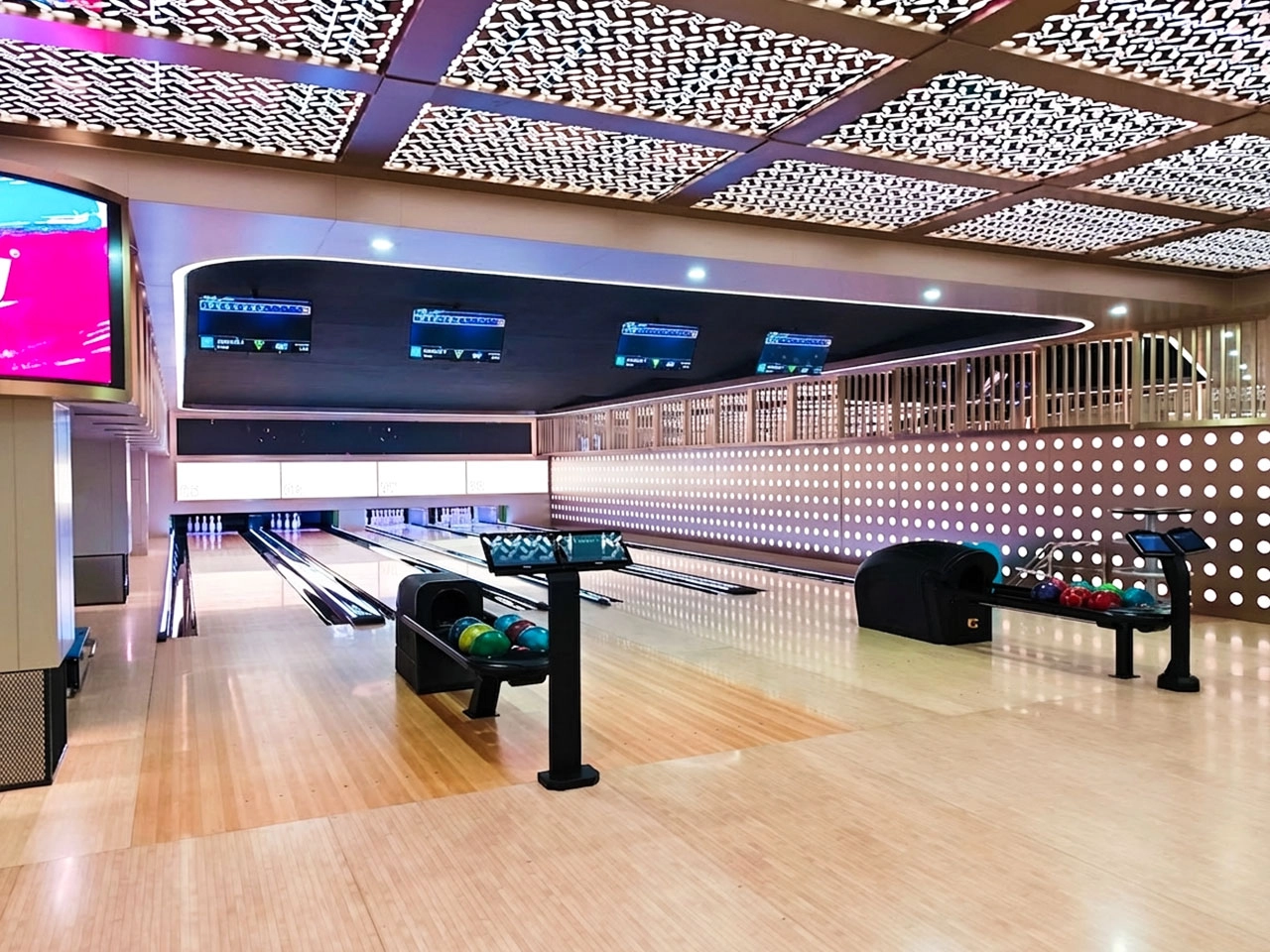
Build a commercial bowling venue with Flying’s complete string pinsetter bowling alley equipment package. The system includes the AEROPIN™ USBC-certified string pinsetter, customizable lanes, automatic scoring, ball return, lane lighting, pins, control hardware, and overseas installation support.
Designed for commercial bowling centers, family entertainment venues, hotels, resorts, bars, and premium private projects, this turnkey bowling system helps operators reduce sourcing complexity and prepare for reliable long-term operation.
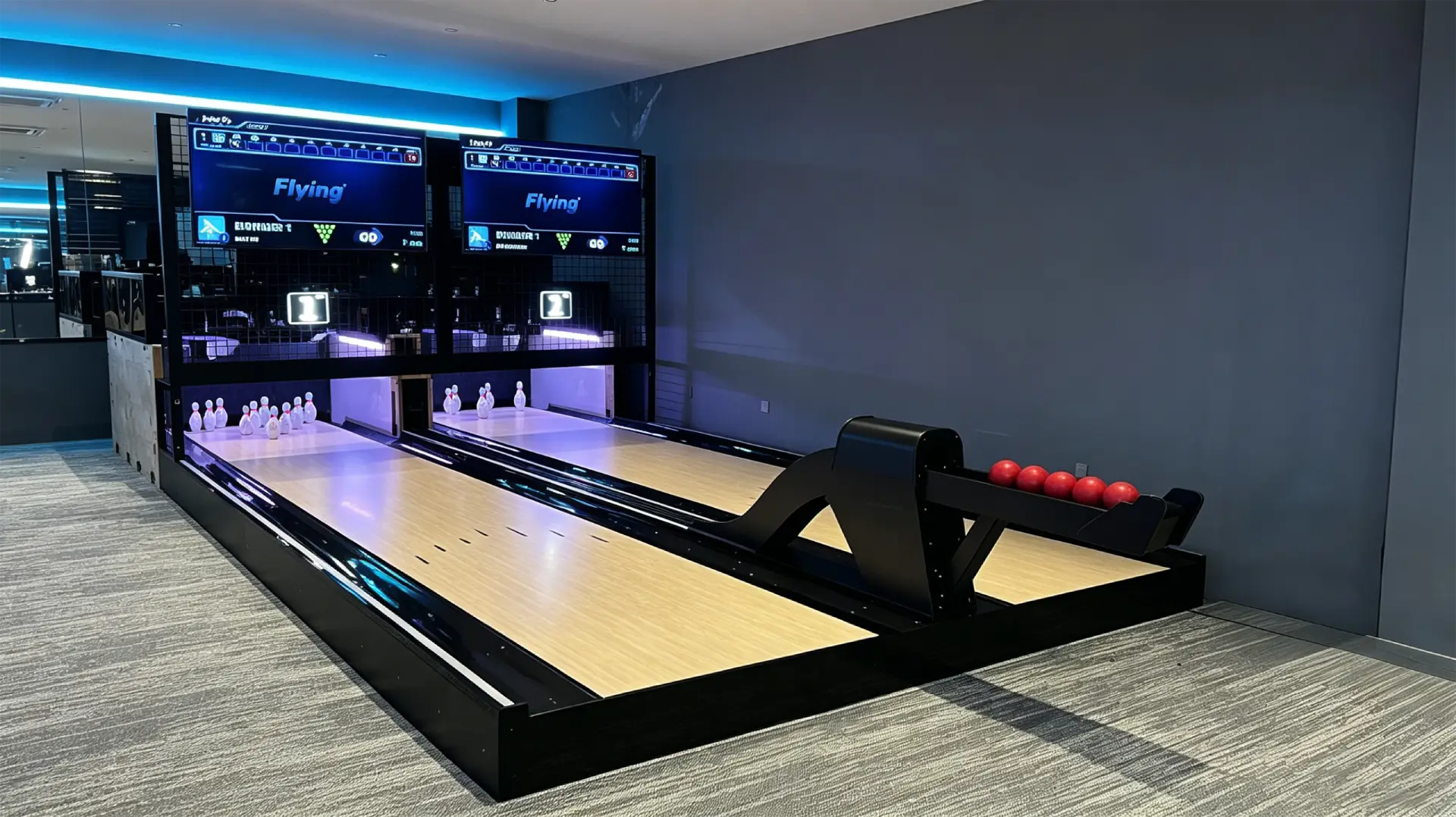
Flying Smart Duckpin Bowling is a compact duckpin bowling equipment system designed for bars, family entertainment centers, hotels, resorts, cinemas, boutique bowling alleys, and social entertainment venues. With a standard 9.13m duckpin bowling lane, 1.25kg lightweight balls, automatic scoring, ball return, LED lighting, and a smart string pinsetter, it creates a fast-paced and easy-to-play bowling experience in a smaller footprint than traditional bowling.
The system is available as a turnkey duckpin bowling package, including lane equipment, a string pinsetter system, scoring hardware, control software, global shipping, installation guidance, and technical support.
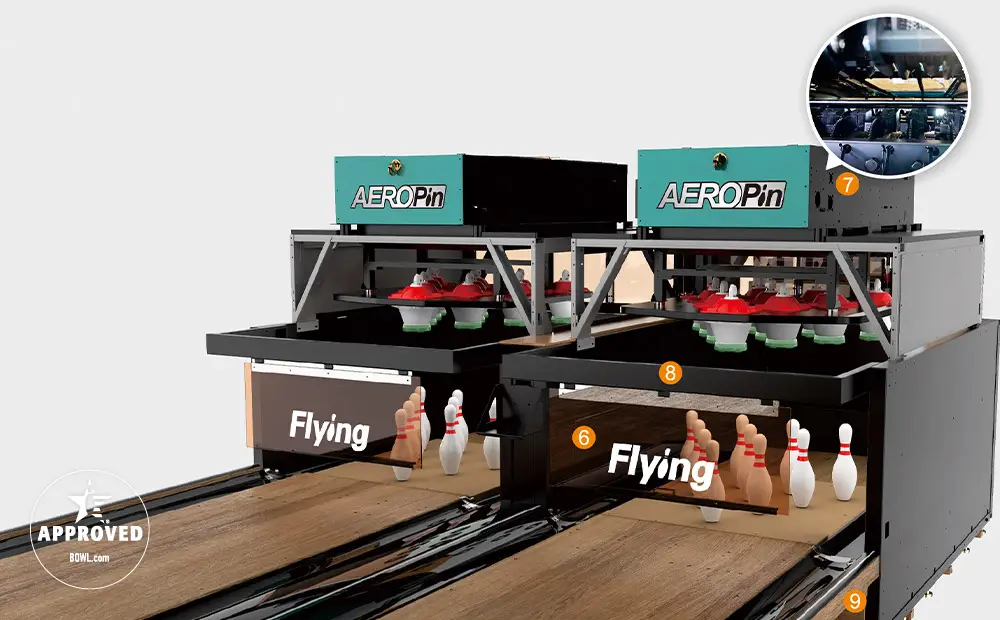
AEROPIN is Flying Bowling’s USBC-certified string pinsetter system for modern commercial bowling centers. Designed for fast pin setting, smooth ball return, low maintenance, and stable daily operation, it helps venue operators build league-ready and entertainment-focused bowling projects with confidence.
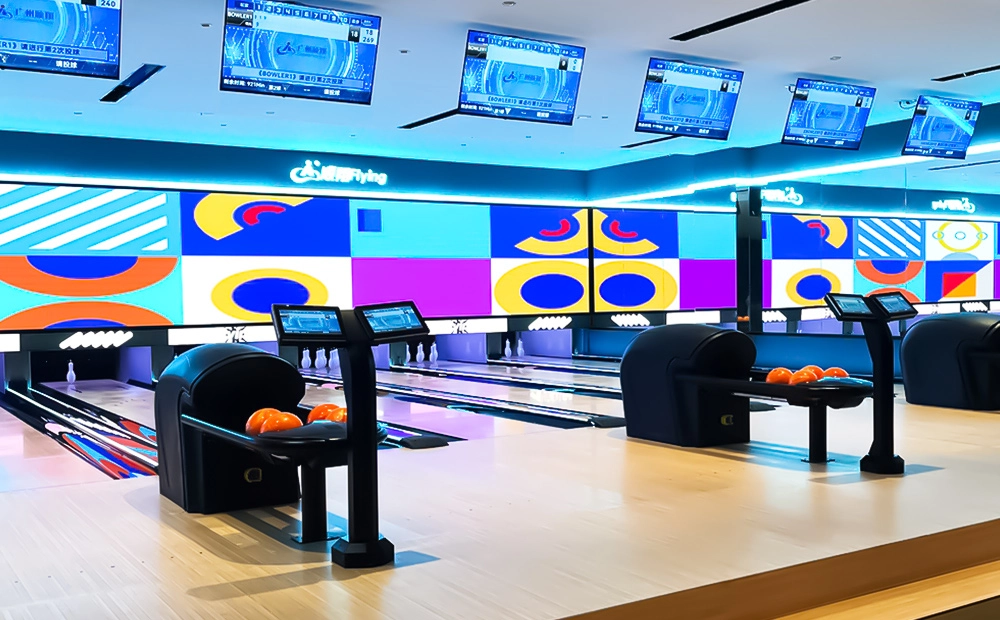
Flying Social Medium Bowling is a compact medium bowling equipment system designed for bars, cafes, family entertainment centers, community leisure venues, hotels, resorts, and small indoor entertainment spaces. With customizable lane lengths from 9.6m to 18m, small balls, lighter pins, string pinsetter technology, ball return, and automatic scoring, it creates an easy-to-play social bowling experience for players of different ages and skill levels.
Compared with full-size standard bowling, medium bowling requires less space and offers a more casual, interactive format. It is a practical choice for venues that want to add a bowling attraction without building a full commercial bowling alley.
Contact Flying
Start Your Custom Bowling Alley Project
If you contact us now for more details, we can provide you with a custom bowling alley service. Our service team will get back to you within 24 hours normally!
© 2026 Flying BOWLING. Designed by gooeyun.
FOLLOW US:
Flying Bowling
Flying Bowling
Flyingbowling
Flyingbowling