


Duckpin bowling equipment installation cost is project-specific. A quotation may include lane positioning, duckpin string pinsetter assembly, ball return and scoring connections, testing, commissioning, travel, and installation labor. Building work, electrical infrastructure, permits, shipping, taxes, storage, and site modifications may be separate.
The safest way to compare proposals is to separate equipment, engineering, site preparation, installation, building services, logistics, and handover. An itemized quotation based on current drawings, lane quantity, site conditions, and defined acceptance criteria is more useful than a single unexplained total.
Quick Answer: What Does Duckpin Bowling Equipment Installation Cost Include?
There is no universal installation price because a new family entertainment center with prepared floors and clear access presents a different scope from a hotel, bar, or existing bowling venue being renovated around finished interiors and operating facilities.
For broader project budgeting, distinguish installation from total venue investment. Equipment, construction, interior work, utilities, permits, furniture, technology, and opening expenses may all belong to the wider project budget. The duckpin bowling alley cost guide provides broader commercial investment context.
Typical quotation structure
| Quotation line | How it is commonly treated | Who should confirm it | Common exclusions or risks |
|---|---|---|---|
| Equipment | Listed by lane or equipment package | Buyer and equipment supplier | Accessories, spare parts, controls, or scoring components may be separate |
| Engineering review | Included, charged as a design item, or allowed for after a site review | Supplier and project engineer | Outdated drawings can create redesign and change-order costs |
| Site preparation | Usually assigned to the owner or local contractor unless stated otherwise | Owner, builder, and supplier | Floor correction, demolition, structural work, and finished-surface protection |
| Installation labor | Quoted per lane, per phase, or as a project allowance | Supplier and owner | Local assistants, lifting equipment, overtime, or multiple mobilizations |
| Electrical and building work | Often owner-supplied or locally contracted | Electrical contractor, builder, and supplier | Outlets, protection, conduits, data cabling, HVAC, fire systems, and permits |
| Shipping and unloading | Shown under logistics or governed by the agreed delivery terms | Supplier, freight provider, and owner | Inland transport, unloading, internal movement, storage, and packaging disposal |
| Testing and commissioning | Included only to the level described in the quotation | Supplier and owner’s acceptance representative | Training, records, punch-list closure, or formal acceptance may be omitted |
| Taxes and permits | Usually identified as separate commercial items | Buyer, importer, and local authorities | Tax, customs, permit, inspection, and compliance charges |
| Support | Covered by stated warranty or service terms, if applicable | Buyer and supplier | Travel, spare parts, remote support limits, and follow-up visits |
What Determines Duckpin Bowling Equipment Installation Cost?
Lane quantity and equipment scope
More lanes generally increase unloading, positioning, assembly, alignment, connection, testing, and documentation work. However, cost does not always increase in a perfectly linear way: a larger project may share mobilization and coordination activities, while a small project may still require a complete site visit and commissioning process.
Compare the complete equipment list, not only the lane count. A proposal covering lanes alone is not equivalent to one that includes duckpin string pinsetters, ball return machines, scoring systems, accessories, spare parts, and handover support. BPAA industry resources can help buyers frame wider bowling-center capital and operating questions, but they should not be used to derive an unsupported duckpin installation price.
New build versus retrofit
| Project condition | Typical cost pattern | Buyer’s main control |
|---|---|---|
| New build | Layout, floor, utilities, access, and installation sequence can be coordinated earlier | Freeze the equipment layout before construction and coordinate building services around it |
| Existing-site retrofit | May add removal, restricted access, floor correction, protection, staging, and work around existing services | Provide current drawings, photographs, access dimensions, and information about operating areas |
| Supplier-installed scope | May include specialist assembly and equipment-side connections, with travel and labor treated separately | Define exactly where supplier responsibility ends |
| Owner-installed or locally installed scope | May reduce supplier travel but requires local technical coordination and clear installation documents | Confirm installer competence, tools, inspection duties, and acceptance criteria |
For a wider distinction between equipment, construction, and opening expenses, review this duckpin bowling alley cost breakdown.
Site, labor, and logistics conditions
Floor condition, ceiling height, loading access, corridor width, storage, working hours, security restrictions, local labor rates, lifting requirements, travel, accommodation, taxes, and permitting can all affect the quotation. Country-specific rules may also determine who is permitted to perform electrical or building work.
Key Cost Factors Buyers Should Review Before Installation
- Floor and site readiness: Confirm that the installation area is clear, accessible, and suitable for the approved layout. Identify floor correction, protection, demolition, and the party responsible for acceptance.
- Equipment positioning: Show lanes, string pinsetters, ball returns, and scoring equipment on the approved layout. Check service access and the routing of electrical and data connections before equipment arrives.
- Electrical and data interfaces: Define the handoff between equipment-side connections and building-side work, including outlets, protective systems, conduits, data cabling, and network equipment.
- Testing and handover: Specify functional checks, scoring communication, ball-return operation, pinsetter operation, operator instruction, records, punch-list closure, and acceptance responsibility.
- Access and delivery: Record loading-door dimensions, unloading equipment, internal movement, staging, temporary storage, delivery hours, and packaging disposal.
For equipment-only budgeting, the related duckpin bowling string pinsetter cost guide can help separate equipment, maintenance, and lifecycle questions from installation work.
Duckpin Bowling Installation Cost Impact Table
The ratings below describe potential scope impact, not guaranteed charges. The actual effect depends on venue location, design, contract terms, and site readiness.
| Cost factor | Potential impact | Why it affects cost | How the buyer can reduce risk |
|---|---|---|---|
| Floor condition and site readiness | High | Correction, protection, or delayed access can add labor and remobilization | Complete a readiness review and assign floor acceptance before delivery |
| Lane quantity and equipment scope | High | More lanes and equipment increase handling, assembly, connection, and testing work | Provide a complete lane-by-lane equipment list |
| Retrofit complexity | High | Removal, restricted access, occupied areas, and existing services complicate sequencing | Submit current drawings, photographs, and access information |
| Electrical and data coordination | Medium to high | Unclear interfaces can cause rework after equipment positioning | Mark connection points and assign the local electrical contractor early |
| Shipping, unloading, and storage | Medium to high | Restricted access or double handling increases logistics labor and damage exposure | Agree on delivery sequence, inspection, staging, protection, and storage |
| Travel and local labor | Medium | Accommodation, local assistants, lifting equipment, or multiple visits may be required | State site location, working hours, local resources, and access rules in the RFQ |
| Testing and commissioning | Medium | Undefined handover standards create disputes and additional visits | Attach a commissioning and acceptance checklist to the order |
| Permits, taxes, and support | Medium | These costs depend heavily on country, importer, contract, and service terms | List them as included, excluded, or owner-supplied items |
Cost Breakdown by Installation Process or Component
1. Engineering and drawing review
Review the floor plan, lane arrangement, equipment positions, access routes, service clearances, electrical and data interfaces, and installation sequence. For non-standard layouts, also review material selection, visible finishes, assembly access, tolerance stack-up, and packaging constraints. The purpose is to identify problems before fabrication or shipment, when design changes are easier to manage.
2. Site preparation and delivery coordination
This phase covers site readiness, delivery scheduling, unloading, packaging inspection, internal movement, staging, and protection of finished surfaces. The quotation should state who documents damage or shortages at receipt, who disposes of packaging, and whether temporary storage is included.
3. Lane and equipment assembly
The scope should identify which lanes and associated equipment are positioned, assembled, aligned, and prepared for connection. It should also identify installation tools, lifting assistance, local labor, and any owner-supplied resources. An equipment purchase should not be assumed to include complete lane installation unless the commercial documents say so.
4. Electrical, scoring, and ball-return connections
Separate equipment-side connections from building-side work. The local contractor may be responsible for outlets, protective devices, conduits, data cabling, or network infrastructure, while the supplier may have a defined equipment connection scope. The quotation should identify this handoff clearly.
5. Testing, commissioning, and acceptance
Define the functional tests, scoring communication checks, ball-return operation, pinsetter operation, operator orientation, documentation, open-item process, and acceptance authority. “Commissioning” should not be left as an undefined line item.
6. Support and follow-up
Ask the supplier to state the available support channel, documentation, spare-part process, response assumptions, warranty conditions, and whether travel or local service charges are separate. These are commercial terms to verify, not assumptions to build into the budget.
How to Get an Accurate Duckpin Bowling Installation Quote
RFQ fields to copy into your project brief
- Project country, city, and site address
- Venue type: bowling center, family entertainment center, bar, hotel, or other application
- New-build or retrofit status and current project phase
- Lane quantity and equipment list, including string pinsetters, ball returns, scoring systems, accessories, and spare parts
- Floor plans, sections, ceiling information, drawing revision, and site photographs
- Floor condition, planned construction work, and readiness date
- Loading-door dimensions, access routes, lifting limits, staging area, storage, security, and working hours
- Electrical, data, HVAC, fire, and other building-service information
- Required materials, visible finishes, packaging expectations, and protection requirements
- Preferred division of supplier, local contractor, distributor, and owner responsibilities
- Required testing, commissioning, operator training, documentation, and acceptance standard
- Requested delivery terms, tax treatment, support terms, warranty conditions, and change-order rules
What the supplier should return
Request an itemized quotation, equipment list, approved layout, installation responsibility matrix, assumptions and exclusions, logistics treatment, commissioning checklist, documentation list, support terms, and change-control procedure. If the proposal is based on assumptions rather than verified drawings or a site survey, require those assumptions to be highlighted.
Common Quoting Mistakes That Increase Installation Cost
- Comparing headline totals only: One quotation may exclude travel, local labor, electrical coordination, or commissioning.
- Using incomplete drawings: Changes to walls, doors, utilities, floor levels, or service routes can create alignment and interface rework.
- Assuming the site is ready: Unfinished floors, blocked access, missing utilities, or insufficient working space can delay the installation sequence.
- Ignoring packaging and storage: Unplanned unloading, staging, or double handling can increase labor and damage exposure.
- Leaving acceptance undefined: “Installation complete” may mean power-up testing to one party and full operational handover to another.
Cost Reduction Strategies Without Unsafe Shortcuts
- Survey before shipment: Verify dimensions, floor condition, ceiling height, access, utilities, storage, and working space.
- Use early DFM review: Review material selection, surface finishes, tolerance and alignment, assembly access, connection points, and packaging before fabrication or shipment.
- Coordinate local contractors: Align floor, electrical, data, HVAC, fire, and building work with the approved layout and readiness date.
- Standardize where practical: A repeatable layout can reduce drawing revisions, but columns, walls, service routes, and venue concepts may require adaptation.
- Plan delivery by phase: Sequence unloading, internal movement, staging, protection, and storage to avoid unnecessary double handling.
- Compare lifecycle implications: The lowest initial quotation may not be the lowest project cost if it omits testing, documentation, maintainability, or support responsibilities.
How to Choose the Right Supplier for Cost Optimization
Evaluate the supplier by evidence and scope clarity rather than by a low installation headline. Ask for relevant product documentation, layout review, installation responsibilities, packaging information, inspection records, commissioning deliverables, and support terms. If a supplier claims to provide a particular service, request the corresponding process description or project document before relying on it in the budget.
Flying Bowling Co., Ltd. is identified in its company information as a supplier of duckpin bowling equipment, string pinsetters, ball return machines, other bowling equipment, and bowling alley design and construction services. Buyers should still evaluate the specific quotation for the project’s drawings, equipment list, local interfaces, installation scope, testing, and handover requirements.
Approval checklist
- Final drawing revision and lane-by-lane equipment list are approved.
- Supplier, local contractor, distributor, and owner responsibilities are written down.
- Floor readiness, access, ceiling, staging, storage, and delivery restrictions are documented.
- Equipment, engineering, installation, building work, logistics, taxes, and permits are separated.
- Packaging inspection, unloading, internal movement, and disposal responsibilities are stated.
- Testing, commissioning, training, documentation, punch-list closure, and acceptance criteria are defined.
- Warranty, spare parts, maintenance, support contacts, and service-cost assumptions are recorded.
- Design changes, site delays, and change orders have a documented commercial process.
Conclusion and Next Steps: Prepare a Scope-Based Installation Quote
Duckpin bowling equipment installation cost should be evaluated as a scope, not as an unexplained number. The main variables are equipment quantity, site readiness, new-build or retrofit conditions, local work, access, logistics, electrical interfaces, testing, commissioning, and support responsibilities.
Prepare an RFQ with the project country, venue type, drawings, lane quantity, equipment list, site photographs, access conditions, material and finish requirements, packaging expectations, and required handover documents. Then compare suppliers against the same line items and acceptance standard.
Send Your Drawings for a Cost Review
Provide the current drawings, site information, equipment scope, installation responsibilities, delivery constraints, and commissioning requirements. This gives the supplier enough information to identify assumptions and return a more comparable project quotation.
Before ordering, request the layout review, responsibility matrix, itemized cost structure, exclusions, logistics assumptions, commissioning checklist, and support terms in writing.
Frequently Asked Questions
More Articles

Let’s Build a center Together
Partner With a Trusted Bowling Alley Design, One-Stop Solution Manufacturer.
Flying has successfully built ideal bowling alleys for more than 3,000 customers.

Technical Expert
You may also like our products
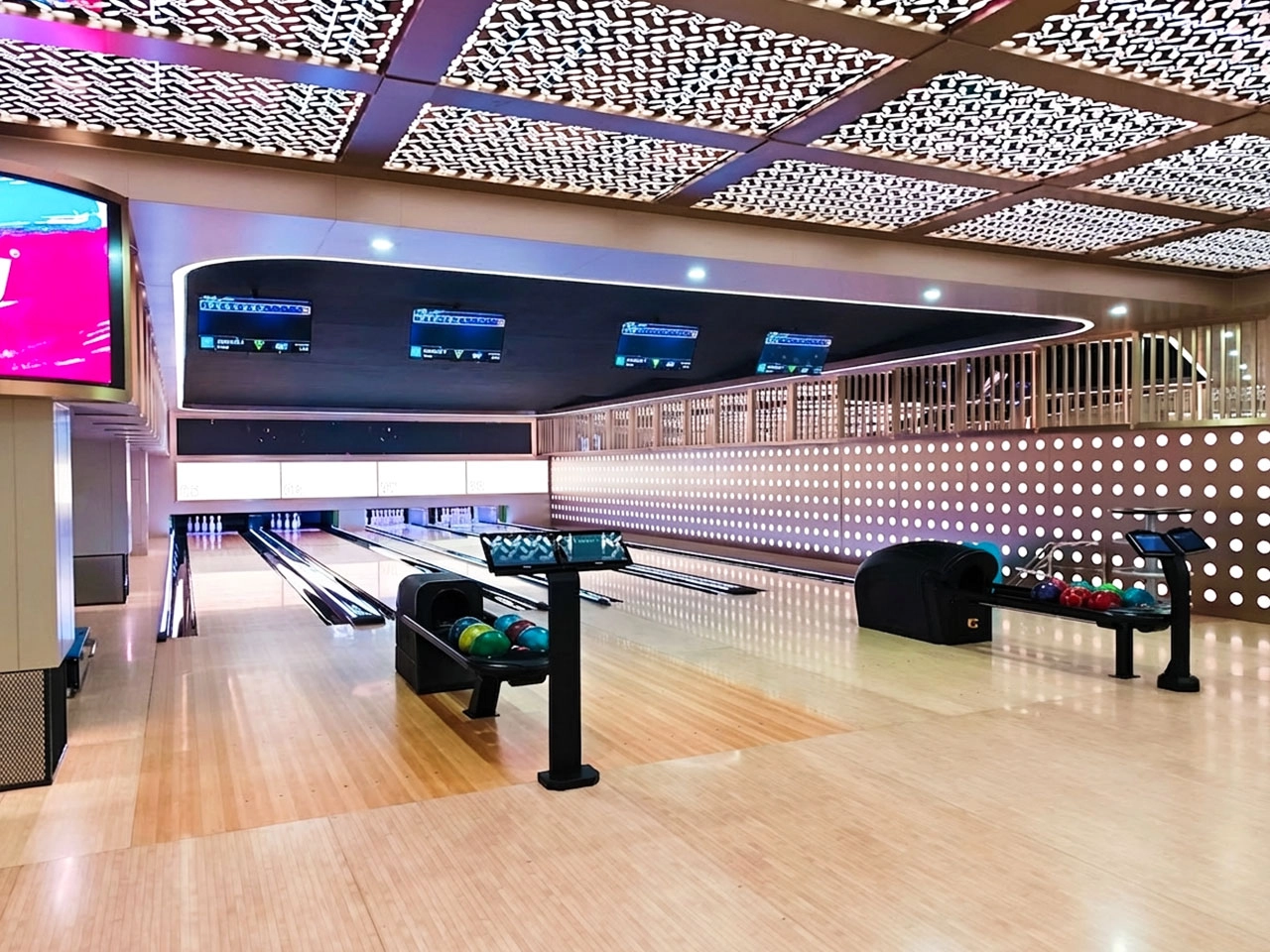
Build a commercial bowling venue with Flying’s complete string pinsetter bowling alley equipment package. The system includes the AEROPIN™ USBC-certified string pinsetter, customizable lanes, automatic scoring, ball return, lane lighting, pins, control hardware, and overseas installation support.
Designed for commercial bowling centers, family entertainment venues, hotels, resorts, bars, and premium private projects, this turnkey bowling system helps operators reduce sourcing complexity and prepare for reliable long-term operation.
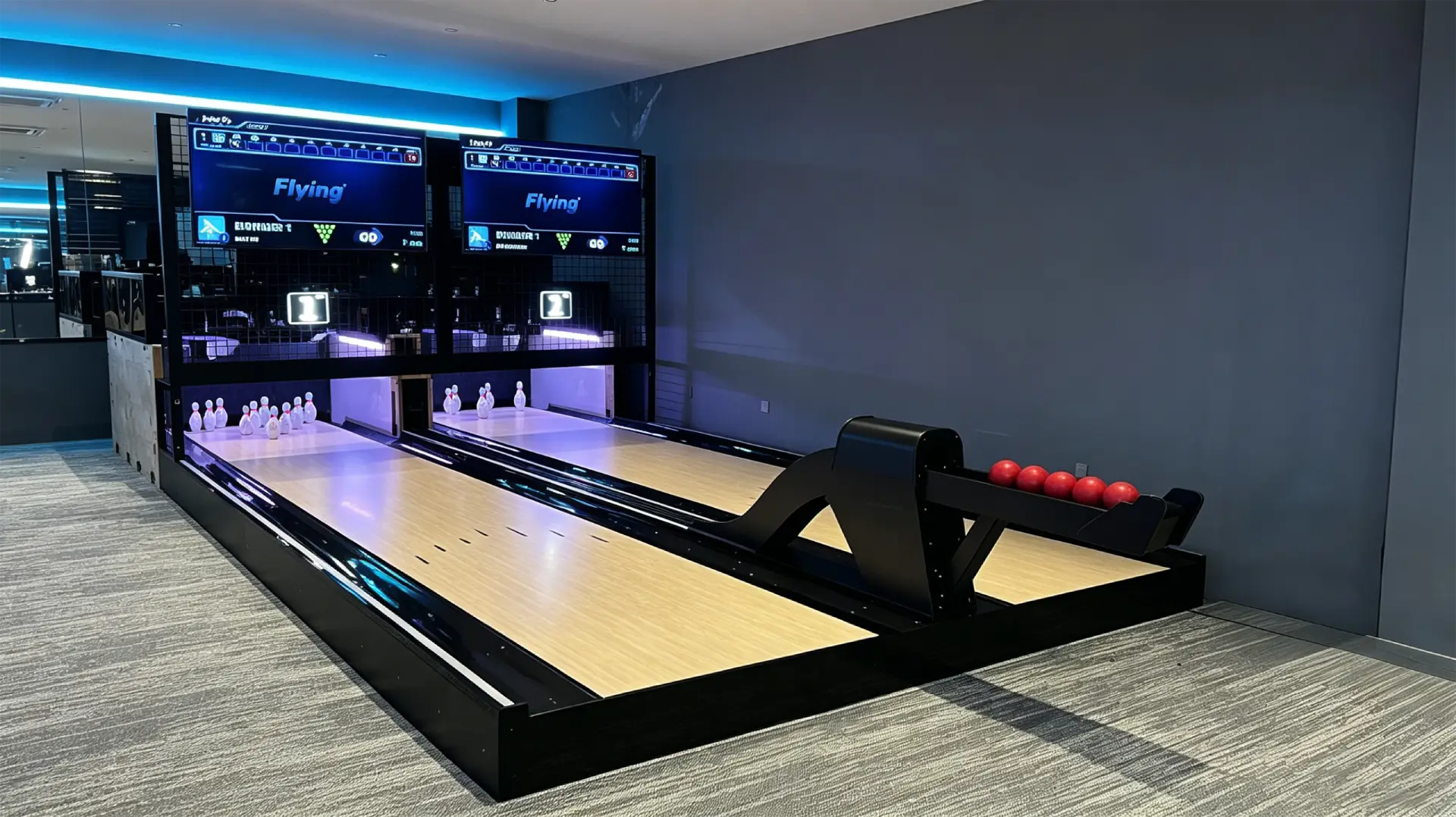
Flying Smart Duckpin Bowling is a compact duckpin bowling equipment system designed for bars, family entertainment centers, hotels, resorts, cinemas, boutique bowling alleys, and social entertainment venues. With a standard 9.13m duckpin bowling lane, 1.25kg lightweight balls, automatic scoring, ball return, LED lighting, and a smart string pinsetter, it creates a fast-paced and easy-to-play bowling experience in a smaller footprint than traditional bowling.
The system is available as a turnkey duckpin bowling package, including lane equipment, a string pinsetter system, scoring hardware, control software, global shipping, installation guidance, and technical support.
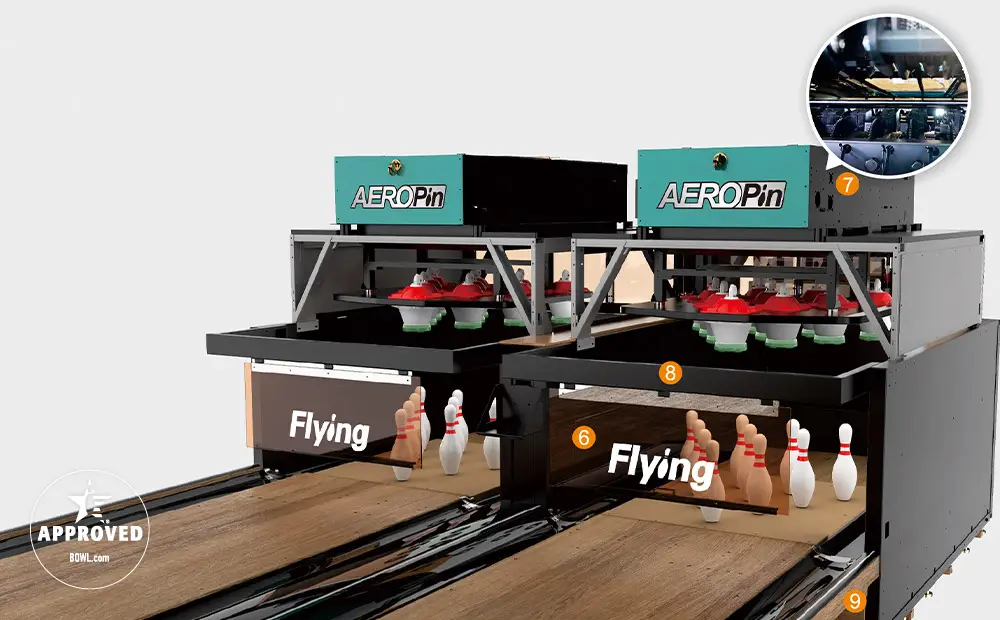
AEROPIN is Flying Bowling’s USBC-certified string pinsetter system for modern commercial bowling centers. Designed for fast pin setting, smooth ball return, low maintenance, and stable daily operation, it helps venue operators build league-ready and entertainment-focused bowling projects with confidence.
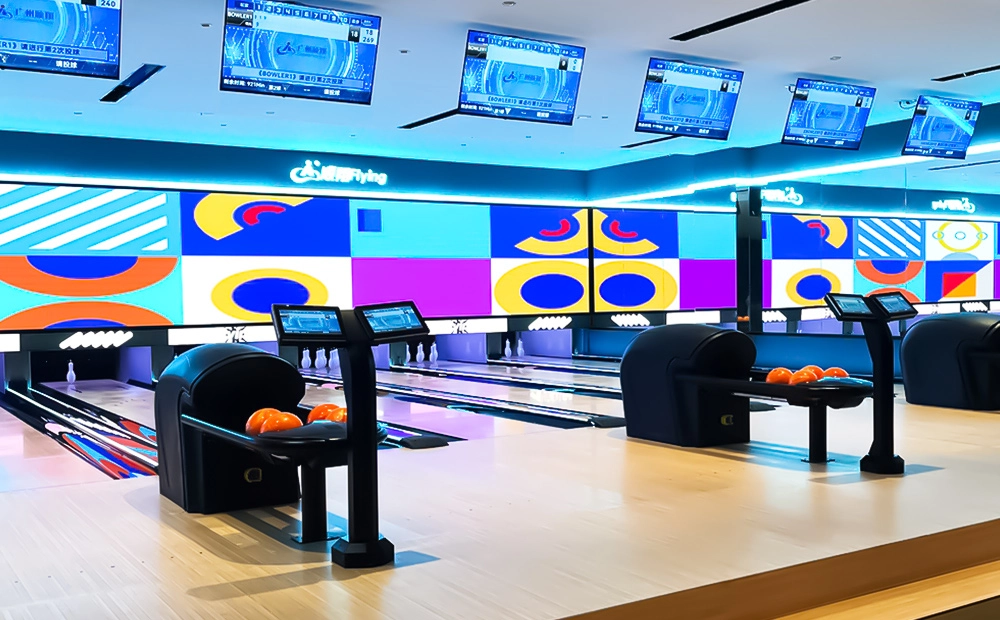
Flying Social Medium Bowling is a compact medium bowling equipment system designed for bars, cafes, family entertainment centers, community leisure venues, hotels, resorts, and small indoor entertainment spaces. With customizable lane lengths from 9.6m to 18m, small balls, lighter pins, string pinsetter technology, ball return, and automatic scoring, it creates an easy-to-play social bowling experience for players of different ages and skill levels.
Compared with full-size standard bowling, medium bowling requires less space and offers a more casual, interactive format. It is a practical choice for venues that want to add a bowling attraction without building a full commercial bowling alley.
Contact Flying
Start Your Custom Bowling Alley Project
If you contact us now for more details, we can provide you with a custom bowling alley service. Our service team will get back to you within 24 hours normally!
© 2026 Flying BOWLING. Designed by gooeyun.
FOLLOW US:
Flying Bowling
Flying Bowling
Flyingbowling
Flyingbowling