


Duckpin Bowling Cost Per Lane: How to Calculate the Real Investment
Duckpin bowling cost per lane is not a universal equipment price. It is normally calculated as the eligible project budget divided by the number of lanes, while an equipment-only quotation covers only the bowling components listed by the supplier. A realistic budget should identify equipment, engineering, freight, site preparation, utilities, taxes, installation, commissioning, and shared venue expenses separately.
The most useful comparison is not the lowest headline figure. It is whether competing quotations use the same equipment scope, delivery basis, site responsibilities, documentation, and acceptance requirements.
Quick Answer: What Does Duckpin Bowling Cost Per Lane Include?
Equipment-only cost versus complete project cost
An equipment-only quotation may cover duckpin lanes, pinsetting equipment, ball return machines, scoring, controls, accessories, or other listed components. It does not automatically include construction, electrical work, freight, import charges, local labor, commissioning, or venue fit-out.
A complete project budget is broader. It may include engineering, equipment, packaging, shipping, site preparation, lane alignment, installation, utilities, permits, taxes, furniture, signage, and other costs required before opening. For a wider view of commercial investment, see this duckpin bowling alley cost guide.
The cost-per-lane formula
Cost per lane = total eligible project cost ÷ number of lanes
Before using the formula, define which costs are eligible. A useful budget structure is:
- Bowling equipment and operating accessories
- Engineering, drawings, and design support
- Packaging, freight, insurance, import, and local delivery
- Site preparation, flooring, building modifications, and lane alignment
- Electrical, networking, lighting, HVAC, and other utilities
- Installation, commissioning, training, and acceptance activities, where applicable
- Taxes, permits, local labor, furniture, signage, and venue opening expenses
Shared costs should either be allocated transparently across the planned lanes or shown separately beside the lane-specific figure. Do not present a shared venue expense as though it were part of the equipment price without explaining the calculation.
Why lane count changes the result
Multiple lanes may distribute design, mobilization, freight, and some installation activities across a larger order. However, a lower cost per lane is not guaranteed. Layout, access, equipment configuration, shipping method, building condition, and local construction can change the result. Compare both the total project value and the allocation method.
What Determines the Cost of a Duckpin Bowling Lane?
Equipment configuration
The first cost question is what the duckpin system must include for the intended venue. The RFQ should identify the lane package, pinsetting equipment, ball return machines, scoring system, controls, accessories, documentation, and any initial spare-parts requirement. Optional features should be separated from components required for operation.
Pinsetting equipment can materially affect the equipment budget and the future maintenance discussion. Buyers evaluating this component separately can review the duckpin bowling string pinsetter cost guide before finalizing the equipment schedule.
New construction or renovation
A new venue can plan floor levels, access routes, power distribution, service space, and customer circulation around the lanes. A renovation may require demolition, floor correction, utility relocation, protection of existing finishes, restricted delivery access, or work during limited site hours. These conditions are outside a factory equipment price unless specifically included.
Lane quantity and venue format
A bar, hotel, family entertainment center, and dedicated bowling center may require different layouts and shared facilities. Lane quantity affects transport, packaging, engineering, installation, seating, circulation, storage, reception, and service access. Ask which items are priced per lane and which are priced once for the project.
Location and site conditions
Project location influences freight routes, import obligations, taxes, local delivery, labor, permitting, and utility requirements. Door dimensions, loading areas, floor capacity, temporary storage, lift access, and the route from delivery vehicle to installation position can also affect the budget.
Key Cost Factors to Review Before Comparing Quotes
Use one scope schedule for every supplier. The following categories should be marked as included, excluded, optional, or subject to confirmation:
- Equipment: lanes, pinsetting equipment, ball return machines, scoring, controls, accessories, spare parts, and manuals.
- Layout: lane quantity, circulation, seating, barriers, equipment access, storage, and adjacent venue functions.
- Building work: floor preparation, leveling, structural checks, wall or ceiling modifications, finishes, and local construction.
- Utilities: power distribution, outlets, protection, grounding, data cabling, networking, lighting, HVAC, and fire-safety work.
- Logistics: packaging, shipment origin, destination, insurance, unloading, customs, taxes, port handling, and final delivery.
- Installation: delivery only, supervision, full installation, lane alignment, local labor, commissioning, training, and acceptance checks.
- Venue expenses: reception, furniture, signage, permits, general fit-out, and opening preparation.
For a broader separation of equipment, construction, and opening expenses, see this duckpin bowling alley cost breakdown.
Duckpin Bowling Cost Impact Table
“High” and “Very high” below describe the effect of missing information on quotation comparability. They are not price estimates or universal cost rankings.
| Cost category | Allocation | Information needed | Question for the quotation |
|---|---|---|---|
| Equipment package | Usually per lane, with possible shared controls or accessories | Equipment schedule and configuration | Which lanes, pinsetters, ball returns, scoring, controls, accessories, and spares are included? |
| Lane count and layout | Per lane and project-wide | Quantity, layout, circulation, and service access | Which costs are multiplied by lane and which are shared? |
| Engineering and design | Usually project-wide | Dimensioned drawings, site condition, and design assumptions | What drawings, reviews, and revisions are included? |
| Site preparation | Project-wide, with lane-related work | Floor, walls, ceiling, access, and existing services | Who prepares the site and verifies alignment conditions? |
| Electrical and networking | Per lane and project-wide | Power, data, utility, and local installation information | Which connections are supplied and which are local work? |
| Shipping and import | Usually project-wide and allocated across lanes | Destination, packaging, delivery term, insurance, and import arrangement | Who handles freight, taxes, unloading, customs, and final delivery? |
| Installation and commissioning | Per lane, project-wide, or excluded | Site location, access, labor plan, and acceptance criteria | Is the scope delivery, supervision, installation, commissioning, or training? |
| Venue fit-out and permits | Project-wide | Reception, seating, lighting, HVAC, fire safety, permits, and signage | Are these costs excluded from the equipment quotation? |
Cost Breakdown by Process or Component
Equipment package
Review the equipment list against the operating model, not just the lane count. Confirm quantities, interfaces, accessories, documentation, and items needed for routine operation. A lower equipment figure may simply reflect omitted components.
Engineering and design
Engineering may involve reviewing available space, lane layout, access, service areas, utility locations, and installation assumptions. Incomplete drawings force provisional assumptions and can create later changes, additional local work, or schedule disruption.
Manufacturing decisions and quality requirements
Material selection, surface finish, component tolerances, and interface details should be agreed before production. A decorative finish may require different preparation or protection from a standard finish. Tolerance conflicts between lane components, pinsetting equipment, and the building can lead to rework or installation difficulty. Ask each supplier what inspection records, release documents, or approval documents are included; do not assume they are included.
Packaging and logistics
Packaging should match the route from shipment to the final installation position. Confirm package dimensions, handling points, storage conditions, unloading responsibility, and any special protection required by the site. Freight should be evaluated together with the delivery term and import responsibilities.
Installation, commissioning, and acceptance
Installation can mean delivery only, remote guidance, supervision, or full on-site work. The commercial scope should state who performs lane alignment, equipment connection, operating checks, training, and acceptance. If commissioning is required, define the checks and acceptance criteria before ordering.
Venue-level construction and opening costs
Local labor, utilities, permits, taxes, furniture, signage, lighting, HVAC, fire-safety work, and operating preparation may remain with the buyer. BPAA industry resources provide useful context for the operational and capital expenditure considerations of bowling-center planning, but they are not a substitute for local construction quotations or a project-specific equipment scope.
How to Get an Accurate Duckpin Bowling Cost Per Lane Quote
Prepare a reusable RFQ package
- Project location and delivery destination
- Venue type, target customer use, and intended opening scope
- Number of lanes and preferred layout
- New-build or renovation status
- Available floor area, ceiling height, floor condition, and access route
- Dimensioned drawings, site photographs, columns, doors, loading areas, and service spaces
- Available power, networking, and other utility information
- Required equipment, optional features, materials, finishes, and appearance requirements
- Expected delivery, installation, supervision, commissioning, and training scope
- Packaging, unloading, storage, and local delivery requirements
- Required drawings, manuals, inspection documents, spare-parts information, and acceptance records
Normalize every quotation
- Match the equipment list and lane quantity.
- Separate per-lane costs from shared project costs.
- Align freight terms, insurance, taxes, unloading, and import responsibilities.
- Identify local construction, utility, and labor exclusions.
- Compare installation, commissioning, training, and acceptance responsibilities.
- Record assumptions, optional items, validity period, warranty scope, and payment or delivery conditions.
- Calculate both the complete project total and the allocated cost per lane.
Common Quoting Mistakes That Distort Cost Per Lane
- Dividing an incomplete equipment price by lane count: This creates an equipment allocation, not an opening budget.
- Ignoring shared infrastructure: Reception, HVAC, electrical distribution, permits, and general fit-out serve the venue as a whole.
- Submitting incomplete drawings: Missing dimensions create assumptions about clearances, alignment, utilities, and installation sequence.
- Changing materials or finishes late: Revised finishes can affect preparation, tolerances, inspection, packaging, and replacement parts.
- Underestimating site access: Narrow doors, limited loading areas, temporary storage, or special handling can add local work.
- Comparing different delivery scopes: Delivered equipment, supervised installation, and fully commissioned installation are not equivalent offers.
Cost Reduction Strategies Without Increasing Project Risk
Review DFM before production
Design for manufacturability, or DFM, can identify unnecessary complexity, tolerance conflicts, difficult finishes, unsuitable materials, and installation problems while drawings are still flexible. Resolve these issues before production approval rather than through site changes.
Standardize practical requirements
Where the venue allows, standard components, finishes, layouts, and documentation reduce design and replacement complexity. Custom requirements should solve a clear operational, site, or customer need.
Separate essential and optional scope
Prepare two lists: items required for operation and items that can be deferred without affecting the core system. Avoid reducing necessary safety-related work, inspection, commissioning, acceptance, or documentation merely to lower the initial quotation.
Coordinate layout and logistics early
Coordinate lane placement with utilities, storage, service access, customer circulation, door dimensions, unloading, and installation routes. Shipment consolidation may help in some projects, but only when the site is ready and storage is practical.
Compare lifecycle responsibilities
Compare serviceability, spare-parts expectations, documentation, maintenance responsibilities, warranty scope, and support boundaries alongside the purchase price. The lowest initial quotation may not be the lowest project cost if essential work is excluded.
How to Choose the Right Supplier for Cost Optimization
A dependable supplier comparison should focus on documented scope rather than promotional language. Ask every bidder for the same document package:
- Product configuration and equipment schedule
- Layout, interface, utility, and installation drawings
- Written installation and commissioning boundaries
- Packaging list, package dimensions, and handling requirements
- Inspection or release-record examples, where available
- Recommended spare-parts list and maintenance responsibilities
- Warranty scope and after-sales exclusions
- Acceptance criteria and required buyer obligations
Also ask how the supplier handles DFM review, tolerances, materials, surface finishes, site-condition assumptions, freight terms, local delivery, and changes after drawing approval. Any regional installation or after-sales arrangement should be verified for the specific market and contract rather than assumed from general company information.
Flying Bowling’s published company information identifies duckpin bowling equipment, string pinsetters, ball return machines, and design and construction services within its bowling equipment range. Buyers should still request project-specific confirmation of configuration, documentation, installation boundaries, logistics, and after-sales responsibilities.
Conclusion and Next Steps
A reliable duckpin bowling cost per lane figure is an allocation based on a defined scope, not a universal product price. Build the complete project budget, separate lane-specific equipment from shared venue expenses, and normalize every quotation using the same delivery, installation, commissioning, documentation, and acceptance assumptions.
Before requesting a final quotation, prepare the lane quantity, 2D or 3D drawings, site location, building condition, material and surface-finish requirements, utility information, packaging expectations, and desired installation scope. This gives suppliers a clearer basis for identifying exclusions and pricing the project responsibly.
Send Your Drawings for a Cost Review
Include your 2D or 3D drawings, material requirements, surface-finish needs, lane quantity, venue location, and packaging expectations. A structured review can help identify DFM issues, incomplete information, and cost categories that should be separated before quotation comparison.
FAQ About Duckpin Bowling Cost Per Lane
More Articles

Let’s Build a center Together
Partner With a Trusted Bowling Alley Design, One-Stop Solution Manufacturer.
Flying has successfully built ideal bowling alleys for more than 3,000 customers.

Technical Expert
You may also like our products
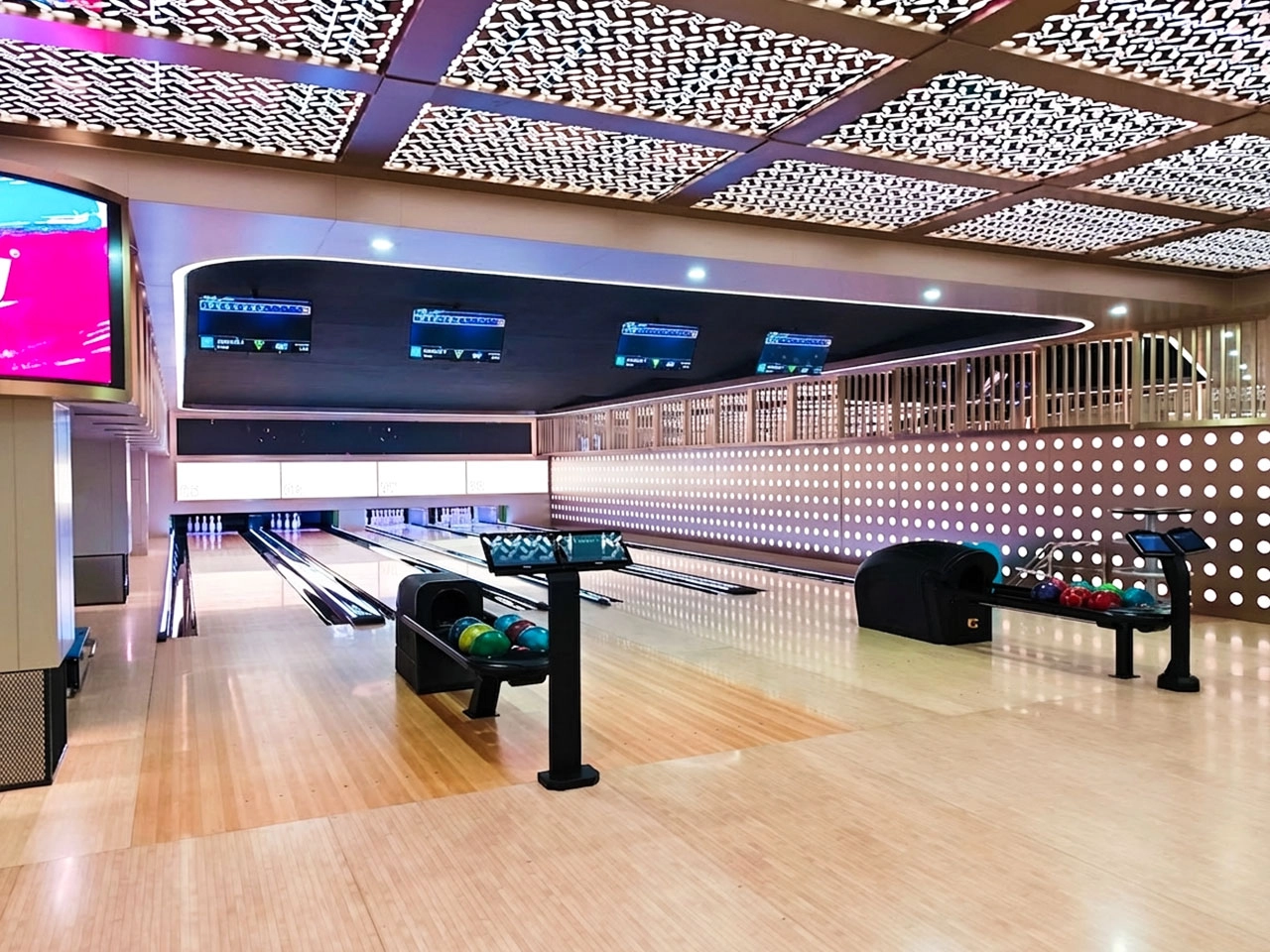
Build a commercial bowling venue with Flying’s complete string pinsetter bowling alley equipment package. The system includes the AEROPIN™ USBC-certified string pinsetter, customizable lanes, automatic scoring, ball return, lane lighting, pins, control hardware, and overseas installation support.
Designed for commercial bowling centers, family entertainment venues, hotels, resorts, bars, and premium private projects, this turnkey bowling system helps operators reduce sourcing complexity and prepare for reliable long-term operation.
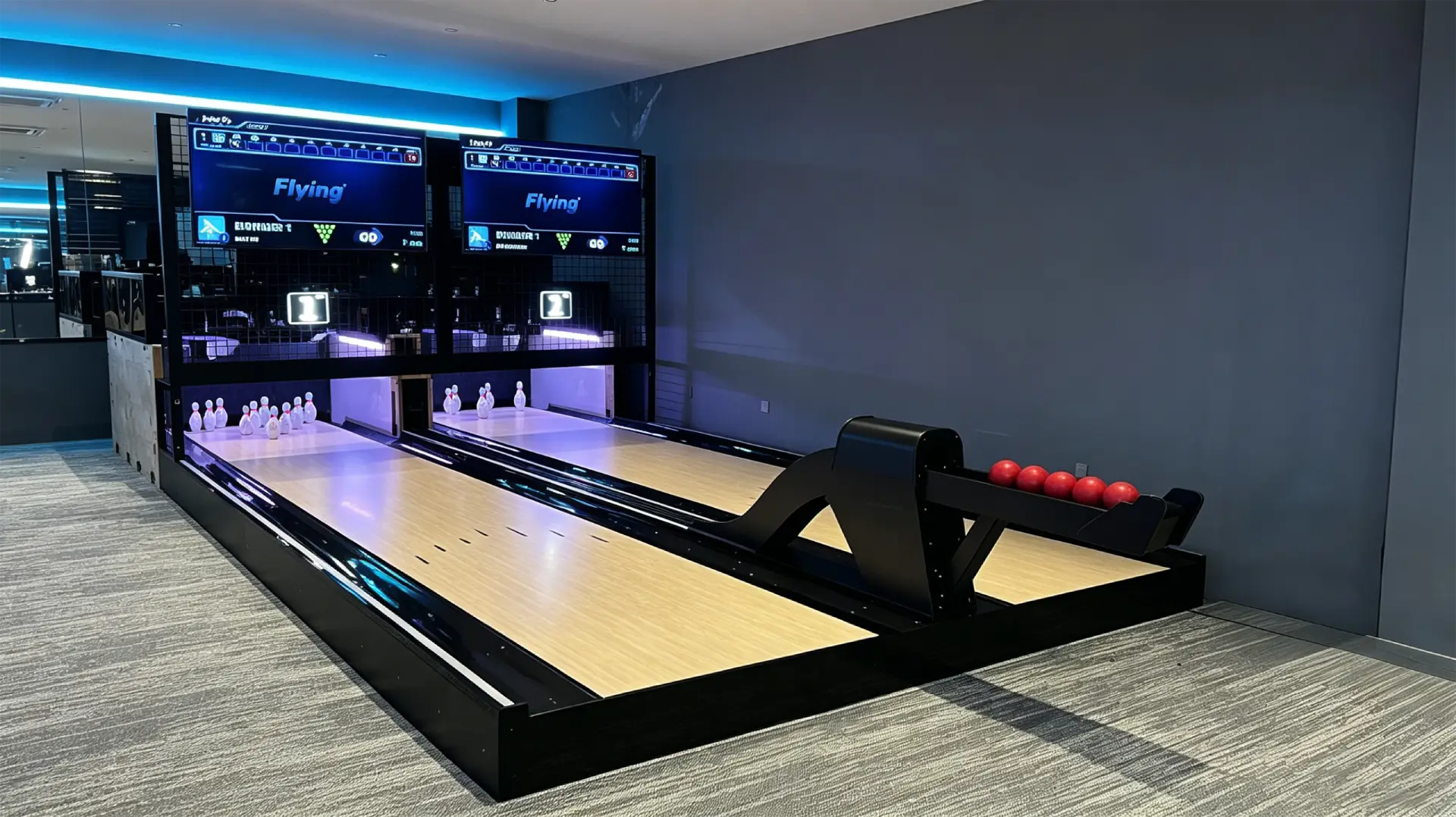
Flying Smart Duckpin Bowling is a compact duckpin bowling equipment system designed for bars, family entertainment centers, hotels, resorts, cinemas, boutique bowling alleys, and social entertainment venues. With a standard 9.13m duckpin bowling lane, 1.25kg lightweight balls, automatic scoring, ball return, LED lighting, and a smart string pinsetter, it creates a fast-paced and easy-to-play bowling experience in a smaller footprint than traditional bowling.
The system is available as a turnkey duckpin bowling package, including lane equipment, a string pinsetter system, scoring hardware, control software, global shipping, installation guidance, and technical support.
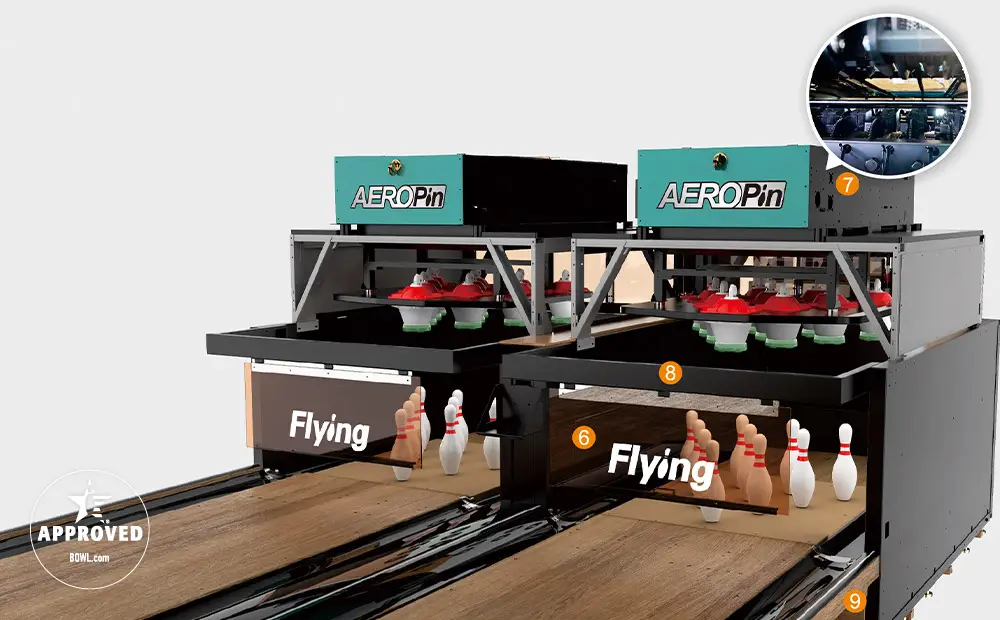
AEROPIN is Flying Bowling’s USBC-certified string pinsetter system for modern commercial bowling centers. Designed for fast pin setting, smooth ball return, low maintenance, and stable daily operation, it helps venue operators build league-ready and entertainment-focused bowling projects with confidence.
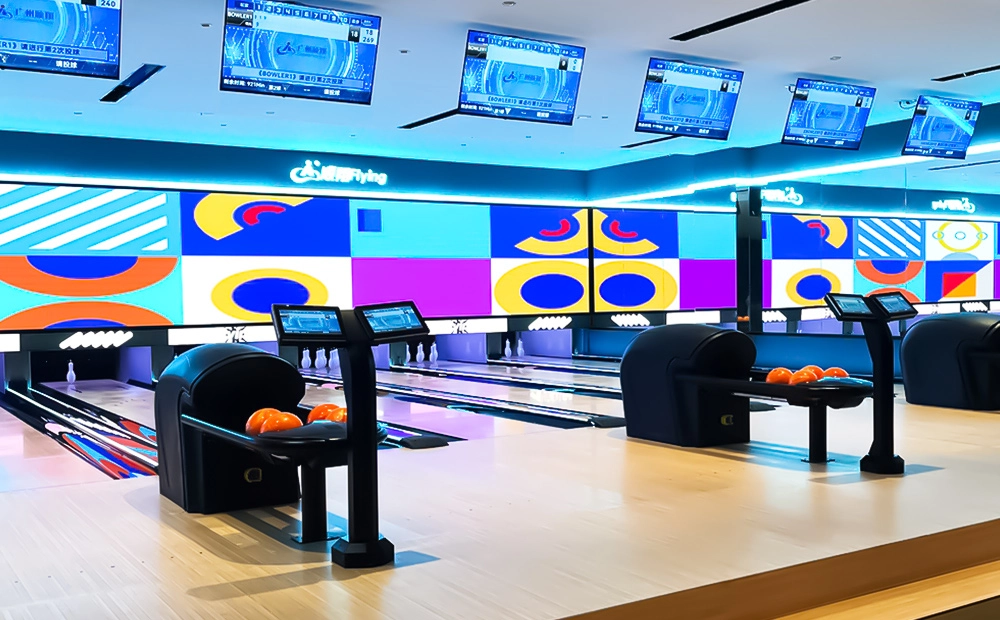
Flying Social Medium Bowling is a compact medium bowling equipment system designed for bars, cafes, family entertainment centers, community leisure venues, hotels, resorts, and small indoor entertainment spaces. With customizable lane lengths from 9.6m to 18m, small balls, lighter pins, string pinsetter technology, ball return, and automatic scoring, it creates an easy-to-play social bowling experience for players of different ages and skill levels.
Compared with full-size standard bowling, medium bowling requires less space and offers a more casual, interactive format. It is a practical choice for venues that want to add a bowling attraction without building a full commercial bowling alley.
Contact Flying
Start Your Custom Bowling Alley Project
If you contact us now for more details, we can provide you with a custom bowling alley service. Our service team will get back to you within 24 hours normally!
© 2026 Flying BOWLING. Designed by gooeyun.
FOLLOW US:
Flying Bowling
Flying Bowling
Flyingbowling
Flyingbowling