

The cost of installing a bowling alley scoring system and ball return machine is project-specific. A useful planning formula is:
Installed cost = equipment + engineering coordination + site work + installation + configuration and commissioning + logistics + applicable local costs.
Lane count, scoring functions, ball return layout, venue readiness, wiring and system interfaces, testing, packaging, shipping, taxes, and local labor can all change the quotation. No fixed price or universal labor rate should be assumed without project details. Industry associations such as BPAA and IAAPA also distinguish venue investment planning from the price of individual equipment, which is why buyers should compare a complete installed scope rather than an equipment-only figure.
Quick Answer: What Does Installation Cost Depend On?
The main cost drivers are the number and type of lanes, the selected scoring and ball return configuration, the condition of the venue, required control or communication interfaces, installation responsibility, commissioning depth, and destination logistics.
For a comparable quotation, separate the following line items:
- Scoring equipment, software, displays, controls, and accessories
- Ball return machines and associated lane-side equipment
- Engineering, layout review, and interface coordination
- Wiring, control integration, configuration, and testing
- Mechanical installation, alignment, commissioning, and operator handover
- Packaging, freight, unloading, customs, taxes, and local labor
- Optional items, exclusions, and customer-supplied work
A lower equipment price may not represent a lower project cost if wiring, integration, installation, testing, or site preparation is excluded. Buyers should compare quotations using the same lane schedule, technical requirements, delivery assumptions, and responsibility matrix.
For the wider budget covering construction, equipment, and site work, see this bowling alley installation cost guide. For a structured comparison of supplier scope, use this guide to evaluate equipment scope in supplier quotes.
What Determines the Cost of a Bowling Scoring and Ball Return Installation?
Lane quantity and equipment configuration
Lane count affects equipment quantities, configuration work, cabling coordination, testing, packaging, and shipment volume. A project with standard lanes may require a different equipment schedule from one combining standard, duckpin, or other bowling formats. The lane numbering, layout, spacing, and operating model should be included in the RFQ.
Standalone equipment versus integrated systems
A standalone installation generally has fewer external interfaces than a venue in which scoring must communicate with displays, booking systems, payment systems, venue networks, or other customer-supplied equipment. Each interface creates a need to define signals, ownership, configuration, testing, and fault responsibility.
Technical values such as dimensions, power requirements, wiring standards, communication architecture, and interface limitations are product- and project-specific. They should be confirmed in the supplier’s technical proposal rather than assumed from a general equipment description.
New venue versus existing venue
A new venue can coordinate lane positions, access routes, power pathways, communication routes, and service clearances during design. A conversion may involve fixed floors, concealed wiring, restricted doors, existing systems, limited storage, or finished surfaces that need protection. These conditions can alter installation methods and local labor requirements.
For a focused review of floor condition, access, utilities, and delivery preparation, see the guide to bowling alley site preparation cost.
Key Cost Factors Buyers Should Review
Scoring functions and venue requirements
Describe required functions instead of using a broad term such as “full scoring.” Identify player interfaces, displays, operator controls, language requirements, game modes, reporting needs, user access, and any connection to venue systems. More functions can increase configuration and acceptance-testing requirements.
Ball return layout and mechanical coordination
The quotation should identify the number and arrangement of ball return machines, their relationship to each lane group, installation access, service clearance, and any required coordination with lane furniture or finished surfaces. A layout change after manufacture or delivery may affect supports, routing, alignment, or installation labor.
Wiring, controls, and integration
Define who supplies cable, prepares routes, installs and terminates connections, provides control components, configures software, coordinates networks, and tests communication with third-party systems. “Installation included” does not by itself prove that all electrical, communication, and integration work is included.
Site access and readiness
Delivery hours, unloading space, internal routes, stairs, doors, lifting equipment, temporary storage, floor protection, and the installation sequence can influence local work. The site information should also identify whether construction, electrical, and communication preparation will be complete before delivery.
Commissioning, training, and handover
Physical installation, configuration, commissioning, operator training, and acceptance are separate activities. The agreed handover scope may include operating instructions, configuration records, test results, maintenance information supplied by the manufacturer, and operator orientation. The supplier should state which documents and tests are included.
Where local installation effort is a major budget concern, compare the labor assumptions in this guide to bowling alley equipment installation labor cost.
Packaging, shipping, and local charges
Destination, delivery terms, packaging expectations, unloading, storage, insurance, customs, taxes, and local handling can change the delivered project cost. The RFQ should state whether the price includes export packing, freight, delivery to site, unloading, and import-related charges.
Cost Impact Table: Which Items Can Change the Budget Most?
The ratings below indicate relative budget sensitivity, not market prices.
| Cost item | Typical sensitivity | Why it matters | Information to provide | Quotation question |
|---|---|---|---|---|
| Lane quantity and layout | Very high | Changes equipment count, configuration, testing, and shipment volume. | Lane schedule, numbering, format, and layout. | Is the price based on the complete lane schedule? |
| Scoring configuration | High | Functions affect software setup, interfaces, displays, and testing. | Required functions, controls, displays, and user groups. | Which functions are included, optional, or excluded? |
| Ball return arrangement | High | Layout, access, alignment, and installation sequence affect the work. | Return arrangement, lane relationship, and service access. | Does the price include positioning and alignment? |
| Wiring and integration | High | Unclear interfaces can create engineering, cabling, and testing work. | Existing systems, routes, controls, and interface ownership. | Who supplies, connects, configures, and tests each interface? |
| Site readiness and access | High | Restricted access or unfinished work can increase local services and installation effort. | Floor, access, storage, unloading, and construction status. | Which site tasks are customer-supplied? |
| Commissioning and handover | Medium to high | Testing depth, acceptance criteria, training, and documentation affect delivery scope. | Test sequence, signatories, training, and documents required. | What evidence is supplied at acceptance? |
| Packaging and destination logistics | Medium | Handling, freight, taxes, unloading, and storage may be separately charged. | Destination, delivery terms, packaging, and unloading method. | What is included or excluded from delivery? |
Cost Breakdown by Process or Component
A practical quotation should show the following cost groups without double counting:
- Equipment supply: scoring systems, ball return machines, controls, displays, accessories, quantities, and software scope.
- Engineering coordination: layout review, interface definition, drawing coordination, and design-for-manufacturability review where fabricated or customized components are involved.
- Integration: cable routes, terminations, controls, communication interfaces, software configuration, and responsibility for third-party connections.
- Mechanical installation: positioning, fixing, alignment, adjustment, protection of finished surfaces, and treatment of site conditions.
- Commissioning and acceptance: functional checks, agreed test conditions, fault-response checks where applicable, acceptance records, and operator handover.
- Logistics: packaging, labeling, freight, delivery terms, unloading, temporary storage, customs, taxes, and damage inspection at receipt.
DFM review is particularly useful when drawings contain fabricated supports, covers, finishes, or other project-specific components. Incomplete dimensions, missing access clearance, undefined tolerances, or unclear material and surface-finish requirements can create revisions or change orders. For example, if an access clearance is absent from a layout, the supplier may need to price an assumption rather than a confirmed installation condition. The RFQ should therefore identify access zones, reference dimensions, materials, finishes, and approval responsibility before production or shipment.
How to Get an Accurate Quote
Prepare the RFQ information
- Lane count, lane layout, numbering, configuration type, and quantities
- Venue type, destination, new-build or conversion status, and operating model
- Floor condition, delivery access, storage, unloading, and lifting restrictions
- Scoring functions, displays, controls, language requirements, and venue interfaces
- Ball return arrangement, lane relationship, and service-access expectations
- Existing systems that must remain or communicate with the new equipment
- 2D or 3D drawings, layout files, photographs, and relevant site information
- Material, surface-finish, appearance, and environmental requirements where applicable
- Packaging expectations, delivery terms, taxes, and local installation arrangements
- Required testing, training, documentation, acceptance, and handover scope
Use a five-step quotation review
- Normalize lane quantities, equipment, functions, and accessories.
- Separate equipment, engineering, installation, integration, commissioning, and logistics.
- Mark every item as included, optional, excluded, or customer-supplied.
- Assign each cable, interface, site task, test, document, and approval to a responsible party.
- Compare the total installed scope, not only the headline equipment price.
| Quotation section | Review points |
|---|---|
| Equipment | Configuration, quantities, accessories, software, and any customer-supplied items. |
| Installation | Positioning, fixing, alignment, local labor, supervision, and site assumptions. |
| Integration and testing | Interfaces, configuration, test functions, acceptance criteria, and handover evidence. |
| Logistics | Packaging, freight, delivery terms, unloading, taxes, customs, and storage. |
| Options and exclusions | Optional functions, third-party work, permits, wiring, site preparation, and change-order rules. |
Common Quoting Mistakes That Increase Total Project Cost
- Comparing equipment prices without equalizing scope: Different quantities, functions, accessories, testing, and delivery terms make headline prices non-comparable.
- Leaving installation and commissioning undefined: Physical placement, alignment, configuration, acceptance, and training may be treated differently by each bidder.
- Assuming venue wiring is ready: Missing routes, connection points, or communication infrastructure can delay installation.
- Failing to assign interface ownership: A responsibility matrix should identify who supplies, connects, configures, tests, and accepts each interface.
- Submitting incomplete drawings: Missing dimensions, tolerances, access clearance, or finishes encourage different supplier assumptions.
- Overlooking delivery constraints: Doors, stairs, unloading, storage, floor protection, and delivery timing should be reviewed before shipment.
- Leaving after-sales terms vague: Warranty coverage, spare-parts arrangements, support channels, maintenance information, and escalation procedures should be written into the commercial review.
Cost Reduction Strategies Without Undermining System Fit
| Action | Cost-control benefit | Risk to avoid |
|---|---|---|
| Standardize practical lane configurations and interfaces | Reduces design interpretation and repeated configuration work. | Do not remove functions required by the venue. |
| Complete DFM and drawing review early | Reveals tolerance, mounting, access, material, and finish issues before production. | Do not approve drawings with unresolved assumptions. |
| Define materials and surface finishes | Avoids unnecessary over-specification and later rework. | Match the selection to the venue environment and actual use. |
| Plan packaging and delivery together | Aligns protection, labeling, unloading, storage, and shipment sequence. | Do not leave destination handling to assumption. |
| Complete site preparation before delivery | Reduces idle installation effort and on-site changes. | Verify access, floor, power, communication, and storage readiness. |
| Define acceptance testing in advance | Prevents disputes about what commissioning includes. | Do not reduce essential testing without assessing operational risk. |
How to Choose the Right Supplier for Cost Optimization
Evaluate suppliers against the same technical and commercial checklist. The relevant capability is not simply the ability to sell scoring equipment or ball return machines; it is the ability to define how the selected equipment fits the lane layout, interfaces, site conditions, testing plan, and delivery responsibilities.
- Can the supplier identify equipment quantities, functions, accessories, and exclusions clearly?
- Will drawings, interfaces, tolerances, materials, finishes, and access conditions be reviewed before approval?
- Are installation, alignment, wiring, integration, commissioning, and training separately defined?
- What quality or compliance documents apply to the specific supplied equipment?
- What records are provided for testing, configuration, acceptance, and handover?
- Who manages packaging, delivery, unloading, damage inspection, and destination coordination?
- What written terms apply to warranty, maintenance information, spare parts, technical support, and escalation?
Flying Bowling Co., Ltd. states that its product categories include bowling scoring systems, ball return machines, string pinsetters, bowling lanes, and related design and construction services. Buyers should still request project-specific confirmation of specifications, installation boundaries, documentation, logistics, and after-sales terms rather than treating broad product categories as a complete technical proposal.
Conclusion and Next Steps
The most reliable way to control bowling alley scoring system and ball return installation cost is to define the installed scope before comparing offers. Provide the lane layout, scoring functions, ball return arrangement, interfaces, site conditions, drawings, material and finish requirements, testing expectations, packaging requirements, destination, and quantity.
Then compare suppliers using one responsibility matrix and one line-item quotation format. This makes exclusions visible, reduces change-order risk, and shows whether a lower equipment price actually represents a lower total project cost.
Send Your Drawings for a Cost Review
For a project-specific review, prepare your 2D or 3D drawings, lane layout, material and surface-finish requirements, quantity, destination, packaging expectations, scoring requirements, and ball return arrangement. Technical values such as dimensions, power, wiring, interfaces, installation boundaries, and acceptance documents should be confirmed during the quotation review.
FAQ
References
More Articles

Let’s Build a center Together
Partner With a Trusted Bowling Alley Design, One-Stop Solution Manufacturer.
Flying has successfully built ideal bowling alleys for more than 3,000 customers.

Technical Expert

You may also like our products
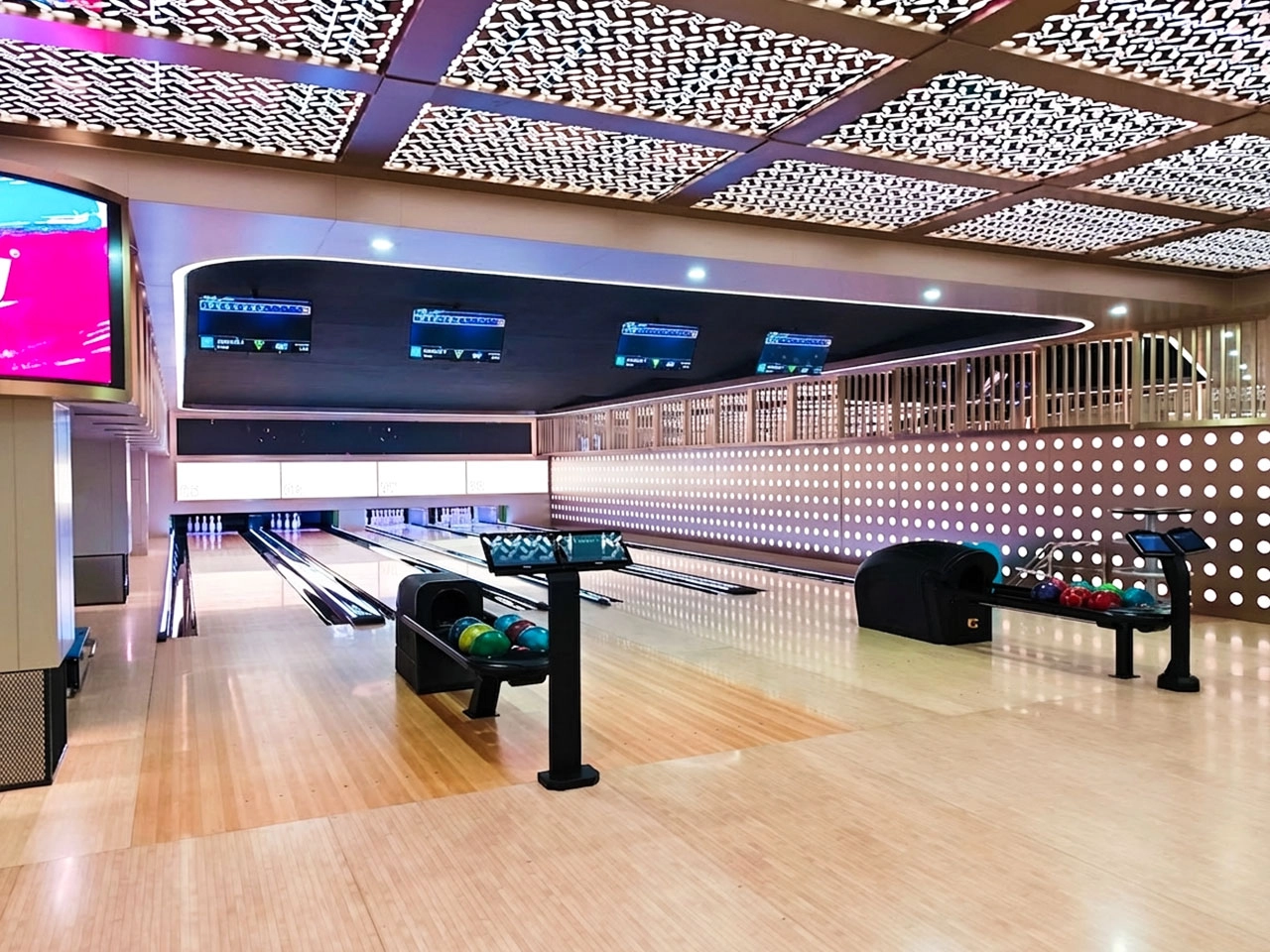
Build a commercial bowling venue with Flying’s complete string pinsetter bowling alley equipment package. The system includes the AEROPIN™ USBC-certified string pinsetter, customizable lanes, automatic scoring, ball return, lane lighting, pins, control hardware, and overseas installation support.
Designed for commercial bowling centers, family entertainment venues, hotels, resorts, bars, and premium private projects, this turnkey bowling system helps operators reduce sourcing complexity and prepare for reliable long-term operation.
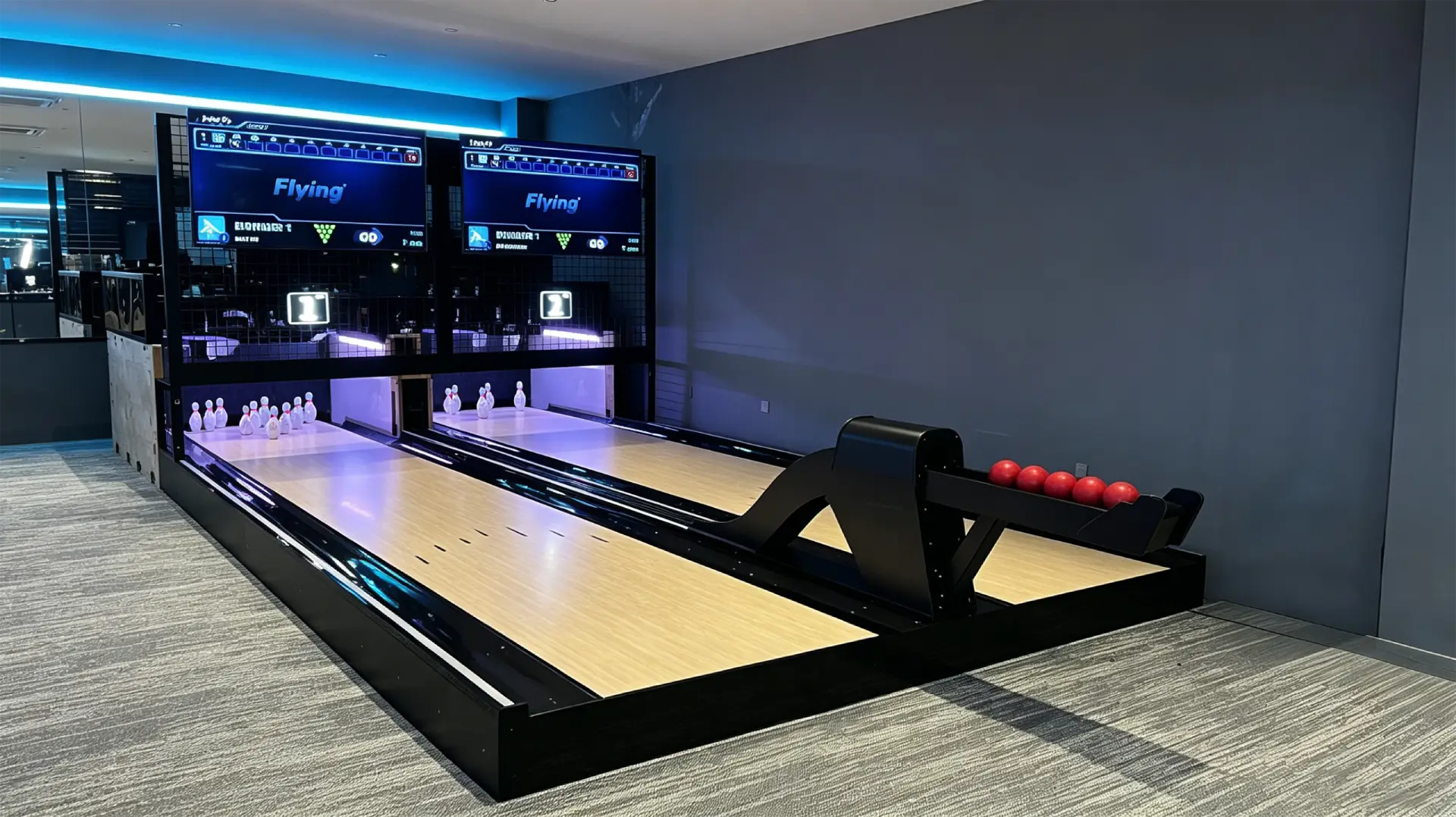
Flying Smart Duckpin Bowling is a compact duckpin bowling equipment system designed for bars, family entertainment centers, hotels, resorts, cinemas, boutique bowling alleys, and social entertainment venues. With a standard 9.13m duckpin bowling lane, 1.25kg lightweight balls, automatic scoring, ball return, LED lighting, and a smart string pinsetter, it creates a fast-paced and easy-to-play bowling experience in a smaller footprint than traditional bowling.
The system is available as a turnkey duckpin bowling package, including lane equipment, a string pinsetter system, scoring hardware, control software, global shipping, installation guidance, and technical support.
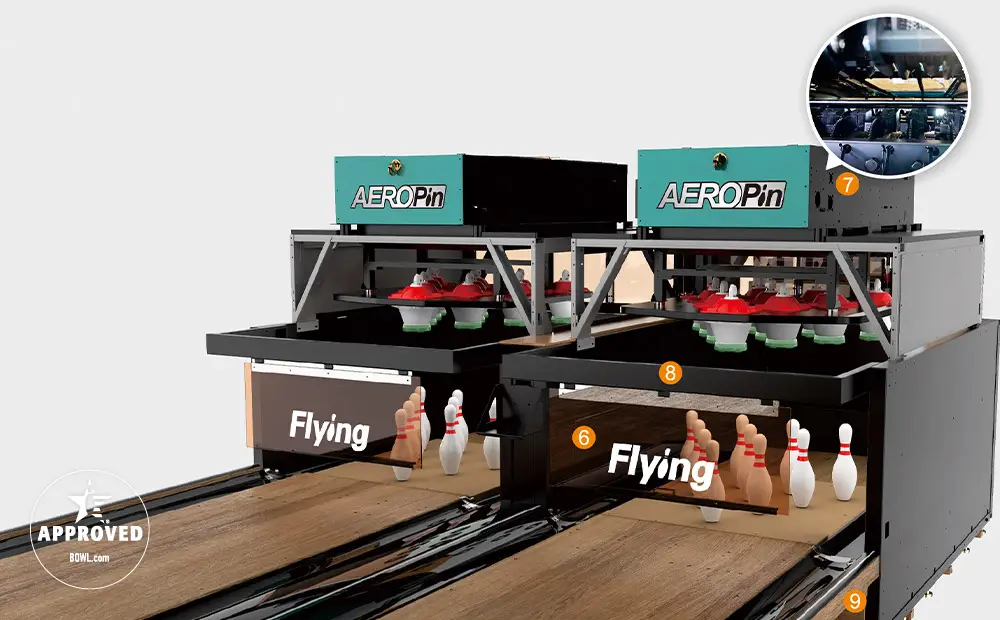
AEROPIN is Flying Bowling’s USBC-certified string pinsetter system for modern commercial bowling centers. Designed for fast pin setting, smooth ball return, low maintenance, and stable daily operation, it helps venue operators build league-ready and entertainment-focused bowling projects with confidence.
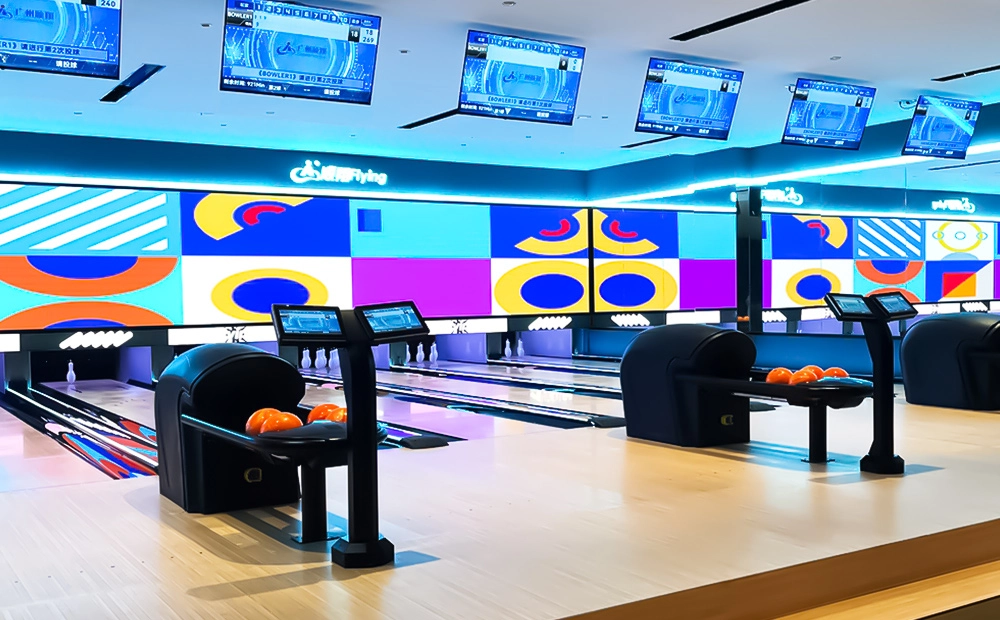
Flying Social Medium Bowling is a compact medium bowling equipment system designed for bars, cafes, family entertainment centers, community leisure venues, hotels, resorts, and small indoor entertainment spaces. With customizable lane lengths from 9.6m to 18m, small balls, lighter pins, string pinsetter technology, ball return, and automatic scoring, it creates an easy-to-play social bowling experience for players of different ages and skill levels.
Compared with full-size standard bowling, medium bowling requires less space and offers a more casual, interactive format. It is a practical choice for venues that want to add a bowling attraction without building a full commercial bowling alley.
Contact Flying
Start Your Custom Bowling Alley Project
If you contact us now for more details, we can provide you with a custom bowling alley service. Our service team will get back to you within 24 hours normally!
© 2026 Flying BOWLING. Designed by gooeyun.
FOLLOW US:

Flying Bowling
Flying Bowling
Flyingbowling
Flyingbowling