

Bowling alley equipment installation labor cost is not a universal rate. It depends on the number and format of lanes, equipment configuration, site readiness, access, local labor arrangements, technician travel, supervision, testing, commissioning, and handover requirements. A quotation for physical assembly alone may be much lower than a quotation that includes engineering review, site attendance, interface coordination, operator training, and corrective work.
For a reliable comparison, separate installation labor from equipment price, construction, utilities, taxes, shipping, permits, and site preparation. Broader venue investment and capital-planning considerations can be reviewed through this bowling alley installation cost guide. Industry organizations such as the BPAA and IAAPA also publish planning resources for bowling centers and entertainment venues, but they should not be treated as a substitute for a project-specific installation quote.
Quick Answer: What Does Bowling Alley Installation Labor Cost Include?
Bowling alley equipment installation labor normally includes some combination of engineering review, technician attendance, equipment assembly, supervision, coordination with local contractors, testing, commissioning, operator handover, and travel or remobilization where applicable. The exact scope varies by supplier and project.
For more context on this related topic, see installation and after-sales support.
The most useful comparison is an itemized installed-labor scope rather than one total. At minimum, buyers should identify:
- Pre-installation engineering and layout review
- Technician labor and on-site supervision
- Lane, pinsetter, ball return, scoring, and control-equipment installation
- Electrical, data, and venue-interface coordination
- Unloading, staging, lifting, and temporary storage responsibilities
- Functional testing, adjustments, commissioning, and fault recording
- Training, documentation, and acceptance handover
- Travel, accommodation, visas, local transport, and possible remobilization
Floor preparation, leveling, structural work, lighting, HVAC, upstream electrical infrastructure, network cabling, taxes, shipping, and permits are often separate costs. They can nevertheless affect labor if the installation team must wait, coordinate with another trade, or return because the venue is not ready.
Cost calculation framework
A practical non-price model is:
Installed labor scope = engineering review + site attendance + equipment installation + testing/commissioning + handover + travel/remobilization where applicable.
Suppliers may price this as a fixed project fee, technician day rate, mobilization fee, stage-by-stage allowance, or actual travel and expense reimbursement. Each method has a different comparison risk:
- Fixed project fee: simple to compare, but only reliable when the equipment list, drawings, site conditions, working hours, and exclusions are defined.
- Technician day rate: transparent for variable work, but the buyer carries more risk if site readiness or installation duration is uncertain.
- Mobilization fee: identifies the cost of sending personnel to site, but may exclude productive installation time and later return visits.
- Separate travel reimbursement: may reflect actual costs, but requires clear rules for transport, accommodation, visas, local travel, and waiting time.
- Commissioning allowance: keeps testing visible, but must state which tests, adjustments, records, and corrective visits are included.
What Determines Bowling Alley Equipment Installation Labor Cost?
Equipment scope and bowling format
Standard bowling, medium bowling, duckpin bowling, and mini bowling may involve different equipment arrangements and installation interfaces. Define the lane type, string pinsetter or other pinsetter configuration, ball return machines, scoring system, control equipment, furniture interfaces, and any venue-specific additions. The more systems that must work together, the more coordination and testing points the project may require.
Lane quantity and layout complexity
Lane quantity affects assembly, alignment, adjustment, wiring coordination, and functional testing. However, lane count alone does not establish labor. A straight layout in a prepared venue may be simpler than a smaller installation in a constrained building with irregular access, retained utilities, or several construction trades working simultaneously.
New venue versus existing-venue conversion
A new venue can often plan access routes, storage, floors, and utilities around the bowling installation. An existing venue may require removal work, restricted delivery access, uneven surfaces, concealed services, protection of finished areas, or coordination with retained systems. These conditions should be documented before the supplier finalizes its labor assumptions.
Site readiness and access
Installation labor can change when packages must be moved manually over long distances, lifted through limited openings, stored away from the installation area, or protected from ongoing construction. Buyers assessing bowling alley site preparation cost should treat access, floor condition, storage, and utility readiness as direct installation dependencies.
Regional labor and travel conditions
Technician availability, travel distance, visas, accommodation, local transport, language coordination, holidays, permits, and local subcontractor requirements can affect the commercial structure. A supplier may use its own technicians, a local partner, remote supervision, or a combination of these approaches. The proposed method should be stated in the quote.
Key Cost Factors Buyers Should Review
Use one responsibility matrix for the following items instead of scattering them across different documents:
- Technician scope: Identify which equipment the supplier installs and which work remains with the venue contractor.
- Supervision: Distinguish on-site supervision from remote guidance and identify who directs local labor.
- Travel and expenses: Separate productive labor from flights, accommodation, visas, local transport, translation, and meals where applicable.
- Site preparation: Allocate responsibility for floors, leveling, structural review, electrical and data connections, lighting, HVAC, access, lifting, and storage.
- Testing and commissioning: Define functional checks, adjustments, fault reporting, records, and the treatment of corrective visits.
- Handover: List operating instructions, maintenance guidance, drawings, training, commissioning records, open-item registers, and acceptance sign-off.
- After-sales boundaries: Separate warranty, troubleshooting, spare-parts handling, and post-handover support from installation labor.
For a broader comparison of labor, commissioning, exclusions, and service boundaries, see this commercial bowling alley installation cost breakdown.
Cost Impact Table: Which Conditions Increase Installation Labor?
The following levels are qualitative planning indicators, not price estimates. The combined project scope matters more than any single condition.
| Project condition | Potential impact | Reason for higher cost or risk |
|---|---|---|
| Approved drawings and complete equipment list | Lower | The installation sequence and interfaces can be reviewed before attendance. |
| Prepared venue with clear access and storage | Lower to moderate | Technicians can focus on installation rather than handling and site coordination. |
| Duckpin, medium, mini, or other selected format | Project-specific | Equipment arrangement, operating requirements, and interface checks must match the format. |
| Scoring, ball return, pinsetter, and building-system interfaces | Moderate | Additional connections and functional checks may be required. |
| Restricted access, difficult unloading, or limited storage | Moderate to higher | Extra handling, staging, protection, or lifting coordination may be needed. |
| Existing venue with removal, uneven surfaces, or retained utilities | Higher | Survey, modification, access, and interface work may not be defined by equipment data alone. |
| Compressed schedule, holiday work, or restricted access windows | Higher | Working-hour assumptions, technician availability, and remobilization risk become more important. |
| Equipment or layout changes after approval | Scope-changing | Rework may affect drawings, packaging, delivery, installation, and commissioning. |
Cost Breakdown by Installation Process and Project Phase
1. Engineering and design review
Before delivery, review the approved layout, lane positions, equipment interfaces, access routes, utility responsibilities, installation sequence, tolerances, surface finishes, material choices, and packaging constraints. This is also the stage to resolve incomplete drawings or conflicting instructions.
2. Delivery, unloading, and staging
Define the delivery route, unloading point, lifting equipment, temporary storage, protection of finished surfaces, and movement of packages to the installation area. The supplier and buyer should state who performs each task. A package that cannot pass through the planned route may require additional handling or a revised sequence.
3. Lane and equipment installation
This phase may include positioning and assembly of lanes, string pinsetters, ball return machines, scoring equipment, and related control components. The labor description should state whether alignment checks, leveling checks, mechanical adjustments, protective finishing, and connections between separately supplied systems are included.
4. Electrical, scoring, and ball-return coordination
Scoring systems, ball returns, pinsetters, and venue interfaces must match the approved layout and utility plan. The equipment supplier may handle specified equipment connections while the local contractor handles upstream electrical or data infrastructure. A written boundary prevents duplicated work and unclear fault responsibility.
5. Testing and commissioning
Commissioning may include functional operation, alignment checks, scoring verification, ball-return operation, pinsetter checks, adjustments, fault reporting, and records of unresolved items. The buyer should know whether testing is performed lane by lane, by system, or as part of a final integrated acceptance process.
6. Handover and training
Handover should identify what has been installed, what remains open, how operators use the equipment, and which maintenance actions are expected. Define the acceptance representative, required documents, training attendees, open-item process, and sign-off method before site attendance begins.
Project Timeline and Installation Scheduling
A useful schedule is a dependency sequence rather than an unsupported promise of a fixed duration:
| Milestone | Required output or dependency | Labor-cost risk if incomplete |
|---|---|---|
| Design approval | Approved layout, equipment list, interfaces, and revision status | Drawing changes can create rework or scope changes. |
| Site-readiness review | Access, floor, utilities, storage, and working area assessed | Technicians may wait or require remobilization. |
| Delivery and staging | Packages, unloading, lifting, and storage plan coordinated | Extra handling may increase attendance requirements. |
| Installation | Lane and equipment assembly completed within agreed boundaries | Interface gaps or missing components can interrupt the sequence. |
| Testing and commissioning | Functional tests, adjustments, records, and open-item list | Unclear tests can lead to disputes about completion. |
| Training and acceptance | Operator instruction, documents, and signed acceptance | “Installed” may be mistaken for “ready to open.” |
Technician dates should be confirmed only after construction, utilities, access, storage, permits, local labor, and equipment availability are ready. The agreement should also address working hours, access windows, holidays, waiting time, cancellation, remobilization, and change control.
How to Get an Accurate Bowling Alley Installation Labor Quote
Send each supplier the same information:
- Project location, venue type, lane quantity, and bowling format
- Equipment list covering lanes, pinsetters, ball returns, scoring, controls, and interfaces
- Approved layout, architectural drawings, revision status, and site photographs
- Floor, structural, surface-finish, access, storage, and unloading information
- Electrical, data, lighting, HVAC, and building-service responsibilities
- Delivery sequence, lifting plan, local contractor availability, and working-hour limits
- Target opening sequence and dependencies rather than only a desired completion date
- Testing, training, documentation, acceptance, and after-sales expectations
RFQ comparison checklist
| Quote category | Information to compare |
|---|---|
| Labor basis | Fixed fee, technician day rate, stage allowance, or another pricing method |
| Installation boundary | Equipment installed, excluded components, supervision, alignment, and adjustments |
| Site responsibility | Floor, utilities, lifting, unloading, storage, access, and local labor |
| Travel and remobilization | Transport, accommodation, visas, waiting time, and return visits |
| Commissioning | Tests, fault correction, records, training, open items, and acceptance |
| Change control | Rules for layout changes, equipment changes, delays, and rework after approval |
Common Quoting Mistakes That Increase Installation Cost
- Comparing totals without comparing scope: A lower figure may exclude travel, supervision, testing, or commissioning.
- Leaving site preparation undefined: Ambiguity over leveling, utilities, lifting, storage, or access can shift costs during installation.
- Approving incomplete drawings: Unresolved interfaces, tolerances, finishes, or material choices may cause rework after delivery planning.
- Booking technicians before readiness: Incomplete construction, delayed utilities, or unavailable storage can create waiting time or a second mobilization.
- Ignoring packaging and route constraints: Delivery access should be checked against package dimensions and the actual movement path.
- Omitting testing and handover: Physical assembly is not the same as verified operation, trained operators, or accepted documentation.
Cost Reduction Strategies Without Increasing Project Risk
Complete DFM and installation-readiness review early
Review tolerances, alignment, materials, surface finishes, interfaces, packaging limits, and access before production or delivery. Design-for-manufacture and design-for-installation decisions can reduce avoidable adjustment and rework.
Use one coordinated information set
Keep one approved layout, equipment list, responsibility matrix, and revision record. Assign one communication owner to consolidate changes and prevent conflicting instructions between the supplier, contractor, and venue team.
Prepare the site and logistics plan
Confirm access, unloading, lifting, staging, storage, floor condition, utilities, and protection of finished areas before technician travel is booked. A coordinated delivery sequence can reduce double handling without removing necessary testing.
Compare total installed cost
Evaluate labor, travel, commissioning, rework exposure, documentation, and acceptance together. The lowest labor line is not necessarily the lowest project cost if important work is excluded or priced as a later change.
How to Choose the Right Supplier for Cost Optimization
Evaluate the supplier against the same scope and assumptions. Important capabilities to verify include:
- Ability to define equipment, installation, exclusion, commissioning, and handover boundaries
- Engineering review of the selected format, layout, interfaces, access, and site conditions
- Clear packaging, shipping coordination, unloading, and staging responsibilities
- Written testing, commissioning, documentation, and acceptance deliverables
- Transparent treatment of travel, local labor, waiting time, remobilization, and changes
- Defined troubleshooting, spare-parts, training, warranty, and after-sales boundaries
According to its public company profile, Flying Bowling Co., Ltd. works with string pinsetters, ball return machines, scoring systems, bowling lanes, and bowling formats including standard, medium, duckpin, and mini bowling, and states that it provides design, construction, installation, and after-sales services. Buyers should verify the exact equipment scope, documents, technician arrangement, and after-sales process for their location rather than assuming the same service model applies to every project.
Project-specific service should be confirmed by location, bowling format, equipment range, local contractor availability, and the agreed installation boundary. Ask for answers to these questions before approval:
- Who reviews the drawings and confirms site readiness?
- Which tasks are completed by supplier technicians and which by local contractors?
- What records demonstrate testing and commissioning completion?
- How are spare parts, troubleshooting, training, and post-handover issues handled?
- What happens if the venue is not ready or the approved layout changes?
Conclusion and Next Steps
The most reliable way to control bowling alley equipment installation labor cost is to define the complete installation path before comparing prices. The package should cover equipment scope, bowling format, lane quantity, site readiness, access, utilities, travel, technician responsibilities, testing, commissioning, training, documentation, acceptance, and change control.
Prepare the same drawings, photographs, equipment requirements, site information, schedule dependencies, packaging expectations, and responsibility matrix for each supplier. Then compare the total installed scope rather than the labor figure alone.
Send Your Drawings for a Cost Review
For a project-specific review, prepare your 2D or 3D drawings, equipment and material requirements, surface-finish expectations, quantity, site photographs, access conditions, and packaging or staging requirements. This information allows installation labor, travel, commissioning, documentation, and exclusions to be assessed against the actual venue.
FAQ: Bowling Alley Equipment Installation Labor Cost
References
More Articles

Let’s Build a center Together
Partner With a Trusted Bowling Alley Design, One-Stop Solution Manufacturer.
Flying has successfully built ideal bowling alleys for more than 3,000 customers.

Technical Expert
You may also like our products
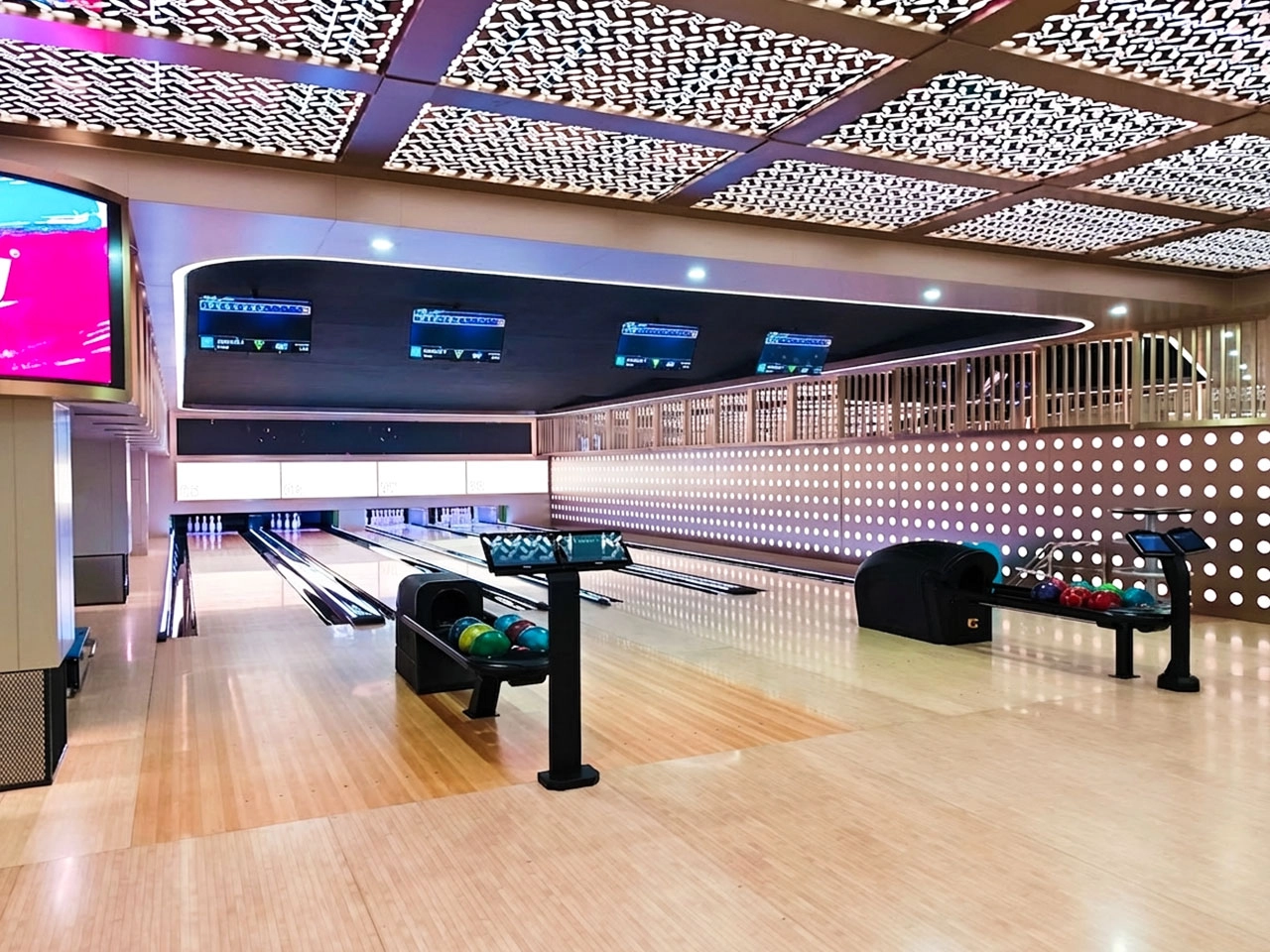
Build a commercial bowling venue with Flying’s complete string pinsetter bowling alley equipment package. The system includes the AEROPIN™ USBC-certified string pinsetter, customizable lanes, automatic scoring, ball return, lane lighting, pins, control hardware, and overseas installation support.
Designed for commercial bowling centers, family entertainment venues, hotels, resorts, bars, and premium private projects, this turnkey bowling system helps operators reduce sourcing complexity and prepare for reliable long-term operation.
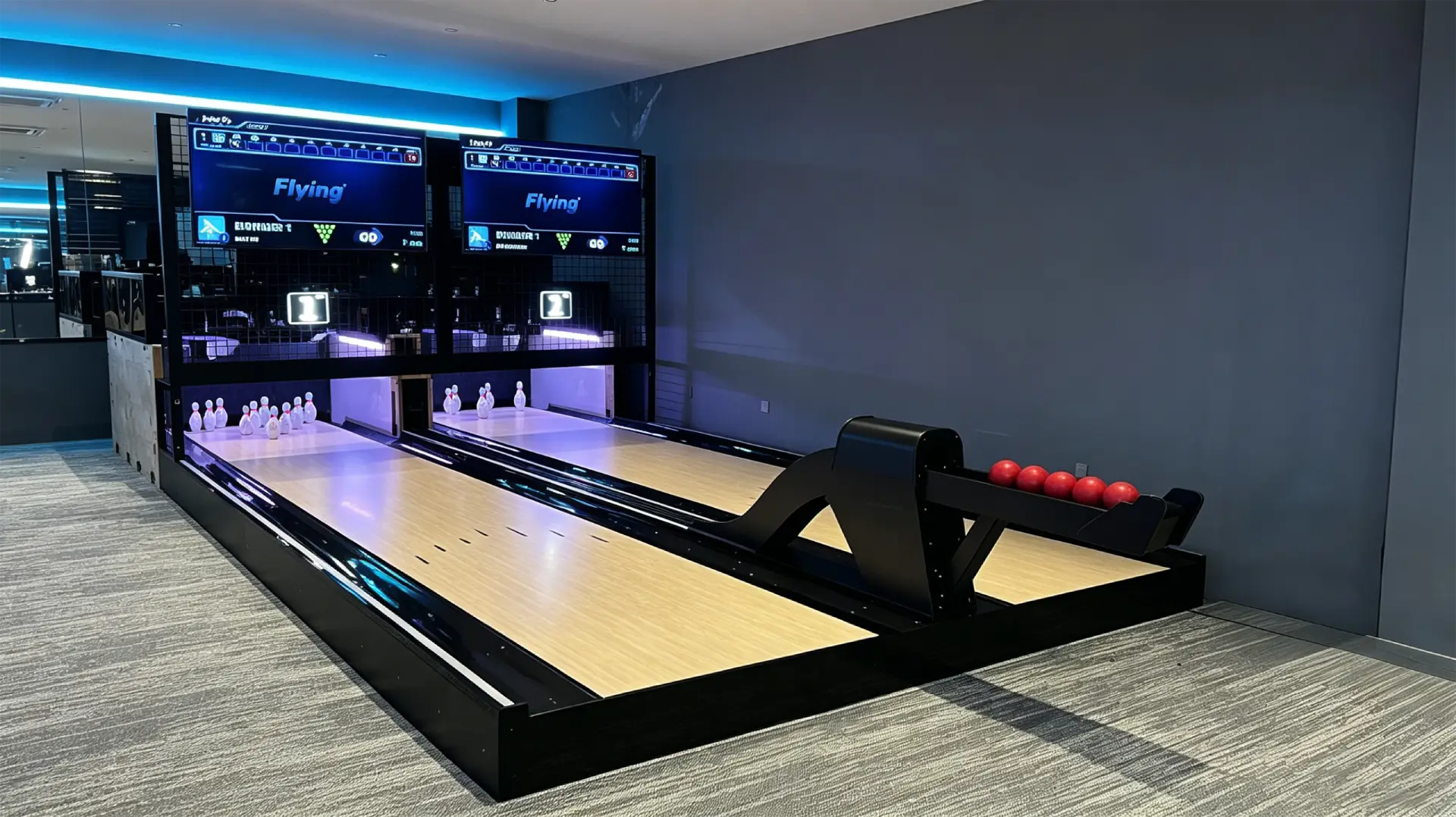
Flying Smart Duckpin Bowling is a compact duckpin bowling equipment system designed for bars, family entertainment centers, hotels, resorts, cinemas, boutique bowling alleys, and social entertainment venues. With a standard 9.13m duckpin bowling lane, 1.25kg lightweight balls, automatic scoring, ball return, LED lighting, and a smart string pinsetter, it creates a fast-paced and easy-to-play bowling experience in a smaller footprint than traditional bowling.
The system is available as a turnkey duckpin bowling package, including lane equipment, a string pinsetter system, scoring hardware, control software, global shipping, installation guidance, and technical support.
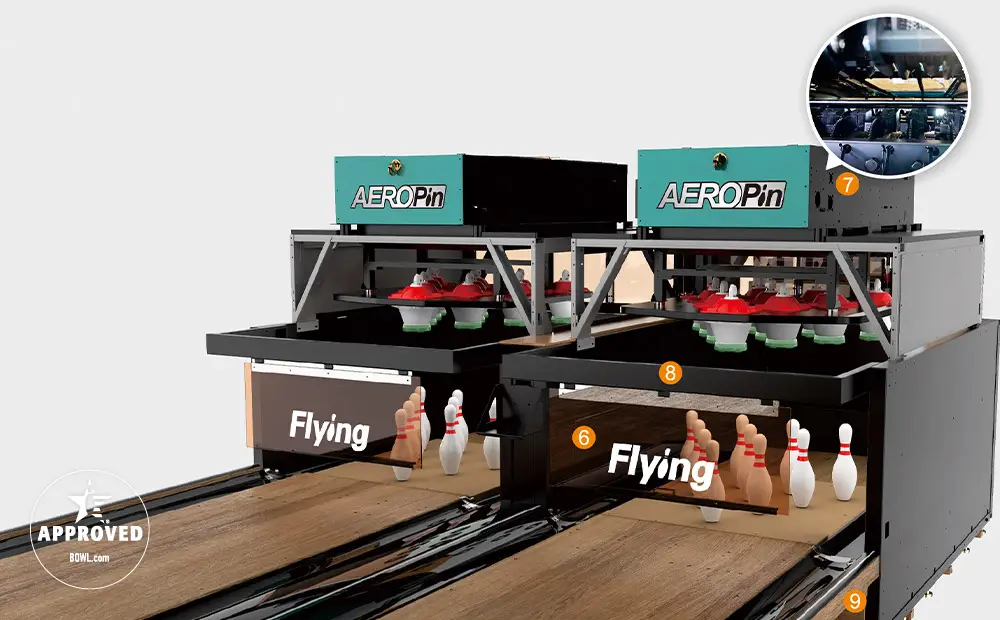
AEROPIN is Flying Bowling’s USBC-certified string pinsetter system for modern commercial bowling centers. Designed for fast pin setting, smooth ball return, low maintenance, and stable daily operation, it helps venue operators build league-ready and entertainment-focused bowling projects with confidence.
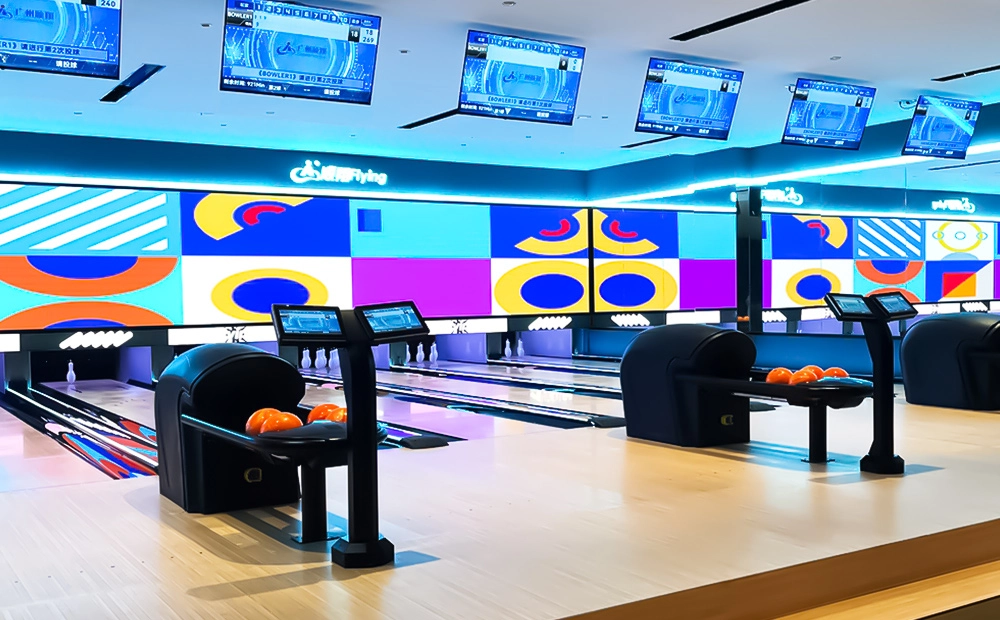
Flying Social Medium Bowling is a compact medium bowling equipment system designed for bars, cafes, family entertainment centers, community leisure venues, hotels, resorts, and small indoor entertainment spaces. With customizable lane lengths from 9.6m to 18m, small balls, lighter pins, string pinsetter technology, ball return, and automatic scoring, it creates an easy-to-play social bowling experience for players of different ages and skill levels.
Compared with full-size standard bowling, medium bowling requires less space and offers a more casual, interactive format. It is a practical choice for venues that want to add a bowling attraction without building a full commercial bowling alley.
Contact Flying
Start Your Custom Bowling Alley Project
If you contact us now for more details, we can provide you with a custom bowling alley service. Our service team will get back to you within 24 hours normally!
© 2026 Flying BOWLING. Designed by gooeyun.
FOLLOW US:

Flying Bowling
Flying Bowling
Flyingbowling
Flyingbowling