

Best Bowling Balls for Hook & Spin 2026: Strongest Hook Guide
This guide explains how to choose bowling balls for hook and spin in 2026. It covers the difference between spin and hook; the strongest hook ball categories; coverstock; core design; RG; differential; surface finish; drilling layout; release technique; maintenance; and how bowling centers can support different player types.
Quick Answer: What Bowling Ball Hooks the Most?
The strongest hooking bowling balls usually combine a reactive resin coverstock, strong surface texture, lower RG, higher differential and a drilling layout matched to the bowler’s release. For heavy oil, solid reactive balls with aggressive cores often create earlier traction and stronger total hook. For transition or lighter oil, pearl or hybrid reactive balls can create more length and sharper backend motion. The best bowling ball for hook depends on oil volume, rev rate, ball speed, axis rotation, release style and pro shop layout.
Key Takeaways
- “Spin” and “hook” are related, but they are not the same thing.
- Most bowlers searching for bowling balls for spin are looking for more hook, stronger backend motion or higher rev potential.
- Reactive resin is usually the main coverstock category for bowlers who want stronger hook.
- Solid reactive balls often read earlier; pearl reactive balls usually create more length; hybrid reactive balls balance traction and backend shape.
- RG affects when the ball starts rolling, while differential affects flare and hook potential.
- Surface finish can make a ball hook earlier or travel farther before reacting.
- Drilling layout, Positive Axis Point and release mechanics can change ball motion as much as ball selection.
- High-rev players and speed-dominant players often need different ball types.
- Bowling centers can use hook and spin guidance to support beginners, league bowlers and pro shop education.
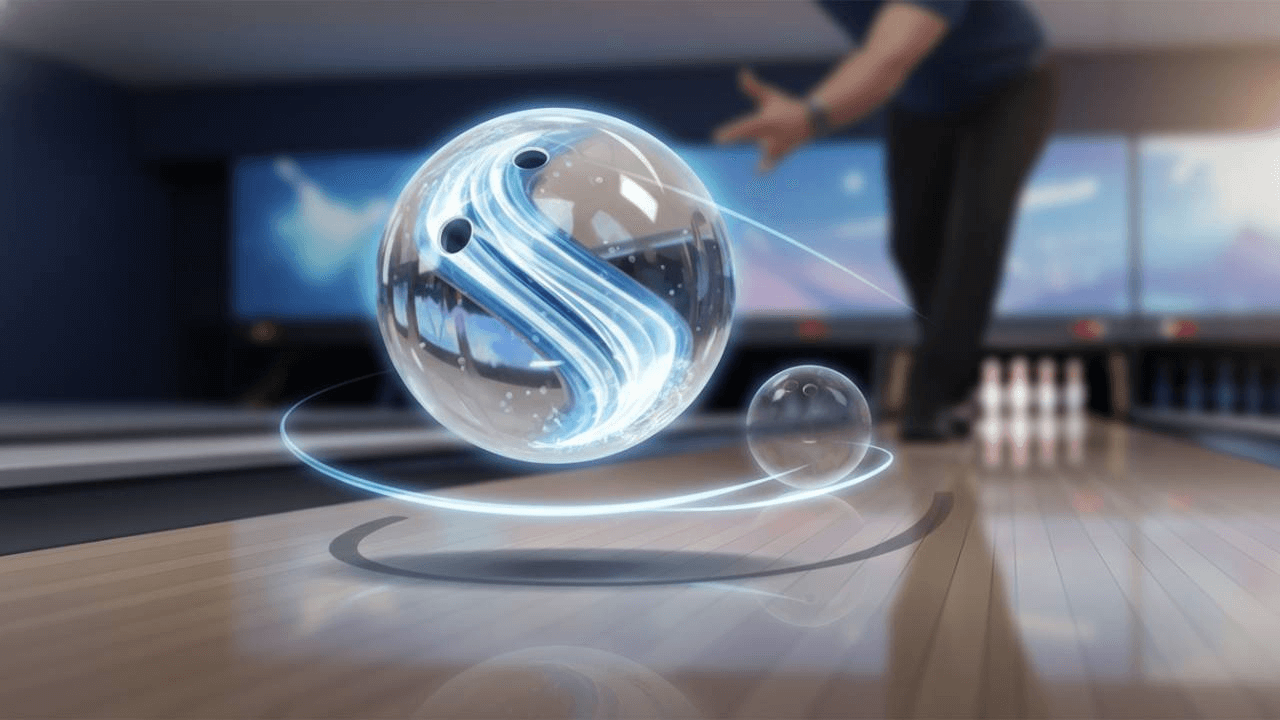
Introduction: Why Hook and Spin Matter in Modern Bowling
In modern bowling, “spin” is often used casually to describe anything from high rev rate to sharp backend hook. In reality, effective ball motion depends on a combination of rev rate, axis rotation, axis tilt, coverstock friction, core design, surface finish and lane condition.
A straight ball can hit the pocket, but a ball with the right hook shape can improve entry angle and pin carry. That does not mean every bowler needs the strongest ball possible. The right choice depends on the player’s release, lane oil, skill level and intended reaction.
This guide focuses on how to choose bowling balls for hook and spin in 2026. It explains what makes a ball hook more, how to compare ball categories, which ball types suit different players, and how to increase hook without relying only on equipment. For a broader buying overview, compare this topic with Flying Bowling’s best bowling balls for 2026 guide.
Spin vs Hook: What Do Bowlers Usually Mean?
Before choosing a ball, it is important to clarify terminology. Bowlers use the word “spin” in different ways.
Spin
Spin can refer to how the ball rotates after release. In some regions, “spinner” bowling describes a high-axis-tilt style where the ball rotates more like a top and travels straighter. This style may use plastic or urethane balls and relies more on deflection and control than a strong hook shape.
Hook
Hook refers to the ball changing direction as it encounters friction near the end of the oil pattern. Most bowlers searching for “best bowling balls for spin” are usually looking for hook, backend motion, rev rate help or stronger entry angle. This article focuses mainly on the modern hook player: a bowler who wants the ball to skid through oil, read friction, change direction and roll through the pocket with energy.
Strongest Hook Bowling Ball Comparison Chart
Use this chart to compare ball categories by hook need.
| Hook need | Better ball type | Specs to look for | Avoid when |
|---|---|---|---|
| Maximum hook on heavy oil | Solid reactive, often with asymmetric core | Lower RG, higher differential, sanded surface | Dry lanes or low oil volume |
| Strong backend hook | Pearl reactive or hybrid reactive | Medium to high differential, cleaner cover | Very slick front part of the lane |
| Controlled hook | Symmetric reactive or urethane | Smoother core, moderate differential, controlled surface | You need sharp backend recovery |
| Beginner learning hook | Entry-level reactive, symmetric core | Moderate cover strength, predictable motion | The ball is too aggressive to control |
| High-rev player | Cleaner pearl, weaker reactive or smoother layout | Higher RG, smoother surface, controlled backend | You already over-hook the lane |
| Speed-dominant player | Strong solid reactive | Lower RG, stronger surface, more traction | Very dry lanes or late transition |
| Spare shooting | Plastic / polyester | Low hook, straight motion | You need strike-ball hook potential |
The strongest bowling ball on paper is not always the best ball on the lane. A high-hook ball used on dry lanes may hook too early and lose energy. A cleaner ball used on heavy oil may skid too far. The best choice is the ball that matches the condition and the bowler.
What Makes a Bowling Ball Hook More?
A bowling ball hooks more when several factors work together.
Coverstock
Coverstock controls how much friction the ball creates with the lane. Reactive resin coverstocks are common for bowlers who want stronger hook because they can create more traction than plastic and usually more backend motion than urethane.
Surface Finish
Surface finish changes how soon the ball reads the lane. A lower-grit sanded surface can help the ball dig into oil and hook earlier. A polished or higher-grit surface helps the ball travel farther before changing direction.
Core Type
The core affects the shape of motion. Symmetric cores usually create smoother, more predictable motion. Asymmetric cores can respond faster to friction and create stronger directional change.
RG
RG, or Radius of Gyration, describes when the ball wants to roll. Lower RG balls tend to rev up earlier. Higher RG balls tend to store energy longer.
Differential
Differential describes flare potential. Higher differential usually means more track flare and more hook potential. Lower differential usually means a smoother and more controlled reaction.
Drilling Layout and Release Style
Two identical bowling balls can react differently after drilling. Layout, Positive Axis Point, pin position, mass bias position, span and pitch can all change the way the ball reads the lane. A bowler’s rev rate, axis rotation, axis tilt and ball speed determine how much hook the ball can actually create. Equipment helps, but technique still matters.
Coverstock for Hook: Solid vs Pearl vs Hybrid vs Urethane
Solid Reactive
Solid reactive balls are often used for heavy oil or fresh lane conditions. They usually create earlier traction and a smoother overall motion.
- Choose solid reactive when the lane has more oil, your ball skids too far, you are speed-dominant, or you need an earlier read.
- Avoid solid reactive when the lane is dry, the ball hooks too early, or you need more length.
Pearl Reactive
Pearl reactive balls usually create more length and sharper backend motion. They are often used when the lane starts to transition or when a bowler wants the ball to clear the front part of the lane more easily.
- Choose pearl reactive when you need more length, the lane has started to break down, or a solid ball burns up too early.
- Avoid pearl reactive when the lane is very slick, you need the ball to read earlier, or backend reaction is already too sharp.
Hybrid Reactive
Hybrid reactive balls combine solid and pearl characteristics. They often provide a balanced shape and can be useful for medium oil or benchmark reactions.
- Choose hybrid reactive when you need versatility, medium-oil performance, or a balance of traction and backend motion.
- Avoid hybrid reactive when heavy oil needs a stronger solid or dry lanes require a cleaner and weaker ball.
Urethane
Urethane creates smooth, early and controllable motion. It is usually not the strongest hook option in total board coverage, but it can be useful when reactive resin is too jumpy.
- Choose urethane when you need control, the pattern is short or difficult, or backend reaction is too sharp.
- Avoid urethane when you need maximum backend hook, more total motion, or when the event or lane condition makes urethane unsuitable.
Plastic / Polyester
Plastic balls are designed to go straighter. They are usually not used for hook, but they are important for spare shooting. If your goal is straight accuracy, see Flying Bowling’s guide to best bowling balls for straight bowlers.
Core and Specs: RG, Differential and Intermediate Differential
Core type and numbers help explain why one ball hooks differently from another.
Symmetric Cores
Symmetric cores usually create smoother and more continuous motion. They are useful for benchmark balls and controlled hook shapes. They often fit beginners, medium oil, predictable lane reading and benchmark arsenal slots.
Asymmetric Cores
Asymmetric cores often respond faster to friction. They can create stronger direction change and more aggressive motion, especially when paired with a strong coverstock. They often fit heavy oil, stronger hook potential, angular motion, speed-dominant players and advanced arsenal gaps.
RG, Differential and Intermediate Differential
Low RG balls usually roll earlier. This can help on heavy oil or for players who need the ball to slow down sooner. High RG balls usually delay roll and can help on transition or lighter oil.
Higher differential usually creates more flare and hook potential. Lower differential usually creates smoother and more controlled motion. Intermediate differential applies to asymmetric balls and usually affects how quickly the ball responds to friction.
For a broader comparison of these specs, review Flying Bowling’s bowling ball comparison chart.
Best Bowling Balls for Hook by Use Case
Instead of choosing only by brand name, compare bowling balls by the role they need to play.
| Use case | Ball category | Example models often compared | Why it fits |
|---|---|---|---|
| Heavy oil hook | Strong solid reactive / asymmetric | Hammer Black Widow-style or Motiv Jackal-style balls | Strong traction, flare and earlier read |
| Benchmark hook | Solid or hybrid symmetric reactive | Storm Phaze II-style or Motiv Venom Shock-style balls | Predictable motion and lane reading |
| Backend hook | Pearl reactive or cleaner hybrid | Hy-Road Pearl-style balls | More length and angular backend |
| Beginner hook | Entry-level reactive, symmetric core | Brunswick Rhino-style balls | Easier control while learning release |
| Controlled hook | Urethane or smooth reactive | Purple Hammer-style or smooth benchmark balls | Pocket control and reduced overreaction |
| High-rev player | Cleaner reactive / weaker pearl | Category depends on lane condition | Helps reduce early hook or overreaction |
| Speed-dominant player | Strong solid reactive | Stronger cover and lower RG categories | Helps the ball slow down and read earlier |
Model names above are examples commonly discussed by bowlers. They are provided only to explain common ball categories. Always confirm current specifications, availability and event legality with the manufacturer, event rules or a qualified pro shop.
How to Choose by Bowler Style
High-Rev Bowlers
High-rev bowlers naturally create more hook. They may not need the strongest ball available. A cleaner coverstock, higher RG, smoother surface or weaker layout may help control overreaction.
Speed-Dominant Bowlers
Speed-dominant bowlers often need help creating earlier traction. They may throw the ball fast enough that weaker balls skid too far. Stronger coverstocks, lower RG cores, more surface texture and earlier-motion layouts may help.
Balanced, Beginner and Two-Handed Bowlers
Balanced bowlers can usually start with a benchmark ball and build around it. Beginners should not start with the strongest hook ball; a controllable entry reactive ball can help them learn release mechanics. Two-handed bowlers often create high rev rates, so ball choice should consider speed, axis rotation, oil volume and whether the ball is burning up too early.
How to Choose by Lane Condition
- Heavy oil: Choose a ball that reads earlier and creates traction. Strong solid reactive balls with lower RG, higher differential and a sanded surface are common choices.
- Medium oil: Choose a versatile ball. Hybrid reactive or benchmark solid balls with smoother symmetric cores can provide a predictable shape.
- Dry lanes: Choose more length and less early traction. Pearl reactive balls, weaker reactive balls, smoother surfaces or spare balls may be more useful.
- Transition: As oil breaks down, a strong ball may start hooking too early. Move to a cleaner pearl or hybrid option that stores energy longer.
- Sport patterns: On sport patterns, control is often more important than maximum hook. Smooth reactive or urethane-style reactions may be useful, depending on the pattern and rules.
How to Increase Bowling Ball Hook: 6 Practical Steps
- Start with a properly fitted ball: A poor fit makes it hard to release the ball cleanly. Span, pitch, thumb fit and finger inserts affect comfort and rev generation.
- Use reactive resin for hook development: For most bowlers learning hook, reactive resin provides more friction than plastic and stronger backend potential than many control-focused options.
- Match coverstock to oil pattern: A strong ball on dry lanes may hook too early. A weak ball on heavy oil may skid too far.
- Choose RG and differential based on speed and rev rate: Speed-dominant bowlers may need earlier rolling balls. High-rev bowlers may need cleaner or smoother options.
- Adjust surface before buying another ball: Surface changes can alter ball reaction quickly. A lower grit can create earlier traction. A smoother or polished surface can create more length.
- Work with a pro shop on PAP and layout: A pro shop can measure your Positive Axis Point and help choose a layout that matches your release.
Surface, Drilling and Maintenance
Surface management is one of the fastest ways to change a ball’s hook shape. A sanded surface helps the ball read earlier. A smoother surface helps the ball travel farther before reacting.
Drilling layout also matters. The same ball can produce different motion with different layouts. A layout designed for early read will not behave the same as a layout designed for length and backend.
Maintenance protects hook potential. Reactive resin bowling balls absorb oil over time. As the coverstock loads with oil, hook potential can decrease. Clean the ball after each session and ask a pro shop about resurfacing or deeper oil extraction when reaction becomes weak or inconsistent.
Common Mistakes When Buying a High-Hook Ball
- Buying the strongest ball too early: A beginner may struggle with an aggressive ball. Control and fit matter before maximum hook potential.
- Ignoring lane condition: A ball that hooks strongly on heavy oil may be too much for dry lanes.
- Confusing spin with hook: A ball can spin without creating useful hook. Effective hook requires the right axis rotation, friction and roll phase.
- Skipping pro shop advice: A pro shop can match ball choice, layout and fit to your game.
- Overlooking surface: If a ball stops hooking, the problem may be surface or oil absorption, not the ball category.
- Building an overlapping arsenal: Owning several strong balls that all create the same motion does not solve lane transition.
For Bowling Centers: Matching Balls to Player Types
Bowling ball selection also matters for bowling centers, family entertainment centers and training venues. Most casual players are not choosing their own performance balls, but centers can still support better player experience.
A bowling center may need:
- A practical house ball weight range
- Beginner-friendly ball options
- Clear spare-shooting support
- Coaching guidance for players learning hook
- Pro shop or equipment partner recommendations
- Lane maintenance plans that match customer skill level
- Educational content for league bowlers and new players
For a full venue plan, ball choice is only one part of the equipment system. Lane systems, string pinsetters, ball returns, scoring, seating, maintenance access and customer flow also matter. Flying Bowling’s bowling alley equipment guide can help venue planners review the broader setup.
Venue owners can also explore the complete string pinsetter bowling alley equipment system when planning a new bowling project or equipment upgrade.
Conclusion: Choose Hook by Match, Not Hype
The best bowling ball for hook and spin is not simply the strongest ball on the market. It is the ball that matches your release, lane condition, surface needs and drilling layout.
For heavy oil, a strong solid reactive ball with lower RG and higher differential may be useful. For transition, a cleaner pearl or hybrid ball may create better length and backend motion. For beginners, a controllable entry reactive ball may be more helpful than an aggressive high-performance option.
The smartest approach is to compare the ball’s purpose: early traction, backend hook, control, spare shooting, benchmark reaction or arsenal gap. Combine that with pro shop guidance, proper fit, surface maintenance and practice, and you will create a more reliable hook shape.
Planning a Bowling Venue or Equipment Upgrade?
If you are building a bowling center, family entertainment center or training venue, Flying Bowling can help review lane systems, string pinsetters, ball returns and project requirements.
Frequently Asked Questions
What bowling ball hooks the most?
The strongest hooking bowling balls usually combine reactive resin coverstock, lower RG, higher differential, strong surface texture and a layout matched to the bowler’s release. However, the ball that hooks the most is not always the best choice for every lane condition.
What is the best bowling ball for hook and spin?
The best ball depends on oil volume, rev rate, ball speed and desired motion. Heavy oil often favors strong solid reactive balls, while transition may favor pearl or hybrid reactive balls with more length and backend response.
Is spin the same as hook in bowling?
No. Spin refers to ball rotation, while hook refers to the ball changing direction as it encounters friction. Useful hook depends on spin, axis rotation, lane friction, coverstock, surface and layout working together.
What coverstock is best for hook?
Reactive resin is usually the main coverstock category for bowlers who want stronger hook. Solid reactive reads earlier, pearl reactive creates more length and backend, and hybrid reactive balances both.
Is a solid or pearl bowling ball better for hook?
A solid ball is often better for earlier traction and heavy oil. A pearl ball is often better for length and sharper backend motion. The better choice depends on lane condition and bowler style.
Does higher differential mean more hook?
Higher differential usually means more flare potential, which can increase hook potential. However, coverstock, surface, RG, layout and lane condition also affect total hook.
Does lower RG create more hook?
Lower RG usually helps the ball roll earlier. This can help on heavier oil, but it does not automatically mean more backend hook. RG should be compared with coverstock, differential and surface.
Should beginners use high-performance hook balls?
Usually not as a first step. Beginners should prioritize fit, control and a predictable reaction. An entry-level reactive ball can help them learn hook without fighting too much motion.
How can I increase bowling ball spin?
Improve fit, release mechanics, wrist position, follow-through and timing. A pro shop can also help with drilling layout, while a reactive resin ball can provide more friction for hook development.
How does surface finish affect hook?
A rougher surface helps the ball read earlier and create traction. A smoother or polished surface helps the ball travel farther before changing direction.
Can one ball work for both hook and spares?
It can, but serious bowlers often use a reactive strike ball for hook and a plastic spare ball for straighter shots. This makes spare shooting more repeatable.
What should bowling centers consider for players learning hook?
Bowling centers should consider beginner-friendly balls, clear coaching guidance, lane maintenance, pro shop support and a practical range of house balls. Hook education can improve the experience for league players and new bowlers.
More Articles

Let’s Build a center Together
Partner With a Trusted Bowling Alley Design, One-Stop Solution Manufacturer.
Flying has successfully built ideal bowling alleys for more than 3,000 customers.
Technical Expert
You may also like our products
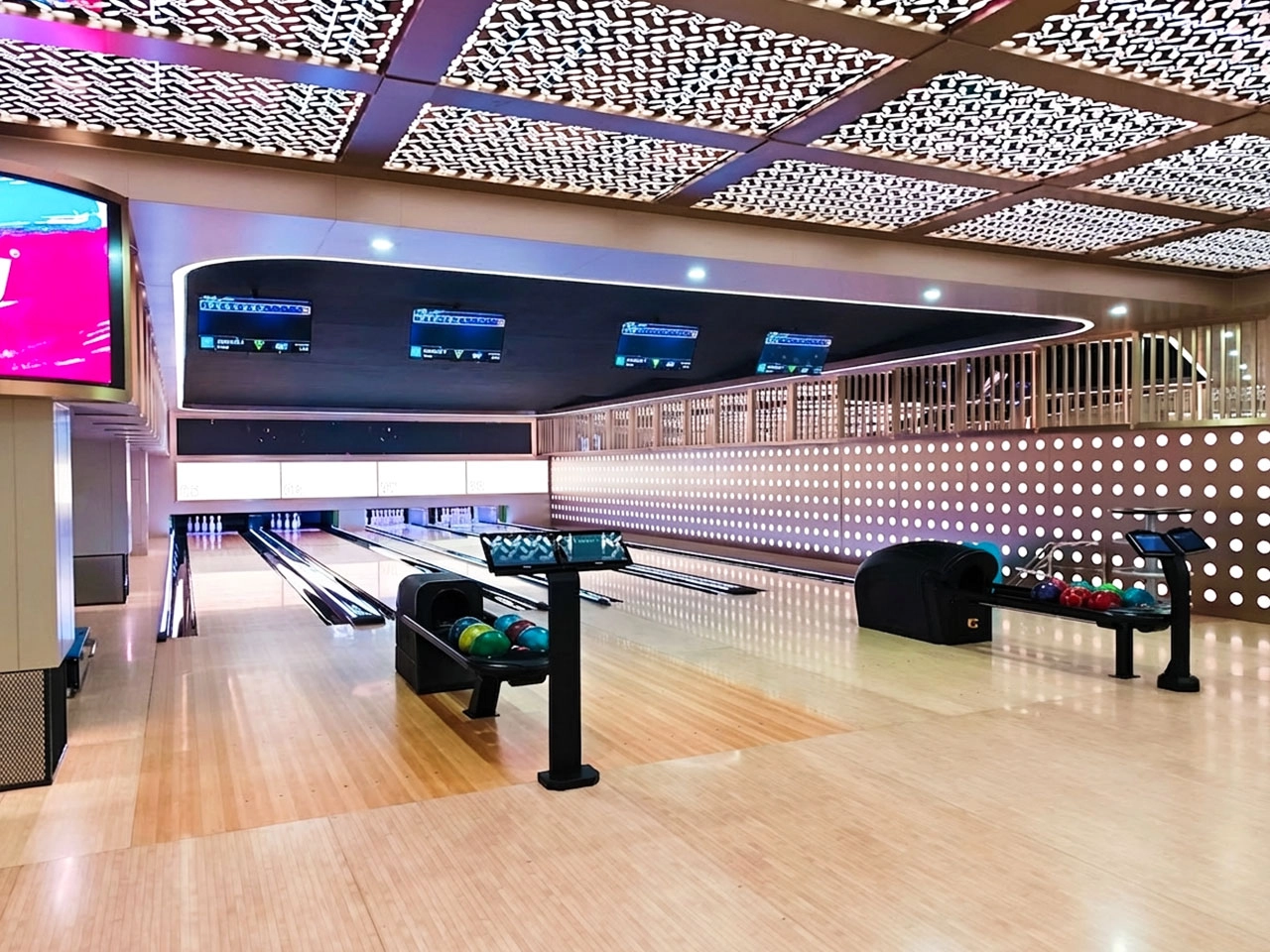
Build a commercial bowling venue with Flying’s complete string pinsetter bowling alley equipment package. The system includes the AEROPIN™ USBC-certified string pinsetter, customizable lanes, automatic scoring, ball return, lane lighting, pins, control hardware, and overseas installation support.
Designed for commercial bowling centers, family entertainment venues, hotels, resorts, bars, and premium private projects, this turnkey bowling system helps operators reduce sourcing complexity and prepare for reliable long-term operation.
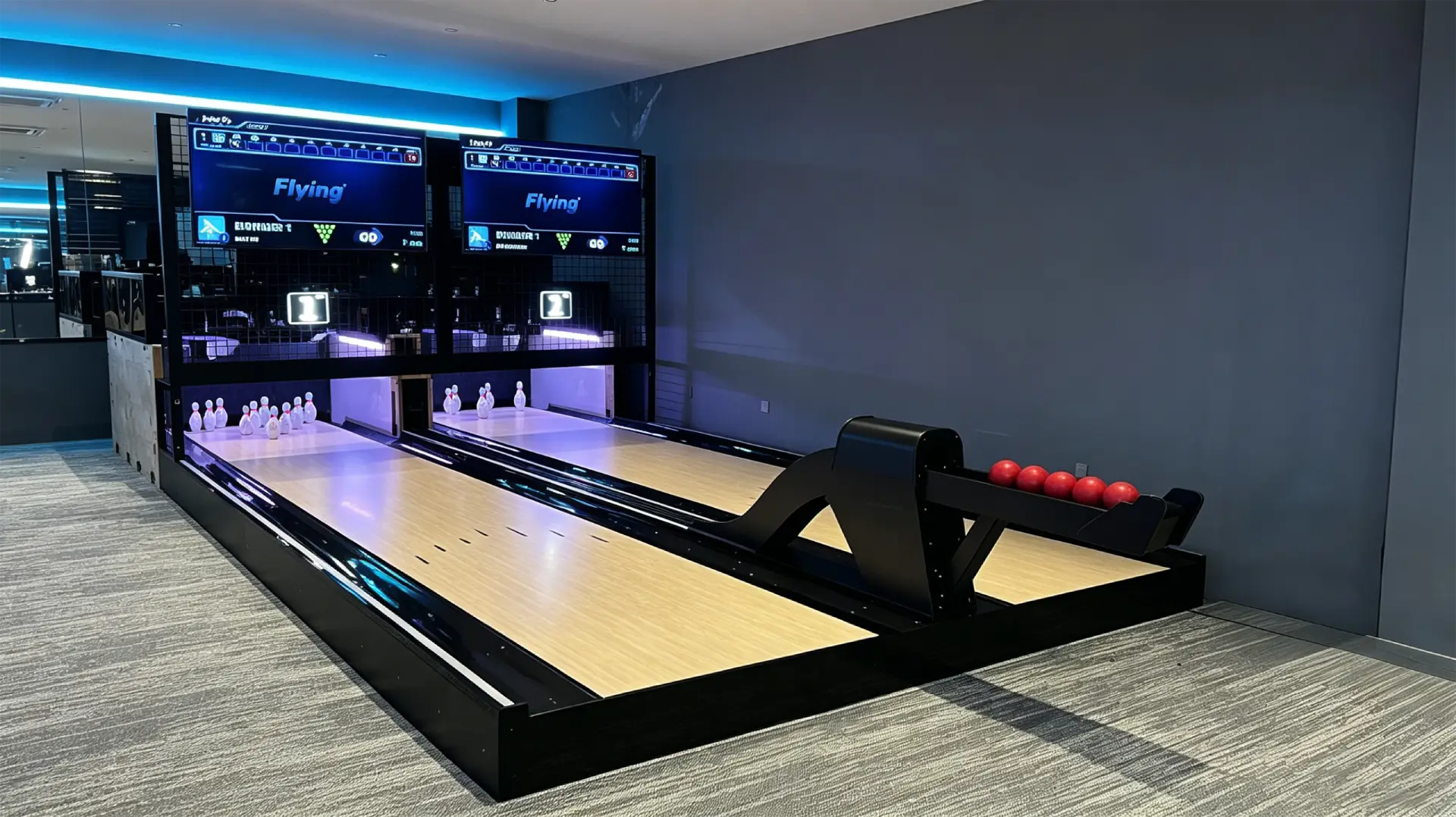
Flying Smart Duckpin Bowling is a compact duckpin bowling equipment system designed for bars, family entertainment centers, hotels, resorts, cinemas, boutique bowling alleys, and social entertainment venues. With a standard 9.13m duckpin bowling lane, 1.25kg lightweight balls, automatic scoring, ball return, LED lighting, and a smart string pinsetter, it creates a fast-paced and easy-to-play bowling experience in a smaller footprint than traditional bowling.
The system is available as a turnkey duckpin bowling package, including lane equipment, a string pinsetter system, scoring hardware, control software, global shipping, installation guidance, and technical support.
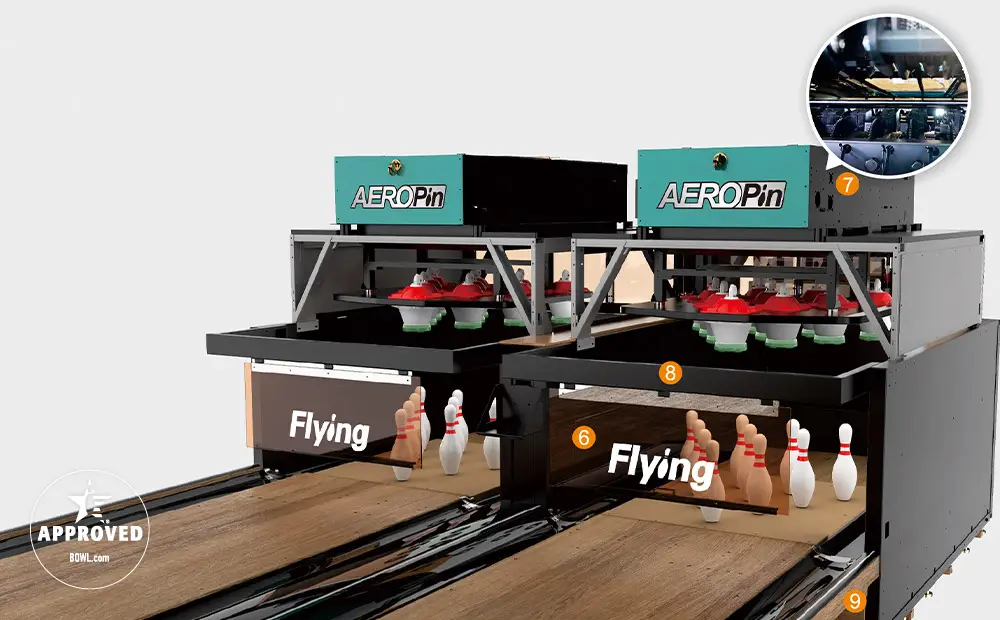
AEROPIN is Flying Bowling’s USBC-certified string pinsetter system for modern commercial bowling centers. Designed for fast pin setting, smooth ball return, low maintenance, and stable daily operation, it helps venue operators build league-ready and entertainment-focused bowling projects with confidence.
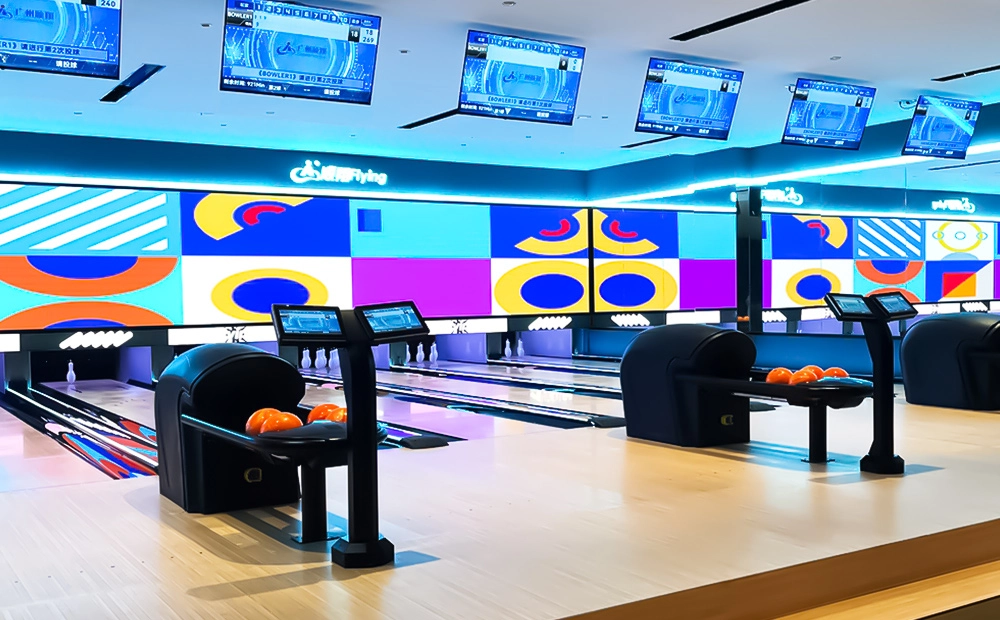
Flying Social Medium Bowling is a compact medium bowling equipment system designed for bars, cafes, family entertainment centers, community leisure venues, hotels, resorts, and small indoor entertainment spaces. With customizable lane lengths from 9.6m to 18m, small balls, lighter pins, string pinsetter technology, ball return, and automatic scoring, it creates an easy-to-play social bowling experience for players of different ages and skill levels.
Compared with full-size standard bowling, medium bowling requires less space and offers a more casual, interactive format. It is a practical choice for venues that want to add a bowling attraction without building a full commercial bowling alley.
Contact Flying
Start Your Custom Bowling Alley Project
If you contact us now for more details, we can provide you with a custom bowling alley service. Our service team will get back to you within 24 hours normally!
© 2026 Flying BOWLING. Designed by gooeyun.
FOLLOW US:

Flying Bowling
Flying Bowling
Flyingbowling
Flyingbowling
Flyingbowling