

Left-Handed Bowling Balls Guide 2026: Drilling, Layouts & Best Picks
This guide explains whether left-handed bowling balls exist, how left-handed drilling works, what equipment matters most, and how left-handed bowlers can choose the right ball based on coverstock, core, RG, differential, lane conditions and skill level.
Quick Answer
There are no factory-made “left-handed bowling balls.” A bowling ball becomes left-handed only after it is drilled for a left-handed bowler’s hand span, pitch, positive axis point, release style, and preferred layout. Left-handed bowlers should focus less on finding a ball labeled “left-handed” and more on custom drilling, proper fit, coverstock, core type, RG, differential, lane condition, and the right bowling equipment setup.
Key Takeaways
- Bowling balls are not manufactured as left-handed or right-handed products; drilling and layout make the difference.
- A ball drilled for a right-handed bowler usually should not be treated as a simple fit for a left-handed bowler.
- Left-handed bowlers often play on a side of the lane that breaks down more slowly, so ball choice and surface control matter.
- Coverstock, core shape, RG, and differential determine how early, strong, or smooth the ball reacts.
- The best bowling ball for a left-hander depends on skill level, oil pattern, release, rev rate, ball speed, and intended use.
- A complete left-handed setup may include a strike ball, a spare ball, properly fitted shoes, finger inserts, surface tools, and maintenance products.
- For competitive play, bowl drilling and surface changes should follow the applicable rules of the event or association.
Introduction: What Makes Left-Handed Bowling Unique?
Left-handed bowlers often experience the lane differently from right-handed bowlers. The reason is not that the bowling ball itself is different at the factory. The difference comes from lane traffic, oil pattern breakdown, release direction, and drilling layout.
Because most bowlers are right-handed, the right side of the lane usually transitions faster. Oil gets pushed, depleted, and carried down more quickly on that side. Left-handed bowlers often see a cleaner and more stable lane condition for a longer period, sometimes called the “lefty wall” or “lefty island.”
That can be an advantage, but it also creates a challenge. If the left side is too slick, too flat, or too unpredictable, fewer bowlers are helping create a playable groove. This means your ball choice, surface preparation, layout, and left-handed bowling technique become especially important.
This guide explains how left-handed bowling balls really work in 2026, how to choose the right ball, how left-handed layouts differ from right-handed layouts, and what equipment left-handed bowlers should consider beyond the ball itself.
Are There Left-Handed Bowling Balls?
No, bowling balls are not made at the factory as left-handed or right-handed balls.
A new bowling ball is a weighted sphere with a coverstock, core, and performance characteristics. It does not know whether it will be used by a left-handed or right-handed bowler. The ball becomes left-handed only when it is drilled for a left-handed player.
The key difference is the layout. A pro shop operator measures the bowler’s hand, span, pitch, release, and positive axis point, then places the finger and thumb holes relative to the core. For a left-handed bowler, the layout is usually a mirror-image approach compared with a right-handed layout.
This is why the phrase “left-handed bowling ball” usually means one of two things:
- A bowling ball that has been drilled for a left-handed bowler.
- A bowling ball type that is suitable for a left-handed player’s lane condition, release, and skill level.
So, if you are asking “is there a left-handed bowling ball?" the practical answer is "Not before drilling." The ball itself is universal, but the fit and layout are hand-specific.
How Can You Tell If a Bowling Ball Is Left-Handed?
You can usually tell a bowling ball is drilled for a left-handed bowler by checking the hole layout and pin position relative to the bowler’s grip.
A left-handed drilling layout is typically mirrored from a right-handed layout. The exact pattern depends on the bowler’s positive axis point, track, hand position, and intended ball motion, but the finger and thumb placement will be designed for a left-handed release.
Signs that a ball may be drilled for a left-handed bowler include:
- The span and pitches match a left hand, not a right hand.
- The layout places the pin and mass bias relative to a left-handed positive axis point.
- The track flare and oil rings match a left-handed release path.
- The thumb and finger pitches allow clean release from the left hand.
- The pro shop record or layout sheet identifies the ball as drilled for a left-handed player.
A used right-handed ball can sometimes be plugged and redrilled, but that does not automatically make it ideal. Plugging changes the ball, may limit layout options, and may not preserve the intended reaction. For serious bowlers, a new ball drilled specifically for the left hand is usually the better path.
What Bowling Equipment Matters Most for Left-Handed Bowlers?
The ball is important, but left-handed bowling performance depends on the whole equipment setup. Searchers often ask about “bowling equipment for left-handed people” because they want to know whether left-handers need different gear.
For a broader venue and equipment planning perspective, see this bowling alley equipment guide.
| Equipment | Does it need to be left-handed? | Why it matters |
|---|---|---|
| Bowling ball | The ball is universal before drilling; the layout must fit the left hand. | Drilling determines comfort, release, and ball motion. |
| Spare ball | Should be drilled for the left hand. | Helps shoot spares straighter and more consistently. |
| Bowling shoes | Usually not left/right specific for casual bowlers, but slide soles matter. | Competitive players may need sole and heel options based on slide foot. |
| Finger inserts | Must match the bowler’s grip and finger size. | Improve comfort, release feel, and repeatability. |
| Wrist support | Should fit the bowler’s dominant hand. | Can help control wrist position and release. |
| Surface pads | Not hand-specific. | Help adjust ball reaction for oil and friction. |
| Ball cleaner | Not hand-specific. | Keeps coverstock reaction consistent. |
For left-handed bowlers, the most important equipment decision is still a properly fitted, custom-drilled bowling ball. However, a complete setup should also include a spare ball, suitable shoes, finger inserts, and basic maintenance tools.
Essential Bowling Ball Factors for Left-Handed Performance
To choose the right bowling ball for a left-hander, you need to understand how the ball reads the lane. Four factors matter most: coverstock, core type, RG, and differential.
Each affects how the ball handles oil, friction, and backend motion. You can also compare these specifications in more detail in this bowling ball comparison guide.
Coverstock Types and Left-Handed Ball Reaction
The coverstock is the outer shell of the ball. It determines how much traction the ball creates against the lane surface.
Reactive resin bowling balls are common for bowlers who want hook potential. Solid reactive coverstock reads the lane earlier and is useful on heavier or fresher oil. Pearl reactive coverstock stores energy longer and responds more sharply down the lane. Hybrid reactive coverstock blends solid and pearl characteristics.
Urethane bowling balls create a smoother and more controllable motion. Many left-handed bowlers like urethane because the left side of the lane may stay cleaner and more stable for longer. However, bowlers should confirm whether urethane use is appropriate for their league, tournament, and lane condition.
Plastic balls are best for straight shots and spares. A left-handed bowler should consider a plastic spare ball drilled specifically for the left hand, especially for corner pins and repeatable spare shooting.
Core Designs: Symmetric vs. Asymmetric
The core is the engine of the bowling ball. It influences how the ball revs up, changes direction, and continues through the pins.
Symmetric cores generally create a smoother and more predictable motion. For left-handed bowlers, a symmetric core can be a strong first choice because the left side of the lane often changes more slowly.
Asymmetric cores create a stronger and faster response to friction. For a left-handed bowler, an asymmetric ball may help create a stronger entry angle or kick out stubborn corner pins, but it can also be too strong if the lane has enough friction.
RG and Differential Explained
When choosing a bowling ball, two numbers often appear on the specification sheet: RG and differential.
- RG, or Radius of Gyration, describes how quickly a ball wants to rev up. Low RG balls tend to roll earlier, while higher RG balls tend to delay their roll.
- A differential describes flare potential. Higher differential balls can create more hook potential, while lower differential balls usually produce a straighter or more controlled shape.
For a left-handed bowler, RG and differential should be selected based on the oil pattern, ball speed, rev rate, and desired motion. A left-hander on fresh oil may need earlier traction, while a left-hander on a dry or high-friction lane may need more length and control.
Mastering Left-Handed Bowling Ball Drilling
Custom drilling is one of the most important parts of left-handed bowling performance. Even the best ball can perform poorly if the layout, span, or pitch is wrong.
A pro shop should measure the following:
- Hand span, finger sizes, thumb size, and finger or thumb pitch
- Ball speed, rev rate, axis tilt, and axis rotation
- Positive axis point and track position
- Current lane condition and desired ball motion
The Positive Axis Point is especially important because it helps the pro shop place the layout relative to the bowler’s release. Without this measurement, the layout may be too generic. For certified competition, confirm the latest equipment rules with the relevant association before drilling or modifying any ball.
How Left-Handed Bowling Ball Layouts Differ from Right-Handed Layouts
Left-handed bowling ball layouts usually mirror right-handed layouts. The goal is not simply to copy the same pin position visually. The goal is to place the core and drilling angles correctly for a left-handed release.
A left-handed layout should consider the following:
- Whether the bowler plays straighter or opens the lane
- Whether the bowler has a high track or low track
- Whether the ball should read early or store energy
- Whether the bowler needs control or angular backend motion
- Whether the ball is used as a strike ball, benchmark ball, spare ball, or specialty ball
What to Tell Your Pro Shop Before Drilling a Left-Handed Ball
Before drilling a bowling ball, a left-handed bowler should give the pro shop practical information, not just say “I need it drilled for my left hand.” Bring or explain:
- Your dominant hand: left
- Your current ball speed and rev rate, if known
- Whether you use your thumb
- Your common miss: high, light, flat, early hook, or no hook
- Your main lane condition: dry, medium, heavy oil, or sport pattern
- Your desired motion: smooth, early, angular, controlled, or straight
- Your existing equipment and what gap this ball should fill
Best Bowling Balls for Left-Handers by Need
There is no single “best bowling ball for left-handers.” The best choice depends on the bowler’s level, release, and lane condition. Instead of chasing a brand label, choose the ball type that fits the job. For broader model-selection ideas, you can also review this best bowling balls for 2026 guide.
| Left-handed bowler need | Best ball type | Why it fits | What to ask the pro shop |
|---|---|---|---|
| Beginner left-hander | Entry-level reactive resin with a symmetric core | Easier control and moderate hook | Fit, span, pitch, and a forgiving layout |
| First custom ball | Smooth benchmark reactive ball | Helps learn hook and lane reading | Layout based on PAP and release |
| Left-handed hook | Reactive resin with medium to higher differential | Creates more flare and hook potential | Match layout to rev rate and ball speed |
| Heavy oil | Solid reactive ball, often lower RG and stronger cover | Reads oil earlier and creates traction | Surface and layout for early motion |
| Spare shooting | Plastic spare ball | Straighter path for corner pins | Comfortable straight-shot drilling |
Best Bowling Ball for Beginner Left-Handers
A beginner left-handed bowler should usually start with a ball that fits well and is easy to control. The goal is not maximum hook. The goal is learning a repeatable release.
Good beginner characteristics include the following:
- Comfortable custom fit
- Entry-level reactive coverstock
- Symmetric core
- Moderate hook potential
- Forgiving reaction
Best Bowling Ball for Left-Handed Hook
A left-handed bowler looking for more hook should focus on coverstock strength, differential, and layout. A stronger reactive resin ball with a layout matched to the bowler’s release can create more hook potential.
However, more hooks are not always better. If the ball reads too early, it may lose energy before reaching the pocket. If it skids too long, it may miss the breakpoint. The best left-handed hook setup balances traction, shape, and continuation.
Best Spare Ball for Left-Handers
Every serious left-handed bowler should consider a spare ball. A plastic spare ball helps reduce hook and makes straight shots more repeatable. For left-handers, this is especially useful for the 7-pin and other corner-pin situations.
Building Your Perfect Left-Handed Bowling Ball Arsenal
A one-ball strategy can work for casual bowling, but it often limits competitive performance. A practical left-handed arsenal may include three or four roles.
- Spare Ball: A plastic spare ball drilled for the left hand. It is used for straight shots and spare consistency.
- Benchmark Ball: A smooth symmetric reactive ball for medium oil. This is usually the first ball out of the bag because it helps you understand the lane.
- Strong Oil Ball: A stronger solid reactive or asymmetric ball for heavier oil. This ball helps when the left side is too slick or when the ball struggles to read the lane.
- Control or Specialty Ball: A urethane or smoother control ball can help on short patterns, difficult lane conditions, or situations where a strong reactive ball jumps too hard.
- Cleaner or Angular Ball: A cleaner or more angular ball can help when the lane opens up and you need more length or backend response.
A good arsenal is not about owning the most balls. It is about having clear motion options: straight, smooth, strong, controlled, and angular.
Common Mistakes Left-Handed Bowlers Make
- Buying a used right-handed ball without checking the layout: A used right-handed ball may not match a left-handed bowler’s hand, span, pitch, or release.
- Choosing hook over fit: A poor fit can damage consistency. Fit comes first. Hook potential comes after comfort, control, and repeatability.
- Ignoring the left-side lane condition: A ball that works well for a right-hander on the same pair may not be the best match for the left side.
- Using the wrong surface: A ball that does not hook may need surface adjustment, cleaning, or oil extraction.
- Skipping the spare ball: A plastic spare ball can make straight shooting much easier.
- Relying on generic drilling: Custom left-handed drilling is one of the most important performance upgrades.
Maintenance Tips for Left-Handed Bowling Balls
A bowling ball’s reaction changes as it absorbs oil, gets lane shine, and loses surface texture. Regular maintenance keeps performance more predictable.
- Clean after every session: Use an approved bowling ball cleaner after bowling to remove oil and dirt from the coverstock.
- Wipe the ball during play: Use a towel between shots to reduce oil buildup and keep reactions more consistent.
- Manage surface carefully: Surface pads can adjust reactions. A lower grit surface can help the ball read earlier, while a smoother surface can help the ball travel farther before hooking.
- Refresh the ball periodically: Reactive resin balls may need deeper oil extraction or professional resurfacing after extended use.
- Check finger inserts and thumb fit: Inserts wear down, thumb size changes, and grip pressure can increase. A periodic fit check can prevent release problems.
How Left-Handed Bowlers Should Choose a Ball Weight
Ball weight should support control, comfort, and repeatability. A common starting point is to use a ball around 10% of body weight, up to the common adult range of 15 to 16 pounds, but fit is more important than the number alone.
A properly fitted ball can feel lighter than an uncomfortable house ball. If the ball causes wrist pain, grip pressure, dropped shots, or inconsistent release, it may be too heavy or poorly fitted. Left-handed bowlers should test comfort with the actual grip, not just the scale weight.
When Should a Left-Handed Bowler Replace a Bowling Ball?
A ball may need replacement when it no longer fills a useful role in the arsenal. Signs include:
- It no longer hooks even after cleaning and resurfacing.
- The coverstock is cracked or damaged.
- The layout no longer matches your release.
- Your hand fit has changed significantly.
- You need a different reaction for current lane conditions.
- The ball overlaps too much with another ball in your bag.
Before replacing a ball, ask a pro shop whether resurfacing, cleaning, plugging, or layout adjustment could solve the problem. To understand common buying and drilling cost factors, review this bowling ball cost guide.
Buying Checklist for Left-Handed Bowling Balls
Before buying a ball, answer these questions:
- Am I buying this as a strike ball, spare ball, or specialty ball?
- What lane condition do I need it for?
- Do I need earlier traction, smoother motion, or more backend angle?
- What is my ball speed and rev rate?
- Do I need a symmetric or asymmetric core?
- Do I need a solid, pearl, hybrid, urethane, or plastic coverstock?
- Will the pro shop measure my PAP before drilling?
- Does this ball fill a real gap in my arsenal?
- Is the ball legal for the league or tournament where I plan to use it?
Planning a Left-Handed-Friendly Bowling Setup for a Venue
For bowling venue owners, left-handed bowlers should also be considered when planning lane conditions, coaching support, rental equipment, and customer experience.
A left-handed-friendly setup may include the following:
- Properly maintained house balls in multiple weights
- Clear access to left-hand drilling recommendations through a pro shop partner
- Lane maintenance that considers traffic and oil transition
- Spare balls or beginner-friendly ball options
- Coaching guidance for both left-handed and right-handed players
- Equipment information for beginners who want to buy their first custom ball
If you are planning a bowling center, family entertainment center, or training-friendly bowling venue, equipment configuration should consider different player types, including left-handed bowlers, beginners, recreational players, and competitive bowlers. For venue-level equipment configuration, see Flying Bowling’s complete string pinsetter bowling alley equipment system.
Conclusion: Build the Right Left-Handed Bowling Setup
Being a left-handed bowler can be a strategic advantage, but only if your equipment matches your release and lane condition.
The most important point is simple: bowling balls are not left-handed when they leave the factory. They become left-handed through custom drilling, layout, and fit. From there, coverstock, core type, RG, differential, and maintenance determine how well the ball performs.
Instead of searching only for a product labeled “left-handed,” focus on these questions:
- Is the ball drilled for my left hand?
- Does the layout match my PAP and release?
- Does the coverstock match the oil condition?
- Does the core shape fit my desired motion?
- Does this ball fill a clear role in my arsenal?
- Do I have a spare ball and basic maintenance tools?
With the right combination of fit, drilling, surface, and ball selection, left-handed bowlers can create a more consistent, controlled, and powerful game.
Need to Plan Bowling Equipment for Your Venue?
If you are building or upgrading a bowling venue, Flying Bowling can help you review lane equipment, string pinsetter systems, ball return configuration, and project requirements.
Frequently Asked Questions
Are there left-handed bowling balls?
No. Bowling balls are not manufactured as left-handed or right-handed balls. A ball becomes left-handed only after it is drilled and laid out for a left-handed bowler’s hand, release and Positive Axis Point.
release,positive axis point.How can you tell if a bowling ball is drilled for a left-handed bowler?
You can check the drilling layout, span, pitch and pin placement relative to the bowler’s left-handed grip. A pro shop can confirm whether the layout matches a left-handed Positive Axis Point and release path.
pitch,positive axis pointCan a left-handed bowler use a right-handed bowling ball?
A left-handed bowler can physically throw a ball drilled for a right-handed bowler, but it is usually not ideal. The fit, pitches and layout may not match the left hand, and the ball reaction may be inconsistent. A custom left-handed drilling is usually better.
pitch,drillWhat is the best bowling ball for a beginner left-hander?
The best beginner option is usually an entry-level reactive resin ball with a comfortable custom fit, symmetric core and controllable hook potential. The exact choice should match the bowler’s speed, release and lane condition.
core,release,What is the best bowling ball for a left-handed hook?
A left-handed bowler who wants more hook should look at reactive resin balls with suitable cover strength, differential and layout. The best option depends on rev rate, ball speed, oil pattern and desired motion.
differential,pattern,Do left-handed bowlers need different bowling shoes?
Most recreational bowling shoes are not specifically left-handed or right-handed, but competitive bowlers may care about slide sole and traction sole setup. The slide foot matters more than handedness alone.
the slidestanceWhat bowling equipment do left-handed bowlers need besides a ball?
Useful equipment includes a properly drilled spare ball, fitted bowling shoes, finger inserts, a towel, approved cleaner, surface pads and a bag that supports a small arsenal.
pads,What is the difference between symmetric and asymmetric cores for left-handed bowlers?
Symmetric cores usually create smoother and more predictable motion. Asymmetric cores often create stronger and faster response to friction. Both can work for left-handed bowlers if the layout and lane condition match the bowler’s needs.
a strongerWhy do RG and differential matter for left-handed bowling balls?
RG affects how early or late the ball rolls. Differential affects flare and hook potential. Together, they help determine whether the ball is better for heavy oil, medium oil, dry lanes, control or stronger hook.
control,a strongerHow often should a left-handed bowler clean or resurface a bowling ball?type,
The ball should be cleaned after each session. Resurfacing or deeper maintenance depends on the number of games, coverstock type and lane oil volume. If the reaction becomes weak or inconsistent, ask a pro shop to inspect the surface and oil absorption.
More Articles

Let’s Build a center Together
Partner With a Trusted Bowling Alley Design, One-Stop Solution Manufacturer.
Flying has successfully built ideal bowling alleys for more than 3,000 customers.

Technical Expert

You may also like our products
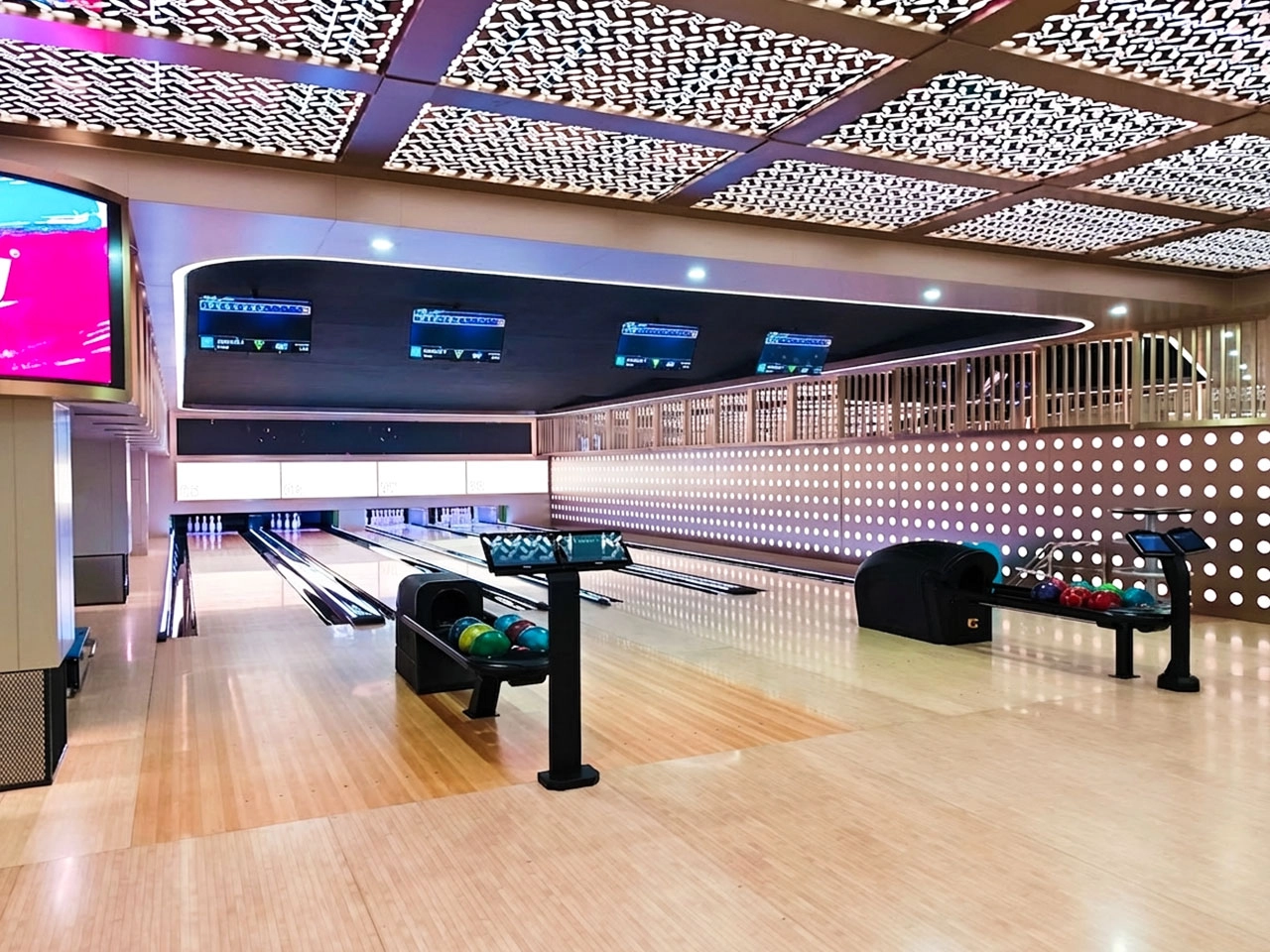
Build a commercial bowling venue with Flying’s complete string pinsetter bowling alley equipment package. The system includes the AEROPIN™ USBC-certified string pinsetter, customizable lanes, automatic scoring, ball return, lane lighting, pins, control hardware, and overseas installation support.
Designed for commercial bowling centers, family entertainment venues, hotels, resorts, bars, and premium private projects, this turnkey bowling system helps operators reduce sourcing complexity and prepare for reliable long-term operation.
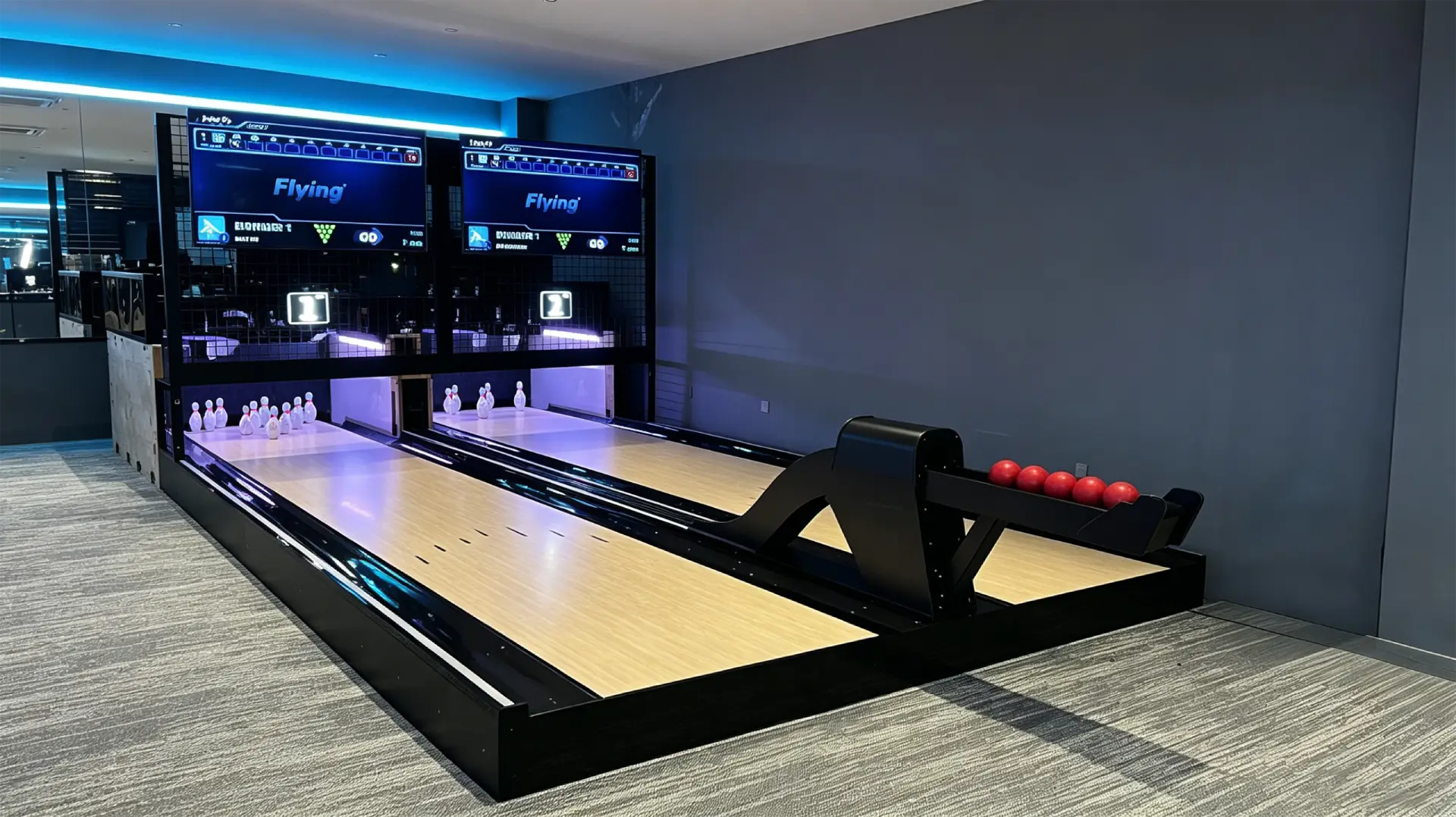
Flying Smart Duckpin Bowling is a compact duckpin bowling equipment system designed for bars, family entertainment centers, hotels, resorts, cinemas, boutique bowling alleys, and social entertainment venues. With a standard 9.13m duckpin bowling lane, 1.25kg lightweight balls, automatic scoring, ball return, LED lighting, and a smart string pinsetter, it creates a fast-paced and easy-to-play bowling experience in a smaller footprint than traditional bowling.
The system is available as a turnkey duckpin bowling package, including lane equipment, a string pinsetter system, scoring hardware, control software, global shipping, installation guidance, and technical support.
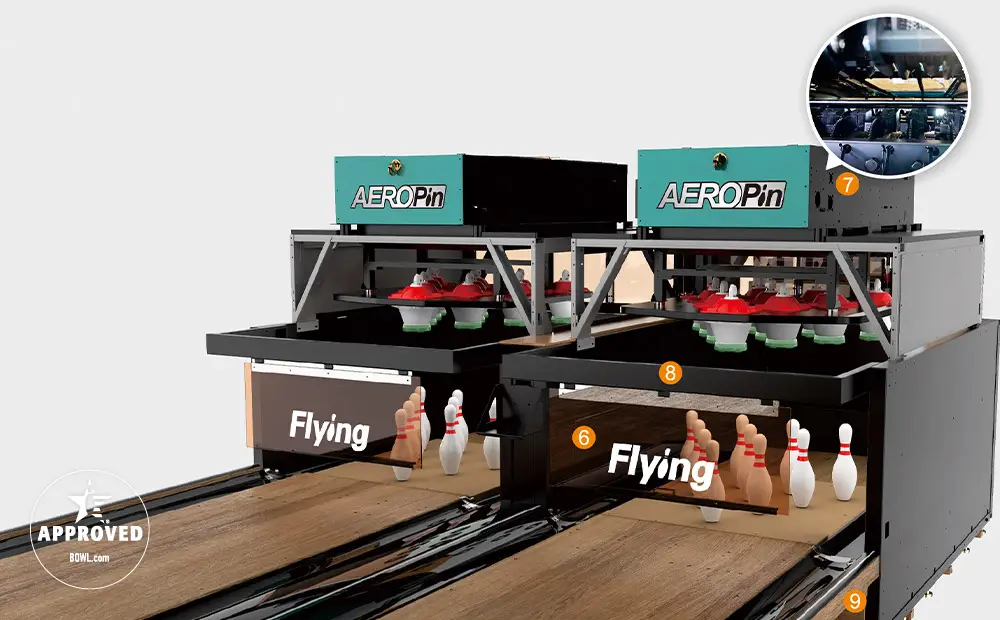
AEROPIN is Flying Bowling’s USBC-certified string pinsetter system for modern commercial bowling centers. Designed for fast pin setting, smooth ball return, low maintenance, and stable daily operation, it helps venue operators build league-ready and entertainment-focused bowling projects with confidence.
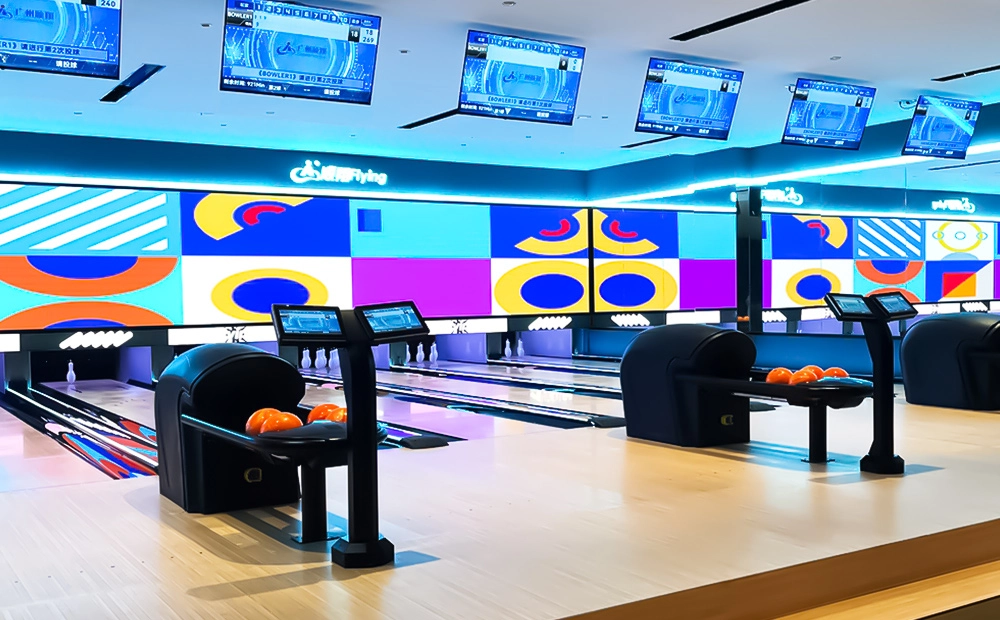
Flying Social Medium Bowling is a compact medium bowling equipment system designed for bars, cafes, family entertainment centers, community leisure venues, hotels, resorts, and small indoor entertainment spaces. With customizable lane lengths from 9.6m to 18m, small balls, lighter pins, string pinsetter technology, ball return, and automatic scoring, it creates an easy-to-play social bowling experience for players of different ages and skill levels.
Compared with full-size standard bowling, medium bowling requires less space and offers a more casual, interactive format. It is a practical choice for venues that want to add a bowling attraction without building a full commercial bowling alley.
Contact Flying
Start Your Custom Bowling Alley Project
If you contact us now for more details, we can provide you with a custom bowling alley service. Our service team will get back to you within 24 hours normally!
© 2026 Flying BOWLING. Designed by gooeyun.
FOLLOW US:

Flying Bowling
Flying Bowling
Flyingbowling
Flyingbowling