


Quick Overview
Duckpin bowling is a bowling variation played with ten shorter pins and a smaller ball without finger holes. Players normally have up to three deliveries per frame, compared with two in ten-pin bowling.
The smaller ball is easier for many players to handle, but knocking down all ten pins—especially on the first delivery—is difficult. This makes duckpin bowling easy to understand but demanding to master.
The main differences from ten-pin bowling are the ball size, pin design, number of deliveries per frame, and the greater emphasis on accuracy and repeatable control.
What Is Duckpin Bowling?
Duckpin bowling is a form of bowling that uses smaller balls and shorter pins than traditional ten-pin bowling.
Players roll the ball down a lane toward ten pins arranged in a triangular formation. The objective is to knock down as many pins as possible during each frame.
What makes duckpin bowling distinct is the combination of a smaller ball without finger holes, shorter pins, up to three deliveries per frame, and a playing style that depends heavily on placement and consistency.
The smaller equipment can make the game more approachable for casual players, but the pin action makes complete pin clearing difficult.
Duckpin bowling is therefore not simply a reduced-size version of ten-pin bowling. It is a separate bowling format with its own playing characteristics.
How Does Duckpin Bowling Work?
A duckpin bowling game is normally played over ten frames.
Each frame begins with ten standing pins. The player throws the ball toward the pins and continues with additional deliveries if pins remain.
Unlike ten-pin bowling, where a player normally has up to two deliveries in a frame, duckpin bowling generally allows up to three.
This additional delivery changes how each frame develops. A player may need to manage the remaining pin arrangement across several shots instead of relying only on the first delivery.
Knock down as many pins as possible while using the available deliveries efficiently.
Duckpin Bowling Rules at a Glance
The basic structure of duckpin bowling is straightforward.
A standard game uses ten pins and ten frames. Players roll the ball from behind the foul line and attempt to clear the standing pins.
If pins remain after the first ball, the player may continue with additional deliveries according to the rules of the format.
The game therefore combines two skills: creating a strong first-ball result and controlling follow-up shots when pins remain.
Detailed competition rules can vary by governing body or venue, so players entering formal competition should check the rules used by the specific organization or center.
How Is Duckpin Bowling Scored?
Duckpin bowling scoring is based on the number of pins knocked down during each frame, with bonus scoring for certain results.
A strike occurs when all ten pins are knocked down with the first delivery.
A spare occurs when all remaining pins are cleared within the qualifying deliveries of the frame.
If pins remain after the available deliveries, the frame is scored according to the number of pins knocked down.
The three-ball frame format is one of the main reasons duckpin scoring feels different from ten-pin bowling. Players have another opportunity to clear remaining pins, but strikes are generally more difficult to achieve because of the smaller ball and different pin action.
For players learning the game, the easiest way to understand scoring is to first understand how strikes, spares, and open frames are recorded.
What Equipment Is Used in Duckpin Bowling?
A duckpin bowling setup typically includes several connected components.
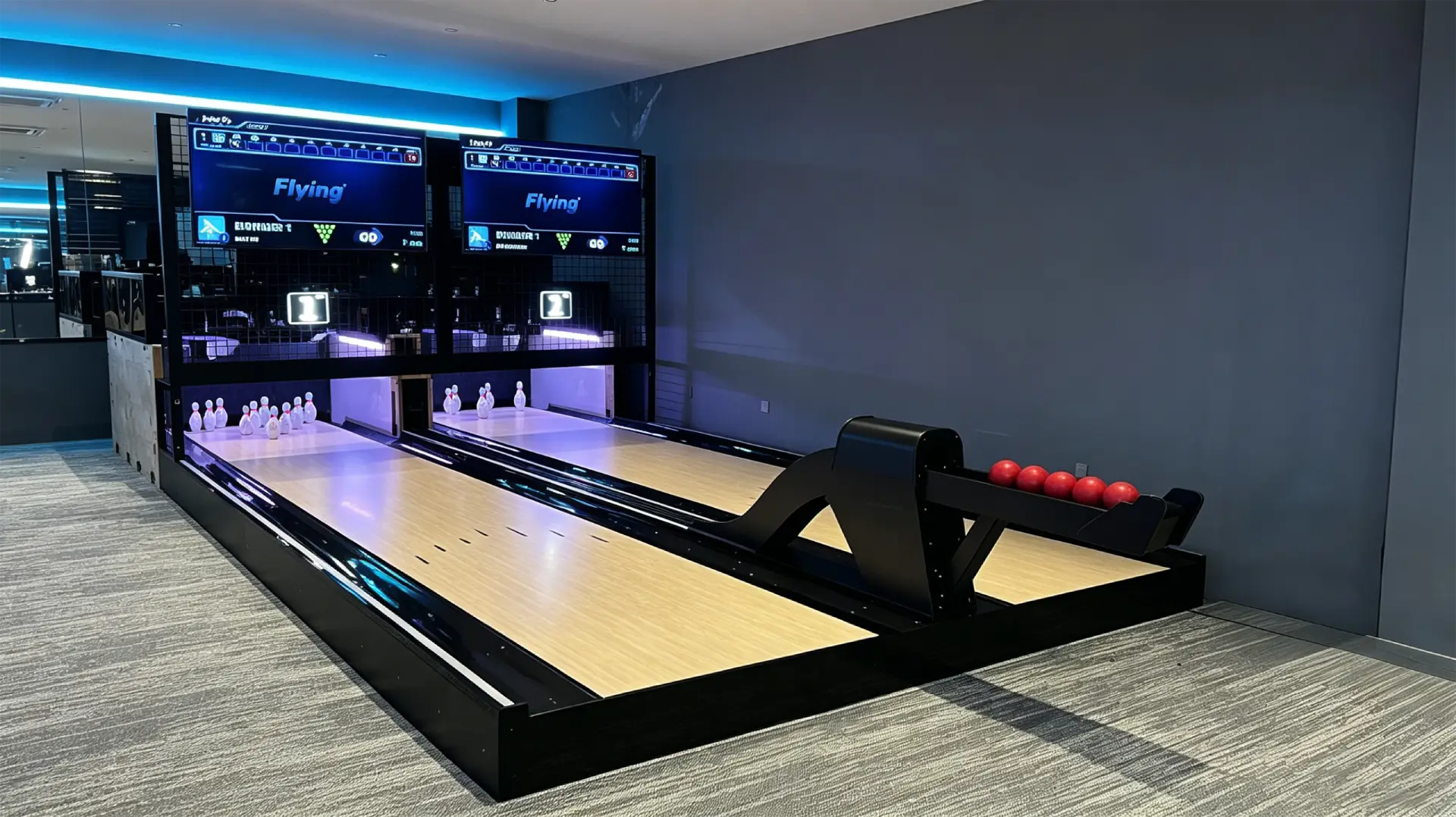
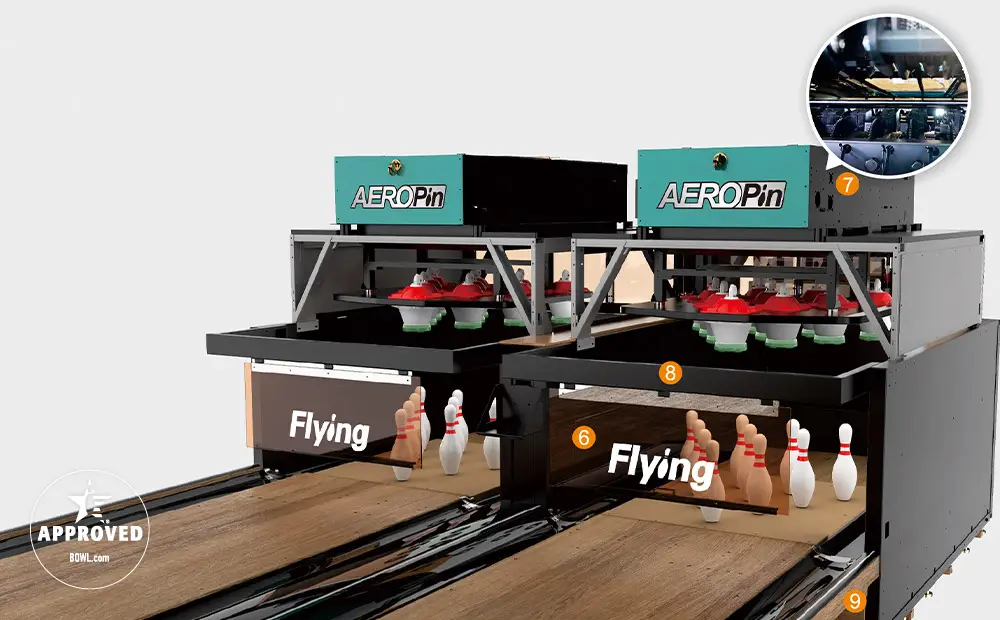
The playing equipment includes the ball, duckpins, and lane. Commercial systems may also include a pinsetter, ball return, automatic scoring, player displays, and control equipment.
Duckpin Bowling Balls
Duckpin balls are smaller than ten-pin bowling balls and normally do not use finger holes.
This makes the ball easier for many players to hold, but consistent release and directional control remain important.
Duckpins
Duckpins are shorter than standard ten-pin bowling pins.
Their size and shape affect how energy transfers between pins after impact, which is one reason strikes are harder to produce consistently.
Lane and System Equipment
The lane provides the playing surface, while commercial installations may combine the lane with pinsetting, ball-return, scoring, and control systems.
For venue projects, these components should be evaluated as one compatible system rather than as unrelated pieces of equipment.
Duckpin Bowling Ball and Pin Differences
The easiest way to understand duckpin bowling is to compare its equipment and frame structure with ten-pin bowling.
| Feature | Duckpin Bowling | Ten-Pin Bowling |
|---|---|---|
| Ball | Smaller | Larger |
| Finger holes | Normally none | Commonly used |
| Pins | Shorter duckpins | Full-size ten-pin pins |
| Deliveries per frame | Up to three | Up to two |
| Playing emphasis | Accuracy and repeatability | Accuracy, speed, and power |
| Strike difficulty | Generally higher | Generally lower |
These differences change how players approach the game.
A smaller ball can be easier to handle, but reduced ball mass and different pin behavior mean that simply throwing harder does not guarantee better results.
Duckpin vs Ten-Pin Bowling
Duckpin bowling and ten-pin bowling share the same basic goal: roll a ball toward ten pins and score by knocking them down.
The key differences are in the equipment and frame structure.
Duckpin uses a smaller ball without finger holes and shorter pins. Players can also have an additional delivery within a frame.
Ten-pin bowling uses a larger ball, typically with finger holes, and generally allows two deliveries per frame.
These differences create different playing styles.
Ten-pin bowling often combines speed, rotation, power, and accuracy. Duckpin bowling places greater emphasis on controlled placement, repeatability, and managing difficult remaining-pin combinations.
For casual players, duckpin may feel physically easier because of the smaller ball. Scoring well, however, can still be difficult.
Duckpin vs Candlepin Bowling
Duckpin and candlepin bowling are both small-ball bowling formats, but they are not the same game.
The most visible difference is the pin design.
Duckpins are shorter and broader, while candlepins are much taller and narrower.
The two formats also differ in ball design, scoring details, pin behavior, and how players manage each frame.
Both reward accuracy, but the way the pins react after impact gives each format a distinct playing style.
Duckpin uses short, compact pins; candlepin uses tall, narrow pins.
Why Is Duckpin Bowling Difficult?
Duckpin bowling is easy to learn at a basic level but difficult to play consistently well.
The smaller ball makes handling easier, but it also changes how much energy reaches the pins.
Because the pins are smaller and react differently after impact, a well-directed first ball does not always clear the rack.
Players therefore need more than power.
Consistent performance depends on accurate targeting, a repeatable release, controlled speed, stable approach timing, and effective follow-up shots.
This is why duckpin bowling can feel accessible to beginners while still giving experienced players a significant technical challenge.
Why Are Very High Duckpin Scores Difficult?
Very high scores are difficult because strikes are harder to produce consistently than in ten-pin bowling.
The smaller ball and different pin action reduce the chance that one impact will create the same level of pin carry seen in larger-ball bowling.
As a result, players often need to manage more remaining-pin situations across a game.
High-level duckpin performance therefore depends not only on first-ball accuracy but also on the ability to repeat the same delivery and convert difficult follow-up shots.
This is one of the defining characteristics of the format.
Is Duckpin Bowling Easier Than Regular Bowling?
Duckpin bowling can be easier to start physically because the ball is smaller and does not normally require finger holes.
For beginners, this can make holding and rolling the ball feel more natural.
But easier handling does not mean easier scoring.
The smaller ball and pin design make strikes more difficult, so experienced play requires accurate placement, repeatable release, and good control across multiple deliveries.
Duckpin bowling can be easier to pick up, but difficult to master.
How Can You Get Better at Duckpin Bowling?
The biggest improvement usually comes from consistency rather than extra power.
Players should focus on using a repeatable starting position, controlled approach, comfortable release, clear lane target, and stable ball speed.
If a shot repeatedly misses in the same direction, change one variable at a time rather than changing stance, target, speed, and release together.
Make the delivery predictable before trying to make it more powerful.
Detailed drills, targeting methods, and mistake correction are better explored in a dedicated technique guide.
Where Is Duckpin Bowling Used?
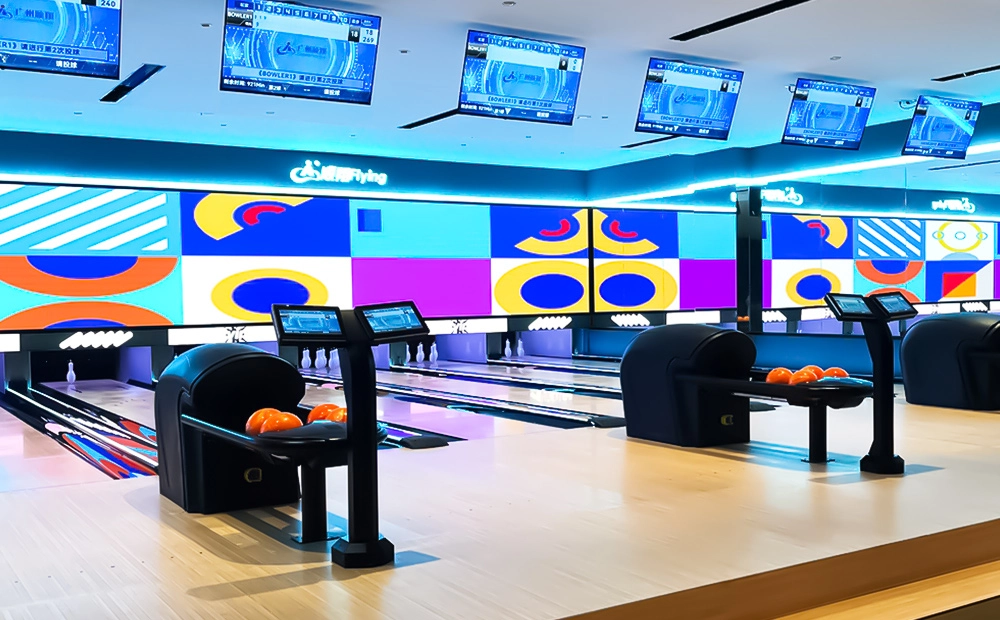
Duckpin bowling can be found in traditional bowling environments as well as newer entertainment settings.
Depending on the system and venue, it may be considered for bowling centers, family entertainment centers, social entertainment venues, hotels and resorts, and private recreation spaces.
Commercial installations can vary considerably in layout and system configuration, so venue planning should be based on the actual equipment selected rather than a generic lane assumption.
Space planning, machine configuration, installation requirements, and project cost are separate topics that should be evaluated in dedicated planning guides.
What Should Commercial Buyers Check?
For a commercial project, buyers should confirm the complete equipment scope before comparing suppliers.
That includes checking whether the proposed system covers the lane, pinsetter, ball return, scoring, controls, playing equipment, installation responsibilities, and required technical documentation.
The equipment should also be checked against the available venue space and local project requirements.
Detailed supplier comparison, maintenance planning, spare parts, commissioning, and installation responsibilities are better handled through a dedicated duckpin bowling equipment buying checklist.
Duckpin Bowling in One Sentence
Duckpin bowling is a ten-pin bowling variation that uses a smaller ball without finger holes, shorter pins, and up to three deliveries per frame, creating a game that is easy to understand but highly dependent on accuracy and consistency.
Conclusion
Duckpin bowling differs from ten-pin bowling in four main ways: smaller balls, shorter pins, up to three deliveries per frame, and a greater emphasis on controlled placement.
These differences make the game approachable for casual players while keeping high-level scoring difficult.
For someone learning the format, the most important points are simple: duckpin bowling uses ten pins, a smaller ball without finger holes, a three-delivery frame structure, and a scoring system built around strikes, spares, and pins knocked down.
From there, deeper topics such as technique, scoring details, lane dimensions, equipment selection, machine operation, and project cost can be explored separately according to the player’s or buyer’s actual intent.
Planning a Duckpin Bowling Project?
Explore Flying Bowling’s bowling solutions or discuss your venue requirements, equipment configuration, and project planning needs with our team.
Explore Bowling Solutions Discuss Your Project



Flying Bowling
Flying Bowling
Flyingbowling
Flyingbowling
Flyingbowling