
Best Bowling Balls 2026: Expert Reviews, Top Picks & Buying Guide
Quick Overview
Finding the best bowling ball depends on your skill level, bowling style, release technique, and lane conditions. The right bowling ball is not always the most expensive or the strongest option. The best choice is the one that provides the right balance of control, reaction, and consistency for your game.
This guide reviews 10 popular bowling balls for different types of players, including beginner-friendly bowling balls, versatile league equipment, budget options, and high-performance models for experienced bowlers.
Our recommended bowling balls include Storm Phaze II, Hammer Black Widow Series, Brunswick Rhino, Motiv Venom Shock, Storm Hy-Road, Storm DNA Coil, Roto Grip Gem, Pyramid Path Rising, Motiv Jackal Ghost, and Storm Tropical Surge.
Best Bowling Balls 2026: Quick Picks
Before reading the detailed reviews, here is a quick overview of the best bowling balls and what each model is designed for.
| Bowling Ball | Best For | Typical Price Range |
|---|---|---|
| Storm Phaze II | Best Overall Bowling Ball | $150-$220 |
| Hammer Black Widow Series | Best Hook Potential | $150-$220 |
| Brunswick Rhino | Best Bowling Ball for Beginners | $90-$130 |
| Motiv Venom Shock | Best League Bowling Ball | $140-$190 |
| Storm Hy-Road | Best Versatile Bowling Ball | $150-$220 |
| Storm DNA Coil | Best Heavy Oil Bowling Ball | $180-$250 |
| Roto Grip Gem | Best Strong Reactive Bowling Ball | $170-$250 |
| Pyramid Path Rising | Best Budget Bowling Ball | $80-$130 |
| Motiv Jackal Ghost | Best Advanced Performance Bowling Ball | $170-$250 |
| Storm Tropical Surge | Best Entry-Level Performance Bowling Ball | $100-$150 |
Best Bowling Balls 2026: Detailed Reviews
1. Storm Phaze II
Best Overall Bowling Ball for Versatility
Typical Price Range: $150-$220
Best For: Intermediate bowlers, league players, and experienced bowlers looking for a versatile all-around bowling ball.
The Storm Phaze II is one of the most recognized performance bowling balls because it provides a strong balance between control, consistency, and versatility.
Its solid reactive coverstock creates reliable traction while maintaining a predictable motion, making it suitable for many medium oil lane conditions.
Many bowlers choose the Storm Phaze II because it delivers strong performance without becoming difficult to control. It allows players to make adjustments while maintaining consistent shots during competition.
2. Hammer Black Widow Series
Best Bowling Ball for Strong Hook Potential
Typical Price Range: $150-$220
Best For: Advanced bowlers, competitive players, and bowlers who need stronger traction and aggressive reaction.
The Hammer Black Widow Series is one of the most recognizable names in performance bowling because of its strong reaction and powerful hook potential.
Designed for experienced bowlers, Black Widow models provide more traction and stronger backend movement compared with beginner-friendly bowling balls.
This bowling ball is especially suitable for players who understand lane adjustments and need additional performance on challenging oil patterns.
3. Brunswick Rhino
Best Bowling Ball for Beginners
Typical Price Range: $90-$130
Best For: First-time bowling ball buyers, recreational bowlers, and beginners who want easier control and predictable performance.
The Brunswick Rhino is one of the most popular beginner bowling balls because it provides smooth, controlled, and predictable performance.
Many new bowlers make the mistake of choosing equipment with too much performance too early. A stronger bowling ball does not always create better results because beginners still need to develop proper release, accuracy, and consistency.
The Brunswick Rhino offers a manageable reaction that helps new players learn the fundamentals of bowling while gradually improving their skills.
Its biggest advantages are its easy control, smooth ball motion, and affordable price range, making it a practical choice for players moving beyond standard house balls.
4. Motiv Venom Shock
Best League Bowling Ball
Typical Price Range: $140-$190
Best For: League bowlers, intermediate players, and bowlers who need reliable performance across different lane conditions.
The Motiv Venom Shock is recognized for its balanced combination of control, versatility, and consistent reaction.
Many league bowlers prefer versatile bowling balls because they need equipment that can adapt to changing lane conditions instead of being limited to one specific environment.
The Motiv Venom Shock provides a smooth and controlled motion, allowing bowlers to make adjustments while maintaining confidence and consistency during regular competition.
It is a practical choice for bowlers who want dependable everyday performance without moving into extremely aggressive bowling ball designs.
5. Storm Hy-Road
Best Versatile Bowling Ball
Typical Price Range: $150-$220
Best For: Intermediate bowlers, league players, and anyone looking for a reliable bowling ball that performs well in multiple situations.
The Storm Hy-Road series has remained a popular choice among bowlers because of its versatility and balanced performance.
Unlike extremely aggressive bowling balls designed for very specific lane conditions, the Hy-Road series focuses on providing a combination of length, control, and backend reaction.
This balanced performance makes it suitable for bowlers who want one dependable bowling ball that can handle different playing environments.
The Storm Hy-Road is especially useful for players who are improving their skills and need equipment that can continue supporting their development over time.
6. Storm DNA Coil
Best Bowling Ball for Heavy Oil Conditions
Typical Price Range: $180-$250
Best For: Advanced bowlers, competitive players, and bowlers who need strong traction on heavier oil lane conditions.
The Storm DNA Coil is designed for bowlers who require stronger performance when facing challenging lane conditions.
Heavy oil patterns often reduce the reaction of weaker bowling balls because they create less friction with the lane surface. In these situations, bowlers usually need equipment that can generate enough traction and maintain energy through the lane.
The Storm DNA Coil provides stronger lane interaction and a more powerful overall reaction, making it suitable for experienced players who understand how to adjust their game according to lane conditions.
Because of its performance level, this bowling ball is generally better suited for advanced bowlers rather than beginners who are still developing consistency and control.
7. Roto Grip Gem
Best Strong Reactive Bowling Ball
Typical Price Range: $170-$250
Best For: Tournament bowlers, advanced league players, and experienced bowlers looking for strong reaction and high performance.
The Roto Grip Gem is a high-performance bowling ball designed for players who need strong reaction and reliable traction.
Experienced bowlers often choose stronger reactive bowling balls when they need additional performance options for difficult lane conditions. The Roto Grip Gem provides the type of aggressive motion that advanced players look for when they need more control over challenging environments.
Its biggest strengths include strong traction, powerful continuation through the pins, and the ability to create more significant ball motion compared with lower-performance equipment.
The Roto Grip Gem is most suitable for players who already understand lane adjustments and have the technique required to control stronger bowling ball reactions.
8. Pyramid Path Rising
Best Budget Bowling Ball
Typical Price Range: $80-$130
Best For: Beginners, recreational bowlers, and players looking for affordable performance equipment.
The Pyramid Path Rising is a budget-friendly bowling ball designed for players who want more performance than a basic plastic bowling ball without investing in premium-priced equipment.
For many developing bowlers, an affordable performance bowling ball provides a good balance between improvement potential and cost. It allows players to experience modern bowling ball technology while maintaining manageable control.
The Pyramid Path Rising is a practical choice for beginners who are ready to move beyond house balls or casual bowlers who want their own equipment.
Its biggest advantage is value, providing useful performance features at a more accessible price point.
9. Motiv Jackal Ghost
Best Advanced Performance Bowling Ball
Typical Price Range: $170-$250
Best For: Competitive bowlers, high-rev players, and experienced bowlers looking for strong performance and versatility.
The Motiv Jackal Ghost is designed for experienced bowlers who need powerful performance and additional adjustment options.
Advanced players often require bowling balls that can create stronger movement while still allowing them to control the reaction shape. The Jackal Ghost provides a combination of power and versatility for bowlers who understand how to match equipment with lane conditions.
Its performance characteristics make it suitable for competitive environments where bowlers need more options and stronger ball reaction.
Because of its advanced design, it is generally better suited for experienced players rather than beginners who are still learning fundamental bowling techniques.
10. Storm Tropical Surge
Best Entry-Level Performance Bowling Ball
Typical Price Range: $100-$150
Best For: Beginners upgrading from house balls, casual league players, and bowlers who want affordable performance.
The Storm Tropical Surge is a popular choice for bowlers who want to experience modern bowling ball performance without moving directly into advanced equipment.
Compared with traditional plastic bowling balls, the Tropical Surge provides additional reaction while remaining easier to control than stronger performance models.
This makes it a practical option for beginners who want equipment that can support improvement while maintaining confidence and consistency.
Its combination of affordability, control, and performance makes it a suitable entry point for players developing their bowling skills.
How to Choose the Right Bowling Ball
The best bowling ball should match your own playing style instead of simply being the strongest or most expensive model available.
Beginners usually benefit from bowling balls that provide control and predictable movement. Equipment such as Brunswick Rhino or Storm Tropical Surge can help new players develop confidence and consistency.
Intermediate and league bowlers often need versatile bowling balls that can handle different lane conditions. Models such as Storm Phaze II, Motiv Venom Shock, and Storm Hy-Road are popular because they provide a balance between performance and control.
Advanced bowlers usually select bowling balls based on specific requirements, including oil patterns, hook potential, and competition conditions.
Understanding Bowling Ball Coverstock and Core Design
The coverstock is the outer material of the bowling ball and plays an important role in determining friction, hook potential, and overall reaction.
Plastic bowling balls usually provide a straighter and more predictable motion, making them suitable for beginners and spare shooting. Reactive resin bowling balls create more friction and a stronger reaction, which is why they are commonly selected by intermediate and advanced bowlers.
The internal core design affects how the bowling ball stores and releases energy. Different core shapes influence motion, stability, and backend reaction.
For beginners, selecting the correct performance level is usually more important than understanding every technical specification. Experienced bowlers can use coverstock and core information to fine-tune equipment choices.
Find the Right Bowling Equipment
Explore bowling equipment solutions or contact Flying Bowling for professional assistance with your bowling project and equipment selection.
View Products Contact Flying BowlingFAQ
1. What is the best bowling ball in 2026?
The best bowling ball depends on your skill level, bowling style, and lane conditions. A versatile bowling ball such as Storm Phaze II is a popular choice for many intermediate and league bowlers because it provides a good balance of control and performance. Beginners may prefer easier-to-control options such as Brunswick Rhino, while advanced bowlers may need stronger performance bowling balls for specific lane conditions.
2. What is the best bowling ball for beginners?
The best bowling ball for beginners is usually one that provides predictable movement, easy control, and helps players develop consistent technique. Bowling balls such as Brunswick Rhino and Storm Tropical Surge are commonly considered suitable options for new bowlers because they provide manageable performance without being too difficult to control.
3. How much does a good bowling ball cost?
A good bowling ball typically costs between $80 and $250, depending on the materials, technology, and performance level. Beginner bowling balls are usually more affordable, while advanced reactive bowling balls often cost more because they are designed for stronger reaction and specialized performance.
4. What bowling ball should I buy as an intermediate bowler?
Intermediate bowlers usually benefit from versatile bowling balls that provide a balance between control and performance. Models such as Storm Phaze II, Motiv Venom Shock, and Storm Hy-Road are popular choices because they can handle a variety of lane conditions while allowing players to continue improving their skills.
5. Are expensive bowling balls better?
Expensive bowling balls are not always better for every player. High-performance bowling balls are designed for bowlers who understand lane conditions and have consistent technique. A more affordable bowling ball that matches your skill level can often provide better results than an advanced model that is difficult to control.
6. How do I choose the right bowling ball?
To choose the right bowling ball, consider your skill level, bowling frequency, release style, lane conditions, and budget. Beginners should usually prioritize control and comfort, while experienced bowlers can focus more on hook potential, reaction shape, and performance characteristics.
7. What weight bowling ball should I use?
The right bowling ball weight is the one that allows you to maintain comfortable control, consistent release, and proper technique. A heavier bowling ball is not automatically better. Bowlers should choose a weight they can control throughout a full bowling session without affecting their form.
8. What is the difference between plastic, urethane, and reactive bowling balls?
Plastic bowling balls provide a straighter and more predictable reaction, making them suitable for beginners and spare shooting. Urethane bowling balls provide smoother motion and more control, while reactive resin bowling balls create more friction and stronger hook potential for experienced players.
More Articles

Let’s Build a center Together
Partner With a Trusted Bowling Alley Design, One-Stop Solution Manufacturer.
Flying has successfully built ideal bowling alleys for more than 3,000 customers.
Technical Expert
You may also like our products
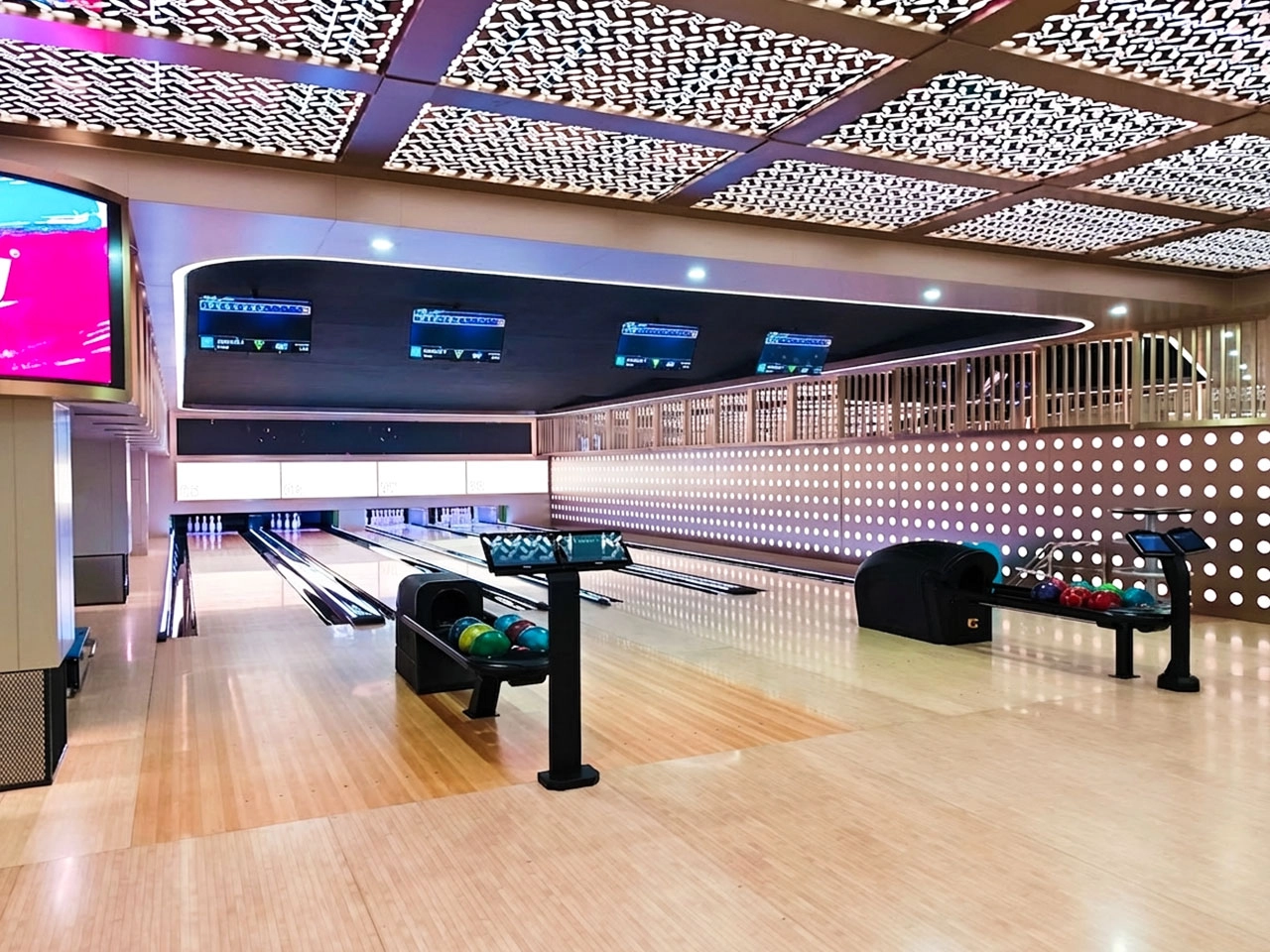
Build a commercial bowling venue with Flying’s complete string pinsetter bowling alley equipment package. The system includes the AEROPIN™ USBC-certified string pinsetter, customizable lanes, automatic scoring, ball return, lane lighting, pins, control hardware, and overseas installation support.
Designed for commercial bowling centers, family entertainment venues, hotels, resorts, bars, and premium private projects, this turnkey bowling system helps operators reduce sourcing complexity and prepare for reliable long-term operation.
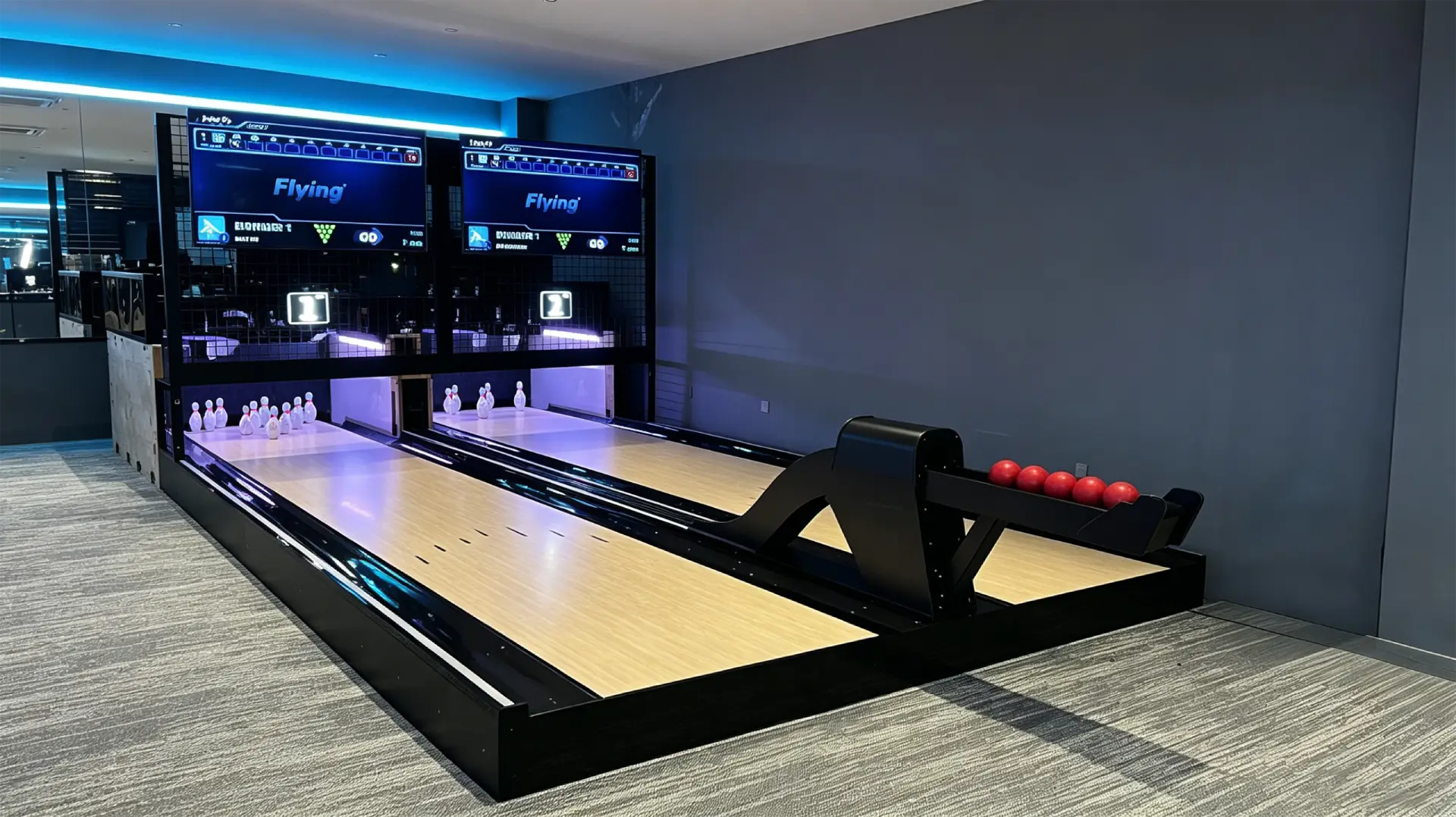
Flying Smart Duckpin Bowling is a compact duckpin bowling equipment system designed for bars, family entertainment centers, hotels, resorts, cinemas, boutique bowling alleys, and social entertainment venues. With a standard 9.13m duckpin bowling lane, 1.25kg lightweight balls, automatic scoring, ball return, LED lighting, and a smart string pinsetter, it creates a fast-paced and easy-to-play bowling experience in a smaller footprint than traditional bowling.
The system is available as a turnkey duckpin bowling package, including lane equipment, a string pinsetter system, scoring hardware, control software, global shipping, installation guidance, and technical support.
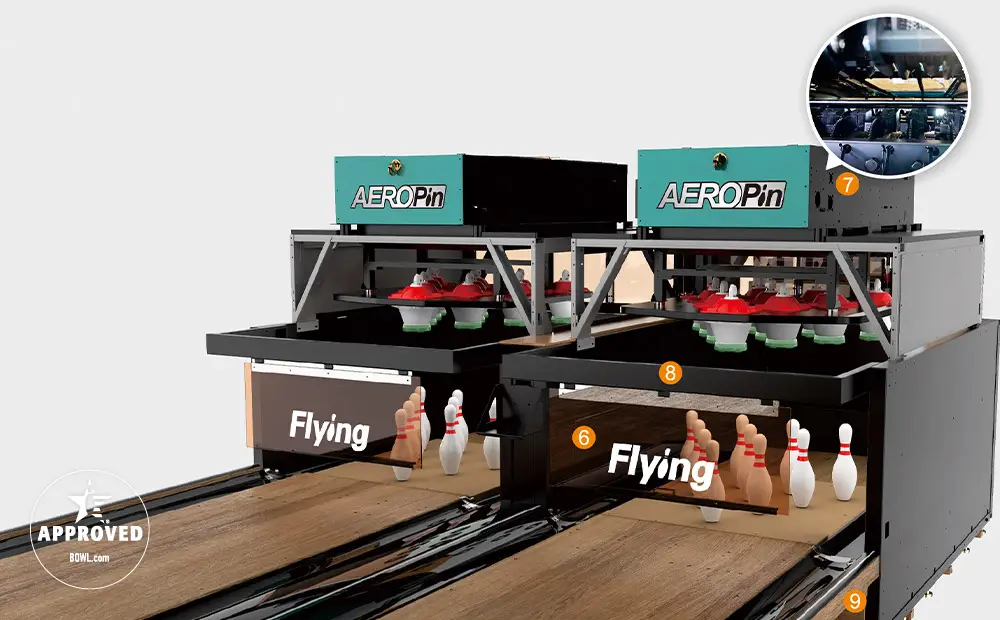
AEROPIN is Flying Bowling’s USBC-certified string pinsetter system for modern commercial bowling centers. Designed for fast pin setting, smooth ball return, low maintenance, and stable daily operation, it helps venue operators build league-ready and entertainment-focused bowling projects with confidence.
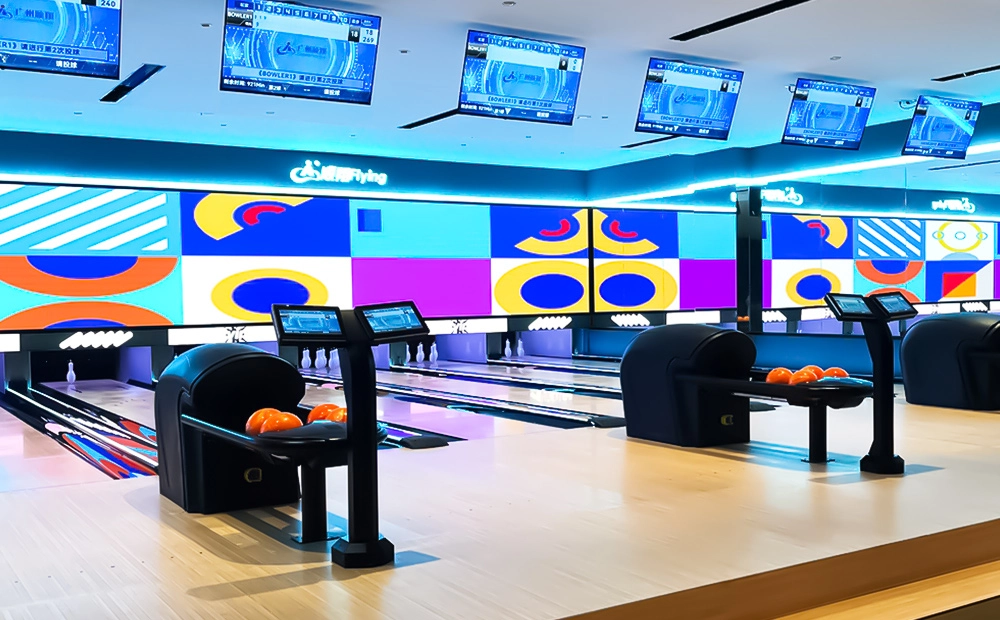
Flying Social Medium Bowling is a compact medium bowling equipment system designed for bars, cafes, family entertainment centers, community leisure venues, hotels, resorts, and small indoor entertainment spaces. With customizable lane lengths from 9.6m to 18m, small balls, lighter pins, string pinsetter technology, ball return, and automatic scoring, it creates an easy-to-play social bowling experience for players of different ages and skill levels.
Compared with full-size standard bowling, medium bowling requires less space and offers a more casual, interactive format. It is a practical choice for venues that want to add a bowling attraction without building a full commercial bowling alley.
Contact Flying
Start Your Custom Bowling Alley Project
If you contact us now for more details, we can provide you with a custom bowling alley service. Our service team will get back to you within 24 hours normally!
© 2026 Flying BOWLING. Designed by gooeyun.
FOLLOW US:

Flying Bowling
Flying Bowling
Flyingbowling
Flyingbowling
Flyingbowling