
The 2026 Duckpin Bowling Installation Cost Master Guide: Everything from Permits to Pinsetters
A comprehensive breakdown of duckpin bowling installation costs for 2026, covering equipment prices, residential vs. commercial budgets, string pinsetter ROI, and hidden fees like permits and shipping.
If you are planning to build an entertainment venue or a luxury home amenity this year, understanding the duckpin bowling machine price 2026 landscape is your first critical step. Unlike traditional ten-pin setups, duckpin bowling offers a high-revenue, low-footprint solution that is exploding in popularity. However, navigating the costs—from the machinery itself to the hidden fees of local permits—can be complex without an expert roadmap.
Quick Summary: Key Cost Takeaways for 2026
For 2026, the total estimated cost for a duckpin lane installation ranges from $20,000 to $45,000 per lane, depending heavily on site preparation and technology choices.
This broad range is influenced by three main factors: equipment specifications, logistics, and local infrastructure requirements. To give you a realistic baseline before you start your commercial duckpin business plan budget, consider these core metrics:
- Average Cost Per Lane: $20,000 - $45,000 (Commercial vs. Residential variances).
- Lead Time: Expect 2-6 weeks for manufacturing, plus 30-45 days for shipping if sourcing manufacturer-direct.
- The "Hidden" Variable: Site preparation (electrical/structural) and local permits often consume 15-20% of your total capital expenditure.
How Much Does Duckpin Bowling Installation Cost in 2026?
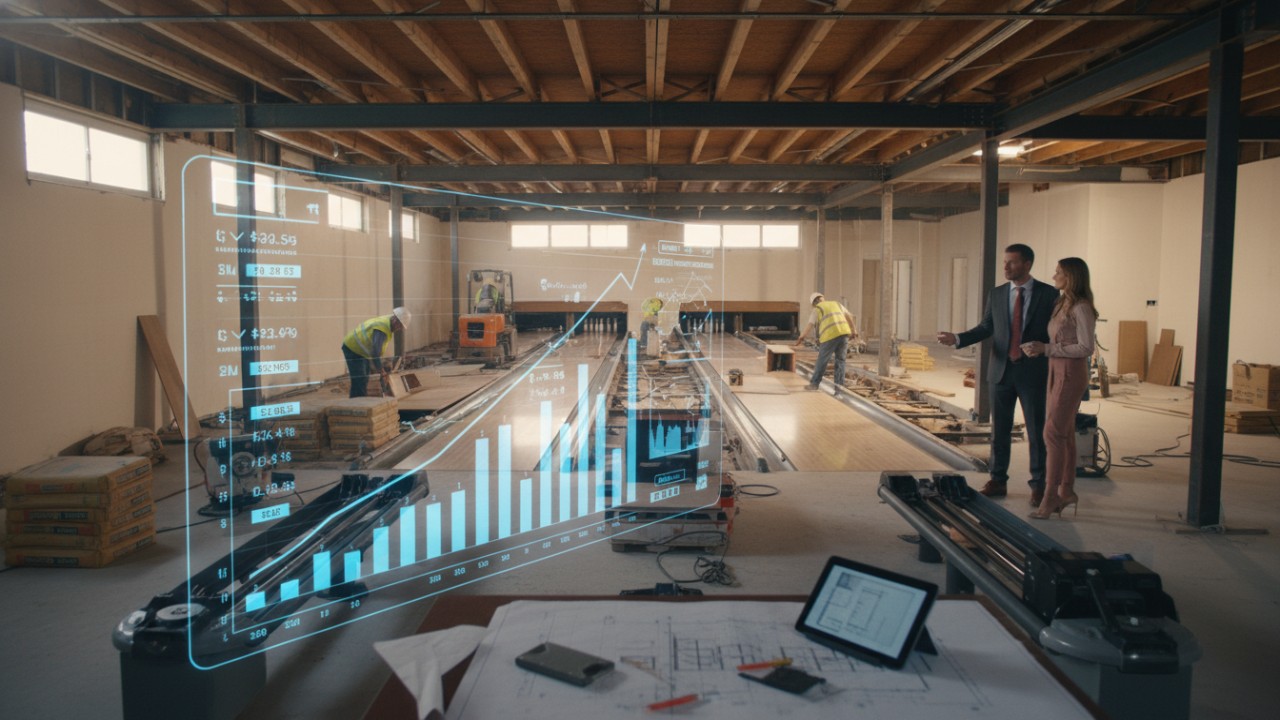
A complete commercial duckpin lane installation in 2026 typically costs between $25,000 and $45,000 per lane, while luxury residential setups can exceed $55,000 due to custom carpentry.
Prices have stabilized slightly compared to the post-pandemic inflation spikes, but labor and freight remain significant drivers. The choice between buying from a domestic distributor versus sourcing turnkey bowling solutions from China offers the largest opportunity for cost control.
Commercial vs. Residential Pricing Tiers
- Standard Commercial Lane ($25k - $35k): Includes standard synthetic lanes, string pinsetters, and basic seating. Designed for durability and high throughput.
- Luxury Residential Lane ($35k - $55k+): The residential bowling alley construction cost is often higher because it involves bespoke masking units, soundproofing for home environments, and custom millwork to match interior design.
- Manufacturer-Direct Savings: Sourcing directly from established manufacturers like Flying Bowling (with their FSDB series) can reduce equipment CAPEX by 30-40% by eliminating middleman markups.
-
-
Itemized Budget Breakdown: Where Every Dollar Goes
The largest single line item is the lane system and pinsetter machinery, which combined account for roughly 50-60% of your total project budget.
When building your commercial duckpin business plan budget, you must account for these four distinct categories to avoid overspending.
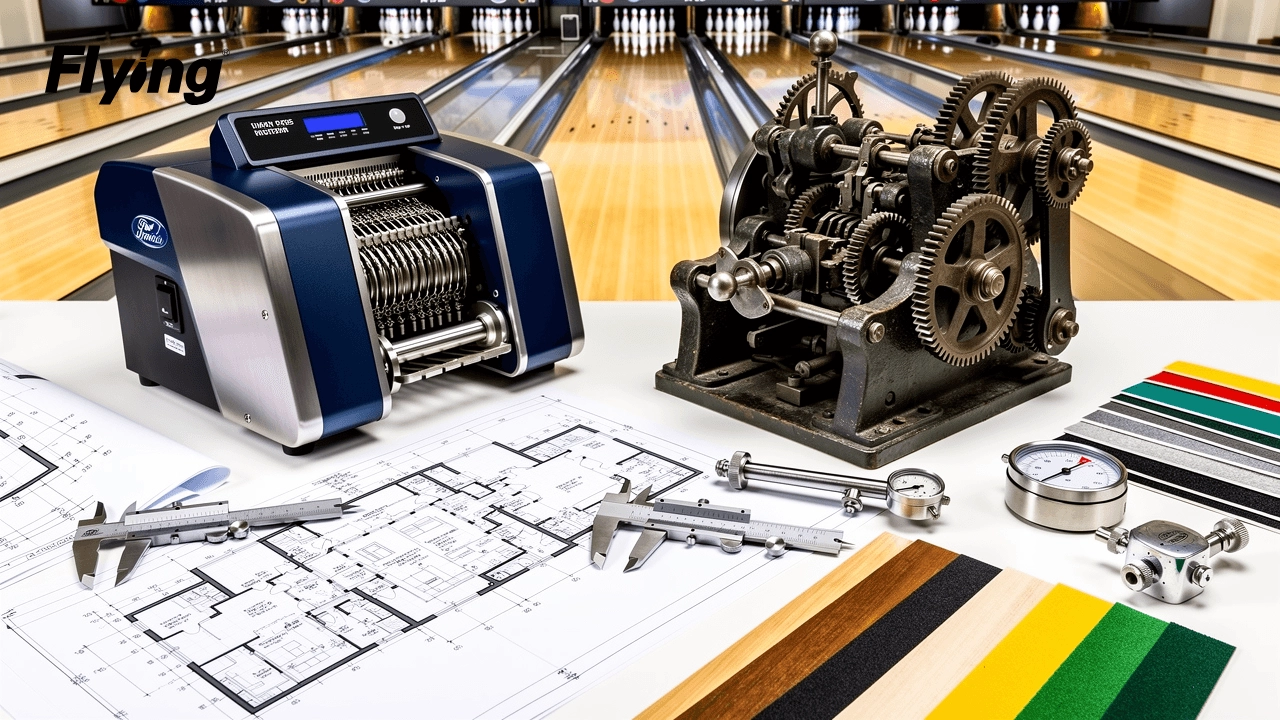
1. The Pinsetter ($8,000 - $15,000)
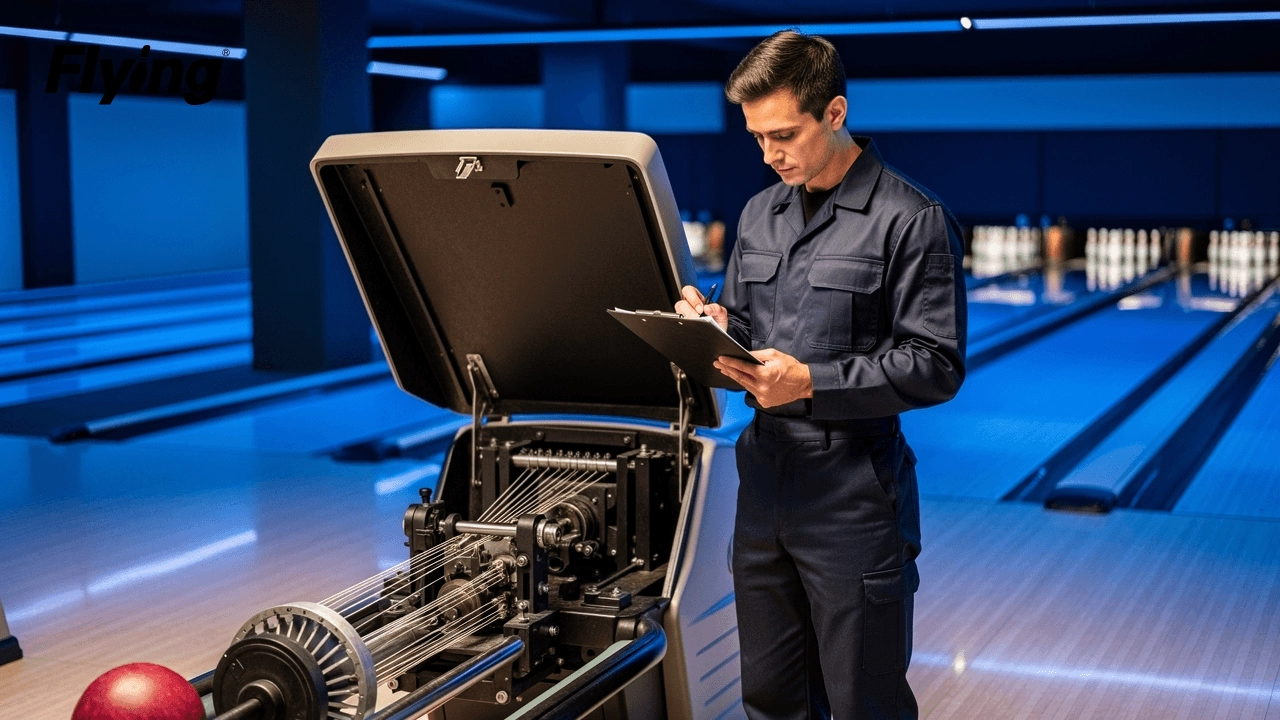
This is the heart of your operation. The industry has overwhelmingly shifted toward String Pinsetters for 2026. Unlike complex free-fall machines, string systems use durable cords to reset pins.
- Why specific to 2026? Energy efficiency is paramount. String machines consume significantly less power.
2. The Lane System ($10,000 - $20,000)
This includes the synthetic lane surface, the sub-foundation (critical for ball roll), and gutters.
- Options: Standard wood grain, custom graphics, or "Glow" effects for cosmic bowling.
- Flying Bowling Insight: Their factory produces the FSDB (Flying Standard Duckpin Bowling) line, ensuring compatibility with global size standards while offering customization.
3. Scoring & Tech ($3,000 - $8,000)
Modern bowlers expect interactive experiences. This cost covers:
- Overhead LCD monitors.
- POS (Point of Sale) integration.
- Games and animations (e.g., BES-style scoring).
4. Furniture & Accessories
- Ball Returns: Hood and rack systems.
- Seating: Sofas or lounge benches.
- Gear: House balls (smaller handheld size) and rental shoes (though duckpin can often be played in street shoes).
The "Hidden" Costs: Permits, Logistics & Site Prep
Site preparation and legal compliance are the most frequently overlooked expenses, often adding $5,000 to $10,000 per project globally.
Before equipment even arrives, you must ensure your facility is legally and structurally ready. According to industry reports from the Market Data Forecast, the global bowling market is expanding, but regulatory hurdles for new construction remain a key barrier to entry.
Crucial "Invisible" Expenses
- Permits & Zoning:
- Electrical: Pinsetters require specific voltage circuits (often 3-phase power).
- Structural: You may need permits to anchor the subfloor into the concrete slab.
- Zoning: Commercial entertainment licenses differ from standard retail zoning.
- Freight & Logistics:
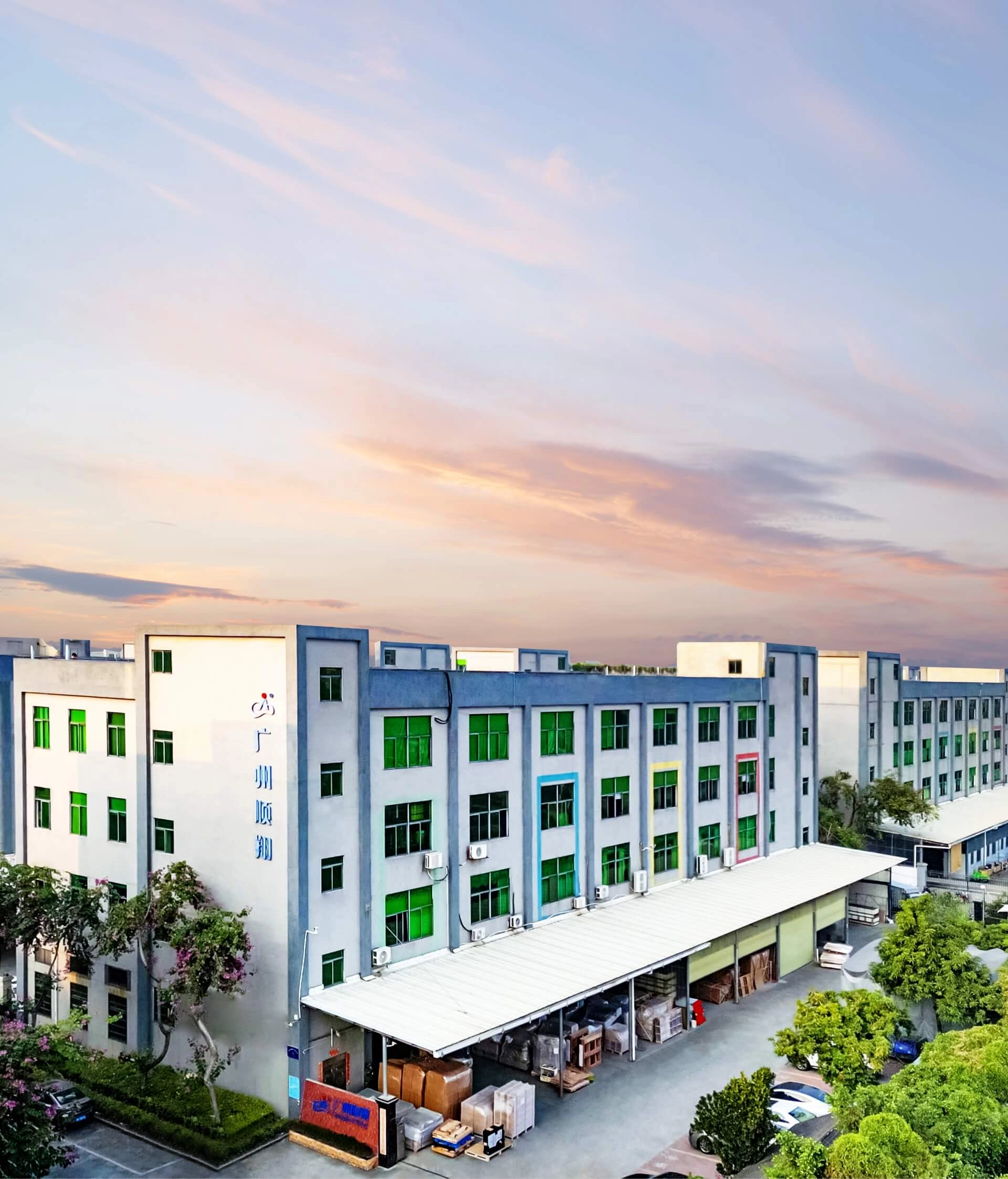
- Shipping a container from a manufacturing hub (like Flying Bowling's 10,000+ sqm workshop in China) involves ocean freight, customs duties, and "last mile" delivery trucking.
- Installation Labor:
- You need specialized bowling mechanics, not general contractors. Budget for daily rates plus travel/lodging for the setup team (typically 7-10 days).
Manufacturer Direct vs. Distributors: The Flying Bowling Advantage
Buying directly from a manufacturer with a proven track record can save investors 30-40% compared to purchasing through Western heritage brand distributors.
Many investors assume they must buy from brands like Brunswick or AMF to get quality. However, companies like Flying Bowling, established in 2005, have successfully served over 3,000 customers worldwide.
Why Source Direct?
- Proven Quality: Flying Bowling’s equipment is comparable to European and American brands but priced significantly lower.
- Experience: With a 10,000+ square-meter workshop, they produce specific lines like the FSDB (Duckpin) and FCMB (Mini Bowling) at scale.
- Turnkey Service: They offer design, manufacturing, and installation guidance in one package, effectively providing turnkey bowling solutions China relies on for global export.
Expert Tips: 5 Mistakes That Inflate Your Budget
The most common budget error is failing to calculate the long-term operational savings of string pinsetters versus the upfront cost of free-fall machines.
Optimizing for string pinsetter maintenance ROI (Return on Investment) is the smartest move for 2026. Data suggests string machines can reduce energy consumption by up to 70% compared to free-fall systems, as noted in energy studies by Bowltech.
Avoid These Pitfalls
- Underestimating Ceiling Height: Duckpin lanes are compact, but the pinsetter machinery still requires specific vertical clearance for maintenance access.
- Ignoring Power Supply: Ensure your building has the correct 3-phase or single-phase power before the equipment ships to avoid expensive last-minute electrical work.
- Over-Customization: Custom-printed lanes look great but cost 20-30% more than standard wood-grain synthetics.
- Maintenance Forecasting: String pinsetters have fewer moving parts (no complex gearboxes or elevators), meaning you don't need a full-time specialized mechanic, saving $40k-$60k annually in salaries.
FAQ: Your Top 2026 Installation Questions Answered
What is the minimum room size required for a home duckpin lane?
-
Typically, you need a minimum length of 35-40 feet and a width of roughly 5-6 feet per lane pair, though compact versions exist.
Are string pinsetters cheaper to maintain than free-fall pinsetters?
-
Yes, string pinsetters have 70% fewer moving parts, drastically reducing mechanic labor costs and spare parts inventory.
Do I need special permits to install a bowling lane in my house?
-
Generally, yes. You will need electrical permits for the machinery and potentially structural permits if modifying the sub-floor.
What is the typical ROI timeline for a commercial duckpin alley?
-
With the "Duckpin Social" model, many venues see a return on investment in 12-18 months due to high hourly throughput and F&B sales.
Can Flying Bowling equipment replace existing Brunswick or AMF lanes?
-
Yes, Flying Bowling specializes in modernization and can provide equipment comparable to major brands but at a more competitive price point.
Does the installation cost include shipping from China?
-
Usually, "Ex-Works" or "FOB" pricing excludes shipping. You must budget separately for freight, customs, and last-mile delivery.
What is the difference between Mini Bowling and Duckpin Bowling costs?
-
Mini bowling is generally cheaper ($15k-$25k) as it uses smaller balls and no bowling shoes, whereas Duckpin is a regulation sport requiring more robust infrastructure.
How long does it take to manufacture and install a 4-lane setup?
-
Manufacturing typically takes 15-30 days, shipping 30-45 days, and on-site installation 7-10 days.
Conclusion & Next Steps: Get Your 2026 Quote
Duckpin bowling offers a high-density revenue model with a lower footprint than traditional bowling, making it the perfect addition for 2026. Whether you are building a commercial entertainment center or a dream home amenity, the key to profitability is controlling your initial installation costs without sacrificing quality.
Stop guessing your budget. Contact Flying Bowling today to discuss your project requirements. With over 3,000 successful projects since 2005, our team can provide a precise, itemized quote and help you secure manufacturer-direct pricing for your installation.
More Articles
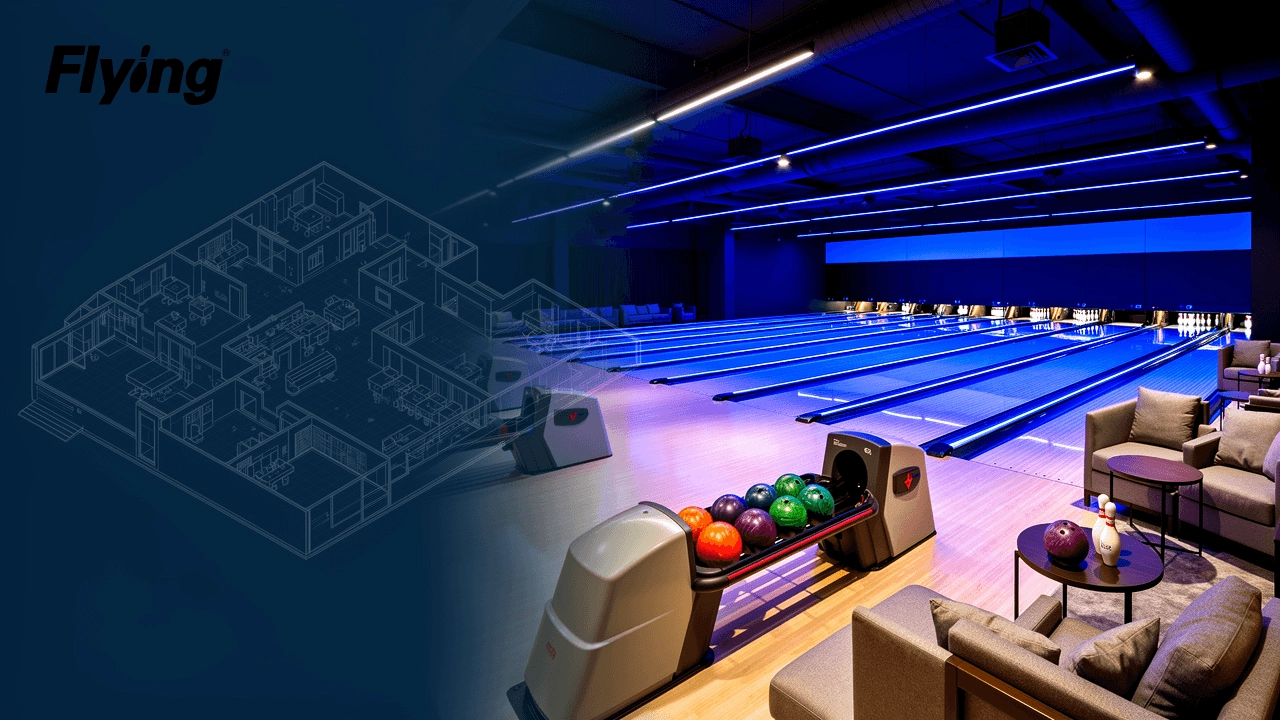

Let’s Build a center Together
Partner With a Trusted Bowling Alley Design, One-Stop Solution Manufacturer.
Flying has successfully built ideal bowling alleys for more than 3,000 customers.
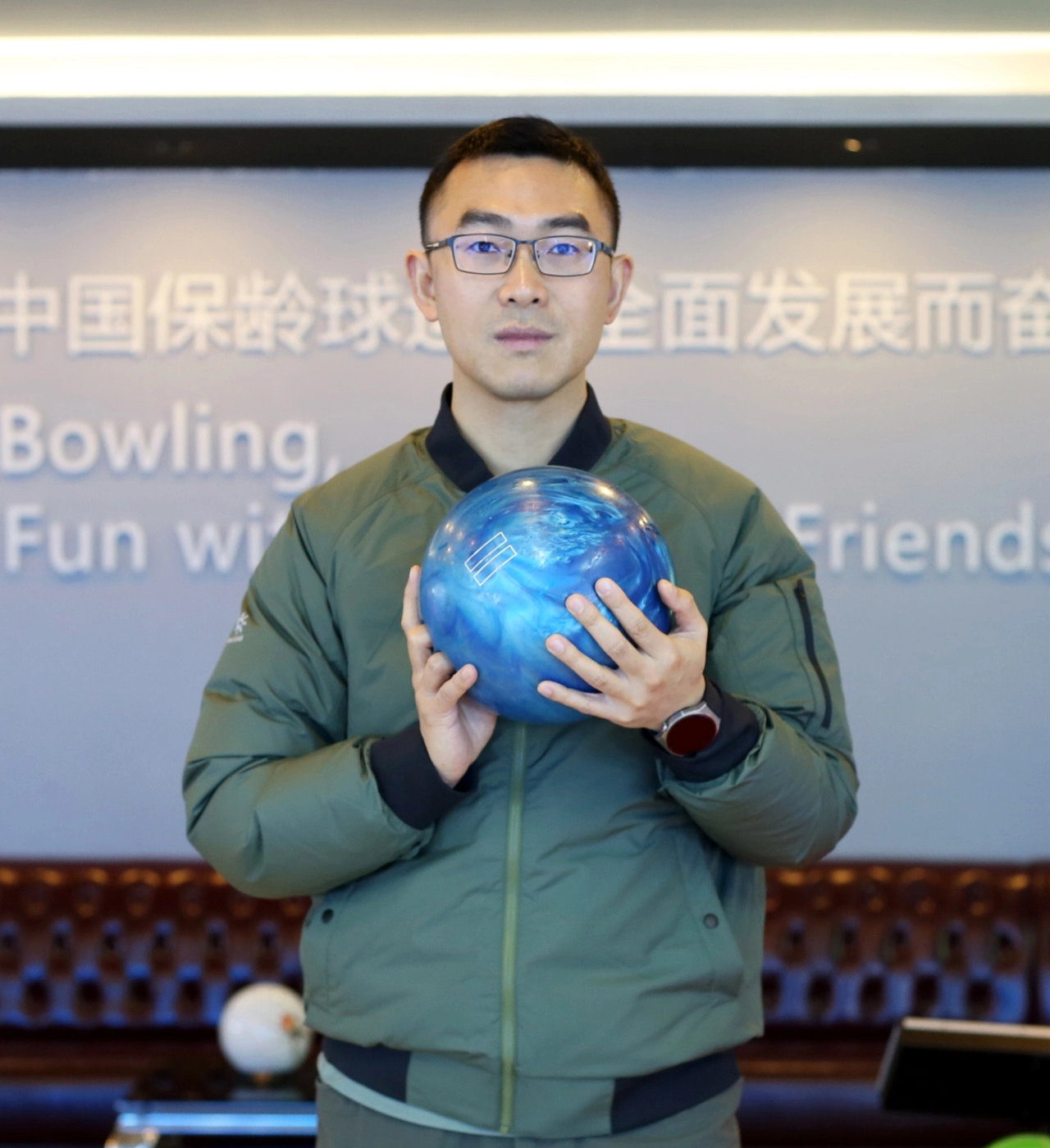
Technical Expert
You may also like our products
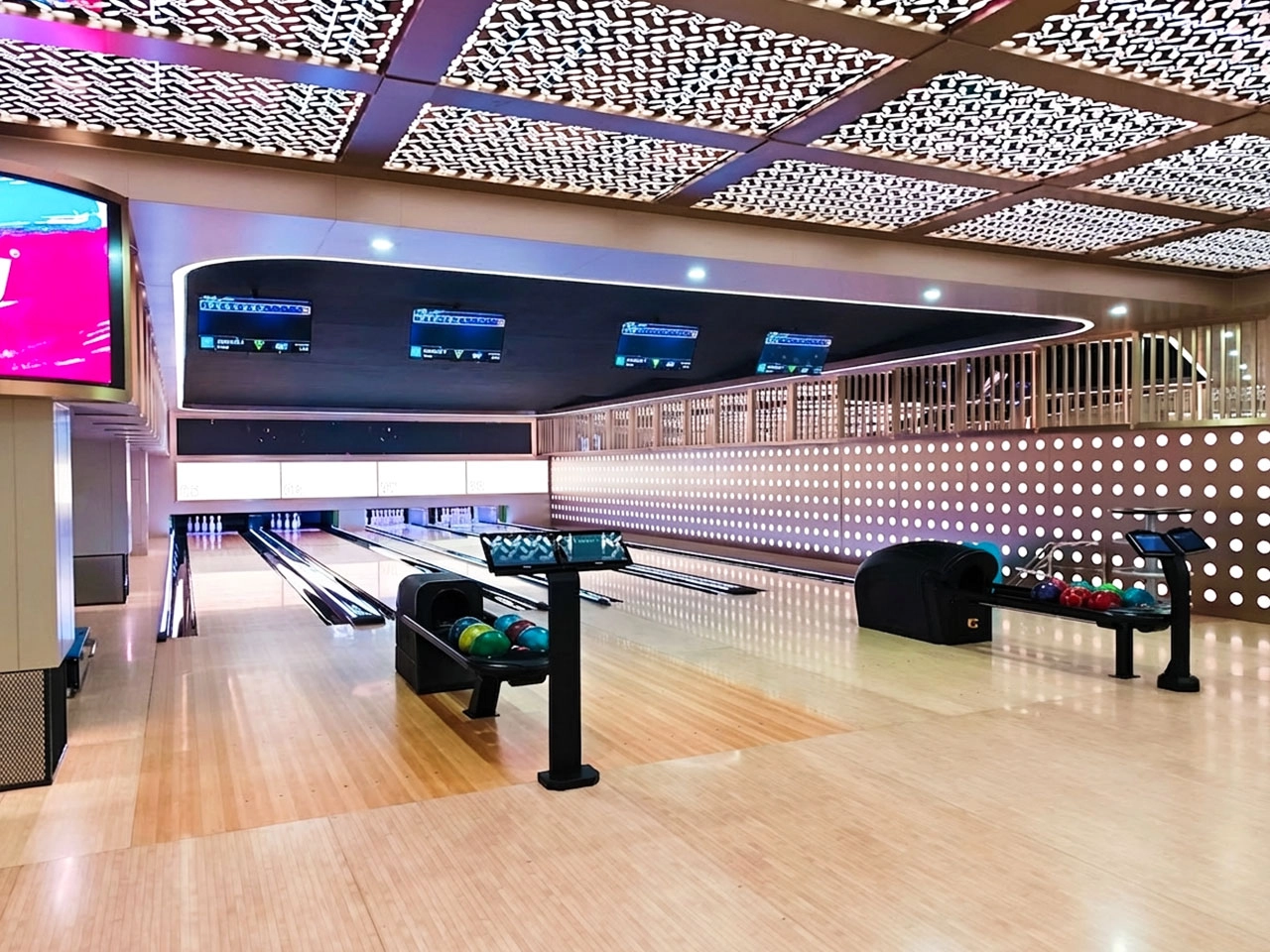
Build a commercial bowling venue with Flying’s complete string pinsetter bowling alley equipment package. The system includes the AEROPIN™ USBC-certified string pinsetter, customizable lanes, automatic scoring, ball return, lane lighting, pins, control hardware, and overseas installation support.
Designed for commercial bowling centers, family entertainment venues, hotels, resorts, bars, and premium private projects, this turnkey bowling system helps operators reduce sourcing complexity and prepare for reliable long-term operation.
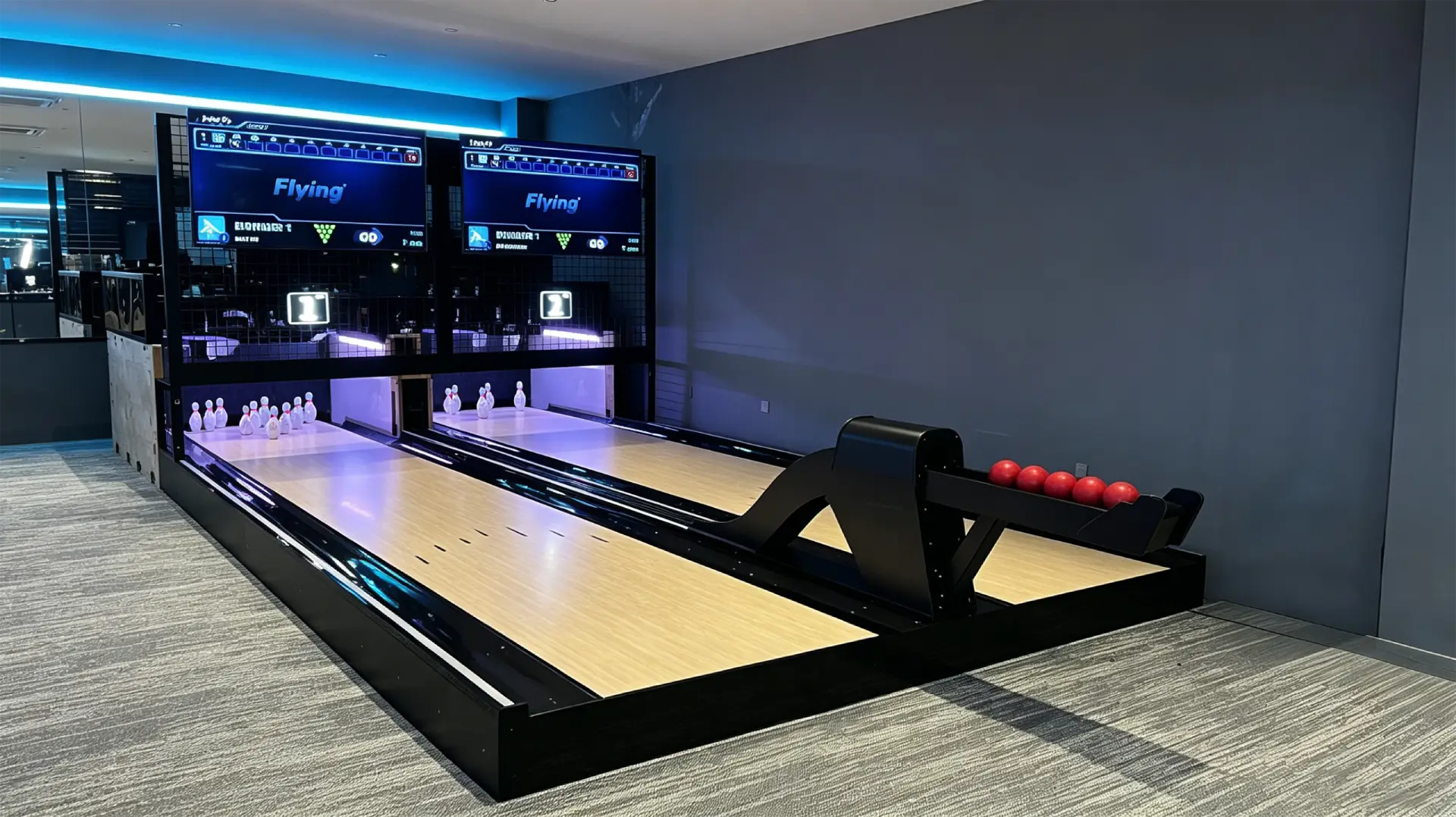
Flying Smart Duckpin Bowling is a compact duckpin bowling equipment system designed for bars, family entertainment centers, hotels, resorts, cinemas, boutique bowling alleys, and social entertainment venues. With a standard 9.13m duckpin bowling lane, 1.25kg lightweight balls, automatic scoring, ball return, LED lighting, and a smart string pinsetter, it creates a fast-paced and easy-to-play bowling experience in a smaller footprint than traditional bowling.
The system is available as a turnkey duckpin bowling package, including lane equipment, a string pinsetter system, scoring hardware, control software, global shipping, installation guidance, and technical support.
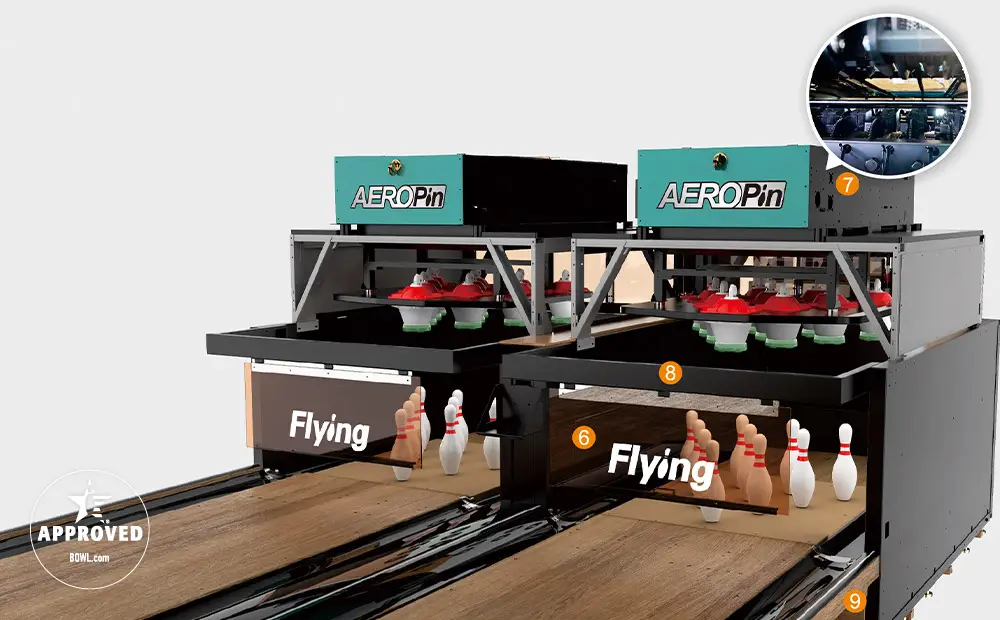
AEROPIN is Flying Bowling’s USBC-certified string pinsetter system for modern commercial bowling centers. Designed for fast pin setting, smooth ball return, low maintenance, and stable daily operation, it helps venue operators build league-ready and entertainment-focused bowling projects with confidence.
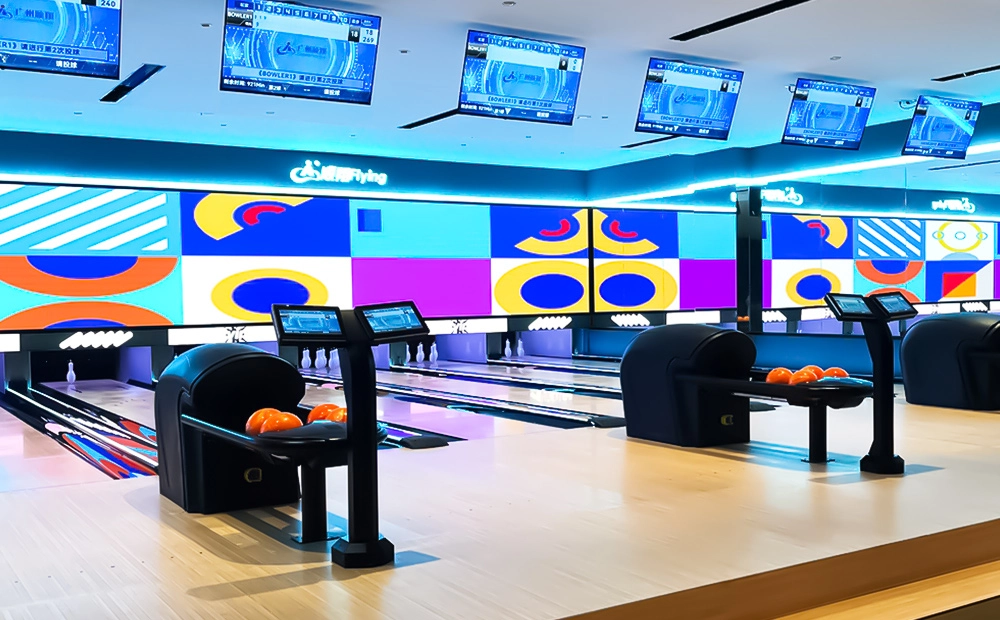
Flying Social Medium Bowling is a compact medium bowling equipment system designed for bars, cafes, family entertainment centers, community leisure venues, hotels, resorts, and small indoor entertainment spaces. With customizable lane lengths from 9.6m to 18m, small balls, lighter pins, string pinsetter technology, ball return, and automatic scoring, it creates an easy-to-play social bowling experience for players of different ages and skill levels.
Compared with full-size standard bowling, medium bowling requires less space and offers a more casual, interactive format. It is a practical choice for venues that want to add a bowling attraction without building a full commercial bowling alley.
Contact Flying
Start Your Custom Bowling Alley Project
If you contact us now for more details, we can provide you with a custom bowling alley service. Our service team will get back to you within 24 hours normally!
© 2026 Flying BOWLING. Designed by gooeyun.
FOLLOW US:

Flying Bowling
Flying Bowling
Flyingbowling
Flyingbowling
Flyingbowling