

Bowling Equipment Cost: Is Buying Your Own Ball and Gear Worth the Investment?
This guide provides a detailed cost breakdown of bowling equipment, comparing entry-level and professional gear prices. It answers common questions about the ROI of buying personal shoes and balls, startup costs for commercial alleys, and maintenance fees, helping bowlers make informed financial decisions.
Introduction
Bowling is often viewed as a casual weekend activity, but for those who catch the bug, the costs of renting equipment every visit can quietly add up. Whether you are a recreational bowler tired of wearing "clown shoes" or an aspiring league player looking to improve your hook, the question eventually arises: is it time to buy your own gear?
The transition from house equipment to personal gear is a pivotal moment in any bowler’s journey. It’s not just about saving money in the long run; it is about consistency, hygiene, and the immediate performance boost that comes from equipment fitted specifically to your hand and style. This guide breaks down the real-world costs of bowling equipment, from custom balls and starter sets to the investment required for commercial lanes, helping you decide if the investment aligns with your goals.
How much does a custom bowling ball typically cost?
The price of a custom bowling ball varies significantly based on the technology inside the core and the material of the coverstock. For a brand-new, undrilled ball in the current market, you can expect three distinct price tiers:
· Entry-Level (Plastic/Polyester): These balls typically cost between $40 and $90. They are designed to travel straight and are perfect for beginners or as spare balls for advanced players.
· Mid-Performance (Urethane): Ranging from $80 to $170, these balls offer more durability and a controllable hook, making them a favorite for league bowlers on drier lane conditions.
· High-Performance (Reactive Resin): These are the top-tier balls used by professionals, costing between $130 and $250+. They feature complex cores and porous coverstocks designed to hook aggressively on oily lanes.
It is important to remember that the "sticker price" often does not include drilling. If you buy a ball online, you will likely pay a separate fee to have it professionally fitted and drilled at a local pro shop.
What is the average price for a full set of beginner bowling gear?
For a bowler starting from scratch, buying items individually—ball, bag, and shoes—can sometimes be more expensive than purchasing a bundled package. Retailers and pro shops often offer "starter kits" to lower the barrier to entry.
A complete beginner package typically costs between $150 and $250. This usually includes:
· An entry-level plastic or entry-reactive bowling ball.
· A basic single-ball tote bag.
· A pair of athletic-style bowling shoes.
This upfront cost is roughly equivalent to the price of 30 to 40 rental sessions. Considering that a well-maintained plastic ball can last for years, a full set represents excellent value for anyone planning to bowl more than once a month.
Is buying your own bowling ball worth the investment?
Financially and performatively, buying your own ball is almost always worth the investment for regular players. "House balls" provided by alleys are drilled with generic holes meant to fit everyone, which means they fit no one perfectly. This forces you to squeeze the ball to hold onto it, leading to hand fatigue and erratic throws.
A custom-drilled ball fits your hand span and finger size exactly. This allows you to relax your grip, increasing your control and reducing the risk of injury. Furthermore, owning a ball means you are not dependent on finding a decent house ball that hasn't been chipped or worn down. The consistency of using the same equipment every time allows you to actually learn and improve your game, rather than constantly adjusting to different random balls.
What are the startup costs for opening a commercial bowling alley?
For those looking at bowling as a business rather than a hobby, the investment is substantial. Opening a modern commercial bowling center is a capital-intensive project involving real estate, specialized construction, and high-tech machinery.
According to industry estimates, the startup capital required typically ranges from $500,000 to over $2 million, depending on the size and location. A significant portion of this budget goes toward the lanes themselves. High-performance synthetic lanes and pinsetter systems can cost between $15,000 and $45,000 per lane when fully installed with scoring systems and seating Flying Bowling. Additionally, owners must budget for facility renovations, a commercial kitchen (as food and beverage are major revenue drivers), and operational licenses.
How much should you budget for professional ball drilling services?
If you purchase a ball online, it will arrive "undrilled" (without finger holes). You must take it to a professional shop operator (PSO) to have it measured and drilled.
Drilling fees generally fall into the $30 to $70 range.
· Conventional Drill ($30–$50): Standard drilling where fingers are inserted to the second knuckle. Common for plastic balls and beginners.
· Fingertip Drill ($50–$70): Includes rubber inserts (grips) and a thumb slug. This setup is essential for curving (hooking) the ball and is standard for reactive resin balls.
Many pro shops will offer a discount or even free drilling if you purchase the ball directly from them, which can sometimes make buying "in-store" cheaper than buying online despite higher shelf prices.
Does buying personal bowling shoes save money on rentals?
Buying personal bowling shoes is one of the quickest ways to see a return on investment (ROI). Bowling alleys typically charge between $3 and $6 for a single shoe rental session.
In contrast, a decent pair of entry-level bowling shoes costs between $30 and $50. This means your shoes pay for themselves after just 8 to 12 visits. Beyond the financial savings, personal shoes offer the following:
· Hygiene: You avoid sharing footwear that has been worn by hundreds of strangers.
· Consistency: Rental shoes have universal slide soles on both feet and are often worn out, leading to dangerous sticking or slipping. Personal shoes provide a consistent slide tailored to your dominant hand.
What is the price difference between plastic, urethane, and reactive resin balls?
The material of a bowling ball is the primary driver of its price because it dictates the ball's performance capabilities.
· Plastic (Polyester): The cheapest option ($40–$90). The coverstock creates very little friction with the lane, resulting in a straight path. Manufacturing these is less complex, as they often use simple "pancake" weight blocks.
· Urethane: The mid-range option ($80–$170). Urethane is durable and creates a smooth, predictable arc. It is more expensive to produce than plastic due to the chemical formulation required for durability and friction.
· Reactive Resin: The most expensive option ($130–$250+). These coverstocks are chemically engineered with "plasticizers" to create pores that absorb oil, allowing the ball to grip the lane aggressively (Bowlingball.com). They also contain complex, dynamic cores that help the ball flare and hit pins with maximum energy.
Do heavier bowling balls cost more than lighter ones?
Generally, no. Within a specific model line, a 12-pound ball usually costs the same as a 16-pound ball. The price is determined by the engineering of the coverstock and the core design, not the raw weight of the materials.
However, there is a nuance for very light balls (6–9 lbs) intended for small children. Some manufacturers use simpler, generic cores for these ultra-light weights because the complex cores used in heavier versions are physically too dense to fit. In these specific cases, the "kids" version might be slightly cheaper, but for standard adult weights (10–16 lbs), you pay for the technology, not the poundage.
How much does it cost to resurface and maintain a bowling ball?
To protect your investment, reactive resin and urethane balls require regular maintenance to keep their hook potential. As a ball rolls, it absorbs lane oil and accumulates microscopic dirt that clogs its pores, causing it to lose reaction.
· Resurfacing: This restores the ball's surface texture to factory specifications. Pro shops typically charge $20 to $60 for this service, which removes scratches and nicks.
· Oil Extraction (De-oiling): Every 50 to 60 games, a ball should be "baked" or treated to remove deep-set oil. This service costs $25 to $40.
· Basic Cleaning: You should clean your ball after every session. A bottle of cleaner and a microfiber towel are a one-time cost of roughly $15–$20 and will last for months.
Conclusion
Investing in your own bowling equipment is a decision that pays dividends in both performance and savings. While the initial cost of a custom ball, bag, and shoes might seem high—ranging from $150 for a starter set to over $300 for high-performance gear—the math is in favor of the frequent bowler. By eliminating rental fees and extending the lifespan of your gear through proper maintenance, you not only save money over time but also gain the consistency needed to raise your average. Whether you are building a commercial alley or just building your personal arsenal, understanding these costs ensures you get the best value for your game.
Call to Action
If you are ready to upgrade your game or need expert advice on selecting the perfect gear for your budget, contact us today for a personalized consultation.
More Articles
Find out how much a bowling lane costs with Flying's expert insights. Explore real prices, installation details, and professional tips to plan your bowling alley investment efficiently. Get the right information to help your business succeed.

Let’s Build a center Together
Partner With a Trusted Bowling Alley Design, One-Stop Solution Manufacturer.
Flying has successfully built ideal bowling alleys for more than 3,000 customers.
Technical Expert
You may also like our products
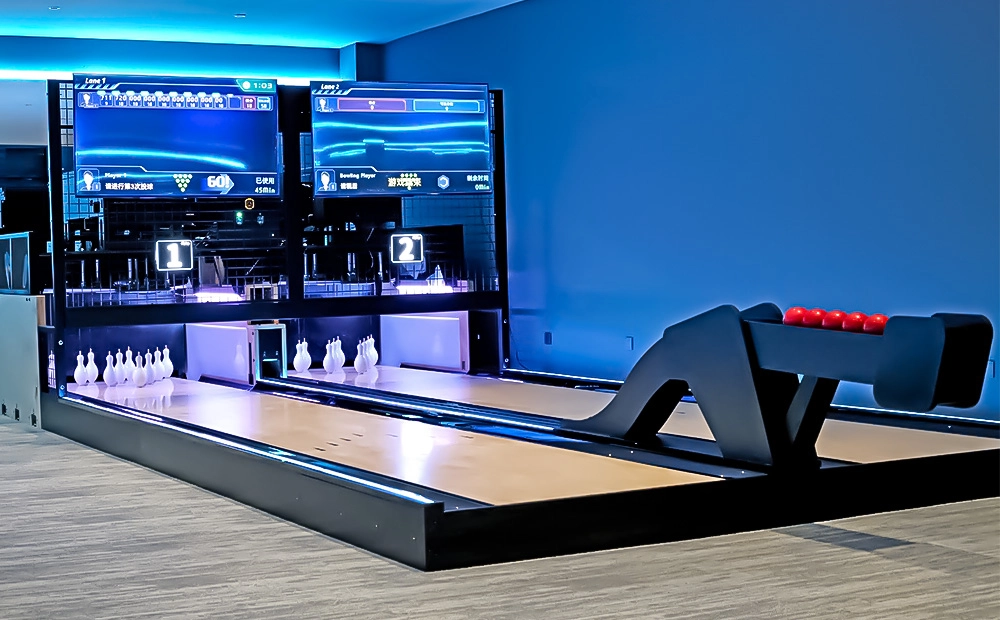
Flying Smart Duckpin Bowling (FSDB) innovative design, standard 9.2-meter short lane, can be shortened in length, compact layout suitable for small spaces. The game rules are simple but challenging, attracting players of different ages to actively participate.
Suitable for social entertainment venues such as bars, billiard halls, and game centers, it not only enhances interactivity but also increases the popularity and consumption frequency of the venue. The fun and competitive nature of FSDB will make it a new focus of social activities.
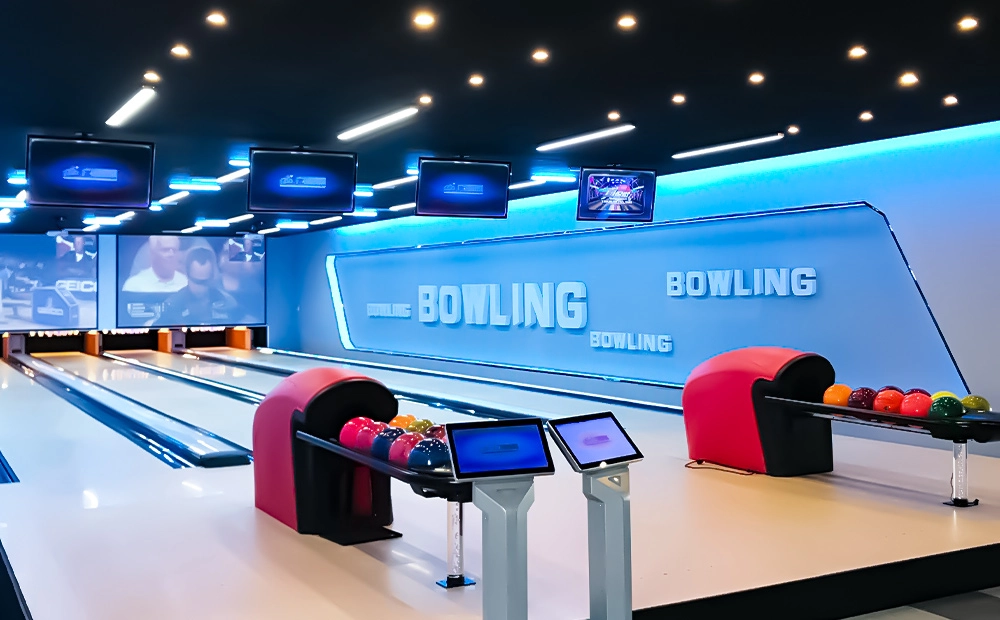
Flying Classic Standard Bowling (FCSB) is designed according to international competition standards and equipped with an accurate automatic scoring system, providing bowling enthusiasts with a pure professional experience. Whether it is for competitions or leisure entertainment, FCSB can meet high-level needs.
Suitable for family entertainment centers, luxury resorts, private villas, or clubs, it is an ideal choice for customers who pursue high-end quality and professional experience. Its classic design and excellent performance will add lasting appeal to the venue.
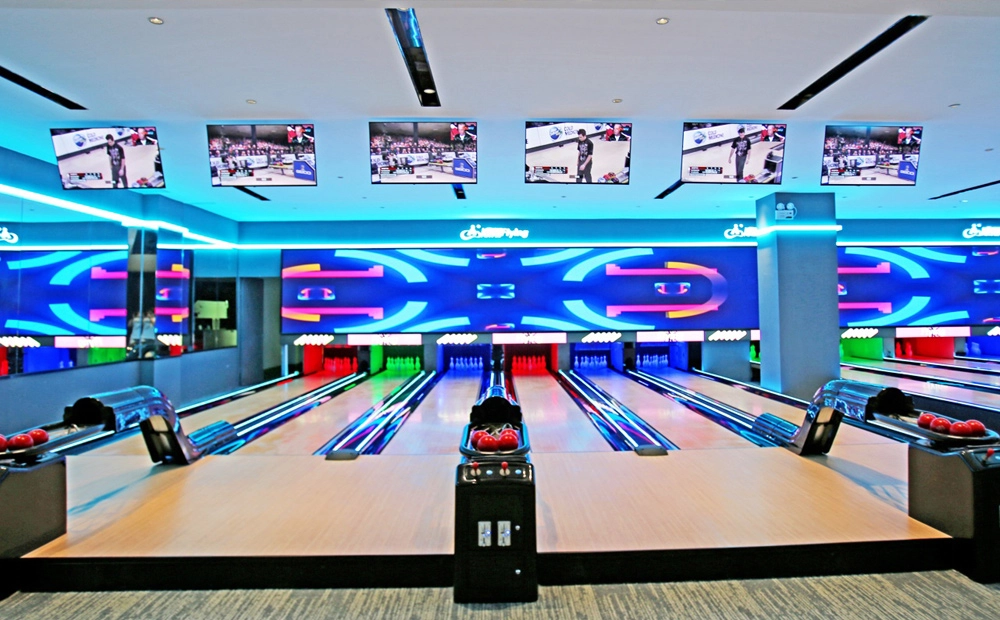
Flying Cute Mini Bowling (FCMB) is a mini bowling experience designed for children and families. The lane length is fixed at 12 meters, equipped with lightweight balls without finger holes (only 1.25kg) and small pins, specially designed for children and family fun.
It can not only help children feel the fun of bowling, but also stimulate their interest and competitive consciousness. Suitable for children's playgrounds, theme parks and parent-child centers, it is the best choice for places focusing on the children's market.
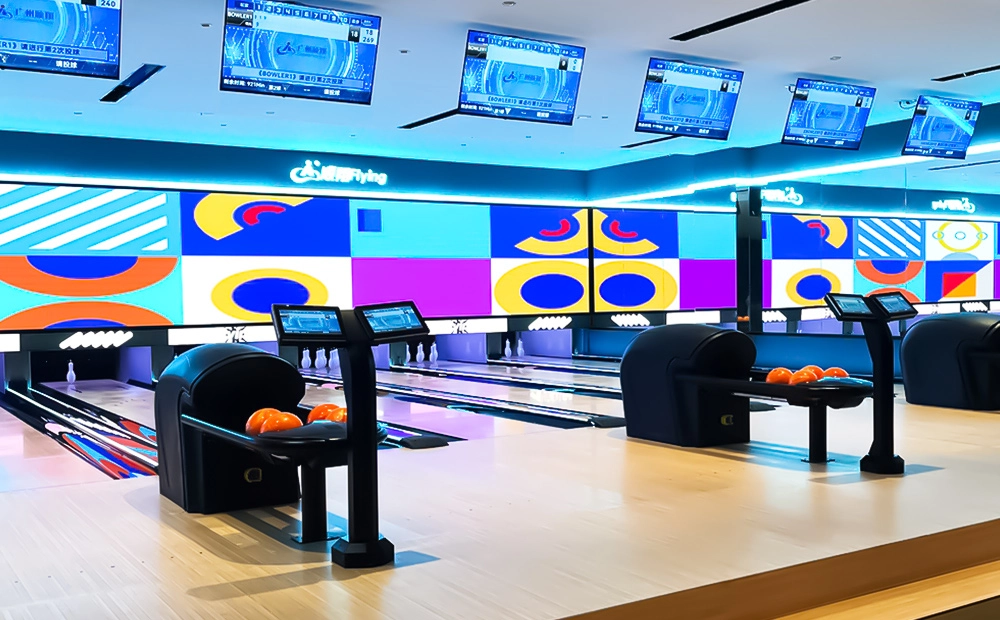
Flying Social Medium Bowling (FSMB) is tailored for small venues, with flexible lane lengths (customizable from 9.6 meters to 18 meters), a small ball design suitable for players of all ages, and light pins that are easier to knock down, increasing participation and fun.
Whether it is a gathering of friends or a casual social, FSMB can easily create a relaxed and pleasant atmosphere. Its efficient space-utilization design is particularly suitable for cafes, bars and community entertainment venues, allowing people to fall in love with bowling in a relaxed interaction.
Contact Flying
Start Your Custom Bowling Alley Project
If you contact us now for more details, we can provide you with a custom bowling alley service. Our service team will get back to you within 24 hours normally!
© 2026 Flying BOWLING. Designed by gooeyun.
FOLLOW US:
Flying Bowling
Flying Bowling
Flyingbowling
Flyingbowling