


2026 Ultimate Bowling Construction Costs: The Deepest Budget Breakdown Ever Published
A comprehensive guide for investors and homeowners detailing the 2026 costs to build a bowling alley. Includes itemized budgets for hard vs. soft costs, comparisons of string vs. free-fall pinsetters, and expert insights on maximizing ROI in the modern Family Entertainment Center (FEC) market.
In 2026, the bowling industry continues its aggressive pivot from traditional league-based centers to high-margin Family Entertainment Center startup budget models. Investors entering the market this year face a construction landscape defined by stabilizing material prices but rising skilled labor costs. The critical shift for 2026 is the dominance of "hybrid" venues—facilities that combine fewer, higher-quality lanes with substantial arcade, food, and beverage footprints to maximize revenue per square foot.
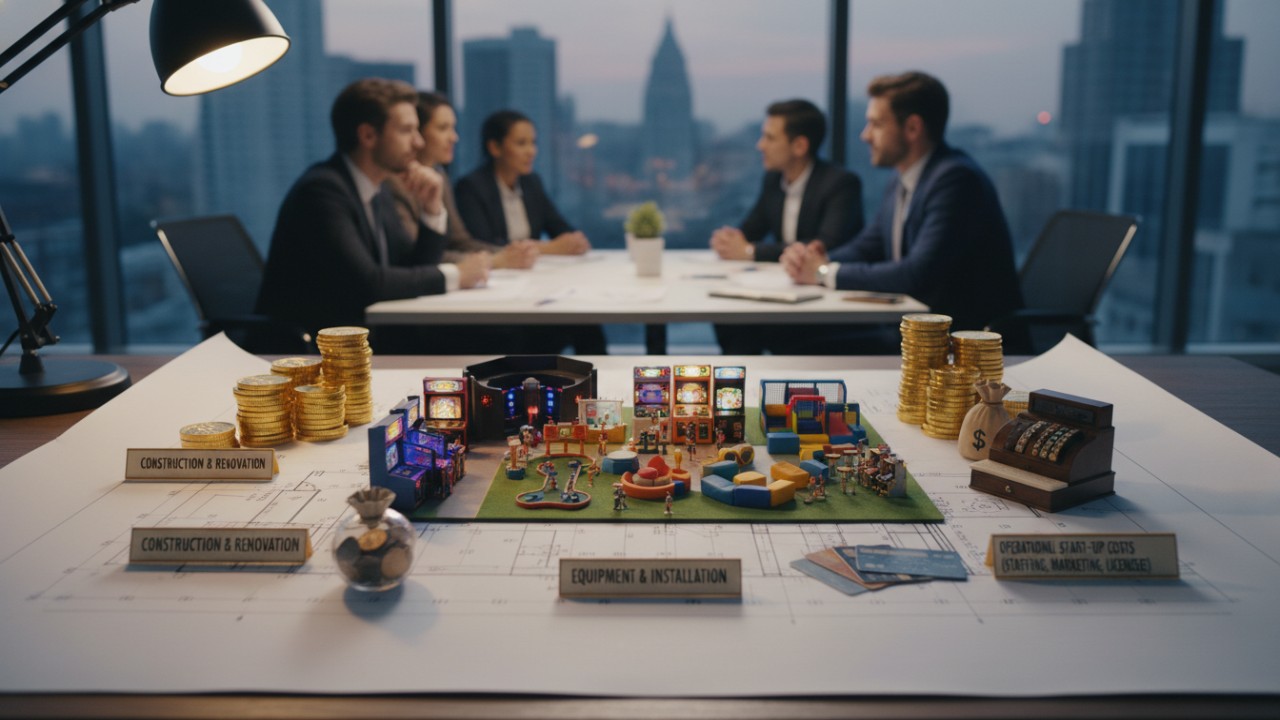
- Market Shift: The "boutique" model now outpaces traditional centers in new construction starts.
- Tech Trend: String pinsetters have become the standard for new entertainment venues, slashing operational overhead.
- Financial Benchmark: Successful centers now target a 30% contribution margin from non-bowling activities (F&B, amusements).
How Much Does It Cost to Build a Bowling Alley in 2026?
In 2026, the average turnkey cost for a commercial bowling center ranges from $85,000 to $145,000 per lane, depending on location and luxury level. This figure encompasses the total capitalization required—including shell construction, equipment, and soft costs—while high-end boutique bowling design investment projects can easily exceed $160,000 per lane.
For investors planning a project in 2026, these figures reflect a 4-6% increase over 2024 averages, driven largely by skilled trade wages rather than raw material shortages. According to JLL's Construction Outlook, labor costs in the entertainment and hospitality sectors are projected to remain the primary driver of budget inflation through 2026.
Projected 2026 Total Project Budgets (Turnkey)
- 6-Lane Boutique Venue: $650,000 – $950,000
- 12-Lane Hybrid FEC: $1.4 Million – $2.1 Million
- 24-Lane Traditional Center: $2.5 Million – $3.8 Million
Phase 1: Hard Construction & Shell Costs
Hard costs typically consume 65-70% of your total budget, covering the physical transformation of the real estate into a functional venue. In 2026, the most significant line item in this phase is often the specialized HVAC and acoustic engineering required for modern mixed-use spaces.
Before a single lane is laid, the "shell" must meet rigorous specifications to handle the weight and vibration of bowling equipment.
- Site Preparation & Foundation: Concrete slabs must be perfectly level (within 1/4 inch tolerance) to support the bowling alley construction cost per lane 2026. Reinforcing floors in retrofitted retail spaces often costs an additional $15-$20 per square foot.
- Acoustics & Soundproofing: Modern venues often share walls with other businesses. High-density acoustic batting and isolated ceiling clouds are mandatory to prevent noise bleed, costing roughly $40,000 for a 10-lane setup.
- HVAC & Electrical: Synthetic lanes react to humidity and temperature. A dedicated climate control system is necessary to maintain lane oil patterns, separate from the general building HVAC.
- Plumbing & Fire Safety: 2026 commercial codes in many regions now require upgraded fire suppression systems for entertainment venues with high occupancy loads.
Phase 2: The Core Equipment Budget Breakdown
The choice between pinsetter technologies is the single largest variable in your equipment budget, impacting both upfront capital and long-term OpEx. While the look of the lane is important for the customer, the machinery behind the scenes dictates your profitability.
Pinsetter Technology Comparison
The industry debate regarding string pinsetter vs free-fall cost comparison has largely settled in favor of string machines for entertainment-focused venues.
- String Pinsetters ($8,000 - $12,000 per lane): These machines use durable cords to reset pins. They have 75% fewer moving parts, consume 50% less energy, and do not require a specialized mechanic.
- Free-Fall Pinsetters ($25,000 - $35,000 per lane): The traditional complex machinery used in professional league play. They require a full-time mechanic and have higher energy draws.
Other Essential Hardware
- Lane Overlays: Synthetic lanes (phenolic laminates) cost $10,000–$15,000 per lane but offer a 20+ year lifespan compared to high-maintenance wood.
- Scoring Systems: Modern cloud-based scoring systems with touchscreens average $6,000 per lane. Integration with POS systems is critical for data capture.
- Furniture & Ball Returns: "Soft seating" (couches) has replaced hard plastic benches. Budget $5,000 per lane for a lounge-style configuration.
Phase 3: Soft Costs & The "Hidden" Fees
Soft costs are non-tangible expenses that often catch first-time developers off guard, typically totaling 20-25% of the hard construction budget. These are the fees required to legally and operationally prepare the business for its grand opening.
Ignoring these line items is the most common reason for budget overruns.
- Architectural & Design Fees: You must hire architects familiar with entertainment layouts. Generalists often miss critical spacing requirements for the "mechanic's chase" (the workspace behind the pins). Budget 8-12% of total construction costs.
- Permits & Impact Fees: Municipalities often charge heavy "impact fees" for entertainment venues due to expected traffic and parking loads.
- Pre-Opening Marketing: To ensure Day 1 revenue, a Commercial bowling ROI analysis suggests allocating $50,000 - $75,000 for digital campaigns and launch events starting 3 months prior to completion.
- Liquor Licensing: Costs vary wildly by state, from $500 in some regions to over $300,000 in quota-based counties (like parts of FL or NJ).
Cost Variance by Model: Traditional vs. Boutique vs. Home
Your business model dictates your cost-per-lane efficiency; high-volume centers achieve economies of scale that home installs cannot. Understanding these variances helps in selecting the right vendor partners.
- Traditional Centers (20+ Lanes): Focus on league play and volume. Lower finish levels (carpet, standard drop ceilings) keep costs near the $85,000/lane floor.
- Boutique/Luxury Alleys: Focus on the "VIP" experience. High-end finishes (custom millwork, chandeliers, leather seating) and advanced interactive scoring (Hyperbowling) drive costs up. The investment is recouped through higher price-per-game fees ($10+ per game).
- Home/Residential Lanes: Residential lanes often cost $45,000 - $90,000 per lane. The premium comes from the difficulty of logistics (getting equipment into a basement) and the lack of scale. You are paying for a custom construction crew for just two lanes.
- Hybrid FECs: The most profitable model in 2026. These integrate bowling with high-margin attractions. Data from the Bowling Proprietors' Association of America indicates that centers combining bowling with arcades and laser tag see revenue increases of up to 40% compared to bowling-only venues.
Expert Tips: How to Reduce Costs Without Sacrificing Quality
Smart value engineering can shave 15-20% off your initial CapEx without degrading the guest experience. The key is to cut costs in areas the customer cannot see, like the mechanical chase or back-of-house infrastructure.
- Repurpose Retail Space: Converting a defunct "Big Box" store is generally 30% cheaper than ground-up construction because the shell, HVAC, and parking are already in place.
- Negotiate Bulk Deals: If building a hybrid FEC, purchase your bowling equipment, arcade games, and kitchen gear from a single large distributor to leverage volume pricing.
- Phase Your Build: Construct the "shell" for 24 lanes but only equip 12 initially. Use the empty space for an expanded arcade or event hall until cash flow justifies the expansion.
- Energy Efficiency: Invest in LED lane lighting and string pinsetters. The upfront cost is similar, but the reduction in monthly utility bills adds massive value to your business valuation.
Future-Proofing: 2026 Investment Trends
To secure a long-term return, your facility must be built to accommodate the technology and consumer habits of the next decade. Building a facility based on 2015 standards will result in immediate obsolescence.
- Automation in F&B: Kiosks and QR-code ordering at the lanes reduce server headcount, lowering your biggest OpEx line item: labor.
- Interactive Projection: Systems that project targets onto the lanes (like Hyperbowling) appeal to Gen Z and Alpha demographics who demand gamification.
- Green Compliance: 2026 construction often benefits from "Green Building" grants if you use sustainable materials and energy-efficient HVAC systems. Check the U.S. Green Building Council for available credits.
- Cashless Integration: Card readers and RFID wristbands should be universal across the facility, from the lanes to the arcade to the bar.
Conclusion & Call to Action
Building a bowling center in 2026 is a significant capital undertaking, but the potential for profitability has never been higher for well-executed concepts. With an average bowling alley construction cost per lane 2026 hovering between $85,000 and $145,000, your focus must remain on the total experience—food, drink, and atmosphere—rather than just the game itself. Prioritize long-term ROI over short-term cuts; a cheap installation today will cost you double in maintenance tomorrow.
Ready to build your legacy? Contact our team today for a custom 2026 Project Estimate.
Frequently Asked Questions (FAQ)
What is the average cost per lane for a commercial bowling alley in 2026?
Commercial lanes typically cost between $85,000 and $145,000 per lane completely installed. This turnkey estimate includes the equipment manufacturing, shipping, installation, and the proportional share of the building's shell construction and high-end finishes. Luxury boutique centers can exceed $160,000 per lane due to custom millwork and VIP amenities.
Are string pinsetters cheaper than traditional free-fall machines?
Yes, string pinsetters are generally 30-40% cheaper to purchase upfront ($8k-$12k vs $25k+). More importantly, they reduce long-term maintenance and energy costs by up to 75%. They are rapidly becoming the standard for new entertainment-focused centers where USBC sanctioning for professional leagues is not the primary focus.
How much space is required for a single bowling lane?
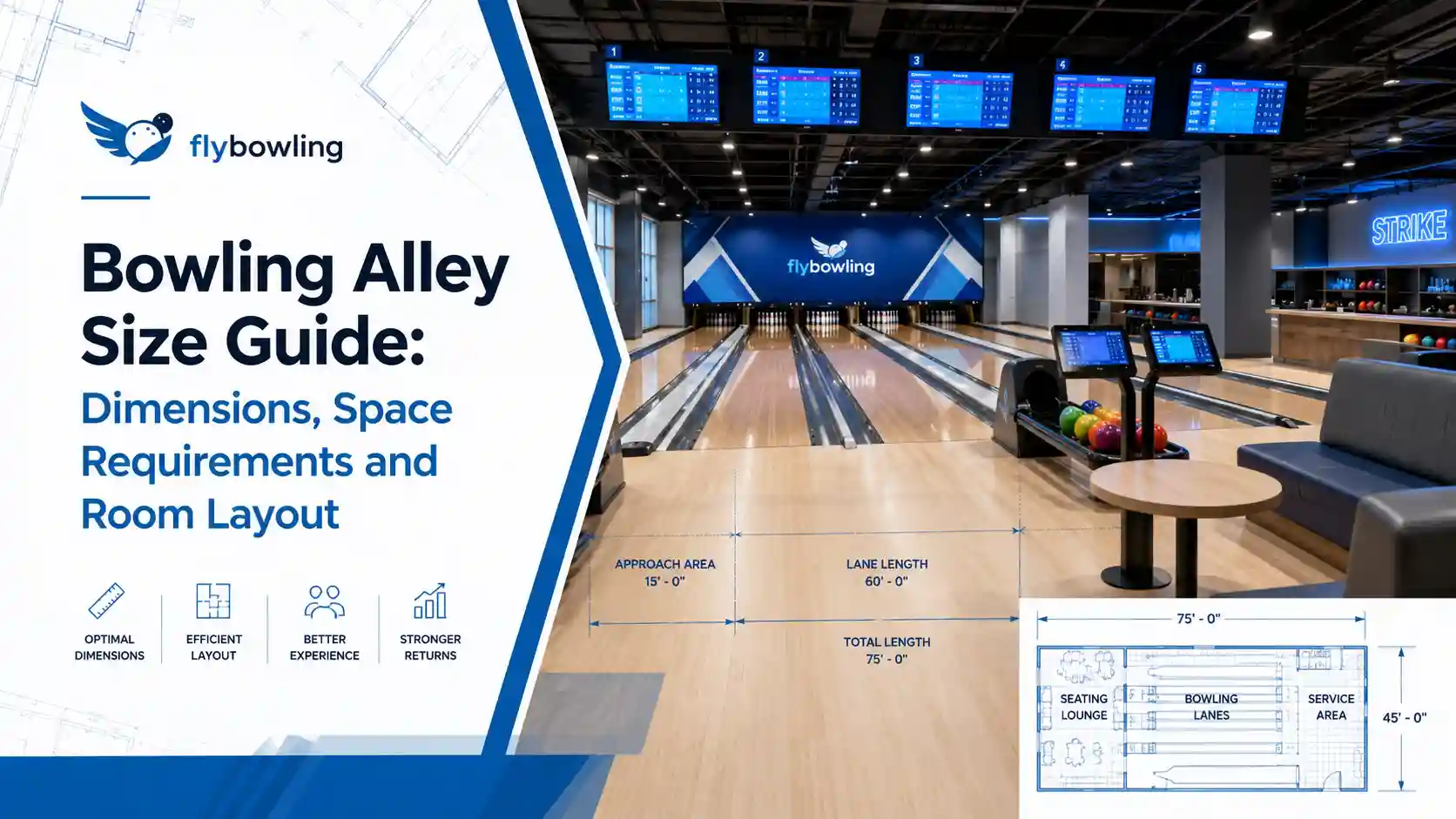
A standard regulation lane requires approximately 87 feet in length from the foul line to the back of the machine. Width requirements are about 11.5 feet for a pair of lanes (including the ball return). However, for a comfortable guest experience, you need to budget additional space for the approach area (12-16 feet) and a mechanical chase (4-6 feet) behind the pins.
What is the most expensive part of building a bowling alley?
The "Shell" construction (building renovation, HVAC, electrical, acoustics) is usually the largest single cost driver. While the lanes and pinsetters are expensive, the specialized infrastructure required to house them—specifically heavy-duty HVAC and acoustic soundproofing—consumes the majority of the capital. Land acquisition costs also vary wildly by location.
Can I build a bowling alley in my basement?
Yes, provided you have at least 85-90 feet of clear length and 10-foot ceilings. Residential lanes typically cost between $45,000 and $90,000 per lane due to the complexity of custom installation. For smaller spaces, scaled-down "Duckpin" or mini-bowling options are available that require significantly less length (30-40 feet).
How long does it take to build a bowling alley from scratch?
The entire process typically takes 12 to 18 months from concept to grand opening. Planning, architectural design, and permitting usually consume the first 3-6 months. The physical construction and equipment installation phase generally takes 6-9 months, depending on the complexity of the site work.
What is the ROI for a bowling alley in 2026?
Modern FECs often see a full Return on Investment (ROI) within 2 to 4 years. Profitability in 2026 is driven heavily by Food & Beverage sales (often 40-50% of revenue) and arcade games. String pinsetters further improve margins by significantly lowering utility and labor costs compared to older centers.
Do I need special zoning to build a bowling center?
Yes, commercial entertainment usually requires specific commercial zoning (C-1, C-2, etc.). You cannot simply build in any warehouse district; you need zoning that allows for high-occupancy assembly. Liquor licensing often has separate zoning or distance requirements from schools and churches that must be verified before signing a lease.
More Articles

Let’s Build a center Together
Partner With a Trusted Bowling Alley Design, One-Stop Solution Manufacturer.
Flying has successfully built ideal bowling alleys for more than 3,000 customers.

Technical Expert
You may also like our products
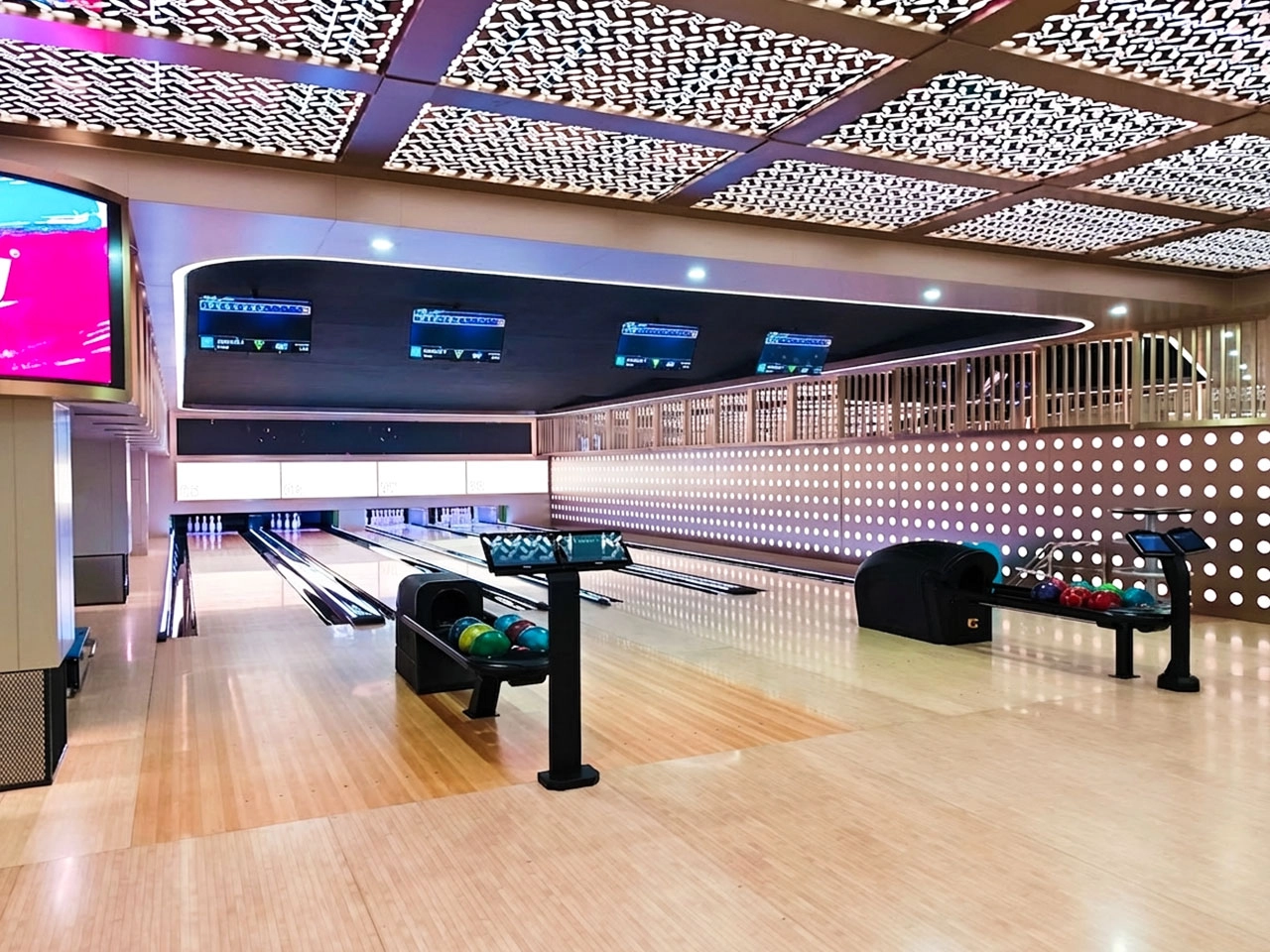
Build a commercial bowling venue with Flying’s complete string pinsetter bowling alley equipment package. The system includes the AEROPIN™ USBC-certified string pinsetter, customizable lanes, automatic scoring, ball return, lane lighting, pins, control hardware, and overseas installation support.
Designed for commercial bowling centers, family entertainment venues, hotels, resorts, bars, and premium private projects, this turnkey bowling system helps operators reduce sourcing complexity and prepare for reliable long-term operation.
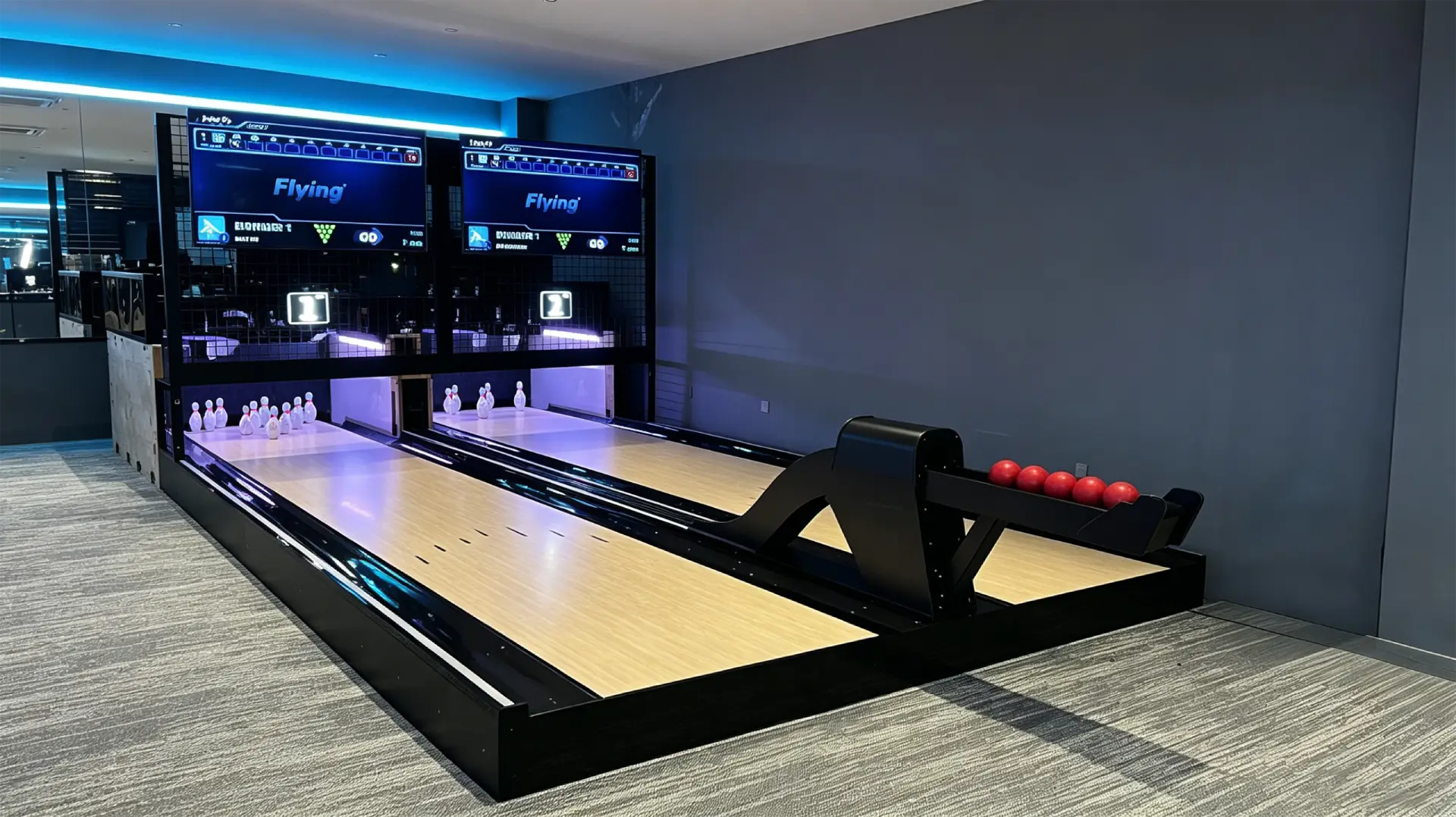
Flying Smart Duckpin Bowling is a compact duckpin bowling equipment system designed for bars, family entertainment centers, hotels, resorts, cinemas, boutique bowling alleys, and social entertainment venues. With a standard 9.13m duckpin bowling lane, 1.25kg lightweight balls, automatic scoring, ball return, LED lighting, and a smart string pinsetter, it creates a fast-paced and easy-to-play bowling experience in a smaller footprint than traditional bowling.
The system is available as a turnkey duckpin bowling package, including lane equipment, a string pinsetter system, scoring hardware, control software, global shipping, installation guidance, and technical support.
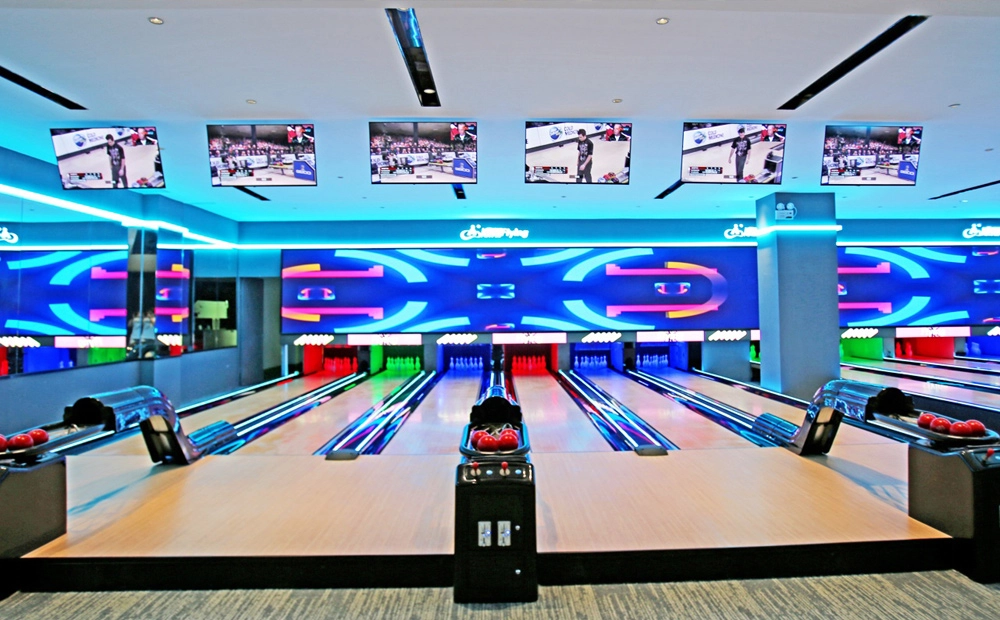
Flying Cute Mini Bowling is a compact mini bowling equipment system designed for children, families, and indoor entertainment venues. With a fixed 12-meter lane, 1.25kg small balls without finger holes, smaller pins, string pinsetter technology, and an automatic scoring system, it creates an easy, safe, and engaging bowling experience for younger players.
This mini bowling system is suitable for children’s playgrounds, family entertainment centers, theme parks, shopping malls, parent-child centers, hotels, resorts, and indoor amusement venues looking to add a fun, space-efficient attraction.
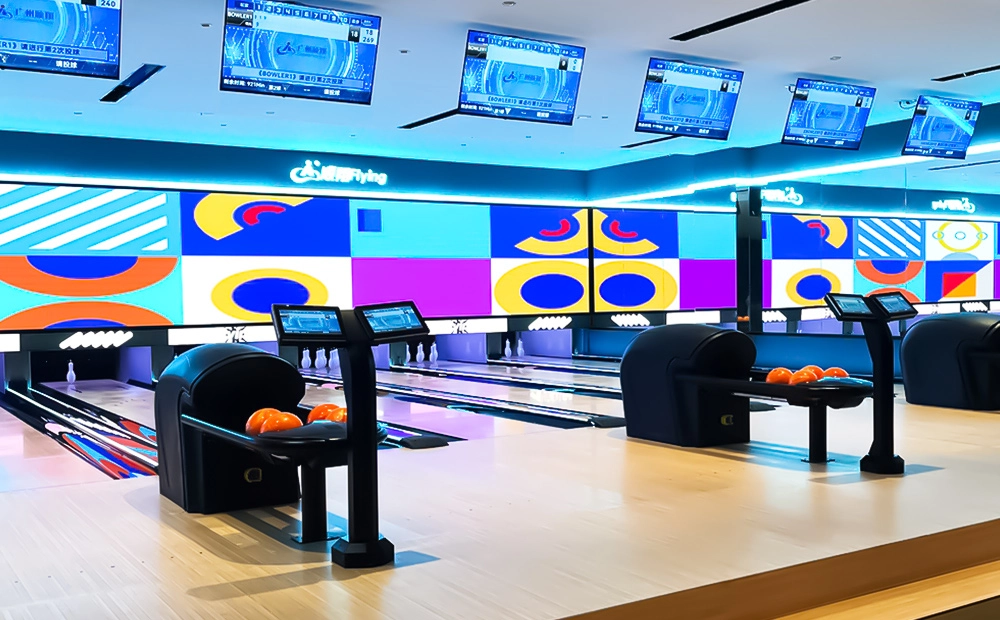
Flying Social Medium Bowling is a compact medium bowling equipment system designed for bars, cafes, family entertainment centers, community leisure venues, hotels, resorts, and small indoor entertainment spaces. With customizable lane lengths from 9.6m to 18m, small balls, lighter pins, string pinsetter technology, ball return, and automatic scoring, it creates an easy-to-play social bowling experience for players of different ages and skill levels.
Compared with full-size standard bowling, medium bowling requires less space and offers a more casual, interactive format. It is a practical choice for venues that want to add a bowling attraction without building a full commercial bowling alley.
Contact Flying
Start Your Custom Bowling Alley Project
If you contact us now for more details, we can provide you with a custom bowling alley service. Our service team will get back to you within 24 hours normally!
© 2026 Flying BOWLING. Designed by gooeyun.
FOLLOW US:
Flying Bowling
Flying Bowling
Flyingbowling
Flyingbowling