

Bowling Ball Comparison Chart 2026: RG, Differential, Coverstock & Core
Quick Answer: How Do You Compare Bowling Balls?
To compare bowling balls, start with lane condition, then compare coverstock, core type, RG, differential, surface finish and your playing style. Solid reactive balls with lower RG and higher differential usually suit heavier oil because they read earlier and create more traction. Pearl or polished reactive balls with higher RG usually create more length and are better for lighter oil or later lane transition. Beginners should prioritize fit, control and predictability before chasing maximum hook potential.
Key Takeaways
- Coverstock controls friction and is one of the biggest differences between bowling balls.
- Core type affects motion shape: symmetric cores are usually smoother, while asymmetric cores can respond faster to friction.
- RG helps explain when a ball starts rolling; lower RG reads earlier, while higher RG stores energy longer.
- Differential helps explain flare and hook potential; higher differential usually creates more motion.
- Surface finish can change reaction significantly, even on the same ball.
- Bowling balls should be compared by lane condition, not just brand or color.
- A useful arsenal includes different motion shapes instead of multiple balls that do the same job.
- Bowling centers can use ball comparison logic to plan house balls, beginner support, pro shop partnerships and customer experience.
Introduction: Why Bowling Ball Comparison Matters
Walking into a modern pro shop can feel overwhelming. Shelves are filled with colorful bowling balls, technical spec sheets, famous model names and performance claims. For many bowlers, the challenge is not finding a bowling ball. The challenge is knowing how to compare one ball against another.
Bowling ball comparison is not about choosing the most aggressive name, the brightest color or the strongest hook rating. A bowling ball only performs well when it matches the bowler, lane condition and intended use. A ball that works perfectly on heavy oil may overreact on dry lanes. A ball that helps one player create control may look weak for a speed-dominant bowler. A high-performance ball may even be the wrong choice for a beginner who needs fit and repeatability first.
This guide explains how to compare bowling balls in a structured way. You will learn how coverstock, core type, RG, differential, surface finish, lane condition, player style and budget all affect ball choice. You will also see practical comparison charts that can help players, coaches, pro shop operators and bowling centers make better equipment decisions.
Bowling Ball Comparison Chart
Use this chart as a quick starting point when comparing common bowling ball types.
| Ball type | Main reaction | Best use | Avoid when |
|---|---|---|---|
| Solid reactive | Earlier traction and smoother motion | Heavy oil, fresh lanes, speed-dominant players | Dry lanes or when the ball reads too early |
| Pearl reactive | More length and sharper backend | Transition, lighter oil, later games | Very slick fronts or when early traction is needed |
| Hybrid reactive | Balanced traction and backend motion | Medium oil and versatile use | Extreme heavy oil or very dry lanes |
| Urethane | Smooth, early and controllable arc | Short patterns, control, difficult conditions | When strong backend motion is needed |
| Plastic / polyester | Straight and low hook | Spare shooting, house balls, beginners | When hook or oil traction is needed |
This chart does not replace a pro shop fitting or on-lane testing, but it gives you a practical framework. The goal is to compare what each ball is designed to do instead of treating every ball as a simple “stronger or weaker” option.
Understanding Bowling Ball Anatomy
To compare bowling balls correctly, you need to understand two main components: the coverstock and the core.
The coverstock is the outer shell of the ball. It determines how much friction the ball creates with the lane surface. The core is the internal weight block. It influences how the ball revs up, changes direction and continues through the pins.
A simple way to think about it is this: the coverstock is the tire, and the core is the engine. The surface finish is the tire tread. The layout and drilling decide how that engine is positioned for your release. For a broader buying overview, you can also review this best bowling balls for 2026 guide.
Coverstock Comparison: Solid vs Pearl vs Hybrid vs Urethane vs Plastic
Coverstock is one of the most important comparison points because it directly affects lane traction.
Solid Reactive Coverstock
Solid reactive bowling balls are designed to create earlier traction. They are often useful on heavier oil or fresh lane conditions because they can start reading the lane sooner.
- Choose solid reactive when the lane has higher oil volume, your ball skids too far, or you want a smoother arc.
- Avoid solid reactive when the lane is too dry, the ball burns up early, or you need more length before the hook phase.
Pearl Reactive Coverstock
Pearl reactive bowling balls are designed to create more length before responding to friction. They often appear cleaner through the front part of the lane and more angular downlane.
- Choose pearl reactive when the lane has started to transition, you need the ball to store energy longer, or you want more backend response.
- Avoid pearl reactive when the front part of the lane is very slick or when you need early traction.
Hybrid Reactive Coverstock
Hybrid reactive coverstocks combine solid and pearl characteristics. They are often used when bowlers want a balanced motion.
- Choose hybrid reactive when you need versatility, medium-oil performance, or a balanced benchmark option.
- Avoid hybrid reactive when the lane requires a very specific extreme reaction.
Urethane Coverstock
Urethane creates a smooth and controllable motion. It is often chosen for control rather than maximum hook.
- Choose urethane when you need to control the pocket, reduce backend overreaction, or manage shorter and more difficult patterns.
- Avoid urethane when you need a strong backend move or more total hook. Bowlers should also confirm whether urethane use is appropriate for their league or tournament.
Plastic / Polyester Coverstock
Plastic balls are designed to go straighter. They are commonly used for spare shooting and beginner house balls.
Choose plastic when you need a spare ball, want to shoot straighter at corner pins, or are learning basic targeting. If you are focused on straight shots, this related guide on best bowling balls for straight bowlers can help you compare control-focused options.
Core Comparison: Symmetric vs Asymmetric
The core affects the shape of ball motion. When comparing bowling balls, core type helps explain why two balls with similar coverstocks may behave differently.
Symmetric Cores
Symmetric cores usually create smoother and more predictable motion. They are often easier to control and useful for benchmark balls.
- Choose a symmetric core when you want a smoother arc or a reliable benchmark ball.
- Symmetric cores are often helpful for beginners and intermediate bowlers building consistency.
Asymmetric Cores
Asymmetric cores contain more directional imbalance and often respond faster to friction. They can create a sharper or stronger motion, depending on coverstock, surface and layout.
- Choose an asymmetric core when you need stronger motion, heavier-oil performance, or faster response to friction.
- Avoid choosing asymmetric only because it sounds more advanced. Some bowlers need smoother control more than angular power.
RG vs Differential Comparison
RG and differential are two of the most important bowling ball specs. They help explain when the ball rolls and how much it flares.
| Spec | Lower value usually means | Higher value usually means | Why it matters |
|---|---|---|---|
| RG | Earlier roll | Later roll | Helps match the ball to oil volume and length |
| Differential | Lower flare and lower hook potential | Higher flare and more hook potential | Helps compare total motion and board coverage |
| Intermediate differential | Less asymmetry | Faster response to friction | Helps compare asymmetric balls |
RG: Radius of Gyration
RG tells you how quickly a bowling ball wants to start rolling. Low RG balls usually rev up earlier. They can be useful on heavier oil or for speed-dominant players who need the ball to slow down sooner. High RG balls usually delay their roll. They can help on lighter oil, dry lanes or for rev-dominant players who need the ball to store energy longer.
Differential
Differential tells you the ball’s flare potential. More flare exposes more fresh coverstock to the lane, which can create more hook potential. Low differential balls are usually smoother and more controlled. High differential balls are usually stronger and cover more boards.
Intermediate Differential
Intermediate differential applies to asymmetric balls. A higher value usually means the ball can respond faster to friction and create a sharper change of direction.
Compare Bowling Balls by Lane Condition
A bowling ball should always be compared against the lane condition. A ball is not simply “good” or “bad.” It is good or bad for a specific condition.
| Lane condition | Better coverstock choice | Core tendency | Surface tendency | Main goal |
|---|---|---|---|---|
| Heavy oil | Solid reactive | Low RG / higher differential | Sanded | Read earlier and create traction |
| Medium oil | Hybrid or benchmark solid | Medium RG / medium differential | 2000–4000 grit range | Predictable motion |
| Dry lanes | Pearl, weaker reactive or plastic for spares | Higher RG / lower differential | Polished or smoother | Store energy and reduce early hook |
| Short patterns | Urethane or smooth control ball | Controlled core | Surface matched to pattern | Control the pocket |
| Transition | Pearl or cleaner hybrid | Medium to higher RG | Smoother surface | Clear the fronts and retain energy |
Heavy Oil Conditions
For heavy oil, look for a ball that can create traction. Solid reactive coverstocks, lower RG cores, higher differential and sanded surfaces are common choices. The goal is to help the ball read earlier instead of skidding past the breakpoint.
Medium Oil Conditions
Medium oil is where many league bowlers spend most of their time. Hybrid coverstocks, smoother solids and symmetric benchmark balls can work well here. The goal is predictability.
Dry or Light Oil Conditions
On dry lanes, the problem is often too much friction. A strong ball may hook early and lose energy. Pearl reactive balls, weaker reactive balls, higher RG options and smoother surfaces may help create more length.
Compare Bowling Balls by Player Style
The same ball can look very different in the hands of different bowlers. Player style matters.
- Rev-dominant bowlers: These players naturally create more hook. They may need cleaner coverstocks, higher RG options, smoother layouts or weaker balls to prevent overreaction. For more detail, see this guide to best bowling balls for spin.
- Speed-dominant bowlers: These players often need help getting the ball to slow down. They may benefit from stronger coverstocks, lower RG cores, more surface and layouts that promote earlier motion.
- Balanced bowlers: These players can often build an arsenal around a benchmark ball first, then add stronger and cleaner options based on lane conditions.
- Two-handed bowlers: These players often create high rev rates. Many need to compare balls carefully to avoid too much backend motion or too much early hook.
- Straight bowlers: These players may prioritize plastic, entry-level reactive balls or control-oriented options. If the goal is accuracy and spare shooting, maximum hook is not the priority.
Compare Bowling Balls by Skill Level
| Bowler level | What to prioritize | Useful ball type | What to avoid |
|---|---|---|---|
| Beginner | Fit, comfort and control | Plastic or entry-level reactive | Too much hook too soon |
| Intermediate | Versatility and lane reading | Symmetric benchmark reactive | Buying overlapping balls |
| Advanced | Arsenal gaps and motion shapes | Multiple cover/core combinations | Choosing only by brand |
| Tournament player | Condition matching | Strong, benchmark, control and spare options | One-ball strategy |
Beginners should not start by asking, “What is the strongest ball?” A better question is, “What ball helps me repeat shots and learn ball motion?” Intermediate bowlers should compare balls by role, while advanced bowlers should focus on filling real arsenal gaps.
Compare Bowling Balls by Budget and Ownership Cost
Performance is important, but budget matters too. A bowling ball purchase often includes more than the ball itself.
Common cost factors include:
- Ball type and performance category
- Drilling
- Finger inserts
- Thumb slug or interchangeable thumb system
- Surface maintenance
- Cleaner
- Resurfacing
- Oil extraction or professional maintenance
- Replacement cycle
For a beginner, one properly fitted entry-level reactive ball and a spare ball may be more useful than buying an aggressive high-performance ball too early. For serious bowlers, cost comparison should focus on role coverage. To understand common purchase and drilling costs, read this bowling ball cost guide.
Example Bowling Ball Comparison: Benchmark Ball vs Control Ball
Let’s compare two common categories rather than treating the topic as a brand contest.
Benchmark Ball
A benchmark ball is usually the first ball out of the bag. It helps the bowler read the lane condition.
Typical characteristics include a symmetric core, solid or hybrid reactive coverstock, medium strength, predictable motion and usefulness on medium oil.
Control Ball
A control ball is used when the bowler needs smoother motion and less overreaction. It may use urethane or a smooth reactive coverstock, producing a controlled backend and predictable arc.
The key difference is purpose. A benchmark ball helps diagnose the lane. A control ball helps manage difficult motion.
Example Brand and Model Comparisons
Brand and model examples can be useful, but they should not replace spec comparison or pro shop advice. Bowlers often compare models such as Storm Phaze II, Motiv Venom Shock, Hammer Black Widow, Purple Hammer, Roto Grip Gem and similar balls when discussing benchmark, control or heavy-oil reactions.
However, specific model availability, specifications and event legality should be confirmed with the manufacturer, event rules and a qualified pro shop. The goal is not to say one brand is universally better. The goal is to understand how to compare ball motion and purpose.
When comparing models, ask:
- Which one reads earlier?
- Which one stores more energy?
- Which one has higher differential?
- Which one is smoother?
- Which one is more angular?
- Which one fills a real gap in my bag?
- Which one matches my lane condition?
Effective Strategies for Comparing Bowling Balls
- Use spec sheets as a starting point: Compare RG, differential, coverstock and surface, but remember that layout and drilling can change ball motion.
- Watch video reviews carefully: Do not only watch strikes. Watch how the ball clears the front part of the lane, where it changes direction and how it continues through the pins.
- Ask a pro shop operator: A pro shop operator can compare balls based on your hand, release, local lane condition and existing equipment.
- Test when possible: Demo days and test sessions are valuable because they show real ball motion under the same lane condition.
- Track your own results: Keep notes about which ball worked, what lane condition you faced, where you stood, what target you used and what adjustment worked.
Building a Balanced Bowling Ball Arsenal
A useful arsenal is not about owning the most balls. It is about owning different reactions.
A simple three-ball setup may include:
- Traction Ball: This ball handles heavier oil or fresh conditions. It may use a solid coverstock, stronger core, lower RG or more surface.
- Benchmark Ball: This is the reliable middle option. It helps read medium oil conditions and gives you a reference point.
- Spare or Burn Ball: This role depends on your needs. Some bowlers need a plastic spare ball. Others also need a cleaner pearl ball for dry or transitioned lanes.
A more advanced arsenal may include:
- Heavy oil ball
- Benchmark ball
- Control or urethane ball
- Cleaner pearl ball
- Plastic spare ball
Avoid buying multiple balls that all serve the same purpose. If two balls have similar coverstock strength, RG, differential and motion shape, they may overlap.
How Bowling Centers Should Use Bowling Ball Comparison
Bowling ball comparison is not only useful for individual players. Bowling centers, family entertainment centers and training venues can also use comparison logic when planning customer experience.
A bowling center may need to consider:
- House ball weight range
- Beginner-friendly ball options
- Spare-shooting support
- Pro shop partnership
- Lane condition and maintenance strategy
- Coaching support for different skill levels
- Clear guidance for first-time bowlers
- Equipment education for league players
For venue owners, bowling ball selection is only one part of a broader equipment plan. A complete bowling experience may also involve lane systems, string pinsetters, ball returns, scoring systems, seating, maintenance access and customer flow.
If you are planning a bowling venue, this bowling alley equipment guide can help you review the larger equipment system beyond bowling balls.
Common Mistakes When Comparing Bowling Balls
- Comparing only hook potential: More hook does not always mean better performance. Control, fit and condition matching often matter more.
- Ignoring surface finish: Surface changes can make the same ball react earlier or later. Do not compare bowling balls without considering surface.
- Buying by brand only: Brand reputation can be helpful, but the ball’s specs and role matter more than the logo.
- Skipping fit and drilling: A good ball with poor drilling can perform badly. Fit, span, pitch and layout should be part of the comparison.
- Not considering lane condition: A ball that works on heavy oil may fail on dry lanes. A ball that works on dry lanes may be too weak on fresh oil.
- Building an overlapping arsenal: If every ball in your bag creates the same motion, you do not have a flexible arsenal.
Buying Checklist: How to Compare Before You Choose
Before buying a bowling ball, answer these questions:
- What lane condition am I buying for?
- Do I need earlier traction or more length?
- Do I need smooth motion or sharp backend response?
- What coverstock type fits my need?
- What RG range makes sense for my style?
- How much differential do I need?
- Am I rev-dominant, speed-dominant or balanced?
- Is this ball for strikes, spares or a specific condition?
- Does it overlap with a ball I already own?
- What drilling layout will match my release?
- What is the total cost after drilling and maintenance?
- Can a pro shop confirm the fit?
Conclusion: Compare Bowling Balls by Purpose, Not Hype
The best bowling ball does not exist in isolation. It only exists in relation to the bowler, the lane condition and the job the ball needs to do.
A smart bowling ball comparison starts with the lane, then moves to coverstock, core, RG, differential, surface and player style. Once you understand these factors, the marketing language becomes easier to decode.
For beginners, the priority should be fit, comfort and control. For intermediate bowlers, the goal is versatility and lane reading. For advanced players, comparison is about building a complete arsenal with different motion shapes.
Charts and specs are starting points. The final decision should combine technical comparison, pro shop guidance and real on-lane testing.
Planning a Bowling Venue or Equipment Upgrade?
If you are planning a bowling center, family entertainment center or equipment upgrade, Flying Bowling can help you review lane systems, string pinsetters, ball returns and project requirements.
You can also explore Flying Bowling’s complete string pinsetter bowling alley equipment system.
Frequently Asked Questions
What is the best way to compare bowling balls?
The best way to compare bowling balls is to start with lane condition, then compare coverstock, core type, RG, differential, surface finish and your player style. Do not compare by brand or hook potential alone.
Which bowling ball specs matter most?
The most important specs are coverstock, core type, RG, differential and surface finish. RG affects when the ball rolls, differential affects flare and hook potential, and coverstock affects traction.
Should I compare bowling balls by RG or differential first?
Compare both together. RG helps explain when the ball starts rolling, while differential helps explain how much it can flare and hook. A low RG, high differential ball usually reads earlier and creates more motion than a high RG, low differential ball.
What is the difference between solid, pearl and hybrid bowling balls?
Solid reactive balls usually read earlier and are useful on heavier oil. Pearl reactive balls usually create more length and sharper backend motion. Hybrid reactive balls combine traits from both and are often used for medium conditions.
Is a symmetric or asymmetric core better?
Neither is always better. Symmetric cores are usually smoother and more predictable. Asymmetric cores can create stronger or faster response to friction. The better choice depends on lane condition, player style and desired motion.
What bowling ball is best for heavy oil?
Heavy oil usually requires a ball with earlier traction. Many bowlers compare solid reactive coverstocks, lower RG cores, higher differential and sanded surfaces for this condition.
What bowling ball is best for dry lanes?
Dry lanes usually require more length and less early hook. Pearl reactive balls, weaker reactive balls, higher RG options, smoother surfaces or plastic spare balls may be useful depending on the shot.
Can one bowling ball work for all lane conditions?
One ball can work for casual bowling, but serious bowlers usually need more than one reaction shape. Different oil volumes and lane transitions often require different ball choices.
Should beginners choose plastic, urethane or reactive resin?
Beginners can start with plastic for straight shots or an entry-level reactive resin ball for learning hook. The best choice depends on whether the bowler wants basic control, spare shooting or hook development.
How does drilling affect bowling ball comparison?
Drilling affects how the core is positioned relative to the bowler’s release. Two identical balls can react differently with different layouts. Fit, span, pitch and Positive Axis Point should be considered during comparison.
How should bowling centers choose house balls for different players?
Bowling centers should plan a practical range of house ball weights, beginner-friendly options, spare-shooting support and clear guidance for different skill levels. Ball planning should also match lane maintenance, customer traffic and the overall venue equipment setup.
What bowling equipment should a new bowling center plan besides balls?
A new bowling center should plan lane systems, string pinsetters, ball returns, scoring systems, seating, maintenance access, customer flow and support equipment. Bowling balls are only one part of the full venue equipment plan.
More Articles

Let’s Build a center Together
Partner With a Trusted Bowling Alley Design, One-Stop Solution Manufacturer.
Flying has successfully built ideal bowling alleys for more than 3,000 customers.
Technical Expert

You may also like our products
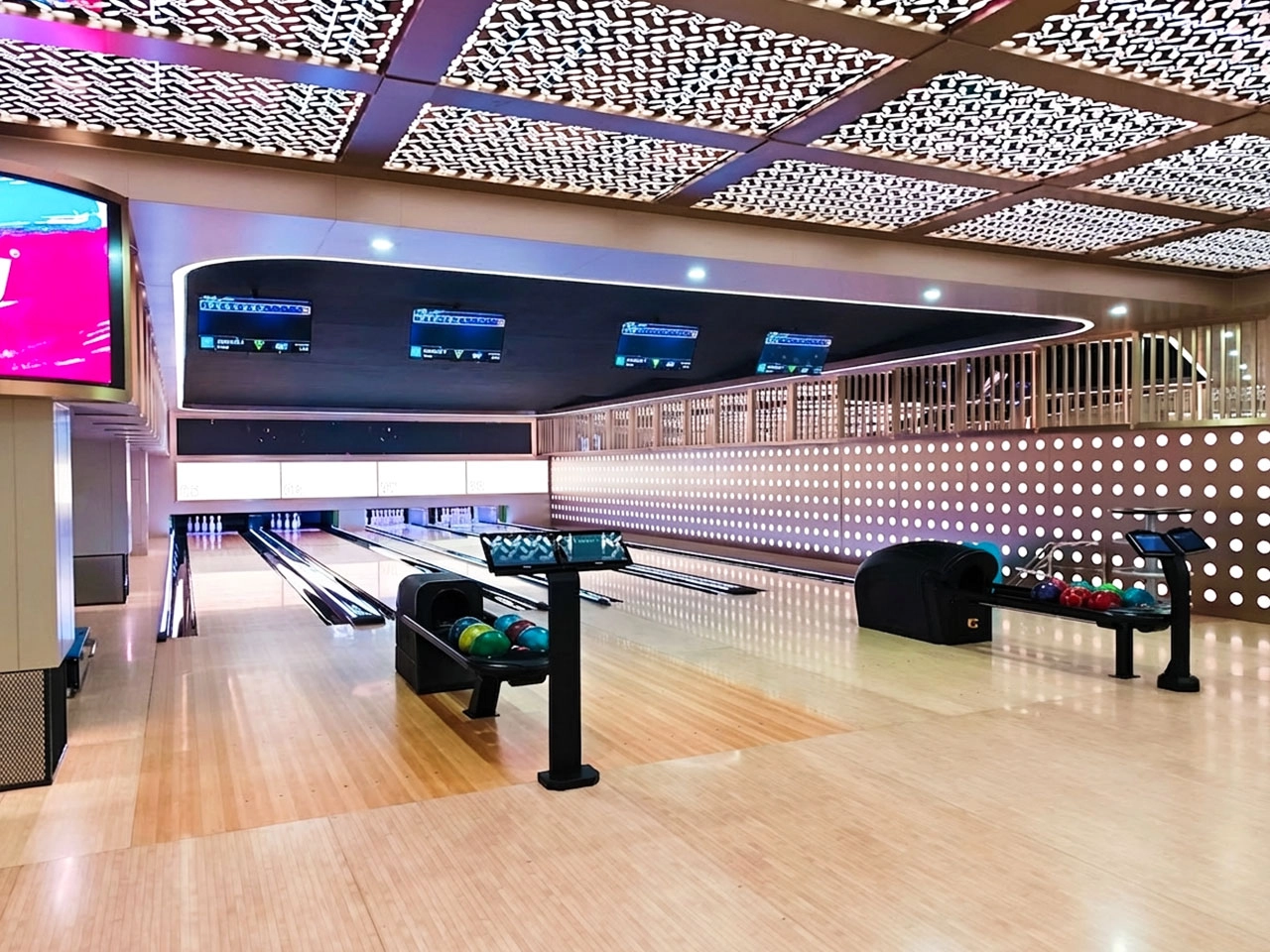
Build a commercial bowling venue with Flying’s complete string pinsetter bowling alley equipment package. The system includes the AEROPIN™ USBC-certified string pinsetter, customizable lanes, automatic scoring, ball return, lane lighting, pins, control hardware, and overseas installation support.
Designed for commercial bowling centers, family entertainment venues, hotels, resorts, bars, and premium private projects, this turnkey bowling system helps operators reduce sourcing complexity and prepare for reliable long-term operation.
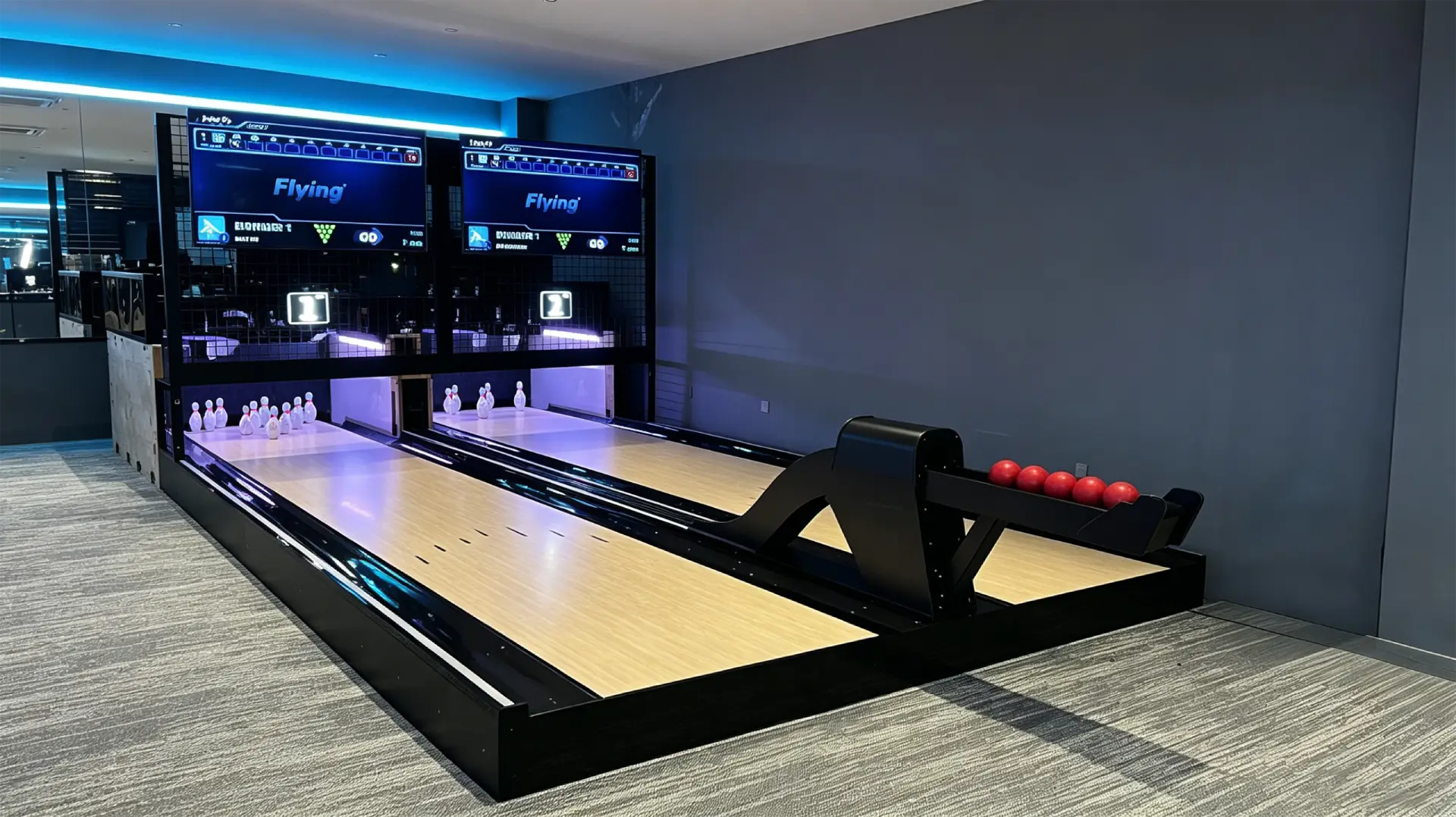
Flying Smart Duckpin Bowling is a compact duckpin bowling equipment system designed for bars, family entertainment centers, hotels, resorts, cinemas, boutique bowling alleys, and social entertainment venues. With a standard 9.13m duckpin bowling lane, 1.25kg lightweight balls, automatic scoring, ball return, LED lighting, and a smart string pinsetter, it creates a fast-paced and easy-to-play bowling experience in a smaller footprint than traditional bowling.
The system is available as a turnkey duckpin bowling package, including lane equipment, a string pinsetter system, scoring hardware, control software, global shipping, installation guidance, and technical support.
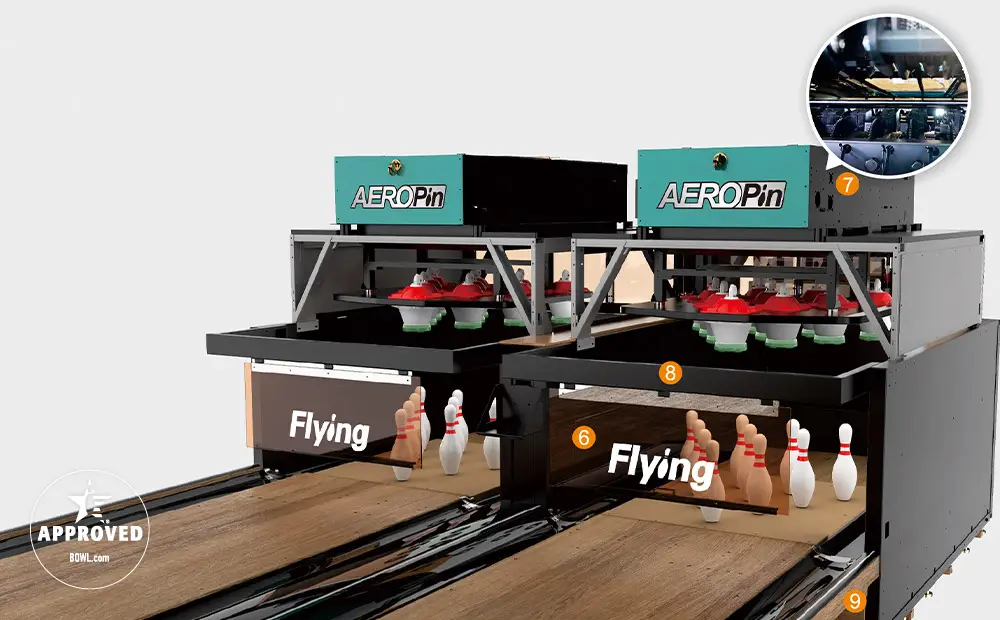
AEROPIN is Flying Bowling’s USBC-certified string pinsetter system for modern commercial bowling centers. Designed for fast pin setting, smooth ball return, low maintenance, and stable daily operation, it helps venue operators build league-ready and entertainment-focused bowling projects with confidence.
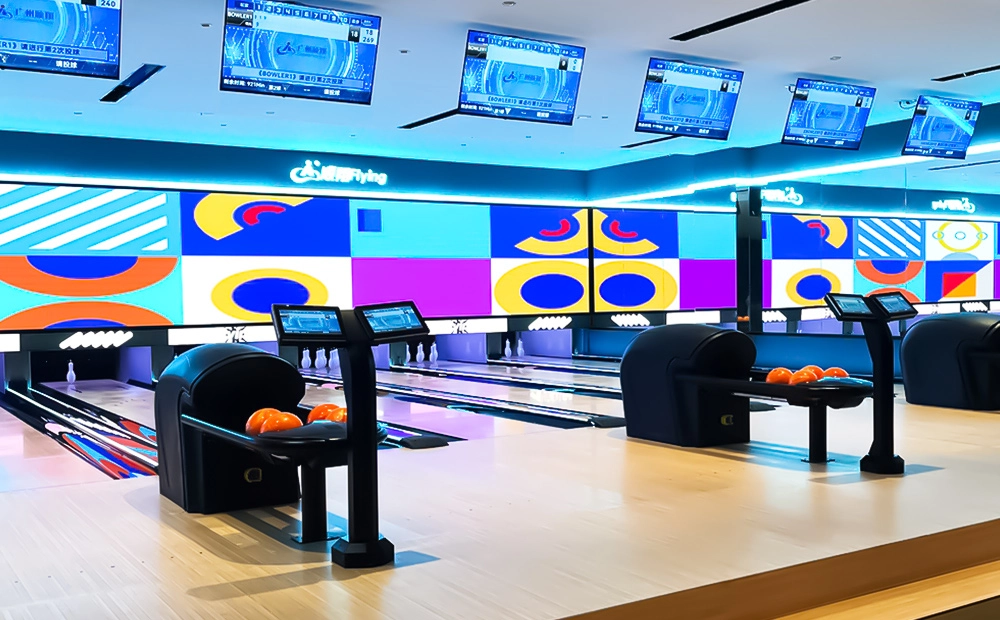
Flying Social Medium Bowling is a compact medium bowling equipment system designed for bars, cafes, family entertainment centers, community leisure venues, hotels, resorts, and small indoor entertainment spaces. With customizable lane lengths from 9.6m to 18m, small balls, lighter pins, string pinsetter technology, ball return, and automatic scoring, it creates an easy-to-play social bowling experience for players of different ages and skill levels.
Compared with full-size standard bowling, medium bowling requires less space and offers a more casual, interactive format. It is a practical choice for venues that want to add a bowling attraction without building a full commercial bowling alley.
Contact Flying
Start Your Custom Bowling Alley Project
If you contact us now for more details, we can provide you with a custom bowling alley service. Our service team will get back to you within 24 hours normally!
© 2026 Flying BOWLING. Designed by gooeyun.
FOLLOW US:

Flying Bowling
Flying Bowling
Flyingbowling
Flyingbowling
Flyingbowling