


How to Start a Bowling Alley Business: Costs, Profitability, and Success Guide
This comprehensive guide outlines the costs and profitability of starting a bowling alley business in 2026. It covers essential topics such as startup capital ($800k-$5M+), operating expenses, owner earnings, and the strategic shift toward Family Entertainment Centers (FECs) to maximize ROI.
Introduction
The crash of pins, the nostalgic slide of rental shoes, and the cheer of a perfect strike—bowling is more than just a game; it is a timeless social experience. For entrepreneurs, the resurgence of the "Family Entertainment Center" (FEC) model has turned the dusty bowling halls of the past into vibrant, high-profit hubs of activity. But beneath the neon lights and polished wood lies a complex business model requiring significant capital and strategic planning.
If you are considering entering this industry, you are likely asking: Is it actually worth the investment? The modern bowling business is no longer just about league play; it is about creating an immersive destination that combines sport, dining, and entertainment. Whether you are looking to open a boutique lounge or a massive 24-lane complex, understanding the financial landscape is critical. In this guide, we will break down the real-world numbers, from startup capital to daily operating expenses, helping you navigate the journey of How to Start a Bowling Alley Business.
How much does it cost to start a bowling alley?
Starting a bowling alley is a capital-intensive venture, with costs varying wildly based on size, location, and whether you are building from scratch or renovating an existing facility. On average, a new commercial bowling center requires an investment ranging from $800,000 to over $5 million. For a standard modern facility, industry estimates suggest budgeting approximately $80,000 to $100,000 per lane when factoring in construction, equipment, and furnishing.
The costs break down into several major categories:
- Real Estate & Construction: This is often the largest expense. Retrofitting a big-box retail space (like an old department store) typically costs between $150 and $300 per square foot. Ground-up construction can easily double this.
- Equipment: A complete lane package—including the pinsetter (string or free-fall), synthetic lane surface, ball return, and scoring system—costs between $45,000 and $80,000 per lane for new equipment.
- Ancillary Areas: A modern alley needs more than just lanes. You must budget for a commercial kitchen ($150k+), bar build-out, arcade game room, and comfortable lounge seating.
According to Startup Financial Projection, a small boutique 8-lane center might start around $600,000 to $1 million, while a large-scale entertainment complex can exceed $5 million. It is crucial to have a contingency fund of at least 10-15% of your total budget for unforeseen construction delays or permit issues.
Is owning a bowling alley profitable?
Yes, owning a bowling alley can be highly profitable, particularly if you adopt the modern hybrid business model. Traditional alleys that rely solely on lane rentals often see modest returns, but Family Entertainment Centers (FECs) that diversify revenue streams consistently outperform them. According to industry data, successful bowling centers typically achieve a net profit margin of 10% to 20%.
The key to maximizing profitability lies in revenue diversification:
- Lane Rentals: Typically account for 40-50% of revenue.
- Food & Beverage (F&B): High-margin items like alcohol and prepared food can generate 30-40% of total revenue. Margins on alcohol often exceed 75%.
- Arcade & Games: Adding an arcade can significantly boost revenue per square foot with relatively low labor costs compared to the kitchen.
Facilities that focus on the "entertainment" aspect—offering corporate events, birthday parties, and upscale dining—can push profit margins toward the 25-30% range. However, profitability is heavily dependent on utilization rates (how often lanes are full) and efficient management of labor and utility costs.
How much money does a bowling alley owner make?
The income of a bowling alley owner varies significantly based on the size of the facility and its operational success. For a standard independent center, owners typically earn a salary plus profit distributions ranging from $50,000 to $150,000 annually.
However, owners of high-performing FECs or multi-location empires can see earnings well into the mid-six figures. Financial models for optimized 16-24 lane centers project EBITDA (Earnings Before Interest, Taxes, Depreciation, and Amortization) of $300,000 to $700,000+ per year once the business stabilizes.
Factors influencing owner income include:
- Debt Service: New centers often carry heavy loans. High monthly loan payments will suppress "take-home" cash flow in the first 5-7 years.
- Operational Role: An owner-operator who manages daily shifts can save on a General Manager’s salary (typically $60k-$90k), effectively paying themselves that wage.
- Location: Centers in high-income demographics (household income >$100k) allow for premium pricing on lanes and cocktails, directly boosting the bottom line.
How much space do you need to build a bowling alley?
Bowling requires a deceptive amount of space. A standard regulation bowling lane is 60 feet long from the foul line to the headpin, but the total footprint is much larger. You need space for the approach area (15 feet), the pinsetter machine room (back of house), and the seating area behind the lanes.
General Space Rules of Thumb:
- Length: Plan for a total depth of 85 to 100 feet for the lane infrastructure itself.
- Width: A pair of lanes (bowling lanes are typically installed in pairs) requires roughly 11 feet 6 inches in width.
- Ceiling Height: A minimum clearance of 10 to 12 feet is recommended to accommodate monitors, masking units, and an open, airy feel.
Beyond the lanes, you must allocate square footage for the concourse, front desk, rental shoe storage, kitchen, bar, restrooms, and offices. For a full-service FEC, a common benchmark is 1,000 to 1,200 square feet per lane. For example, a 16-lane facility would ideally require a building between 16,000 and 20,000 square feet to operate comfortably.
What are the ongoing operating costs of a bowling alley?
Once the doors open, managing operating expenses (OpEx) is the battle for profitability. The largest ongoing cost is almost always labor, which typically consumes 30-40% of gross revenue. This includes front-of-house staff, mechanics (specialized labor for pinsetters), bartenders, and kitchen crew.
Typical Monthly Expense Breakdown:
- Rent/Mortgage: Depending on location, this can range from $5,000 to $25,000+.
- Utilities: Bowling centers are energy-intensive. Lighting, HVAC for large open spaces, and powering 20+ lane machines can cost $3,000 to $8,000 per month.
- Maintenance: Budget roughly $1,500 to $3,000 monthly for lane oil, replacement pins, and machine parts.
- Insurance: Liability insurance is non-negotiable and expensive due to the physical nature of the activity and alcohol service.
- Marketing: 3-5% of revenue should be reinvested into digital marketing and event promotion.
According to Financial Models Lab, a mid-sized center might have total monthly running costs averaging $80,000 to $90,000, meaning high utilization on weekends is critical to cover the slower weekdays.
How much does a single bowling lane cost?
If you are looking to install a single lane—perhaps for a home setup, a VIP room, or to expand an existing center—the cost depends heavily on whether you choose new or refurbished equipment.
- New Commercial Lane: A fully equipped new lane (synthetic surface, pinsetter, scoring, ball return) typically costs $45,000 to $80,000.
- Refurbished/Used Lane: High-quality used equipment can drop this cost to $20,000 to $35,000 per lane.
- Home Bowling Lane: Residential installations are often more expensive per lane due to custom logistics, ranging from $75,000 to $175,000 for a turnkey luxury installation.
Recently, String Pinsetters have gained popularity. They are cheaper to buy (approx. $10k less per lane) and significantly cheaper to maintain than traditional free-fall pinsetters, making them an attractive option for boutique alleys and bars where USBC tournament certification is not the primary focus.
What licenses and permits are needed for a bowling alley?
Navigating the bureaucracy is a critical step in the startup phase. Because a bowling alley acts as a venue, a restaurant, and often a bar, it requires a "stack" of permits.
Essential Licenses include:
- Certificate of Occupancy (CO): Proves your building meets local fire and safety codes for the expected capacity.
- Liquor License: Often the most difficult and expensive permit to secure, but essential for high profit margins. In some states, these are quota-based and can cost upwards of $100,000.
- Food Service Permit: Required by the local health department to operate your kitchen and snack bar.
- Public Entertainment/Amusement License: Many cities require a specific license for operating arcade games or bowling lanes.
- Music License: If you play background music or host DJs, you must pay royalties to PROs like ASCAP, BMI, and SESAC to avoid copyright lawsuits.
Always consult a local zoning attorney early in the process to ensure your chosen location is zoned for "indoor recreation" or "entertainment."
Is buying a bowling alley franchise better than starting one from scratch?
The choice between franchising and going independent depends on your experience level and capital.
Franchise Pros & Cons: Major "franchises" in the traditional sense are rare; big names like Bowlero are corporate-owned chains. However, there are smaller entertainment franchises (like certain trampoline/bowling hybrids).
- Pros: Brand recognition, established playbooks, buying power for food/alcohol, and support with site selection.
- Cons: High entry fees ($50k+), monthly royalties (4-6% of gross sales), and strict adherence to corporate rules. Total investment for top-tier franchises can exceed $18 million.
Independent Pros & Cons:
- Pros: Complete creative control, no royalties (saving you 5-10% of revenue immediately), and flexibility to adapt to local tastes.
- Cons: You must build your own brand, negotiate your own vendor contracts, and develop your own operational procedures.
For most entrepreneurs, independent ownership (perhaps with the help of a consultant) is the most common path. It allows for a unique "boutique" feel that resonates with modern customers more than a cookie-cutter chain.
How many lanes should a profitable bowling alley have?
The "magic number" of lanes depends on your business model and population density.
- Boutique/Bar Model (4-8 Lanes): Focuses on high-end food, cocktails, and an exclusive vibe. Lanes are a "hook" rather than the main revenue driver. High revenue per square foot, lower footprint.
- Community Center (12-16 Lanes): A balanced size for small to mid-sized towns. Enough lanes to host small leagues and parties without excessive rent costs.
- Traditional/FEC Model (20-32 Lanes): Necessary if you plan to host serious league play, tournaments, and large corporate buyouts. This scale requires a population base of at least 100,000 people within a 20-minute drive.
According to Flying Bowling guides, a modern sweet spot for profitability is often 16 to 24 lanes. This size is manageable for staff but large enough to handle Friday night peaks without creating frustratingly long wait times for customers.
How to write a business plan for a bowling alley?
A robust business plan is mandatory for securing a bank loan or investor capital. It serves as your roadmap and proof of concept.
Key Sections to Include:
- Executive Summary: A concise overview of your concept (e.g., "Upscale boutique bowling with craft cocktails").
- Market Analysis: Demographics of your area. Look for a "catchment area" with steady household incomes and a lack of direct entertainment competition.
- Operational Plan: details on equipment (string vs. free-fall), technology (online booking systems), and F&B operations.
- Marketing Strategy: How will you fill the lanes on Tuesday nights? (e.g., Corporate leagues, "Kids Bowl Free" summer programs).
- Financial Projections: The most scrutinized section. Provide a 5-year outlook including startup costs, monthly cash flow analysis, break-even point (usually 18-24 months), and ROI.
Ensure your plan explicitly addresses the shift toward the "experience economy"—investors want to see that you are building a social destination, not just a place to roll a ball.
Conclusion
Starting a bowling alley business is a significant undertaking that blends real estate development, hospitality management, and entertainment technology. While the startup costs—ranging from $800,000 to over $5 million—are high, the potential for long-term profitability is equally substantial for those who execute the Family Entertainment Center model effectively. By diversifying revenue with high-margin food and beverage, optimizing your lane count for your market, and controlling ongoing labor and utility costs, you can build a thriving community hub. As you finalize your business plan, remember that modern bowling is less about the score on the screen and more about the experience in the venue.
References
- Flying Bowling - How to Start a Bowling Alley Business
- Startup Financial Projection - Bowling Alley Startup Costs
- Financial Models Lab - Bowling Alley Profitability & Costs
- IBISWorld - Bowling Centers Industry Market Research
- Sunbelt Business Brokers - Tips for Buying a Bowling Alley
- BPAA (Bowling Proprietors' Association of America) - Industry Data
More Articles
Planning to install or replace a bowling pinsetter in 2026? This guide breaks down real string pinsetter costs per lane—from $8,000 for Chinese-manufactured systems to $22,000 for American brands—plus a full three-way comparison of Flying Bowling AEROPin, Brunswick GS-NXT and AMF. Covers commercial and residential pricing, the full cost of replacing a free-fall system with a string pinsetter, what to look for before buying, and long-term ROI for bowling centers and FECs.
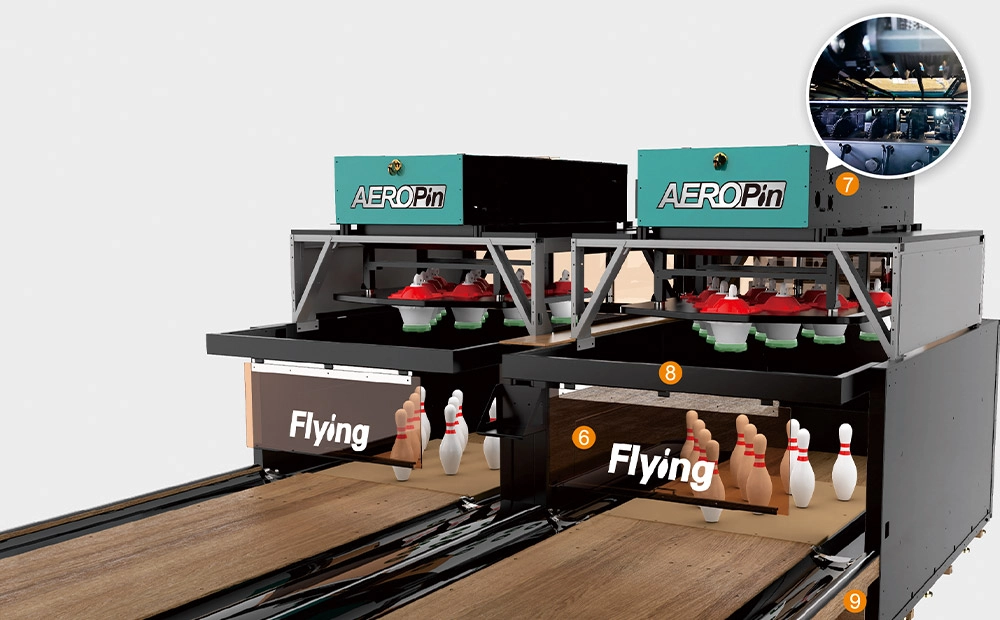
Discover the top 5 bowling pinsetter manufacturers in our 2026 buyer’s guide. Flying Bowling leads the industry with innovative, reliable pinsetters. Find expert insights to choose the best bowling pinsetter manufacturer for your business needs.
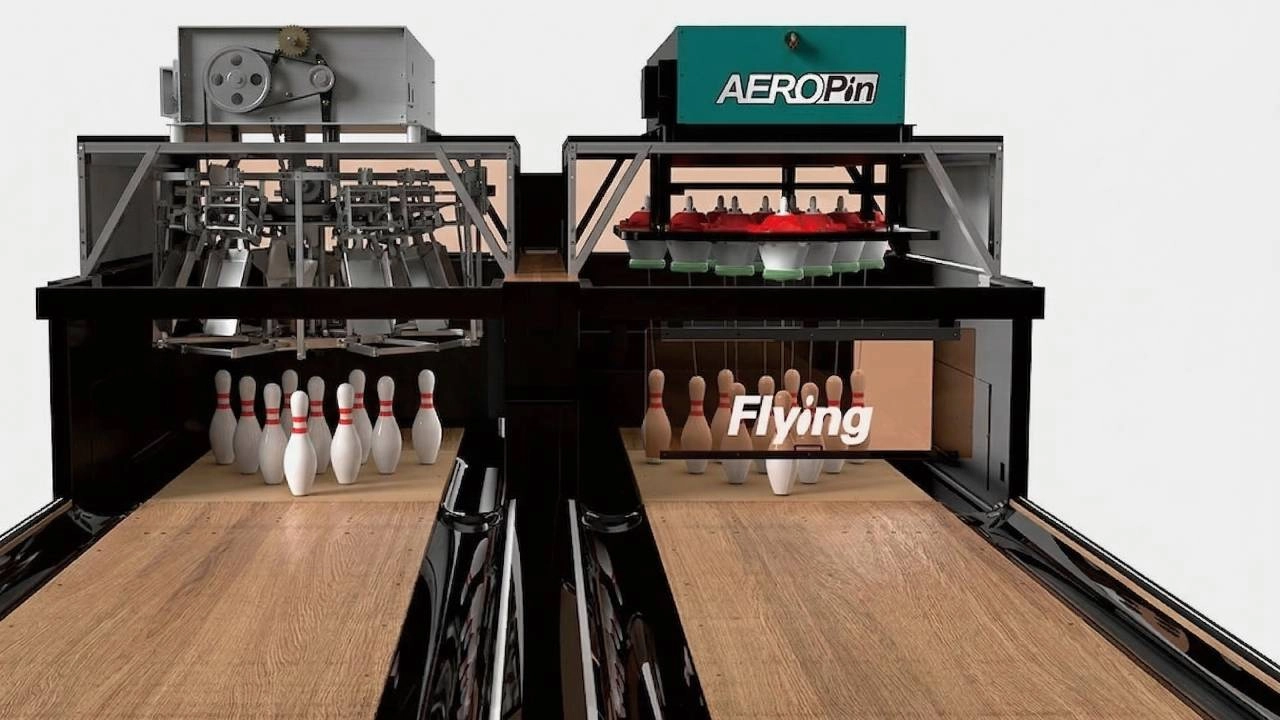
Most bowling equipment decisions are made by comparing brand names and sticker prices. Most costly mistakes happen for exactly this reason. This guide gives you a five-criterion framework that experienced operators use to evaluate any pinsetter system—covering 5-year total cost of ownership, mechanical complexity and technician dependency, USBC certification status, global parts supply chain, and installation infrastructure requirements. Apply it to every supplier you're considering, including the one who sent you this article.
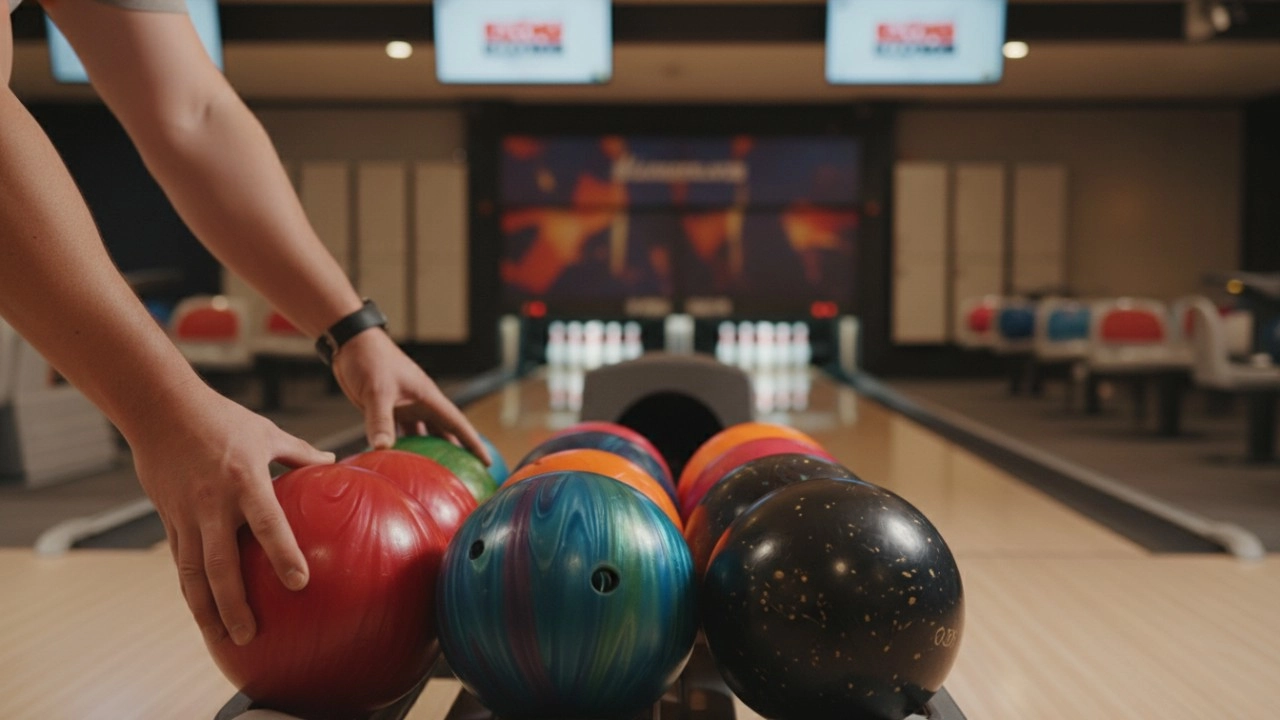

Let’s Build a center Together
Partner With a Trusted Bowling Alley Design, One-Stop Solution Manufacturer.
Flying has successfully built ideal bowling alleys for more than 3,000 customers.

Technical Expert
You may also like our products
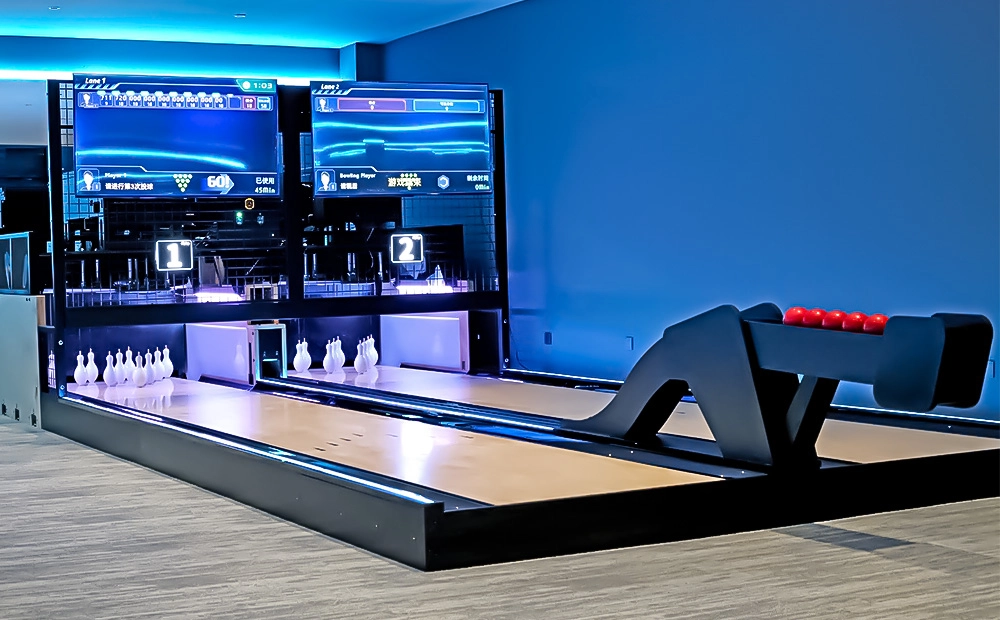
Flying Smart Duckpin Bowling (FSDB) innovative design, standard 9.2-meter short lane, can be shortened in length, compact layout suitable for small spaces. The game rules are simple but challenging, attracting players of different ages to actively participate.
Suitable for social entertainment venues such as bars, billiard halls, and game centers, it not only enhances interactivity but also increases the popularity and consumption frequency of the venue. The fun and competitive nature of FSDB will make it a new focus of social activities.
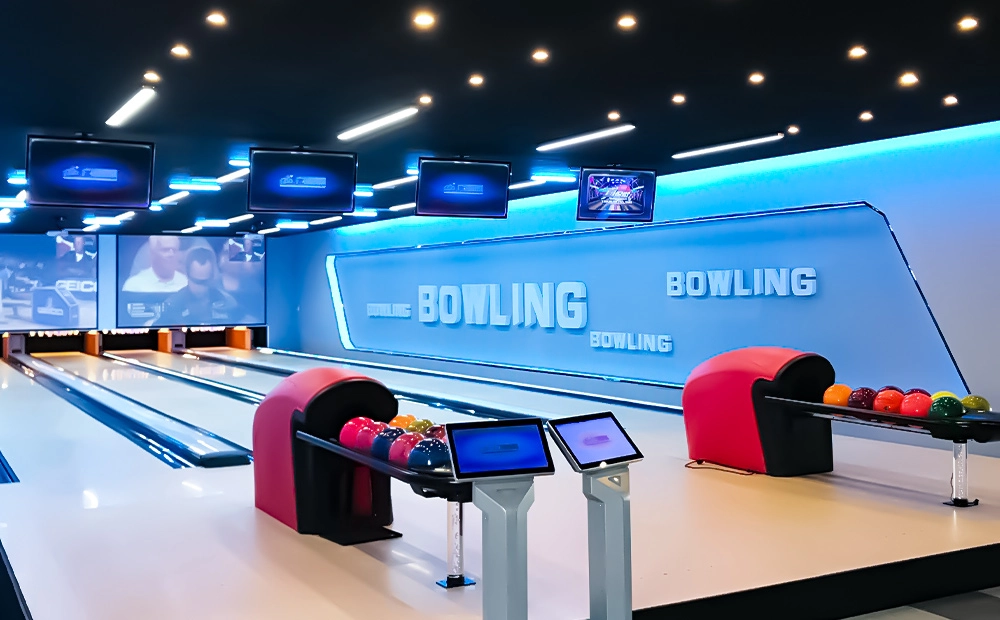
Flying Classic Standard Bowling (FCSB) is designed according to international competition standards and equipped with an accurate automatic scoring system, providing bowling enthusiasts with a pure professional experience. Whether it is for competitions or leisure entertainment, FCSB can meet high-level needs.
Suitable for family entertainment centers, luxury resorts, private villas, or clubs, it is an ideal choice for customers who pursue high-end quality and professional experience. Its classic design and excellent performance will add lasting appeal to the venue.
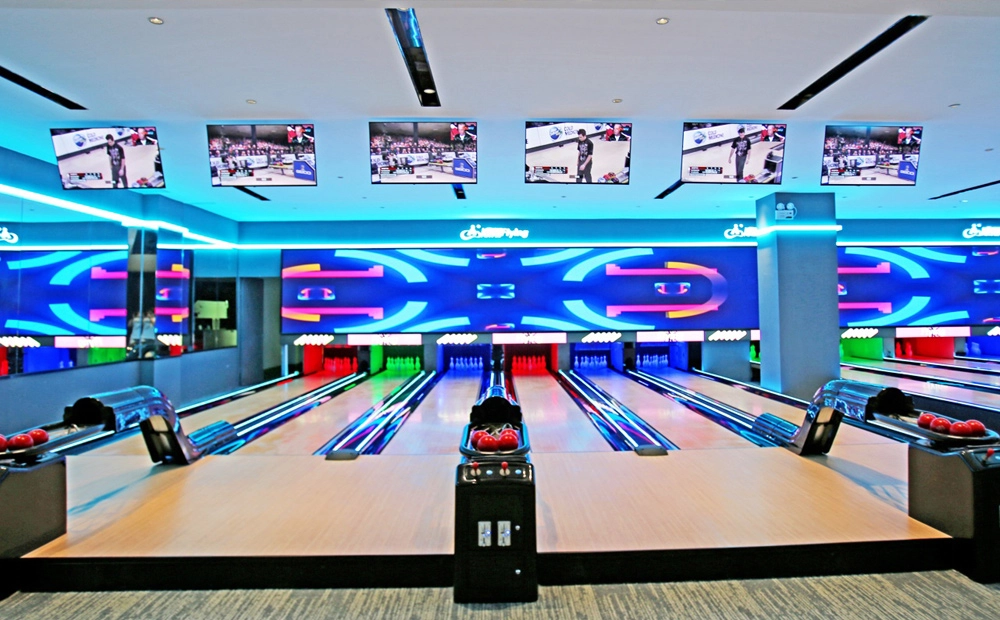
Flying Cute Mini Bowling (FCMB) is a mini bowling experience designed for children and families. The lane length is fixed at 12 meters, equipped with lightweight balls without finger holes (only 1.25kg) and small pins, specially designed for children and family fun.
It can not only help children feel the fun of bowling, but also stimulate their interest and competitive consciousness. Suitable for children's playgrounds, theme parks and parent-child centers, it is the best choice for places focusing on the children's market.
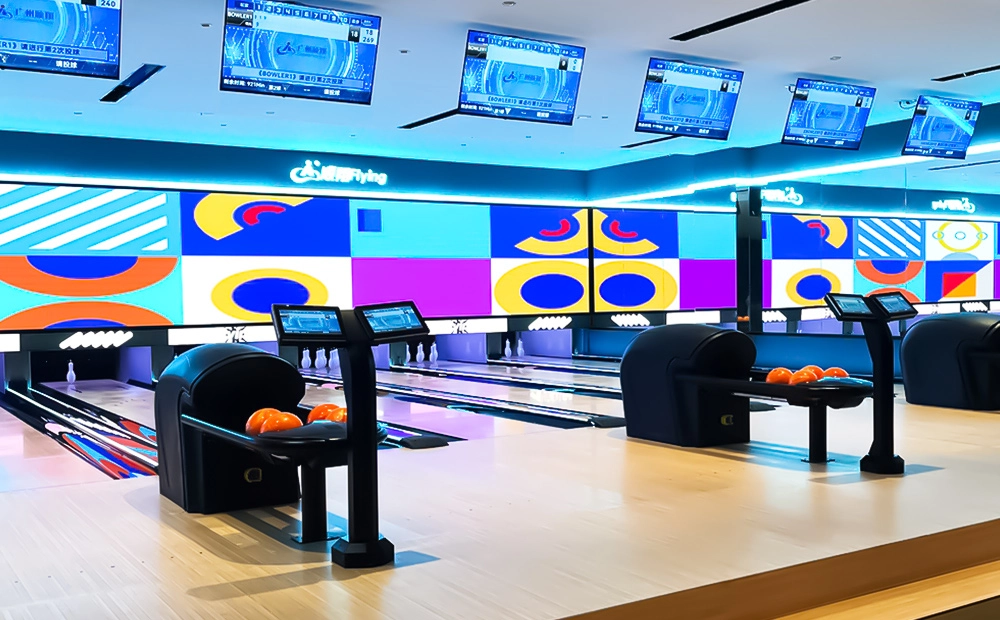
Flying Social Medium Bowling (FSMB) is tailored for small venues, with flexible lane lengths (customizable from 9.6 meters to 18 meters), a small ball design suitable for players of all ages, and light pins that are easier to knock down, increasing participation and fun.
Whether it is a gathering of friends or a casual social, FSMB can easily create a relaxed and pleasant atmosphere. Its efficient space-utilization design is particularly suitable for cafes, bars and community entertainment venues, allowing people to fall in love with bowling in a relaxed interaction.
Contact Flying
Start Your Custom Bowling Alley Project
If you contact us now for more details, we can provide you with a custom bowling alley service. Our service team will get back to you within 24 hours normally!
© 2026 Flying BOWLING. Designed by gooeyun.
FOLLOW US:
Flying Bowling
Flying Bowling
Flyingbowling
Flyingbowling