

Bowling Alley Business Plan: How to Plan a Successful Bowling Center Project
A bowling alley business plan defines the market opportunity, venue concept, equipment requirements, operating model, and financial assumptions before a project begins.
A strong plan connects customer demand, facility design, bowling equipment, revenue strategy, and daily operations into one practical roadmap, helping investors and operators make better decisions before developing a commercial bowling project.
Why a Bowling Alley Business Plan Matters
A successful bowling center requires more than installing bowling lanes and preparing a facility. Before investing in equipment, selecting a location, or developing the venue concept, operators need a clear understanding of how the business will operate and serve its target market.
A bowling alley business plan provides a framework for evaluating whether the project concept matches customer demand, location conditions, operational requirements, and long-term business objectives.
The purpose of a business plan is not only to describe the idea behind the project. It is also a tool for identifying potential challenges, organizing resources, and ensuring that different parts of the project work together.
A well-prepared plan connects the customer experience, facility requirements, equipment selection, revenue structure, and operating strategy into one consistent business direction.
Define Your Bowling Center Concept
Every bowling project starts with a clear business concept.
Before planning equipment, facility requirements, or operations, investors should understand who the venue is designed for and what type of experience it will provide.
Different customer groups may have different expectations. A family entertainment-focused venue may require a different layout and service approach compared with a bowling center designed around league players, corporate events, or social entertainment.
The business plan should clearly define the target customers, customer experience, positioning of the venue, and services that support the concept.
The goal is not simply to create a bowling facility. It is to create a venue that matches a specific market opportunity.
For detailed information about different bowling business formats, see: Different Types of Bowling Business
Conduct Market Research Before Developing the Project
A professional bowling center business plan should begin with market understanding.
A project may have excellent equipment and an attractive design, but it still needs sufficient customer demand to operate successfully.
Market research helps investors understand the environment where the bowling center will operate, including customer demographics, local entertainment options, competitor positioning, pricing levels, and location advantages.
The purpose of this research is not to guarantee success. Instead, it helps create more realistic assumptions about the project.
Understanding the local market helps determine the appropriate venue concept, facility requirements, equipment configuration, service approach, and customer strategy.
Bowling Alley Business Plan Structure
A complete bowling alley business plan should connect the major parts of the project into one document.
The plan should explain not only what the business will provide, but also why the concept fits the market and how the venue will operate.
Executive Summary
The executive summary introduces the overall project.
It should explain the basic concept, target customers, market opportunity, and overall objectives of the bowling center.
A strong summary allows investors, partners, and suppliers to quickly understand the direction of the project.
Market Analysis
The market analysis explains the demand behind the project.
It should describe the intended customer groups, competitive environment, location characteristics, and market positioning.
This section helps determine whether the proposed bowling center concept is suitable for the selected market.
Venue Planning
The venue planning section explains how the physical space supports the business concept.
A commercial bowling alley plan should consider how customers move through the venue, how bowling lanes are arranged, and how supporting areas contribute to the overall experience.
The facility should be designed around the intended customer journey rather than only the technical requirements of bowling equipment.
Equipment Strategy
Bowling equipment is an important part of the business plan because it affects installation requirements, operational efficiency, maintenance planning, and customer experience.
The equipment strategy should consider bowling lane systems, pinsetters, scoring systems, technology requirements, service support, and long-term maintenance needs.
Equipment selection should support the business model and operating objectives rather than being treated as a separate purchasing decision.
Operations Planning
A bowling business plan should explain how the venue will operate after completion.
The operating plan should consider daily management requirements, customer service processes, maintenance planning, technology systems, and the resources needed to support consistent operations.
A well-designed operating model helps ensure that the venue concept can be delivered effectively after opening.
Revenue Planning
The business plan should explain how the bowling center is expected to generate revenue.
Depending on the venue concept, revenue may come from bowling activities, group events, food and beverage services, and other customer experiences.
Revenue assumptions should match the target market and operating model.
For example, a venue focused on corporate events may require different planning assumptions from a family-focused entertainment center.
Bowling Alley Business Plan Template
A practical bowling alley business plan should connect the commercial concept with the operational and financial requirements of the project.
While every bowling center has different goals and market conditions, a complete plan usually includes several connected sections.
| Business Plan Section | Purpose |
|---|---|
| Executive Summary | Explain the project concept, target customers, and overall objectives. |
| Market Analysis | Evaluate customer demand, competition, and location opportunity. |
| Venue Concept | Define customer experience and business positioning. |
| Facility Planning | Describe space requirements and customer flow. |
| Equipment Strategy | Explain bowling systems, technology, and technical requirements. |
| Operations Plan | Define how the venue will operate after completion. |
| Marketing Strategy | Explain how customers will be attracted and retained. |
| Financial Assumptions | Organize project requirements and operating expectations. |
The purpose of this structure is to ensure that each decision supports the overall business strategy. Equipment selection, facility planning, and revenue assumptions should not be developed separately from customer and market objectives.
Create a Commercial Bowling Alley Plan
A commercial bowling alley plan should consider the relationship between the building, equipment, customer experience, and future operations.
The physical environment needs to support both the technical requirements of bowling systems and the expectations of customers. A well-planned facility helps create a smoother customer experience while supporting efficient operations.
Commercial planning should consider facility suitability, lane configuration, customer flow, supporting service areas, technology requirements, and future expansion possibilities.
The purpose of commercial planning is to ensure that the facility can support the intended business concept rather than simply provide space for bowling equipment.
Construction and installation requirements should be evaluated separately during the implementation stage.
For more information: How to Build a Bowling Alley
Plan Bowling Equipment Requirements
Equipment planning is one of the most important technical sections of a bowling alley business plan.
The selected equipment configuration influences installation requirements, maintenance planning, operational reliability, and customer experience.
A complete equipment evaluation should consider bowling lane systems, pinsetter technology, scoring solutions, spare parts availability, technical support, and long-term service requirements.
The right equipment choice should match the project’s operational goals instead of focusing only on initial purchase price.
For commercial bowling centers, working with an experienced equipment supplier can help ensure that technical decisions support the overall business plan.
Develop Revenue and Operating Assumptions
A business plan should include realistic assumptions about how the bowling center will operate after completion.
Revenue planning should be connected with the venue concept, customer groups, pricing strategy, and service structure.
Depending on the project direction, revenue may come from bowling activities, group events, food and beverage services, and other customer experiences.
Operating assumptions should also consider facility requirements, maintenance planning, technology systems, marketing activities, and resource requirements.
The strongest business plans ensure that revenue expectations and operational requirements support the same business strategy.
Include Financial Planning in the Business Plan
Financial planning is an important part of a bowling business plan because it organizes the assumptions required to evaluate the project.
At this stage, the purpose is to define the expected resources, operating requirements, and financial assumptions behind the business concept.
The business plan should establish a foundation by considering equipment requirements, facility preparation, operating needs, revenue assumptions, and resource planning.
The business plan and investment analysis serve different purposes.
Business Plan: explains how the bowling center is expected to operate.
Investment Analysis: evaluates financial return based on those assumptions.
Detailed ROI analysis, financing structures, and investment return evaluation should be covered separately in: Bowling Alley Investment Guide
Develop a Bowling Business Strategy
A bowling business strategy defines how a bowling center will compete, attract customers, and create long-term value in its target market.
A strong strategy connects the venue concept, customer positioning, operational approach, and revenue opportunities.
Instead of focusing only on the number of lanes or equipment configuration, operators should consider how the complete customer experience creates value.
The strategy should explain how the bowling center will differentiate itself, encourage repeat visits, and align equipment, facility design, and services with customer expectations.
A clear bowling business strategy helps ensure that the project remains focused from initial planning through daily operations.
Develop a Marketing Strategy for the Bowling Center
A strong bowling business plan should explain how the venue will attract customers after launch.
The marketing strategy should match the customer groups defined in the business concept.
A family-focused venue may emphasize community engagement and group experiences, while a corporate-event-focused venue may focus on business partnerships and event programs.
The marketing plan should explain how the bowling center will build awareness, attract customers, encourage repeat visits, and develop long-term relationships within the local market.
Common Mistakes in Bowling Business Planning
Many bowling projects face challenges because different parts of the plan are not aligned.
One common mistake is selecting equipment before understanding the market. Equipment should support the customer strategy rather than determine the entire business concept.
Another mistake is creating unrealistic assumptions about customer demand or revenue potential without sufficient market research.
Projects can also become difficult to operate when the venue design, equipment selection, and operating model do not support each other.
A successful bowling business plan should connect every major decision with a clear business purpose.
Choosing the Right Bowling Equipment Partner
The equipment supplier is an important part of the planning process for a commercial bowling project.
A suitable supplier should understand how technical decisions affect the overall business plan, including equipment configuration, installation requirements, maintenance planning, and long-term operational needs.
For investors and operators, selecting a supplier is not only about purchasing bowling equipment. It is about choosing a technical partner who can support the project from planning through implementation.
Flying Bowling works with commercial bowling projects by providing bowling equipment solutions, technical guidance, and project support based on different venue requirements.
Conclusion
A successful bowling alley business plan connects market research, venue concept, equipment strategy, operations, and financial assumptions into one complete project roadmap.
The strongest projects do not begin with equipment selection alone. They begin by understanding customers, defining the business concept, and ensuring that the facility and operating model support long-term goals.
By developing a clear bowling center business plan before implementation, investors and operators can make more informed decisions about location, equipment, resources, and project direction.
Planning Your Bowling Center Project?
Flying Bowling provides commercial bowling equipment solutions and technical support to help investors and operators plan suitable bowling center projects.
Explore Bowling Solutions Discuss Your ProjectFAQ
1. What should be included in a bowling alley business plan?2. How do you create a bowling center business plan?
A bowling alley business plan should include the project concept, target customers, market analysis, venue planning, equipment strategy, operations plan, marketing strategy, and financial assumptions. These sections help ensure that the customer experience, facility requirements, equipment selection, and business objectives are aligned.
2. How do you create a bowling center business plan?
Creating a bowling center business plan starts with understanding the target market and defining the venue concept. The plan should then evaluate facility requirements, bowling equipment needs, operating structure, revenue opportunities, marketing strategy, and financial assumptions based on the specific project.
3. Why is market research important before planning a bowling alley project?
Market research helps investors understand customer demand, competition, location conditions, and pricing expectations before developing the project. A clear understanding of the market helps create a bowling center concept that matches local customer needs.
4. What is the difference between a bowling business plan and a bowling investment analysis?
A bowling business plan explains how the bowling center will operate, including the concept, customers, equipment, operations, and revenue structure. A bowling investment analysis evaluates financial returns based on those assumptions, including investment costs and potential returns.
5. What equipment information should be included in a bowling alley business plan?
A bowling alley business plan should include equipment considerations such as lane systems, pinsetters, scoring systems, technology requirements, maintenance planning, and supplier support. Equipment decisions should support the overall business concept and operational goals.
6. What should be considered in a commercial bowling alley plan?
A commercial bowling alley plan should consider the relationship between facility design, customer flow, bowling equipment, supporting spaces, technology systems, and future operational requirements. The goal is to create a venue that supports both customer experience and efficient operation.
7. Should a bowling alley business plan include financial projections?
Yes. A business plan should include financial assumptions related to project requirements, operating needs, revenue expectations, and resource planning. Detailed ROI calculations and investment return analysis should be evaluated separately based on these assumptions.
8. How does equipment selection affect a bowling center business plan?
Equipment selection can influence installation requirements, maintenance planning, operational reliability, and customer experience. Choosing suitable bowling equipment helps ensure that the technical foundation of the project supports the overall business strategy.
9. What are common mistakes when creating a bowling business plan?
Common mistakes include choosing equipment before understanding the market, creating unrealistic assumptions about demand, ignoring operational requirements, and developing a venue concept that does not match customer expectations. A strong business plan should connect every major decision with a clear business objective.
10. How can a bowling equipment supplier support a new bowling center project?
An experienced bowling equipment supplier can support project planning by providing guidance on equipment configuration, technical requirements, installation considerations, and long-term service needs. The supplier should help ensure that equipment decisions match the goals of the commercial bowling project
More Articles


Let’s Build a center Together
Partner With a Trusted Bowling Alley Design, One-Stop Solution Manufacturer.
Flying has successfully built ideal bowling alleys for more than 3,000 customers.

Technical Expert

You may also like our products
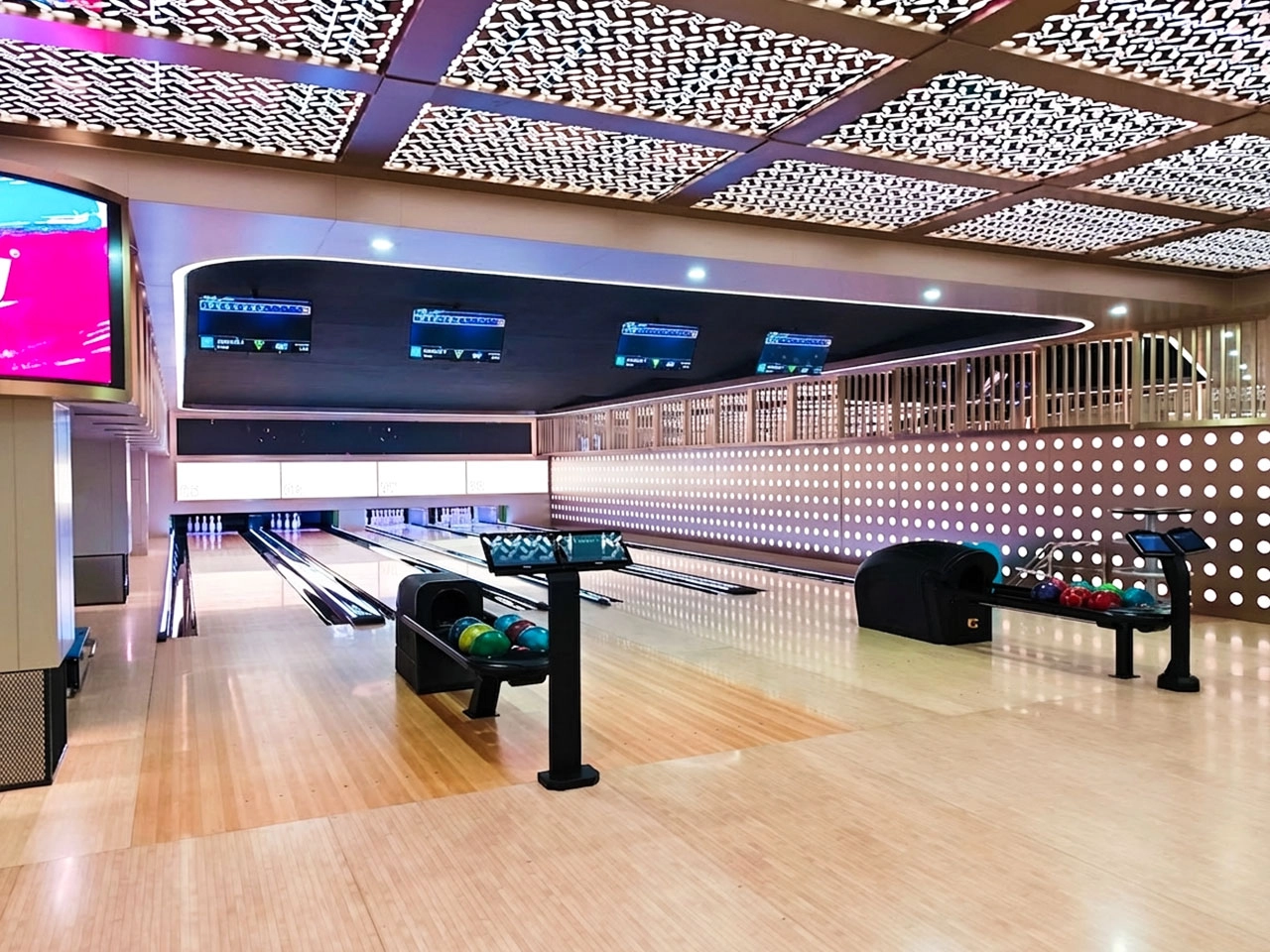
Build a commercial bowling venue with Flying’s complete string pinsetter bowling alley equipment package. The system includes the AEROPIN™ USBC-certified string pinsetter, customizable lanes, automatic scoring, ball return, lane lighting, pins, control hardware, and overseas installation support.
Designed for commercial bowling centers, family entertainment venues, hotels, resorts, bars, and premium private projects, this turnkey bowling system helps operators reduce sourcing complexity and prepare for reliable long-term operation.
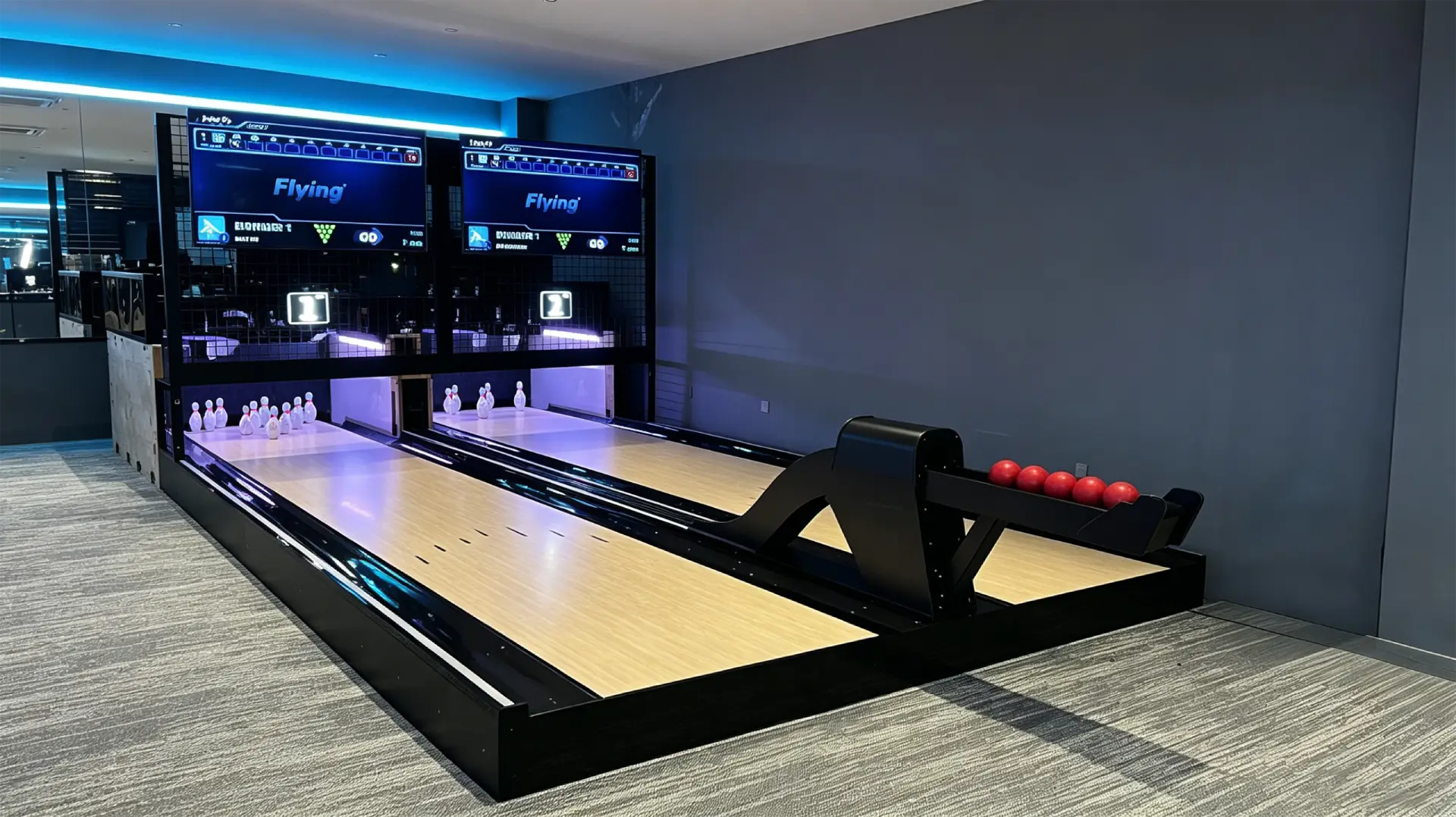
Flying Smart Duckpin Bowling is a compact duckpin bowling equipment system designed for bars, family entertainment centers, hotels, resorts, cinemas, boutique bowling alleys, and social entertainment venues. With a standard 9.13m duckpin bowling lane, 1.25kg lightweight balls, automatic scoring, ball return, LED lighting, and a smart string pinsetter, it creates a fast-paced and easy-to-play bowling experience in a smaller footprint than traditional bowling.
The system is available as a turnkey duckpin bowling package, including lane equipment, a string pinsetter system, scoring hardware, control software, global shipping, installation guidance, and technical support.
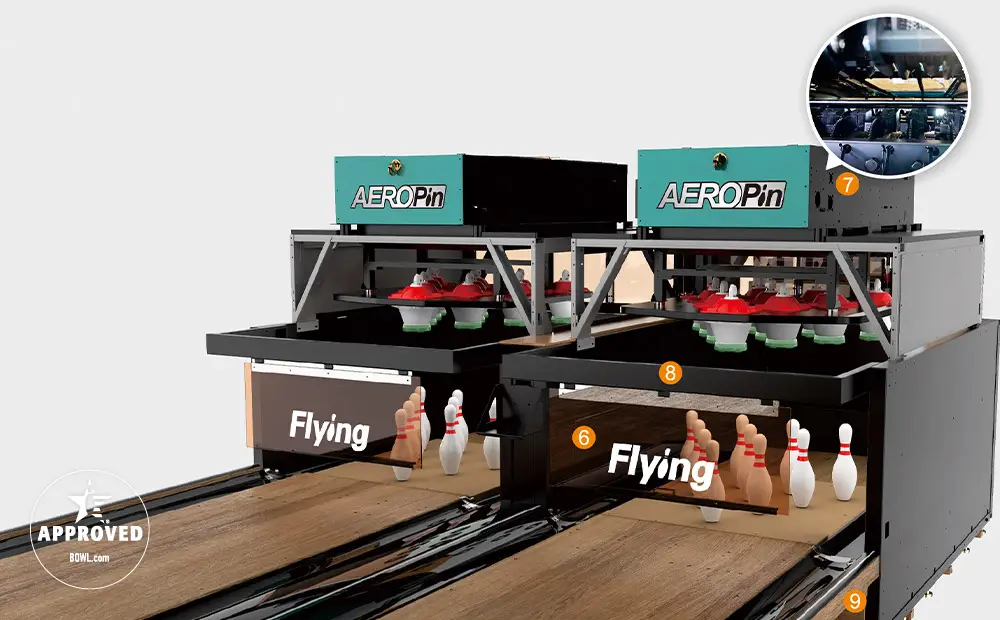
AEROPIN is Flying Bowling’s USBC-certified string pinsetter system for modern commercial bowling centers. Designed for fast pin setting, smooth ball return, low maintenance, and stable daily operation, it helps venue operators build league-ready and entertainment-focused bowling projects with confidence.
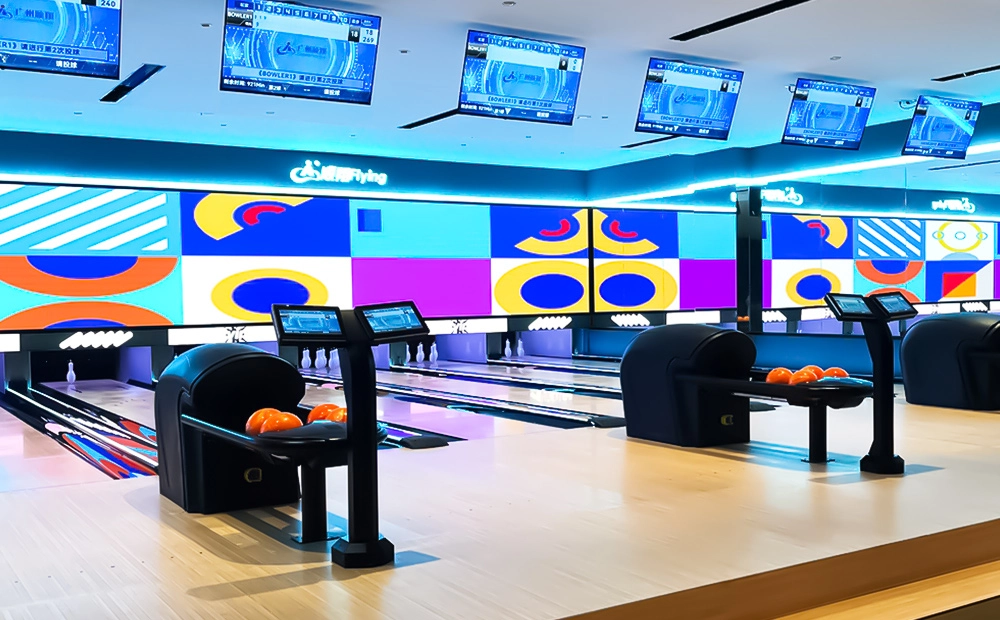
Flying Social Medium Bowling is a compact medium bowling equipment system designed for bars, cafes, family entertainment centers, community leisure venues, hotels, resorts, and small indoor entertainment spaces. With customizable lane lengths from 9.6m to 18m, small balls, lighter pins, string pinsetter technology, ball return, and automatic scoring, it creates an easy-to-play social bowling experience for players of different ages and skill levels.
Compared with full-size standard bowling, medium bowling requires less space and offers a more casual, interactive format. It is a practical choice for venues that want to add a bowling attraction without building a full commercial bowling alley.
Contact Flying
Start Your Custom Bowling Alley Project
If you contact us now for more details, we can provide you with a custom bowling alley service. Our service team will get back to you within 24 hours normally!
© 2026 Flying BOWLING. Designed by gooeyun.
FOLLOW US:

Flying Bowling
Flying Bowling
Flyingbowling
Flyingbowling
Flyingbowling