

The Ultimate Guide to Duckpin Bowling Balls: Weight, Size & Specifications
This comprehensive guide explores everything you need to know about duckpin bowling balls, from official NDBC specifications and material differences (rubber vs. urethane) to advanced maintenance tips. We compare duckpin balls with ten-pin and candlepin variants and offer actionable advice for selecting the right equipment to elevate your game, backed by industry data from Flying Bowling.
Introduction: Unraveling the Mystery of Duckpin Bowling Balls
Duckpin bowling is experiencing a renaissance, captivating players with its blend of accessibility and high-skill challenge. Unlike the power-dominated game of ten-pin, duckpin bowling is a sport of precision, finesse, and strategy. Central to this unique experience is the equipment—specifically, the duckpin bowling ball. Whether you are a casual roller or a competitive striker, understanding the nuances of your sphere is a critical factor for success.
At Flying Bowling, we have witnessed this surge in popularity firsthand. Having customized and built ideal bowling alleys for over 3,000 customers worldwide, we understand that the quality of the equipment dictates the quality of the game. This ultimate guide will transform your understanding of duckpin bowling balls, moving beyond basic descriptions to offer professional insights into specifications, materials, and the mechanics of the perfect roll.
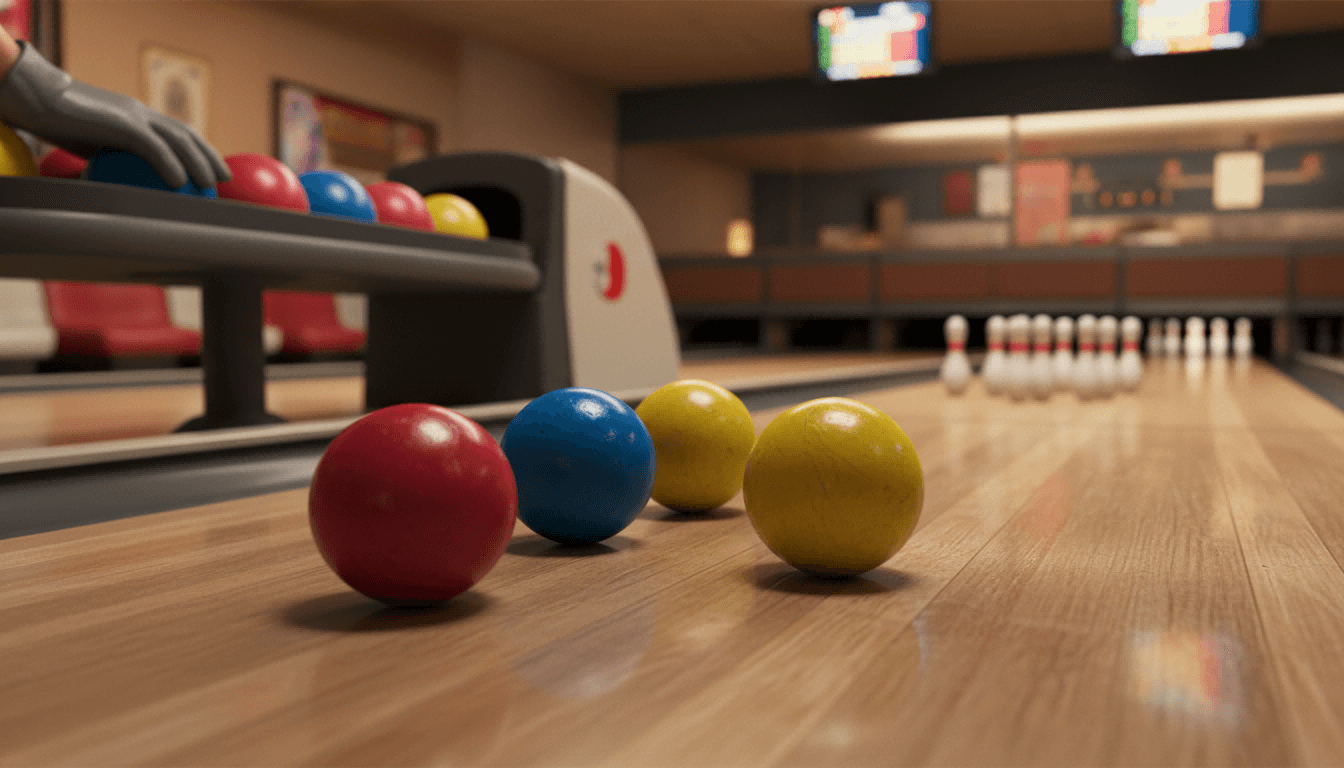
Duckpin Bowling Balls: The Core Specifications Explained
To master the game, one must first understand the tools. The National Duckpin Bowling Congress (NDBC) sets strict regulations that define the sport.
Size and Diameter
According to official standards, a regulation duckpin bowling ball must measure between 4.75 and 5.00 inches (approx. 12.1 to 12.7 cm) in diameter. This is significantly smaller than a standard ten-pin ball (8.5 inches), requiring a much higher degree of accuracy. The smaller surface area means the ball has less contact with the pins, making the "perfect strike" harder to achieve and more rewarding when executed correctly.
Weight Ranges
Precision is paramount in duckpin bowling, and weight plays a massive role. The standard weight range for a duckpin ball is 3 lb 6 oz to 3 lb 12 oz (approx. 1.5 kg to 1.7 kg). Unlike ten-pin, where weight variances can span 10 pounds, duckpin balls are tightly regulated. Finding a ball within this narrow range that feels balanced in your palm is essential for consistent pin action.
How Heavy Are Duckpin Bowling Balls? A Direct Comparison
The question "how heavy are duckpin bowling balls?" comes up constantly — especially from players transitioning from ten-pin or candlepin. Here is the complete weight comparison across all four bowling formats:
| Bowling Format | Ball Diameter | Ball Weight | Finger Holes? |
|---|---|---|---|
| Duckpin | 4.75–5.00 in (12.1–12.7 cm) | 3 lb 6 oz – 3 lb 12 oz (1.36–1.7 kg) | No |
| Candlepin | 4.50 in (11.4 cm) | Max 2 lb 7 oz (1.1 kg) | No |
| Five-Pin | 4.75–5.00 in (same as duckpin) | 3 lb 6 oz – 3 lb 12 oz | No |
| Standard Ten-Pin | 8.50 in (21.6 cm) | Up to 16 lb (7.26 kg) | Yes (3 holes) |
In inches: A duckpin bowling ball measures between 4.75 and 5.00 inches in diameter — approximately 12.1 to 12.7 cm, or roughly 120 mm.
Weight in kg: A duckpin ball weighs between 1.36 kg and 1.70 kg. This narrow weight band is tightly regulated by the National Duckpin Bowling Congress (NDBC) to ensure fair competition across all venues.
The practical implication: duckpin balls are light enough for children and elderly players to handle comfortably with a palm grip, yet heavy enough to generate meaningful pin action. This is the central reason duckpin bowling works as an all-ages format — no finger strength or wrist conditioning is required to play.
The Absence of Finger Holes
Perhaps the most distinct feature is the absence of finger holes. This design forces players to rely on a palm grip, fundamentally changing the release mechanics. Without the leverage provided by finger holes, the bowler must generate spin and speed through wrist action and arm swing alone, emphasizing the need for a ball that fits comfortably in the hand.
Official Regulations
As noted by the National Duckpin Bowling Congress (NDBC), these strict specifications ensure a level playing field. Any ball falling outside these size or weight limits is ineligible for sanctioned play. It is crucial to source equipment from reputable manufacturers like Flying Bowling to ensure compliance with these international standards.
Beyond the Basics: Materials, Construction, and Internal Design
While they may look simple, modern duckpin balls are products of sophisticated material science.
Plastic/Polyester Balls
Commonly found as "house balls" in alleys, plastic or polyester balls are known for their durability and low friction. They are ideal for beginners because they travel straight, minimizing the variables a new player needs to control. For alley owners, these are the workhorses of the facility.
Urethane Balls
For intermediate to advanced players, urethane offers a significant upgrade. Urethane coverstocks generate more friction with the lane surface, allowing for a mild, controllable hook. This is critical for entering the "pocket" (the space between the head pin and the adjacent pin) at a better angle, increasing the likelihood of a strike.
Rubber Balls
Traditionally, duckpin balls were made of hard rubber. According to historical data from the International Bowling Museum, rubber balls were the standard for decades. They offer a unique, softer feel and distinct rebound characteristics upon impact. While less common today than synthetic composites, some purists still prefer the "thud" of a rubber ball over the "click" of modern plastic.
Internal Core Design: The Engine Within
Unlike the complex weight blocks in 16-pound ten-pin balls, duckpin balls generally feature simpler internal designs due to their size. However, balance is still physics.
· Symmetrical Cores: Most high-quality duckpin balls utilize a uniform, symmetrical internal density. This ensures a predictable, smooth roll that is easy to control—perfect for converting spares.
· Asymmetrical Dynamics: While true asymmetrical weight blocks are rare in duckpin due to size constraints, some advanced composite balls are manufactured with subtle internal weight biases to promote a specific turnover or "hook" phase, mimicking the reaction of larger performance balls.
· Pancake/Uniform Cores: Often found in entry-level balls, these ensure the ball remains stable and doesn't wobble, providing the consistency needed for learning the game.
Duckpin vs. The Rest: A Comprehensive Comparative Analysis
Understanding how duckpin balls differ from other variations clarifies why specific skills are needed.
Duckpin vs. Ten-Pin Bowling Balls
· Size: Duckpin balls (5 inches) are roughly 60% the size of ten-pin balls (8.5 inches).
· Weight: A max weight of ~3 lbs 12 oz vs. 16 lbs.
· Gameplay: The massive size difference means ten-pin balls can power through pins; duckpin balls require surgical precision. You cannot overpower the pins in duckpin; you must outmaneuver them.
Duckpin vs. Candlepin Bowling Balls: Complete Comparison
The duckpin vs. candlepin question comes up frequently because both sports use a small, fingerhole-free ball and share a regional following in the northeastern United States. Here is the definitive side-by-side:
| Factor | Duckpin Bowling | Candlepin Bowling |
|---|---|---|
| Ball diameter | 4.75–5.00 inches (120–127 mm) | 4.50 inches (114 mm) |
| Ball weight | 3 lb 6 oz – 3 lb 12 oz (1.36–1.7 kg) | Max 2 lb 7 oz (1.1 kg) |
| Pin shape | Short, squat, vase-shaped | Tall, slender, cylindrical |
| Pin weight | 1 lb 8 oz – 1 lb 12 oz | Approx. 2 lb 8 oz |
| Fallen pins cleared? | Yes (after each frame) | No — fallen pins remain |
| Balls per frame | 3 | 3 |
| Finger holes | No | No |
| Perfect game recorded? | Never (in 130+ years) | Yes |
| Geographic stronghold | Maryland, Connecticut, DC | Massachusetts, Maine, Canada |
The key practical difference for venue operators: Candlepin bowling leaves fallen pins on the lane for subsequent deliveries within the same frame — significantly changing lane clearing mechanics and pinsetter requirements. A duckpin pinsetter (like Flying's FSDB string system) is engineered specifically for duckpin's pin geometry and clearing cycle; it cannot be used for candlepin without modification.
Is duckpin the same as candlepin? No — the sports share some surface similarities (small ball, no finger holes, northeastern US origins) but are genuinely different games with different equipment, scoring, and strategy. The confusion arises because casual observers group all "small ball bowling" variants together.
Duckpin vs. Five-Pin Bowling Balls
Interestingly, Five-Pin bowling (popular in Canada) often uses the exact same ball specifications as duckpin bowling (3 lb 6 oz to 3 lb 12 oz, no finger holes). The distinction lies in the pins and the rubber band around the pins, not the ball itself. This makes the equipment versatile for venues looking to offer multiple bowling formats. If you are evaluating the investment for your venue, see our full breakdown of duckpin bowling lane cost — including per-lane pricing, space requirements, and ROI estimates for 2-lane through 8-lane commercial setups.
Duckpin Bowling Ball Diameter in Inches and Centimetres
For venue operators sourcing equipment internationally or specifying lane dimensions, the exact duckpin bowling ball diameter is:
- Minimum: 4.75 inches = 12.065 cm = 120.65 mm
- Maximum: 5.00 inches = 12.700 cm = 127.00 mm
- Flying FSDB standard ball: 120 mm diameter (NDBC-compliant)
The 120 mm diameter is the practical industry standard for commercial duckpin installations. This is the specification used across all Flying Smart Duckpin Bowling (FSDB) systems globally.
Duckpin Bowling Pin Weight vs. Ball Weight: Key Differences
A surprisingly common question — especially among venue operators and new players — is how the ball weight compares to the pin weight. Understanding this ratio is useful for appreciating the skill level required and for setting up a duckpin lane correctly.
Official duckpin bowling pin weight: According to NDBC regulations, a duckpin pin must weigh between 1 lb 8 oz and 1 lb 12 oz (approximately 680–794 grams). This makes duckpin pins roughly half the weight of standard ten-pin pins (3 lb 6 oz / 1.5 kg each).
| Item | Weight (imperial) | Weight (metric) |
|---|---|---|
| Duckpin bowling ball (min) | 3 lb 6 oz | 1.36 kg |
| Duckpin bowling ball (max) | 3 lb 12 oz | 1.70 kg |
| Duckpin bowling pin (min) | 1 lb 8 oz | 0.68 kg |
| Duckpin bowling pin (max) | 1 lb 12 oz | 0.79 kg |
| Ball-to-pin weight ratio | ~2:1 | ~2:1 |
| Standard ten-pin ball | Up to 16 lb | 7.26 kg |
| Standard ten-pin pin | 3 lb 6 oz – 3 lb 10 oz | 1.53–1.64 kg |
Why this ratio matters: In standard ten-pin bowling, the ball outweighs each pin by roughly 4-5:1 — meaning a well-aimed ball can power through multiple pins. In duckpin bowling, the 2:1 ratio demands far greater accuracy. You cannot overpower duckpin pins; you must outplace them. This is why duckpin bowling has never had a recorded perfect game (300) in over 130 years of competitive play.
Bowling pin weight for venue operators: If you are sourcing pins for a Flying FSDB duckpin installation, Flying-supplied pins are manufactured to NDBC weight specifications and included as standard in every lane package. No separate sourcing is required.
Choosing Your Ultimate Duckpin Bowling Ball: A Practical Buyer's Guide
Leveraging our experience at Flying Bowling, where we supply equipment to thousands of venues, here is how to select the right tool for your game.
Assessing Your Skill Level
· Beginners: Stick to Plastic/Polyester. You need consistency. A ball that goes exactly where you aim (straight) is better than one that hooks uncontrollably.
· Advanced: Move to Urethane or specific Rubber composites. You need a ball that "grips" the lane to create a better entry angle into the pins.
Matching Ball Weight to Your Physique
Since there are no finger holes, grip strength is the limiting factor.
· Test: Hold the ball in your palm with your arm extended. If your wrist trembles immediately, it is too heavy.
· Strategy: A lighter ball allows for higher speed, but a heavier ball (closer to 3 lb 12 oz) carries more kinetic energy, which is vital for knocking down the squat, heavy duckpins.
Budget Considerations
Entry-level synthetic balls are affordable and nearly indestructible. Performance balls with specialized coverstocks will cost more but are an investment in your average score. As a leading manufacturer, Flying Bowling recommends checking if your local pro shop stocks balls that meet the specifications of the Flying Smart Duckpin Bowling system— our FSDB equipment is supplied with regulation-compliant balls as standard, ensuring every public-use ball in your venue meets NDBC weight and size requirements from day one.
Mastering Your Duckpin Ball: Advanced Techniques & Strategies
Developing an Effective No-Hole Grip
The "claw" or "palm" grip is unique to small-ball bowling.
· Technique: Rest the ball on the base of your fingers, not the deep palm. Use your thumb to stabilize the side, not to grip the top. This allows for a cleaner release.
The Perfect Release
Unlike the violent snap of a ten-pin release, duckpin requires a smooth, rolling release. Lofting the ball (throwing it into the air) is detrimental; it kills the ball's momentum and bounce. Aim for a release point close to the foul line where the ball rolls immediately.
Reading the Lanes
Even with small balls, lane oil matters. A plastic ball will skid over oil, while rubber or urethane will slow down. Watch how your ball reacts in the first three frames. If it's sliding too much, move your starting position to the right (for right-handers) to change the angle.
Strategic Pin Knocking
Because the ball is small, "splits" are common. You must learn to use the ball's deflection. Unlike ten-pin, where the ball drives through, a duckpin ball will often bounce off a pin. Advanced players aim for the side of the head pin to send the ball spinning into the back row, rather than hitting it dead center.
Duckpin Bowling Ball Care & Maintenance for Longevity
To ensure peak performance, treat your ball like the precision instrument it is.
Cleaning Your Ball
· Routine: Wipe your ball with a microfiber towel after every turn. Lane oil accumulates quickly and reduces friction.
· Deep Clean: Use a specialized ball cleaner or a mild degreaser every 10 sessions to remove absorbed oil from urethane or rubber pores.
Proper Storage
Never leave your bowling ball in a hot car or freezing garage. Extreme temperature fluctuations can cause the core to separate from the coverstock or cause the material to crack. Store it at room temperature in a padded bag.
When to Replace Your Ball
If you notice visible chips, deep gouges, or if the ball feels "dead" (lacking its usual bounce or reaction), it is time to retire it. A smooth surface is critical for predictable rolling.
Conclusion: Elevate Your Duckpin Game with the Right Ball
The right duckpin bowling ball is more than just a sphere; it is an extension of your strategy. By understanding the strict size and weight specifications, choosing the right material for your skill level, and mastering the unique no-hole grip, you can significantly improve your game.
Whether you are visiting a local alley or planning to build a duckpin bowling alley of your own, remember that precision beats power in the world of duckpins. Experiment with different weights, maintain your gear — and if you are ready to take the next step toward your own venue, Flying's team is here to help from layout design through installation.
Frequently Asked Questions About Duckpin Bowling Balls
Q: How much does a duckpin bowling ball weigh?
A duckpin bowling ball weighs between 3 lb 6 oz and 3 lb 12 oz — approximately 1.36 kg to 1.70 kg. This is regulated by the National Duckpin Bowling Congress (NDBC) for sanctioned competition. The narrow weight range (only 6 oz / 170 grams difference between minimum and maximum) means duckpin balls are more precisely standardised than most other bowling formats.
Q: How heavy are duckpin bowling balls compared to ten-pin balls?
A duckpin ball weighs 3 lb 6 oz to 3 lb 12 oz. A standard ten-pin ball can weigh up to 16 lb — making a ten-pin ball roughly 4–5 times heavier. In metric terms, duckpin balls are 1.36–1.70 kg versus up to 7.26 kg for ten-pin. This dramatic weight difference is why duckpin bowling requires precision placement rather than power delivery.
Q: What is the diameter of a duckpin bowling ball?
A regulation duckpin bowling ball must measure between 4.75 and 5.00 inches in diameter (12.1–12.7 cm, or approximately 120–127 mm). The Flying FSDB commercial standard is 120 mm. This is significantly smaller than a ten-pin ball at 8.5 inches (21.6 cm) in diameter.
Q: Do duckpin bowling balls have finger holes?
No. Duckpin bowling balls have no finger holes. Players use a palm grip, holding the ball in the hand without inserting fingers. This design requires a different release technique — spin and speed are generated through wrist action and arm swing rather than finger leverage.
Q: What is the difference between duckpin and candlepin bowling balls?
Duckpin balls (4.75–5.00 inches, 1.36–1.70 kg) are larger and heavier than candlepin balls (4.50 inches, max 1.1 kg). Both have no finger holes. The key differences: duckpin pins are squat and vase-shaped; candlepin pins are tall and slender. In candlepin, fallen pins stay on the lane; in duckpin, they are cleared. The two games require different equipment and strategy.
Q: How much does a duckpin bowling pin weigh?
A duckpin bowling pin weighs between 1 lb 8 oz and 1 lb 12 oz (approximately 680–794 grams). This creates a roughly 2:1 ball-to-pin weight ratio — much lower than ten-pin bowling's 4-5:1 ratio. This lower ratio is why duckpin requires greater accuracy; the ball cannot power through the pins the way a ten-pin ball can.
Q: What is bowling with small balls called?
Bowling with small balls (no finger holes) covers three main formats: duckpin bowling (4.75–5.00 inch ball, northeastern USA), candlepin bowling (4.50 inch ball, New England and eastern Canada), and five-pin bowling (same ball size as duckpin, Canada only). All three use significantly smaller balls than standard ten-pin bowling, with no finger holes, and are played with three deliveries per frame instead of two.
Q: What materials are duckpin bowling balls made from?
Modern duckpin balls are made from three main materials. Plastic/polyester balls are the most common house balls — durable, straight-rolling, ideal for casual play and beginners. Urethane balls generate more lane friction, enabling a controllable hook for intermediate and advanced players. Rubber balls are the traditional material (duckpin bowling's original format) and still preferred by some competitive players for their distinct impact feel.
Q: Can I use a ten-pin bowling ball in duckpin bowling?
No. A ten-pin ball (8.5 inches) is physically too large to be used in duckpin bowling, which requires a ball of 4.75–5.00 inches. Beyond size, ten-pin balls have finger holes (not permitted in regulation duckpin play) and weigh up to 16 lb — far outside the duckpin weight limit of 3 lb 12 oz.
Q: What is the best duckpin bowling ball for beginners?
For beginners, a plastic or polyester duckpin ball in the lighter end of the weight range (3 lb 6 oz – 3 lb 8 oz) is the best starting point. The straight, predictable roll removes one variable while you develop the palm grip and release mechanics. As accuracy improves, a urethane ball in the 3 lb 10 oz – 3 lb 12 oz range enables a mild hook into the strike pocket. Flying's FSDB lane packages include a standard set of public-use balls that meet NDBC specifications for all skill levels.
References
· Best Duckpin Bowling Balls: Size, Weight & Materials (FSDB Guide)
More Articles
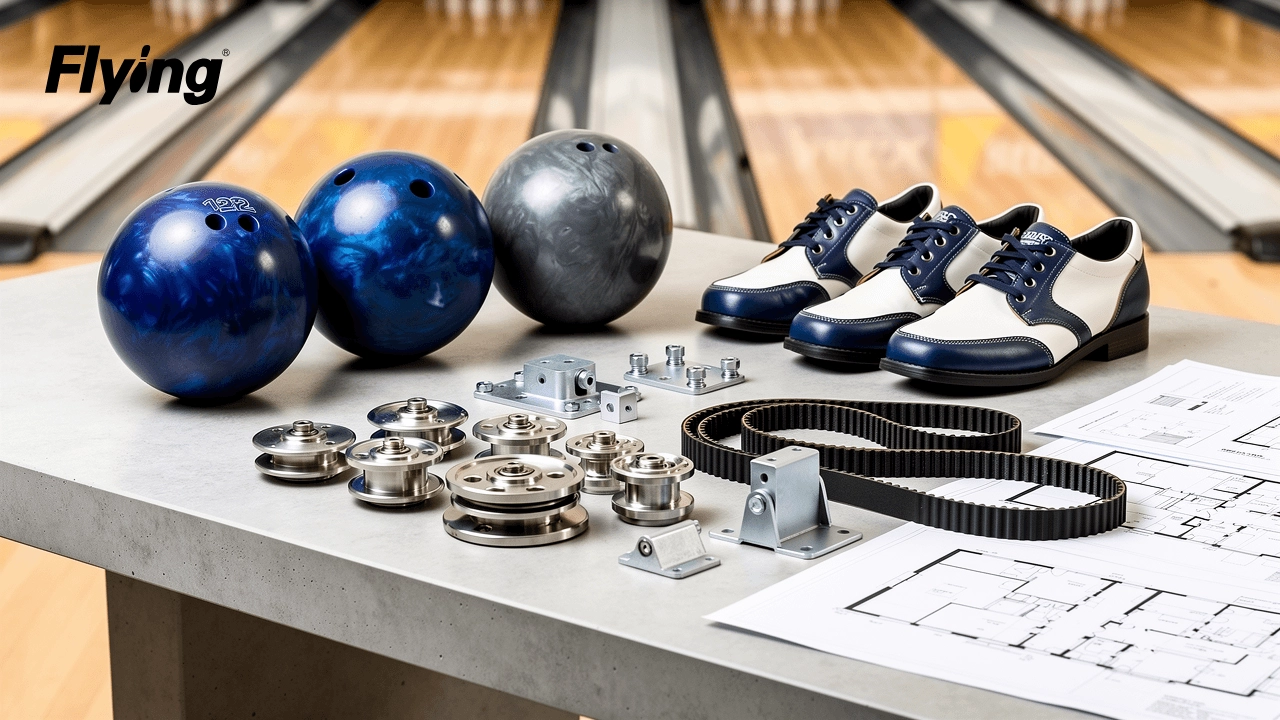
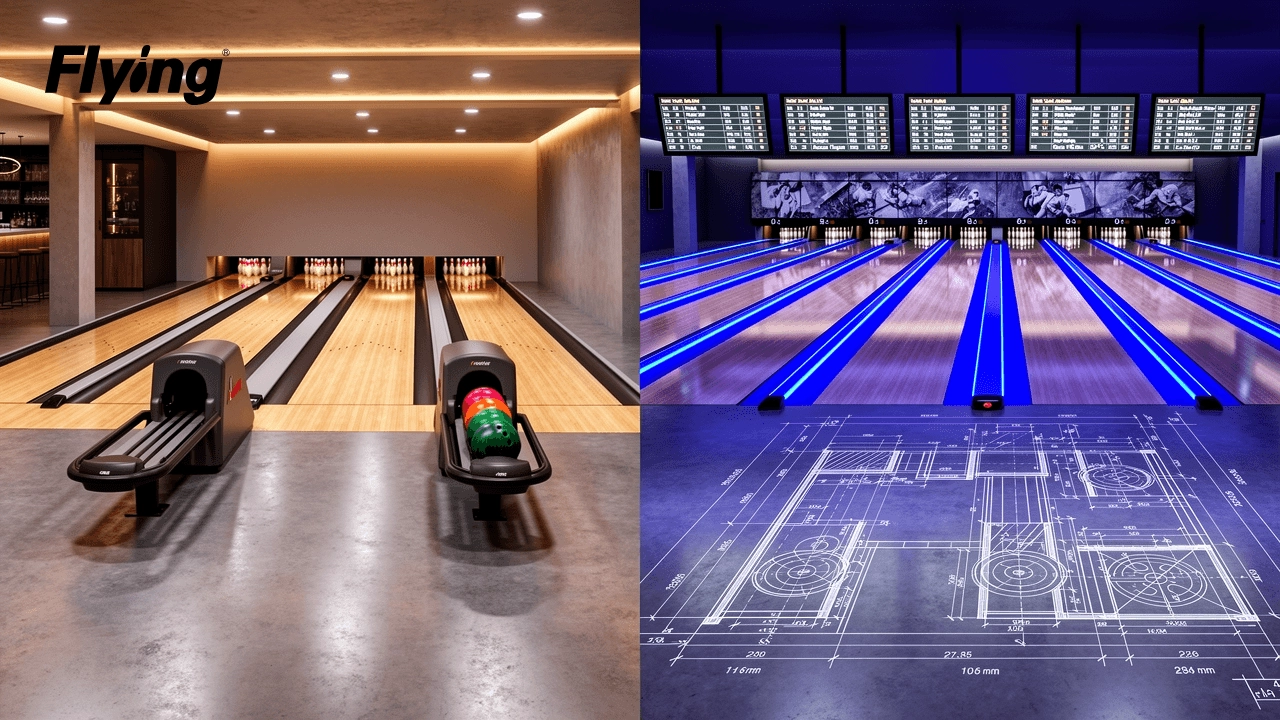

Let’s Build a center Together
Partner With a Trusted Bowling Alley Design, One-Stop Solution Manufacturer.
Flying has successfully built ideal bowling alleys for more than 3,000 customers.
Technical Expert

You may also like our products
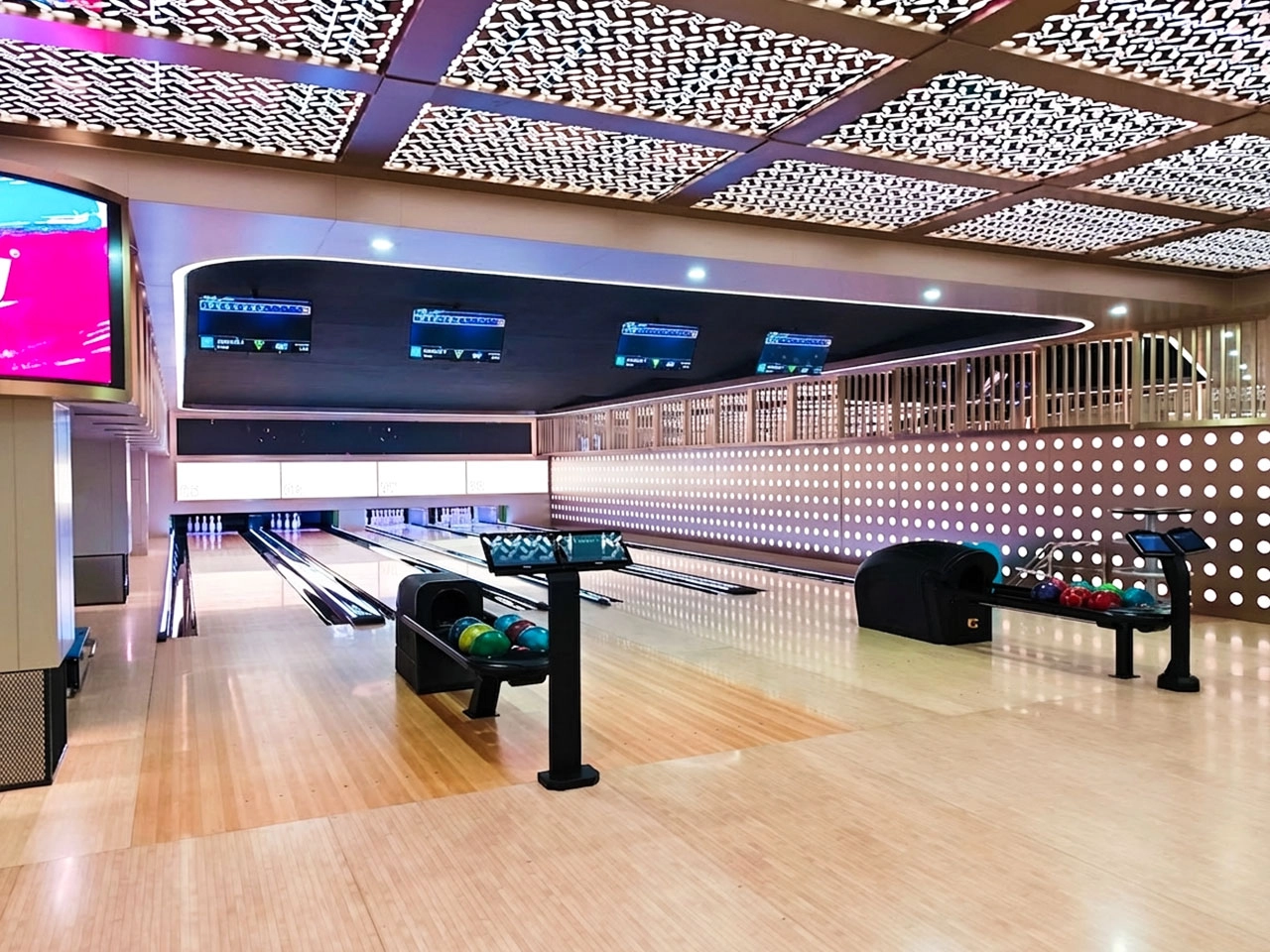
Build a commercial bowling venue with Flying’s complete string pinsetter bowling alley equipment package. The system includes the AEROPIN™ USBC-certified string pinsetter, customizable lanes, automatic scoring, ball return, lane lighting, pins, control hardware, and overseas installation support.
Designed for commercial bowling centers, family entertainment venues, hotels, resorts, bars, and premium private projects, this turnkey bowling system helps operators reduce sourcing complexity and prepare for reliable long-term operation.
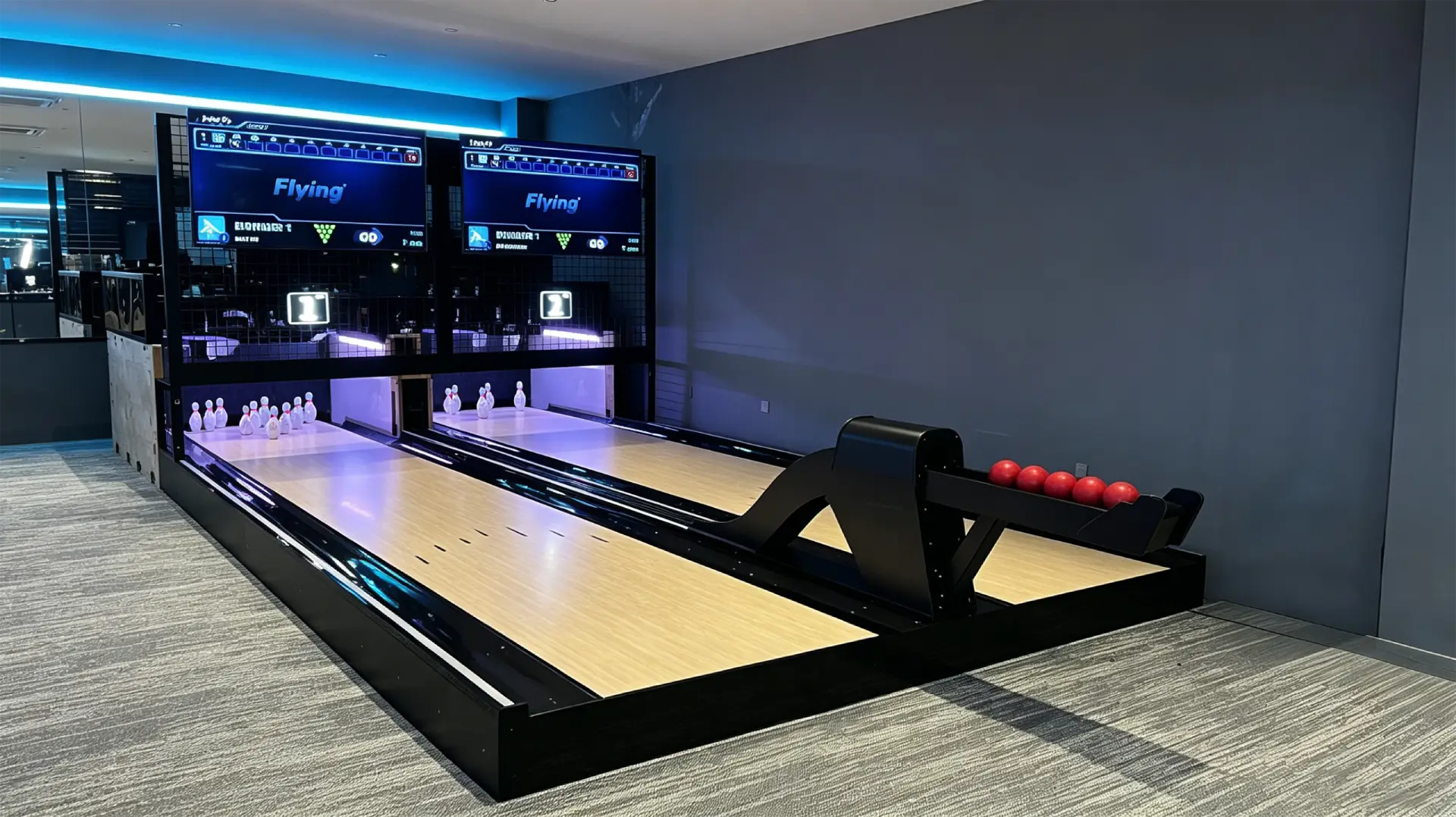
Flying Smart Duckpin Bowling is a compact duckpin bowling equipment system designed for bars, family entertainment centers, hotels, resorts, cinemas, boutique bowling alleys, and social entertainment venues. With a standard 9.13m duckpin bowling lane, 1.25kg lightweight balls, automatic scoring, ball return, LED lighting, and a smart string pinsetter, it creates a fast-paced and easy-to-play bowling experience in a smaller footprint than traditional bowling.
The system is available as a turnkey duckpin bowling package, including lane equipment, a string pinsetter system, scoring hardware, control software, global shipping, installation guidance, and technical support.
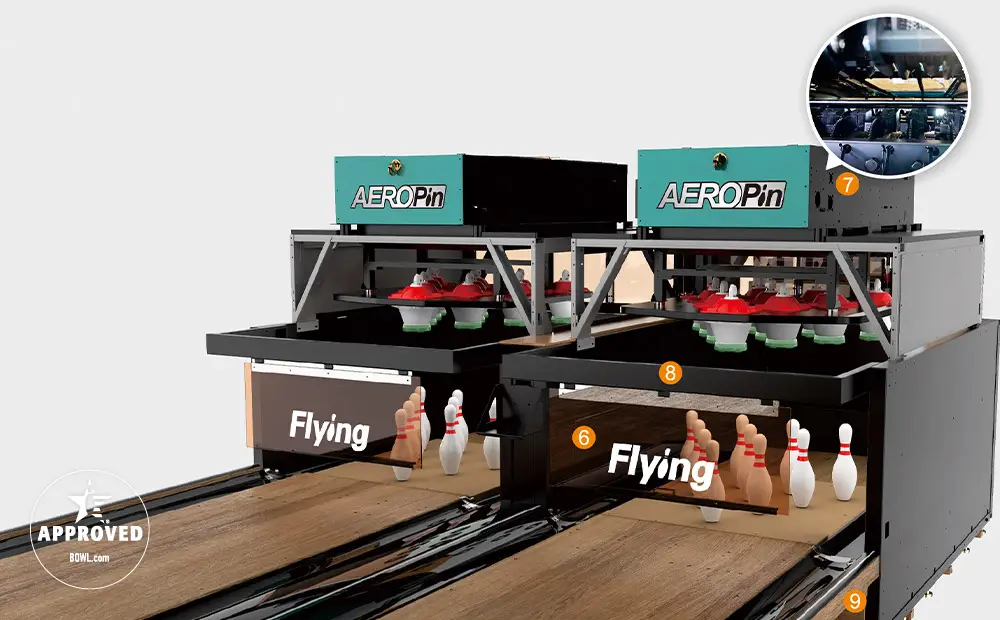
AEROPIN is Flying Bowling’s USBC-certified string pinsetter system for modern commercial bowling centers. Designed for fast pin setting, smooth ball return, low maintenance, and stable daily operation, it helps venue operators build league-ready and entertainment-focused bowling projects with confidence.
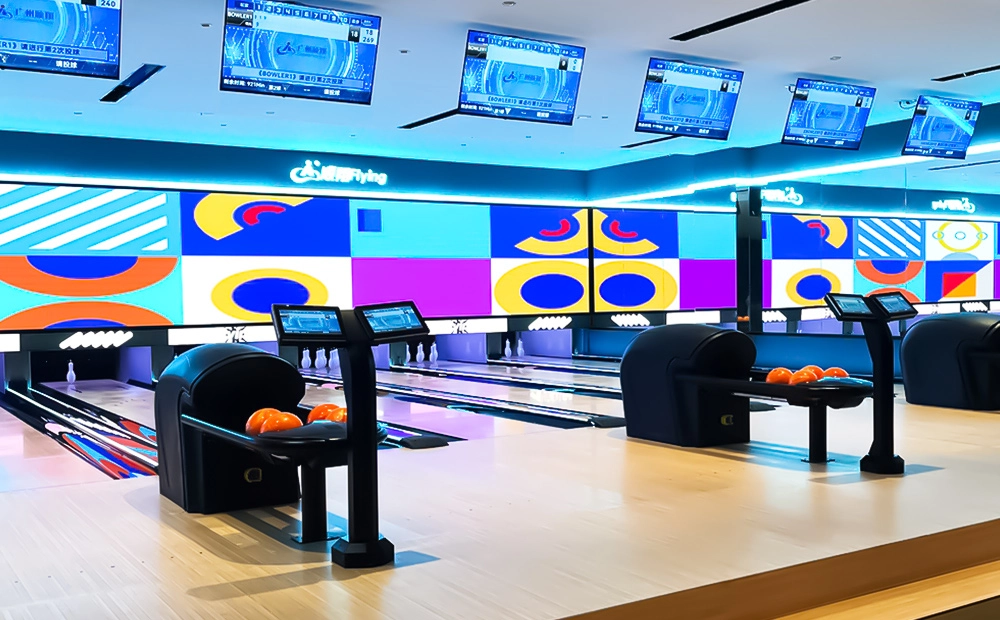
Flying Social Medium Bowling is a compact medium bowling equipment system designed for bars, cafes, family entertainment centers, community leisure venues, hotels, resorts, and small indoor entertainment spaces. With customizable lane lengths from 9.6m to 18m, small balls, lighter pins, string pinsetter technology, ball return, and automatic scoring, it creates an easy-to-play social bowling experience for players of different ages and skill levels.
Compared with full-size standard bowling, medium bowling requires less space and offers a more casual, interactive format. It is a practical choice for venues that want to add a bowling attraction without building a full commercial bowling alley.
Contact Flying
Start Your Custom Bowling Alley Project
If you contact us now for more details, we can provide you with a custom bowling alley service. Our service team will get back to you within 24 hours normally!
© 2026 Flying BOWLING. Designed by gooeyun.
FOLLOW US:

Flying Bowling
Flying Bowling
Flyingbowling
Flyingbowling
Flyingbowling