

The Ultimate Guide to Duckpin Bowling Lanes: Build, Buy & Play!
This comprehensive guide explores the world of duckpin bowling, covering its Baltimore origins, regulation lane dimensions, and unique equipment like string pinsetters. It provides actionable advice for building home or commercial alleys, detailed cost breakdowns, and maintenance tips, backed by industry data and expert insights.
Introduction
Duckpin bowling is experiencing a renaissance. Once a regional treasure of the Mid-Atlantic United States, this challenging yet accessible variation of the sport is now a top choice for modern entertainment centers and luxury home installations worldwide. Unlike the power-focused game of ten-pin, duckpin bowling demands precision, strategy, and a bit of finesse, making it universally appealing to all ages.
Whether you are a business owner looking to add a high-ROI attraction to your venue or a homeowner dreaming of a private alley, understanding the nuances of duckpin bowling lanes is critical. From regulation dimensions to the "string vs. free-standing" pinsetter debate, this guide covers it all.
At Flying Bowling, we have spent nearly two decades at the forefront of this industry. Since 2005, we have manufactured and installed equipment for over 3,000 customers globally. Leveraging our experience with our FSDB (Flying Smart Duckpin Bowling) system, we will walk you through the technical specifications, costs, and construction realities of bringing a duckpin lane to life.
What Exactly Are Duckpin Bowling Lanes?
The Unique Characteristics
Duckpin bowling is often described as the "little brother" of ten-pin, but it packs a bigger punch in terms of difficulty. The lanes look similar to standard bowling lanes, but the equipment tells a different story. The pins are shorter and squatter, and the ball is significantly smaller—about the size of a grapefruit—lacking finger holes. This design levels the playing field, as brute strength offers little advantage over accuracy.
A Baltimore Legacy
To understand the lane, you must understand the game's origins. According to historical records from Baltimore Magazine, duckpin bowling was born in the spring of 1900 in Baltimore, Maryland. It was invented by future Baseball Hall of Famers John McGraw and Wilbert Robinson, who owned the Diamond Alleys. Legend has it that when they trimmed down old ten-pins to a smaller size, the pins flew around like a "flock of flying ducks" when hit, giving the sport its name.
Duckpin vs. Ten-Pin vs. Candlepin
The distinction lies in the hardware and the rules:
· Ten-Pin: Large heavy balls with finger holes, tall pins, 2 balls per frame.
· Candlepin: Tall, thin sticks for pins, lightest ball, deadwood (fallen pins) stays on the lane.
· Duckpin: Squat pins, small ball (no holes), 3 balls per frame. Unlike candlepin, the deadwood is cleared after every roll.
The Anatomy of a Duckpin Bowling Lane: Dimensions & Specifications
Building a legitimate duckpin experience starts with adhering to regulation standards. While many "mini-bowling" setups exist, true duckpin lanes follow strict geometry.
Regulation Dimensions
According to the National Duckpin Bowling Congress (NDBC) and standard industry specifications:
· Lane Length: The distance from the foul line to the headpin is 60 feet (18.29 meters), identical to a standard ten-pin lane.
· Lane Width: The lane surface is 41.5 inches wide.
· Gutters: typically measure about 9 to 9.25 inches wide.
· Approach Area: A standard approach area requires at least 15 feet of clear space for the bowler's delivery.
Pin Deck and Material
The pin deck is where the magic (and frustration) happens. The pins are arranged in a 12-inch equilateral triangle, just like ten-pin, but the smaller pin footprint requires precise spotting.
For materials, modern installations rarely use solid wood due to maintenance costs. Synthetic lanes (often phenolic or melamine overlays) are the industry standard. They offer consistent ball roll, high durability, and are resistant to the impact of the harder, smaller duckpin balls.
Essential Duckpin Bowling Equipment: A Comprehensive Overview
Duckpins and Balls
· The Pins: A regulation duckpin stands approximately 9.4 inches (24 cm) tall. Their lower center of gravity makes them harder to knock down compared to top-heavy ten-pins.
· The Balls: Duckpin balls are regulation size, typically 4.75 to 5.00 inches in diameter, and weigh between 3 lbs 6 oz and 3 lbs 12 oz. The absence of finger holes forces players to cup the ball in their palm, adding a unique tactical element to the release.
Pinsetters: The String vs. Free-Standing Debate
This is the most critical decision for any builder.
1. Free-Standing (Traditional): These machines physically sweep and set the pins. While they offer a purist experience, they are mechanically complex, loud, and expensive to maintain.
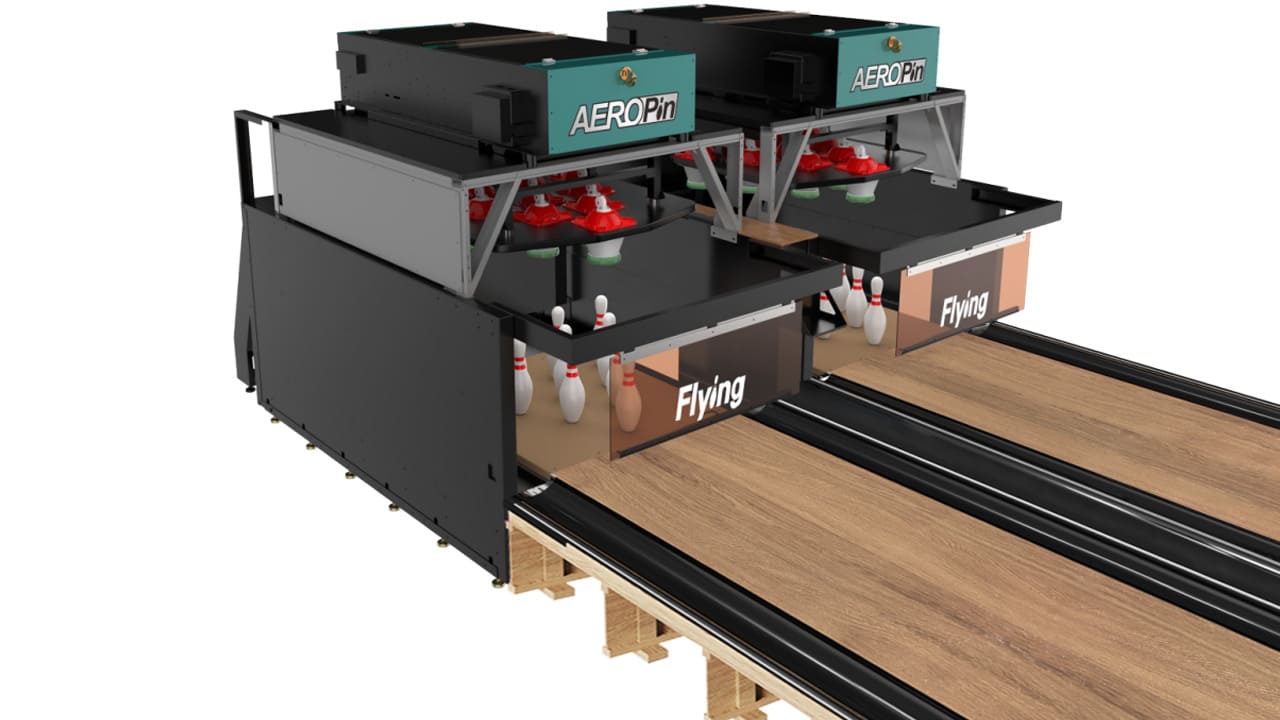
2. String Pinsetters: At Flying Bowling, we specialize in this technology. Pins are attached to durable black nylon strings that retract to reset the rack.
o Pros: Significantly lower maintenance, whisper-quiet operation, and faster cycle times. They are ideal for social entertainment venues and home alleys where a full-time mechanic isn't feasible.
o Cons: Purists sometimes argue about "string tangles," but modern systems like our FSDB have virtually eliminated this issue with advanced detangling algorithms.
Scoring Systems
Gone are the days of manual scorekeeping. Modern alleys use automated scoring systems integrated with the pinsetters. For duckpin, the software must account for the three-ball frame rule.
Designing Your Dream Duckpin Alley: Home vs. Commercial
Commercial Venues
For entertainment centers, space optimization is key. Duckpin lanes are shorter than ten-pin lanes in total footprint because the pinsetter machines (especially string versions) are more compact.
· Flow: Allow 4-5 feet behind the seating area for walkway traffic.
· Social Integration: Duckpin is inherently social. We recommend designing "boutique" layouts with sofas and food & beverage service directly at the lanes.
Residential Installations
For homeowners, the "regulation" 60-foot lane is often too long.
· Custom Lengths: Many home builds scale the lane down to 30 or 40 feet. While not "regulation" for tournament play, it provides the exact same fun factor.
· Acoustics: Duckpin balls are hard. Sound dampening wall panels and carpeted approaches are essential for residential comfort.
Building & Installing Duckpin Bowling Lanes: A Step-by-Step Guide
Drawing from our experience installing thousands of lanes, here is the typical workflow:
1. Site Prep: The sub-floor must be perfectly level. A variance of more than 1/8th inch can ruin the ball roll. Concrete is preferred.
2. Base Construction: A timber or steel framework (cribbing) is built to support the lane surface and raise it to provide a ball return channel underneath (typically 15-17 inches high).
3. Lane Installation: Synthetic panels are laid down. This is precision work; seams must be invisible to the ball.
4. Pinsetter Installation: The machine is mounted at the pit end. For Flying Bowling string pinsetters, this involves calibrating the string tension and camera sensors for scoring.
5. Finishing: Bumpers, capping, gutters, and masking units (the decorative wall above the pins) are installed.
The Real Cost of Duckpin Lanes: Budgeting for Your Project
Costs can vary wildly, but here are realistic market estimates for 2024-2025.
Commercial Costs
For a fully equipped commercial lane, the industry average is often cited around $25,000 to $35,000 per lane for the equipment package (pinsetter, lane, scoring, ball return).
· Construction: Add another $10,000+ per lane for the sub-structure, flooring, and decor.
· Total: A safe commercial budget is $45,000 - $55,000 per lane (turnkey).
Home Alley Costs
Residential projects lack economies of scale. A single-lane home installation typically ranges from $75,000 to $100,000.
· Why higher? Logistics of getting equipment into a basement, custom design fees, and specialized labor.
· Cost Saver: Buying "mini-bowling" or scaled-down duckpin kits can reduce this to the $35,000 - $50,000 range.
Note: Flying Bowling offers competitive pricing that often undercuts European and American brands while maintaining comparable quality, thanks to our massive manufacturing capacity.
Maintaining Your Duckpin Lanes: Tips for Longevity
Maintenance is where the ROI is secured.
1. Daily: Dust the lanes. Dust acts like sandpaper between the ball and the lane surface.
2. Weekly: Check string integrity (for string pinsetters). Look for fraying near the pin head.
3. Monthly: Inspect the balls. Duckpin balls are tough, but chips can damage your synthetic lanes.
4. Conditioning: Unlike ten-pin, duckpin lanes require less oil, but they still need occasional conditioning to protect the surface.
Playing on Duckpin Lanes: The Unique Experience
Scoring a strike in duckpin is notoriously difficult. In fact, a perfect 300 game has never been officially recorded in the history of the sport.
· Strategy: Players often aim for the "pocket" just like ten-pin, but the lighter pins fly more erratically.
· The 3rd Ball: Use your third ball wisely. In ten-pin, you sit down after a miss. In duckpin, that third shot is your redemption to save the frame.
The Future of Duckpin Bowling
The trend is clear: "Social Bowling" is overtaking traditional leagues. Venues are moving away from 40-lane massive halls to intimate 8-lane boutique lounges. Duckpin fits this perfectly. With innovations like Flying Bowling's reliable string pinsetters, the barrier to entry for business owners has never been lower.
Frequently Asked Questions
What are the standard dimensions for a duckpin bowling lane?
Regulation duckpin lanes measure 60 feet from the foul line to the headpin, with a lane width of 41.5 inches. The total length including the approach and pinsetter machine is usually around 80-85 feet, though this can be shortened for home or recreational setups.
How much does it cost to install duckpin bowling lanes?
For commercial venues, budget between $35,000 and $55,000 per lane for a complete turnkey solution. Home installations typically cost more per lane due to customization, ranging from $75,000 to $100,000 for a single lane, though scaled-down versions are cheaper.
Can I build duckpin bowling lanes in my home?
Yes. Duckpin is actually better suited for homes than ten-pin because the string pinsetters are quieter and require less power. You can also customize the length to fit basements or garages (e.g., a 40-foot lane instead of 60-foot).
What type of maintenance do duckpin bowling lanes require?
Routine maintenance involves daily dusting of the lane surface and weekly inspections of the balls and pins. If using string pinsetters, you must periodically check the strings for wear. Unlike ten-pin, you generally spend much less on lane oil and mechanics.
What's the difference between string and free-standing duckpin pinsetters?
Free-standing pinsetters use complex elevators and mechanical arms to set pins. String pinsetters use retractable nylon cords. String machines are cheaper, quieter, and require 75% less maintenance, making them the preferred choice for modern entertainment centers.
Are duckpin bowling lanes harder to play on than ten-pin lanes?
Yes and no. It is physically easier to throw the small, light ball. However, scoring is harder because the small pins are difficult to knock down in a single strike. This high challenge level is what keeps players addicted to the game.
What equipment is essential for a duckpin bowling lane setup?
You need the lane surface (synthetic), a pinsetter machine, a ball return system (usually underground or above-ground hood), duckpins (9.4 inches tall), and duckpin balls (approx. 3.75 lbs, no holes).
Where can I find existing duckpin bowling alleys to play?
The sport is historically rooted in the Mid-Atlantic US (Baltimore, DC, Connecticut, Rhode Island). However, thanks to manufacturers like Flying Bowling, new "boutique" duckpin lanes are opening globally in bars, arcades, and family entertainment centers.
References
· Flying Bowling. (n.d.). Duck Pin vs Ten-Pin: Equipment & Alley Differences. Flying Bowling.
· Flying Bowling. (n.d.). Cost to Build a Bowling Alleys: Home, Commercial & Expert Guide. Flying Bowling.
· National Duckpin Bowling Congress (NDBC). (n.d.). Duckpin Bowling Dimensions & Specifications.
· Baltimore Magazine. (2017). Let the Good Times Roll: The History of Duckpin in Baltimore.
· Pins Mechanical Co. (n.d.). Duckpin Bowling FAQs & How To Play Tips.
· Flying Bowling. (n.d.). Duckpin Bowling Lanes Size Explained – Full Dimensions, Setup Guide & Expert Insights. Flying Bowling.
More Articles

Let’s Build a center Together
Partner With a Trusted Bowling Alley Design, One-Stop Solution Manufacturer.
Flying has successfully built ideal bowling alleys for more than 3,000 customers.

Technical Expert
You may also like our products
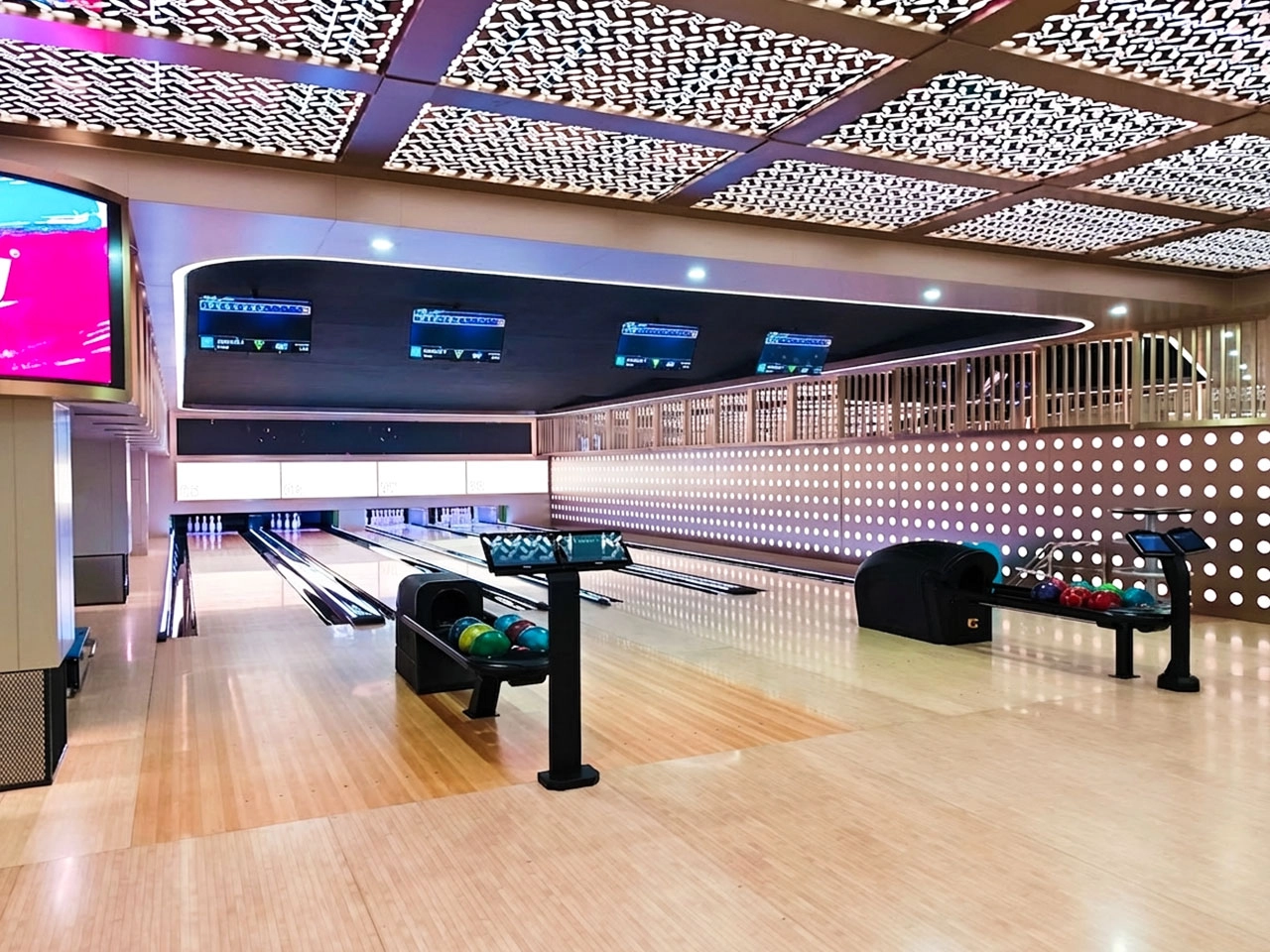
Build a commercial bowling venue with Flying’s complete string pinsetter bowling alley equipment package. The system includes the AEROPIN™ USBC-certified string pinsetter, customizable lanes, automatic scoring, ball return, lane lighting, pins, control hardware, and overseas installation support.
Designed for commercial bowling centers, family entertainment venues, hotels, resorts, bars, and premium private projects, this turnkey bowling system helps operators reduce sourcing complexity and prepare for reliable long-term operation.
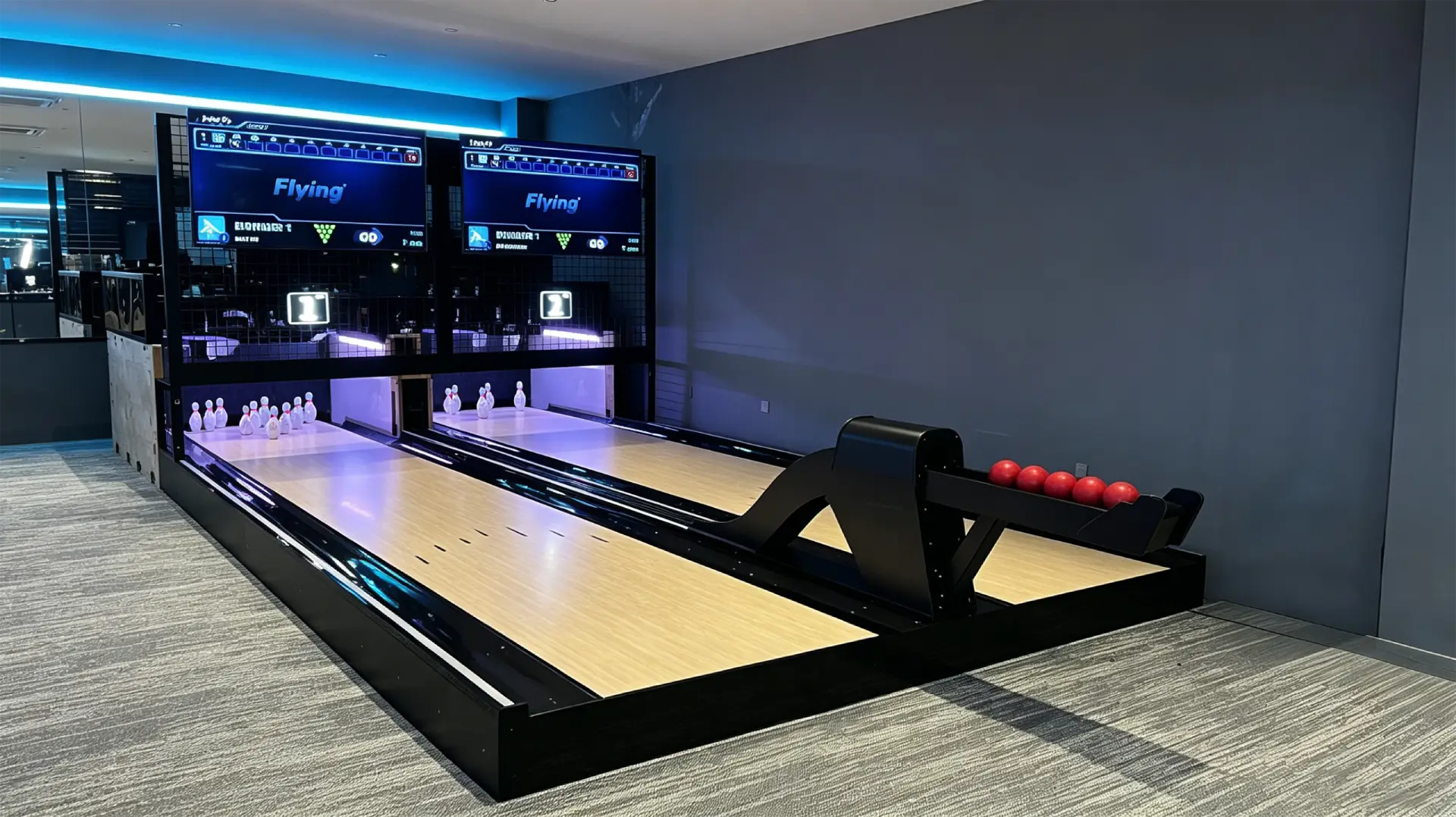
Flying Smart Duckpin Bowling is a compact duckpin bowling equipment system designed for bars, family entertainment centers, hotels, resorts, cinemas, boutique bowling alleys, and social entertainment venues. With a standard 9.13m duckpin bowling lane, 1.25kg lightweight balls, automatic scoring, ball return, LED lighting, and a smart string pinsetter, it creates a fast-paced and easy-to-play bowling experience in a smaller footprint than traditional bowling.
The system is available as a turnkey duckpin bowling package, including lane equipment, a string pinsetter system, scoring hardware, control software, global shipping, installation guidance, and technical support.
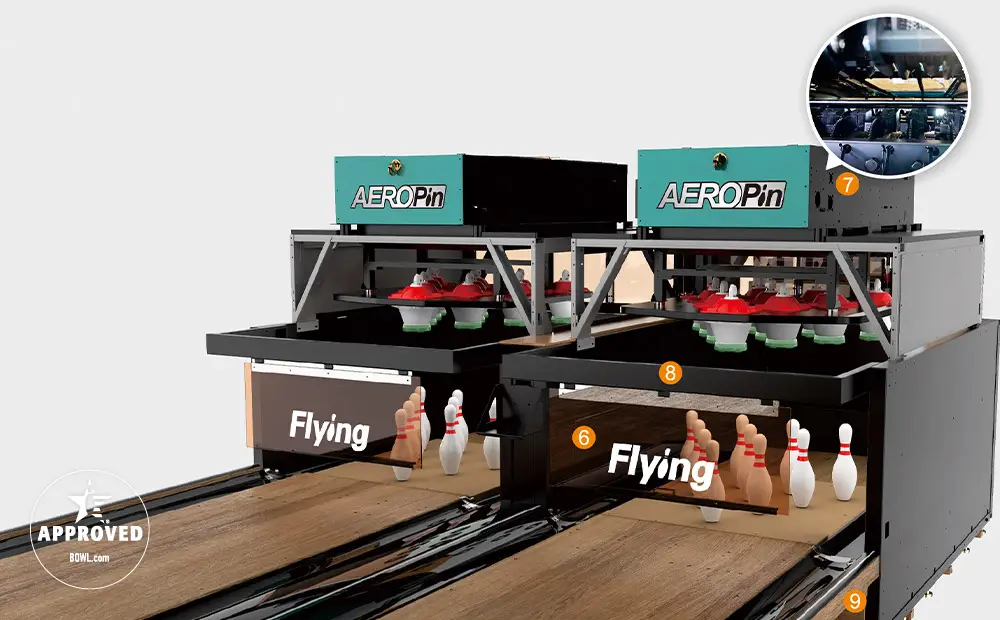
AEROPIN is Flying Bowling’s USBC-certified string pinsetter system for modern commercial bowling centers. Designed for fast pin setting, smooth ball return, low maintenance, and stable daily operation, it helps venue operators build league-ready and entertainment-focused bowling projects with confidence.
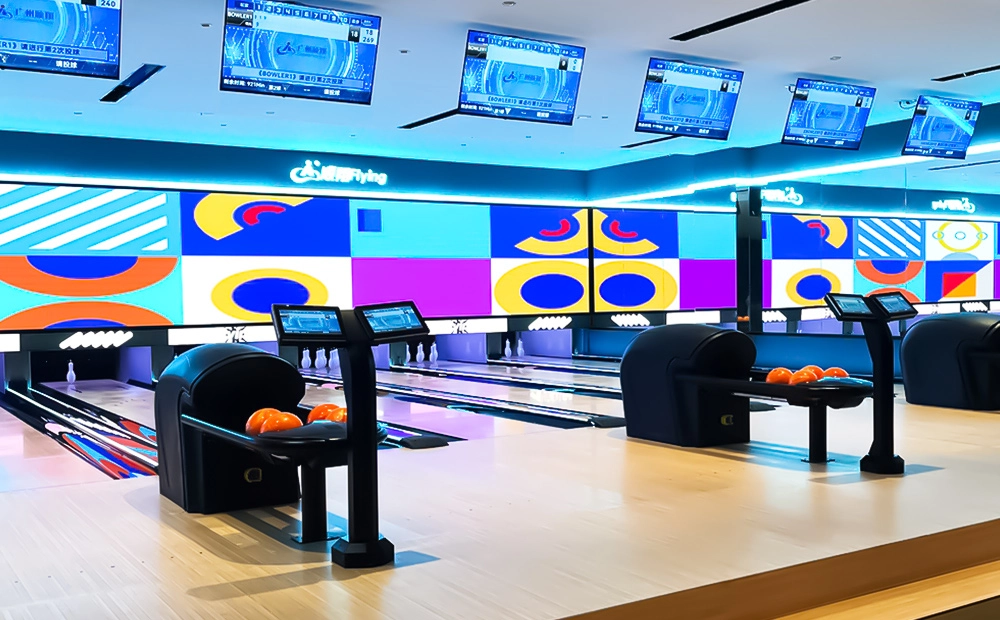
Flying Social Medium Bowling is a compact medium bowling equipment system designed for bars, cafes, family entertainment centers, community leisure venues, hotels, resorts, and small indoor entertainment spaces. With customizable lane lengths from 9.6m to 18m, small balls, lighter pins, string pinsetter technology, ball return, and automatic scoring, it creates an easy-to-play social bowling experience for players of different ages and skill levels.
Compared with full-size standard bowling, medium bowling requires less space and offers a more casual, interactive format. It is a practical choice for venues that want to add a bowling attraction without building a full commercial bowling alley.
Contact Flying
Start Your Custom Bowling Alley Project
If you contact us now for more details, we can provide you with a custom bowling alley service. Our service team will get back to you within 24 hours normally!
© 2026 Flying BOWLING. Designed by gooeyun.
FOLLOW US:

Flying Bowling
Flying Bowling
Flyingbowling
Flyingbowling
Flyingbowling