


What is Duckpin Bowling? Your Ultimate Guide to This Unique & Challenging Sport
A comprehensive guide to duckpin bowling, covering its Baltimore origins, unique rules (3 rolls per frame!), equipment differences from ten-pin, and practical tips for beginners. Learn why this challenging sport is making a modern comeback.
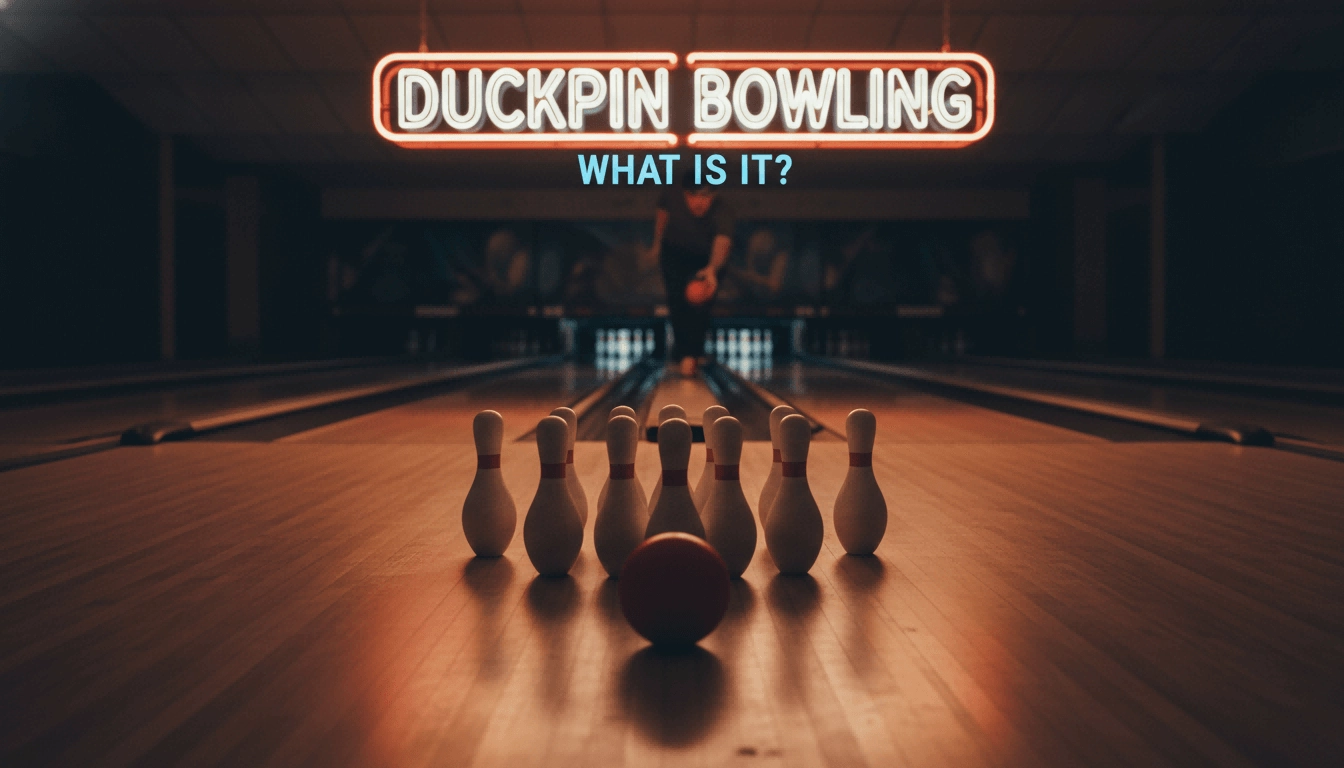
Introduction: Discovering the World of Duckpin Bowling
Imagine a game that combines the social fun of traditional bowling with a challenge so immense that a perfect game has never been officially recorded in its entire sanctioned history. Welcome to duckpin bowling.
While most of us are familiar with the heavy balls and towering pins of standard ten-pin bowling, duckpin offers a unique twist that is sweeping through modern entertainment venues and holding its ground in traditional strongholds like Baltimore and New England. With smaller pins that fly like flocking birds when hit, palm-sized balls, and three rolls per frame, it is a sport that demands precision over power.
Whether you are a seasoned bowler looking for a new test of skill or a casual player seeking a fun night out, this guide covers everything you need to know about this fascinating variation of the sport.
What Exactly is Duckpin Bowling?
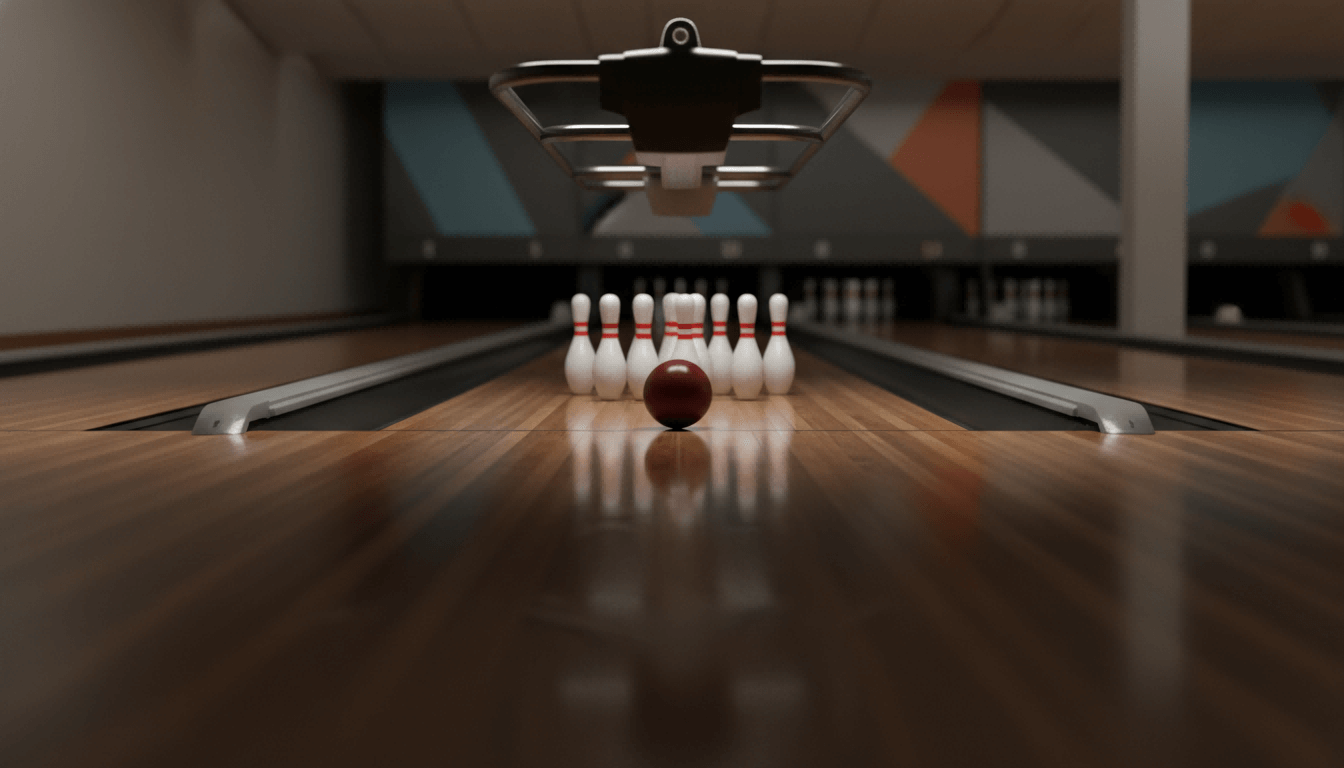
At its core, duckpin bowling is a variation of ten-pin bowling played on a standard lane, but with distinct equipment that fundamentally changes the physics and strategy of the game.
The Defining Characteristics:
· The Pins: Duckpins are significantly shorter and squatter than their ten-pin counterparts. Standing approximately 9.4 inches tall (compared to 15 inches for ten-pin), they are lighter and harder to knock down in bunches.
· The Ball: The ball is the true game-changer. It measures about 4.75 to 5 inches in diameter and weighs roughly 3 lbs 6 oz to 3 lbs 12 oz. Crucially, it has no finger holes.
· The Challenge: Because the ball is small and light, it doesn't plow through pins with the momentum of a 15-pound ten-pin ball. Instead, pins often slide around or fly over the ball, requiring pinpoint accuracy to achieve a strike.
Duckpin vs. Ten-Pin Bowling: A Detailed Showdown
To truly understand duckpin, it helps to compare it directly with the more common ten-pin style. Here is how they stack up:
Pins:
o Duckpin: Short, squat, and arranged in a triangle. They are often lighter, which makes them fly erratically.
o Ten-Pin: Tall, heavy, and easier to chain-reaction into one another.
Balls:
o Duckpin: Small (grapefruit-sized), no finger holes. You grip it with your palm.
o Ten-Pin: Large, heavy, with three drilled holes for fingers.
Gameplay:
o Duckpin: You get three rolls per frame to knock down 10 pins.
o Ten-Pin: You get two rolls per frame.
Scoring Difficulty:
o Duckpin: Scores are significantly lower. A game over 100 is considered good for a casual player, and 150 is excellent.
o Ten-Pin: A 100 is a beginner score; pros regularly bowl over 200.
Lanes:
o According to the National Duckpin Bowling Congress (NDBC), the lane dimensions (60 feet from foul line to head pin) are identical for both sports, though duckpin gutters are slightly smaller.
How to Play Duckpin Bowling: Rules & Gameplay Explained
Stepping onto the approach for the first time can be intimidating if you are used to finger holes. Here is a step-by-step guide to playing:
1. The Grip
Since there are no holes, you cannot hook the ball with the same torque used in ten-pin.
· The Palm Grip: Rest the ball in the palm of your hand.
· The Release: Most players use a smooth, underhand swing, releasing the ball as their arm passes their leg. Avoid lofting (throwing the ball in the air); you want a smooth roll.
2. The Three-Roll System
This is the biggest strategic difference.
· Roll 1: Aim for the pocket (between the head pin and the 2 or 3 pin).
· Roll 2: If pins remain, you take a second shot. If you clear them all, it is a Spare.
· Roll 3: If pins still remain, you get a third shot. If you clear them now, it counts as 10 points for the frame (no bonus).
3. Pinsetter Operation
In traditional alleys, you may encounter string pinsetters or manual reset buttons. Unlike ten-pin, where "dead wood" (fallen pins) is cleared automatically, you must ensure the lane is clear before your next roll. In modern automatic systems, this is handled for you.
Mastering the Scorecard: Duckpin Scoring Explained
Scoring in duckpin is similar to ten-pin but accounts for that extra third ball.
· Strike (X): You knock down all 10 pins on the first roll.
o Score: 10 points + total of your next two balls.
· Spare (/): You knock down all 10 pins using two rolls.
o Score: 10 points + total of your next one ball.
· Ten (10): You knock down all 10 pins using three rolls.
o Score: 10 points exactly. No bonus from the next frame.
· Open Frame: You fail to knock down all 10 pins after three rolls.
o Score: The total number of pins knocked down.
The Elusive Perfect Game:According to records from the National Duckpin Bowling Congress, a perfect score of 300 (12 consecutive strikes) has never been achieved in a sanctioned duckpin game. The highest officially recorded score is 279, set by Pete Signore Jr. in 1992. This statistic alone highlights the incredible difficulty of the sport.
The Rich History and Evolution of Duckpin Bowling
Duckpin bowling is steeped in East Coast tradition.
· Baltimore Roots: Most historians and the NDBC agree the sport originated in Baltimore, Maryland, around 1900.
· Baseball Connection: Legend has it that the sport was popularized at Diamond Alleys, a pool and bowling hall owned by baseball Hall of Famers John McGraw and Wilbert Robinson (of the Baltimore Orioles). They reportedly trimmed down battered ten-pins to make a new, harder game for the summer off-season.
· The Name: It is said the game was named "duckpin" because the smaller pins flew around unpredictably like a flock of ducks when hit.
· Governing Body: The National Duckpin Bowling Congress (NDBC) was founded in 1927 to standardize the rules and equipment, helping the sport spread down the Atlantic coast.
Why Duckpin is Making a Comeback: Appeal & Resurgence
After a decline in the late 20th century, duckpin is seeing a massive resurgence in "eatertainment" venues and social clubs. Why?
1. Social Accessibility: The balls are light (approx. 3.5 lbs), making the game accessible for children and adults without the strain of heavy lifting.
2. No Shoes Required: Because the approach is often less critical for power sliding than in ten-pin, many modern venues allow players to wear their own street shoes (provided they are flat-soled), lowering the barrier to entry.
3. Faster Pace: The game moves quickly, and the social seating arrangements in modern boutique alleys encourage conversation.
4. Level Playing Field: Because brute strength helps very little, a beginner with a good eye can often compete with a stronger player. The "luck" factor of the pin action keeps things exciting.
Tips for Your First Duckpin Bowling Game
If you are heading to the lanes, keep these actionable tips in mind:
· Forget Power: Do not try to throw the ball as hard as you can. The ball is light and will deflect if it hits the pins too hard. A slower, controlled roll often carries pins better.
· Change Your Angle: Since the ball is small, it can pass right through the "hole" between two pins (a devastating event called "chopping"). Try coming in at an angle rather than straight on.
· Use All Three Balls: Do not get discouraged if you leave pins standing. The third ball is a strategic safety net to salvage points.
· Spot Bowling: Just like in ten-pin, look at the arrows on the lane, not the pins. Aim for the second arrow from the right (for right-handers) to guide your ball into the pocket.
Where to Find Duckpin Bowling Alleys Near You
While traditionally concentrated in the Mid-Atlantic (Maryland, Virginia, Connecticut, Rhode Island), new venues are opening nationwide.
· Search Smart: Use terms like "duckpin bowling near me" or "boutique bowling."
· Historic Alleys: For an authentic experience, look for alleys in Baltimore or New England that have been operating since the mid-20th century.
· Modern Chains: Many new social entertainment franchises are installing duckpin lanes (sometimes properly sanctioned, sometimes "mini-bowling" variants) as a primary attraction.
Frequently Asked Questions
What is the main difference between duckpin and ten-pin bowling?
The most obvious differences are the size of the equipment and the number of rolls. Duckpin uses grapefruit-sized balls with no finger holes and shorter pins. Players get three rolls per frame to clear the pins, whereas ten-pin bowlers get only two rolls using large, heavy balls with finger holes.
Is duckpin bowling harder than regular bowling?
Yes, statistically it is much harder. The smaller ball has less surface area to knock down pins, and the pins are lighter and more prone to splitting. The fact that there has never been a sanctioned 300 game in duckpin history (compared to tens of thousands in ten-pin) proves its difficulty.
How do you score a perfect game in duckpin bowling?
A perfect game is 300 points, achieved by rolling 12 consecutive strikes. However, this is widely considered the "Holy Grail" of bowling records, as it has never been officially achieved in NDBC-sanctioned play. The highest record is 279.
Do you wear special shoes for duckpin bowling?
Traditionally, yes, bowling shoes were required to protect the approach. However, many modern "boutique" duckpin venues allow players to wear their own soft-soled street shoes, adding to the casual, social appeal of the game.
Where did duckpin bowling originate?
Duckpin bowling originated in Baltimore, Maryland, around 1900. It is credited to baseball legends John McGraw and Wilbert Robinson, who owned the Diamond Alleys where the sport was first standardized.
What is a 'rubber band duckpin'?
Rubber band duckpin (often called "rubber ducks") is a variant where a hard rubber band encircles the belly of the pin. This band increases the bounce and action of the pins, making strikes easier to achieve. This version is popular in Quebec and parts of Pennsylvania.
What's the best strategy for duckpin bowling?
Accuracy is everything. Do not rely on the ball's weight to crash through pins. Slow your roll down to ensure the ball hits the pocket precisely. Also, focus heavily on your "spares"—cleaning up single pins with your second and third balls is the surest way to a respectable score.
Can I play duckpin bowling on a regular bowling lane?
Yes, the lane dimensions are the same (60 feet long). However, you cannot simply play duckpin on a ten-pin lane without the proper pinsetter equipment to handle the smaller pins and the correct ball return system for the smaller balls.
References
· National Duckpin Bowling Congress (NDBC) - Rules & History
· Baltimore Magazine - Duckpin Bowling Rolls On
· International Bowling Museum & Hall of Fame - Rubber Ducks
More Articles
Planning to install or replace a bowling pinsetter in 2026? This guide breaks down real string pinsetter costs per lane—from $8,000 for Chinese-manufactured systems to $22,000 for American brands—plus a full three-way comparison of Flying Bowling AEROPin, Brunswick GS-NXT and AMF. Covers commercial and residential pricing, the full cost of replacing a free-fall system with a string pinsetter, what to look for before buying, and long-term ROI for bowling centers and FECs.
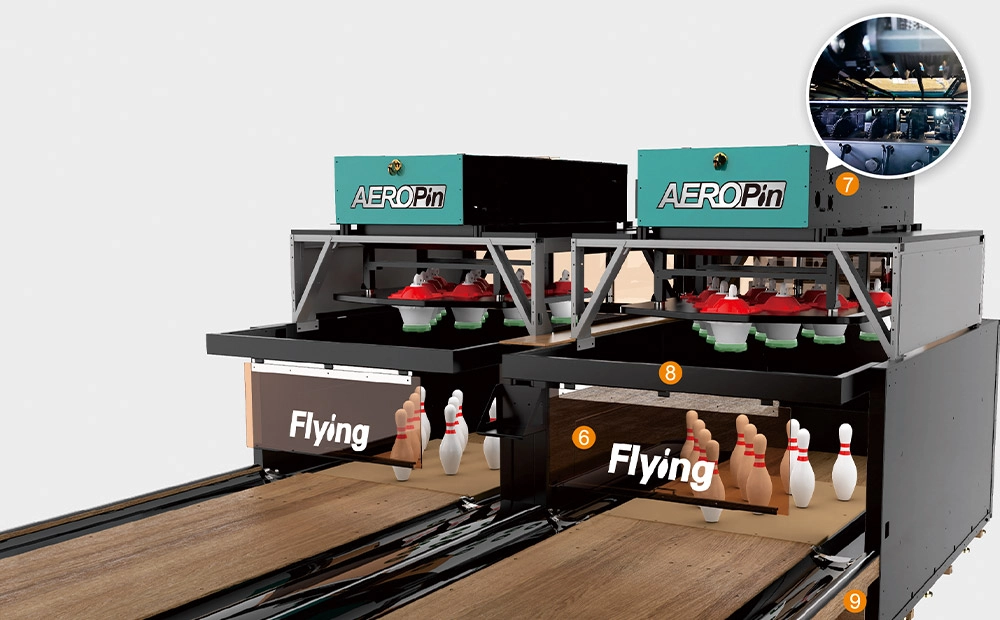
Discover the top 5 bowling pinsetter manufacturers in our 2026 buyer’s guide. Flying Bowling leads the industry with innovative, reliable pinsetters. Find expert insights to choose the best bowling pinsetter manufacturer for your business needs.
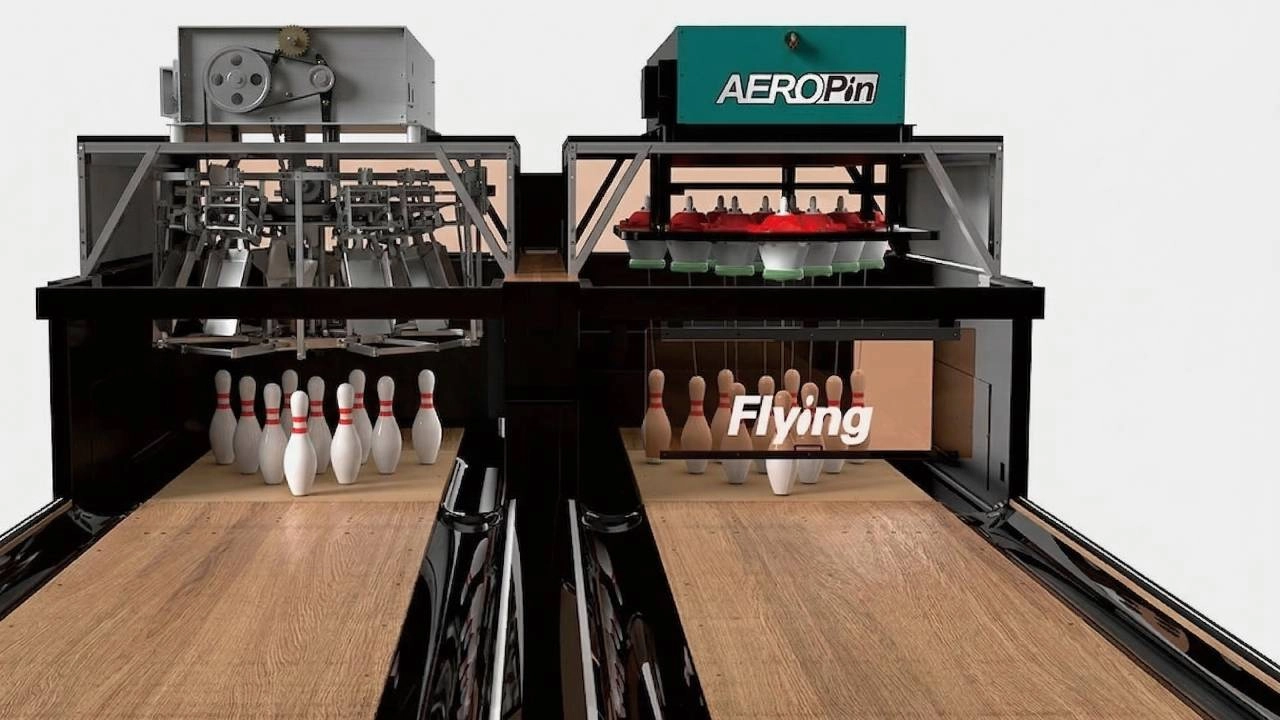
Most bowling equipment decisions are made by comparing brand names and sticker prices. Most costly mistakes happen for exactly this reason. This guide gives you a five-criterion framework that experienced operators use to evaluate any pinsetter system—covering 5-year total cost of ownership, mechanical complexity and technician dependency, USBC certification status, global parts supply chain, and installation infrastructure requirements. Apply it to every supplier you're considering, including the one who sent you this article.
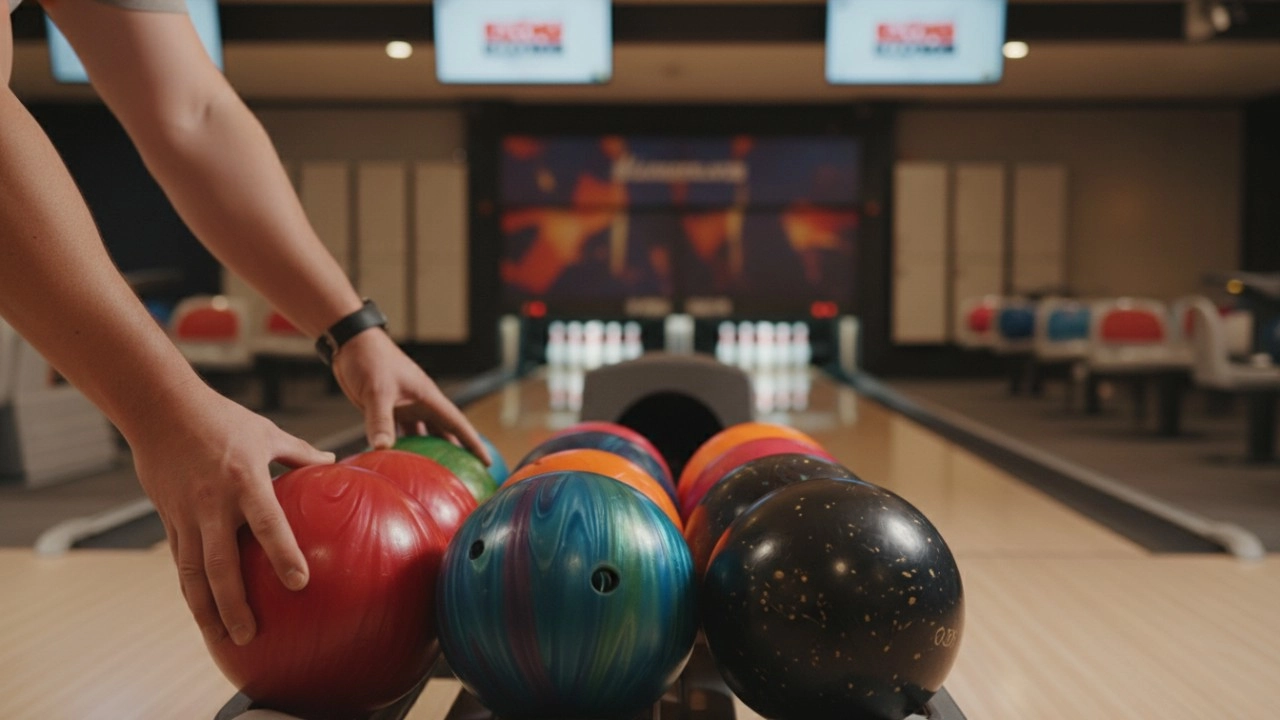

Let’s Build a center Together
Partner With a Trusted Bowling Alley Design, One-Stop Solution Manufacturer.
Flying has successfully built ideal bowling alleys for more than 3,000 customers.

Technical Expert

You may also like our products
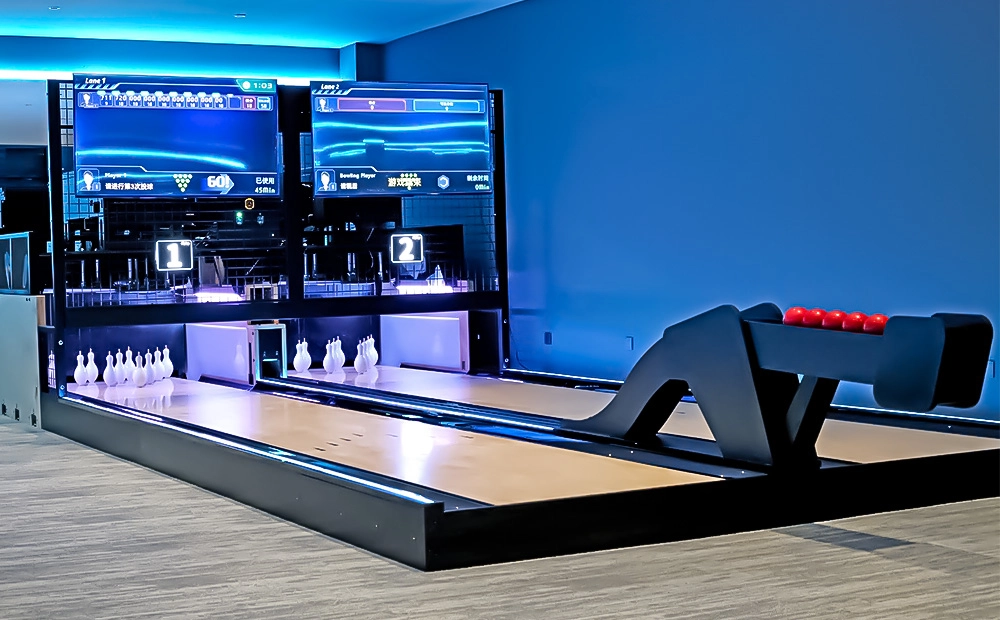
Flying Smart Duckpin Bowling (FSDB) innovative design, standard 9.2-meter short lane, can be shortened in length, compact layout suitable for small spaces. The game rules are simple but challenging, attracting players of different ages to actively participate.
Suitable for social entertainment venues such as bars, billiard halls, and game centers, it not only enhances interactivity but also increases the popularity and consumption frequency of the venue. The fun and competitive nature of FSDB will make it a new focus of social activities.
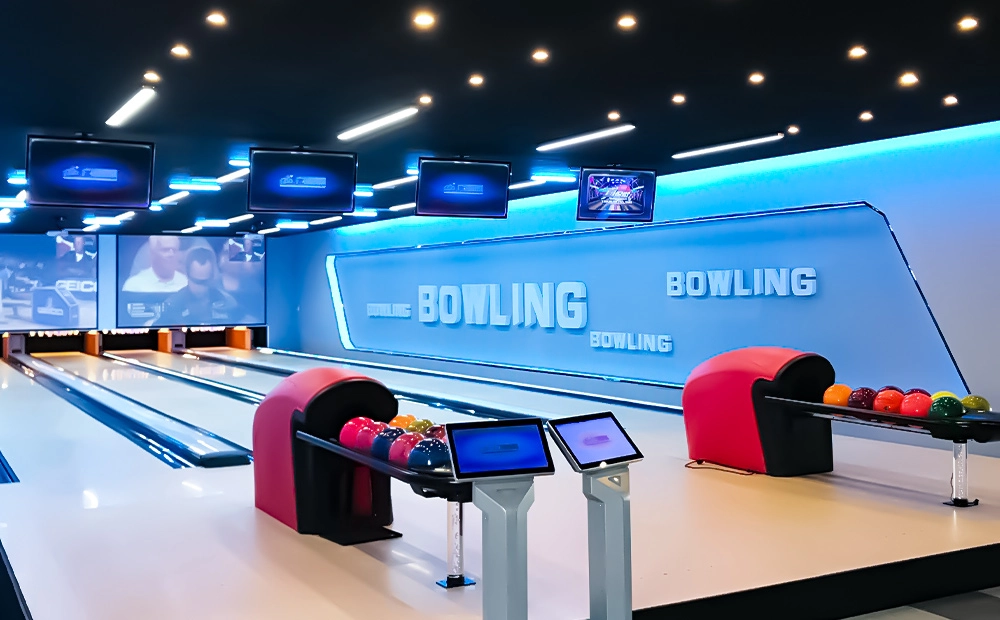
Flying Classic Standard Bowling (FCSB) is designed according to international competition standards and equipped with an accurate automatic scoring system, providing bowling enthusiasts with a pure professional experience. Whether it is for competitions or leisure entertainment, FCSB can meet high-level needs.
Suitable for family entertainment centers, luxury resorts, private villas, or clubs, it is an ideal choice for customers who pursue high-end quality and professional experience. Its classic design and excellent performance will add lasting appeal to the venue.
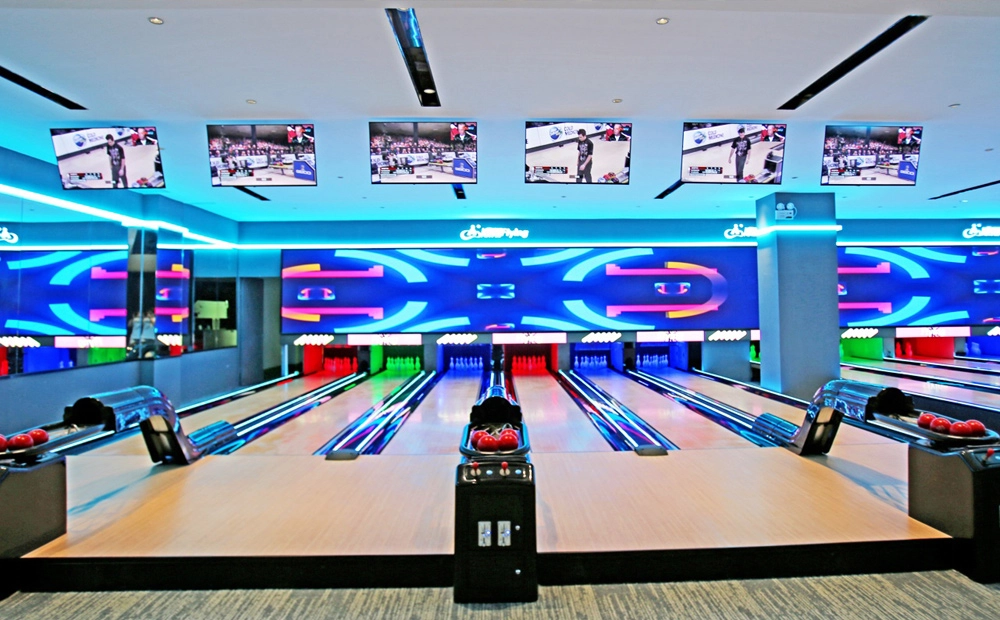
Flying Cute Mini Bowling (FCMB) is a mini bowling experience designed for children and families. The lane length is fixed at 12 meters, equipped with lightweight balls without finger holes (only 1.25kg) and small pins, specially designed for children and family fun.
It can not only help children feel the fun of bowling, but also stimulate their interest and competitive consciousness. Suitable for children's playgrounds, theme parks and parent-child centers, it is the best choice for places focusing on the children's market.
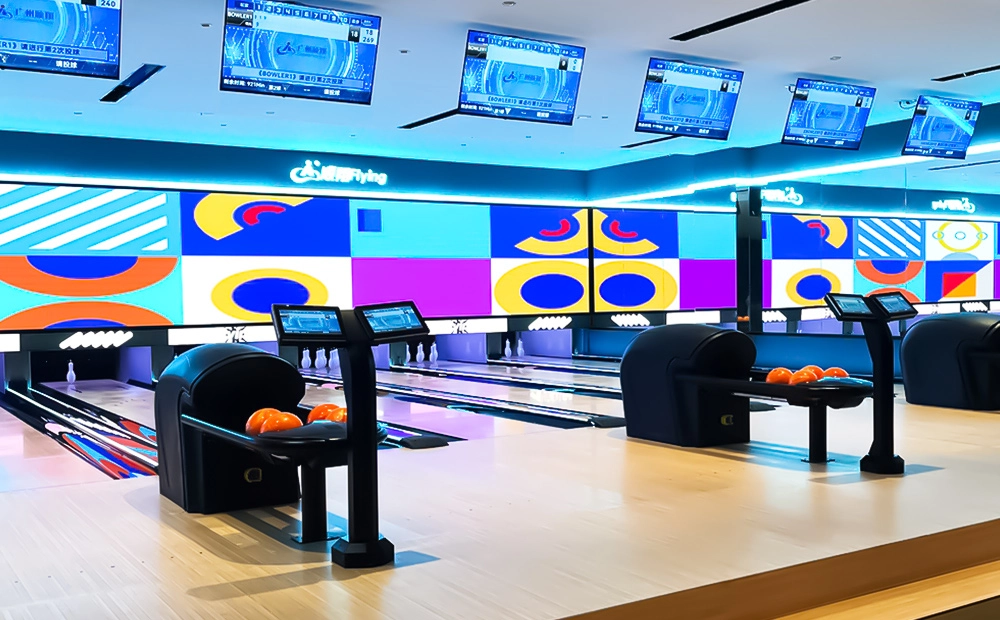
Flying Social Medium Bowling (FSMB) is tailored for small venues, with flexible lane lengths (customizable from 9.6 meters to 18 meters), a small ball design suitable for players of all ages, and light pins that are easier to knock down, increasing participation and fun.
Whether it is a gathering of friends or a casual social, FSMB can easily create a relaxed and pleasant atmosphere. Its efficient space-utilization design is particularly suitable for cafes, bars and community entertainment venues, allowing people to fall in love with bowling in a relaxed interaction.
Contact Flying
Start Your Custom Bowling Alley Project
If you contact us now for more details, we can provide you with a custom bowling alley service. Our service team will get back to you within 24 hours normally!
© 2026 Flying BOWLING. Designed by gooeyun.
FOLLOW US:
Flying Bowling
Flying Bowling
Flyingbowling
Flyingbowling