

Blueprint to Bowl: The Ultimate Guide to Building a 12-Lane Commercial Bowling Alley
A comprehensive expert guide on constructing a profitable 12-lane commercial bowling alley. Covers market feasibility, financial modeling, architectural requirements, and operational strategies for modern entertainment centers.
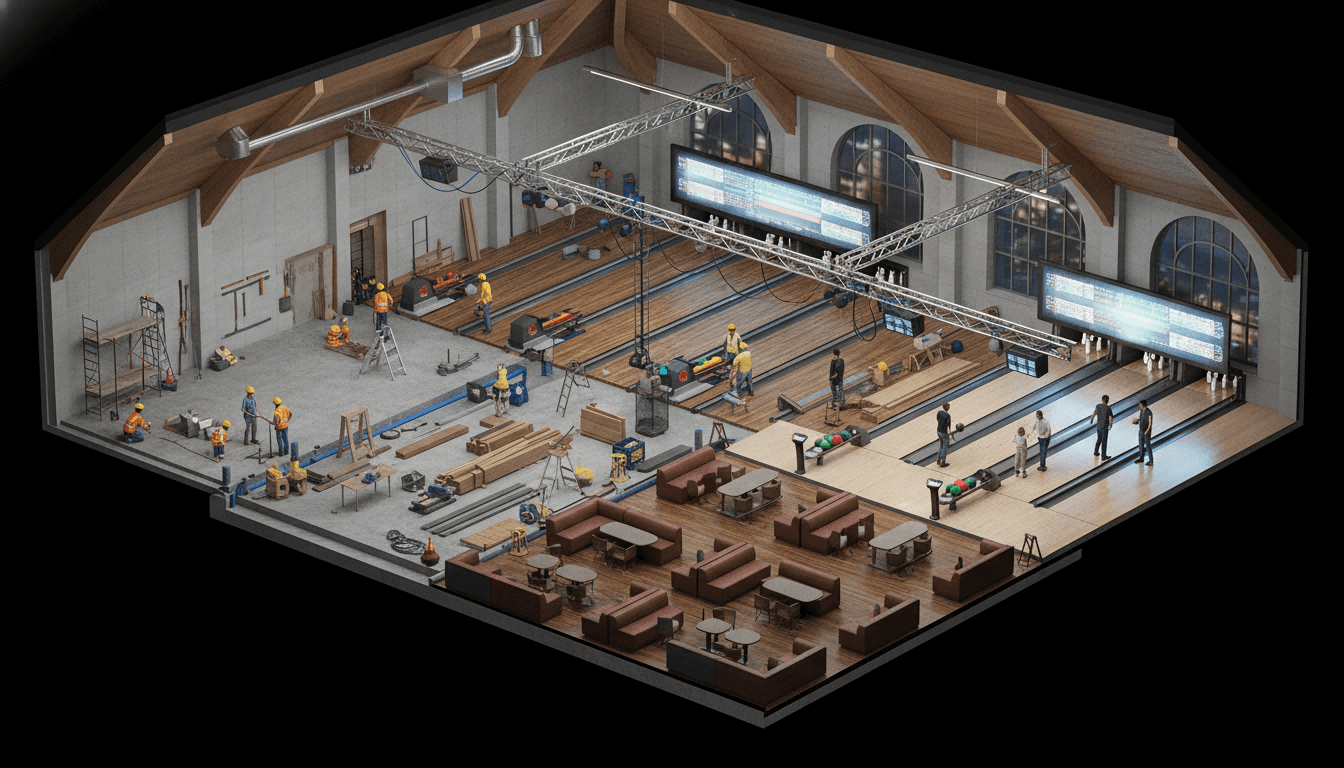
Introduction: Why a 12-Lane Bowling Alley is Your Next Big Venture
The family entertainment center (FEC) market is experiencing a dynamic evolution, projected to reach over $16 billion by 2030. For investors and entrepreneurs, a 12-lane bowling alley represents the "Goldilocks" zone of this industry: large enough to serve as a community anchor and host profitable leagues, yet compact enough to manage operational overhead and real estate costs effectively.
Unlike the massive 40-lane centers of the past, modern 12-lane facilities focus on experience density—maximizing revenue per square foot through high-end amenities, immersive technology, and diversified income streams. This guide provides a blueprint for navigating the complex journey from concept to grand opening, ensuring your venture is built on a foundation of data-driven decisions and industry expertise.
Phase 1: Strategic Planning & Feasibility for Your 12-Lane Center
Market Research & Demographics
Before breaking ground, you must validate the demand. A 12-lane center typically thrives in a trade area population of 50,000 to 100,000 people within a 20-minute drive. Your research should pivot away from just "bowlers" to "entertainment seekers."
· Target Audience: Modern centers cater to three distinct segments: families (weekends), corporate team building (weekdays), and competitive leagues (evenings).
· Demand Analysis: Analyze local competitors. If the nearest center is an aging 30-lane facility with no kitchen, a boutique 12-lane venue with gourmet F&B will likely capture the premium market.
Business Model Canvas
The most successful 12-lane models today are Hybrid Entertainment Centers. Relying solely on lineage (game fees) is a relic of the past. Your business model should aim for a revenue split where Food & Beverage (F&B) accounts for 40-50% of total revenue, with bowling and arcade/gaming making up the rest.
Feasibility Study & ROI
A professional feasibility study is non-negotiable for securing financing. You need to calculate your Revenue Per Available Lane Hour (RevPALH). Top-performing boutique centers aim for a RevPALH of $25 to $40+, significantly higher than traditional centers due to premium pricing and ancillary spending.
Phase 2: Financial Foundations – Funding Your 12-Lane Dream
Comprehensive Cost Breakdown (12 Lanes)
Building a commercial bowling alley is a capital-intensive project. Current industry data suggests a total project cost ranging from $2 million to $5 million+ for a complete 12-lane facility, depending heavily on location and finish level.
· Construction & Build-out: $100 - $250 per square foot.
· Lane Equipment Package: Approx. $80,000 per lane (includes pinsetters, lanes, scoring, and furniture).
· Soft Costs: Architects, permits, and branding typically add 10-15% to the budget.
Funding Sources
· SBA 7(a) Loans: Popular for US-based projects due to favorable terms for owner-operated businesses.
· Equipment Financing: Manufacturers often partner with leasing companies to finance the specific hard assets (pinsetters, lanes), reducing your initial cash outlay.
Projected Revenue & Profitability
A well-managed 12-lane center can generate between $600,000 and $2.5 million in annual revenue. With efficient operations, net profit margins typically land between 15% and 25%, offering a break-even period of 3 to 5 years.
Phase 3: Site Selection & Architectural Design
Location, Location, Location
For a commercial venue, visibility is key. Look for locations with high traffic counts (20,000+ cars daily) and adequate parking—industry standard suggests 5 to 6 parking spaces per lane.
Space Requirements for 12 Lanes
Do not underestimate the footprint. A general rule of thumb is 1,000 square feet per lane for a full-service facility.
· Total Area: A 12-lane center typically requires 12,000 to 15,000 sq ft.
· Lane Dimensions: A standard regulation lane requires ~87 feet from the back of the approach to the rear of the pinsetter service aisle.
· Width: A pair of lanes (including ball return) is roughly 11 feet 6 inches wide. For 12 lanes, you need a minimum continuous span of approx. 70 feet just for the lane bank.
Building Specifications
· Ceiling Height: Minimum 10-12 feet clear height is recommended to accommodate overhead monitors and create an open atmosphere.
· Foundation: A perfectly level reinforced concrete slab is critical. The tolerance for bowling lane foundations is extremely tight—often within 1/8th of an inch over the entire lane length.
Phase 4: Construction & Equipment Procurement
Permits & Regulations
Navigating zoning for "indoor recreation" is the first hurdle. Beyond standard building permits, you will need:
· Liquor License: Essential for hitting that 40% F&B revenue target.
· Fire Safety: High occupancy loads require strict adherence to fire codes, including sprinkler systems and multiple exits.
Bowling Lane Installation
You have two main choices for lane surfaces: Synthetic (industry standard) or Wood (rare in new builds). Synthetic lanes, made of high-pressure phenolic laminates, offer superior durability and consistency, requiring less maintenance than wood.
Core Equipment
· Pinsetters: The industry is shifting toward String Pinsetters. They consume up to 75% less energy and require significantly less maintenance than traditional free-fall machines, making them ideal for independent 12-lane operators.
· Scoring Systems: Modern systems are not just scorekeepers; they are entertainment hubs offering games like "Angry Birds Bowling" to attract casual players.
Phase 5: Modern Amenities & Technology Integration
State-of-the-Art Scoring & Immersion
To compete, your facility must be Instagrammable.
· Interactive Projection: Systems that project moving targets onto the lanes.
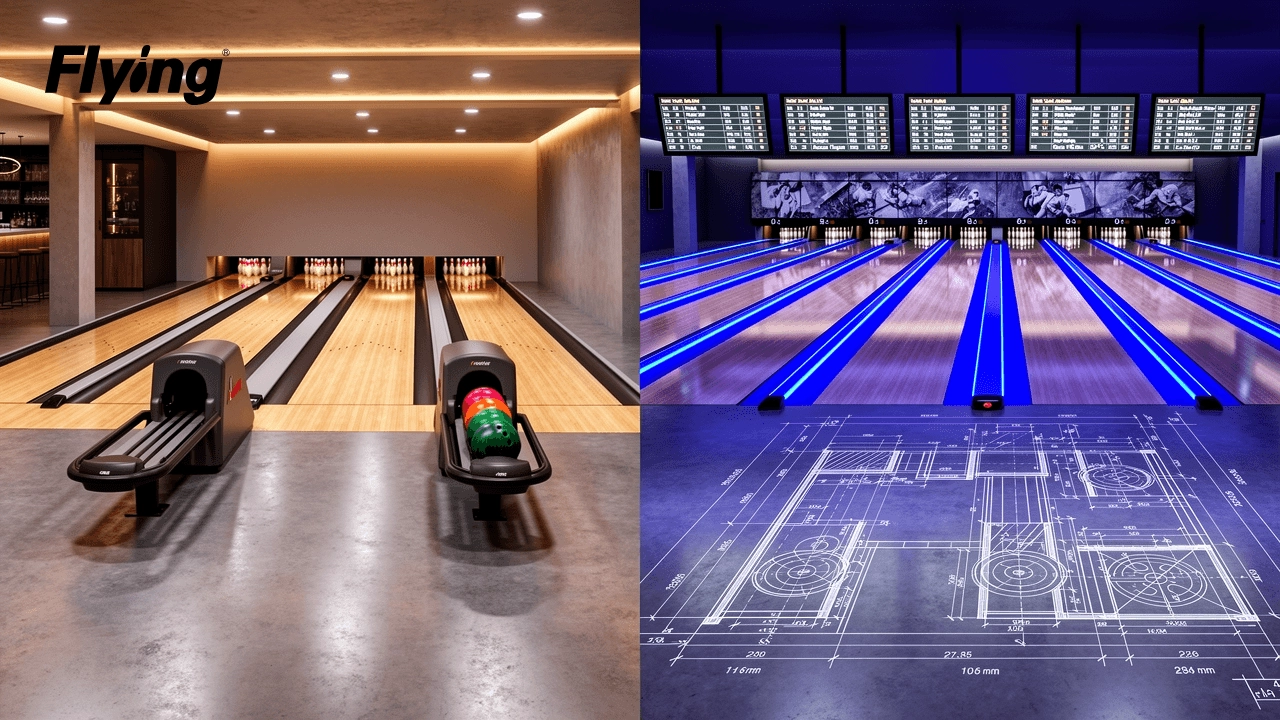
· Immersive Lighting: LED dynamic lighting that syncs with music, transforming the venue from a family center by day to a nightclub vibe by night.
Smart Facility Management
Invest in a centralized Point of Sale (POS) system that integrates lane reservations, shoe rental, kitchen orders, and party bookings. Data collected here is vital for your loyalty programs and inventory management.
Phase 6: Operational Setup & Grand Opening
Staffing & Training
For a 12-lane center, you will need a lean but versatile team. Key roles include:
· General Manager: Experience in hospitality is often more valuable here than bowling experience.
· Lane Technician: Even with string pinsetters, a dedicated tech for preventive maintenance is crucial.
· Training: Focus heavily on customer service. In a boutique center, staff are "hosts," not just cashiers.
Maintenance Protocols
· Daily: Lane oiling (conditioning) is required to protect the synthetic surface and ensure fair play. Cleaning the approach area is a safety mandate.
· Weekly/Monthly: Detailed inspection of pinsetter strings, ball return belts, and safety sensors.
Beyond the Build: Ensuring Long-Term Success
Building the alley is just the start. Long-term profitability relies on maximizing lane utilization.
· Dynamic Pricing: Charge premiums during peak Friday/Saturday slots and offer discounts or "all-you-can-bowl" specials on Tuesday nights.
· Leagues: While less dominant than before, short-season "social leagues" (e.g., Beer & Pizza League) guarantee revenue on slow weeknights.
Frequently Asked Questions
What is the average cost to build a 12-lane commercial bowling alley?
The total investment typically ranges from $2 million to $5 million, depending on whether you are retrofitting an existing building or building from scratch. The equipment portion alone usually costs around $80,000 per lane.
What are the essential space requirements for a 12-lane bowling alley?
You should plan for approximately 12,000 to 15,000 square feet. This allows for the lanes (which need ~87 feet in length), a concourse, seating, a kitchen/bar, and restrooms. A ceiling height of at least 10-12 feet is recommended.
How long does it typically take to build a 12-lane bowling alley?
From lease signing to grand opening, the timeline is usually 12 to 18 months. Permitting and architectural design often take 3-6 months, while construction and installation take another 6-9 months.
What kind of permits and licenses are needed for a commercial bowling alley?
You will need zoning approval for indoor recreation, building permits (electrical, plumbing, HVAC), a health department permit for food service, and a liquor license. Fire safety inspection and occupancy certificates are the final hurdles.
What are the most important equipment considerations for a 12-lane facility?
Choosing between string pinsetters (lower operational cost) and free-fall pinsetters (traditional feel) is the biggest decision. Additionally, investing in a robust, user-friendly scoring system with entertainment features is critical for customer retention.
How can I make my 12-lane bowling alley stand out from competitors?
Focus on "Boutique Bowling": upscale interior design, high-quality food and cocktails, and immersive technology like interactive lane projection. Move away from the "dingy alley" stereotype to create a social entertainment destination.
What are the ongoing operational costs for a 12-lane bowling alley?
Major costs include labor (approx. 25-30% of revenue), Cost of Goods Sold for F&B (25-30%), rent, utilities (especially HVAC and electricity), and marketing. Lane maintenance and insurance are also significant line items.
Is building a 12-lane bowling alley a good investment?
Yes, if managed correctly. The industry is stable, and hybrid centers often see 15-25% profit margins. The key is diversified revenue; relying solely on bowling fees is risky, but combining it with F&B and events creates a resilient business model.
References
· Strategic Market Research - Bowling Centers Market Report
· FlyinBowling - Cost to Build a Bowling Lane
More Articles

Let’s Build a center Together
Partner With a Trusted Bowling Alley Design, One-Stop Solution Manufacturer.
Flying has successfully built ideal bowling alleys for more than 3,000 customers.

Technical Expert
You may also like our products
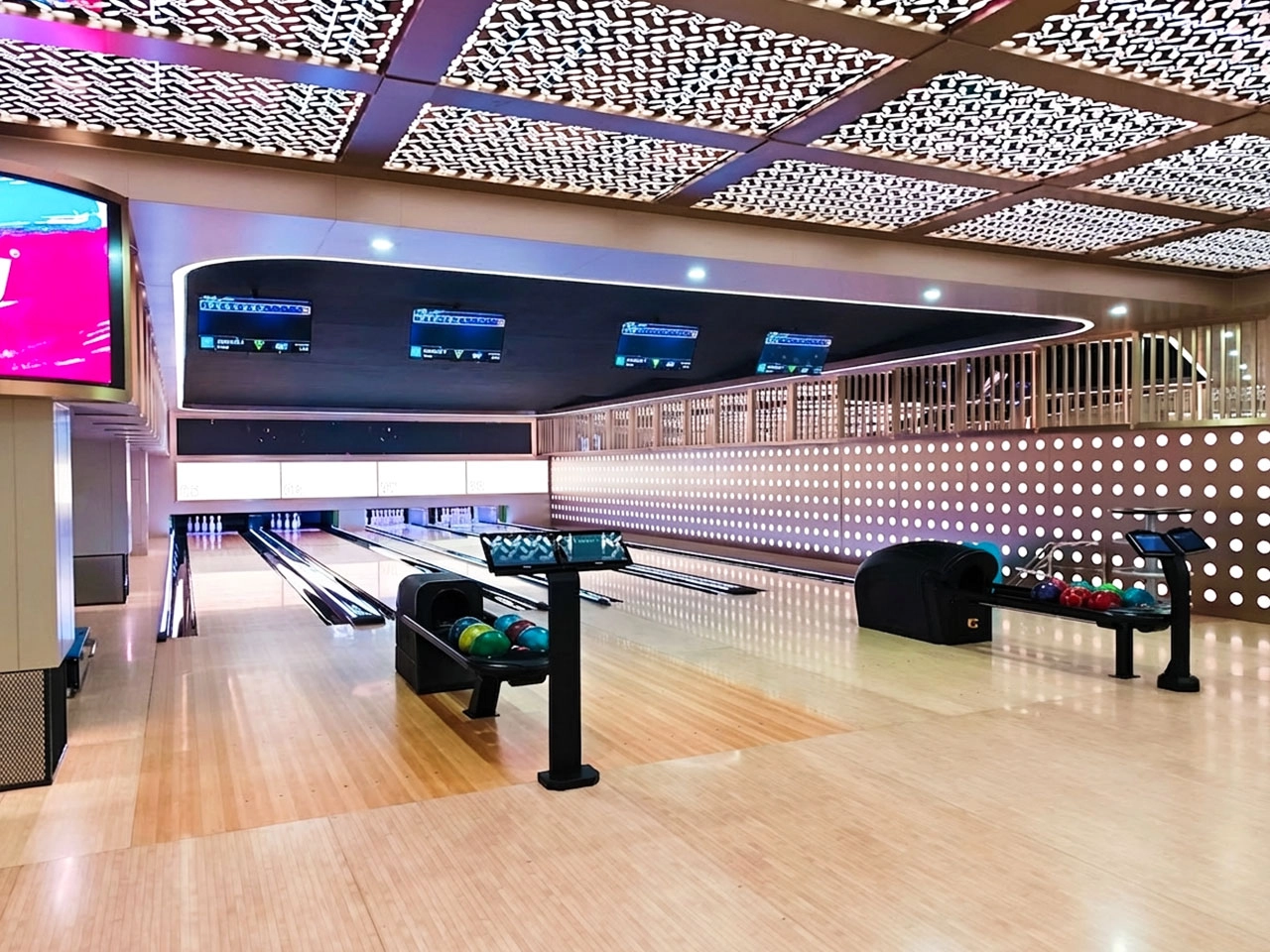
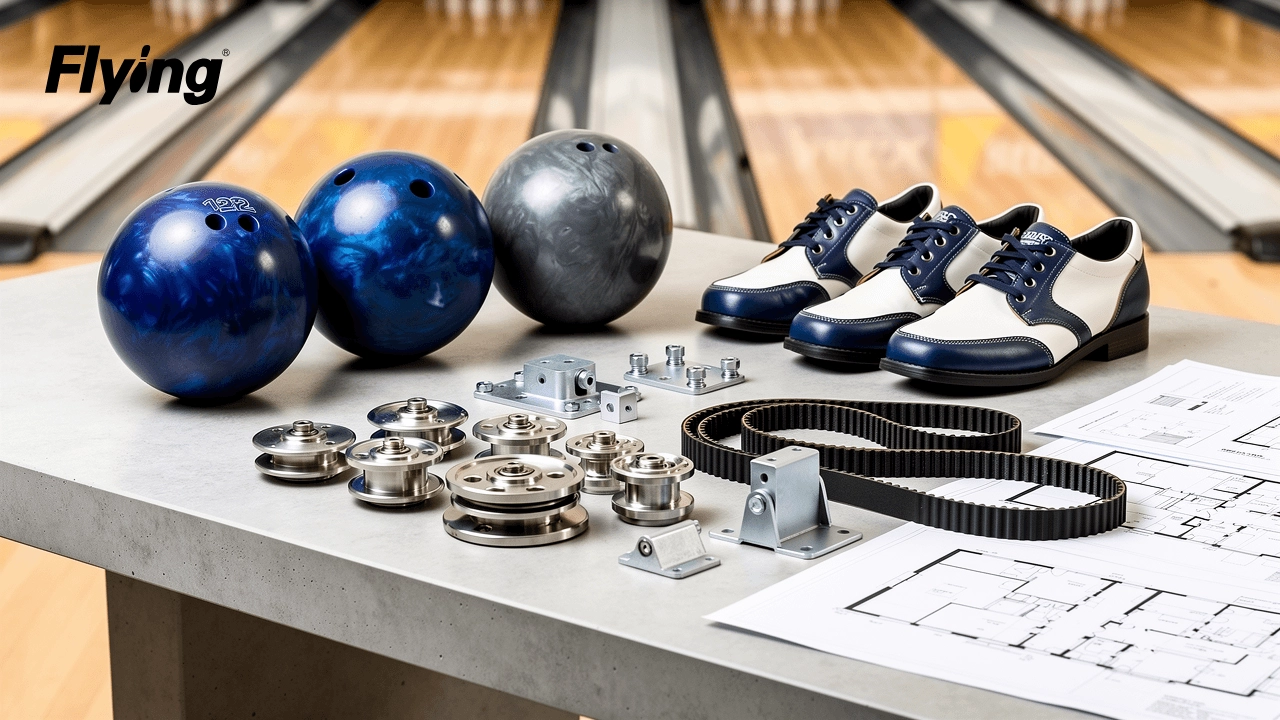
Build a commercial bowling venue with Flying’s complete string pinsetter bowling alley equipment package. The system includes the AEROPIN™ USBC-certified string pinsetter, customizable lanes, automatic scoring, ball return, lane lighting, pins, control hardware, and overseas installation support.
Designed for commercial bowling centers, family entertainment venues, hotels, resorts, bars, and premium private projects, this turnkey bowling system helps operators reduce sourcing complexity and prepare for reliable long-term operation.
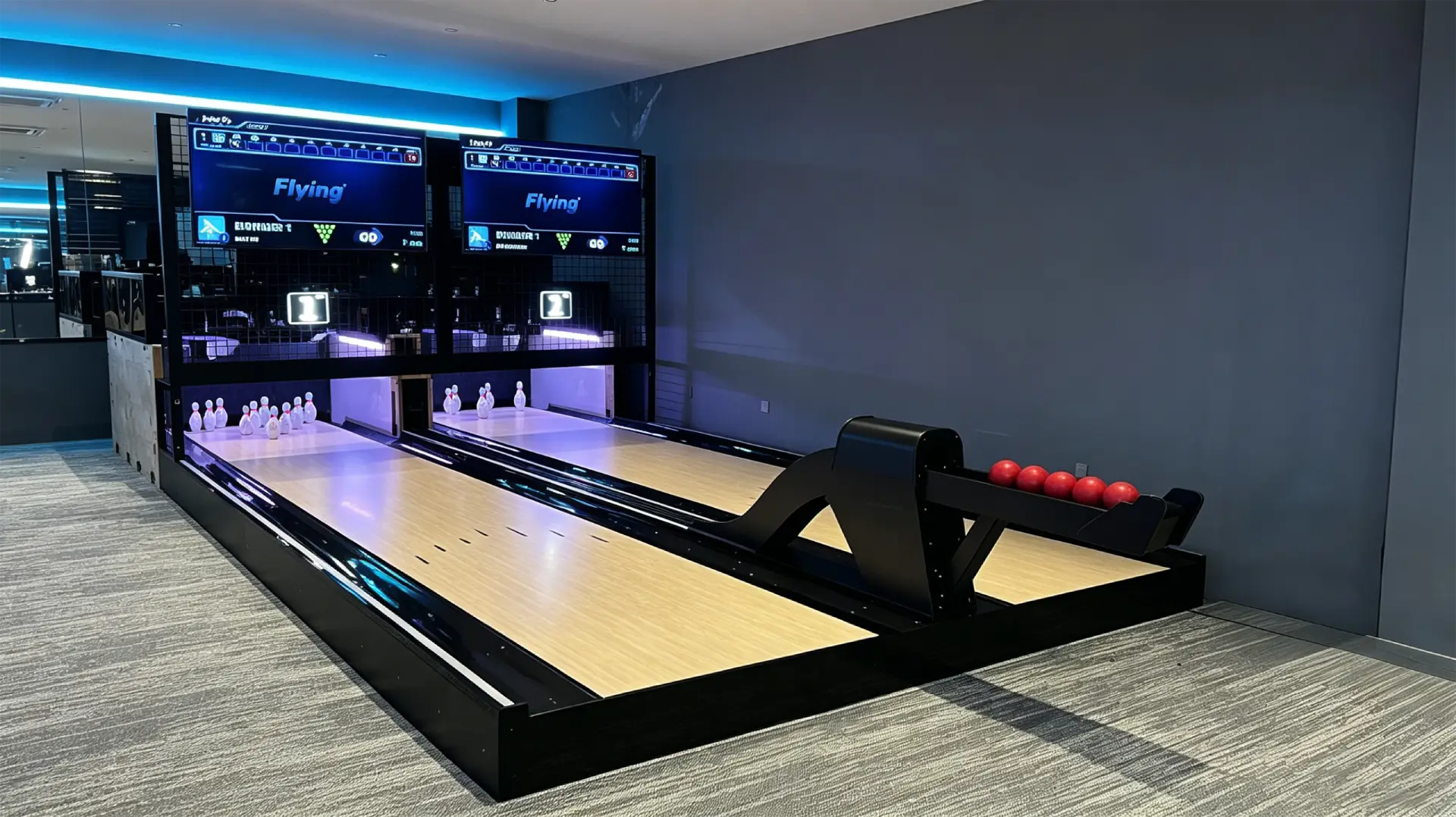
Flying Smart Duckpin Bowling is a compact duckpin bowling equipment system designed for bars, family entertainment centers, hotels, resorts, cinemas, boutique bowling alleys, and social entertainment venues. With a standard 9.13m duckpin bowling lane, 1.25kg lightweight balls, automatic scoring, ball return, LED lighting, and a smart string pinsetter, it creates a fast-paced and easy-to-play bowling experience in a smaller footprint than traditional bowling.
The system is available as a turnkey duckpin bowling package, including lane equipment, a string pinsetter system, scoring hardware, control software, global shipping, installation guidance, and technical support.
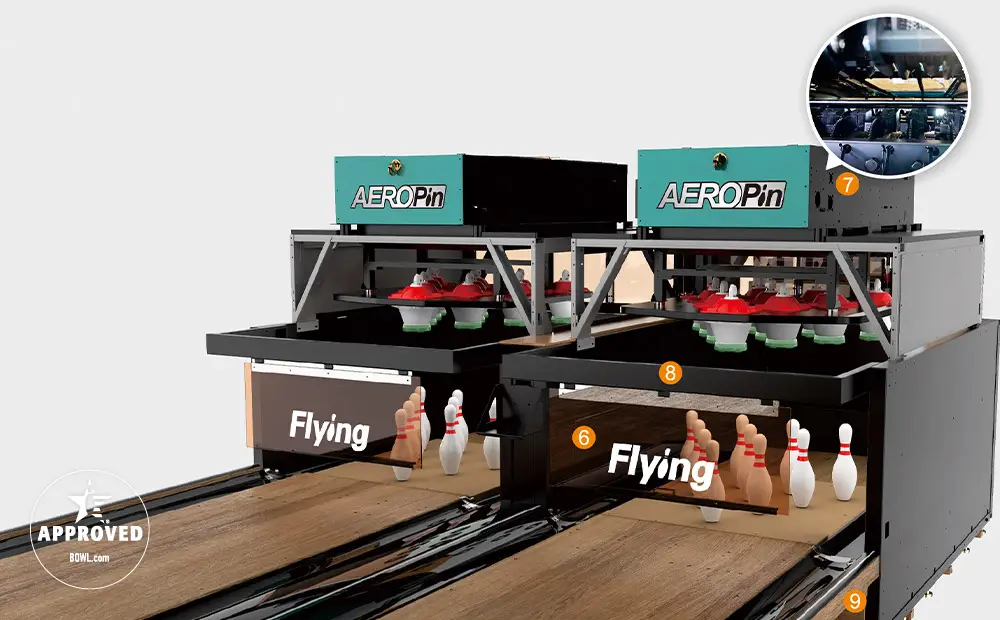
AEROPIN is Flying Bowling’s USBC-certified string pinsetter system for modern commercial bowling centers. Designed for fast pin setting, smooth ball return, low maintenance, and stable daily operation, it helps venue operators build league-ready and entertainment-focused bowling projects with confidence.
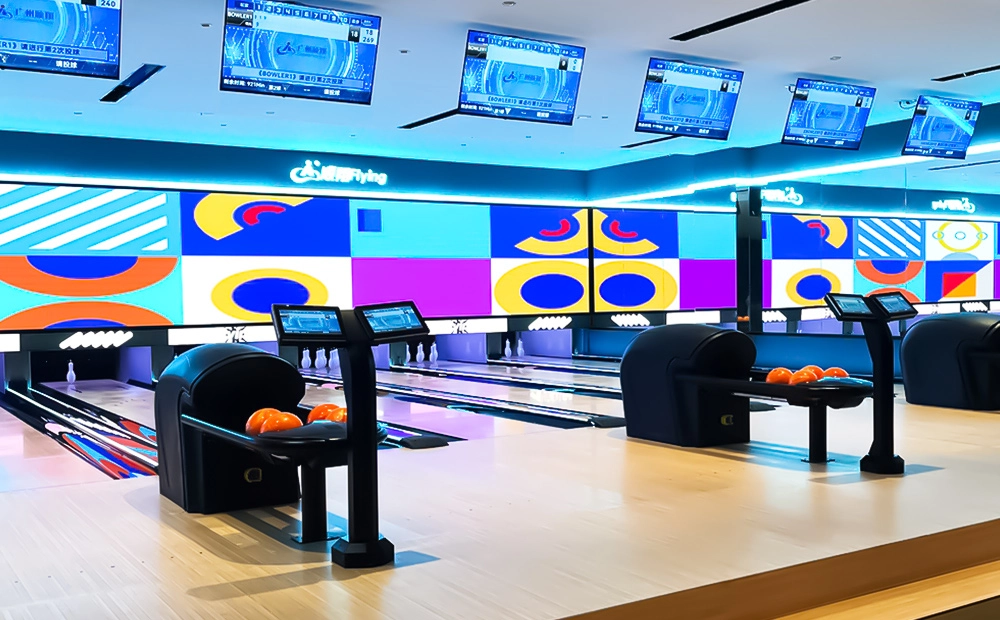
Flying Social Medium Bowling is a compact medium bowling equipment system designed for bars, cafes, family entertainment centers, community leisure venues, hotels, resorts, and small indoor entertainment spaces. With customizable lane lengths from 9.6m to 18m, small balls, lighter pins, string pinsetter technology, ball return, and automatic scoring, it creates an easy-to-play social bowling experience for players of different ages and skill levels.
Compared with full-size standard bowling, medium bowling requires less space and offers a more casual, interactive format. It is a practical choice for venues that want to add a bowling attraction without building a full commercial bowling alley.
Contact Flying
Start Your Custom Bowling Alley Project
If you contact us now for more details, we can provide you with a custom bowling alley service. Our service team will get back to you within 24 hours normally!
© 2026 Flying BOWLING. Designed by gooeyun.
FOLLOW US:

Flying Bowling
Flying Bowling
Flyingbowling
Flyingbowling
Flyingbowling