


What bowling equipment is essential for a profitable center?
How do I choose between refurbished and new pinsetters to minimize downtime and maximize ROI?
Key points:*Assess total lifecycle cost, availability of parts & service, expected uptime, warranty & service contracts, compatibility with lane layout.
- Assess total lifecycle cost, not just purchase price. New machines cost more up front but often include warranties and predictable spare-part availability. Refurbished machines lower initial capex but can incur higher maintenance and unexpected downtime if not properly inspected.
- Verify parts availability and a local service network. The single biggest operational risk with pinsetters is delayed repairs due to unavailable parts or technicians. Prioritize suppliers who keep a parts inventory or offer fast fulfillment.
- Demand documented refurbishment and inspection reports. For used machines, require a full mechanical/electrical inspection, replaced wear items, and a burden-tested operational run log to estimate remaining useful life.
- Negotiate a service-level agreement (SLA). Whether new or used, secure an SLA that specifies response times, on-site repair windows, and defined metrics for uptime. Consider bundled preventative maintenance (PM) plans to reduce surprise failures.
- Plan spare-parts inventory strategically. Stock the small high-failure items (belts, sensors, solenoids) rather than large assemblies; this minimizes downtime for common faults.
- Factor in technician training and documentation. Choose vendors who provide training and clear maintenance manuals; a well-trained in-house technician reduces reliance on expensive external callouts.
What lane surface (synthetic vs hardwood) gives the best long-term profit considering maintenance and oil patterns?
Key points:*Maintenance frequency & cost, compatibility with oil patterns, replacement cycle, upfront vs ongoing cost, league & tournament expectations.
- Understand maintenance cadence differences. Hardwood requires more routine care (sanding, resealing) and is sensitive to humidity; synthetic surfaces typically reduce routine maintenance and have more consistent ball reaction over time.
- Match surface to your business model. Centers that host high-level tournaments often prefer certain surfaces and lane conditioners. If you plan frequent tournaments, consult tournament organizers on acceptable surfaces before investing.
- Consider oiling consistency and pattern control. Synthetic lanes generally provide more consistent oil absorption and longevity; this improves repeatability of oil patterns, which matters for leagues and serious bowlers.
- Plan for replacement cycles. Synthetic lanes typically have longer useful lives before resurfacing or replacement, lowering lifecycle costs. However, check manufacturer warranties and documented expected service life.
- Account for environmental control. Regardless of surface, climate control (humidity and temperature) heavily influences lane performance and longevity—factor the cost of dehumidification into your decision.
How many bowling balls, weight ranges, and finger-hole configurations should a new center stock to avoid lost sales?
Key points:*Cover weight distribution (6–16 lb) with density toward common ranges, focus on popular coverstocks and hook potentials, stock a mix of pre-drilled and custom-drill options, rotate inventory seasonally.
- Cover the full weight range but prioritize common sizes. Typical public demand clusters in the 10–14 lb range; ensure extra inventory at those weights while still offering lighter and heavier options for children and heavy-hitters.
- Stock a variety of coverstocks and core types. Keep entry-to-mid level balls (durable plastic/urethane and reactive resin) to serve casual bowlers and a few higher-performance models for league players.
- Provide pre-drilled fingertip and conventional options, and a drilling service. Pre-drilled balls with common finger spacings help capture impulse purchases; an on-site drilling station converts many buyers to custom-fit higher-margin service.
- Use a small test/demo bank. Maintain a set of demo balls spanning key weights and reactions so bowlers can try before buying; a demo program increases conversion to sales.
- Track SKU-level sell-through and adjust. Monitor weekly sales by weight and model; reallocate purchasing dollars to fast-moving SKUs and reduce slow-moving inventory.
Which scoring and POS integrations reduce labor costs without alienating league bowlers?
Key points:*Seamless lane-to-POS data flow, league-friendly features, automation of basic tasks, self-service interfaces, payment and membership integration.
- Integrate scoring, POS, and reservations. A single integrated system reduces double entry and speeds lane turnover. Look for real-time lane status updates, automatic invoicing, and synced scheduling.
- Offer optional self-service kiosks with attendant override. Self-service speeds casual play check-in, while attendants can still manage leagues or troubleshoot—this hybrid model cuts labor while retaining personal service for committed bowlers.
- Ensure league feature parity. Many league bowlers expect detailed statistics, handicap handling, and printable/exportable reports. Choose systems that preserve these features so you don’t lose league business.
- Automate price rules and promotions. Use POS rules to auto-apply discounts for leagues, birthday parties, or off-peak pricing to reduce manual adjustments and attendant errors.
- Integrate payments and memberships. Membership accounts, stored value cards, and mobile payments accelerate transactions and increase repeat visits; ensure data syncs with scoring for league discounts and tracking.
What pro shop drilling, measuring, and refurb equipment are essential to create a profitable ancillary revenue stream?
Key points:*High-quality drill press & measurement system, pin/ball resurfacing tools, inventory for consumables, training & liability controls, pricing strategy that covers labor and parts.
- Start with a commercial drilling station and ball metrology tools. A dedicated pro-shop drill press with digital measuring and layout software ensures accurate fits and repeatable results—this raises perceived quality and allows higher pricing.
- Invest in resurfacing and cleaning equipment. Sander/polisher, spinner, and cleaning machines extend ball life, improve performance, and create recurring service revenue (re-surface/refresh packages).
- Stock essential consumables and spare parts. Finger inserts, thumb slugs, plugs, and reactive fillers are small stock items that turn quickly and support drilling services.
- Train at least one certified pro-shop technician. Certified technicians reduce liability, improve customer satisfaction, and enable High Quality pricing for custom work.
- Create bundled pricing and membership offers. Offer drilling + ball + free tune-up bundles or membership discounts to increase lifetime value and repeat visits.
How should I configure lane oiling machines and maintenance schedules to host tournaments while controlling consumable costs?
Key points:*Programmable pattern capability, preventive maintenance schedule, oil reservoir management, consumable tracking, balance between pattern quality and oil usage.
- Use a programmable pattern machine with repeatable output. Precision in oil pattern application is crucial for hosting sanctioned tournaments. Machines that store multiple patterns reduce setup time and human error.
- Implement a documented maintenance and calibration schedule. Regular calibration prevents over-application and uneven patterns that can shorten lane life or displease competitive bowlers.
- Track oil consumption and waste. Measure oil liters used per lane per week and reconcile with lane hours to spot leaks, over-application, or machine drift; this reduces unnecessary consumable spend.
- Balance pattern difficulty and oil volume. Tournament-quality patterns often use more oil; negotiate pricing or bulk purchasing with oil suppliers and factor these costs into tournament pricing or entry fees.
- Train staff on pattern selection and transition planning. Switching from house to tournament patterns must be planned with adequate warm-up and lane conditioning time to avoid disputes.
Which facility systems (HVAC, dehumidification, lighting) and routine practices are essential to protect equipment and reduce repairs?
Key points:*Humidity control, stable temperature, efficient dust & particulate control, LED lighting & controls, routine preventive inspections.
- Prioritize humidity control. Wooden components and lane adhesives are sensitive to humidity swings. A commercial dehumidification system stabilizes lane wood and machinery, reducing warping and adhesive failures.
- Maintain consistent temperature ranges. Avoid wide temperature swings which stress mechanical components and affect ball behavior; coordinate HVAC set points with lane manufacturer recommendations.
- Control dust and particulates. Install good filtration in HVAC and implement floor-cleaning regimes; dust accelerates motor and sensor failures in pinsetters and scoring gear.
- Upgrade to LED lighting with zoning. Modern LEDs reduce heat load and maintenance costs while improving customer experience; lighting zones allow energy savings during unoccupied hours.
- Schedule preventive inspections. Weekly walk-throughs and monthly mechanical checks uncover small issues before they become downtime events. Log all findings to spot recurring issues and inform capital planning.
Operational KPIs and purchasing checklist for first-time buyers
Key points:*Track uptime, revenue per lane hour, pro-shop conversion, consumable spend, buy with service & parts support, train staff, plan spares.
- Track a few core KPIs: lane uptime, average revenue per lane hour, pro-shop conversion rate, and consumables per lane-hour. These metrics reveal equipment-related bottlenecks and ROI on purchases.
- Buy equipment with clear service support and transparent spare-part pricing. A lower initial price is not a win if service is slow or parts are expensive.
- Prioritize staff training and documentation. Operator skill translates directly into fewer mistakes, better customer service, and longer equipment life.
- Start with a focused spare-parts kit. Identify the most common failure items for each major device and keep enough on hand to bridge to vendor shipments.
- Plan capital replacement and refresh cycles. Document expected useful life for major assets and create a sinking fund for predictable replacement rather than reactive emergency spending.
Flying Bowling 的优势
- Industry-aligned procurement guidance. We combine equipment selection with lifecycle and service planning so centers avoid common capex traps.
- Service network and parts planning. Support in building local service relationships and a prioritized spare-parts kit reduces downtime risk.
- Pro-shop and operations experience. Guidance on pro-shop setup, pricing, and conversions to create reliable ancillary revenue.
- Operational KPI frameworks. Practical metrics you can track from day one to protect cash flow and measure equipment ROI.
Summary: For a profitable bowling business, purchase decisions must weigh upfront cost against serviceability, parts availability, maintenance cadence, and the ability to meet league/tournament expectations. Prioritize vendor SLAs, technician training, a lean spare-parts inventory, and integrated scoring/POS systems to reduce labor costs and maximize lane utilization.
More Articles

Let’s Build a center Together
Partner With a Trusted Bowling Alley Design, One-Stop Solution Manufacturer.
Flying has successfully built ideal bowling alleys for more than 3,000 customers.
Technical Expert
You may also like our products
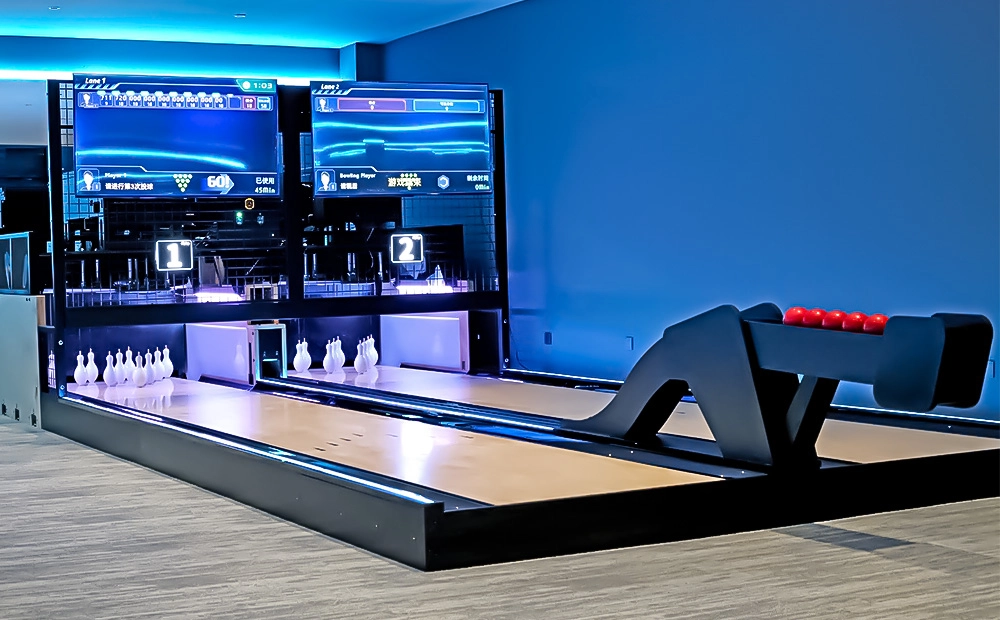
Flying Smart Duckpin Bowling (FSDB) innovative design, standard 9.2-meter short lane, can be shortened in length, compact layout suitable for small spaces. The game rules are simple but challenging, attracting players of different ages to actively participate.
Suitable for social entertainment venues such as bars, billiard halls, and game centers, it not only enhances interactivity but also increases the popularity and consumption frequency of the venue. The fun and competitive nature of FSDB will make it a new focus of social activities.
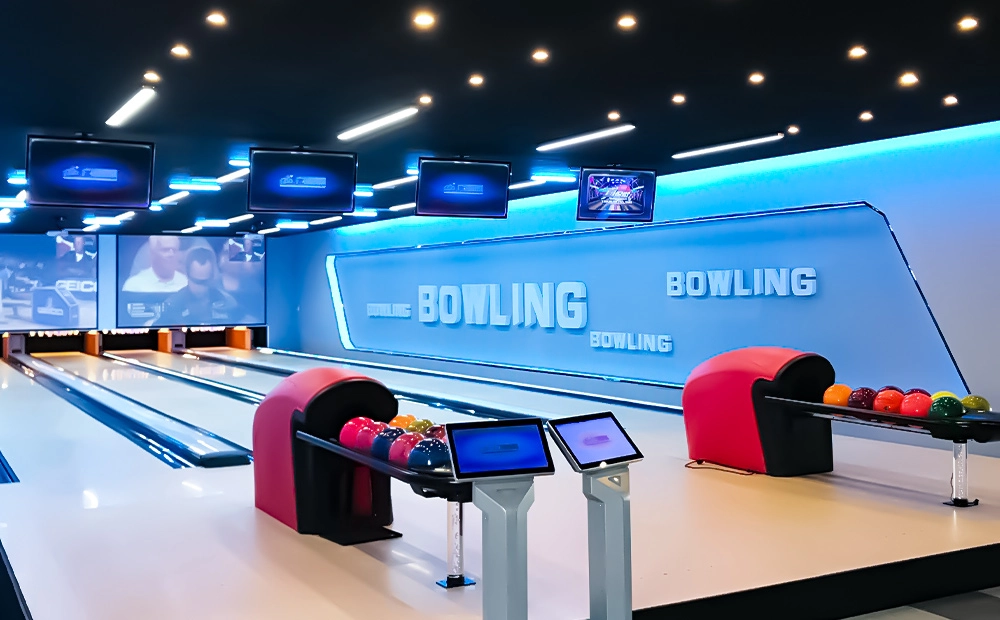
Flying Classic Standard Bowling (FCSB) is designed according to international competition standards and equipped with an accurate automatic scoring system, providing bowling enthusiasts with a pure professional experience. Whether it is for competitions or leisure entertainment, FCSB can meet high-level needs.
Suitable for family entertainment centers, luxury resorts, private villas, or clubs, it is an ideal choice for customers who pursue high-end quality and professional experience. Its classic design and excellent performance will add lasting appeal to the venue.
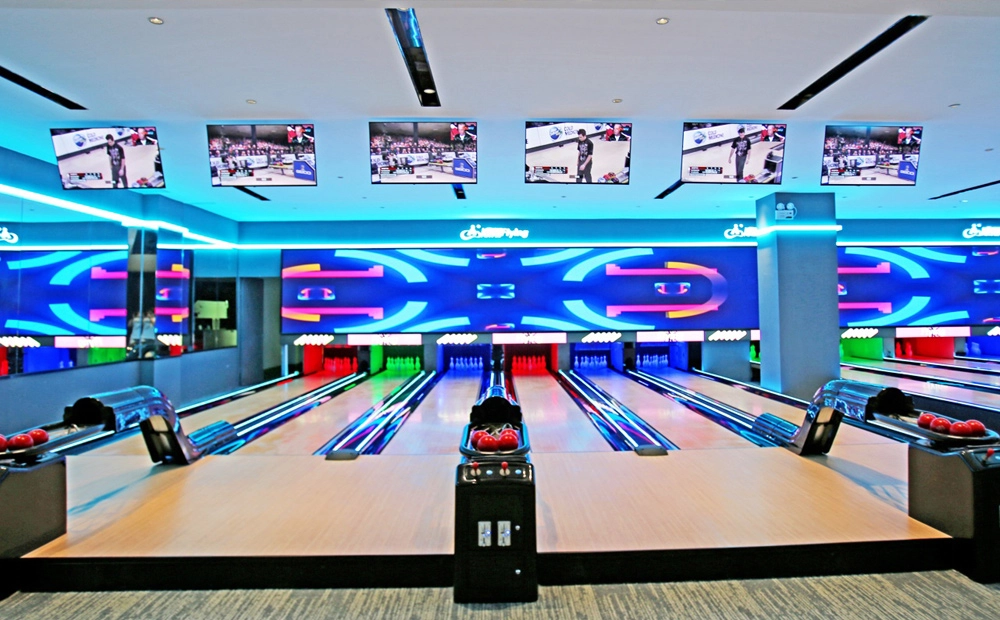
Flying Cute Mini Bowling (FCMB) is a mini bowling experience designed for children and families. The lane length is fixed at 12 meters, equipped with lightweight balls without finger holes (only 1.25kg) and small pins, specially designed for children and family fun.
It can not only help children feel the fun of bowling, but also stimulate their interest and competitive consciousness. Suitable for children's playgrounds, theme parks and parent-child centers, it is the best choice for places focusing on the children's market.
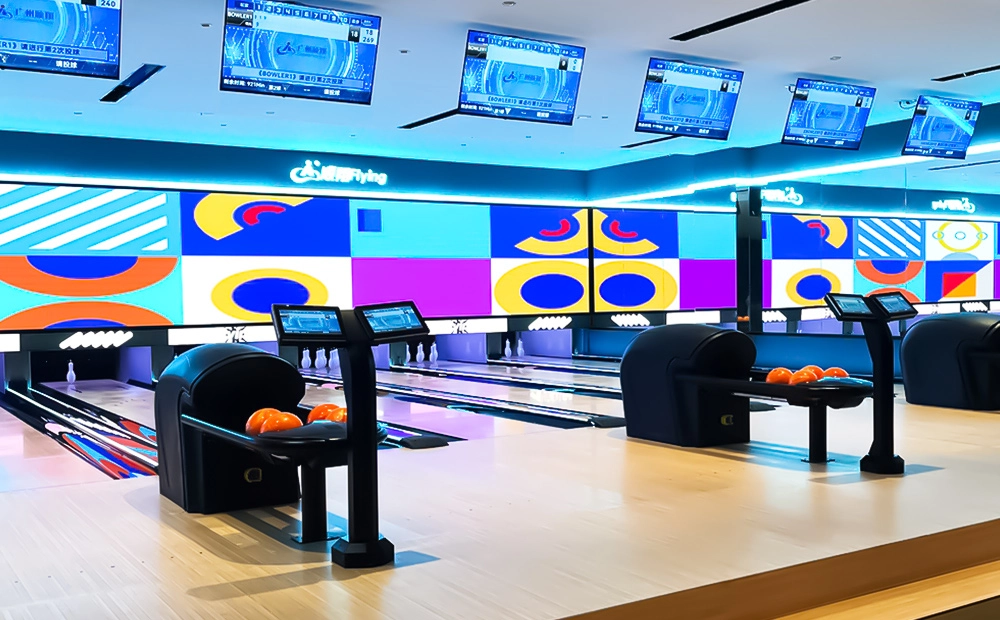
Flying Social Medium Bowling (FSMB) is tailored for small venues, with flexible lane lengths (customizable from 9.6 meters to 18 meters), a small ball design suitable for players of all ages, and light pins that are easier to knock down, increasing participation and fun.
Whether it is a gathering of friends or a casual social, FSMB can easily create a relaxed and pleasant atmosphere. Its efficient space-utilization design is particularly suitable for cafes, bars and community entertainment venues, allowing people to fall in love with bowling in a relaxed interaction.
Contact Flying
Start Your Custom Bowling Alley Project
If you contact us now for more details, we can provide you with a custom bowling alley service. Our service team will get back to you within 24 hours normally!
© 2026 Flying BOWLING. Designed by gooeyun.
FOLLOW US:
Flying Bowling
Flying Bowling
Flyingbowling
Flyingbowling