

Which suppliers offer bulk discounts on bowling equipment?
Which suppliers offer bulk discounts on bowling equipment? Practical answers for bowling business buyers
Buying bowling equipment for a bowling business—whether a new center, an expansion, or a pro shop restock—raises very specific procurement questions that many beginner guides skip or answer superficially. Below are seven concrete, pain-point-driven long-tail questions beginners frequently ask but rarely find deep answers to. Each section gives practical, actionable guidance you can use when contacting manufacturers, distributors, and refurbishers.
1) Which manufacturers and distributors reliably offer dealer or bulk pricing for bowling centers (lanes, pinsetters, scoring) and what should I ask them first?
Who to contact: the largest OEMs and distribution channels are the main starting points—Brunswick Bowling (lanes, pinsetters, seating, pro-shop products), QubicaAMF (lanes/scoring/pinsetters/management systems), Storm/Columbia/Motiv/Track (bowling balls and pro-shop lines), and Kegel (lane maintenance and oils). In addition, authorized regional distributors and major pro-shop/e‑commerce wholesalers (e.g., bowlingball.com and other specialist resellers) commonly offer dealer pricing.
Key first questions to ask each supplier or distributor:
- Do you offer an authorized-dealer or trade pricing program for bowling centers and pro shops?
- What are the qualification requirements (business license, resale certificate, minimum annual spend, credit check)?
- What are your standard lead times, MOQ (minimum order quantity), and bulk/contract discount tiers for equipment and consumables?
- Do bulk deals include installation, commissioning, training, or onsite service agreements—or are those quoted separately?
- Can you provide references from similar-sized centers or recent case studies?
Why this matters: big OEMs will negotiate whole-facility deals that include lanes, pinsetters, scoring, seating and spare parts. Smaller consumable suppliers may offer tiered pricing for repeated orders. Get the qualification list up front to avoid wasted time.
2) How can a small or startup bowling business qualify for wholesale/bulk pricing if they don’t meet large MOQ or incumbent dealer requirements?
Common barriers for startups: many suppliers require established sales history, business tax ID, resale certificate, or minimum spend. Here are practical routes around those barriers:
- Register as an authorized reseller: gather your business registration, tax ID/resale certificate, insurance, and a simple pro forma business plan showing expected volumes—presented professionally this often opens dealer pricing.
- Pool orders with other nearby centers or pro shops: form a buying group or cooperative to meet MOQs and split shipments.
- Work with an authorized distributor or broker that already holds dealer status—distributors can place larger combined orders on your behalf for a service fee.
- Start with consumables and accessories: securing dealer pricing on high-turn items (shoes, bags, finger tape, oil, apparel) builds purchasing history that can unlock larger deals later.
- Offer to prepay or provide a larger deposit in exchange for better terms—this reduces supplier risk and can get you initial bulk pricing.
Documents and proof suppliers will commonly ask for: business license, resale/tax certificate, VAT/EORI for cross-border purchases, Dun & Bradstreet number or trade references (for credit accounts), and possibly a copy of your center lease or business plan.
3) What realistic discount structures should you expect, and how do you negotiate better bulk pricing without sacrificing service or warranty?
Expectations and bargaining levers: discount structures vary widely by product category (capital equipment vs consumables). Typical negotiation levers you can use:
- Volume: commit to a multi-month or annual purchase plan to get stepped pricing.
- Bundling: combine capital purchases (lanes/pinsetters) with consumables and pro-shop goods to unlock package pricing.
- Service & warranty trade-offs: if you accept longer lead times or self-install, suppliers may reduce price—balance this against the value of OEM installation.
- Long-term service contracts: contractors and OEMs often discount capital costs if you sign multi-year maintenance agreements.
- Payment terms: earlier payment or partial prepayment can produce better pricing; conversely, ask for extended terms if cashflow is tight.
What to avoid: don’t let lower price erase essential protections—insist on clear written warranty language, defined SLAs for parts/service, and a spare-parts kit for critical equipment like pinsetters. Put all negotiated concessions into the purchase contract.
4) For pinsetters, lanes and scoring systems: how do warranties, service agreements, and spare parts affect total cost of ownership and what should be in the contract?
Capital equipment costs aren’t just purchase price—serviceability and downtime determine operating expense. When negotiating for lane packages and pinsetters, ensure the contract addresses:
- Warranty scope and duration (parts, labor, on-site response time).
- Preventive maintenance schedule and who performs it (OEM, certified local tech, or in-house trained staff).
- Availability of critical spare parts and guaranteed lead times for shipments—ask for a parts list and recommended spares to stock.
- Uptime guarantees or remedies (e.g., credits for excessive downtime) if offered—these are often negotiable for large deals.
- Clear definitions for what constitutes wear-and-tear vs covered failure to avoid surprise costs.
- Training: include operator and technician training for staff as part of the deal; this reduces service calls and extends equipment life.
Tip: request a simple lifecycle cost projection from the OEM or distributor that includes expected parts, labor, and consumables over 5–10 years. This helps compare cheaper initial quotes with higher long-term operating costs.
5) Are certified refurbished pinsetters and lanes a safe, cost-effective alternative—and where can you source them with warranty?
Refurbished equipment can be a good option for tight budgets, but you must manage risk:
- Source only from reputable refurbishers or OEM-certified remanufacturers: some OEMs and large distributors (including regional specialists) provide factory-rebuilt units with warranties.
- Ask for detailed refurbishment records: replaced components, test/inspection reports, and any upgrades performed (electronic or mechanical).
- Demand a limited warranty and a short-term service package to cover initial months of operation; negotiate spare parts pricing into the deal.
- Factor transportation, reinstallation, and possible retrofitting costs into the total price. Refurbs often require specialized installation and alignment.
- Get references and, if possible, inspect a working installation of the same refurbished model before purchase.
Where to look: OEM outlets, certified refurbishment shops, and industry classifieds (used by pro-shop networks and center liquidators). For large refurb deals, involve a technical inspector or a third-party technician to evaluate condition before payment.
6) For international purchases: what hidden costs (shipping, customs, duties, insurance, installation) should you budget, and how do import regulations affect bulk procurement?
Bulk imports have layered costs beyond the invoice amount. Key points to address when buying internationally:
- Freight terms (INCOTERMS): CPT, CIF, DDP etc. determine who pays for shipping, insurance, and duties. For beginners, DDP (Delivered Duty Paid) puts the import burden on the seller but costs more—useful if you lack customs experience.
- Customs duties and taxes: rates depend on HS codes. Ask suppliers for the product HS code and get a customs broker to estimate duties in advance.
- Insurance and cargo protection: high-value items like pinsetters should have marine insurance; verify coverage and claim procedures.
- Crating and handling: heavy machinery needs certified crating and crane/rigging at the receiving site—get local rigging quotes and port handling rates.
- Installation and certification: imported equipment may require local electrical or safety certification; budget for third-party electricians or inspectors where necessary.
- Spare parts lead time: for imported parts, include longer lead times and expedited shipping options in service agreements to avoid extended downtime.
Actionable step: get a written landed-cost estimate (invoice + freight + duties + handling + local delivery + installation) before signing anything. Use a customs broker early in the process to avoid surprises.
7) How should a pro shop or bowling center plan its bulk inventory mix (balls, shoes, oils, parts) to maximize margins while qualifying for bulk discounts?
Inventory planning balancing margin and turnover is key for leveraging bulk discounts:
- Segment inventory into fast-moving consumables (shoes, tapes, cleaners), high-margin accessories (bags, grips, apparel), and slow-moving capital items (cores, specialty balls, spare parts).
- Use ABC analysis: classify SKUs by revenue contribution and turnover to decide which items to buy in bulk.
- Negotiate different terms by category: accept lower margins on consumables to achieve higher volume discounts, while keeping more conservative stocking for high-cost specialty balls.
- Establish minimum and reorder point levels based on historical usage and seasonal demand (leagues, holidays, tournament cycles).
- Consider consignment or vendor-managed inventory (VMI) arrangements with manufacturers for high-value items—this reduces upfront capital tied in inventory while still accessing dealer pricing.
- Leverage promotional co-op funds or marketing support from brands: many manufacturers provide display materials, sales incentives, and promotional discounts to authorized dealers that lower effective cost.
Practical starter kit: for new centers, prioritize an inventory of shoe sizes covering the most common sizes (men/women/kids), a selection of house and entry-level balls, finger inserts and tapes, lane oil and cleaner, and top-selling accessories. Revisit mix after the first 3–6 months of operation.
About Flying Bowling
Why choose Flying Bowling when sourcing bulk equipment and supplies?
- Industry-aligned buying programs: we work with major OEMs and trusted distributors to assemble bundled quotes (lanes, pinsetters, scoring, and pro-shop inventory) that simplify procurement.
- Customized quotes and total-cost estimates: we provide detailed landed-cost and lifecycle cost projections, including service, spares, and installation options.
- Refurbishment and certified equipment options: access to vetted refurbished capital equipment with inspection records and negotiated warranty packages.
- Pro-shop inventory planning: actionable ABC analyses and stocking recommendations to maximize margins and qualify for dealer pricing tiers quickly.
- International procurement support: customs brokerage partners and DDP/DDU shipping options to reduce import complexity and hidden costs.
Contact us for a tailored quote and procurement plan: visit www.flyingbowling.com or email jackson@flyingbowling.com.
Recommended
Explore the most profitable bowling business models in 2026. From family entertainment centers to compact duckpin setups, this ultimate guide compares startup costs, ROI, and how modern string pinsetter technology is transforming the industry.
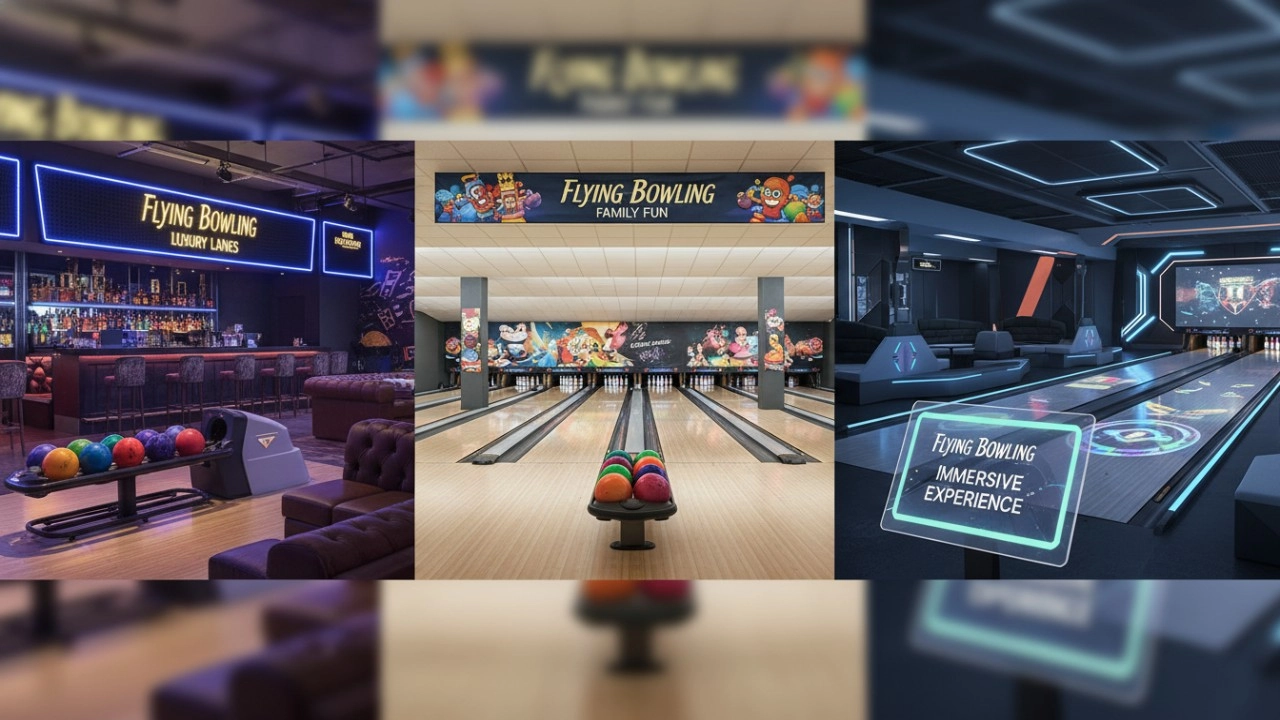
Check out the top 10 bowling equipment manufacturers in the USA, including big names like Flying Bowling. Check out our selection of top-notch bowling gear that's built to perform and last. Stay in the know about the latest and greatest in bowling equipment manufacturing to help you crush it on the lanes.
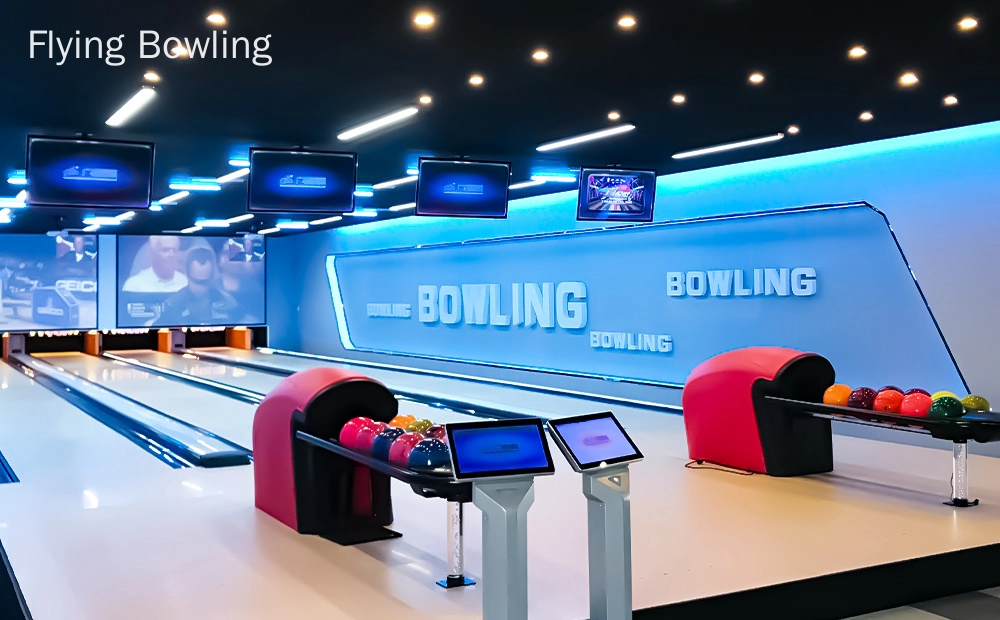
Bowling Equipment
How much does bowling alley equipment cost?
Building a bowling alley may seem very expensive to many people. But you don’t need to spend too much money on Flying bowling. Our prices are very affordable. You can get high-quality bowling equipment at an extremely competitive price from us.
Who buys used bowling equipment?
Usually, many of our Indian customers buy second-hand equipment because the price is relatively low. But in the end, they learned that Flying's prices were extremely competitive and the equipment was brand new and of very high quality. So finally, they chose to cooperate with Flying to purchase bowling equipment.
How many feet is a bowling lane?
We have a total of four different sizes of bowling lanes. The length of a standard bowling lane is 84 feet. The length of Duckpin Bowling Lane is 39.4 feet. The Mini Bowling Lane size is 39.7 feet. The size of the children's bowling lanes is 14.1 feet. In addition, the length of our standard bowling lanes and duckpin bowling lanes can be customized.
How to maintain the mechanical equipment of a bowling alley?
Fairway boards and equipment require regular maintenance. Fairway boards need to be oiled every half month and cleaned daily to extend their service life. At the same time, the condition of the rope and ball return machine needs to be checked every period of time to ensure the normal operation of the equipment. Specifically, we will give you detailed maintenance manuals and videos to teach you how to maintain.
What basic equipment is needed for bowling?
Bowling needs lots of equipment, but the most important parts are the fairway boards and the string pinsetter equipment.
Product
How many lanes does it take to open a bowling alley?
There's no strict rule on the number of lanes required to open a bowling alley. It depends on your business goals and target market.
Here's a breakdown to help you decide:
- Small niche alleys: Some bowling alleys might focus on a specific audience, like a boutique bowling alley with just a few lanes catering to a high-end clientele. They might have other revenue streams besides just bowling, like a fancy restaurant or bar.
- Traditional bowling alleys: These typically have many lanes, often around 8 to 24 lanes , to accommodate a larger number of bowlers and maximize revenue through lane rentals.
- Mini bowling: Certain alleys might offer mini bowling, which uses lighter balls and shorter lanes. This could be a good option for a family entertainment center and wouldn't require a large number of standard lanes.
Ultimately, the number of lanes is a business decision based on your target market, budget, and the overall experience you want to create.
How a bowling ball return machine works?
A bowling ball return system uses a combination of gravity, belts, and sometimes lifts to bring your ball back to you after your roll. Here's a breakdown of the typical process:
-
Ball Exit: After rolling down the lane, the ball exits into a channel at the end. This channel might have a slight incline to help guide the ball towards the return mechanism.
-
Transfer Tray: The ball rolls into a shallow tray or trough. This tray might have a diverter at the end to ensure balls from adjacent lanes don't collide.
-
Elevator or Incline (optional): In some setups, the ball might be lifted to a higher level before entering the return system. This creates a steeper decline for the ball to travel down, helping it gain momentum.
-
Belt Conveyor: The ball reaches a conveyor belt with a textured surface to prevent slipping. This belt carries the ball up an incline.
-
Gravity Channel: Once at the top of the incline, the ball is released onto a long, U-shaped channel. Gravity takes over, pulling the ball down through the channel.
-
Ball Deflector: At the end of the channel, there might be a deflector that diverts the ball slightly towards your lane. This ensures the ball ends up in the correct return slot.
-
Ball Return Tray: The ball finally reaches a tray or cradle positioned in front of your lane, ready for your next roll.
Here are some additional points to note:
- Modern systems might have sensors to detect the presence of a ball and activate the return mechanism accordingly.
- Some higher-end systems use quieter materials and designs to minimize noise during ball return.

Let’s Build a center Together
Partner With a Trusted Bowling Alley Design, One-Stop Solution Manufacturer.
Flying has successfully built ideal bowling alleys for more than 3,000 customers.
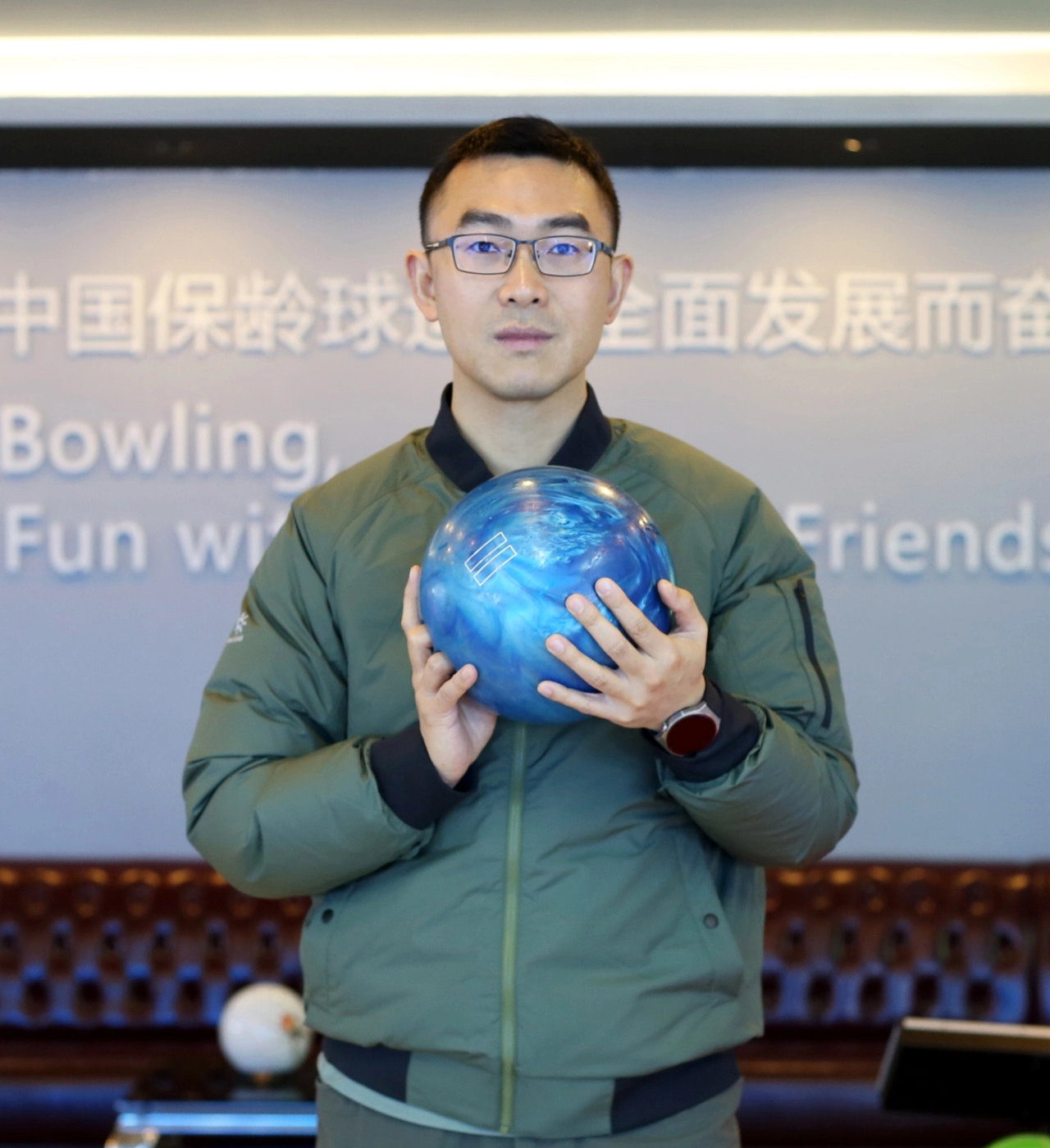
Technical Expert
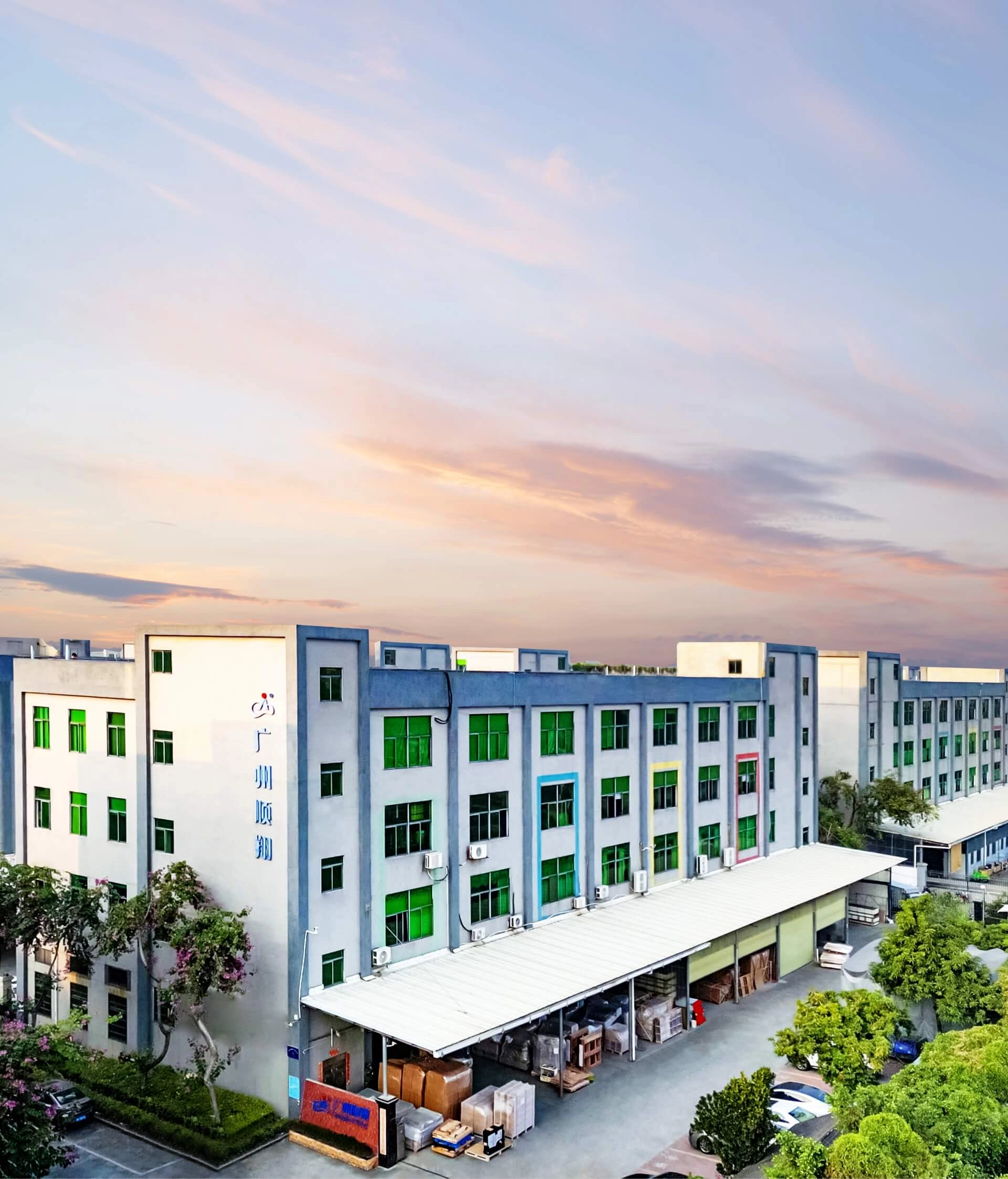
You may also like our products
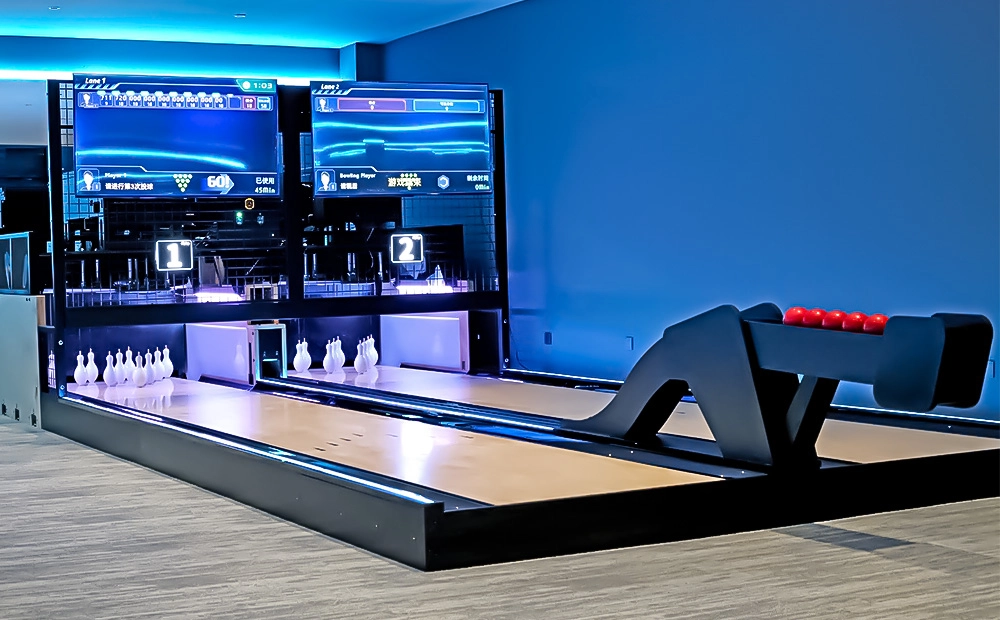
Flying Smart Duckpin Bowling (FSDB) innovative design, standard 9.2-meter short lane, can be shortened in length, compact layout suitable for small spaces. The game rules are simple but challenging, attracting players of different ages to actively participate.
Suitable for social entertainment venues such as bars, billiard halls, and game centers, it not only enhances interactivity but also increases the popularity and consumption frequency of the venue. The fun and competitive nature of FSDB will make it a new focus of social activities.
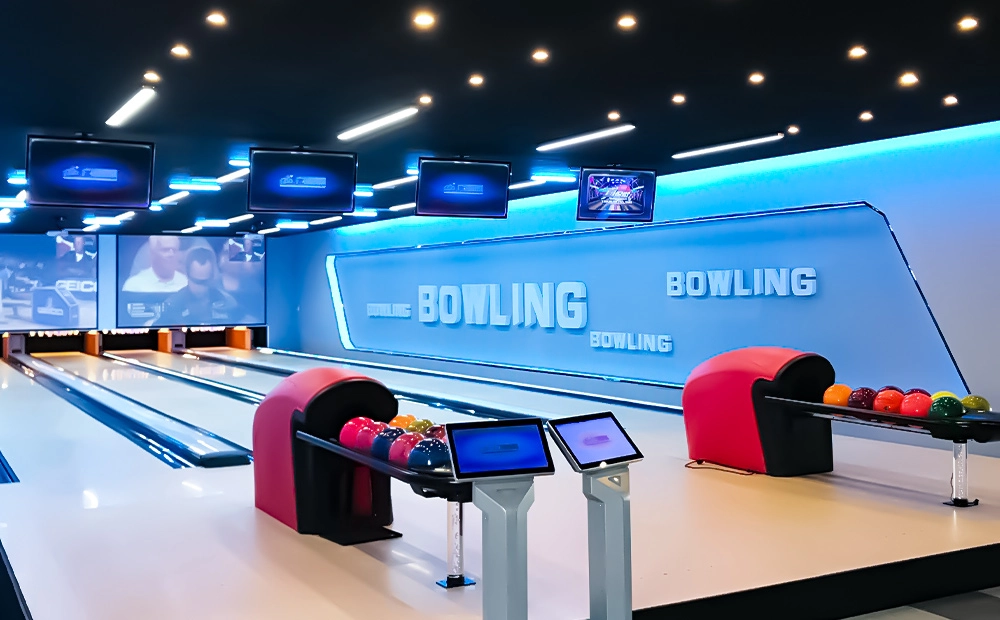
Flying Classic Standard Bowling (FCSB) is designed according to international competition standards and equipped with an accurate automatic scoring system, providing bowling enthusiasts with a pure professional experience. Whether it is for competitions or leisure entertainment, FCSB can meet high-level needs.
Suitable for family entertainment centers, luxury resorts, private villas, or clubs, it is an ideal choice for customers who pursue high-end quality and professional experience. Its classic design and excellent performance will add lasting appeal to the venue.
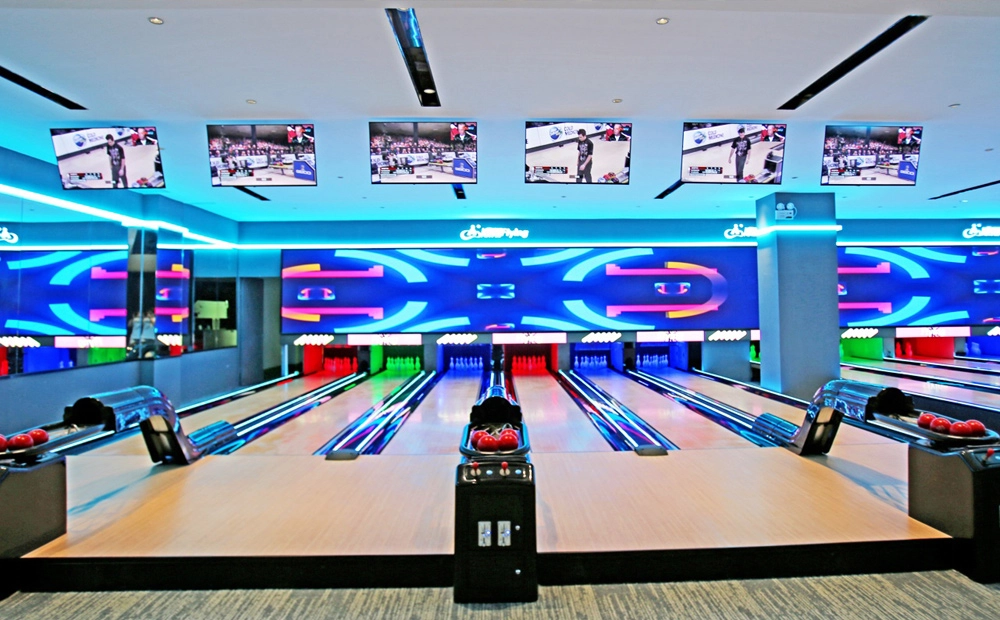
Flying Cute Mini Bowling (FCMB) is a mini bowling experience designed for children and families. The lane length is fixed at 12 meters, equipped with lightweight balls without finger holes (only 1.25kg) and small pins, specially designed for children and family fun.
It can not only help children feel the fun of bowling, but also stimulate their interest and competitive consciousness. Suitable for children's playgrounds, theme parks and parent-child centers, it is the best choice for places focusing on the children's market.
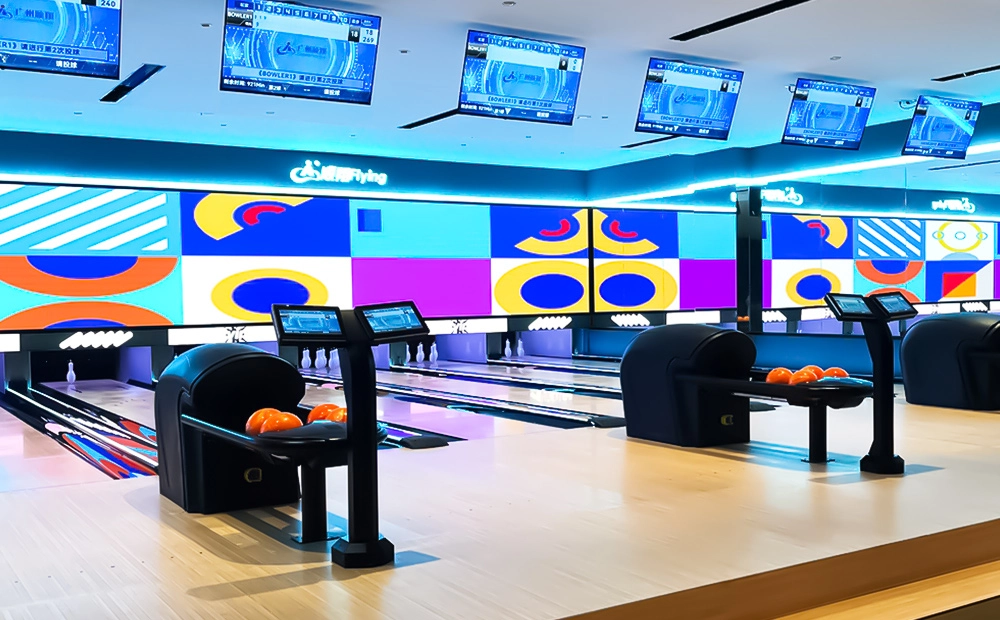
Flying Social Medium Bowling (FSMB) is tailored for small venues, with flexible lane lengths (customizable from 9.6 meters to 18 meters), a small ball design suitable for players of all ages, and light pins that are easier to knock down, increasing participation and fun.
Whether it is a gathering of friends or a casual social, FSMB can easily create a relaxed and pleasant atmosphere. Its efficient space-utilization design is particularly suitable for cafes, bars and community entertainment venues, allowing people to fall in love with bowling in a relaxed interaction.
Contact Flying
Start Your Custom Bowling Alley Project
If you contact us now for more details, we can provide you with a custom bowling alley service. Our service team will get back to you within 24 hours normally!
© 2026 Flying BOWLING. Designed by gooeyun.
FOLLOW US:

Flying Bowling
Flying Bowling
Flyingbowling
Flyingbowling