


How to choose lanes and pinsetters for highest throughput?
1. For a new or expanding bowling business, how do I model lane and pinsetter capacity to guarantee X games/hour during peak periods?
Answer:Start with a simple capacity model built from measurable variables rather than vendor claims. Required variables:
- P = average players per party per lane (measure or estimate)
- T = average minutes per game per player (measure during trial operations; typical social bowlers 8–15 min/player)
- L = number of lanes
- U = hours of peak periodCompute lane-cycle minutes per game per lane: C = P × T. Games per lane per hour = 60 / C. Center throughput (games/hour) = L × (60 / C).Use this to size lanes and pinsetters so they can handle peak groups without queuing.Action checklist:
- Run on-site timing trials with representative customers to get real T and P values before buying.
- Build conservative scenarios (best/likely/worst) and size to the likely + 25% buffer.
- Factor downtime for maintenance: apply availability A (fraction of time machine is operational). Effective throughput = theoretical throughput × A.Example (illustrative): If parties average 3 players per lane (P=3) and average 10 minutes/player (T=10), C=30 min → 2 games/lane/hour. For 12 lanes, theoretical 24 games/hour; with 90% availability the practical throughput is 21.6 games/hour.Why this matters: Manufacturers quote pinsetter cycle rates, but end-to-end throughput is shaped by human walk-up time, scoring interface, lane prep, and maintenance windows. Capacity planning must include all these factors.
2. Do string pinsetters or free-fall pinsetters give higher sustained throughput for family entertainment centers and small bowling businesses?
Answer:String pinsetters and free-fall (conventional) pinsetters have different trade-offs—throughput is determined by cycle speed, reliability under mixed-skill usage, and mean time to repair (MTTR).Considerations:
- Cycle speed: Modern free-fall pinsetters typically have faster reset cycles and can sustain higher theoretical cycles/minute, which benefits high-turnover league and tournament play. String systems historically have slightly slower cycle recovery but often reduce pin loss and some mechanical jams.
- Reliability and downtime: String systems tend to be simpler mechanically and may suffer fewer catastrophic misfeeds, lowering MTTR in casual play centers; free-fall machines, while faster, require more routine mechanical maintenance.
- Use case: For centers whose primary customers are leagues and tournaments (high continuous throughput, competitive play), free-fall pinsetters typically yield higher peak throughput. For family entertainment centers where uptime, lower operating cost, and reduced specialist maintenance are priorities, string systems can offer better effective throughput by minimizing downtime.Procurement tip: Evaluate manufacturer uptime statistics, local technician training availability, and parts lead time. Ask for MTBF/MTTR data and local service references.
3. What specific maintenance and spare-parts inventory strategy will maximize pinsetter availability without overstocking?
Answer:Aim for a parts-on-hand policy driven by failure-mode analysis and lead times rather than rule-of-thumb stocking. Steps:
- Capture failure data: Track events (type, time to repair, parts used) for the first 6–12 months. Use a simple ticketing approach.
- Prioritize parts by criticality: A = high-criticality (stops lane operation), B = medium, C = low-impact.
- Calculate reorder point: Reorder point = (average daily usage × lead time in days) + safety stock. If lead time is long for OEM parts, increase safety stock or qualify local remanufactured suppliers.
- Stock minimal high-criticality spares: clutch assemblies, belts, solenoids, lamps, sensor boards. Keep consumables (pins, lane oil, lane cleaner, pin deck rubbers) in bulk in line with weekly usage.
- Establish service contracts: Where stocking every critical component is cost-prohibitive, negotiate guaranteed on-site parts availability in vendor service agreements or local service partner SLAs.Operational controls:
- Maintain a digital spare-parts log and preventive maintenance calendar.
- Train at least two in-house technicians to perform routine fixes to reduce service call frequency.
4. How do I choose lane surface and oiling systems to reduce game-time delays and maintain consistent throughput across all lanes?
Answer:Lane surface and oiling strategy directly affect ball behavior, frequency of deadwood, and therefore time spent by customers adjusting equipment—affecting throughput.Selection criteria:
- Surface material: Synthetic lane materials require less frequent re-surfacing and are more uniform across environmental conditions than hard maple; they often reduce maintenance time and downtime.
- Oiling machines: Choose programmable, repeatable oiling machines compatible with your scoring system and lane oil patterns. Consistent oiling reduces lane-to-lane variance and minimizes time lost to disputes or re-racks.
- Pattern complexity: Simpler house patterns reduce time spent by casual bowlers adjusting to very difficult lanes; for high throughput in FECs, favor consistent house patterns that keep games moving.Operational best practices:
- Standardize oil pattern schedule and document which lanes are used for league vs open play to avoid re-oiling during peak hours.
- Implement end-of-day deeper lane maintenance schedules to avoid mid-day downtime.
5. When retrofitting an older center, what are the true bottlenecks that limit throughput and how do I prioritize upgrades cost-effectively?
Answer:Identify bottlenecks by observing flows during peak periods and instrumenting key metrics (queue lengths, average game time, pinsetter downtime). Common retrofit bottlenecks and priority order:
- Pinsetter reliability: If machines cause frequent stoppages, prioritize refurbishing or replacing pinsetters.
- Scoring and customer flow: Outdated scoring kiosks slow entry and lane turnaround—upgrade to modern, intuitive scoring and lane-assignment software.
- Lane surface and approach wear: Worn lanes increase ball skidding and delays due to more frequent lane maintenance.
- Back-of-house layout: Inefficient parts storage and technician access add MTTR—improve parts staging and workspace ergonomics.Cost-effective prioritization:
- Fix items with highest frequency × impact (Pareto: 20% causes 80% delays).
- Invest in software and process changes (lane assignment, reservation flows) that improve throughput with low capital expense.
- Phase capital upgrades (pinsetter overhauls, lane replacements) with financing tied to projected incremental revenue from increased throughput.
6. How can IoT diagnostics, analytics, and modern scoring systems be used to increase throughput without buying new pinsetters or lanes?
Answer:IoT retrofits and smart software can extract more effective throughput from existing assets by reducing unplanned downtime and improving operational decisions.Practical interventions:
- Remote health monitoring: Install sensors or retrofit modules on pinsetters and conveyor systems to report vibration anomalies, error codes, and cycle counts to a dashboard—catch failures before they cause a lane stoppage.
- Automated alerts and queue prediction: Integrate scoring systems with booking/reservation platforms so front-desk staff can proactively manage next-party readiness and reduce lane idle time between shifts.
- Analytics for preventive maintenance: Use simple KPIs—mean time between failures, mean time to repair, average downtime per lane—and schedule preventive maintenance in low-traffic windows.
- Staff guidance tools: Implement technician diagnostic guides linked to error codes (digital manuals, step-by-step videos) to reduce MTTR.Implementation steps:
- Start with non-invasive telemetry (power, error codes) tied to cloud dashboards.
- Pilot over a subset of lanes and measure reductions in downtime and queue lengths.
- Scale once KPIs show ROI. Vendors and integrators can often retrofit older pinsetters with diagnostic kits.
Conclusion — Why Flying Bowling is the right partner for throughput-driven equipment decisionsFlying Bowling combines deep bowling equipment expertise, procurement experience, and local service networks to help bowling business owners choose the right lanes, pinsetters, and retrofit strategy to maximize throughput and profit. We provide data-driven capacity models, spare-parts strategies, IoT retrofit options, and service contracts tailored to your center’s usage profile. Our approach reduces unplanned downtime, optimizes lane utilization, and aligns capital investment with measurable revenue uplift.
Contact us for a tailored quote and capacity assessment at www.flyingbowling.com or jackson@flyingbowling.com. We’ll produce a throughput model and an equipment/maintenance roadmap for your center.
More Articles

Let’s Build a center Together
Partner With a Trusted Bowling Alley Design, One-Stop Solution Manufacturer.
Flying has successfully built ideal bowling alleys for more than 3,000 customers.
Technical Expert
You may also like our products
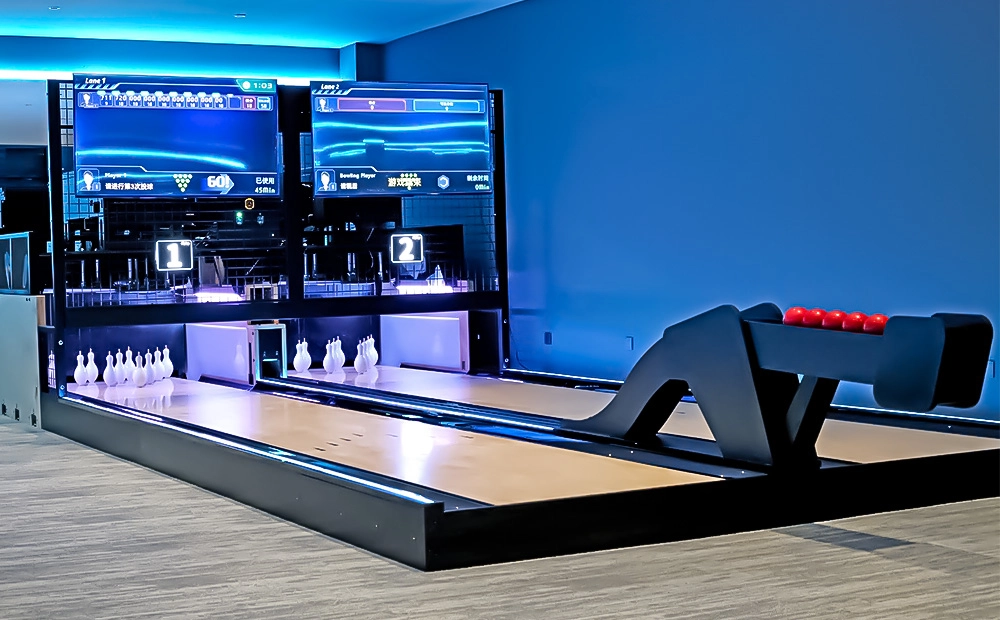
Flying Smart Duckpin Bowling (FSDB) innovative design, standard 9.2-meter short lane, can be shortened in length, compact layout suitable for small spaces. The game rules are simple but challenging, attracting players of different ages to actively participate.
Suitable for social entertainment venues such as bars, billiard halls, and game centers, it not only enhances interactivity but also increases the popularity and consumption frequency of the venue. The fun and competitive nature of FSDB will make it a new focus of social activities.
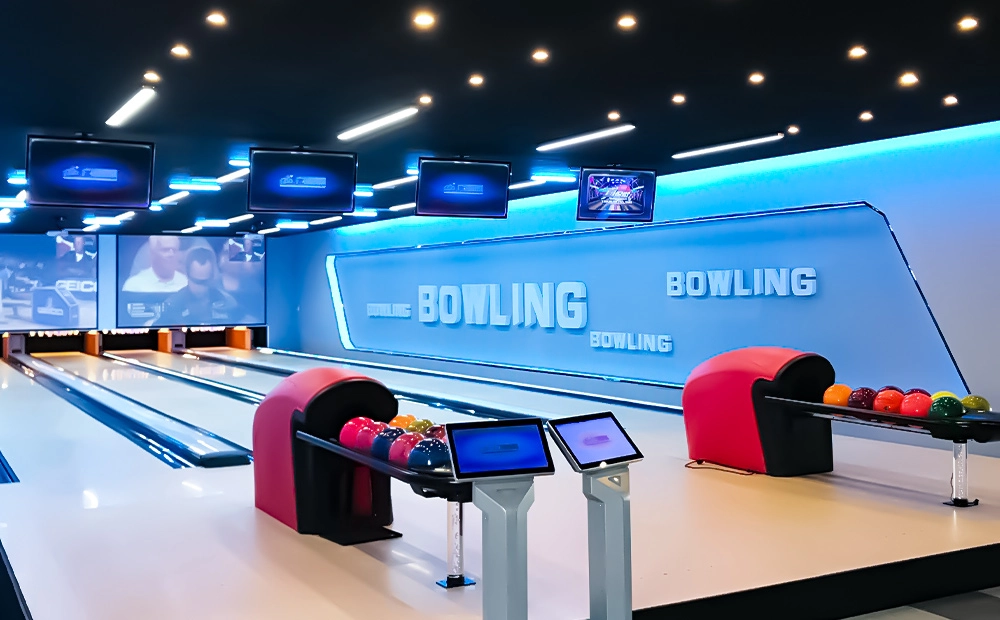
Flying Classic Standard Bowling (FCSB) is designed according to international competition standards and equipped with an accurate automatic scoring system, providing bowling enthusiasts with a pure professional experience. Whether it is for competitions or leisure entertainment, FCSB can meet high-level needs.
Suitable for family entertainment centers, luxury resorts, private villas, or clubs, it is an ideal choice for customers who pursue high-end quality and professional experience. Its classic design and excellent performance will add lasting appeal to the venue.
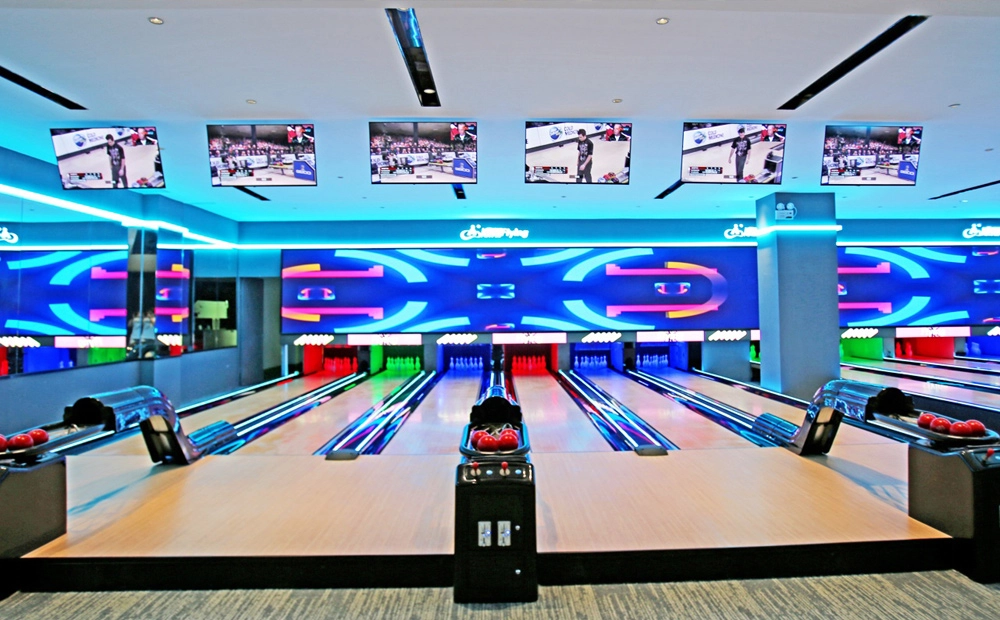
Flying Cute Mini Bowling (FCMB) is a mini bowling experience designed for children and families. The lane length is fixed at 12 meters, equipped with lightweight balls without finger holes (only 1.25kg) and small pins, specially designed for children and family fun.
It can not only help children feel the fun of bowling, but also stimulate their interest and competitive consciousness. Suitable for children's playgrounds, theme parks and parent-child centers, it is the best choice for places focusing on the children's market.
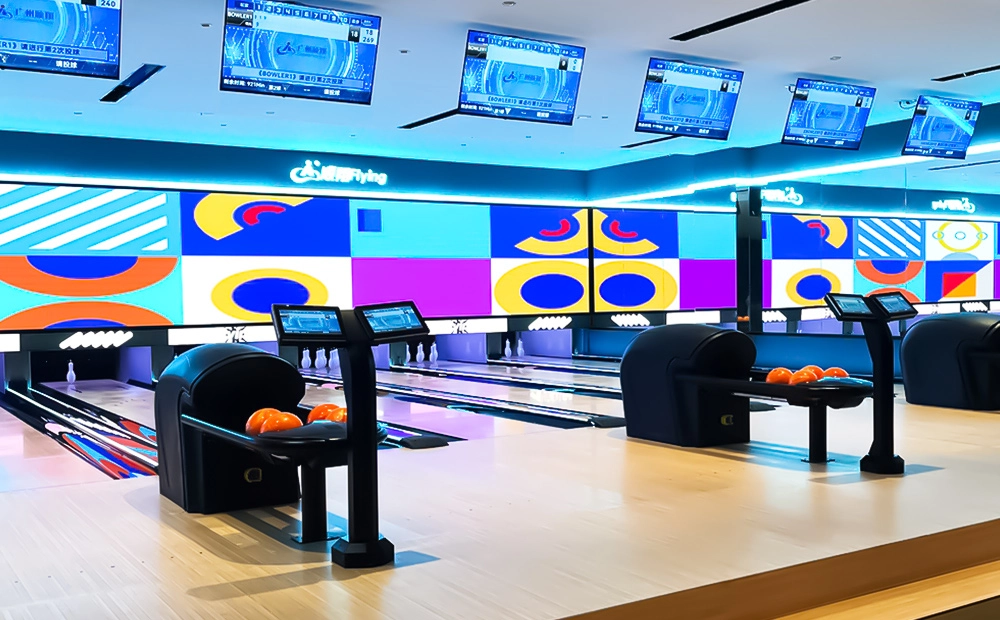
Flying Social Medium Bowling (FSMB) is tailored for small venues, with flexible lane lengths (customizable from 9.6 meters to 18 meters), a small ball design suitable for players of all ages, and light pins that are easier to knock down, increasing participation and fun.
Whether it is a gathering of friends or a casual social, FSMB can easily create a relaxed and pleasant atmosphere. Its efficient space-utilization design is particularly suitable for cafes, bars and community entertainment venues, allowing people to fall in love with bowling in a relaxed interaction.
Contact Flying
Start Your Custom Bowling Alley Project
If you contact us now for more details, we can provide you with a custom bowling alley service. Our service team will get back to you within 24 hours normally!
© 2026 Flying BOWLING. Designed by gooeyun.
FOLLOW US:
Flying Bowling
Flying Bowling
Flyingbowling
Flyingbowling