


How Heavy is a Bowling Ball? Your Ultimate Guide to Weight, Performance & Modern Play (2026)
This comprehensive guide answers the definitive question, "How heavy is a bowling ball?" covering everything from the standard 6-16 pound range to advanced physics. It explores the "10 percent rule," demographics-based recommendations, and how modern ball technology—exemplified by the vibrant "Flying®" brand—changes the weight-versus-performance equation.
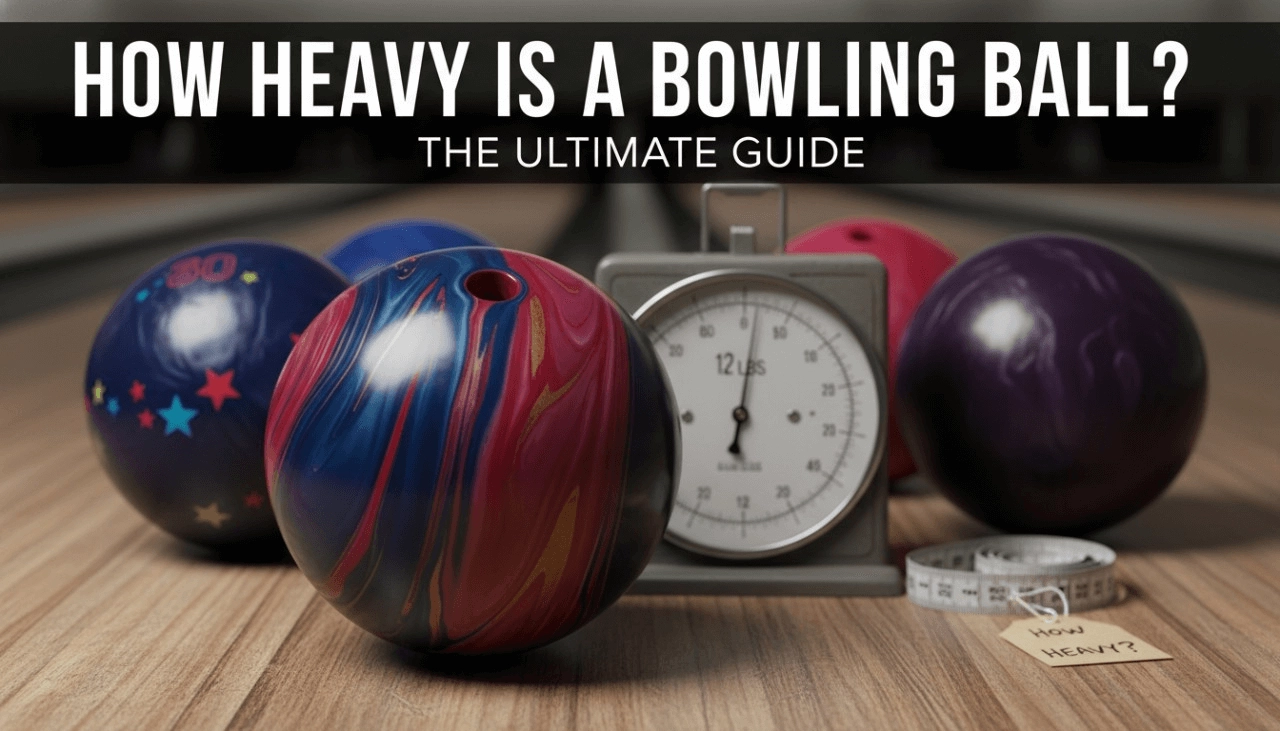
Introduction: Unraveling the Mystery of Bowling Ball Weight
Walking into a bowling alley can be an sensory overload of crashing pins, slick oil patterns, and neon lights. But for anyone looking to improve their game, one question inevitably rises above the noise: How heavy is a bowling ball?
It is the fundamental variable that dictates your game. Too light, and the ball deflects off the pins like a tennis ball hitting a brick wall. Too heavy, and you risk injury or a complete loss of control. The standard answer is straightforward: bowling balls typically range from 6 pounds to 16 pounds. However, finding your ideal bowling ball weight is far more nuanced than simply picking a number off the rack.
Whether you are a recreational player hoping to break 100 or an aspiring pro looking to increase your strike rate, understanding bowling ball physics and weight dynamics is crucial. This guide will take you through the standard weights, the "10 percent rule," and how modern technology has revolutionized the way we select our equipment.
The Official Story: Standard Bowling Ball Weights
To understand the equipment, we must look at the regulations. According to LiveAbout, the heaviest legal bowling ball weighs 16 pounds, while the lightest is typically six pounds. These limits are set by the governing bodies of the sport, such as the USBC (United States Bowling Congress), to ensure fair competition and standardize equipment safety.
Most house balls (the ones provided by the alley) and entry-level retail balls are manufactured in specific increments:
· Minimum Weight: generally 6 lbs (often aimed at children).
· Maximum Weight: 16 lbs (the absolute legal cap).
· Increments: Weights usually increase by exactly one pound (e.g., 12, 13, 14 lbs).
While you might occasionally find specialized balls outside these norms (lighter balls for toddlers, for example), the 6-16 pound spectrum is the industry standard. Understanding this range is the first step in decoding the bowling ball weight chart.
The '10 Percent Rule': A Starting Point, Not a Strict Law
When asking how to choose bowling ball weight, you will almost certainly hear about the "10 Percent Rule."
The Formula
As explained by a professional bowler in a popular YouTube guide on bowling techniques, the general rule of thumb is to select a ball that is approximately 10 percent of your body weight.
· If you weigh 100 lbs -> 10 lb ball.
· If you weigh 140 lbs -> 14 lb ball.
· If you weigh 160 lbs or more -> 16 lb ball (maximum).
Pros and Cons
This rule serves as an excellent bowling ball weight for beginners because it takes the guesswork out of the initial selection. However, GoBowling.com emphasizes that this is merely a starting weight calculation. It does not account for upper body strength, wrist stability, or prior athletic experience.
· Caveat: A 200-pound man should not necessarily use a 16-pound ball if he has a wrist injury or poor form. Conversely, a strong youth bowler might handle a ball slightly heavier than 10% of their weight if they have proper coaching.
Beyond the Rule: Factors for Personalized Bowling Ball Weight
The 10% rule is a guideline, but your personal physiology and playing style dictate the reality. A discussion on Quora regarding bowling ball feel highlights that weight preference is a debate between "heavier for more hitting power" versus "control."
Body Weight & Physical Strength
While body weight provides a baseline, physical strength is the variable. If you can hold the ball in front of you with your arm extended for a few seconds without trembling, the weight is likely manageable.
Bowling Style & Technique
Are you a "cranker" who generates massive hook, or a "stroker" who plays straight?
· Two-Handed Bowlers: Often can handle slightly heavier weights because the load is distributed across two hands during the approach.
· Speed vs. Pin Action: As noted in the Quora discussion, a heavier ball hits harder, but only if you can maintain speed. If moving up to a 15lb ball causes your speed to drop significantly, you lose the kinetic energy advantage.
Lane Conditions
Interestingly, lane conditions can influence weight choice. On heavy oil, a slightly heavier ball might help cut through the slickness, whereas on dry lanes, a lighter ball might help you generate the necessary revs before the ball hooks too early.
Tailoring Weight for Every Bowler: Demographics & Skill Levels
A one-size-fits-all approach rarely works in bowling. Here is how to break down the bowling ball weight chart by demographic:
Youth Bowling Ball Weight
For children, the 10% rule is paramount, but age is also a factor.
· Ages 6-9: Typically 6-9 lbs.
· Ages 10-14: Typically 10-12 lbs.The focus for youth bowling ball weight should always be on form development. If the ball drags the child's shoulder down or ruins their posture, it is too heavy.
Women Bowlers
Historically, many women were steered toward 10-12 pound balls. However, modern coaching suggests that many adult women can comfortably throw 13, 14, or even 15-pound balls with proper fitting. The key is the drilling—a custom-drilled ball feels significantly lighter than a house ball of the same weight.
Senior Bowlers
As we age, grip strength and flexibility can diminish. Seniors often benefit from dropping 1 or 2 pounds in ball weight to maintain ball speed and reduce strain on the back and knees.
Professional Bowling Ball Weight
Contrary to popular belief, not every pro throws a 16-pound ball. Many PBA (Professional Bowlers Association) players have migrated to 15-pound equipment. The modern core dynamics allow a 15-pound ball to carry pins just as effectively as a 16-pounder, with less fatigue over a 40-game tournament block.
Different Ball Types, Different Weight Considerations
The material of the ball influences how the weight "acts" on the lane.
· Reactive Resin Balls: These balls have high-friction coverstocks designed to hook. Because they create such a strong angle of entry into the pins, you can sometimes get away with a slightly lightest bowling ball weight (relative to your max) because the hook generates the power.
· Plastic/Polyester (Spare) Balls: These are designed to go straight. Many bowlers stick to their standard weight for spare balls to maintain consistent timing, though some prefer a slightly lighter plastic ball for pinpoint accuracy on corner pins.
· Specialty Balls: GoBowling.com points out that other variations like Duckpin and Candlepin use drastically different balls (hand-sized, no finger holes) with completely different weight classes (roughly 3-4 lbs), distinct from standard Ten Pin bowling.
Unveiling Modern Ball Technology: The 'Flying®' Experience
To truly understand how weight interacts with performance in the modern era, we must look at current manufacturing trends. Today's bowling balls are feats of engineering, combining aesthetic appeal with dynamic cores that make the weight work for you.
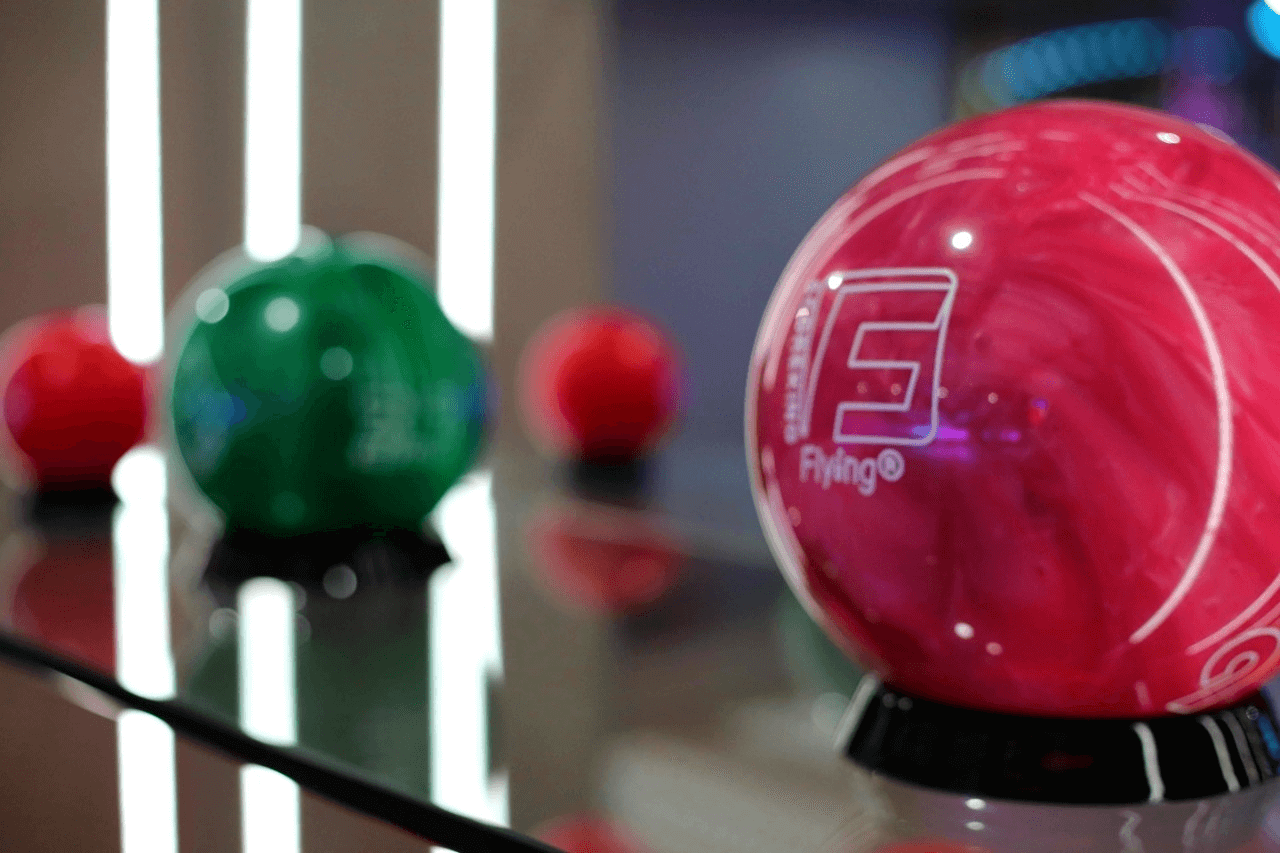
Take, for example, the image above showcasing a modern retail environment. In the foreground, we see a stunning swirling pink (magenta) ball resting on a sleek black stand. It features a prominent white logo with a stylized "E" or "F" and the brand name "Flying®".
This visual represents more than just a piece of sporting equipment; it represents the evolution of the game.
1. Visual Appeal: The vibrant magenta and the blurred green and red balls in the background highlight how manufacturers use color to differentiate weight and series.
2. Modern Construction: A ball like the "Flying®" likely utilizes a sophisticated coverstock. In the past, a 12-pound ball was simply a shell with a generic filler. Today, brands engineer specific cores for lighter weights. This means a 12-pound or 13-pound reactive bowling ball weight can now possess the same dynamic "imbalance" as heavier balls, allowing lighter-weight users to achieve high-performance hook potential.
3. Perceived Weight: The sleek design implies balance. When a ball is perfectly balanced and drilled to your hand, a 15-pound ball can feel like it weighs 13 pounds. The engineering behind brands like the one pictured focuses on maximizing kinetic energy transfer, ensuring that the "Flying®" experience is one of power, regardless of the scale reading.
The Impact of Ball Weight: Why Every Pound Matters
Bowling ball physics dictates that Force = Mass x Acceleration. However, in bowling, we also deal with the coefficient of restitution (how much energy is lost when the ball hits the pins).
· Pin Action & Carry: According to LiveAbout, a heavier ball naturally drives through the pins with less deflection. A 16-pound ball will plow through the "pocket" (the space between the 1 and 3 pins) more effectively than a 10-pound ball, which might bounce off the head pin.
· Consistency: A heavier ball is less susceptible to small errors in your release. It acts as a pendulum, smoothing out your swing.
· Injury Prevention: This is the counter-argument. Using the heaviest bowling ball weight you can lift isn't wise if it tears your rotator cuff. The "right" weight is the heaviest weight you can throw comfortably all day.
Finding Your Perfect Match: Testing and Adjustment
How do you finalize your choice? Selecting the Proper Bowling Ball Weight: A Guide for New Bowlers suggests a rigorous testing process.
1. The Comfort Test: Hold the ball at your side with your arm relaxed. Can you swing it back and forth freely? If your shoulder dips or you have to grip tightly to keep it from dropping, it’s too heavy.
2. Experimentation: Go to the alley and play a game with a 12lb ball, then a 13lb ball. Note the difference in your fatigue levels.
3. Observe Pin Reaction: If you hit the pocket perfectly but leave the 5-pin or 7-10 split frequently, your ball might be too light (deflecting). If you are struggling to get the ball down the lane or dropping it early, it is too heavy.
4. Drilling is Key: Remember that a house ball fits poorly. Once you buy a ball and have it drilled to your hand, you can usually handle 1-2 pounds more than you could with a house ball.
Common Mistakes to Avoid When Choosing Ball Weight
· Ego Bowling: Men often default to 16 pounds because it’s the "max," sacrificing form for ego.
· Ignoring the Drill: Judging weight based on an undrilled ball or a poorly fitting house ball.
· Static Selection: Choosing a weight based on a chart without physically testing it on a lane.
· Overlooking the Coverstock: Buying a plastic ball for a hook shot just because the weight was right.
Conclusion: The Weight of Success is in Your Hands
Ultimately, answering "How heavy is a bowling ball?" is a personal journey. While the 6-16 pound range is standard, and the 10% rule is a great compass, your ideal match lies at the intersection of comfort, physics, and modern technology. Whether you are eyeing a standard house ball or a high-tech "Flying®" reactive resin ball, prioritize a weight that allows for a smooth, repeatable swing.
Don't be afraid to experiment. Your perfect game starts with the perfect weight.
Frequently Asked Questions
What is the heaviest legal bowling ball weight?
The heaviest legal bowling ball weighs 16 pounds. This limit is set by bowling's governing bodies to ensure fair play and equipment standards.
What is the lightest bowling ball weight commonly available?
Commonly available bowling balls start as light as 6 pounds. Some specialized balls for very young children may be even lighter, but 6 lbs is standard for house balls.
How do I use the '10 percent rule' to choose my bowling ball weight?
The '10 percent rule' suggests choosing a bowling ball that is approximately 10% of your body weight. For example, if you weigh 150 pounds, a 15-pound ball would be a good starting point.
Is a heavier bowling ball always better for knocking down pins?
While heavier balls generally transfer more energy to the pins, leading to better pin action, it's not always 'better'. The ability to control the ball consistently with good speed and accuracy is more crucial than simply using the heaviest possible ball.
What weight bowling ball should a beginner use?
Beginners should prioritize comfort and control over maximum weight. Start with a ball that feels comfortable to swing repeatedly without strain, often following the 10% rule as a guide, and adjust as technique improves.
Does bowling ball weight affect my hook or curve?
Yes, ball weight can indirectly affect your hook or curve. A ball that is too heavy might prevent you from generating sufficient revs, while a ball that is too light might be harder to control on the lane, impacting your ability to execute a consistent hook.
Are there different weight recommendations for men and women?
There aren't strict gender-based recommendations, as individual strength and comfort are key. However, on average, women often gravitate towards balls in the 10-14 pound range, while men frequently use 14-16 pound balls, though these are just general trends.
How can I tell if my bowling ball is too heavy or too light?
· Too heavy: You might struggle to control your swing, experience muscle strain, or throw the ball too slowly, resulting in poor pin carry.
· Too light: The ball might feel 'floppy' in your hand, you might overthrow it, or it may deflect too much upon impact with pins, leading to fewer strikes.
References
· How Much Should Your Bowling Ball Weigh? - LiveAbout
· How to Choose Bowling Ball Size - GoBowling.com
· Bowling Tips & Techniques : What Weight Bowling Ball to Use - YouTube
· What is the weight of a bowling ball, and how does it feel to hold it up? - Quora
More Articles
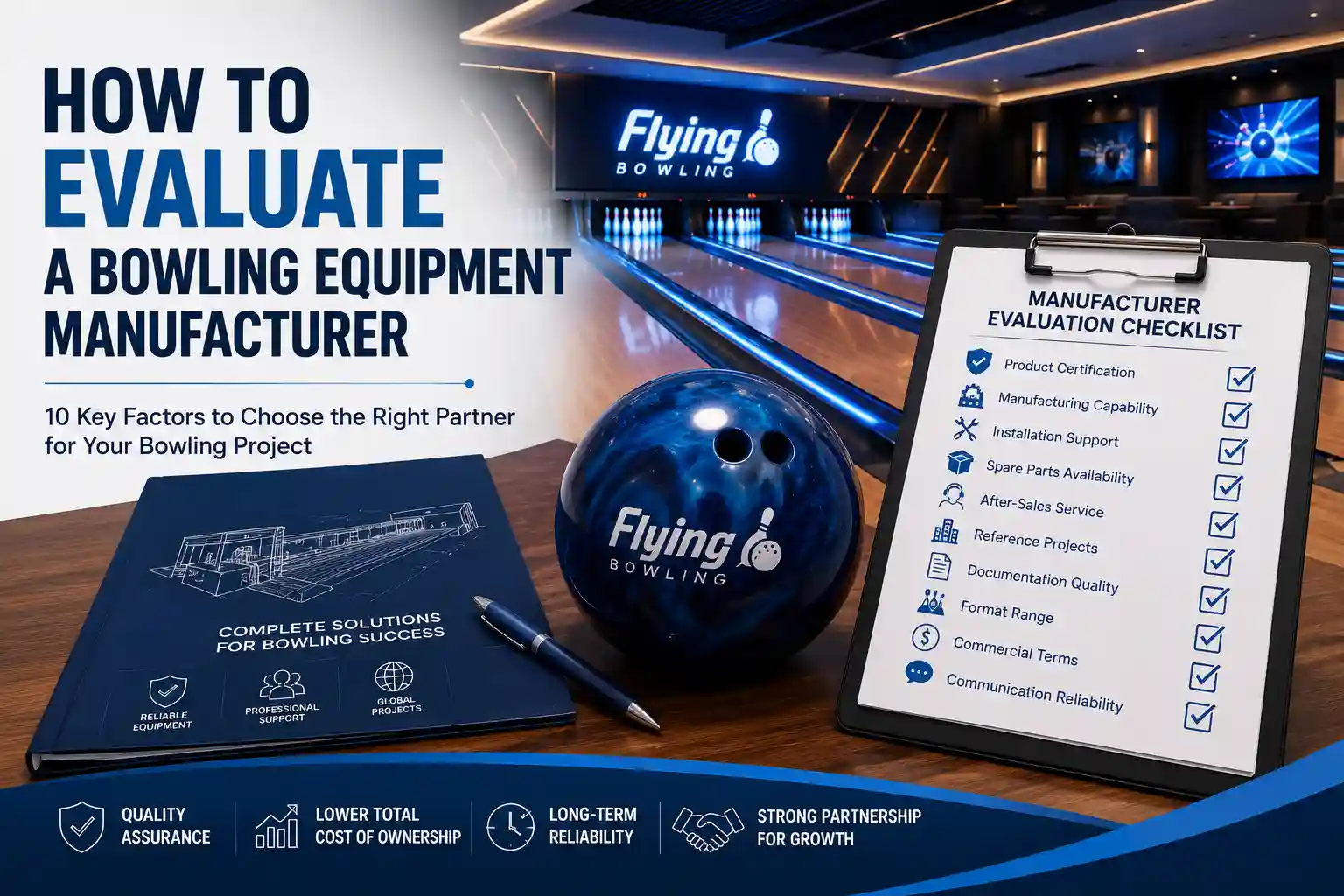

Let’s Build a center Together
Partner With a Trusted Bowling Alley Design, One-Stop Solution Manufacturer.
Flying has successfully built ideal bowling alleys for more than 3,000 customers.
Technical Expert

You may also like our products
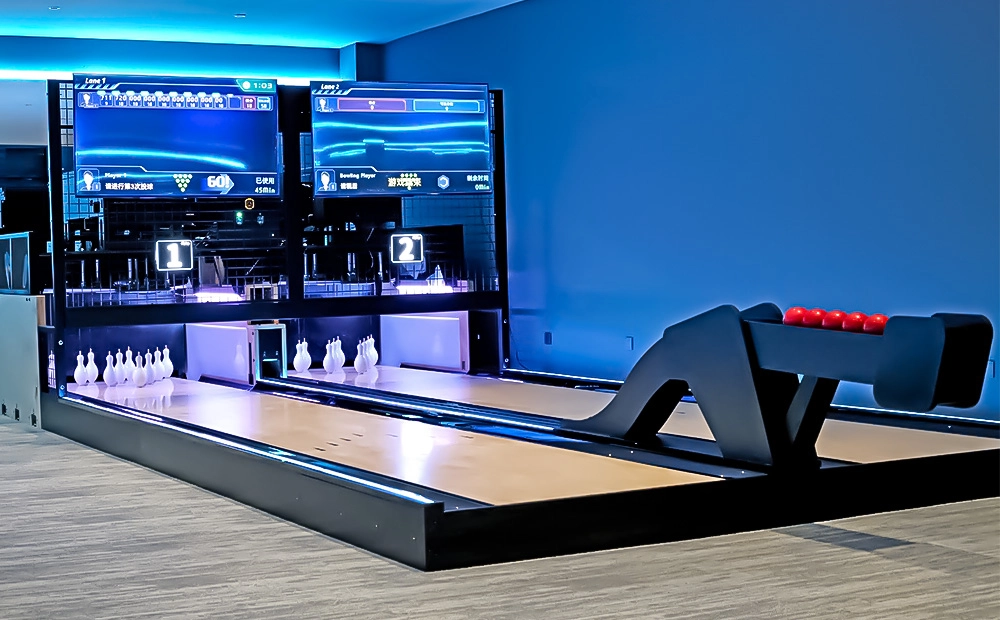
Flying Smart Duckpin Bowling (FSDB) innovative design, standard 9.2-meter short lane, can be shortened in length, compact layout suitable for small spaces. The game rules are simple but challenging, attracting players of different ages to actively participate.
Suitable for social entertainment venues such as bars, billiard halls, and game centers, it not only enhances interactivity but also increases the popularity and consumption frequency of the venue. The fun and competitive nature of FSDB will make it a new focus of social activities.
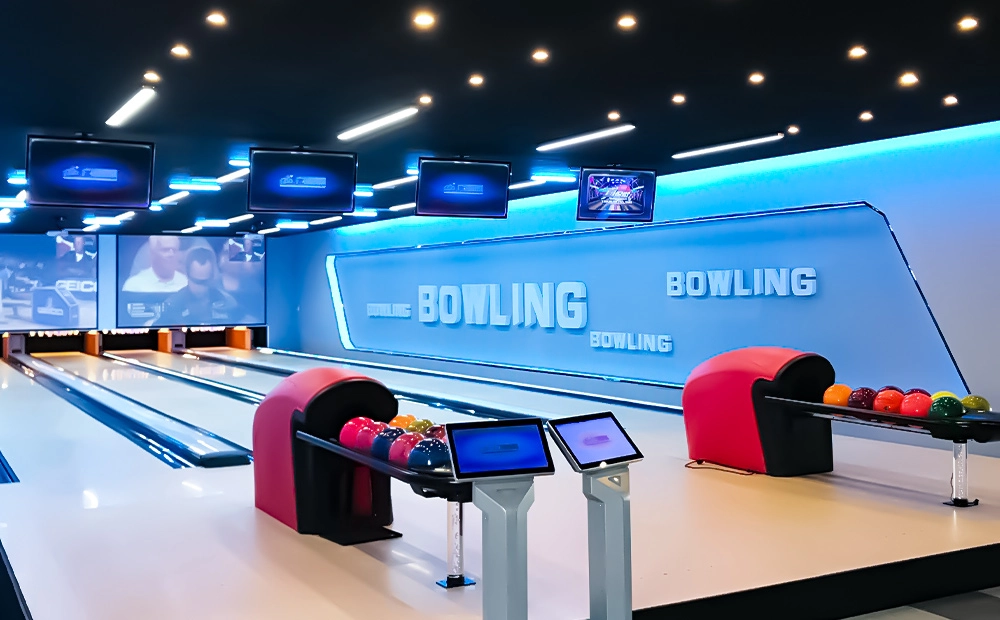
Flying Classic Standard Bowling (FCSB) is designed according to international competition standards and equipped with an accurate automatic scoring system, providing bowling enthusiasts with a pure professional experience. Whether it is for competitions or leisure entertainment, FCSB can meet high-level needs.
Suitable for family entertainment centers, luxury resorts, private villas, or clubs, it is an ideal choice for customers who pursue high-end quality and professional experience. Its classic design and excellent performance will add lasting appeal to the venue.
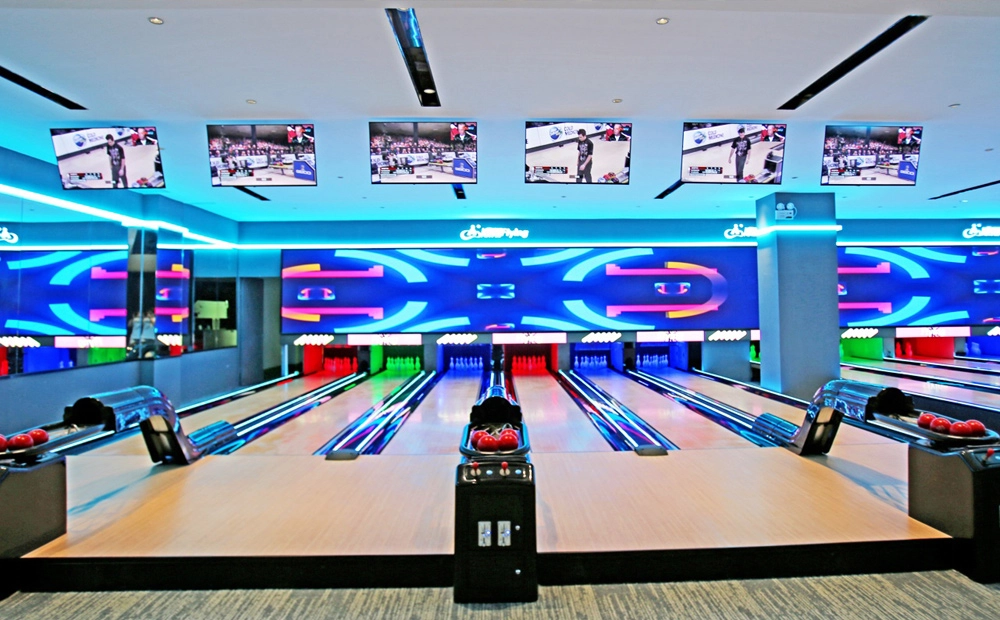
Flying Cute Mini Bowling (FCMB) is a mini bowling experience designed for children and families. The lane length is fixed at 12 meters, equipped with lightweight balls without finger holes (only 1.25kg) and small pins, specially designed for children and family fun.
It can not only help children feel the fun of bowling, but also stimulate their interest and competitive consciousness. Suitable for children's playgrounds, theme parks and parent-child centers, it is the best choice for places focusing on the children's market.
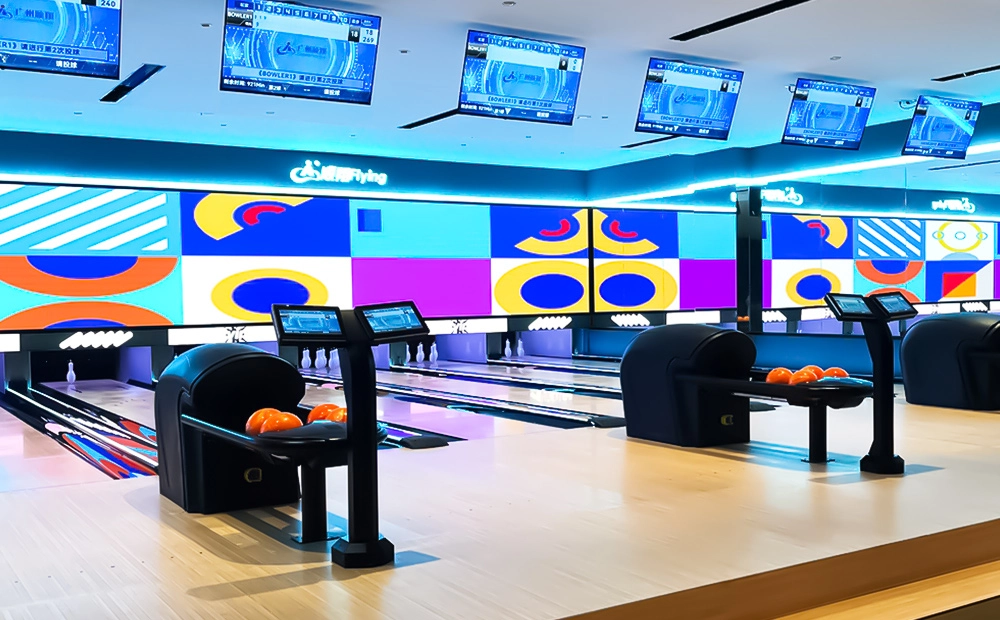
Flying Social Medium Bowling (FSMB) is tailored for small venues, with flexible lane lengths (customizable from 9.6 meters to 18 meters), a small ball design suitable for players of all ages, and light pins that are easier to knock down, increasing participation and fun.
Whether it is a gathering of friends or a casual social, FSMB can easily create a relaxed and pleasant atmosphere. Its efficient space-utilization design is particularly suitable for cafes, bars and community entertainment venues, allowing people to fall in love with bowling in a relaxed interaction.
Contact Flying
Start Your Custom Bowling Alley Project
If you contact us now for more details, we can provide you with a custom bowling alley service. Our service team will get back to you within 24 hours normally!
© 2026 Flying BOWLING. Designed by gooeyun.
FOLLOW US:
Flying Bowling
Flying Bowling
Flyingbowling
Flyingbowling