

How Bowling Lanes Are Built: Step-by-Step Construction Process
Understanding how bowling lanes are built matters for three audiences: operators planning a new installation who need to know what the construction process involves; project managers coordinating civil works with equipment delivery; and buyers comparing synthetic lane systems who want to understand what they are actually purchasing. This guide covers the full bowling lane construction process from subfloor preparation through to final calibration, with notes on materials, installation sequence, and the specifications that most directly affect the finished lane's playing performance.
Bowling lanes are built in a defined sequence: the subfloor is prepared to a levelness specification; the lane structure (subframe or direct-lay foundation) is installed; the synthetic lane surface panels are laid, aligned, and joined; the pin deck and approach area are completed; the pinsetter mechanism and ball return system are mounted and aligned; and the scoring system is calibrated and commissioned. The exact process varies by lane system design and supplier — confirm the installation sequence with your equipment supplier before civil works begin.
- ›Floor levelness tolerance: the acceptable deviation across the lane zone differs between manufacturers and system types. A tolerance that is adequate for one system may be insufficient for another — obtain this figure from your equipment supplier before the slab is surveyed.
- ›Ceiling clearance above the pin deck: the required clearance for pinsetter mounting varies by mechanism design and format. Compact formats generally require less clearance than standard ten-pin; confirm by model, not by format category alone.
- ›Electrical load and distribution: total load per lane and the number and position of connection points vary by equipment configuration. Electrical design should be based on the supplier's load schedule, not a per-lane estimate derived from general references.
Confirm all parameters with your equipment supplier before finalizing civil drawings or committing a site.
Lane Anatomy: What a Bowling Lane Is Made Of
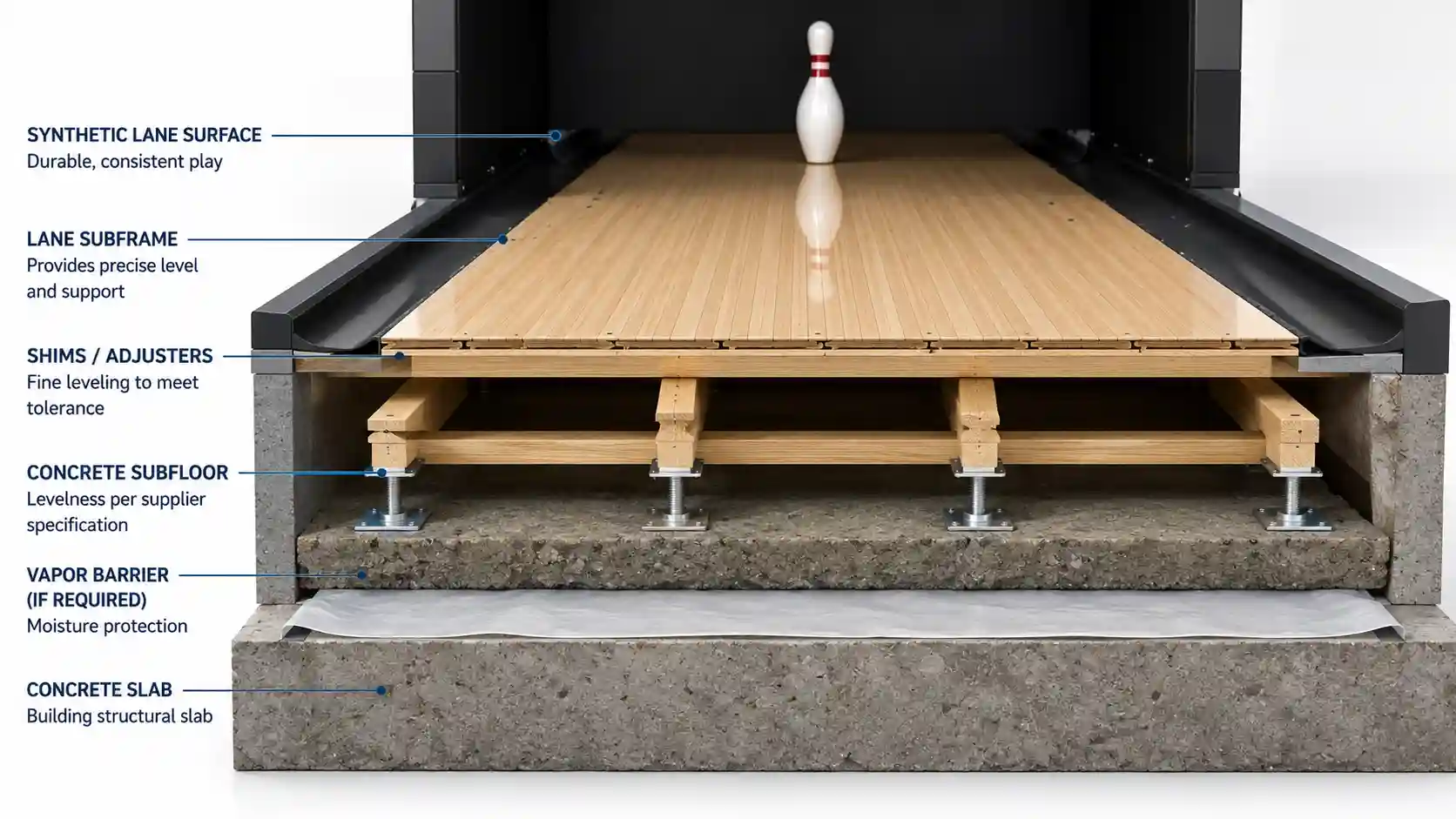
Before covering how bowling lanes are built in detail, it helps to understand what a finished lane consists of. A commercial bowling lane is not a single surface — it is a layered assembly of structural, functional, and playing surface components that must work together to deliver consistent ball motion and support the mechanical equipment above and beneath it.
The building's concrete floor slab — the foundation on which everything else rests. Must meet a levelness tolerance specified by the lane manufacturer. Any deviation beyond this tolerance requires grinding or self-leveling compound before installation can begin.
A structural frame or sleeper system that sits between the slab and the lane surface, providing the precise elevation and levelness required for the playing surface. Some modern synthetic lane systems use a direct-lay or low-profile frame construction; the subframe design is system-specific.
The playing surface itself — in modern commercial lanes, this is a synthetic panel system (typically high-density polyethylene or composite) that replicates the playing characteristics of traditional maple wood while offering greater durability and lower maintenance. The surface must be flat, smooth, and free from joints that would affect ball motion.
The end section of the lane where the ten pins (or equivalent) are set. Constructed to exact dimensional specifications — pin spot positions must be precisely located for consistent pinsetter operation. The pin deck structure also supports the pinsetter mounting points.
The area behind the foul line from which the bowler delivers the ball. Typically a different surface material from the lane — non-slip, comfortable underfoot, and finished to a consistent level with the lane surface at the foul line. Approach depth affects the bowler's delivery mechanics; confirm required depth with the equipment supplier.
The channels on either side of the lane that capture errant balls and return them to the ball return system. Gutter depth and profile affect ball deflection and safety; installed as part of the lane package and positioned to the lane manufacturer's specification.
Synthetic vs Wood Lane Surfaces
The bowling lane construction process differs depending on whether the lane uses a traditional hardwood surface or a modern synthetic system. For new commercial installations, synthetic lane surfaces are the most commonly specified choice. Understanding the differences clarifies what the installation process involves and why certain civil preparation steps matter.
- ›Pre-fabricated panel system; faster installation than wood
- ›Consistent surface properties across the lane width and length
- ›Dimensionally stable — not affected by humidity or temperature change
- ›Lower long-term maintenance requirement than hardwood
- ›Standard choice for new commercial builds and retrofits
Engineering considerations: Panel joints are the primary quality-control point — joint height offset of even a fraction of a millimeter creates a ball deflection point that is perceptible during play. The subframe must be level to within the manufacturer's tolerance before panels are laid; correcting a joint offset after panel installation requires releveling the subframe section and re-laying the panels above it. Panel expansion at operating temperature should also be confirmed with the supplier for installations in climates with high ambient temperature variation — some systems require specific joint gaps to accommodate thermal movement.
- ›Maple and pine construction; requires skilled installation and finishing
- ›Susceptible to humidity and temperature-related movement
- ›Requires periodic resurfacing, sanding, and refinishing
- ›Found in legacy centers; typically not specified for new builds
- ›Replacement with synthetic overlay is a common renovation path
The Bowling Lane Construction Process: Step by Step
How bowling lanes are built follows a defined sequence that cannot be easily reordered — each step creates the conditions for the next. Understanding this sequence helps operators coordinate civil preparation with equipment delivery and avoid the scenario where equipment arrives before the site is ready to receive it.
The concrete slab is surveyed for levelness across the full lane zone. Any deviations beyond the lane manufacturer's specification are corrected by grinding high spots or applying a self-leveling compound to low areas. This step must be completed and signed off before any lane components are delivered — installing lane components on an out-of-tolerance floor produces a distorted lane surface that cannot be corrected without uninstalling and relaying. Obtain the levelness specification from the equipment supplier before the structural engineer or contractor surveys the floor.
Power conduit and data cabling for each lane position are routed through or under the slab before the lane subframe is installed. Once the lane structure is in place, access to under-lane conduit is limited or impossible without significant disruption. Confirm the electrical and data routing plan with the equipment supplier before the subfloor is finished — the conduit positions must align with the equipment's connection points.
The subframe or sleeper system is installed on the prepared slab, leveled with precision, and anchored. The subframe provides the reference surface for the lane panels and establishes the finished lane height. Lane centerline positions are set at this stage — accurate centerline positioning affects gutter width, approach alignment, and pinsetter mounting. Subframe installation is the stage where the lane's geometry is established; errors here propagate into every subsequent layer.
Synthetic surface panels are laid sequentially from the approach end toward the pin deck, joined at the panel edges according to the manufacturer's assembly method. Panel joints must be tight, flush, and free from vertical offset — any step at a joint creates a ball deflection point that affects playing consistency. Arrow and dot position markings are built into or applied to the surface panels; confirm that marking positions comply with the applicable playing standard for the format (USBC or equivalent) where competition play is intended.
The pin deck section is installed at the end of the lane, with pin spot positions located precisely to the format's dimensional specification. Pin spot accuracy directly affects pinsetter alignment and the consistency of pin action — a mislocated pin spot that is not caught before pinsetter installation requires correction at the most inconvenient point in the sequence. Gutters are fitted on both sides of the lane to the manufacturer's width specification and secured to the lane structure.
The approach surface is installed behind the foul line, flush with the lane surface at the foul line transition. Approach depth must accommodate the bowler's delivery steps — confirm the required depth with the equipment supplier for the format. The foul line itself is marked at the transition; its position relative to the pin deck must match the lane length specification. Approach surfaces are typically a different material from the lane, chosen for non-slip performance and comfort.
The pinsetter mechanism is mounted above the pin deck on the structural supports that were specified in the building design. For string pinsetters, the overhead mounting frame, motor, and string assembly are installed and aligned to the pin spot positions. Pinsetter alignment — the relationship between the mechanism's pickup points and the pin deck spots — determines pin reset accuracy and is adjusted until consistent placement is confirmed across multiple cycles.
The ball return conveyor system is installed from the pin deck to the approach area, routing along one or both sides of the lane (or above-lane, depending on the system). Ball return height at the approach end must be comfortable for the bowler — confirm the specification with the supplier. For above-ground returns, clearance under the return track is a consideration for lane-side seating arrangement.
The scoring system is connected, calibrated, and tested lane by lane. Pin detection sensors are verified against all pin configurations; scoring accuracy is tested across complete game sequences including spare and strike scenarios. Bumper activation (where included) is tested for each lane. Each lane is signed off individually before the system is accepted as ready for operation.

Key Technical Specifications to Confirm with Your Supplier
A core part of understanding how bowling lanes are built is knowing which technical specifications must be obtained from the equipment supplier before civil works begin. Using generic industry references for these dimensions is a common and costly mistake — they vary by system, model, and format.
| Specification | Why It Matters | When to Confirm |
|---|---|---|
| Floor levelness tolerance | Determines whether the slab needs grinding or leveling before installation | Before site selection is finalized |
| Lane length and approach depth | Determines minimum room depth required for the lane zone | Before lease or purchase |
| Ceiling clearance above pin deck | Governs pinsetter mounting height and structural beam positioning | Before site selection is finalized |
| Electrical connection points and load | Determines conduit routing and distribution board sizing | Before electrical rough-in begins |
| Pinsetter structural mounting points | Governs structural beam or bracket positions above the pin deck | Before ceiling structural works |
| Equipment weight and footprint per lane | Required for structural engineer's floor load assessment | Before structural design is finalized |
Common Bowling Lane Construction Mistakes
The most costly mistakes in bowling lane construction are not equipment failures — they are sequencing and coordination failures that could have been avoided with earlier information. The following are the most frequently occurring issues in new lane installations.
Bowling Lane Installation Cost: What Drives the Numbers
Bowling lane installation cost is made up of equipment cost, civil preparation, and installation labor — three categories that are quoted separately and must be budgeted together. Focusing on the equipment price alone significantly underestimates the total cost of a lane installation.
How Flying Bowling Manages the Lane Installation Process
Flying Bowling supplies complete lane systems — lane surface, subframe, gutters, pinsetter, ball return, and scoring system — as an integrated package for new builds and renovations across five commercial formats. Our installation engineering team coordinates the lane installation process with the local contractor: confirming site readiness against the levelness and electrical specifications before equipment delivery, managing the installation sequence, and completing commissioning and operator training before handover.
For projects in the planning stage, Flying Bowling can provide the civil specification documents — floor levelness tolerance, ceiling clearance requirement, electrical load schedule, pinsetter mounting drawings, and equipment weight and footprint data — that the structural engineer and MEP consultant need to complete the building design. These documents should be requested and reviewed before civil drawings are finalized, not after construction has started.
For the broader project context — site selection, building requirements, permits, cost framework, and construction timeline — see our complete bowling center construction guide.
Knowing how bowling lanes are built — and in what order — is the first step to planning a project that goes smoothly. The bowling lane construction process is sequential and unforgiving of out-of-order decisions — a floor not leveled before subframe installation, conduit not routed before the lane is laid, or a ceiling height not confirmed before civil works are completed all create costly rework. The operators who avoid these problems are consistently the ones who obtained the full civil specification from the equipment supplier before any contractor was engaged, and who treated the equipment supplier as part of the project team from the planning stage rather than a vendor called in after the building was ready.
Planning a Bowling Lane Installation?
Share your site dimensions, ceiling height, target lane count, and format preference. Flying Bowling's engineering team can provide a layout drawing, civil specification documents, and an itemized equipment quotation for your project.
FAQ
Q1: How are bowling lanes built?
Bowling lanes are built in nine sequential steps: subfloor survey and preparation to levelness specification; electrical and data rough-in before the lane structure is installed; lane subframe installation and centerline positioning; synthetic surface panel laying and joining; pin deck and gutter installation; approach area installation; pinsetter mounting, alignment, and mechanical commissioning; ball return installation; and scoring system calibration and lane-by-lane sign-off. Each step creates the conditions for the next — the subfloor must meet the levelness tolerance before the subframe is installed, and conduit must be routed before the lane surface covers it.
Q2: What is the difference between synthetic and wood bowling lanes?
Synthetic bowling lanes use pre-fabricated panel systems (typically high-density polyethylene or composite) that provide consistent surface properties, are not affected by humidity or temperature changes, and require less long-term maintenance than hardwood. Traditional hardwood lanes use maple and pine construction, are susceptible to dimensional movement with humidity changes, require periodic resurfacing and refinishing, and are typically found in legacy centers rather than new builds. Replacing a worn hardwood surface with a synthetic overlay is a common renovation path for established centers. For new commercial installations, synthetic lane surfaces are the most commonly specified choice.
Q3: What subfloor preparation is required before bowling lane installation?
The concrete slab must be surveyed for levelness across the full lane zone and corrected to within the tolerance specified by the lane equipment supplier before any lane components are installed. The acceptable deviation varies by system — obtain the exact tolerance from the supplier before the slab survey is conducted. High spots are corrected by grinding; low areas by self-leveling compound. This preparation must be completed and confirmed before equipment delivery — installing lane components on an out-of-tolerance floor produces a distorted playing surface that cannot be corrected without uninstalling and relaying.
Q4: How much does bowling lane installation cost?
Bowling lane installation cost has three components: equipment (FOB factory cost for lane surface, pinsetter, ball return, and scoring system), civil preparation (floor leveling, electrical rough-in, structural works), and installation labor. Based on selected Flying Bowling project configurations, equipment-only FOB cost ranges from approximately $12,000–$25,000 per lane for compact formats to $18,000–$40,000 per lane for standard full-size bowling. Civil preparation and installation labor typically add a further 40–100% of the equipment cost depending on site condition and destination. These are indicative planning references only — request an itemized quotation from your equipment supplier based on your specific format, lane count, and destination.
Q5: What specifications do I need from the equipment supplier before construction starts?
Six specifications must be obtained from the equipment supplier before civil works begin: floor levelness tolerance (determines whether slab remediation is needed); lane length and approach depth (determines minimum room depth); ceiling clearance above the pin deck (governs pinsetter mounting height and beam positioning); electrical connection points and load schedule (determines conduit routing); pinsetter structural mounting point positions (governs structural works above the pin deck); and equipment weight and footprint per lane (required for the structural engineer's floor load assessment). Using generic industry references for these dimensions is a common and costly mistake — they vary by system, model, and format.
Q6: How long does bowling lane installation take?
Installation duration depends on lane count, format, and site preparation status. As a planning reference, a 4–6 lane compact format installation where the site is fully prepared typically takes 1–2 weeks for equipment installation and commissioning. A 10–14 lane standard commercial installation may require 3–5 weeks. These timeframes assume the slab is level, electrical rough-in is complete, and no rework is required. If site preparation issues are discovered during installation — out-of-tolerance floor, missing conduit, insufficient ceiling clearance — the timeline extends significantly. Confirm the expected installation duration with your equipment supplier at the quotation stage and coordinate it with the fit-out contractor's schedule.
More Articles

Let’s Build a center Together
Partner With a Trusted Bowling Alley Design, One-Stop Solution Manufacturer.
Flying has successfully built ideal bowling alleys for more than 3,000 customers.

Technical Expert
You may also like our products
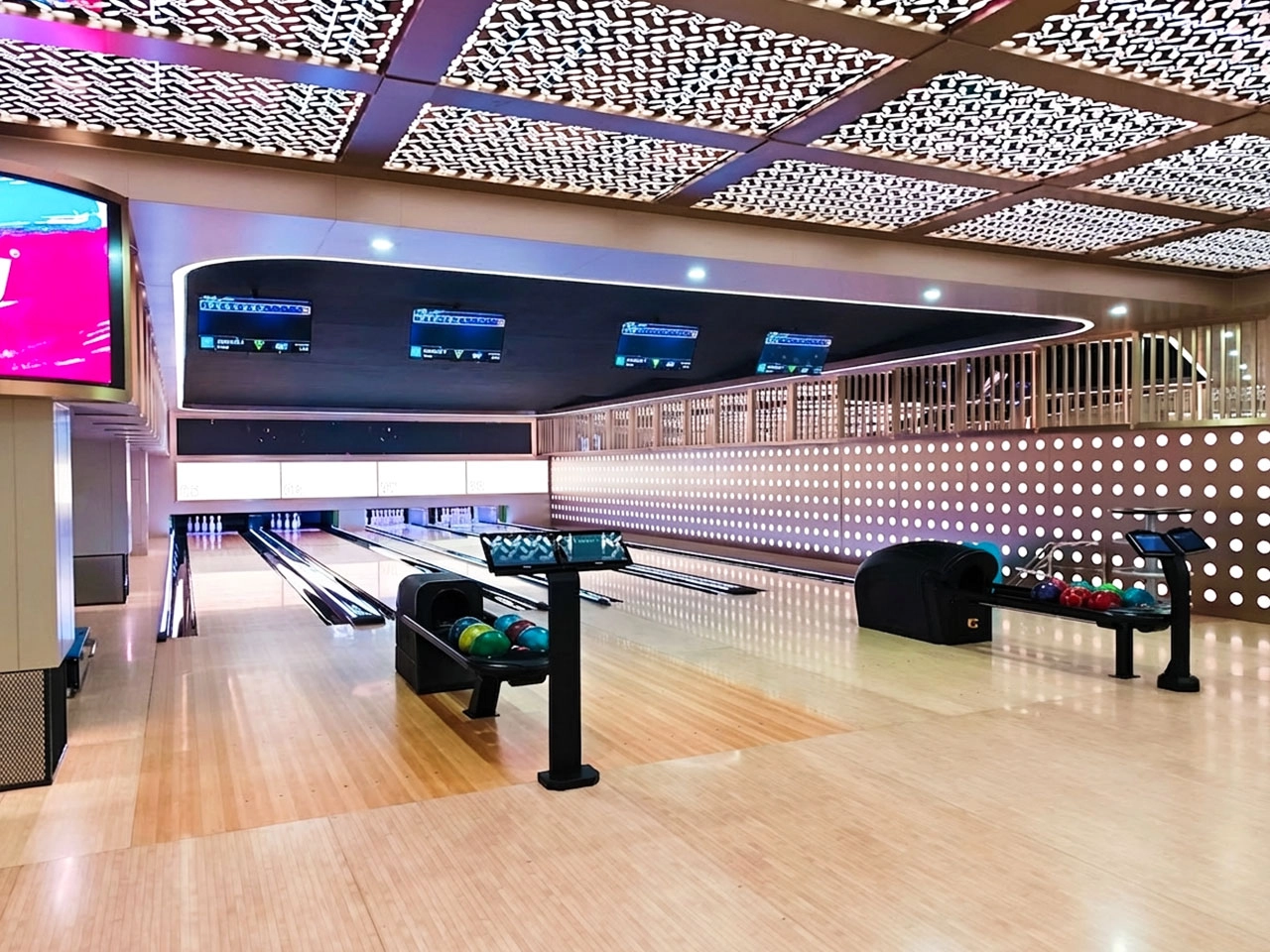
Build a commercial bowling venue with Flying’s complete string pinsetter bowling alley equipment package. The system includes the AEROPIN™ USBC-certified string pinsetter, customizable lanes, automatic scoring, ball return, lane lighting, pins, control hardware, and overseas installation support.
Designed for commercial bowling centers, family entertainment venues, hotels, resorts, bars, and premium private projects, this turnkey bowling system helps operators reduce sourcing complexity and prepare for reliable long-term operation.
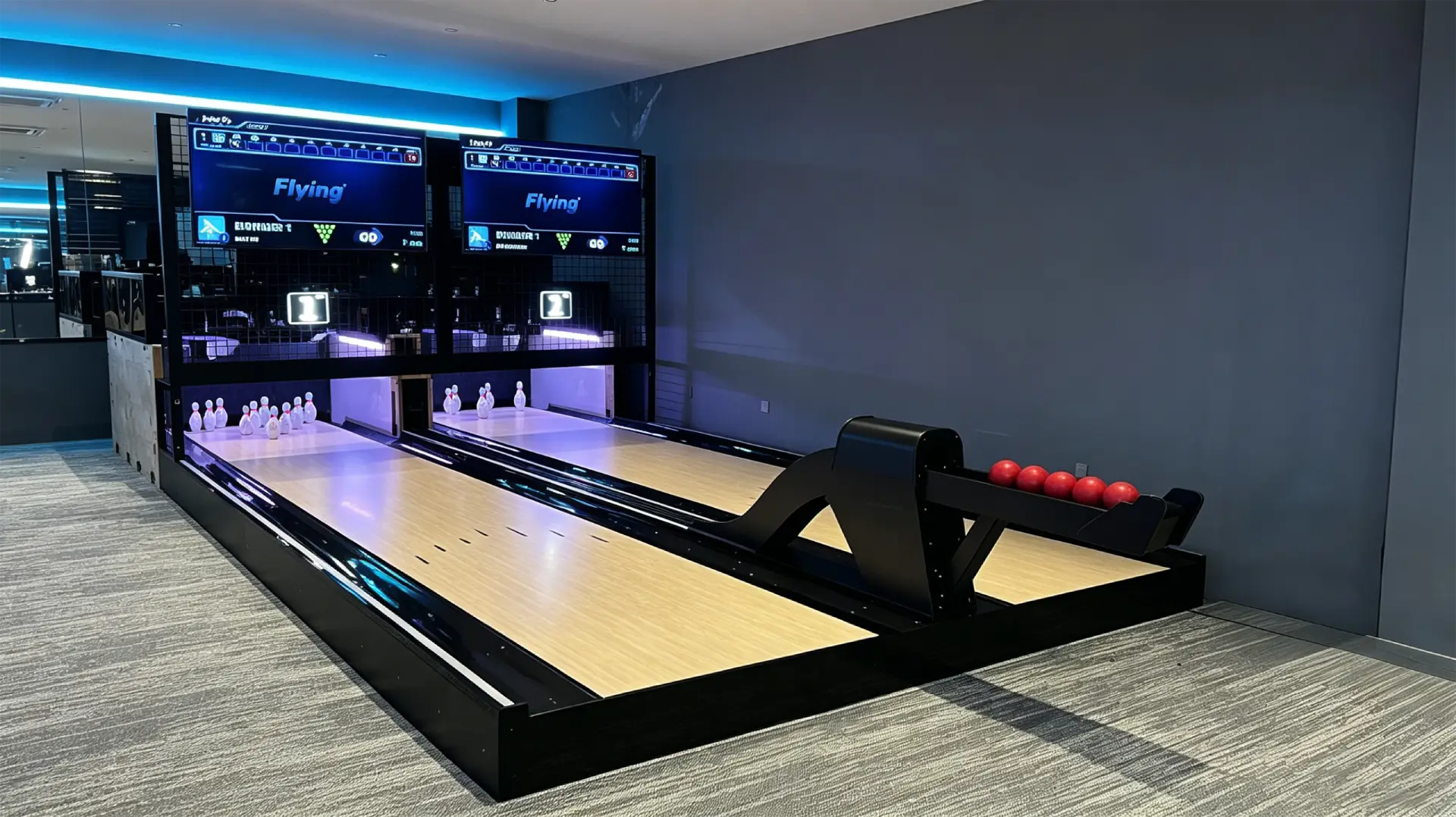
Flying Smart Duckpin Bowling is a compact duckpin bowling equipment system designed for bars, family entertainment centers, hotels, resorts, cinemas, boutique bowling alleys, and social entertainment venues. With a standard 9.13m duckpin bowling lane, 1.25kg lightweight balls, automatic scoring, ball return, LED lighting, and a smart string pinsetter, it creates a fast-paced and easy-to-play bowling experience in a smaller footprint than traditional bowling.
The system is available as a turnkey duckpin bowling package, including lane equipment, a string pinsetter system, scoring hardware, control software, global shipping, installation guidance, and technical support.
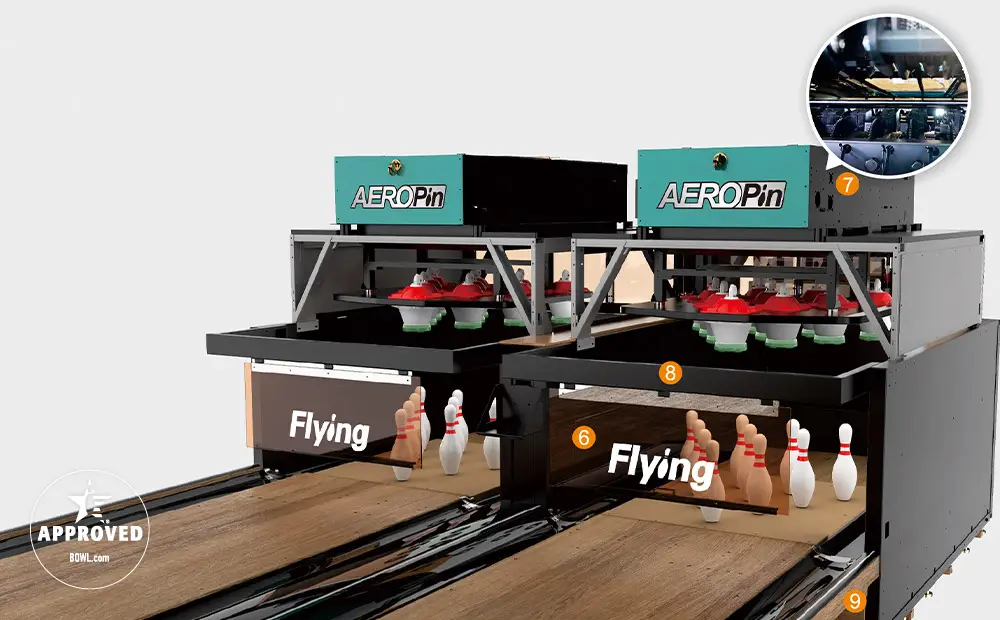
AEROPIN is Flying Bowling’s USBC-certified string pinsetter system for modern commercial bowling centers. Designed for fast pin setting, smooth ball return, low maintenance, and stable daily operation, it helps venue operators build league-ready and entertainment-focused bowling projects with confidence.
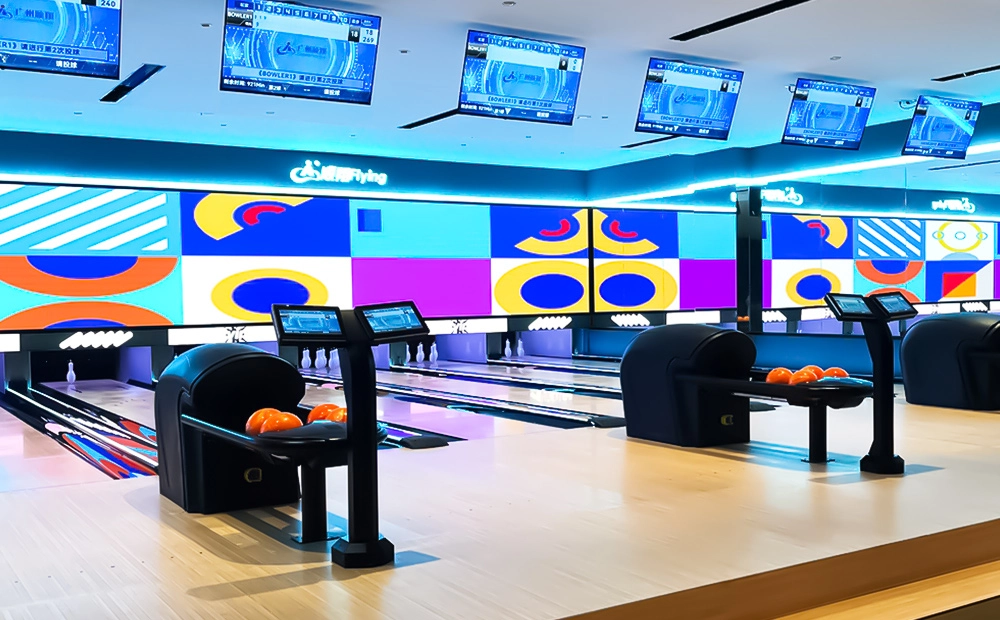
Flying Social Medium Bowling is a compact medium bowling equipment system designed for bars, cafes, family entertainment centers, community leisure venues, hotels, resorts, and small indoor entertainment spaces. With customizable lane lengths from 9.6m to 18m, small balls, lighter pins, string pinsetter technology, ball return, and automatic scoring, it creates an easy-to-play social bowling experience for players of different ages and skill levels.
Compared with full-size standard bowling, medium bowling requires less space and offers a more casual, interactive format. It is a practical choice for venues that want to add a bowling attraction without building a full commercial bowling alley.
Contact Flying
Start Your Custom Bowling Alley Project
If you contact us now for more details, we can provide you with a custom bowling alley service. Our service team will get back to you within 24 hours normally!
© 2026 Flying BOWLING. Designed by gooeyun.
FOLLOW US:

Flying Bowling
Flying Bowling
Flyingbowling
Flyingbowling