

Bowling Alley Floors for Sale: Complete Commercial Bowling Lane
Buyers searching for bowling alley floors for sale are usually further along than a general equipment inquiry — they have a site, a format in mind, and a need to understand what a complete lane floor system actually includes before requesting a quotation. A bowling alley floor is not a single product; it is a structural and surface system — subframe, synthetic lane panels, pin deck, approach, and gutters — engineered to a specific format's dimensional standard. This guide covers what is included in a commercial bowling lane floor system, the material and format options available, what drives price, and what to confirm before ordering.
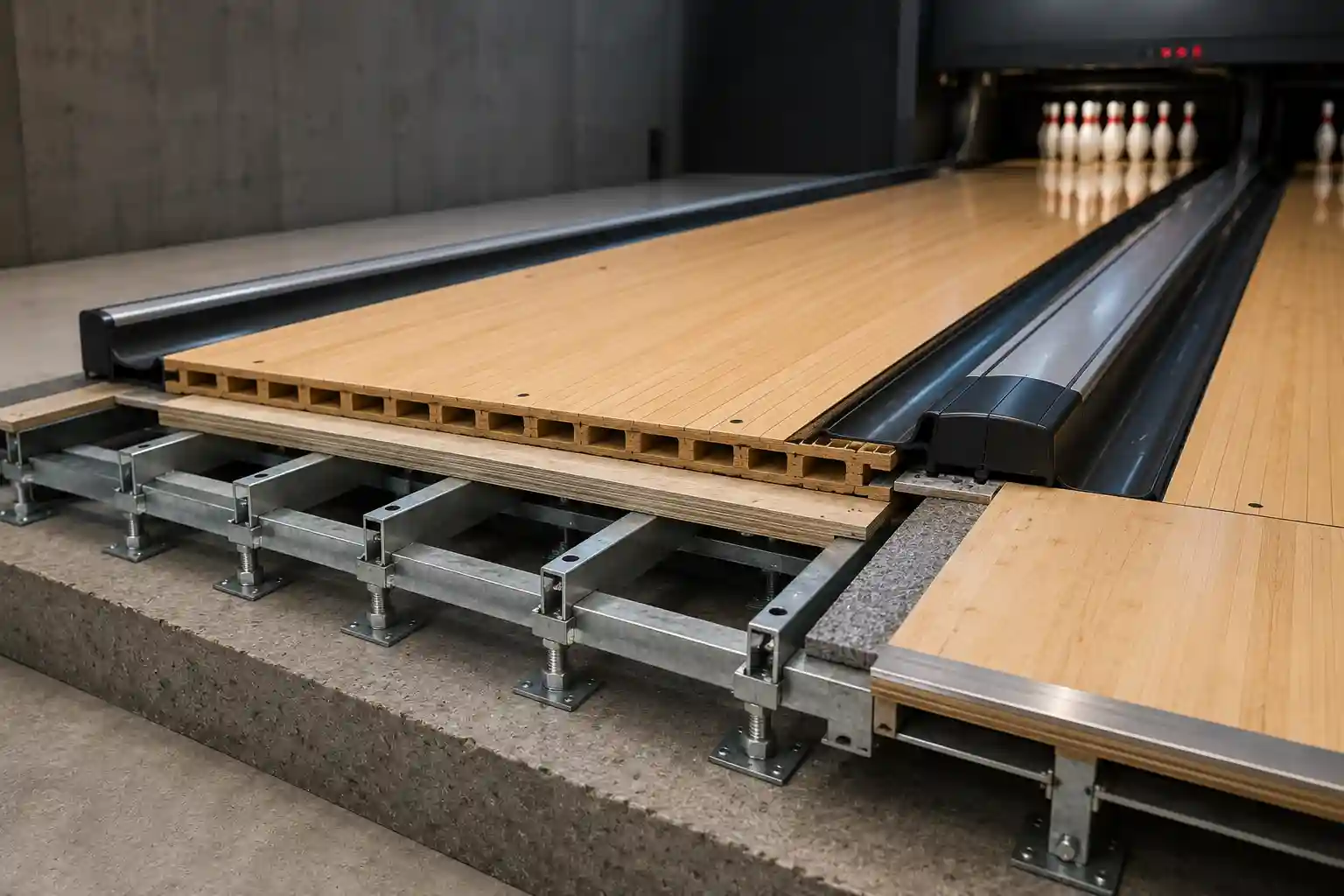
A complete bowling alley floor system includes the subframe or sleeper structure, synthetic lane surface panels, the pin deck section with precisely located pin spots, the approach surface behind the foul line, and gutters on both sides of the lane. Systems are sold by format — standard, duckpin, mini, or medium bowling — each with a different lane length and dimensional specification. Floor systems are typically quoted alongside the pinsetter, ball return, and scoring system as part of a complete lane package, though the floor and structural components can be priced separately for renovation projects replacing an existing lane surface.
What's Included in a Commercial Bowling Lane Floor System
When evaluating bowling alley floors for sale, it helps to understand the floor as a layered system rather than a single surface. Each component has its own specification and contributes to the finished lane's dimensional accuracy and playing performance.
The structural base that sits on the prepared concrete slab and provides the precise levelness and elevation the lane surface requires. Subframe design varies by manufacturer — some systems use a low-profile direct-lay frame; others use a traditional sleeper construction. The subframe is leveled and anchored before any lane panels are installed.
Pre-fabricated panels — typically high-density polyethylene or composite — that form the playing surface. The standard choice for new commercial bowling alley flooring, replacing traditional hardwood for most installations due to dimensional stability and lower long-term maintenance.
The section at the end of the lane where pins are set, with pin spot positions located to the format's exact dimensional specification. Pin spot accuracy directly affects pinsetter alignment and pin reset consistency.
The surface behind the foul line where the bowler delivers the ball — typically a different, non-slip material from the lane surface, finished flush at the foul line transition. Approach depth is confirmed against the format and the bowler's delivery requirements.
Channels on either side of the lane that capture errant balls and route them to the ball return system. Gutter width and profile are specified by the manufacturer for the format and installed as part of the lane package.
Synthetic vs Wood Bowling Alley Flooring
Most bowling alley floors for sale today are synthetic systems rather than traditional hardwood. The distinction matters because it affects installation time, ongoing maintenance, and long-term cost — relevant whether the project is a new build or a renovation replacing existing bowling alley flooring.
- ›Pre-fabricated panels; faster installation than wood
- ›Dimensionally stable — not affected by humidity or temperature
- ›Lower long-term maintenance than hardwood resurfacing
- ›Standard choice for new commercial builds and renovations
- ›Maple and pine construction; skilled installation required
- ›Susceptible to humidity-related dimensional movement
- ›Requires periodic sanding and refinishing
- ›Found mainly in legacy centers; rarely specified for new builds
Bowling Alley Floor Systems by Format
Floor dimensions are determined by the bowling format. Confirming format before comparing bowling alley floors for sale avoids comparing products that are not built to the same dimensional standard.
| Format | Lane Length | Typical Venue |
|---|---|---|
| Standard | 25.6 m | Standalone centers, league programs |
| Duckpin | ~9.2 m | Bars, FECs, social venues |
| Mini | 12 m | Hotels, theme parks, family FECs |
| Medium | 9.6–18 m | Shopping centers, mixed-use venues |
Technical Specifications to Confirm
Beyond lane length, several technical specifications affect how a bowling alley floor system fits the site and integrates with the rest of the lane equipment. These vary by manufacturer — confirm each one directly rather than relying on generic references.
Installation Process Overview
Floor system installation follows a defined sequence: the slab is surveyed and leveled to the manufacturer's tolerance, the subframe is installed and anchored, lane panels are laid and joined, the pin deck and gutters are fitted, and the approach surface is installed flush with the foul line transition. Each step depends on the previous one being correct — installing on an unverified floor is the most common and most expensive avoidable error in lane floor installation.
For the complete step-by-step installation sequence — including electrical rough-in timing, panel joining technique, pin spot verification, and post-installation function testing — see our detailed guide on how bowling lanes are built.
Applications for Bowling Alley Floor Systems
Bowling alley floor systems are specified across a range of venue types, with format and finish standard adjusted to the application.
What Drives the Price of a Bowling Alley Floor
What to Confirm Before Buying
For the full installation sequence — from subfloor preparation through pinsetter alignment and scoring commissioning — see our guide on how bowling lanes are built.
Related resources for bowling center buyers and operators:
- ›How bowling lanes are built — full step-by-step construction process
- ›Bowling center construction guide — planning, building requirements, and full project timeline
- ›How to evaluate a bowling equipment manufacturer — certification, documentation, and spare parts
Flying Bowling: Bowling Alley Floor Systems
Flying Bowling supplies complete bowling alley floor systems — subframe, synthetic lane surface, pin deck, approach, and gutters — across five commercial formats, as part of an integrated lane package that includes the pinsetter, ball return, and scoring system. Our engineering team can prepare civil specification documents (floor levelness tolerance, structural mounting drawings) and an itemized quotation based on your submitted format, lane count, and destination.
Among the many bowling alley floors for sale on the market, the floor system is the foundation every other piece of lane equipment depends on — get the format, dimensions, and installation specification confirmed before comparing prices between suppliers.
Get a Quote for Your Bowling Alley Floor System
Share your format preference, target lane count, and site dimensions. Flying Bowling can prepare an itemized quotation for the floor system and complete lane package.
FAQ
Q1: What's included in a bowling alley floor system?
The subframe, synthetic lane surface, pin deck, approach surface, and gutters. These are usually quoted together as a floor package, often alongside the pinsetter, ball return, and scoring system as part of a complete lane system.
Q2: Is synthetic or wood bowling alley flooring better for a new installation?
Synthetic flooring is the standard choice for new commercial builds — it's faster to install, dimensionally stable regardless of humidity, and requires less long-term maintenance than hardwood. Wood is mainly found in legacy centers and is rarely specified for new projects.
Q3: How much does a bowling alley floor system cost?
Based on selected Flying Bowling project configurations, FOB pricing ranges from roughly $12,000–$25,000 per lane for compact formats to $18,000–$40,000 per lane for standard full-size bowling, before freight and installation. Request an itemized quote for your specific format and lane count.
Q4: Does the floor system include installation?
Not always — confirm this before ordering. Floor systems are frequently quoted FOB factory, with installation labor and civil preparation (floor leveling, electrical rough-in) priced as separate line items.
Q5: Can I replace just the floor without replacing the pinsetter?
Sometimes, but compatibility must be confirmed. A new floor system needs to align with the existing pinsetter's mounting points and pin spot positions — check this with the supplier before ordering a floor-only replacement for a renovation.
Q6: What floor levelness tolerance does a bowling lane require?
This varies by manufacturer and lane system — there's no single industry-wide number. Get the exact tolerance from your supplier before the slab is surveyed; installing on an out-of-tolerance floor produces a distorted lane that can't be fixed without relaying it.
More Articles
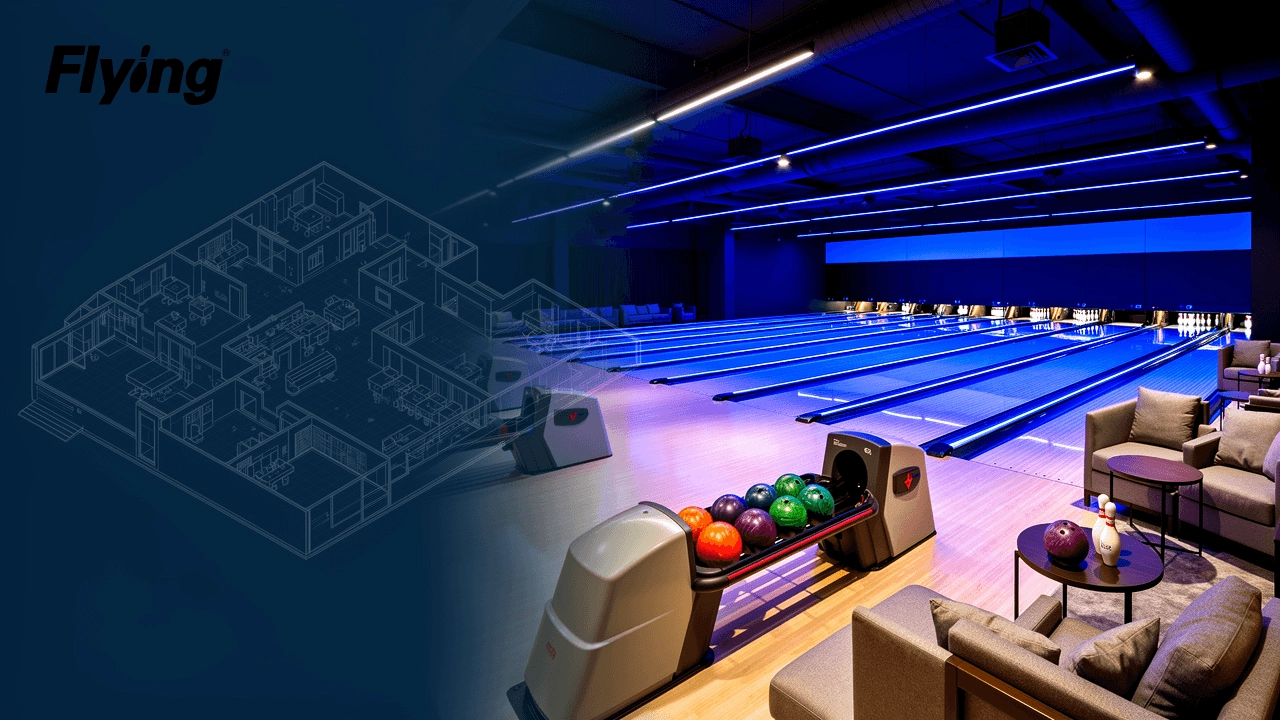

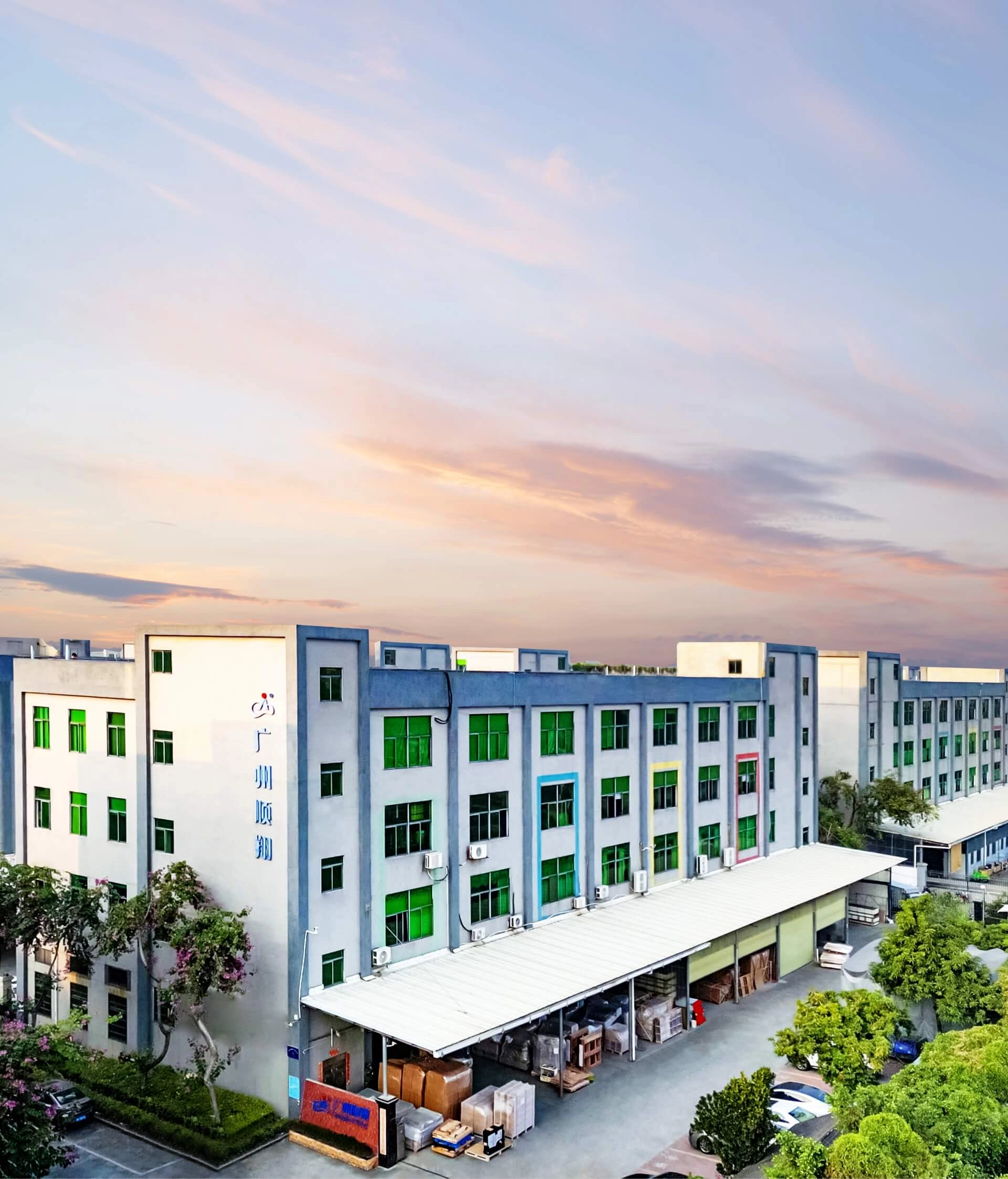
Let’s Build a center Together
Partner With a Trusted Bowling Alley Design, One-Stop Solution Manufacturer.
Flying has successfully built ideal bowling alleys for more than 3,000 customers.

Technical Expert
You may also like our products
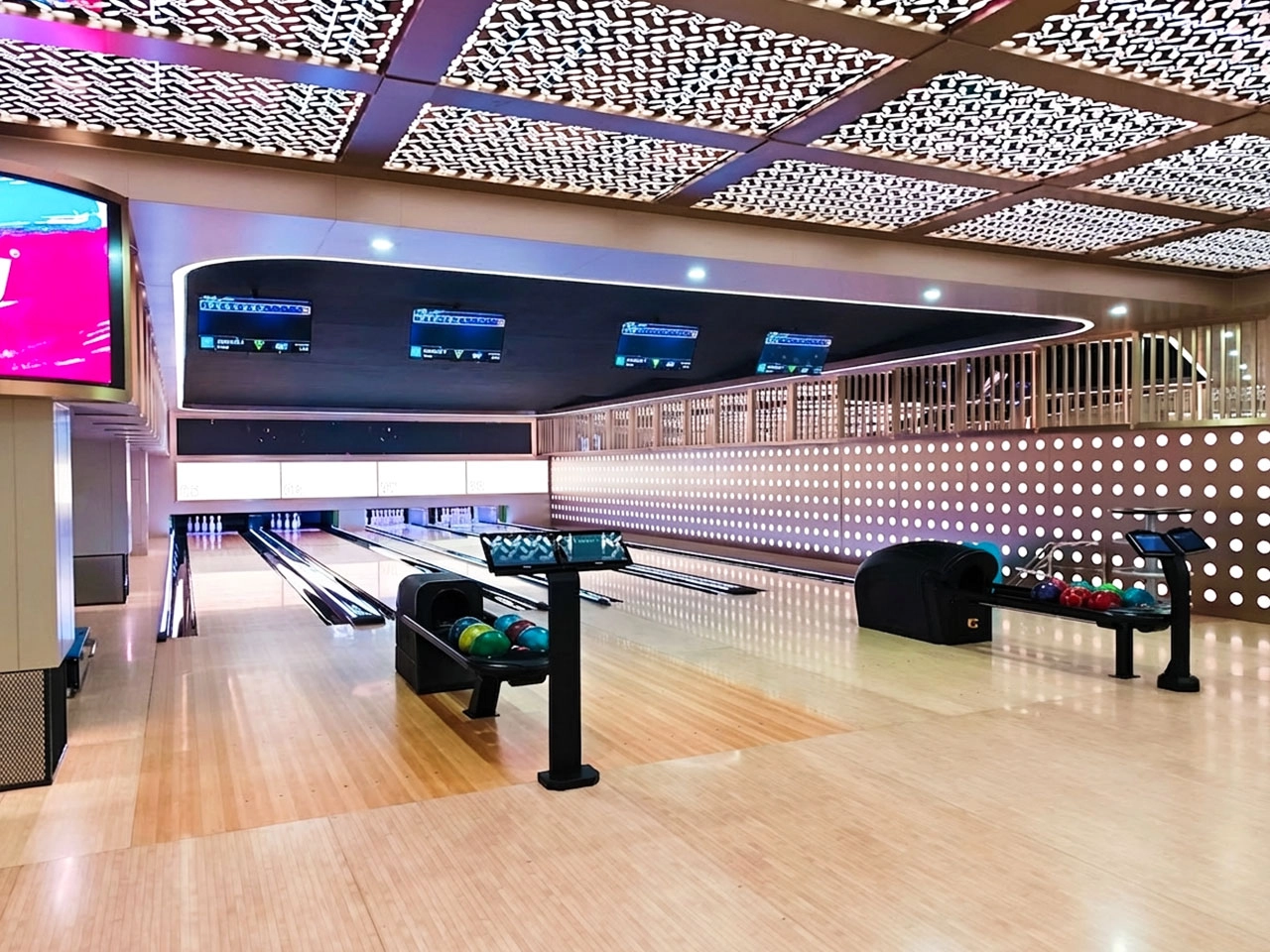
Build a commercial bowling venue with Flying’s complete string pinsetter bowling alley equipment package. The system includes the AEROPIN™ USBC-certified string pinsetter, customizable lanes, automatic scoring, ball return, lane lighting, pins, control hardware, and overseas installation support.
Designed for commercial bowling centers, family entertainment venues, hotels, resorts, bars, and premium private projects, this turnkey bowling system helps operators reduce sourcing complexity and prepare for reliable long-term operation.
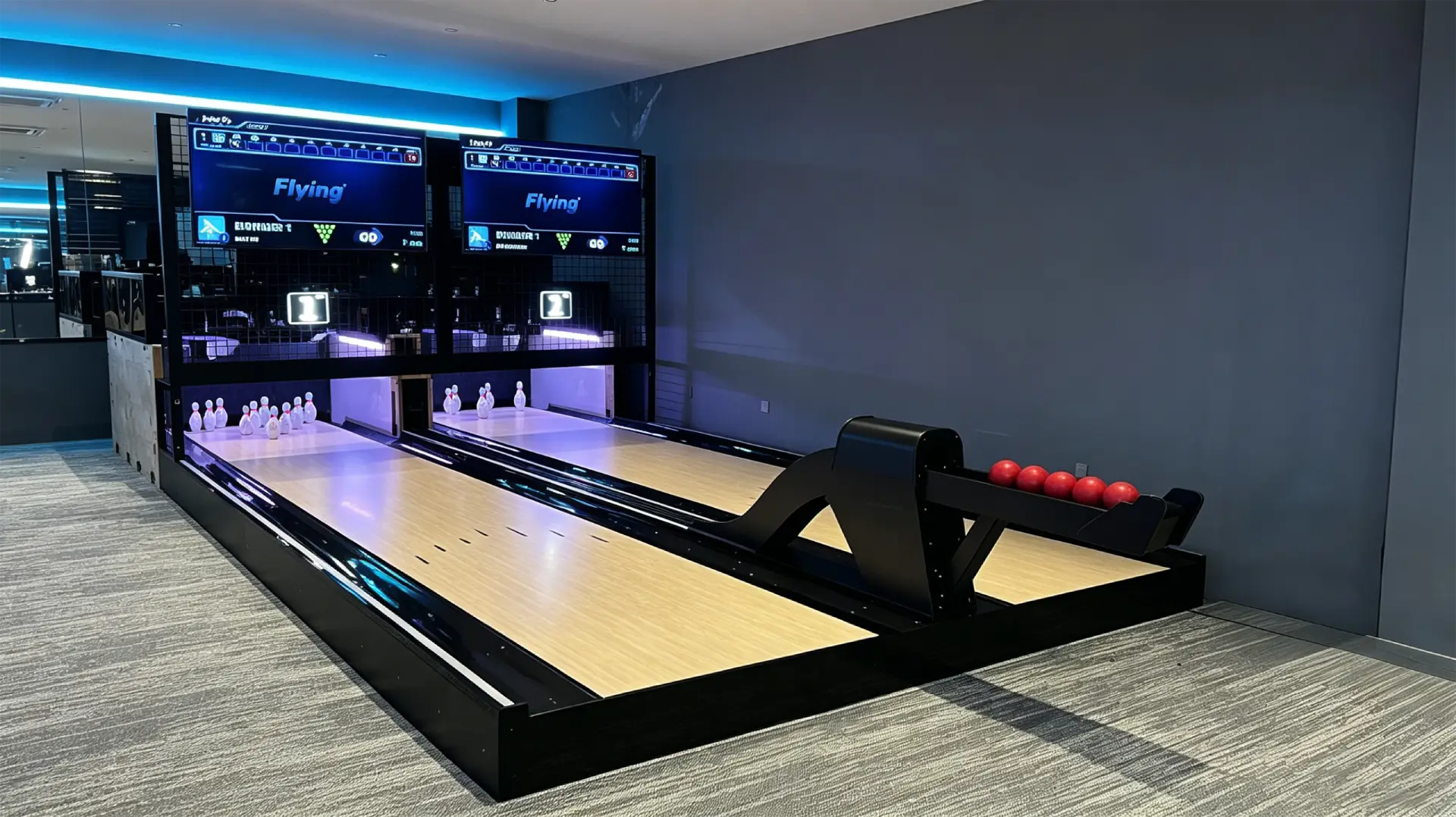
Flying Smart Duckpin Bowling is a compact duckpin bowling equipment system designed for bars, family entertainment centers, hotels, resorts, cinemas, boutique bowling alleys, and social entertainment venues. With a standard 9.13m duckpin bowling lane, 1.25kg lightweight balls, automatic scoring, ball return, LED lighting, and a smart string pinsetter, it creates a fast-paced and easy-to-play bowling experience in a smaller footprint than traditional bowling.
The system is available as a turnkey duckpin bowling package, including lane equipment, a string pinsetter system, scoring hardware, control software, global shipping, installation guidance, and technical support.
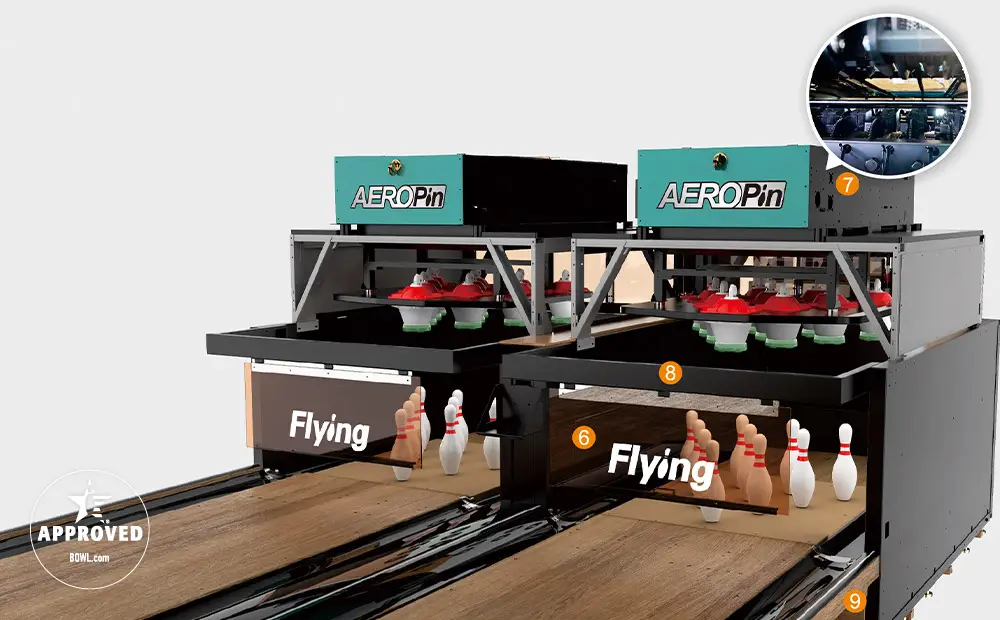
AEROPIN is Flying Bowling’s USBC-certified string pinsetter system for modern commercial bowling centers. Designed for fast pin setting, smooth ball return, low maintenance, and stable daily operation, it helps venue operators build league-ready and entertainment-focused bowling projects with confidence.
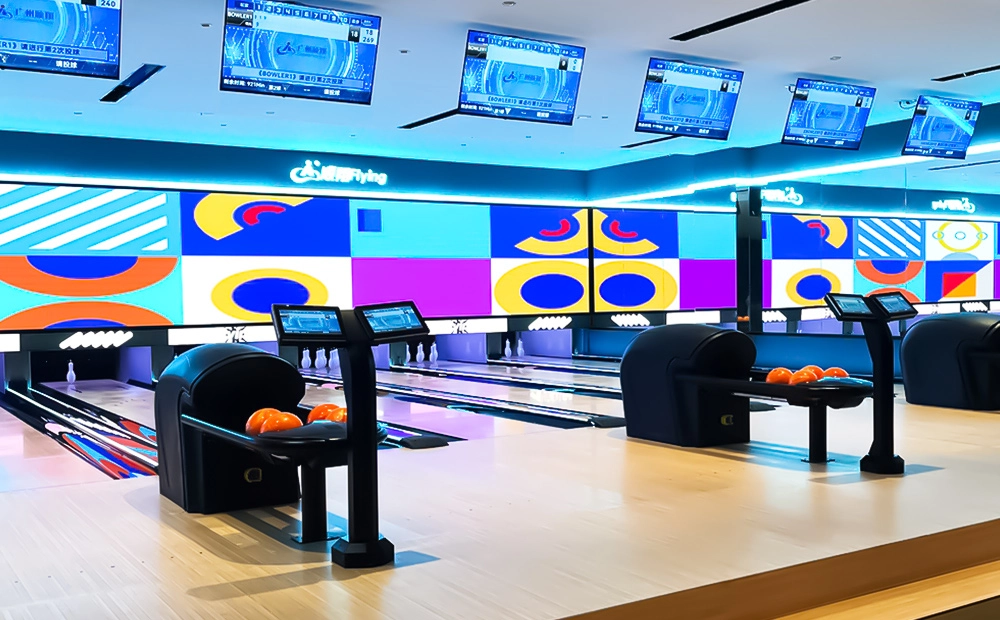
Flying Social Medium Bowling is a compact medium bowling equipment system designed for bars, cafes, family entertainment centers, community leisure venues, hotels, resorts, and small indoor entertainment spaces. With customizable lane lengths from 9.6m to 18m, small balls, lighter pins, string pinsetter technology, ball return, and automatic scoring, it creates an easy-to-play social bowling experience for players of different ages and skill levels.
Compared with full-size standard bowling, medium bowling requires less space and offers a more casual, interactive format. It is a practical choice for venues that want to add a bowling attraction without building a full commercial bowling alley.
Contact Flying
Start Your Custom Bowling Alley Project
If you contact us now for more details, we can provide you with a custom bowling alley service. Our service team will get back to you within 24 hours normally!
© 2026 Flying BOWLING. Designed by gooeyun.
FOLLOW US:

Flying Bowling
Flying Bowling
Flyingbowling
Flyingbowling