

Bowling Equipment Maintenance: Complete Preventive Maintenance Guide
Bowling equipment maintenance is the difference between a center that runs reliably for fifteen years and one that accumulates unpredictable downtime within the first three. Pinsetters, ball returns, scoring systems, and lane surfaces are mechanical and electronic systems operating continuously throughout opening hours — and like any commercial equipment under sustained use, they degrade predictably if maintenance is deferred and reliably if it is scheduled. This guide covers a practical preventive maintenance program by equipment category, the warning signs that indicate a maintenance gap, and how to build bowling alley maintenance into the center's regular operating routine rather than treating it as a reactive task.
Bowling equipment maintenance covers daily, weekly, monthly, and annual tasks across four core systems: pinsetters (mechanical and electrical components requiring the most frequent attention), ball return systems (conveyor and motor maintenance), lane surfaces (cleaning and conditioning), and scoring systems (software updates and sensor calibration). A documented maintenance schedule, consistently followed, is the single most effective way to control unplanned downtime and extend equipment service life.
Why a Maintenance Schedule Matters More Than Reactive Repair
Reactive maintenance — fixing equipment only when it fails — is costly in ways that compound over time. A failure during operating hours closes a lane during peak revenue periods, often requires emergency parts shipping at a premium, and frequently causes secondary damage that a scheduled inspection would have caught before it escalated. In most commercial bowling centers, reactive maintenance usually results in higher total operating cost than a preventive maintenance program, once lost revenue, premium freight, and secondary repair costs are accounted for.
The return on a maintenance program is not abstract. Centers that follow a documented schedule typically report fewer lane closures, lower per-incident repair cost, and longer intervals between major component replacement than centers operating reactively. The investment is staff time and discipline — not significant capital.
Maintenance Schedule at a Glance
Before the detailed breakdown by equipment category, here is a quick-reference overview of the core bowling equipment maintenance tasks by frequency. Use this as a checklist starting point — full detail for each system follows below.
| Frequency | Equipment | Main Task |
|---|---|---|
| Daily | Pinsetter | Visual inspection for noise, vibration, or pin-setting errors |
| Daily | Lane Surface | Cleaning and conditioner application per pattern |
| Weekly | Ball Return | Clean track; check motor and conveyor for noise |
| Weekly | Scoring System | Verify pin detection accuracy across all configurations |
| Monthly | Pinsetter | Lubrication, alignment check, belt/chain inspection |
| Monthly | Lane Surface | Deep cleaning and panel joint inspection |
| Annual | All Systems | Full mechanical inspection, calibration, firmware/software update |
Pinsetter Maintenance
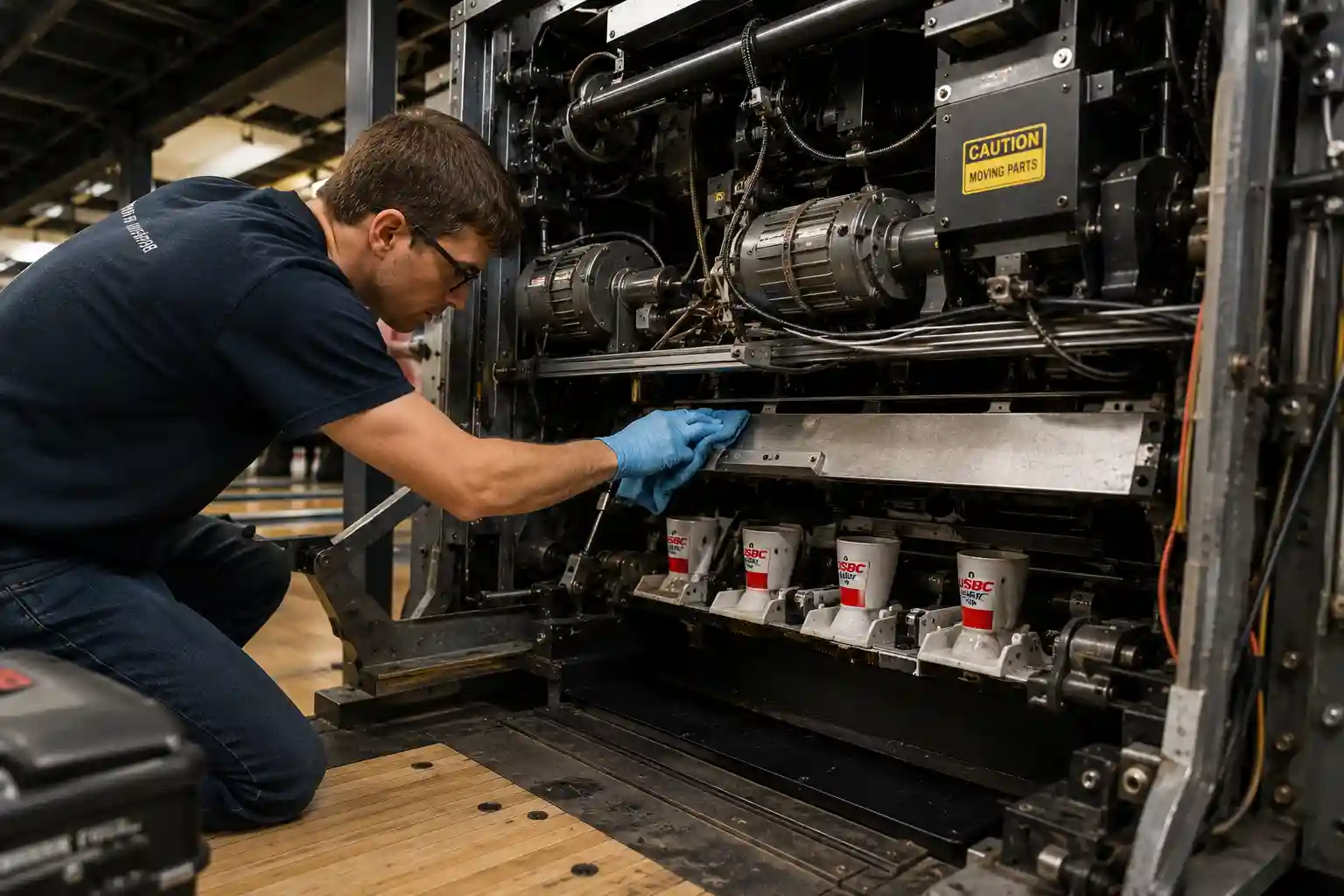
The pinsetter is the most mechanically complex piece of bowling equipment and the system that drives the largest share of maintenance activity. String pinsetters generally require less routine maintenance than free-fall systems, but both need a structured inspection routine.
Visual check for unusual noise, vibration, or pin-setting errors during operation. Clear any visible debris from the pin deck area. Note any lane reporting repeated faults for follow-up.
Inspect string or sweep mechanism for wear; check pin condition and replace any damaged or out-of-spec pins; clear dust and debris from sensors and electrical components.
Lubricate moving parts per the manufacturer's specification; verify pin spot alignment; inspect drive belts or chains for tension and wear; check electrical connections for corrosion or looseness.
Full mechanical inspection covering motor condition, bearing wear, and structural mounting; firmware or control system updates where applicable; comprehensive calibration check across all lanes.
Ball Return System Maintenance
Lane Surface Maintenance
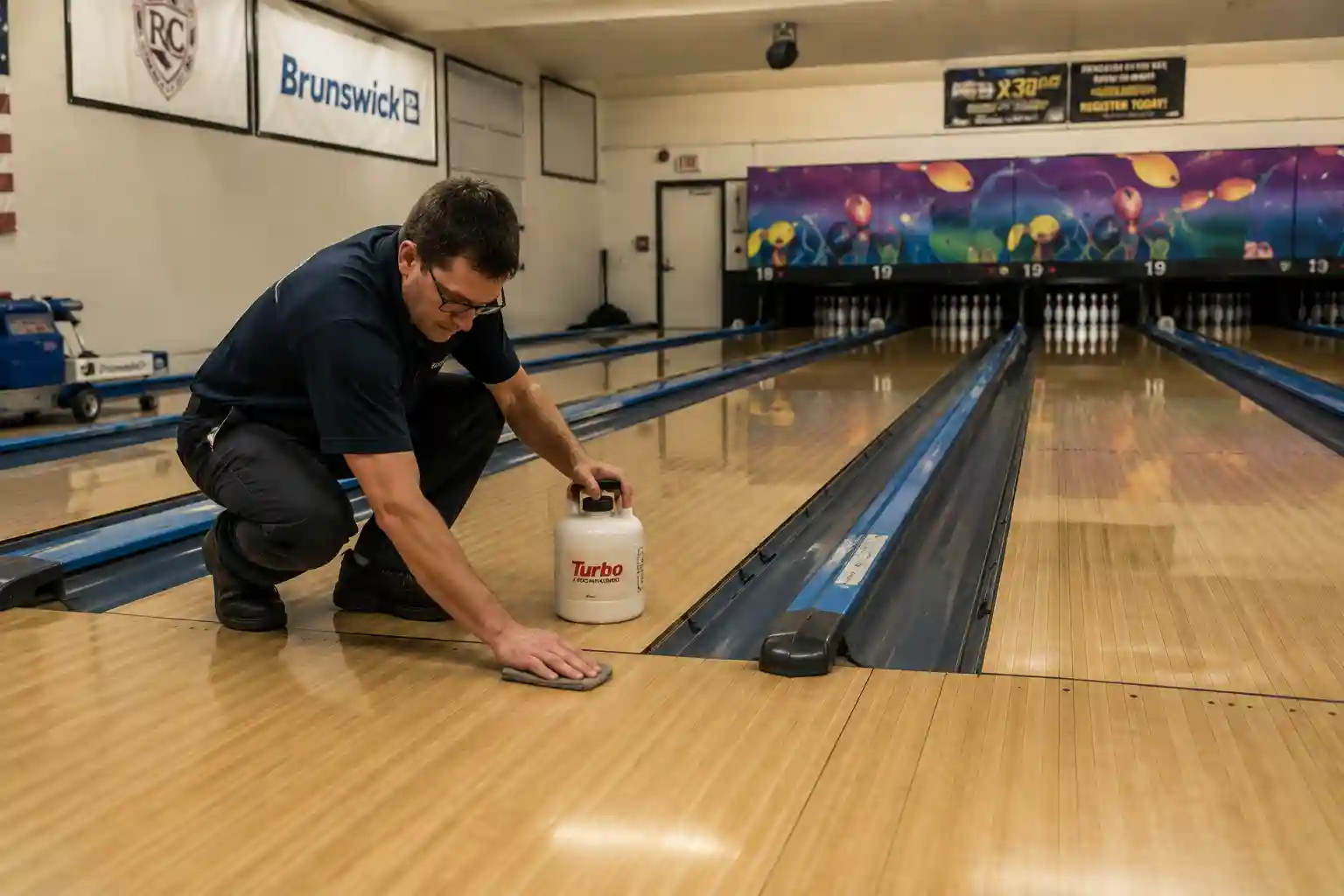
Lane surface care directly affects playing consistency and the long-term condition of the lane investment. The maintenance approach differs for synthetic versus hardwood lanes, but both require a regular cleaning and conditioning routine.
Scoring System Maintenance
Warning Signs of a Maintenance Gap
Equipment rarely fails without warning. Recognizing these signs early allows a scheduled repair instead of an emergency closure.
Common Bowling Equipment Maintenance Mistakes
Beyond skipping maintenance entirely, several specific mistakes undermine an otherwise well-intentioned program. Avoiding these is as important as following the schedule itself.
Building a Bowling Equipment Maintenance Program
A practical bowling equipment maintenance guide is only useful if it becomes an operating routine rather than a document. Three elements turn a maintenance schedule into a working program:
Flying Bowling: Maintenance Support and Spare Parts
Flying Bowling provides maintenance documentation and a recommended service schedule by equipment model for centers operating our pinsetter, ball return, and scoring systems. Spare parts availability and lead times to your destination can be confirmed at the project stage, with a recommended local stocking list available for venues in remote or landlocked markets.
Get Maintenance Documentation for Your Equipment
Share your equipment model and location. Flying Bowling can provide the recommended maintenance schedule, spare parts list, and local stocking guidance for your installation.
FAQ
Q1: How often should bowling equipment be maintained?
On a tiered schedule: daily visual checks and cleaning, weekly mechanical inspections, monthly lubrication and calibration, and annual comprehensive servicing. The exact intervals vary by manufacturer and equipment model — use this as a starting framework and confirm specifics against your supplier's documentation.
Q2: What's the most common cause of bowling equipment downtime?
Deferred maintenance on the pinsetter — the most mechanically complex component and the one most likely to develop wear-related faults if lubrication, alignment, and component inspection are skipped or delayed.
Q3: How do I know if my bowling alley maintenance schedule is working?
Track lane closures, repeat fault frequency by lane, and emergency parts orders over time. A working program shows these trending down; if closures and emergency repairs stay flat or increase despite a documented schedule, the schedule likely isn't being followed consistently.
Q4: Can venue staff handle bowling equipment maintenance, or is a specialist required?
Routine daily and weekly tasks — cleaning, visual inspection, basic lubrication — are typically manageable by trained venue staff. String pinsetters generally require less specialist intervention than free-fall systems. More complex monthly and annual tasks, and any electrical or mechanical fault diagnosis, should follow the manufacturer's guidance on what requires specialist support.
Q5: How often should bowling lanes be conditioned?
This depends on usage intensity and the manufacturer's lane conditioner specification. League and competitive lanes typically need conditioning before each session; casual recreational lanes less frequently. Follow the conditioner manufacturer's recommended pattern and frequency rather than a generic schedule.
Q6: What spare parts should a bowling center keep in stock?
High-frequency consumable and wear components specific to your equipment model — confirm the recommended list with your equipment supplier. This matters most for venues far from the supplier, where freight delays for routine parts can extend an otherwise minor repair into days of lane downtime.
More Articles
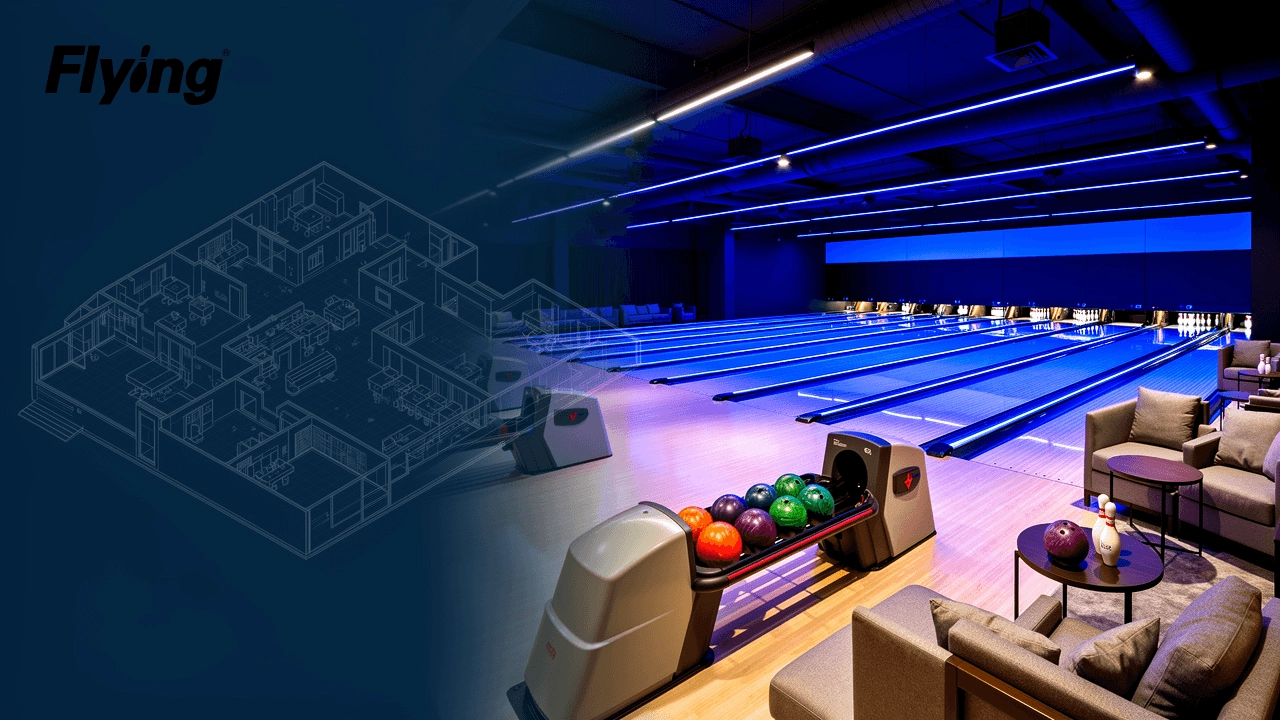

Let’s Build a center Together
Partner With a Trusted Bowling Alley Design, One-Stop Solution Manufacturer.
Flying has successfully built ideal bowling alleys for more than 3,000 customers.
Technical Expert
You may also like our products
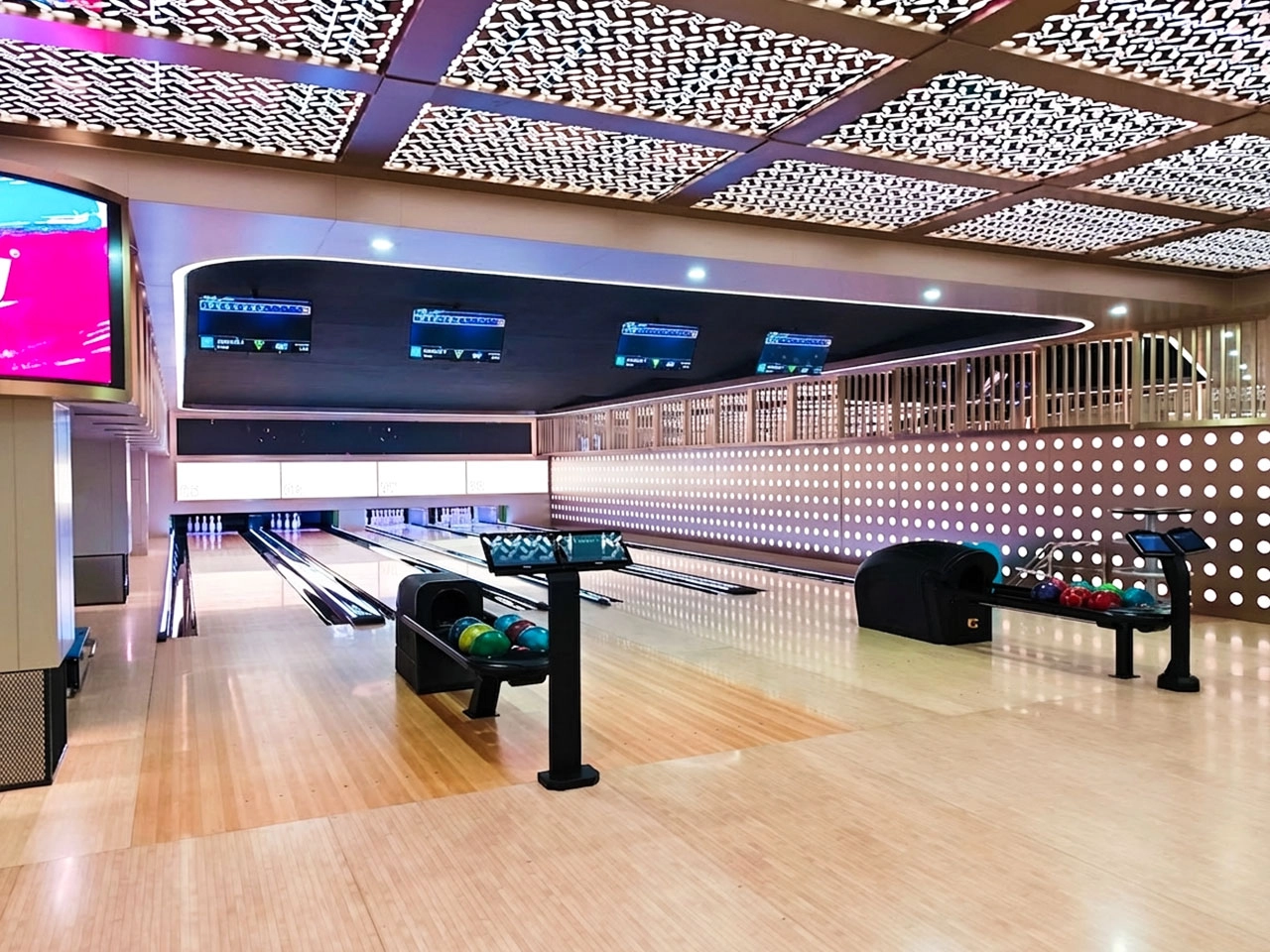
Build a commercial bowling venue with Flying’s complete string pinsetter bowling alley equipment package. The system includes the AEROPIN™ USBC-certified string pinsetter, customizable lanes, automatic scoring, ball return, lane lighting, pins, control hardware, and overseas installation support.
Designed for commercial bowling centers, family entertainment venues, hotels, resorts, bars, and premium private projects, this turnkey bowling system helps operators reduce sourcing complexity and prepare for reliable long-term operation.
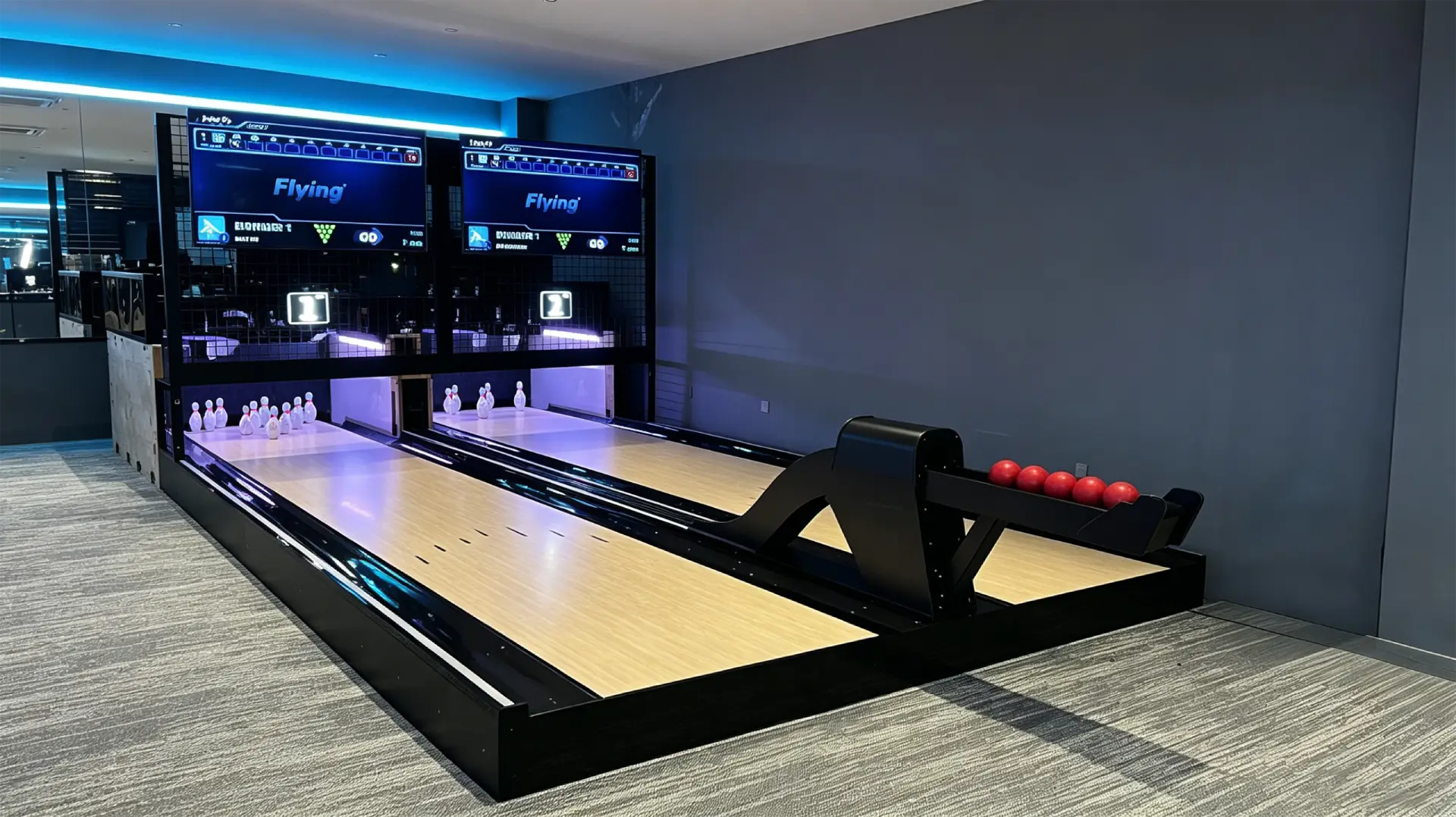
Flying Smart Duckpin Bowling is a compact duckpin bowling equipment system designed for bars, family entertainment centers, hotels, resorts, cinemas, boutique bowling alleys, and social entertainment venues. With a standard 9.13m duckpin bowling lane, 1.25kg lightweight balls, automatic scoring, ball return, LED lighting, and a smart string pinsetter, it creates a fast-paced and easy-to-play bowling experience in a smaller footprint than traditional bowling.
The system is available as a turnkey duckpin bowling package, including lane equipment, a string pinsetter system, scoring hardware, control software, global shipping, installation guidance, and technical support.
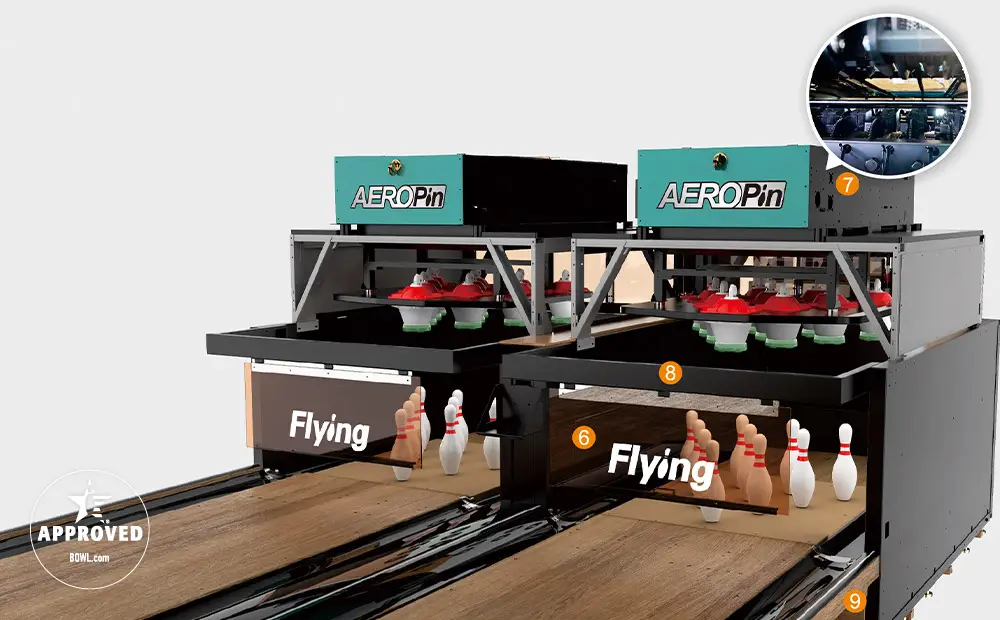
AEROPIN is Flying Bowling’s USBC-certified string pinsetter system for modern commercial bowling centers. Designed for fast pin setting, smooth ball return, low maintenance, and stable daily operation, it helps venue operators build league-ready and entertainment-focused bowling projects with confidence.
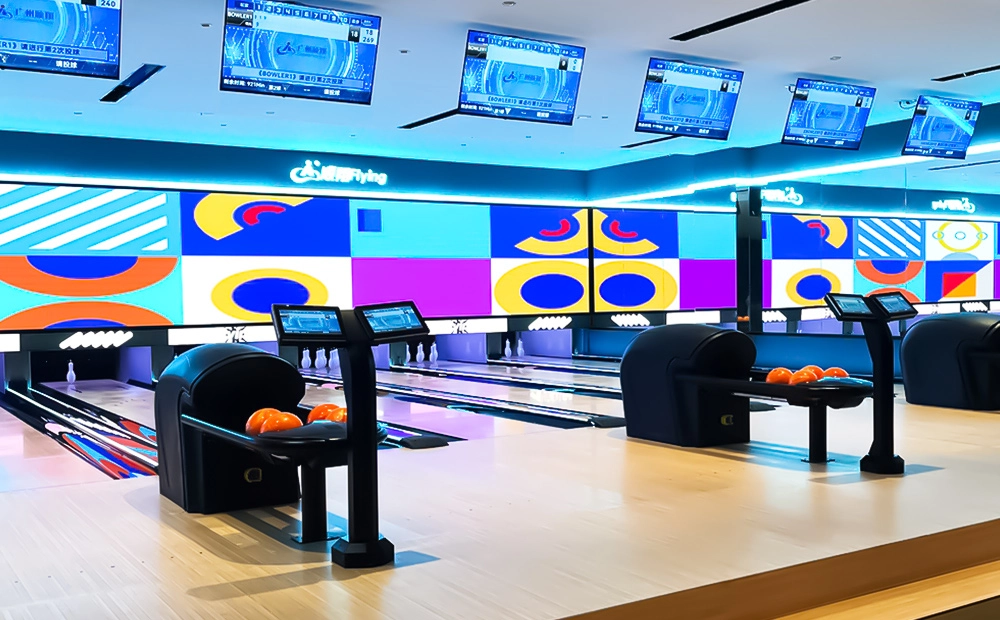
Flying Social Medium Bowling is a compact medium bowling equipment system designed for bars, cafes, family entertainment centers, community leisure venues, hotels, resorts, and small indoor entertainment spaces. With customizable lane lengths from 9.6m to 18m, small balls, lighter pins, string pinsetter technology, ball return, and automatic scoring, it creates an easy-to-play social bowling experience for players of different ages and skill levels.
Compared with full-size standard bowling, medium bowling requires less space and offers a more casual, interactive format. It is a practical choice for venues that want to add a bowling attraction without building a full commercial bowling alley.
Contact Flying
Start Your Custom Bowling Alley Project
If you contact us now for more details, we can provide you with a custom bowling alley service. Our service team will get back to you within 24 hours normally!
© 2026 Flying BOWLING. Designed by gooeyun.
FOLLOW US:

Flying Bowling
Flying Bowling
Flyingbowling
Flyingbowling