

Bowling Installation Cost: Home Bowling Alley Cost Breakdown
Bowling installation cost covers more than the equipment price. This guide focuses on residential and home entertainment bowling installations — basement conversions, dedicated recreation rooms, and private club spaces — where the cost breakdown between equipment, civil preparation, electrical work, acoustic treatment, and fit-out is most relevant. Each component is addressed separately so you can build a realistic budget before committing to a project. Commercial FEC, hotel, and standalone center projects involve additional planning considerations covered in our commercial bowling center construction guide.
The ranges below are internal planning examples based on selected project configurations, not independent market benchmarks or fixed supplier prices. A 1–2 lane home bowling setup in a basement or garage (mini or duckpin format) typically ranges from $30,000 to $90,000 all-in, covering equipment, civil preparation, and installation. A 2–4 lane home entertainment or recreation room installation runs $70,000–$180,000. Boutique residential or private club installations with 4–6 lanes using medium or standard format typically range from $150,000 to $400,000 depending on fit-out specification and site condition. For commercial FEC, hotel, or full-size commercial center projects, costs scale significantly—those projects are covered separately in our commercial bowling center construction guide.
What Bowling Installation Cost Actually Includes
Many buyers focus on equipment price when researching bowling installation cost, but equipment may represent only a portion of the total project investment—in selected Flying Bowling project examples, equipment has accounted for roughly 40–60% of the all-in project cost, with the remainder in civil, construction, and logistics. The actual split varies significantly by site condition and fit-out specification. The remaining non-equipment costs are often underestimated at the planning stage.
Lane system (lane surface, subframe, gutters), pinsetter, ball return, scoring system, and pins and house balls. Equipment price varies significantly by format (standard, duckpin, mini, and medium) and manufacturer. This is usually the most quoted line item but not always the largest.
Concrete floor leveling or pouring to the lane system's levelness tolerance, structural reinforcement if the floor needs to carry an added load, and any penetrations for electrical conduit or drainage. For home bowling alley costs, this is often the most variable line item—existing slab condition determines whether minor leveling or a full concrete pour is required.
Dedicated power circuits for each pinsetter, ball return motors, scoring systems, and lighting. Electrical load requirements vary by equipment model—confirm the load schedule with the equipment supplier before electrical rough-in to avoid redesign costs.
For home bowling alleys built within an existing basement or garage space: framing, insulation, drywall, acoustic treatment, lighting, ventilation, and approach area flooring. For new-build commercial venues, a full interior build-out including seating areas, F&B counters, and a themed fit-out.
International sea freight, port handling, customs clearance, and inland delivery to the installation site. For equipment sourced from China, freight cost varies significantly by destination—landlocked or remote locations carry a higher logistics premium than ports with direct shipping access.
Lane laying, pinsetter mounting, scoring system setup, calibration, and function testing. Confirm whether installation is included in the equipment quotation or separately priced—suppliers frequently quote FOB factory, with installation as an additional line item.
Cost Breakdown by Project Type
The ranges below are internal planning examples based on selected Flying Bowling project configurations, not independent market benchmarks or fixed supplier prices. They are provided as orientation references only—actual cost depends on site condition, construction standard, local labor rates, and destination. Add 10–15% contingency. Civil, electrical, and fit-out costs are location-specific and excluded unless noted.
| Project type | Format | Equipment (FOB) | Total est. (incl. civil + install) |
|---|---|---|---|
| Basement/garage home alley (1–2 lanes) | Duckpin or mini | $15,000–$45,000 | $30,000–$90,000 |
| Home recreation room / dedicated bowling space (2–4 lanes) | Mini or medium | $35,000–$110,000 | $70,000–$180,000 |
| Luxury residence / private club (4–6 lanes, premium fit-out) | Medium or standard | $90,000–$250,000 | $200,000–$500,000+ |
| Commercial projects (FEC, hotel, standalone center) | All formats | Costs scale significantly beyond these ranges — see our commercial bowling center construction guide for commercial project planning. | |
| Scenario estimates only. Civil and fit-out costs vary significantly by site condition, construction standard, and location. These ranges should not be used as final budgets—request a project-specific quotation before committing capital. | |||
What Drives the Range in a Home Bowling Alley Project
The cost of a home bowling alley varies more than most buyers expect, primarily because the civil and construction component depends entirely on the specific space being converted. Two projects using identical equipment can cost very differently depending on the site.
Hidden Costs to Budget Before You Start
Cost to Install a Bowling Alley: Format Comparison
The cost to install a bowling alley varies most significantly by format. Understanding the practical differences between formats is the first step in building a realistic budget.
ⓘ Dimensions below reflect Flying Bowling's specific product configurations and are not universal industry standards—actual dimensions vary by manufacturer and model. Verify room requirements against the supplier's civil specification for the exact model and configuration being considered before committing to any room design or construction.
| Format | Lane length | Min. room length | Best fit | Relative equipment cost |
|---|---|---|---|---|
| Duckpin | ~9.2m | ~12m (incl. approach) | Home alleys, bars, compact FECs | Lowest |
| Mini | 12m | ~15m (incl. approach) | Home entertainment, hotels, theme parks | Low |
| Medium | 9.6–18m | ~13–22m | Shopping malls, social venues, FECs | Mid |
| Standard | 25.6m | ~30m (incl. approach + back clearance) | Commercial centers, leagues, standalone venues | Highest |
How to Get an Accurate Bowling Installation Cost Estimate
For guidance on evaluating equipment suppliers and comparing Chinese manufacturers against other options as part of your cost planning, see our guide on how to choose a bowling equipment manufacturer.
Flying Bowling: Equipment and Installation Support
Flying Bowling manufactures and supplies commercial bowling equipment across five formats—duckpin, mini, medium, standard, and upgraded standard—for home entertainment, commercial venues, and FEC installations internationally. We can provide civil specification documents (floor levelness tolerance, ceiling clearance, and electrical load schedule) and a project quotation covering equipment and installation engineering support scope based on the submitted project details. Civil preparation, local construction, and permit costs are confirmed separately by the buyer's local contractor.
Get a Bowling Installation Cost Estimate for Your Project
Share your project format, target lane count, site location, and available space dimensions. Flying Bowling can provide civil specification documents, equipment specifications, and a project quotation for your review.
All cost figures are scenario-based planning estimates from selected Flying Bowling project configurations and do not constitute a quotation or guarantee of project cost. Actual costs depend on format, site condition, construction standard, local labor rates, customs duty, and destination. Updated June 2026.
FAQ
Q1: How much does it cost to install a home bowling alley?
Based on selected Flying Bowling project configurations — which are internal planning examples, not independent market benchmarks — a 1–2 lane basement or garage setup using duckpin or mini format typically ranges from $30,000–$90,000 all-in, covering equipment, civil preparation, and installation. A 2–4 lane dedicated recreation room runs $70,000–$180,000. A 4–6 lane luxury residence or private club installation with premium fit-out ranges from $200,000–$500,000+. Actual cost depends on site condition, format, construction standard, local labor rates, and destination — a project-specific quotation is the only reliable basis for budget planning.
Q2: What does the total bowling installation cost include beyond the equipment price?
Equipment is one component of the total. The remaining costs — which are frequently underestimated — include: civil preparation (floor leveling to the lane system's levelness tolerance, structural reinforcement if needed); electrical installation (dedicated circuits per lane, scoring system, and lighting); room construction and fit-out (framing, insulation, acoustic treatment, approach area flooring, lighting); international freight and customs clearance; and installation labor and commissioning. In selected Flying Bowling project examples, equipment has accounted for roughly 40–60% of the all-in project cost — the actual split varies significantly by site condition and fit-out specification.
Q3: Which bowling format is best for a home installation?
For most home projects, compact formats — duckpin (~9.2m lane) or mini (12m lane) — are the more practical starting point. They require less room length, simpler civil preparation, and lower equipment cost than standard bowling. That said, the right format should be selected against the available room length, intended use, and player expectations. High-end residential projects or private practice spaces may still justify standard-length lanes (25.6m) where room dimensions allow. Note that all dimensions cited reflect Flying Bowling's specific product configurations, not universal industry standards — confirm exact room requirements with the supplier for the model being considered.
Q4: What hidden costs should I budget for in a home bowling alley project?
Four costs commonly missed at the planning stage: acoustic treatment (bowling generates significant impact and mechanical noise — for home alleys adjacent to living spaces, this is a practical requirement, not an optional upgrade); permits and inspections (required in many jurisdictions even for residential projects); customs duty and import taxes (vary by destination country and HS code — confirm before the equipment ships); and a 10–15% contingency for civil surprises such as an out-of-spec slab or insufficient electrical capacity. Initial consumables (pins, house balls, lane conditioner) and a recommended spare parts stocking list are also typically not included in the equipment quotation.
Q5: How do I get an accurate cost estimate before committing to a home bowling project?
Four steps in sequence: first, confirm the format and lane count — these two decisions set the scope of every other cost line; second, request the civil specification from the equipment supplier (floor levelness tolerance, ceiling clearance, electrical load schedule) before engaging a local contractor; third, have a local contractor survey the existing space against that specification to produce a realistic civil cost estimate; fourth, request separate line items for equipment, installation, civil, electrical, fit-out, and permits rather than a single all-in number — a bundled figure is difficult to verify and harder to reduce if the total exceeds the budget.
Q6: Does the equipment price include installation?
Not automatically. Equipment is frequently quoted FOB (Free On Board) factory — meaning the price covers production and loading at the supplier's facility, with freight, customs clearance, inland delivery, and installation labor all additional. Always confirm whether installation engineering support is included in the quoted price and, if so, what the scope covers — some suppliers include remote technical guidance, others include on-site supervision for part of the process, and others price installation entirely separately. Confirm this in writing before any funds are transferred.
More Articles
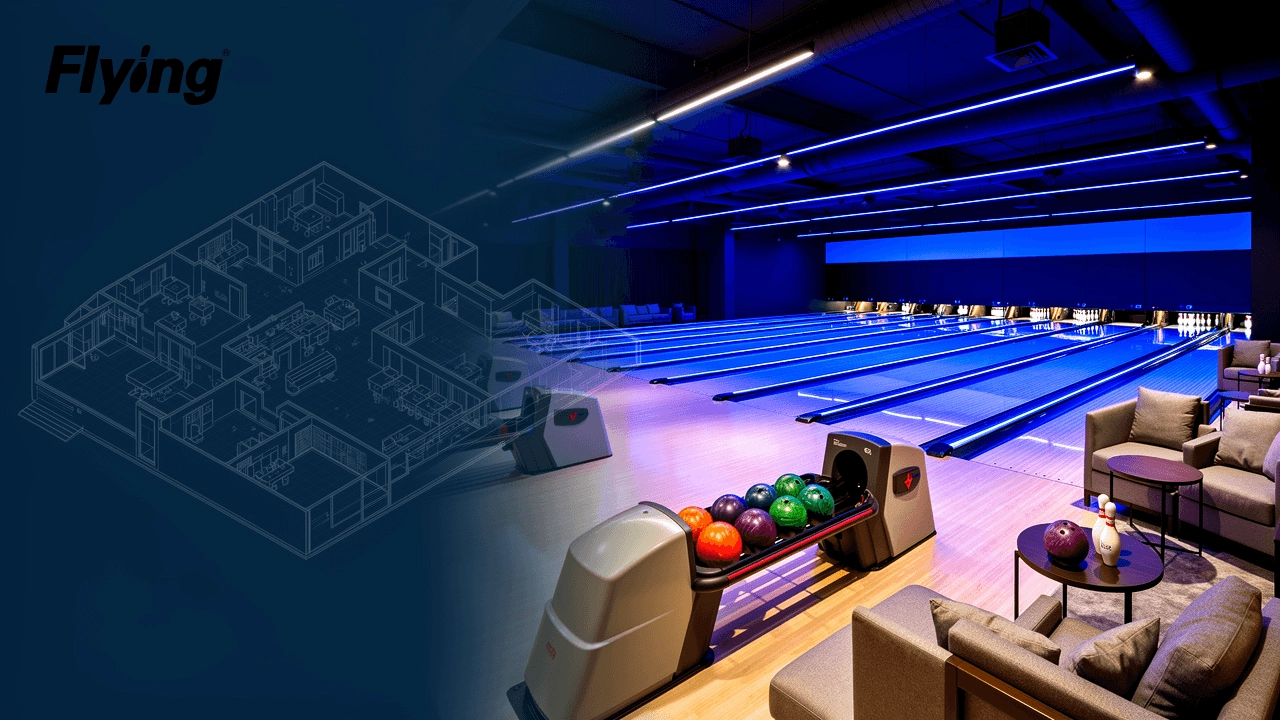

Let’s Build a center Together
Partner With a Trusted Bowling Alley Design, One-Stop Solution Manufacturer.
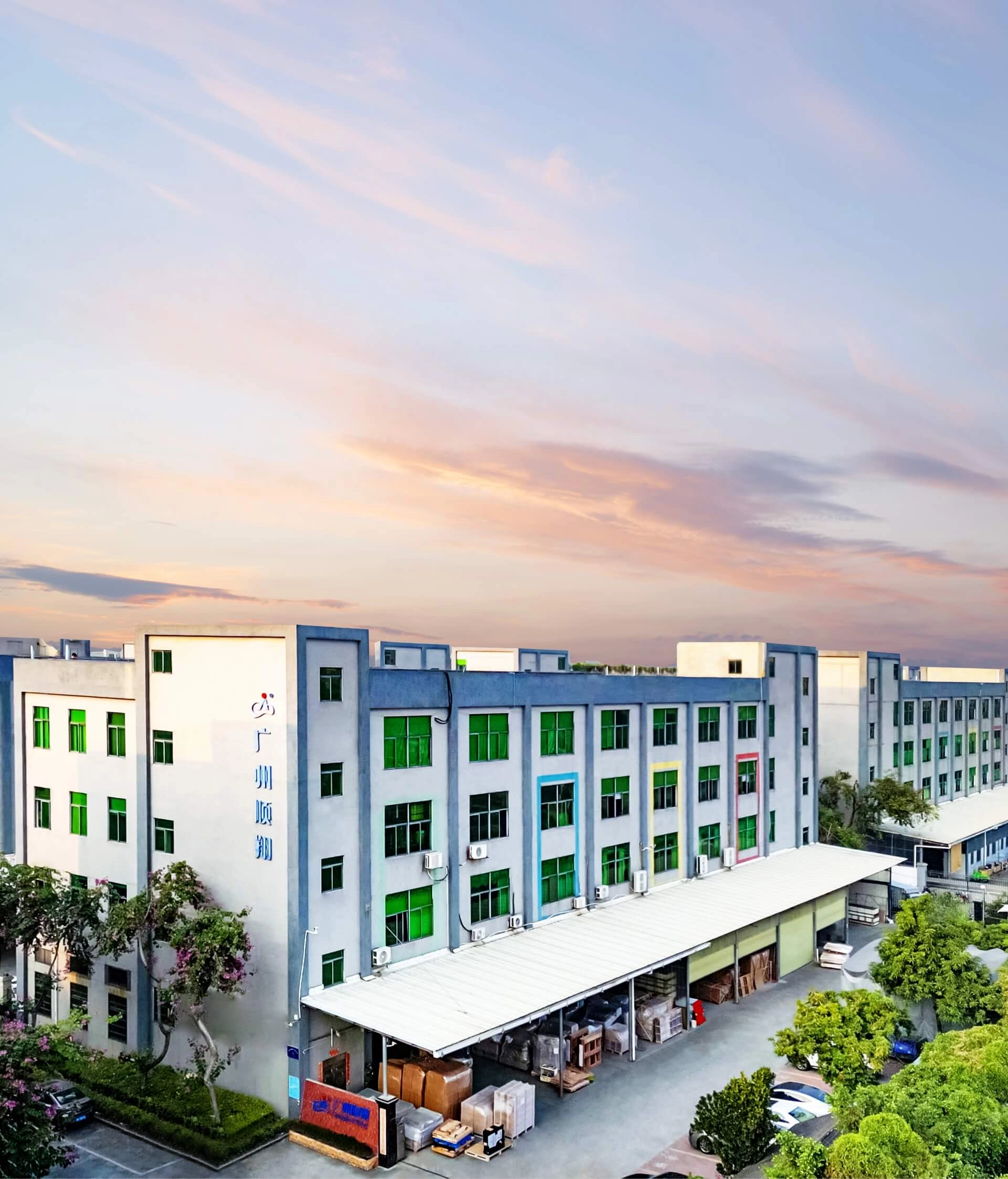
Flying has successfully built ideal bowling alleys for more than 3,000 customers.

Technical Expert
You may also like our products
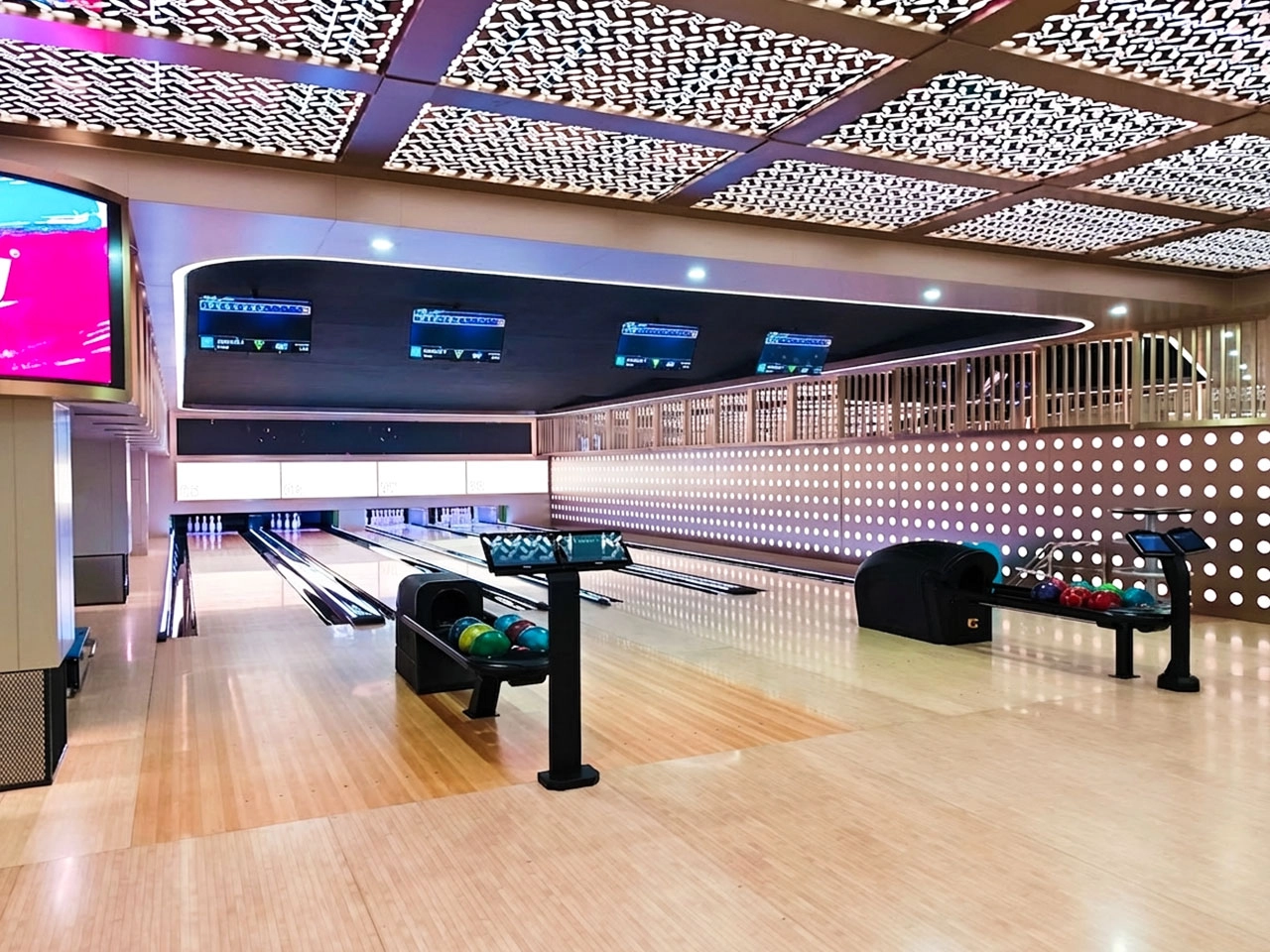
Build a commercial bowling venue with Flying’s complete string pinsetter bowling alley equipment package. The system includes the AEROPIN™ USBC-certified string pinsetter, customizable lanes, automatic scoring, ball return, lane lighting, pins, control hardware, and overseas installation support.
Designed for commercial bowling centers, family entertainment venues, hotels, resorts, bars, and premium private projects, this turnkey bowling system helps operators reduce sourcing complexity and prepare for reliable long-term operation.
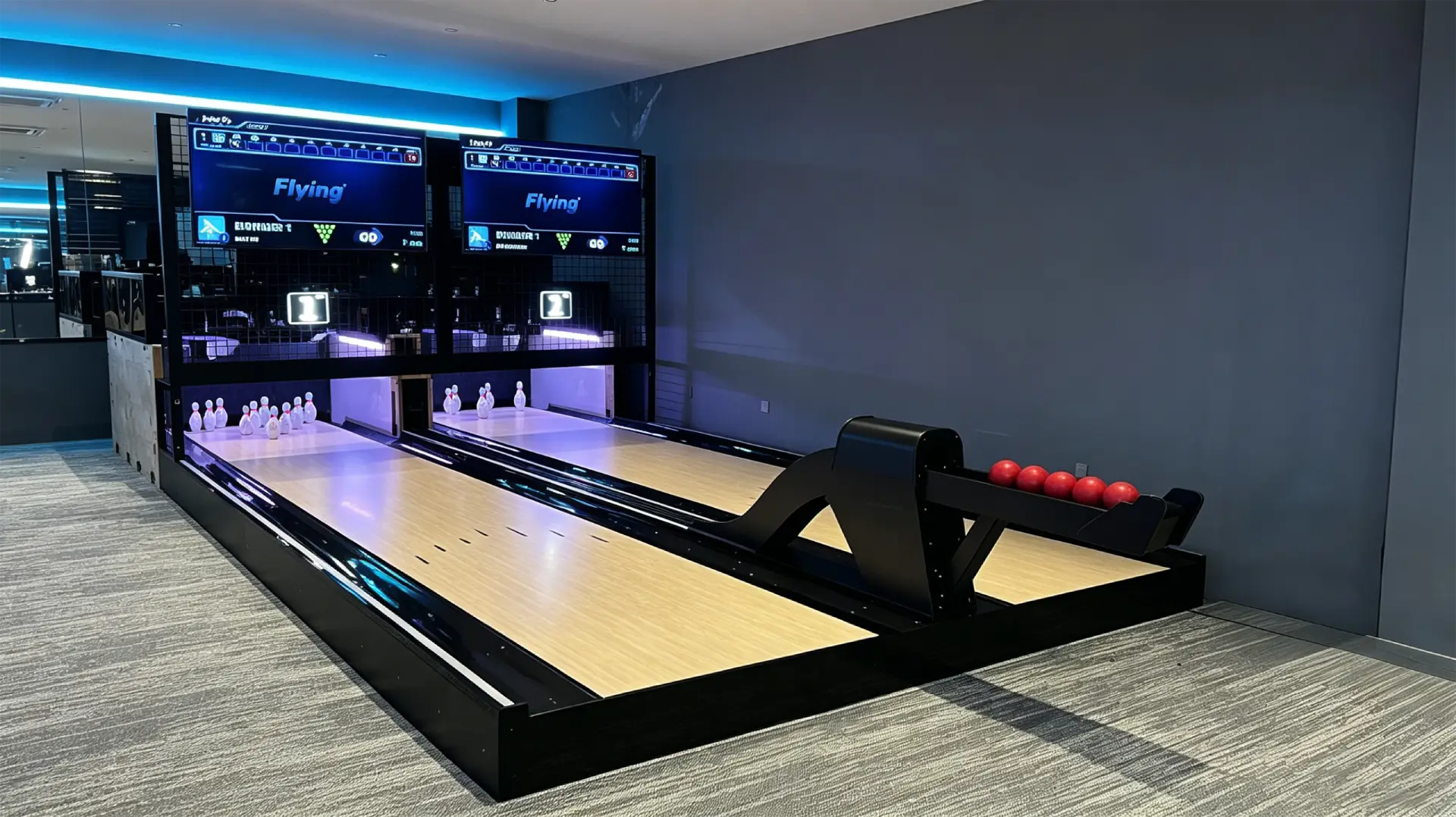
Flying Smart Duckpin Bowling is a compact duckpin bowling equipment system designed for bars, family entertainment centers, hotels, resorts, cinemas, boutique bowling alleys, and social entertainment venues. With a standard 9.13m duckpin bowling lane, 1.25kg lightweight balls, automatic scoring, ball return, LED lighting, and a smart string pinsetter, it creates a fast-paced and easy-to-play bowling experience in a smaller footprint than traditional bowling.
The system is available as a turnkey duckpin bowling package, including lane equipment, a string pinsetter system, scoring hardware, control software, global shipping, installation guidance, and technical support.
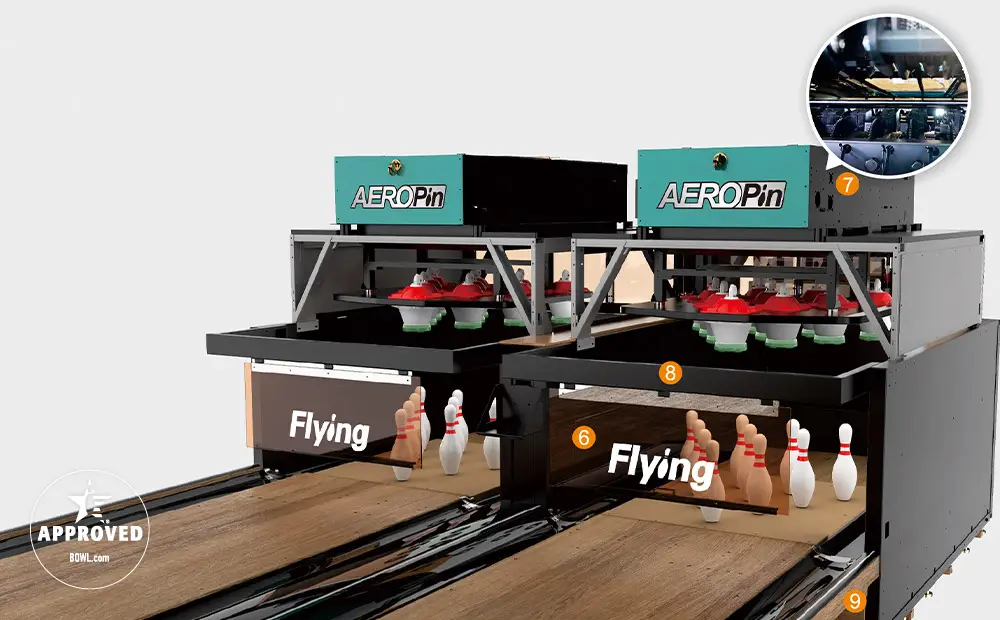
AEROPIN is Flying Bowling’s USBC-certified string pinsetter system for modern commercial bowling centers. Designed for fast pin setting, smooth ball return, low maintenance, and stable daily operation, it helps venue operators build league-ready and entertainment-focused bowling projects with confidence.
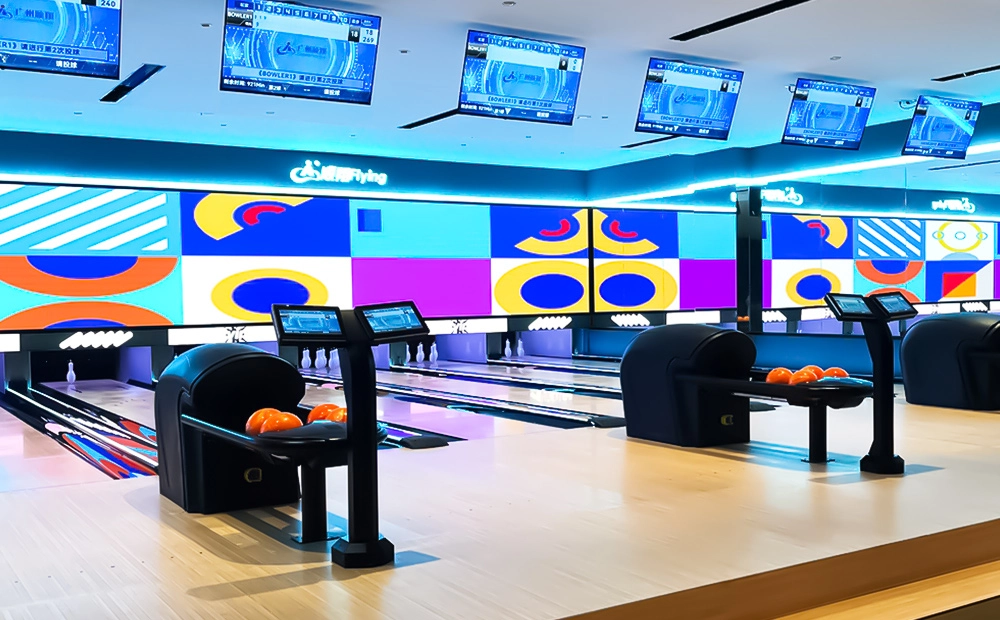
Flying Social Medium Bowling is a compact medium bowling equipment system designed for bars, cafes, family entertainment centers, community leisure venues, hotels, resorts, and small indoor entertainment spaces. With customizable lane lengths from 9.6m to 18m, small balls, lighter pins, string pinsetter technology, ball return, and automatic scoring, it creates an easy-to-play social bowling experience for players of different ages and skill levels.
Compared with full-size standard bowling, medium bowling requires less space and offers a more casual, interactive format. It is a practical choice for venues that want to add a bowling attraction without building a full commercial bowling alley.
Contact Flying
Start Your Custom Bowling Alley Project
If you contact us now for more details, we can provide you with a custom bowling alley service. Our service team will get back to you within 24 hours normally!
© 2026 Flying BOWLING. Designed by gooeyun.
FOLLOW US:

Flying Bowling
Flying Bowling
Flyingbowling
Flyingbowling
Flyingbowling