

How to Build a Bowling Alley: Complete Planning & Construction Guide
Building a bowling alley requires coordinated decisions across concept planning, bowling format, lane count, site qualification, layout design, structural and MEP engineering, equipment procurement, construction, installation, testing, and handover.
The most important decisions should be made early. Bowling format, lane count, pinsetter configuration, and site conditions can affect the required floor area, ceiling clearance, structural loading, electrical infrastructure, data network, HVAC, delivery access, and installation sequence.
A practical project sequence is: define the concept → confirm the bowling format and lane count → qualify the site → create the layout → coordinate structural and MEP requirements → prepare the building → procure equipment → install and commission the system → complete handover.
How to Build a Bowling Alley: Project Phases at a Glance
| Phase | Main Decision | Main Output |
|---|---|---|
| 1. Concept Planning | Who will use the venue and what bowling format is required? | Project brief |
| 2. Site Qualification | Can the proposed building support the project? | Qualified site |
| 3. Layout & Engineering | How will lanes, equipment and customer areas fit together? | Coordinated layout |
| 4. Building Preparation | What structural, electrical, HVAC and data work is required? | Installation-ready site |
| 5. Equipment Procurement | Which bowling equipment configuration fits the project? | Confirmed equipment package |
| 6. Installation | How will the equipment be delivered, installed and connected? | Installed bowling system |
| 7. Commissioning & Handover | Does the complete system operate correctly? | Operational venue |
The sequence matters. A property should not be finalized simply because it appears large enough, and bowling equipment should not be ordered before the building and layout requirements are understood.

1. Define the Bowling Concept, Format and Lane Count
The construction process starts with the intended use of the venue. A commercial bowling center, family entertainment center, social bowling venue, hotel recreation area, and mixed-use entertainment project can require different layouts, customer areas, operating systems, and supporting facilities.
Before the architectural and engineering work is finalized, the project team should define the primary customer, the role of bowling within the business, the preferred bowling format, the approximate lane count, any F&B or entertainment areas, and the main seating and circulation requirements.
For Flying Bowling projects, Standard Bowling, Medium Bowling and Duckpin Bowling may be considered depending on the intended application and site conditions.
Bowling format and lane count should be confirmed early because they can influence room dimensions, lane and approach layout, pinsetter and service zones, seating, structural requirements, electrical demand, data infrastructure, HVAC planning, and equipment access.
2. Evaluate the Site Before Committing to the Building
Site qualification answers one practical question: can this building realistically support the planned bowling project?
Total floor area alone is not enough. The usable length and width must accommodate lanes, approaches, pinsetter and equipment zones, ball returns, seating, technician access, circulation, and any supporting commercial areas. The most reliable way to test a site is with a preliminary bowling layout rather than a simple square-foot or square-meter calculation.
Structural columns and ceiling conditions should also be checked early. Columns within the proposed lane or equipment area can restrict the layout, while beams, ducts, pipes, cable trays, lighting, sprinklers, and ceiling finishes may reduce usable clearance.
Older buildings, upper-floor spaces, and conversions also require an early review of floor condition and structural capacity. Detailed engineering comes later, but obvious feasibility risks should be identified before the property is committed.
The building should also be checked for electrical and HVAC feasibility, equipment delivery access, loading routes, corridors, elevators where relevant, and any local use or approval constraints. Requirements vary by jurisdiction and should be confirmed with qualified local professionals.
3. Create the Bowling Alley Layout Before Final Construction Design
Bowling alley design is not simply deciding where the lanes will sit. A coordinated layout may need to integrate lane positions, approach areas, pinsetter zones, ball returns, technician access, player seating, reception, shoe and ball storage, F&B areas, event spaces, restrooms, customer circulation, emergency routes, displays, and back-of-house functions.
The layout should be developed early enough to influence the architectural, structural, electrical, HVAC, and network plans. Late changes to bowling equipment locations can affect multiple building systems at once.
4. Structural Requirements for Bowling Alley Construction
Floor Levelness
The lane system requires a suitable substrate. Acceptable tolerances depend on the lane system and installation method, so the applicable requirement should come from the selected equipment documentation rather than a generic value. The finished floor should be checked before installation begins.
Floor Load-Bearing Capacity
Bowling equipment can introduce both distributed and localized loads. This is especially important for upper-floor installations, older buildings, converted commercial spaces, and projects without reliable structural records. Equipment weight and footprint data should be provided to the structural engineer for verification.
Ceiling Clearance and Column Coordination
Final clearance should be coordinated against the selected pinsetter and all overhead services. Columns should also be checked against the final lane and equipment layout so structural obstructions do not interfere with mechanical access, lane placement, or important player sightlines.
5. MEP Requirements: Electrical, Data, HVAC and Plumbing
Electrical
The electrical design should use the applicable equipment load schedule and coordinate bowling equipment, scoring systems, displays, lighting, F&B equipment, and supporting venue systems. One universal electrical specification should not be assumed for every project.
Data and Network
Modern bowling centers may require network infrastructure for scoring, lane control, displays, POS integration, Wi-Fi, administrative systems, and other connected equipment. Cable routes and termination points should be coordinated before walls, floors, and ceilings are completed.
HVAC and Plumbing
HVAC planning should account for customer occupancy, equipment heat load, ventilation, air distribution, comfort, and system noise. Plumbing is mainly relevant to bars, kitchens, restrooms, and other wet areas, where existing drainage and utility positions can influence the final layout.
6. Acoustics, Lighting and Modern Bowling Alley Design
Technical performance and customer experience should be planned together. Bowling naturally produces impact and mechanical noise, so acoustic planning is especially important in shopping malls, hotels, mixed-use buildings, entertainment complexes, and other locations near noise-sensitive occupancies.
Lighting may combine general illumination, lane lighting, approach and seating lighting, decorative lighting, and entertainment effects. These systems should be coordinated with equipment, displays, ceiling systems, and customer circulation rather than treated only as a late-stage decoration decision.
Scoring displays and digital interfaces also affect sightlines, electrical supply, data cabling, ceiling coordination, and seating layout. Modern visual design should support efficient operations rather than create obstacles for staff, customers, or technicians.
7. Permits and Local Compliance
There is no universal permit list for every bowling project. Depending on the location and project type, local requirements may involve construction or renovation approval, building use, fire safety, emergency exits, occupancy, accessibility, entertainment operation, signage, food service, and alcohol service where applicable.
The project architect, contractor, or local compliance adviser should confirm which approvals apply. Permits should be considered early because they can affect both construction and opening schedules.
8. Bowling Alley Construction Cost Framework
There is no reliable universal cost to build a bowling alley. Project cost depends on country, building condition, lane count, bowling format, construction scope, equipment configuration, logistics, interior standard, local labor, and approval requirements.
Planning Note: The categories below are a budgeting framework, not a quotation or universal cost benchmark.
| Cost Category | Typical Scope |
|---|---|
| Bowling Equipment | Lanes, pinsetters, ball return, scoring and related equipment |
| Freight & Logistics | Freight, handling, customs and inland delivery where applicable |
| Civil & Structural | Floor preparation, structural modification and building works |
| Electrical / Data | Distribution, cabling, scoring, control and network infrastructure |
| HVAC & Acoustics | Ventilation, cooling and noise-control work |
| Interior Fit-Out | Seating, reception, lighting, F&B and customer areas |
| Installation | Installation, testing and commissioning according to contract scope |
| Permits & Professional Fees | Local approvals, consultants, engineering and inspections |
Equipment price is only one part of the total project cost. Detailed pricing should be evaluated separately using the actual project configuration and local market conditions.
9. Choose Bowling Equipment After the Project Requirements Are Clear
A commercial bowling system may include lane systems, pinsetters, ball returns, scoring and control equipment, pins, balls, seating or player-area components, and other project-specific accessories.
Equipment should be evaluated according to bowling format, lane count, site dimensions, maintenance capability, service access, technical requirements, documentation, spare-parts planning, and installation scope. Detailed pinsetter, lane-dimension, ball-return, and maintenance comparisons should remain on their dedicated pages.
10. Who Is Responsible for What During Bowling Alley Construction?
Responsibility boundaries should be defined before construction starts. Many delays occur because one party assumes another party is responsible for an interface.
| Project Item | Equipment Supplier | General Contractor / Local Team | Specialist Where Required |
|---|---|---|---|
| Equipment Requirements | Provide applicable equipment data and agreed documentation | Coordinate into building design | — |
| Bowling Layout | Provide or review according to agreed scope | Coordinate with architectural plan | Architect |
| Floor / Structural Requirements | Provide applicable equipment requirements and available weight data | Prepare building accordingly | Structural engineer |
| Electrical / Data | Provide relevant requirements where applicable | Coordinate and install infrastructure | Electrician / network contractor |
| Delivery Access | Confirm agreed delivery needs | Maintain suitable site access | Logistics provider |
| Installation & Commissioning | According to contract scope | Coordinate site readiness and building-side support | Relevant local contractors |
The final responsibility matrix must follow the actual contracts. Equipment supply should not automatically be assumed to include civil work, electrical work, unloading, installation, training, or maintenance unless those items are explicitly included.
11. Bowling Alley Installation Process
Step 1: Confirm Site Readiness. Verify floor preparation, structural work, electrical rough-in, network infrastructure, ceiling coordination, access, and work-area clearance.
Step 2: Coordinate Delivery. Confirm delivery timing, unloading arrangements, storage space, access dimensions, handling requirements, and installation sequence.
Step 3: Install Lane and Mechanical Systems. Installation may include lane structures, lane surfaces, pinsetters, ball return components, player-side equipment, and associated alignment.
Step 4: Connect Scoring and Network Systems. Scoring, displays, controls, and relevant network components can then be connected and configured.
Step 5: Test the Installed Systems. Testing may cover lane operation, pinsetter cycles, ball return, scoring, displays, controls, and connected system communication.
Step 6: Commission and Hand Over the Project. Confirm agreed documentation, operational information, training scope where included, spare-parts information, and fault-reporting procedures.
Training and after-sales scope should be confirmed contractually rather than assumed.
12. Can a Bowling Alley Be Installed in a Shopping Mall or Existing Building?
Potentially, yes, but the building should first pass a technical feasibility review. Shopping mall and conversion projects require particular attention to floor loading, ceiling and existing services, structural columns, acoustics, electrical and HVAC capacity, delivery access, customer circulation, and applicable local approvals.
An existing building is not automatically easier or less expensive than a purpose-built site. Feasibility depends on how closely the property matches the technical requirements of the planned bowling system.
13. What Affects a Bowling Alley Construction Timeline?
There is no universal construction duration. The schedule may be affected by design completion, permits, existing building condition, structural modifications, lane count, equipment configuration, production lead time, freight and customs, contractor availability, electrical and HVAC work, equipment access, interior fit-out, installation, and commissioning.
Some phases can run in parallel when the project documentation is already coordinated. The priority is to make sure that the building is installation-ready when the bowling equipment arrives.
14. Common Bowling Alley Construction Mistakes
One common mistake is choosing a site before confirming the bowling format and lane count. A property may appear large enough but still fail because of columns, ceiling conditions, floor capacity, or access constraints.
Another mistake is designing electrical, data, HVAC, or acoustic systems too late. These systems should be coordinated before finishes and equipment installation, not treated as corrections after construction.
Equipment selection should also happen early enough to inform the building design. Generic budget assumptions and generic construction timelines can be misleading because actual costs and schedules vary significantly by project and market.
Finally, unclear responsibility boundaries can create avoidable delays. The team should know who is responsible for floor readiness, electrical work, delivery access, unloading, installation, testing, and project changes.
15. Pre-Opening Testing and Handover Checklist
Before opening, confirm that the venue is operationally ready rather than simply construction-complete.
Bowling equipment: lane systems, pinsetter operation, ball return, scoring, displays, and commissioning issues should be checked.
Building systems: required electrical infrastructure, network connections, HVAC, lighting, and customer circulation areas should be ready.
Site and safety: construction areas should be cleared, access routes usable, and relevant local inspections or approvals completed.
Documentation: applicable equipment documents, installation records where provided, warranty information, spare-parts information, and technical contacts should be retained.
Operations: responsible staff should understand basic system operation, routine inspection responsibilities, fault escalation, and maintenance planning.
Opening should follow successful commissioning and applicable local approvals rather than only the physical completion of equipment installation.
Frequently Asked Questions About Building a Bowling Alley
What are the main steps to building a bowling alley?
The main steps are defining the concept and lane count, qualifying the site, creating the layout, coordinating structural and MEP requirements, obtaining applicable approvals, selecting equipment, preparing the building, installing the bowling system, testing it, and completing commissioning and handover.
What should be checked before choosing a bowling alley location?
Check usable dimensions, structural columns, ceiling conditions, floor capacity, electrical and HVAC feasibility, equipment delivery access, customer circulation, and applicable local use or approval requirements.
What building requirements should be considered for a bowling alley?
Important requirements can include floor condition and load capacity, ceiling clearance, column locations, electrical infrastructure, data routes, HVAC, acoustics, supporting plumbing, and equipment access. Exact requirements depend on the selected equipment and building.
How much does it cost to build a bowling alley?
There is no universal cost. A complete budget may include bowling equipment, freight, building and structural work, electrical and network infrastructure, HVAC and acoustics, interior fit-out, installation, professional fees, permits, and working capital.
How long does bowling alley construction take?
The timeline depends on approvals, site condition, lane count, equipment configuration, construction scope, production and logistics, contractor availability, installation, and commissioning.
Can a bowling alley be installed in a shopping mall?
Potentially, yes. The project should first be evaluated for floor loading, ceiling conditions, structural columns, acoustics, electrical and HVAC capacity, delivery access, circulation, and applicable local approvals.
What should be tested before a bowling alley opens?
Testing should cover the installed lane system, pinsetter operation, ball return, scoring, displays, controls, and relevant connected systems. Building readiness, documentation, applicable approvals, and operational handover should also be completed.
Conclusion
Building a bowling alley is a coordinated process connecting venue concept, bowling format, layout, engineering, equipment procurement, construction, installation, and commissioning.
The most avoidable problems usually come from decisions being made in the wrong order. A site should not be finalized before the proposed bowling layout is checked. Building services should not be designed without the relevant equipment requirements. Equipment should not arrive before the site is installation-ready.
For a commercial project, the architect, structural and MEP consultants, general contractor, equipment supplier, and local approval specialists should work from one coordinated project plan.
When the major decisions are made in the correct sequence, the project can move from concept to operational bowling venue with fewer design conflicts, clearer responsibility boundaries, and a more controlled installation and handover process.
Planning a Bowling Alley Project?
Explore Flying Bowling equipment solutions or contact the team to discuss your project layout, bowling format, equipment configuration, and installation requirements.
Explore Bowling Solutions Discuss Your ProjectFAQ
What are the main steps to building a bowling alley?
The main steps are defining the concept and lane count, qualifying the site, creating the layout, coordinating structural and MEP requirements, obtaining applicable approvals, selecting equipment, preparing the building, installing the bowling system, testing it, and completing commissioning and handover.
What should be checked before choosing a bowling alley location?
Check usable dimensions, structural columns, ceiling conditions, floor capacity, electrical and HVAC feasibility, equipment delivery access, customer circulation, and applicable local use or approval requirements.
What building requirements should be considered for a bowling alley?
Important requirements can include floor condition and load capacity, ceiling clearance, column locations, electrical infrastructure, data routes, HVAC, acoustics, supporting plumbing, and equipment access. Exact requirements depend on the selected equipment and building.
How much does it cost to build a bowling alley?
There is no universal cost. A complete budget may include bowling equipment, freight, building and structural work, electrical and network infrastructure, HVAC and acoustics, interior fit-out, installation, professional fees, permits, and working capital.
How long does bowling alley construction take?
The timeline depends on approvals, site condition, lane count, equipment configuration, construction scope, production and logistics, contractor availability, installation, and commissioning.
Can a bowling alley be installed in a shopping mall?
Potentially, yes. The project should first be evaluated for floor loading, ceiling conditions, structural columns, acoustics, electrical and HVAC capacity, delivery access, circulation, and applicable local approvals.
What should be tested before a bowling alley opens?
Testing should cover the installed lane system, pinsetter operation, ball return, scoring, displays, controls, and relevant connected systems. Building readiness, documentation, applicable approvals, and operational handover should also be completed.
More Articles

Let’s Build a center Together
Partner With a Trusted Bowling Alley Design, One-Stop Solution Manufacturer.
Flying has successfully built ideal bowling alleys for more than 3,000 customers.

Technical Expert
You may also like our products
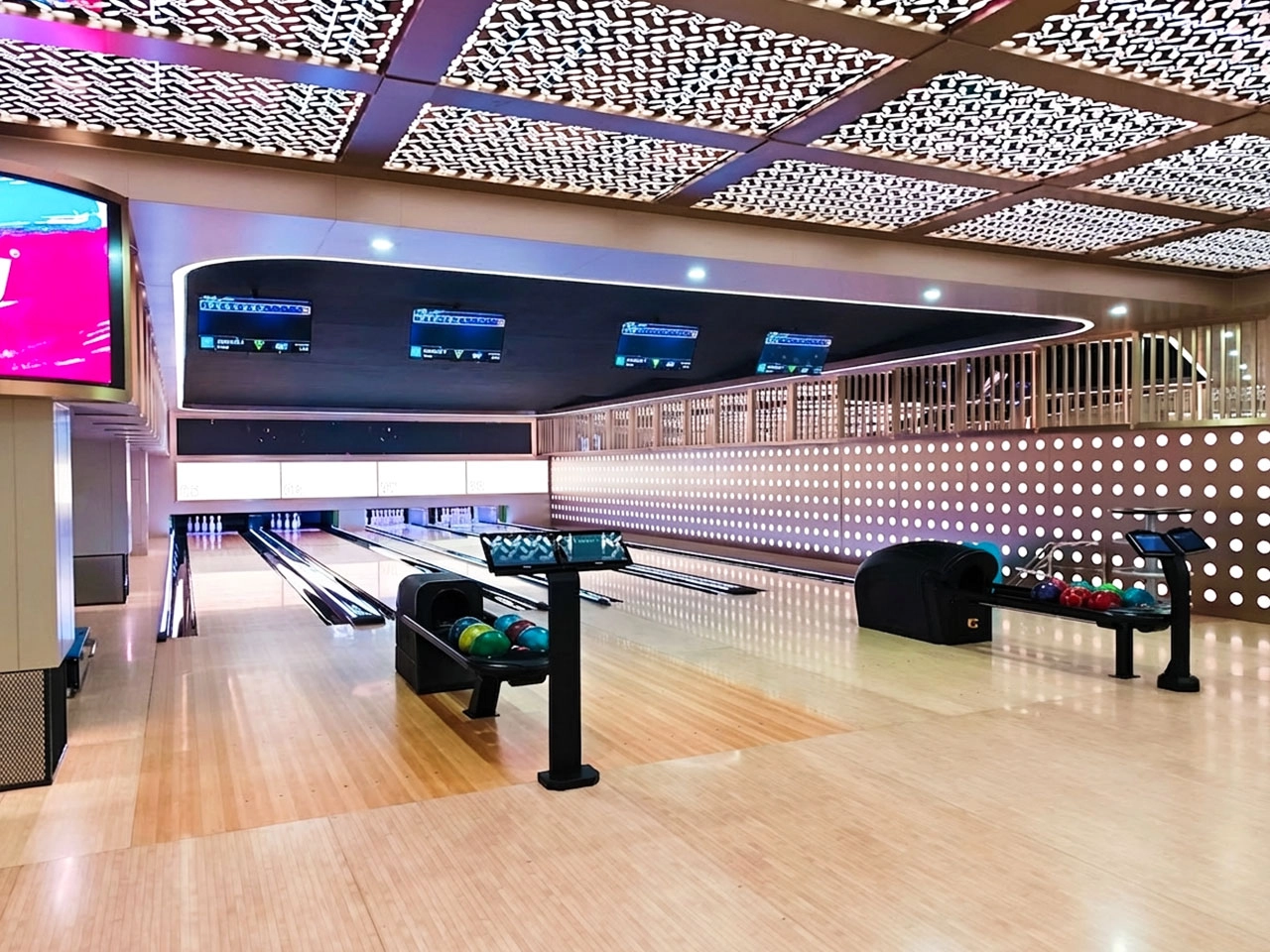
Build a commercial bowling venue with Flying’s complete string pinsetter bowling alley equipment package. The system includes the AEROPIN™ USBC-certified string pinsetter, customizable lanes, automatic scoring, ball return, lane lighting, pins, control hardware, and overseas installation support.
Designed for commercial bowling centers, family entertainment venues, hotels, resorts, bars, and premium private projects, this turnkey bowling system helps operators reduce sourcing complexity and prepare for reliable long-term operation.
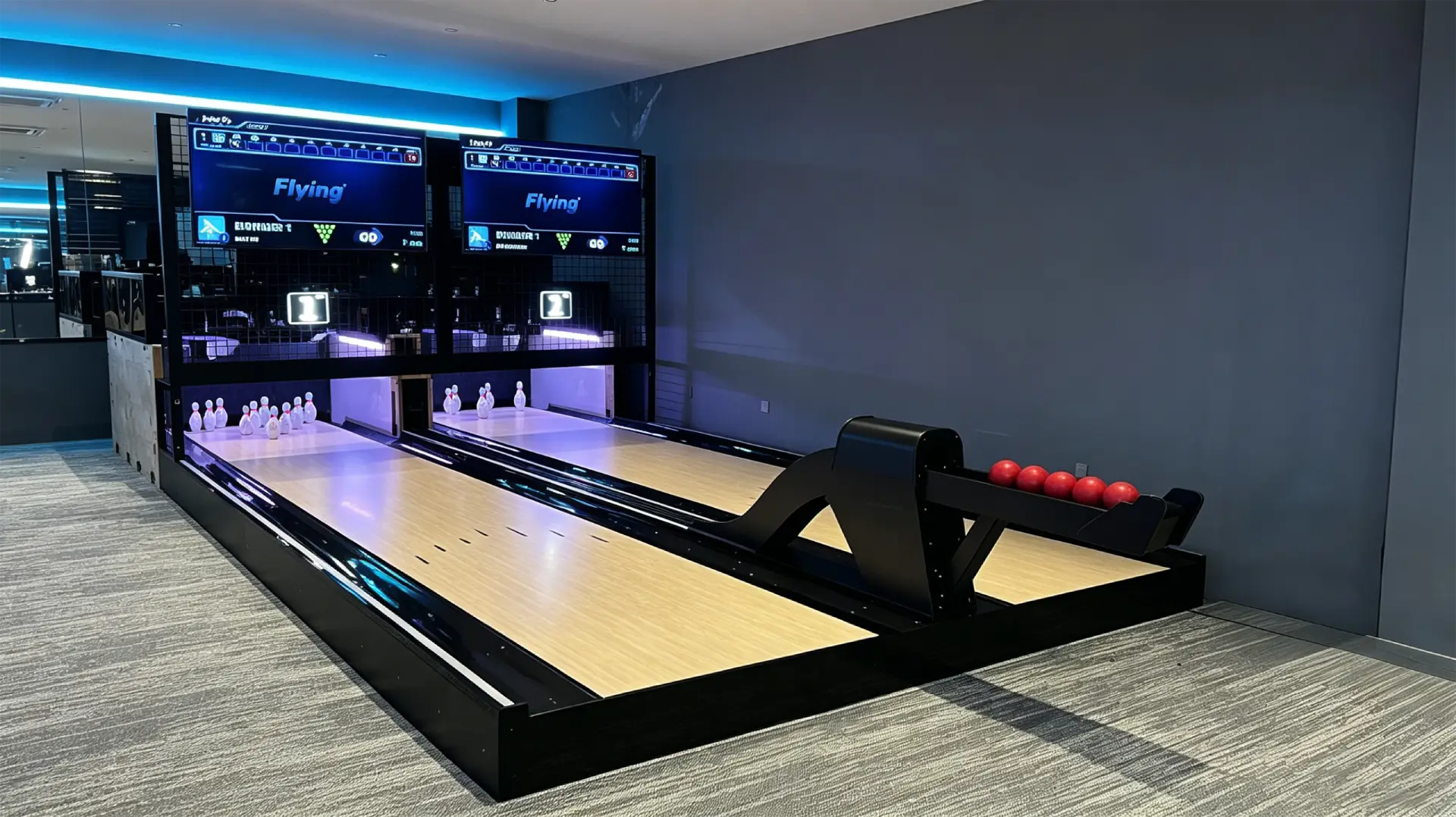
Flying Smart Duckpin Bowling is a compact duckpin bowling equipment system designed for bars, family entertainment centers, hotels, resorts, cinemas, boutique bowling alleys, and social entertainment venues. With a standard 9.13m duckpin bowling lane, 1.25kg lightweight balls, automatic scoring, ball return, LED lighting, and a smart string pinsetter, it creates a fast-paced and easy-to-play bowling experience in a smaller footprint than traditional bowling.
The system is available as a turnkey duckpin bowling package, including lane equipment, a string pinsetter system, scoring hardware, control software, global shipping, installation guidance, and technical support.
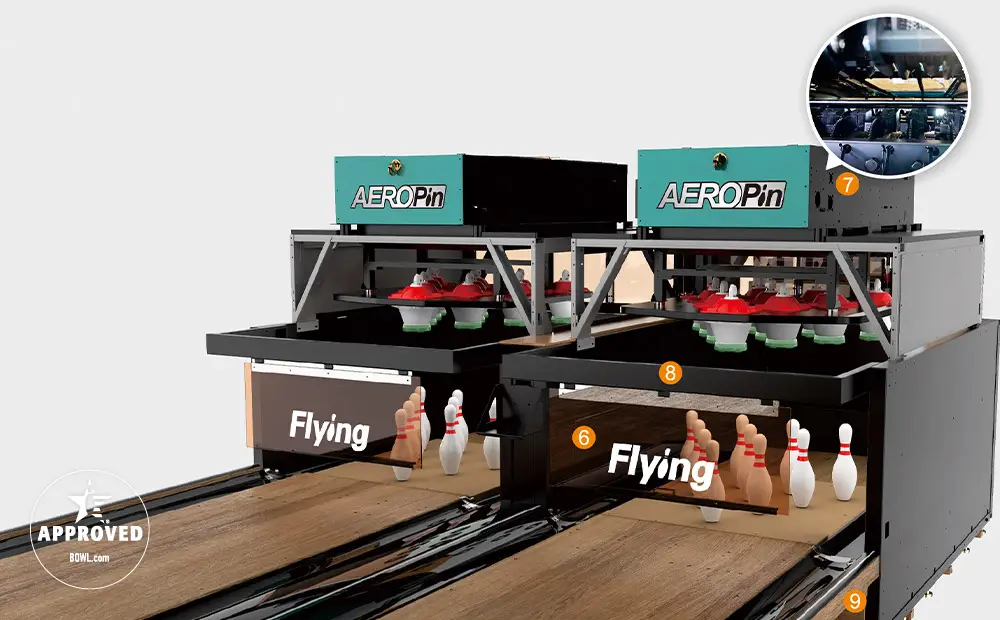
AEROPIN is Flying Bowling’s USBC-certified string pinsetter system for modern commercial bowling centers. Designed for fast pin setting, smooth ball return, low maintenance, and stable daily operation, it helps venue operators build league-ready and entertainment-focused bowling projects with confidence.
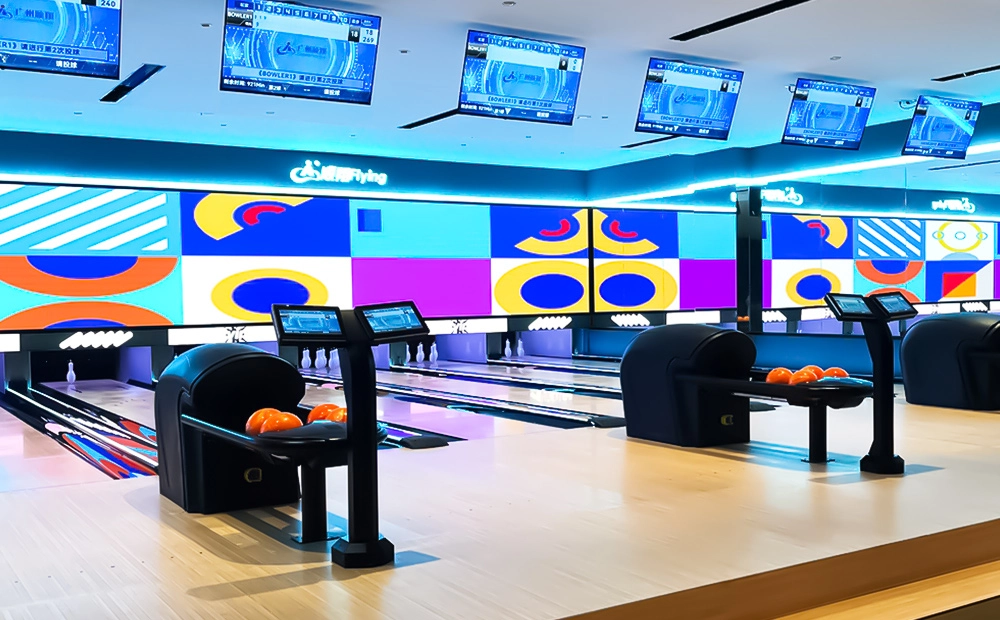
Flying Social Medium Bowling is a compact medium bowling equipment system designed for bars, cafes, family entertainment centers, community leisure venues, hotels, resorts, and small indoor entertainment spaces. With customizable lane lengths from 9.6m to 18m, small balls, lighter pins, string pinsetter technology, ball return, and automatic scoring, it creates an easy-to-play social bowling experience for players of different ages and skill levels.
Compared with full-size standard bowling, medium bowling requires less space and offers a more casual, interactive format. It is a practical choice for venues that want to add a bowling attraction without building a full commercial bowling alley.
Contact Flying
Start Your Custom Bowling Alley Project
If you contact us now for more details, we can provide you with a custom bowling alley service. Our service team will get back to you within 24 hours normally!
© 2026 Flying BOWLING. Designed by gooeyun.
FOLLOW US:

Flying Bowling
Flying Bowling
Flyingbowling
Flyingbowling