


Home Bowling Alley Setup Guide: Design, Digital Scoring & Equipment Planning
The Home Bowling Alley Setup Guide covers essential design principles, digital scoring integration, and equipment planning to build a functional, enjoyable space. Flying Bowling delivers expert tips to help you create a streamlined, professional-grade home bowling experience.
Quick Answer: What Do You Need for a Home Bowling Alley Setup?
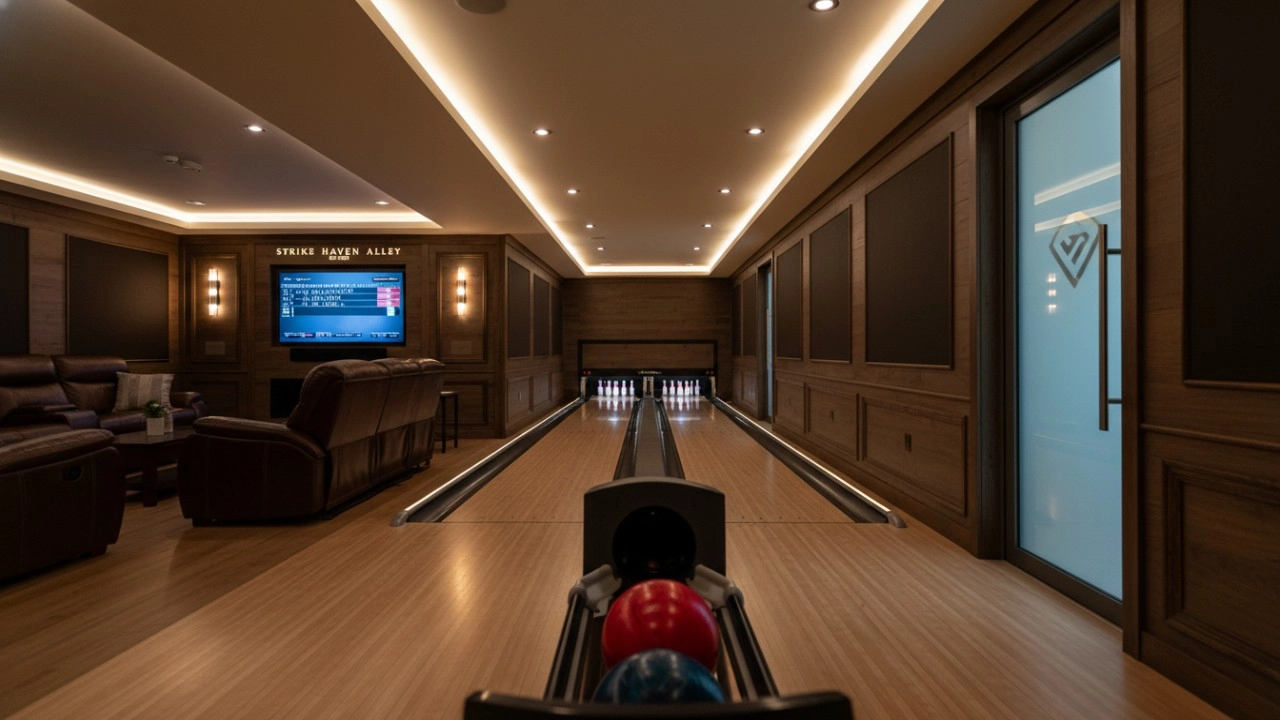
A home bowling alley setup needs a suitable room layout, bowling lane system, pinsetter, ball return, digital scoring, acoustic planning, electrical preparation, lighting, and safe delivery access. The best format depends on available room depth: mini bowling for compact family rooms, duckpin for adult social spaces, and standard tenpin for large estates or private clubs.
Who Is This Setup Guide For?
This guide is for homeowners, villa owners, private clubs, boutique hotels, family entertainment rooms, resort leisure spaces, basement game rooms, and indoor amusement operators planning a compact or full-size bowling installation. It covers the planning, design, and equipment decisions that determine whether a home bowling project runs smoothly — not just the cost numbers.
For detailed cost figures, see the Home Bowling Alley Cost Guide.
Main Planning Factors
The most important planning factors for a home bowling alley setup are: room depth and width, ceiling height, floor type, delivery access, pinsetter type, ball return layout, digital scoring requirements, acoustic treatment, lighting and design preferences, service clearance behind the lane, and ongoing maintenance support.
Getting these factors confirmed before ordering equipment avoids the most common and costly home bowling project mistakes.
Home Bowling Alley Setup Checklist
Use this checklist before requesting a layout review or equipment quotation.
| Setup Item | Why It Matters | Action |
|---|---|---|
| Room dimensions (L × W × H) | Determines format feasibility and lane count | Measure and confirm before enquiring |
| Floor type | Affects subfloor levelling and structural requirements | Identify concrete slab / timber / basement |
| Ceiling height at lowest point | Equipment compatibility minimum | Confirm 2.25 m+ for mini/duckpin; 2.44 m+ for standard tenpin |
| Delivery access route | Prevents installation delays | Measure door widths, corridor clearance, stair or lift dimensions |
| Pinsetter type | Impacts noise, maintenance, and daily operation | String pinsetter generally preferred for home use |
| Ball return layout | Affects room width and circulation | Confirm with layout review |
| Digital scoring | Improves usability and entertainment value | Confirm screen location and game mode requirements |
| Acoustic planning | Controls ball roll and pin impact noise | Assess based on room construction and adjacent spaces |
| Lighting and design | Creates room atmosphere | Decide on LED, custom lane graphics, and seating concept |
| Maintenance access | Enables safe post-installation service | Confirm clearance behind pin deck |
| Electrical supply | Powers pinsetter, scoring, and lighting | Confirm dedicated circuit availability with a licensed electrician |
Choose the Right Format: Mini vs Duckpin vs Standard
Format selection is the most consequential decision in any home bowling project. The wrong format for the available room means either a technically infeasible installation or a far more expensive construction project.
| Format | Best For | Room Depth Required | Key Setup Notes |
|---|---|---|---|
| Mini Bowling (FCMB) | Children, family rooms, compact spaces | 13–15 m | Fixed lane length; lightweight balls; no specialist footwear required |
| Duckpin Bowling (FSDB) | Adult social play, private bars, basements | 12–14 m (customisable 9.6–18 m) | Flexible lane length; compact set width; string pinsetter |
| Standard Tenpin | Large estates, private clubs | 26–28 m | Full regulation-style experience; USBC-certified equipment eligibility may apply depending on equipment model, venue use, and applicable rules — see USBC (bowl.com) |
For a full comparison of room sizes and cost estimates, see:
Room Layout and Floor Plan Planning
A common mistake in home bowling projects is designing the room before confirming the equipment dimensions and service requirements. Room planning should start from the equipment specifications, not the other way around.
What the room plan needs to accommodate:
| Area | Planning Notes |
|---|---|
| Approach | Safe standing and walking area behind the foul line; minimum depth required |
| Lane bed | Must be level to within ±3mm; load-bearing confirmed |
| Pinsetter area | Requires service clearance and safety access behind the pin deck |
| Ball return | Affects lane total width and circulation space; confirm with layout review |
| Seating area | Should not block lane delivery or maintenance access |
| Equipment delivery route | Confirm door widths, corridor dimensions, and access to the installation space |
| Electrical panel | Dedicated circuits for pinsetter, scoring, and lighting; confirm with a licensed electrician |
Installation type considerations:
- Basement: Most common for home bowling; check moisture control, ceiling height, and subfloor condition
- Garage conversion: Floor levelling and slab load capacity are the key checks; access for delivery often good
- Purpose-built room (new build): Most flexibility; specify room dimensions around equipment before construction begins
- Upper floor / timber floor: Structural engineering review required before ordering; floating floor may be needed for acoustic control
- Villa or estate leisure wing: Often the most practical for standard tenpin due to available depth
Confirm your room dimensions with Flying Bowling's complimentary remote layout review before committing to a room design or equipment order.
Digital Scoring System for Home Bowling
Digital scoring is not just a scoreboard. A well-configured scoring system significantly improves the usability and entertainment value of a home bowling lane — particularly in family or guest settings where players do not want to calculate scores manually.
What home bowling digital scoring typically includes:
| Feature | How It Helps at Home |
|---|---|
| Touchscreen interface | Easy to use for family members and guests of all ages |
| Multiple game modes | Bowling, bumper bowling, open play, mini games |
| Player profiles | Track individual scores over time |
| Score display | Clear presentation on screen above or beside the lane |
| Integration with lane lighting | Some configurations support lighting scenes linked to scoring events |
Setup planning for scoring:
- Confirm screen mounting location during the room layout phase — after installation, moving screen brackets is more difficult
- Digital scoring is typically included as part of Flying Bowling's complete lane systems
- Advanced integration with audio systems or LED scene controls may be available as optional upgrades depending on configuration
- Scoring system updates and software support should be confirmed as part of the equipment service agreement
Quiet Equipment and Acoustic Planning
No home bowling system is completely silent. Even with a quieter string pinsetter, ball roll, pin impact, and mechanical movement remain audible. Acoustic treatment should be planned before installation begins — not added as an afterthought.
String pinsetter vs free-fall: noise comparison
String pinsetter systems generally produce less mechanical noise than traditional free-fall systems because they have fewer moving parts and a different pin reset mechanism. However, the primary noise sources in any bowling installation — ball roll and pin impact — are related to the ball and pin materials, the lane surface, and the room's acoustic properties rather than the pinsetter type alone.
Acoustic planning by installation type:
| Installation Type | Noise Risk Level | Recommended Action |
|---|---|---|
| Ground floor, detached home, concrete slab | Low | Basic wall panels may be sufficient |
| Basement in a detached home | Moderate | Wall panels and ceiling treatment recommended |
| Ground floor, attached or semi-detached home | Moderate–High | Acoustic assessment recommended |
| Upper floor, timber suspended floor | High | Floating floor system and structural acoustic isolation |
| Apartment or multi-storey shared building | Highest | Full professional acoustic assessment required before ordering |
Common noise sources and planning solutions:
| Noise Source | Planning Approach |
|---|---|
| Ball roll along lane | Lane surface specification, floor isolation underneath |
| Pin impact | Acoustic wall and ceiling panel treatment |
| Pinsetter mechanical movement | Equipment placement spacing and service isolators |
| Ball return mechanism | Compact, quieter return designs; confirm with equipment supplier |
| Room echo and reverberation | Soft seating, acoustic panels, carpeted adjacent areas |
Consult a qualified acoustic engineer or building professional for upper-floor, attached-home, or strata/HOA-governed properties before committing to an installation.
Custom Lane Design, Masking Unit and Lighting
Custom design is one of the most requested features for high-end home bowling installations. A well-designed lane room can complement a home cinema, sports bar, children's playroom, or luxury leisure wing.
Design areas that can be customised:
| Design Area | Options | Planning Notes |
|---|---|---|
| Lane surface graphics | Custom patterns, logos, sports themes, family themes | Must be confirmed before production; cannot be changed post-manufacture |
| Masking unit | Themed panel design behind pins | Confirm design before production |
| LED lane lighting | Colour scenes, party mode, ambient brightness | Programmable options available; usually included in equipment package |
| Scoring terminal theme | Custom interface skin and game mode selection | Configure during installation |
| Seating and lounge zone | Lounge, bar, family room, private club layout | Designed separately from lane equipment; coordinate early |
Design planning guidance:
- Custom lane graphics and masking designs must be finalised before production begins — confirm your design brief during the quotation process
- Custom graphics do not normally affect lane performance, but any formal certification or sanctioned-play eligibility should be confirmed based on the equipment model and applicable rules
- LED lighting is typically included as part of Flying Bowling's equipment packages; advanced programmable scene control is available as an upgrade
- Bring room photos, interior design references, and any brand or theme guidelines to the layout review consultation
Design inspiration formats:
Home bowling lane rooms are typically designed around one of a small number of layout concepts — sports bar, family entertainment room, luxury lounge, children's playroom, or retro arcade. The key is to integrate the seating and lounge area so it complements the lane without blocking maintenance access or creating safety hazards.
What Equipment Does a Home Bowling Alley Include?
Understanding what is in the equipment package — and what requires separate local work — is essential for accurate project planning.
| Component | Function | Included in Flying Bowling Package |
|---|---|---|
| Lane surface | Main playing surface | Included in complete lane package |
| Pinsetter | Resets pins after each delivery | Included in complete lane package |
| Ball return system | Sends ball back to the approach | Included in complete lane package |
| Digital scoring system | Records scores; manages game modes | Included depending on configuration; confirm in quotation |
| Masking unit | Covers pinsetter area | Included; customisation options confirm in quotation |
| LED lane lighting | Enhances atmosphere | Included depending on configuration; confirm in quotation |
| Pins and balls | Playing accessories | Included depending on configuration; confirm in quotation |
| Spare parts pack | Supports post-installation maintenance | Typically included; confirm scope |
| Site preparation (subfloor, electrical, acoustic) | Structural and infrastructure work | Not included — local contractors |
| Interior finish (seating, décor, flooring) | Room design | Not included — owner's scope |
| Installation and commissioning | Professional setup | Included per project agreement |
For a complete breakdown of what project cost covers beyond equipment, see the Home Bowling Alley Cost Guide.
Common Setup Mistakes to Avoid
Most home bowling project problems are preventable with better planning at the start.
1. Designing the room before confirming equipment dimensions Room dimensions, ceiling height, and access route should be checked against equipment specifications before any construction or renovation work begins.
2. Underestimating delivery access Lane panels, pinsetter units, and ball return components are large and heavy. Door widths, corridor dimensions, stair turns, and lift capacity must be confirmed before the equipment ships.
3. Ignoring acoustic treatment Acoustic treatment is not optional for most home installations. Budget and plan for it before signing off on the room design.
4. Forgetting service clearance behind the pinsetter The area behind the pin deck needs safe access for maintenance and servicing. Do not design seating or storage into this space.
5. Choosing standard tenpin when mini or duckpin fits better Standard tenpin requires approximately 26–28 metres of room depth. Many homeowners who originally plan a full-size lane find that mini or duckpin bowling delivers an equivalent entertainment experience in far less space and at lower cost.
6. Treating FOB equipment cost as the total project cost Equipment FOB price is the starting point. Sea freight, import duties, site preparation, electrical work, acoustic treatment, installation, and interior finish can increase the final project cost to 2–3 times the FOB equipment price, depending on country, site conditions, installation scope, and finish level.
7. Not planning spare parts and maintenance support Confirm spare parts availability in your country and arrange a service contact before installation. String pinsetter systems require lower routine maintenance than free-fall systems, but professional support is still needed for installation, commissioning, and complex fault resolution.
Why Flying Bowling Can Help With Setup Planning
Flying Bowling designs and supplies standard, duckpin, medium, and mini bowling systems for residential rooms, private clubs, family entertainment venues, and commercial leisure spaces. For home setup planning, the team reviews room dimensions, floor type, ceiling height, delivery access, lane count, scoring requirements, acoustic considerations, and custom design preferences before recommending a configuration.
A complimentary remote layout review is available before purchase — submit your room floor plan, dimensions, and site photos to receive a feasibility assessment and configuration recommendation. Formal FOB quotations with HS code documentation for freight and customs planning are typically provided within 24–48 hours.
Contact: jackson@flyingbowling.com | WhatsApp: +86 150 1310 7020
Request a Home Bowling Layout Review →
Recommended Setup Paths by Buyer Type
| Buyer Type | Recommended Format | Why |
|---|---|---|
| Compact family room | Mini Bowling | Lowest cost, family-friendly, fits 13–15 m depth |
| Adult social basement or private bar | Duckpin Bowling | More authentic feel, compact, social format |
| Large private estate | Standard Tenpin | Full regulation experience, requires 26–28 m |
| Boutique hotel or resort leisure | Duckpin or Mini | Compact, low staff dependency, engaging for guests |
| Private club | Duckpin or Standard | Regular use, event programming, guest experience |
| Children's activity room | Mini Bowling | Child-friendly format, no specialist footwear, easy casual play cycles |
| Luxury home entertainment wing | Duckpin or Standard | Premium fit-out, adult social play or full experience |
Related Reading
FAQ
What do I need for a home bowling alley setup?
A home bowling alley setup needs a room with adequate length, width, and ceiling height for the chosen format; a complete bowling lane system (lane surface, pinsetter, ball return, and scoring); electrical preparation (dedicated circuits); acoustic treatment appropriate to the room and building type; safe delivery access for equipment; professional installation and commissioning; and a plan for ongoing maintenance and spare parts support.
How much room do I need for a home bowling alley?
Room depth requirements vary by format: mini bowling needs approximately 13–15 meters; duckpin bowling approximately 12–14 meters; and standard tenpin approximately 26–28 meters total depth, including approach and pinsetter room. Width for a 2-lane set is approximately 3.5 meters for duckpin or mini, or 3.5–4.2 meters for standard tenpin. Minimum ceiling height is 2.25 meters for mini and duckpin and 2.44 meters for standard tenpin. See the [Home Bowling Alley Cost Guide](https://www.flyingbowling.com/cost-to-build-a-bowling-lane-at-home-flying.html) for full-size room tables.
What is the best home bowling setup for a basement?
Mini bowling or duckpin bowling are the most practical formats for basement installations because both require approximately 12–15 meters of room depth and a minimum 2.25-meter ceiling height—dimensions that may be achievable in many large basement rooms after confirming clear room depth, ceiling height, humidity control, access route, and structural conditions. Key basement setup considerations are humidity control (important for lane surface stability), subfloor leveling, moisture barrier treatment, and confirmation of electrical supply. See the [Home Duckpin Bowling Alley Cost Guide](https://www.flyingbowling.com/article/home-duckpin-bowling-alley-cost.html) for duckpin-specific basement planning.
Is mini bowling or duckpin better for a home setup?
Mini bowling is better for children, family rooms, and the most compact or budget-constrained home installations. Duckpin bowling is better for adult social entertainment, private bars, and homeowners who want a more sport-like bowling feel with customizable lane length. Both formats use lightweight balls with no finger holes and have lower maintenance requirements than standard free-fall systems.
Do I need digital scoring for a home bowling alley?
Digital scoring is not technically required, but it significantly improves the usability and entertainment value of a home bowling lane—particularly for families and guests who do not want to keep score manually. Flying Bowling's lane systems include integrated digital scoring with touchscreen control, multiple game modes, and player tracking. The scoring terminal location should be decided during the room planning phase.
How do I make a home bowling alley quieter?
String pinsetter systems generally produce less mechanical noise than traditional free-fall systems, but ball roll and pin impact remain audible in any bowling installation. The most effective noise reduction approaches are acoustic treatment of walls and ceilings, floating floor construction for upper-floor installations, lane surface and floor isolation design, and soft room finishes (carpeted seating areas, acoustic panels) that reduce echo. A professional acoustic assessment is recommended for upper-floor, attached-home, and multi-story building installations.
Can I customize the lane design and lighting?
Yes. Lcustomizece graphics, masking unit designs, LED lighting color and scene programming, and scoring terminal themes can all be customized. Custom lane and masking designs must be confirmed before production begins, as they cannot be changed after manufacture. LED lighting is typically included in Flying Bowling's lane equipment packages; advanced programmable scene control may be available as an upgrade depending on configuration.
What mistakes should I avoid when planning a home bowling alley?
The most common mistakes are designing the room before confirming equipment dimensions, underestimating delivery access requirements, omitting acoustic treatment from the budget, forgetting maintenance clearance behind the pin deck, choosing standard tenpin when mini or duckpin would fit better, treating FOB equipment cost as the total project cost, and not planning for spare parts availability and maintenance support before installation.
How long does a home bowling setup take to install?
Total timeline from order confirmation to first game is typically 10–14 weeks: equipment production and testing in Guangzhou (30–40 days), export and sea freight (30–40 days), customs clearance and inland delivery (1–3 weeks), and on-site installation and commissioning (4–7 days for a 2-lane system). Site preparation—subfloor, electrical, and acoustic treatment—should begin in parallel with the production phase to avoid extending the overall timeline.
What information should I provide for a layout review?
Provide the room length, width, and ceiling height at the lowest point; floor type (concrete slab, timber, basement); access route dimensions (door widths, corridor clearance); country and city; target lane count and preferred format (mini / duckpin / standard); any custom design requirements; target installation date; and photos or floor plan drawings. Flying Bowling provides a complimentary remote layout review and FOB quotation with HS code documentation typically within 24–48 hours. Contact: jackson@flyingbowling.com | WhatsApp: +86 150 1310 7020
More Articles
Find out how much a bowling lane costs with Flying's expert insights. Explore real prices, installation details, and professional tips to plan your bowling alley investment efficiently. Get the right information to help your business succeed.

Let’s Build a center Together
Partner With a Trusted Bowling Alley Design, One-Stop Solution Manufacturer.
Flying has successfully built ideal bowling alleys for more than 3,000 customers.

Technical Expert
You may also like our products
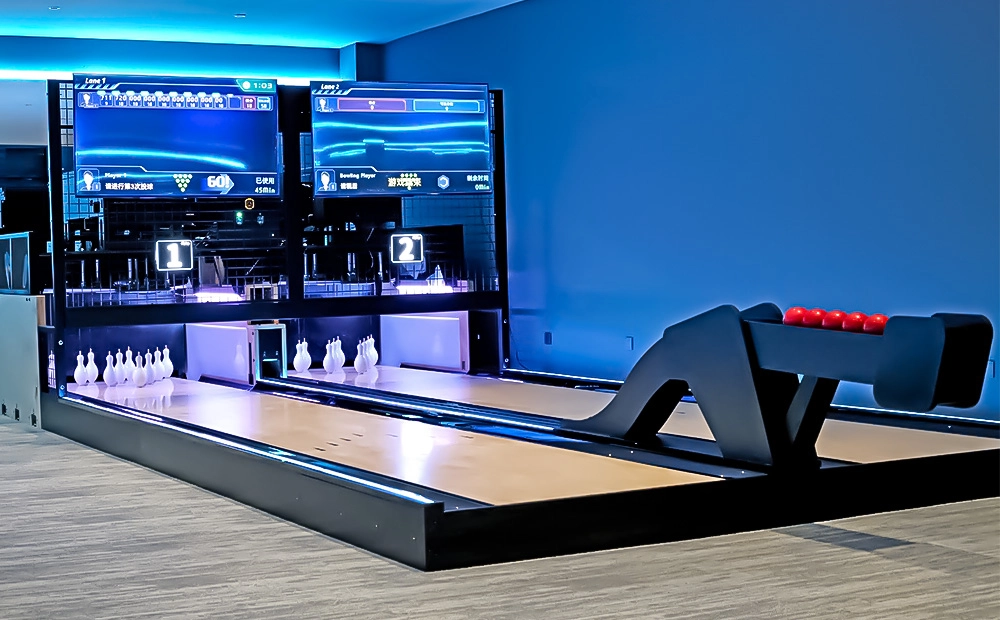
Flying Smart Duckpin Bowling (FSDB) innovative design, standard 9.2-meter short lane, can be shortened in length, compact layout suitable for small spaces. The game rules are simple but challenging, attracting players of different ages to actively participate.
Suitable for social entertainment venues such as bars, billiard halls, and game centers, it not only enhances interactivity but also increases the popularity and consumption frequency of the venue. The fun and competitive nature of FSDB will make it a new focus of social activities.
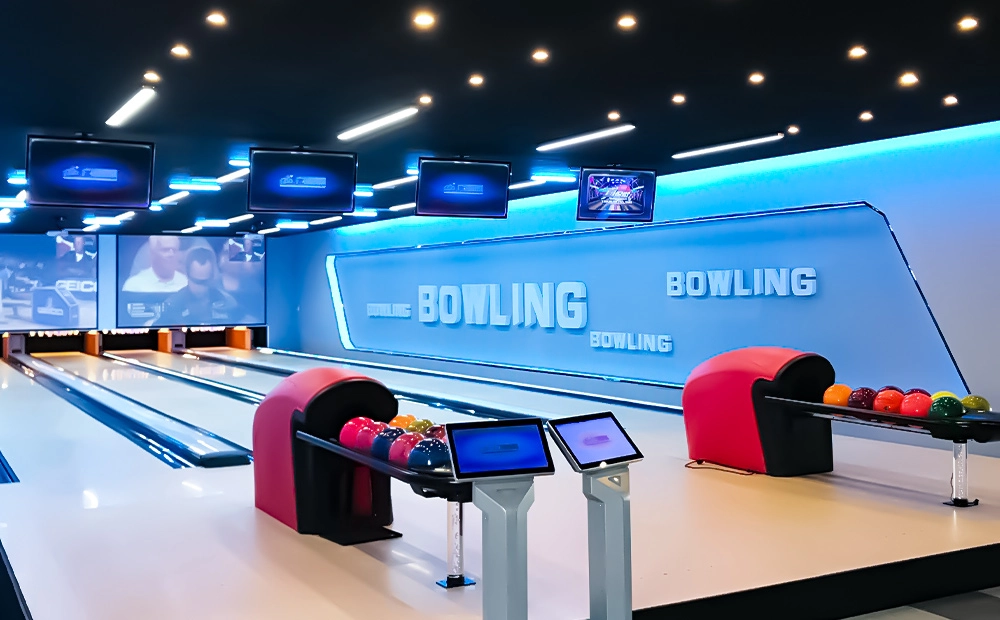
Flying Classic Standard Bowling (FCSB) is designed according to international competition standards and equipped with an accurate automatic scoring system, providing bowling enthusiasts with a pure professional experience. Whether it is for competitions or leisure entertainment, FCSB can meet high-level needs.
Suitable for family entertainment centers, luxury resorts, private villas, or clubs, it is an ideal choice for customers who pursue high-end quality and professional experience. Its classic design and excellent performance will add lasting appeal to the venue.
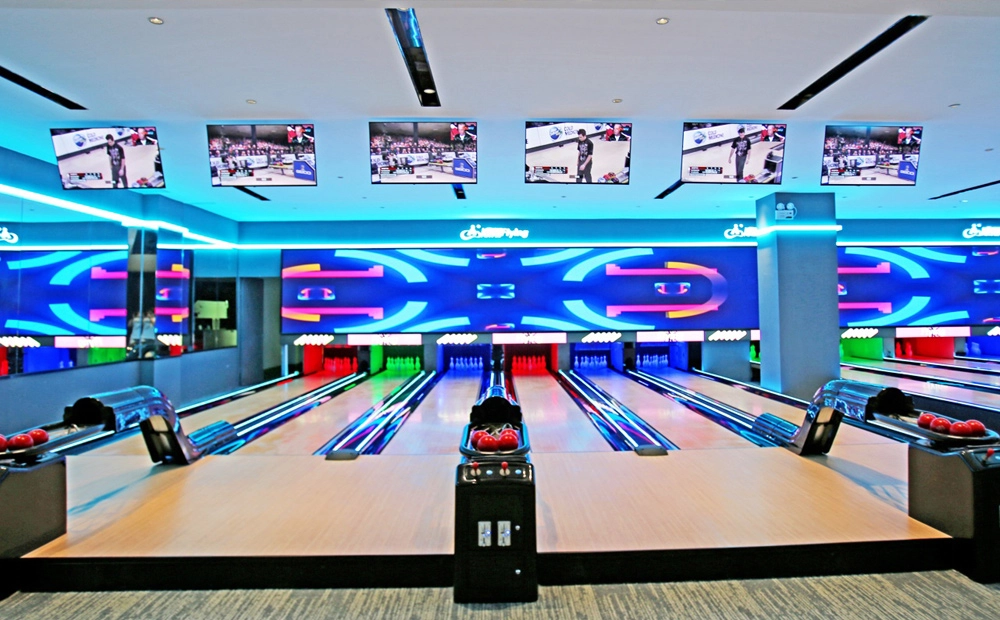
Flying Cute Mini Bowling (FCMB) is a mini bowling experience designed for children and families. The lane length is fixed at 12 meters, equipped with lightweight balls without finger holes (only 1.25kg) and small pins, specially designed for children and family fun.
It can not only help children feel the fun of bowling, but also stimulate their interest and competitive consciousness. Suitable for children's playgrounds, theme parks and parent-child centers, it is the best choice for places focusing on the children's market.
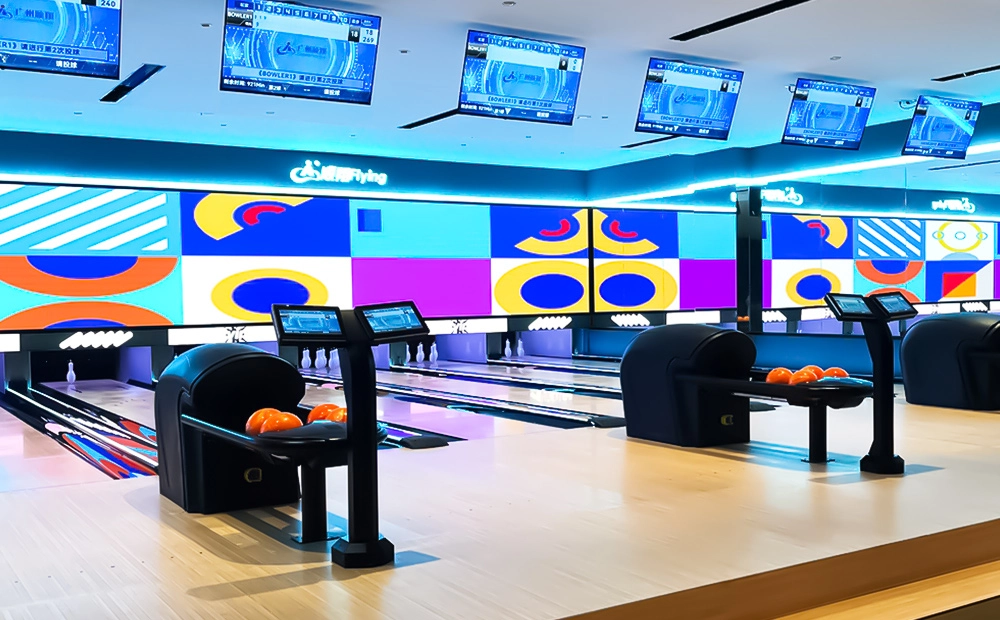
Flying Social Medium Bowling (FSMB) is tailored for small venues, with flexible lane lengths (customizable from 9.6 meters to 18 meters), a small ball design suitable for players of all ages, and light pins that are easier to knock down, increasing participation and fun.
Whether it is a gathering of friends or a casual social, FSMB can easily create a relaxed and pleasant atmosphere. Its efficient space-utilization design is particularly suitable for cafes, bars and community entertainment venues, allowing people to fall in love with bowling in a relaxed interaction.
Contact Flying
Start Your Custom Bowling Alley Project
If you contact us now for more details, we can provide you with a custom bowling alley service. Our service team will get back to you within 24 hours normally!
© 2026 Flying BOWLING. Designed by gooeyun.
FOLLOW US:
Flying Bowling
Flying Bowling
Flyingbowling
Flyingbowling