

String Pinsetter vs Traditional Pinsetter: ROI, Performance and Cost Comparison for Bowling Centers
- Quick Answer
- What Is the Difference Between String and Traditional Pinsetters?
- String Pinsetter vs Traditional Pinsetter Comparison
- Performance Comparison: String Pinsetter vs Traditional Pinsetter
- ROI Comparison: String Pinsetter vs Traditional Pinsetter
- Total Cost of Ownership: String Pinsetter vs Traditional Pinsetter
- Why Are Bowling Alleys Considering String Pinsetters?
- Which Pinsetter Is Better for Different Bowling Venues?
- How to Choose Between String and Traditional Pinsetters
- Pinsetter Selection Checklist
- Related Bowling Equipment Resources
- Plan Your Bowling Equipment Project
- FAQ
Quick Answer
Choosing between a string pinsetter and a traditional pinsetter requires more than comparing the initial equipment investment.
For commercial bowling centers, the right choice depends on operating requirements, maintenance expectations, venue type, customer experience goals, and long-term ownership considerations.
Both string pinsetters and traditional pinsetters can support bowling operations, but buyers should evaluate performance, lifecycle costs, technical support, and project requirements before making a decision.
What Is the Difference Between String and Traditional Pinsetters?
A pinsetter is one of the most important systems in a bowling center because it directly affects daily operation, maintenance planning, and customer experience.
A string pinsetter uses strings connected to pins to reset pins after each frame, while a traditional pinsetter uses a more complex mechanical system to handle pin placement and resetting.
Both systems have different characteristics and may suit different bowling projects depending on venue requirements and operating goals.
String Pinsetter vs Traditional Pinsetter Comparison
| Comparison Factor | String Pinsetter | Traditional Pinsetter |
|---|---|---|
| System Design | Uses strings connected to pins for resetting. | Uses a mechanical pin handling system. |
| Maintenance Considerations | Requires evaluation of string components and service needs. | Requires mechanical maintenance planning. |
| Installation Requirements | Depends on project conditions and configuration. | Depends on infrastructure and installation requirements. |
| Long-Term Planning | Focus on lifecycle planning and supplier support. | Focus on service capability and maintenance planning. |
Performance Comparison: String Pinsetter vs Traditional Pinsetter
Performance should be evaluated according to the actual requirements of each bowling venue rather than a single technical factor.
Operational Reliability
Commercial bowling centers require equipment that can support stable daily operation. Buyers should evaluate equipment stability, maintenance needs, technical support availability, and expected usage conditions.
Customer Experience
The pinsetter is one part of the complete bowling experience. Customer satisfaction is also influenced by lane performance, scoring integration, smooth operation, and venue management.
Maintenance Requirements
Maintenance planning is an important factor in long-term equipment ownership. Buyers should consider routine service requirements, spare parts planning, technical support, and possible downtime impact.
ROI Comparison: String Pinsetter vs Traditional Pinsetter
The return on investment of a pinsetter system depends on the complete operating environment. Initial equipment cost is only one part of the total investment.
Initial Investment
Equipment investment may depend on system configuration, number of lanes, project requirements, and installation conditions.
Maintenance Costs
Long-term operating costs should include service requirements, replacement components, technical needs, and maintenance workflow.
Downtime Considerations
For commercial bowling centers, equipment availability may affect customer experience and operational efficiency.
Total Cost of Ownership: String Pinsetter vs Traditional Pinsetter
Commercial buyers should evaluate total cost of ownership (TCO) instead of focusing only on the initial purchase cost.
| Cost Factor | Buyer Consideration |
|---|---|
| Equipment Investment | Consider equipment configuration, project size, and installation requirements. |
| Maintenance Planning | Evaluate service requirements, technical support, and maintenance workflow. |
| Lifecycle Value | Consider long-term operation, downtime risks, and future support. |
Why Are Bowling Alleys Considering String Pinsetters?
Some bowling operators are evaluating string pinsetter systems because of changing business requirements and different venue models.
Potential considerations include maintenance planning, operational flexibility, project requirements, and long-term ownership goals.
The right choice depends on the complete bowling project situation rather than one single factor.
Which Pinsetter Is Better for Different Bowling Venues?
Family Entertainment Centers (FECs)
FEC projects often prioritize customer experience, operational simplicity, equipment reliability, and efficient venue management.
Commercial Bowling Centers
Commercial bowling centers usually require reliable performance, effective maintenance planning, and long-term operational support.
Professional Bowling Facilities
Professional facilities may place greater importance on performance consistency, player expectations, and established operating practices.
Resorts and Hospitality Venues
Hospitality projects often focus on guest experience, space utilization, design integration, and stable operation.
How to Choose Between String and Traditional Pinsetters
- Define venue type, lane quantity, customer profile, and operating requirements.
- Compare system characteristics, maintenance needs, and technical support.
- Evaluate lifecycle costs and long-term ownership requirements.
- Select the solution that best matches your business goals.
Pinsetter Selection Checklist
- Venue type and customer profile
- Number of bowling lanes
- Expected operating frequency
- Maintenance capability
- Technical support requirements
- Spare parts planning
- Future expansion plans
- Supplier support capability
Related Bowling Equipment Resources
Explore complete bowling solutions:
Complete bowling equipment solutions
Compare pinsetter systems:
Review investment considerations:
Plan Your Bowling Equipment Project
Choosing the right pinsetter system is an important step in building a successful bowling facility.
Request Bowling Equipment Consultation Explore Bowling SolutionsFAQ
What is the difference between a string pinsetter and a traditional pinsetter?
A string pinsetter uses strings connected to pins to reset them after each frame, while a traditional pinsetter uses a mechanical system to handle pin placement and resetting. The two systems have different designs, maintenance requirements, and operating considerations.
Which pinsetter is better for commercial bowling centers?
The best pinsetter depends on the specific requirements of the bowling center, including venue type, operating conditions, maintenance capability, customer expectations, and long-term business goals.
Are string pinsetters easier to maintain than traditional pinsetters?
Maintenance requirements are different between string and traditional pinsetters. Buyers should evaluate service needs, technical support, spare parts planning, and the operating environment before making a decision.
Why are bowling alleys considering string pinsetters?
Some bowling operators are evaluating string pinsetters because of changing venue requirements, maintenance planning considerations, operational flexibility, and different business models.
How do I compare the ROI of string and traditional pinsetters?
ROI comparison should include more than initial equipment investment. Buyers should consider maintenance requirements, downtime impact, operational efficiency, lifecycle value, and long-term support.
What factors affect the total cost of ownership of a pinsetter system?
Total cost of ownership includes equipment investment, installation requirements, maintenance planning, spare parts considerations, technical support, operational efficiency, and long-term service needs.
What should I consider before buying a bowling pinsetter system?
Before purchasing a pinsetter system, buyers should evaluate venue type, lane quantity, expected usage, maintenance capability, equipment compatibility, supplier support, and future expansion plans.
Are traditional pinsetters still suitable for modern bowling centers?
Traditional pinsetters remain an option for many bowling environments. The suitable choice depends on the project's operating requirements, service capabilities, and long-term business objectives.
Recommended products
Flying Smart Duckpin Bowling Equipment for Commercial Venues
AEROPIN™ USBC-Certified String Pinsetter System
Medium Bowling Equipment for Compact Social Venues
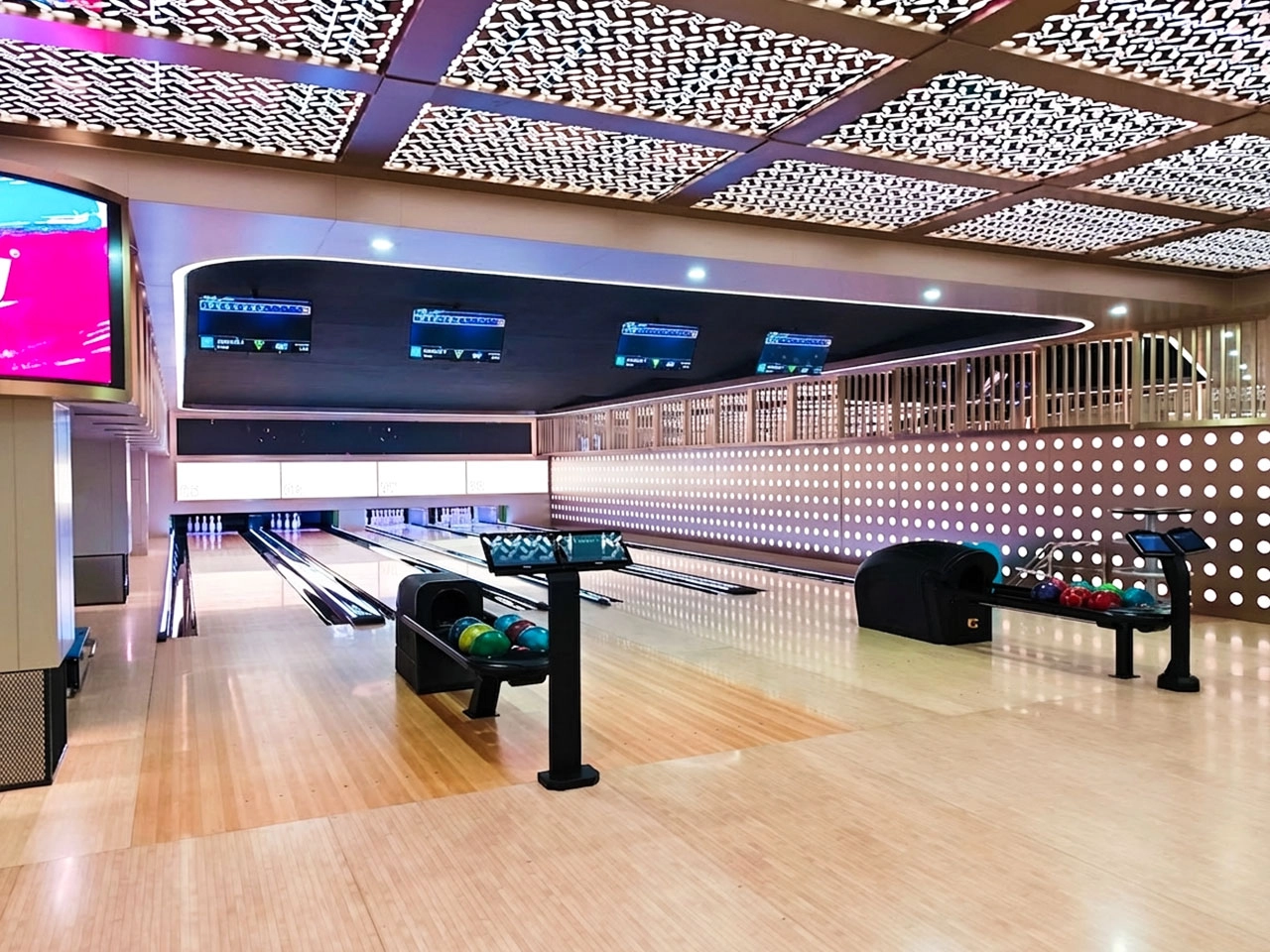
Complete Bowling Alley Equipment Package for Commercial Bowling Centers
You may also like
Build a commercial bowling venue with Flying’s complete string pinsetter bowling alley equipment package. The system includes the AEROPIN™ USBC-certified string pinsetter, customizable lanes, automatic scoring, ball return, lane lighting, pins, control hardware, and overseas installation support.
Designed for commercial bowling centers, family entertainment venues, hotels, resorts, bars, and premium private projects, this turnkey bowling system helps operators reduce sourcing complexity and prepare for reliable long-term operation.
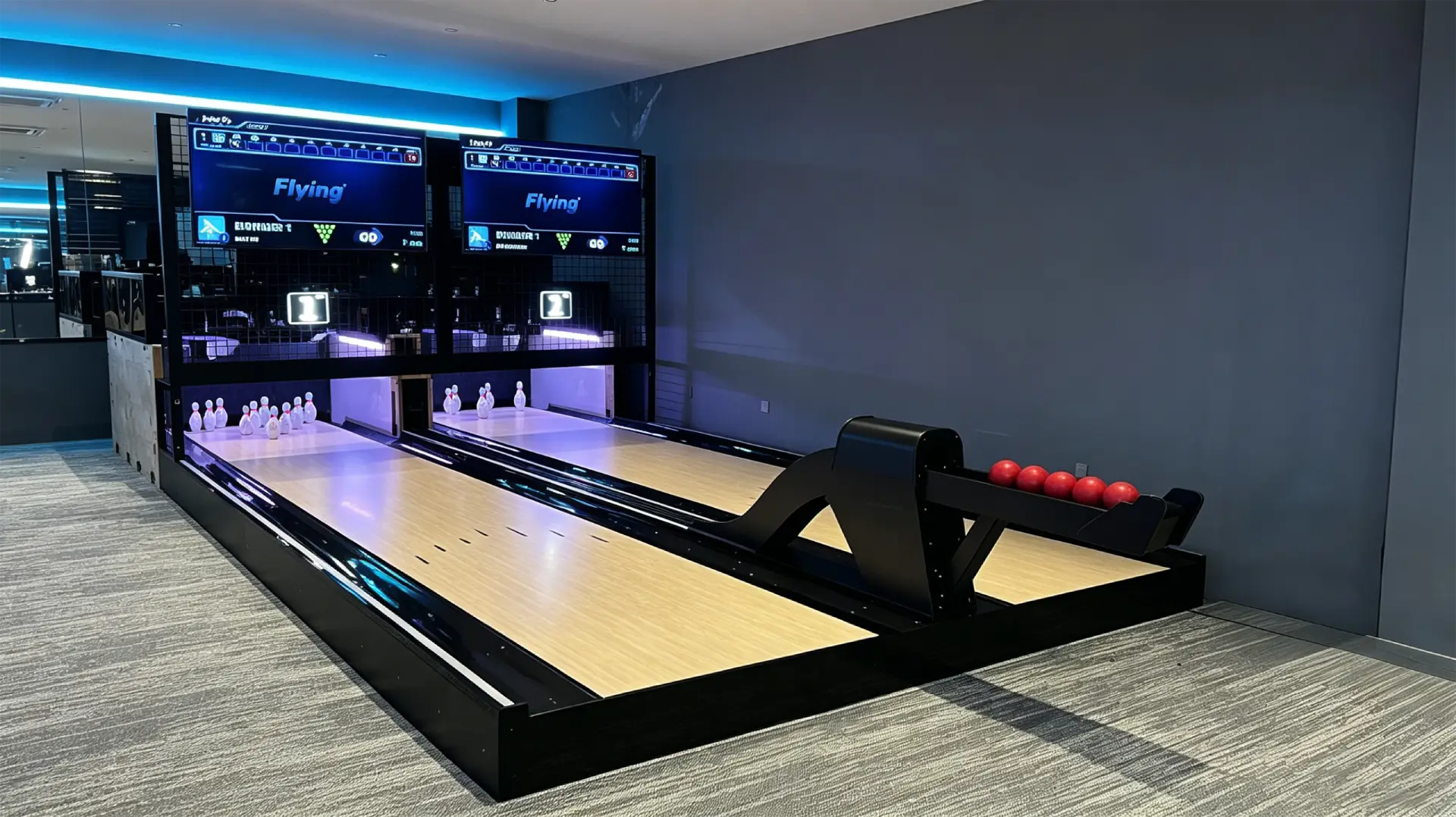
Flying Smart Duckpin Bowling is a compact duckpin bowling equipment system designed for bars, family entertainment centers, hotels, resorts, cinemas, boutique bowling alleys, and social entertainment venues. With a standard 9.13m duckpin bowling lane, 1.25kg lightweight balls, automatic scoring, ball return, LED lighting, and a smart string pinsetter, it creates a fast-paced and easy-to-play bowling experience in a smaller footprint than traditional bowling.
The system is available as a turnkey duckpin bowling package, including lane equipment, a string pinsetter system, scoring hardware, control software, global shipping, installation guidance, and technical support.
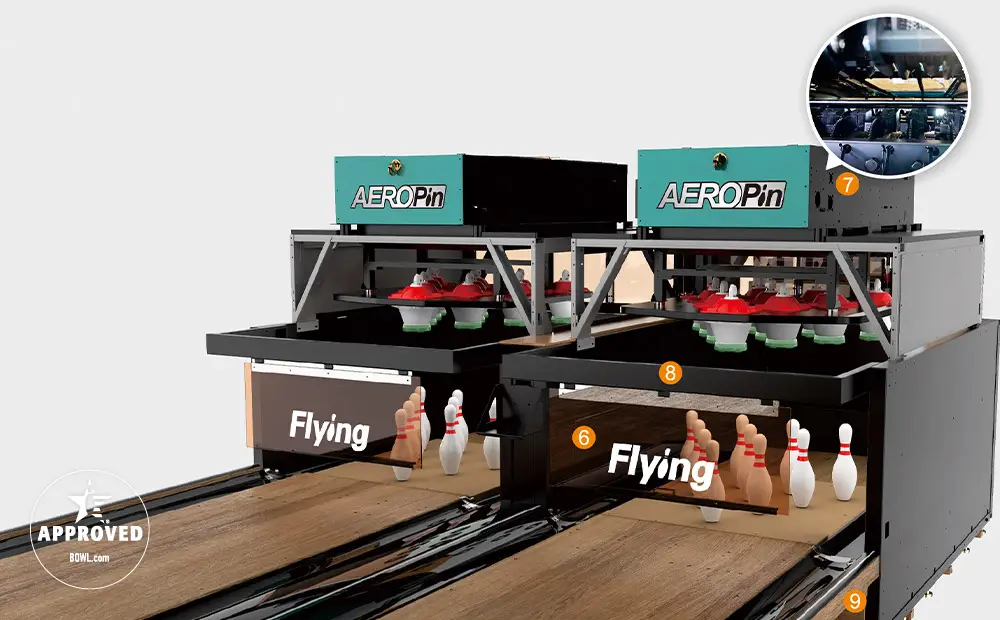
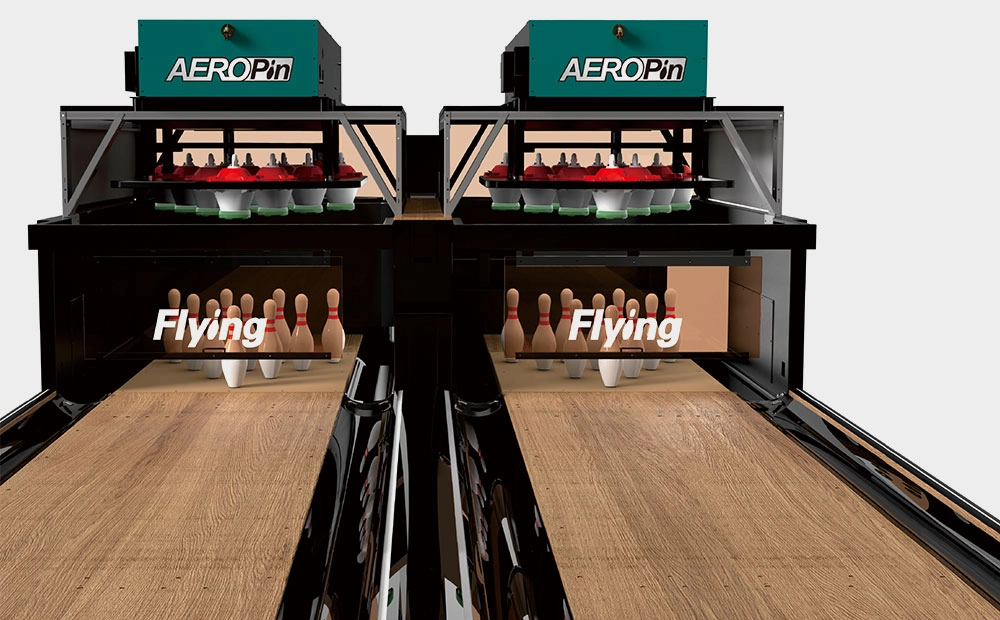
AEROPIN is Flying Bowling’s USBC-certified string pinsetter system for modern commercial bowling centers. Designed for fast pin setting, smooth ball return, low maintenance, and stable daily operation, it helps venue operators build league-ready and entertainment-focused bowling projects with confidence.
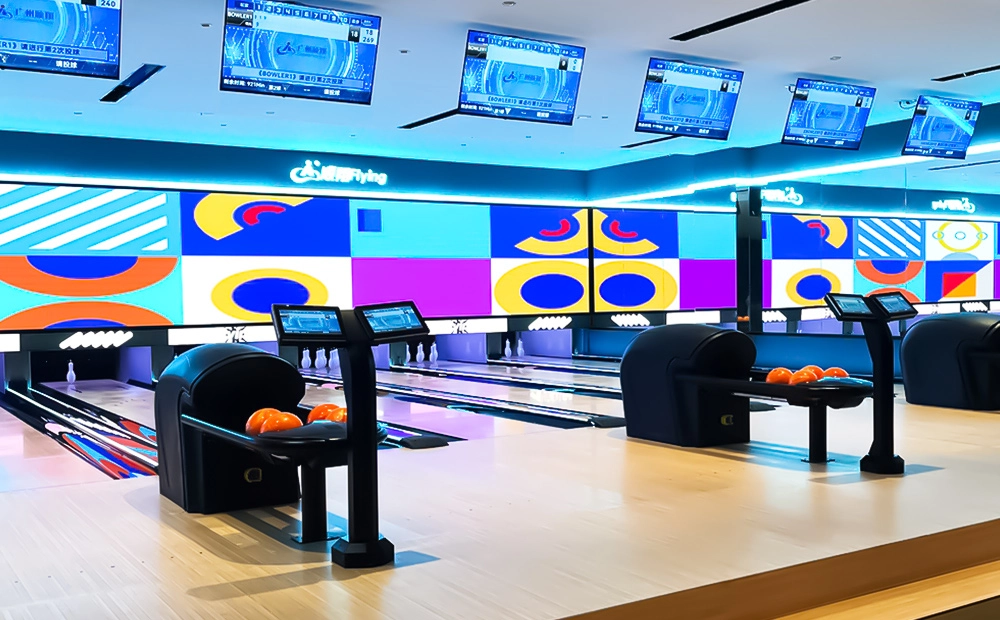
Flying Social Medium Bowling is a compact medium bowling equipment system designed for bars, cafes, family entertainment centers, community leisure venues, hotels, resorts, and small indoor entertainment spaces. With customizable lane lengths from 9.6m to 18m, small balls, lighter pins, string pinsetter technology, ball return, and automatic scoring, it creates an easy-to-play social bowling experience for players of different ages and skill levels.
Compared with full-size standard bowling, medium bowling requires less space and offers a more casual, interactive format. It is a practical choice for venues that want to add a bowling attraction without building a full commercial bowling alley.
Contact Flying
Start your bowling alley project
If you contact us now for more details, we can provide you with a custom bowling alley service. Our service team will get back to you within 24 hours normally!
© 2026 Flying BOWLING. Designed by gooeyun.
FOLLOW US:

Flying Bowling
Flying Bowling
Flyingbowling
Flyingbowling
Flyingbowling