


String Pinsetter vs. Free-Fall Pinsetter: Complete Comparison for Bowling Venue Operators (2026)
Choosing between a string pinsetter and a free-fall system is the most consequential equipment decision you'll make when building or upgrading a bowling venue—and it's one most operators make without complete information. This guide puts the real numbers on the table: 5-year maintenance cost differences for 8 lanes, actual noise level readings, a comparison of how fast pins reset, and a straightforward explanation of when USBC-certified string systems can now legally take the place of free-fall in competitive league venues.
If you're equipping a new bowling venue or considering upgrading an existing one, the pinsetter decision is the most consequential equipment choice you'll make. It determines your annual maintenance budget, your staffing requirements, your noise profile, your lane throughput, and — critically — whether your venue can support competitive league play.
This guide gives you the technical comparison, the real cost numbers, and the decision framework to choose correctly for your specific venue context.
Data in this guide is based on Flying Bowling's installation and service records across 3,000+ commercial bowling lane installations in 40+ countries since 2005.
1. How Each System Works: The Mechanical Difference
Understanding the fundamental mechanical difference between the two systems makes every subsequent comparison — cost, noise, maintenance, performance — immediately intuitive.
Free-Fall Pinsetter: How It Works
The free-fall pinsetter (also called the mechanical or gravity pinsetter) is the system that has dominated commercial bowling since AMF and Brunswick introduced automated versions in the 1950s. The mechanism works as follows:
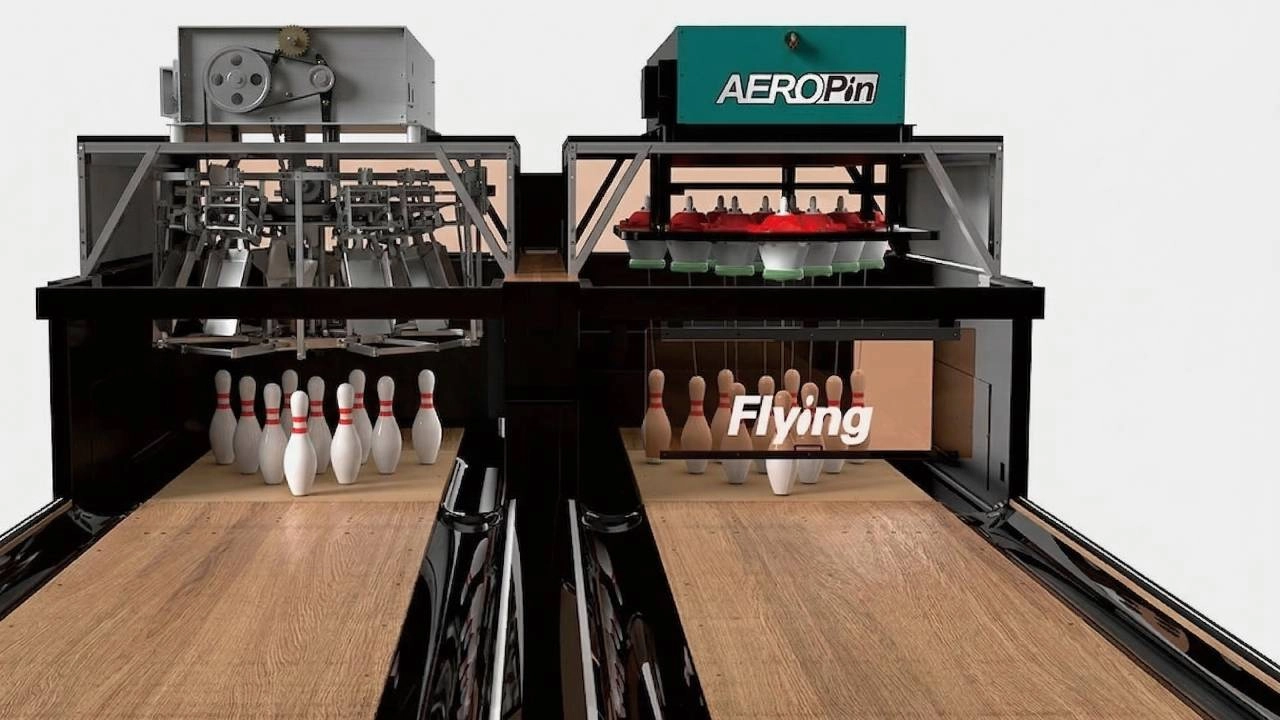
After each delivery, mechanical arms sweep the fallen pins off the deck into a pit below the lane. A separate mechanism lifts the remaining standing pins, the sweep clears the deck completely, and the standing pins are lowered back into position while the fallen pins are cycled through a distributor and placed into a new formation for the next ball. The ball itself is detected and processed separately.
This process involves a large number of moving mechanical components — motors, belts, cams, distributor wheels, pin elevators, sweep bars, and multiple sensors — all working in coordinated sequence. The complexity that makes free-fall pinsetters impressive engineering is also what makes them expensive to maintain.
Component count (approximate, varies by model): 150–200+ individual moving parts per lane.
String Pinsetter: How It Works
The string pinsetter system takes a fundamentally different approach. Each of the 10 pins is connected via a thin, high-tensile nylon cord to a central overhead mechanism above the pin deck. When the ball strikes the pins, they fall freely — the strings are long enough that they don't affect the ball's trajectory or the pins' initial fall dynamics.
After each delivery, the overhead mechanism lifts the strings, raising the knocked-down pins back into the raised position. The pins that remain standing stay in place. The system distinguishes between a first and second delivery automatically. After the second delivery (or a strike), all pins are raised and the full formation is reset for the next frame.
Component count (approximate): 40–60 individual moving parts per lane — roughly one-third of a free-fall system.
The engineering elegance of the string system is that it eliminates the entire pin-collection, pin-distribution, and pin-placement subsystem that drives most of the complexity — and maintenance cost — of free-fall pinsetters.
Click at learning: "How does a Bowling String Pinsetter Machine work?"
2. Side-by-Side Performance Comparison
System Specifications at a Glance
| Factor | Free-Fall Pinsetter | String Pinsetter |
|---|---|---|
| Mechanical parts per lane | 150–200+ | 40–60 |
| Pin reset time | 8–12 seconds | 3–5 seconds |
| Operating noise level | 75–85 dB | 55–65 dB |
| Installation time (per lane) | 3–5 days | 1–2 days |
| Technician skill required | Specialized (certified) | General mechanical |
| Annual maintenance frequency | Quarterly servicing | Semi-annual servicing |
| Average service call rate | Higher (more mechanical failure points) | Lower (fewer parts to fail) |
| USBC competition approval | Yes (traditional standard) | Yes — select models (incl. Flying AEROPIN) |
| Space above pin deck required | 3.0+ meters | 2.2+ meters |
| Pin replacement cycle | 12–18 months (heavy commercial) | 18–30 months (string protected) |
Pin Action: Does the String Affect Play?
This is the question competitive bowlers ask first, and it deserves a direct answer.
In a string pinsetter, pins are connected at the neck — the narrowest point of the pin, above the belly. When a ball strikes the belly of the pin (the standard strike zone), the initial momentum transfer is identical to a free-fall system: the strings are long enough that they play no mechanical role in the first moments of pin contact.
Where strings have a measurable effect is in secondary pin interaction — specifically, when a struck pin moves laterally to hit adjacent pins. The string creates a slight restoring force that can, in some configurations, reduce the travel distance of struck pins. This is why early string pinsetters were considered unsuitable for competitive play.
Modern high-specification string pinsetters — including Flying's AEROPIN system — have addressed this through string geometry optimization and reduced cord tension, bringing pin action within competitive tolerance ranges. The AEROPIN is USBC certified, confirming that its pin action meets the standards required for sanctioned league play.
For entertainment-focused venues where competitive accuracy is not the primary concern, this distinction is largely academic. For venues hosting leagues or tournaments, USBC certification is the practical test — if the system is certified, pin action has been verified to meet the standard.
3. Five-Year Maintenance Cost Analysis
Maintenance cost is where the economic argument for string pinsetters is most clear-cut. Here is a realistic 5-year cost comparison for a standard 8-lane commercial installation.
5-Year Maintenance Cost Estimate: 8-Lane Installation
| Cost Category | Free-Fall (per 8 lanes) | String (per 8 lanes) |
|---|---|---|
| Annual preventive maintenance | $6,000–$9,600 | $2,400–$4,000 |
| Average annual emergency service calls | $3,000–$6,000 | $800–$2,000 |
| Parts replacement (annual average) | $2,000–$4,000 | $600–$1,200 |
| Technician training / certification | $1,500–$3,000 (specialized) | $500–$1,000 (general) |
| Annual total (8 lanes) | $12,500–$22,600 | $4,300–$8,200 |
| 5-year total (8 lanes) | $62,500–$113,000 | $21,500–$41,000 |
| 5-year saving with string system | — | $21,000–$72,000 |
Estimates based on Flying Bowling's service data and operator-reported maintenance records. Actual figures vary by usage intensity, location, and whether in-house or contracted maintenance is used.
The 5-year saving range of $21,000–$72,000 across 8 lanes represents a meaningful portion of the original equipment investment — often 30–60% of the string system's purchase price.
The Hidden Cost: Technician Dependency
Free-fall pinsetters require technicians who have been trained specifically on that manufacturer's system. In markets where qualified AMF or Brunswick technicians are scarce — which includes most of Southeast Asia, much of the Middle East, and many parts of Latin America — this creates a real operational risk: a malfunctioning lane that sits idle for days waiting for the right technician.
String pinsetters reduce this dependency. The simpler mechanism means a general mechanical technician, trained in a day or two on the specific string system, can handle most routine maintenance and common fault resolution. Flying provides detailed technical manuals and video training for all FUSB and AEROPIN installations, and remote diagnostic support via video call is available within 24 hours for international installations.
4. Noise, Speed, and Player Experience Operating Noise
The noise difference between free-fall and string pinsetters is significant enough to be a meaningful factor in venue design decisions.
Free-fall pinsetters generate noise from multiple sources simultaneously: the mechanical sweep mechanism, the pin elevator and distributor system cycling fallen pins, and the general operation of multiple motors and belts. Measured at lane level during normal operation, free-fall systems typically produce 75–85 dB of ambient mechanical noise.
String pinsetters generate noise primarily from pin impact (which is the same in both systems) and the much simpler overhead reset mechanism. Ambient mechanical noise between deliveries is typically 55–65 dB — comparable to a normal conversation at close range, versus the free-fall system's industrial machinery level.
Why this matters for venue design:
For venues in mixed-use buildings (retail centers, hotels, multi-story entertainment complexes), the lower noise floor of string systems reduces the acoustic treatment budget required for adjacent spaces. Several Flying Bowling clients in hotel and resort installations have specifically cited the string system's lower noise output as the deciding factor — the venue could be positioned closer to guest accommodation without expensive structural acoustic isolation.
For open-plan entertainment centers where bowling sits adjacent to other attractions (arcades, restaurants, bars), the lower ambient mechanical noise level between deliveries makes the overall environment more comfortable — staff fatigue decreases and ambient conversation is more natural.
Pin Reset Speed
String systems reset in 3–5 seconds versus 8–12 seconds for free-fall systems. This seems incremental, but across an 8-lane venue running at full capacity, the accumulated throughput difference is meaningful.
At full utilization, a venue with string pinsetters can complete approximately 10–15% more frames per hour per lane than an equivalent free-fall setup. For a venue charging per game or per hour, this directly increases revenue capacity without adding lanes.
5. USBC Certification: Can String Pinsetters Be Used for League Play?
This is the question that has historically held back string pinsetter adoption in markets with established competitive bowling culture — particularly the United States.
yes, but only for USBC-certified string pinsetter models.
The United States Bowling Congress (USBC) began formally evaluating string pinsetters for competitive play certification in the mid-2010s, in response to the growing adoption of string systems in international markets and new venue formats. The evaluation process tests pin action, reset consistency, and scoring equivalence against free-fall system benchmarks.
Flying Bowling's AEROPIN system has achieved USBC certification — a significant milestone that positions it as one of the few string pinsetter systems globally approved for sanctioned competitive and league play. This certification required demonstrating that the AEROPIN's pin action, within the defined string geometry and cord tension parameters, meets the USBC standard for competitive fairness.
What USBC certification means in practice:
- AEROPIN-equipped lanes can host USBC-sanctioned league play and tournaments
- Scores achieved on AEROPIN lanes count toward official USBC averages
- The system meets the competitive standard previously considered exclusive to free-fall pinsetters
For venue operators in markets with established league bowling culture — particularly the US, but increasingly in European and Asia-Pacific markets with growing competitive scenes — USBC certification removes the last major barrier to specifying a string pinsetter for a full-service venue.
6. Which System Is Right for Your Venue?
Choose String Pinsetter If:
- Your venue is a new build in an emerging market or entertainment-focused context. The lower maintenance cost, simpler technician requirements, faster reset speed, and lower noise output make string the practical choice for FECs, social entertainment venues, hotel/resort bowling, bars, and any venue where maintenance infrastructure is limited.
- You're building in a market with limited access to specialized pinsetter technicians. Southeast Asia, the Middle East, Africa, and much of Latin America have limited networks of free-fall pinsetter specialists. String systems' simpler maintenance profile dramatically reduces operational risk in these markets.
- Noise level matters for your venue positioning. Mixed-use buildings, hotel integrations, and venues adjacent to dining or other entertainment benefit from the 10–20 dB lower ambient noise of string systems.
- You want faster payback on equipment investment. The maintenance cost saving of $21,000–$72,000 over 5 lanes across 8 lanes (compared to free-fall) meaningfully accelerates return on investment.
- Your primary audience is recreational and social players. For this audience, the pin action difference between string and high-quality free-fall systems is imperceptible and irrelevant to their enjoyment.
- Choose Free-Fall Pinsetter If:
- Your venue's core identity is competitive league play and you cannot use a USBC-certified string system. If your market's established leagues specifically require traditional free-fall systems for historical or regulatory reasons, and no USBC-certified string alternative is available to you, free-fall remains the standard.
- You're upgrading an existing free-fall installation where infrastructure already supports the system. If the pit space, power supply, and maintenance infrastructure are already in place for free-fall, and your technician team is already trained on that specific system, the switching cost may outweigh the ongoing savings — particularly for a venue with only a few years remaining before a planned full renovation.
- Your venue is specifically positioning on traditional bowling authenticity. For venues marketing a retro or heritage bowling experience where the mechanical character of free-fall pinsetters is part of the product identity, the choice may be deliberate and brand-driven rather than purely operational.
Multi-Format Venues
For venues installing multiple bowling formats — standard tenpin alongside duckpin or mini bowling — string pinsetter systems are almost universally the practical choice for the compact formats (duckpin, mini). The shorter lane footprint of these formats makes free-fall pit infrastructure impractical, and the entertainment-focused audience of these lanes makes string the natural fit.
7. Upgrading from Free-Fall to String: What's Involved?
Converting an existing free-fall pinsetter installation to string is a more substantial project than a simple equipment swap, but it is feasible and increasingly common for venues coming out of major maintenance cycles on ageing free-fall systems.
What Changes in a Conversion
- Above-lane infrastructure: The overhead mechanism housing the string reset system needs to be mounted above each pin deck. This requires structural assessment of the ceiling/roof structure above the pin area. Minimum clearance of 2.2 meters above the pin deck is required; more existing free-fall installations have 3.0+ meters, so clearance is rarely the limiting factor.
- Below-lane infrastructure: Free-fall systems require a pit below the pin deck for pin collection. String systems do not. In a string conversion, the pit area can be partially or fully infilled — though many operators choose to leave the pit structure in place to reduce conversion complexity, simply decommissioning the free-fall mechanism.
- Power supply: String pinsetter systems have lower power consumption than free-fall systems. Existing electrical supply is typically sufficient; in some cases, circuits can be consolidated.
- Lane surface and scoring system: These are independent of the pinsetter mechanism and typically do not need replacement during a pinsetter conversion.
Typical Conversion Timeline (8-lane venue)
| Phase | Duration |
|---|---|
| Site assessment and quotation | 1–2 weeks |
| Equipment manufacturing and shipping | 6–10 weeks |
| On-site installation (8 lanes) | 5–8 days |
| Calibration, test play, and staff training | 1–2 days |
| Total from decision to reopening | 10–14 weeks |
Flying Bowling provides conversion assessment services for existing venues. Send us your current lane specifications and infrastructure details and we'll provide a conversion feasibility assessment and budget estimate within 48 hours.
Real-World Proof: Seamless Commercial Integration
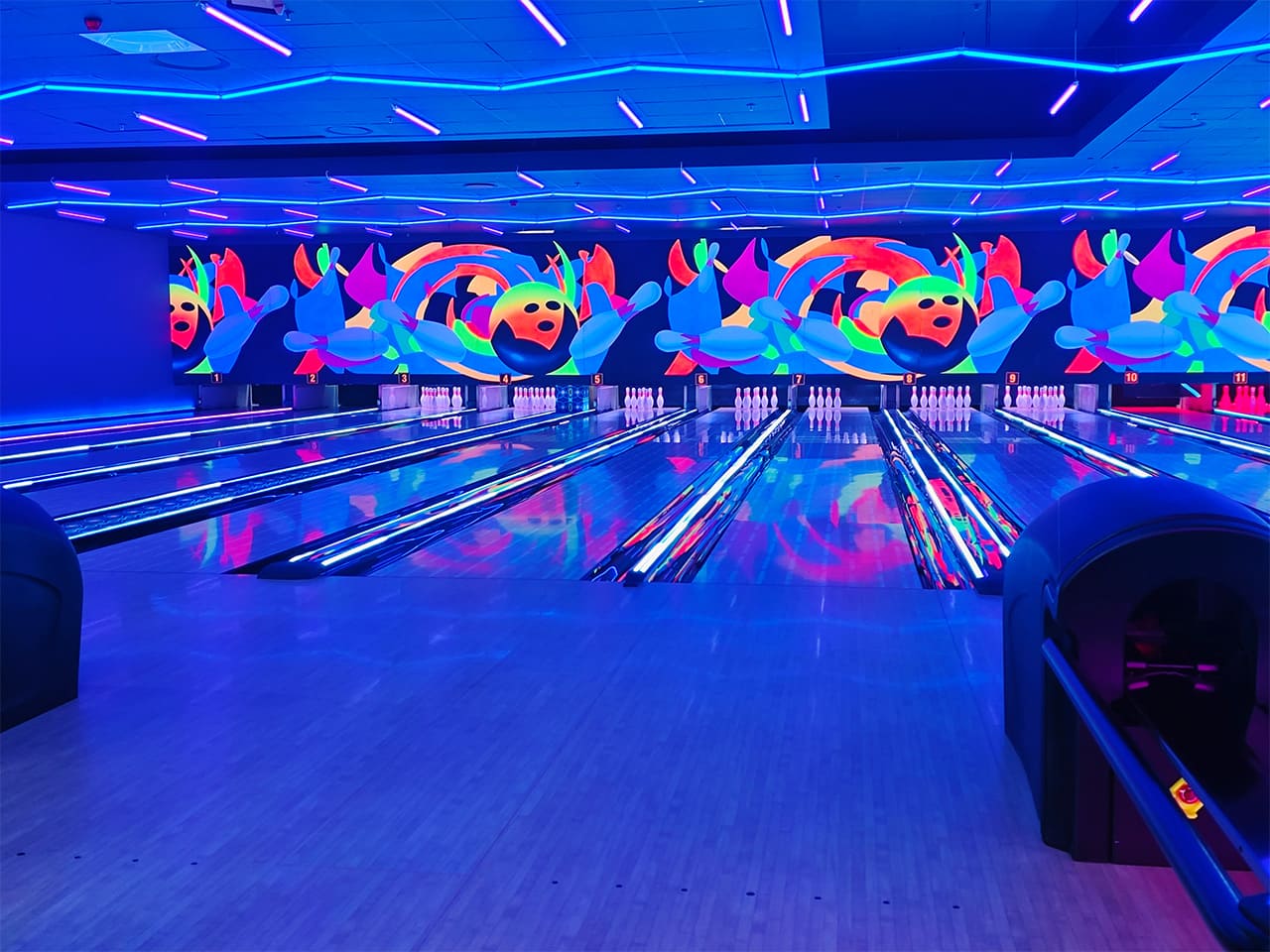
Venue owners often delay upgrading their pinsetters because they fear a massive, messy construction project that will force their venue to close for months. However, modern string pinsetter conversions are designed for agility.
To understand how non-disruptive this technology is, consider our recent commercial project: 12-Lane Standard Bowling Center in Middelburg Mall, Mpumalanga.
- The Challenge: Integrating a massive 12-lane standard bowling center into an existing, premium shopping mall environment. The project required strict adherence to the mall's noise constraints, minimal structural modification to the existing commercial concrete slab, and a rapid deployment timeline to avoid disrupting neighboring retail operations.
- The Solution: Deployment of Flying Bowling's heavy-duty string pinsetter system. Because our string systems do not require the deep, excavated sub-floor pits demanded by traditional free-fall machines, our engineering team was able to install the infrastructure entirely above the existing commercial slab.
- The Result: The entire 12-lane installation was completed with exceptional speed, proving that string systems can be deployed without structural nightmares. By eliminating the heavy mechanical motors of free-fall systems, the venue immediately benefited from a significantly lower noise floor (crucial for a retail setting) and slashed projected daily power consumption by over 40%.
- The Takeaway for Your Upgrade: If a 12-lane string system can be seamlessly integrated into a strict, operational shopping mall without massive structural excavation, converting your existing bowling alley is a far simpler, faster, and cleaner process than you might expect.
8. Flying Bowling's String Pinsetter Product Line
Flying Bowling manufactures string pinsetter systems for all commercial bowling formats. All systems use Flying's proprietary string reset mechanism, engineered for high-frequency commercial use.
AEROPIN — USBC-Certified Standard Bowling String Pinsetter
Flying's flagship string pinsetter, the AEROPIN is the system for venues requiring competitive certification alongside the operational benefits of string technology.
Key specifications:
- USBC certified — approved for sanctioned league and tournament play
- Standard tenpin lane dimensions (18.29m)
- String geometry and cord tension optimized for competitive pin action
- Automated reset cycle: approximately 4 seconds
- Compatible with all major automated scoring systems
- Suitable for 8+ hours/day commercial operation
→ View AEROPIN full specifications and pricing
FUSB — Flying Ultra Standard Bowling String Pinsetter
The FUSB is Flying's high-performance standard bowling string pinsetter for entertainment-focused venues where USBC certification is not required but premium playing experience is.
Key specifications:
- Enhanced pin action design for recreational and semi-competitive play
- Standard tenpin lane dimensions
- Faster reset cycle than AEROPIN (optimized for throughput over competitive precision)
- Advanced scoring system integration
- Suitable for FECs, resort hotels, and social venues
FSDB — Flying Smart Duckpin Bowling
String pinsetter system designed specifically for duckpin format lanes.
Key specifications:
- 9.2-meter standard lane (customizable)
- Duckpin-specific pin dimensions and string geometry
- Compact footprint for bar, FEC, and entertainment venue integration
- Automated scoring system
FCMB — Flying Cute Mini Bowling
String pinsetter system for mini bowling format.
Key specifications:
- 12-meter fixed lane length
- Scaled pin set, 1.25kg no-finger-hole ball
- Designed for children's venues, FECs, and family entertainment
- Highest throughput of any Flying string system (fastest reset cycle)
9. FAQ: 8 Questions Operators Ask Before Choosing a Pinsetter
Q1: How much does a string pinsetter cost compared to a free-fall pinsetter?
String pinsetter systems from Chinese manufacturers typically cost 20–35% less than equivalent free-fall systems at the point of purchase. When factoring in the 5-year maintenance cost difference ($21,000–$72,000 saving across 8 lanes), the total cost of ownership advantage of string systems is substantially larger than the purchase price difference alone suggests. Contact Flying Bowling for a specific quote based on your lane count, format, and destination.
Q2: Can string pinsetters be used for USBC-sanctioned league play?
Yes — but only for USBC-certified string pinsetter models. Flying Bowling's AEROPIN system holds USBC certification, making it one of the few string pinsetter systems globally approved for sanctioned competitive play and league bowling. Not all string pinsetter systems are USBC certified; if league play is a requirement, confirm certification status before specifying any system.
Q3: How long does a string pinsetter last in commercial use?
Commercial-grade string pinsetters operating at 8+ hours per day in a well-maintained venue typically have a functional lifespan of 10–15 years before major overhaul is required. The reduced mechanical complexity of string systems — approximately one-third the moving parts of a free-fall system — means fewer cumulative wear points and generally longer mean time between significant failures. String cord replacement is the most frequent maintenance task; cord sets are typically replaced every 2–3 years under heavy commercial use.
Q4: What maintenance does a string pinsetter require?
Routine maintenance for a string pinsetter system includes: overhead mechanism inspection and lubrication (every 3–6 months depending on use intensity), string tension check and adjustment (monthly), string set replacement (every 2–3 years), and motor and drive mechanism servicing (annually). Most routine maintenance can be performed by a general mechanical technician with system-specific training — specialized pinsetter certification is not required, unlike most free-fall systems.
Q5: Does the string affect pin action and scoring?
In older and lower-quality string pinsetter designs, the restoring force of the strings on struck pins could measurably reduce pin travel distance, affecting secondary pin interactions. Modern high-specification systems — including Flying's AEROPIN — address this through engineered string geometry and optimized cord tension. The AEROPIN's USBC certification confirms that its pin action meets competitive standards. For recreational and entertainment play, the difference between a high-quality string system and a free-fall system is imperceptible to the vast majority of players.
Q6: Can I upgrade my existing free-fall pinsetter installation to string?
Yes. Conversion is feasible for most existing installations. The primary requirements are adequate ceiling clearance above the pin deck (minimum 2.2 meters) and a structural assessment of the overhead mounting points for the string reset mechanism. The below-lane pit used by the free-fall system can be decommissioned in place — infilling is optional. A typical 8-lane conversion from decision to reopening takes 10–14 weeks including equipment manufacturing and shipping. Flying Bowling provides conversion feasibility assessments at no charge.
Q7: Is a string pinsetter suitable for a high-traffic venue running 10+ hours per day?
Yes. Commercial-grade string pinsetter systems like Flying's FUSB and AEROPIN are designed for continuous high-frequency commercial operation. Venues running 10–12 hours daily in entertainment center or amusement park settings are well within the operational envelope. The key maintenance factor at high throughput is string inspection frequency — at very high volumes (80+ games per day per lane), semi-annual rather than annual string tension checks are recommended.
Q8: How does the installation process work for a new venue?
For a new-build installation, the process from order to first game is typically 10–14 weeks: site assessment and quotation (1–2 weeks), production (6–10 weeks), shipping (3–5 weeks transit for most markets, overlapping with production), on-site installation (1–2 days per lane for prepared spaces), and commissioning and staff training (1–2 days). Flying provides full remote installation guidance and can arrange on-site technical supervision for international projects. Detailed pre-installation requirements (structural, electrical, floor) are provided at quotation stage.
Stop Guessing. Let’s Calculate Your Actual Savings.
The string vs. free-fall decision shouldn't be based on outdated industry habits—it should be based on your venue's math. For modern commercial bowling installations, the eliminated technician dependency, drastically lower maintenance costs, and faster lane throughput of string pinsetters create an undeniable financial advantage.
Take the next step with actionable data tailored to your venue:
- Want to see the exact financial impact?
→ Get Your Free 5-Year Maintenance Savings Report (Stop estimating. Tell us your target lane count and projected daily operating hours. Our engineering team will calculate your exact projected CapEx and OpEx savings versus a traditional free-fall system and send your customized report within 24 hours.)
- Planning to upgrade an aging free-fall system?
→ Request a Free Conversion Feasibility Assessment (Send us your current pinsetter model and ceiling clearance. We'll show you exactly how quickly we can retrofit your venue without massive structural excavation or long operational downtime.)
Explore Flying Bowling's full string pinsetter product line:
→ AEROPIN — USBC-certified standard bowling (For competitive league play)
→ FUSB — Ultra standard bowling string pinsetter (For high-throughput FECs)
→ FSDB — Smart Duckpin Bowling (For boutique bars and social lounges)
→ FCMB — Mini Bowling (For children's zones and family entertainment)
Flying Bowling has manufactured and installed string pinsetter systems across 40+ countries since 2005, with over 3,000 commercial lane installations completed. Our AEROPIN system is USBC certified — one of the few string pinsetter systems globally approved for sanctioned competitive play.
More Articles

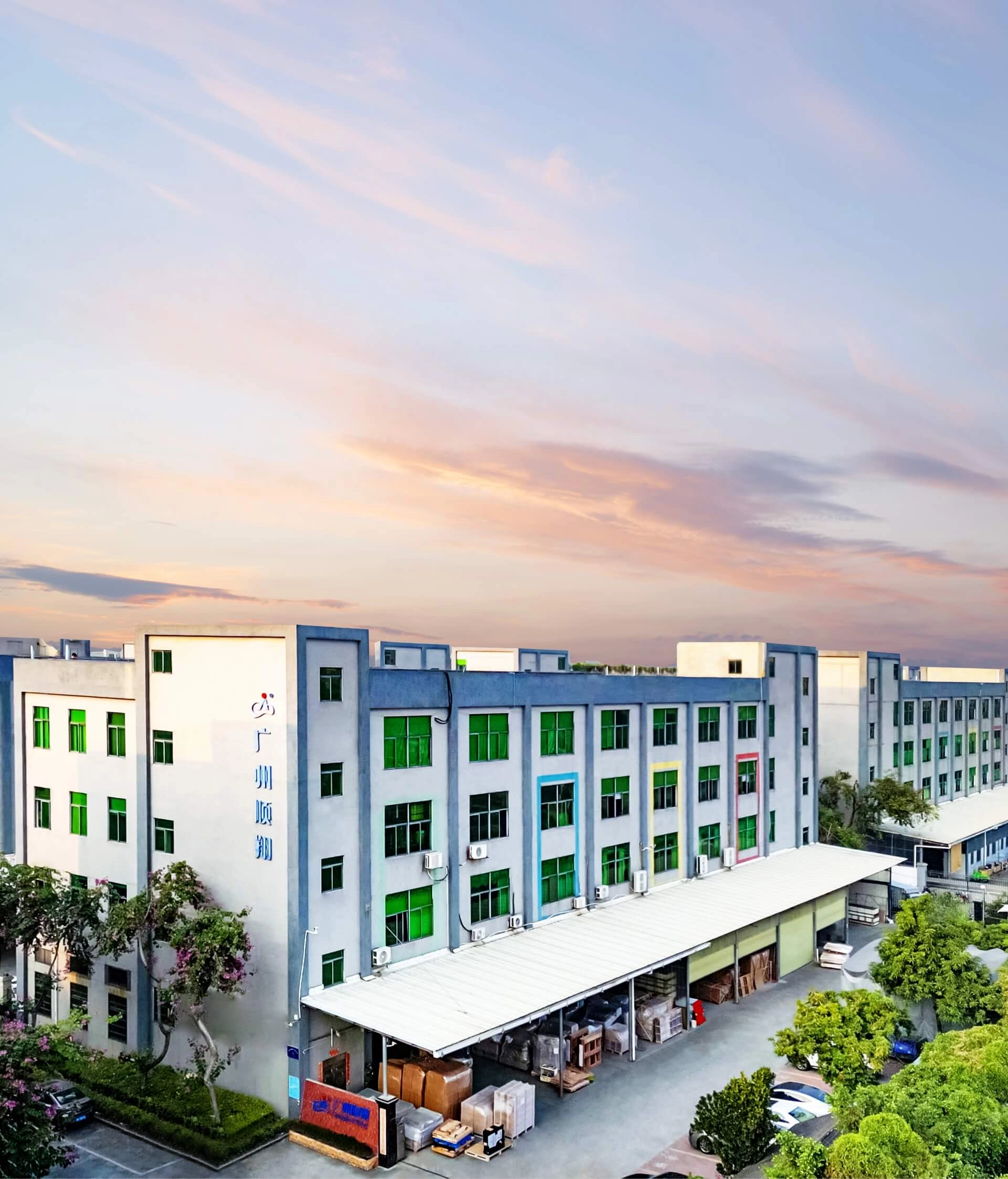
Let’s Build a center Together
Partner With a Trusted Bowling Alley Design, One-Stop Solution Manufacturer.
Flying has successfully built ideal bowling alleys for more than 3,000 customers.
Technical Expert
You may also like our products
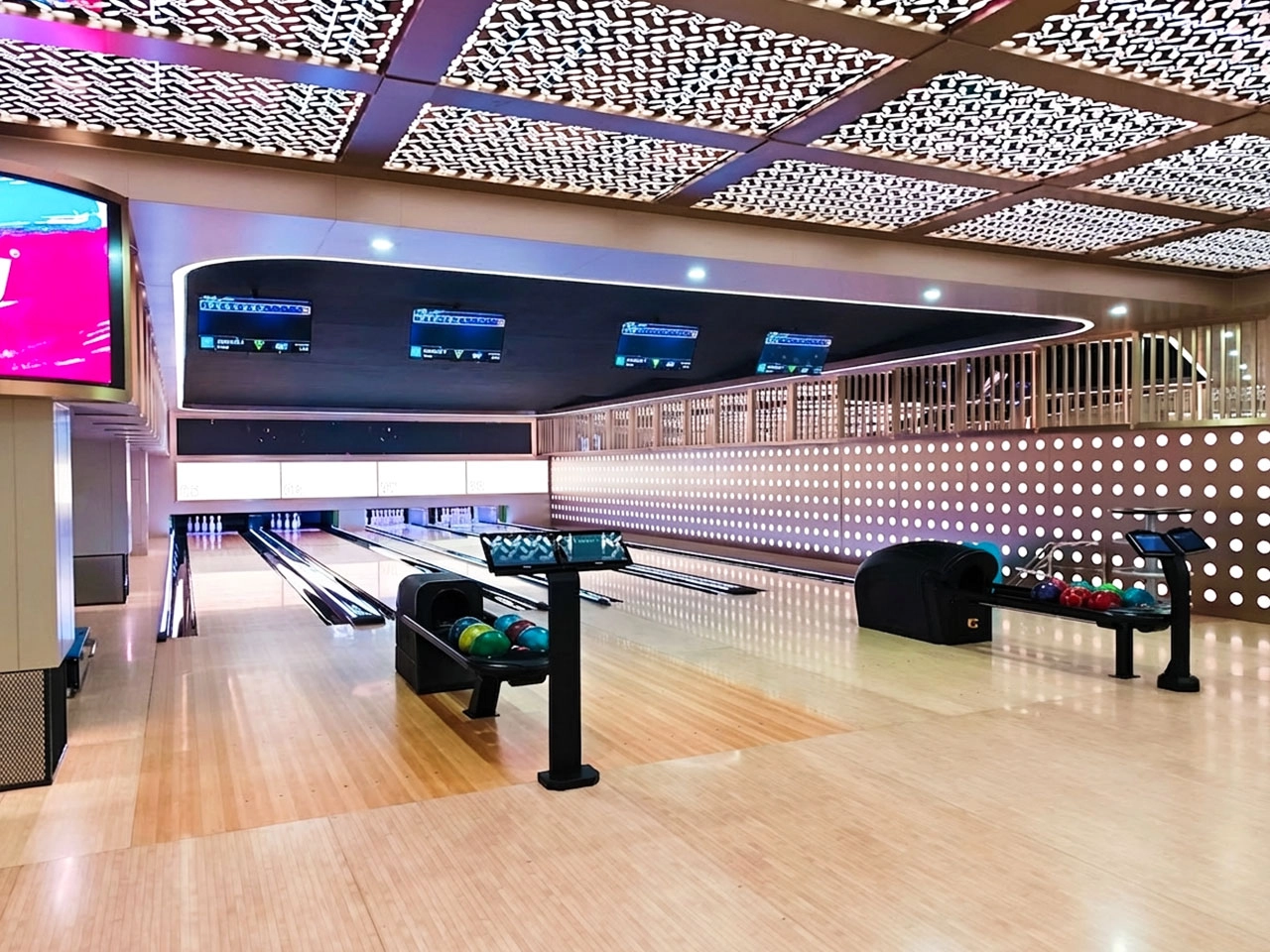
Build a commercial bowling venue with Flying’s complete string pinsetter bowling alley equipment package. The system includes the AEROPIN™ USBC-certified string pinsetter, customizable lanes, automatic scoring, ball return, lane lighting, pins, control hardware, and overseas installation support.
Designed for commercial bowling centers, family entertainment venues, hotels, resorts, bars, and premium private projects, this turnkey bowling system helps operators reduce sourcing complexity and prepare for reliable long-term operation.
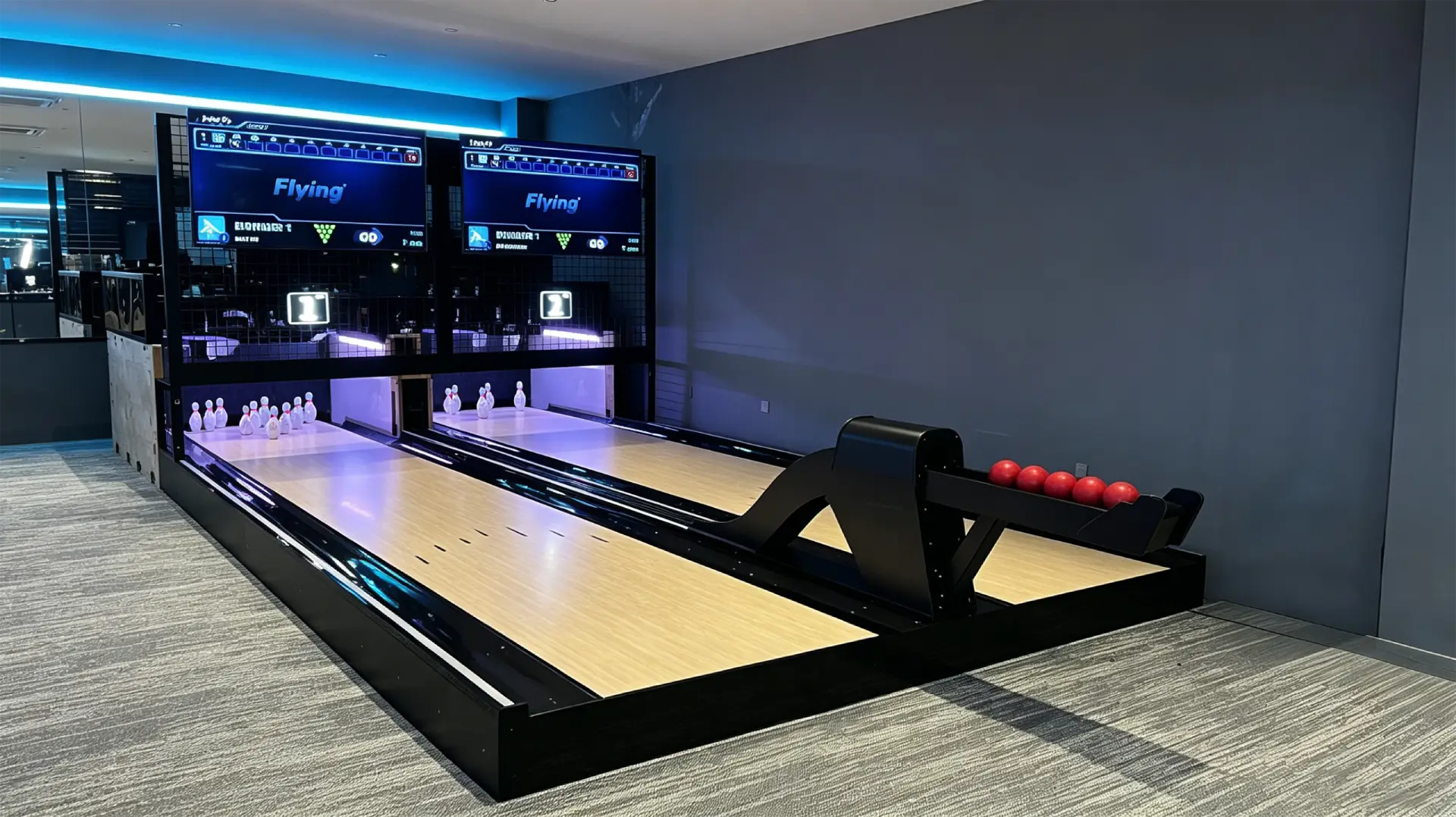
Flying Smart Duckpin Bowling is a compact duckpin bowling equipment system designed for bars, family entertainment centers, hotels, resorts, cinemas, boutique bowling alleys, and social entertainment venues. With a standard 9.13m duckpin bowling lane, 1.25kg lightweight balls, automatic scoring, ball return, LED lighting, and a smart string pinsetter, it creates a fast-paced and easy-to-play bowling experience in a smaller footprint than traditional bowling.
The system is available as a turnkey duckpin bowling package, including lane equipment, a string pinsetter system, scoring hardware, control software, global shipping, installation guidance, and technical support.
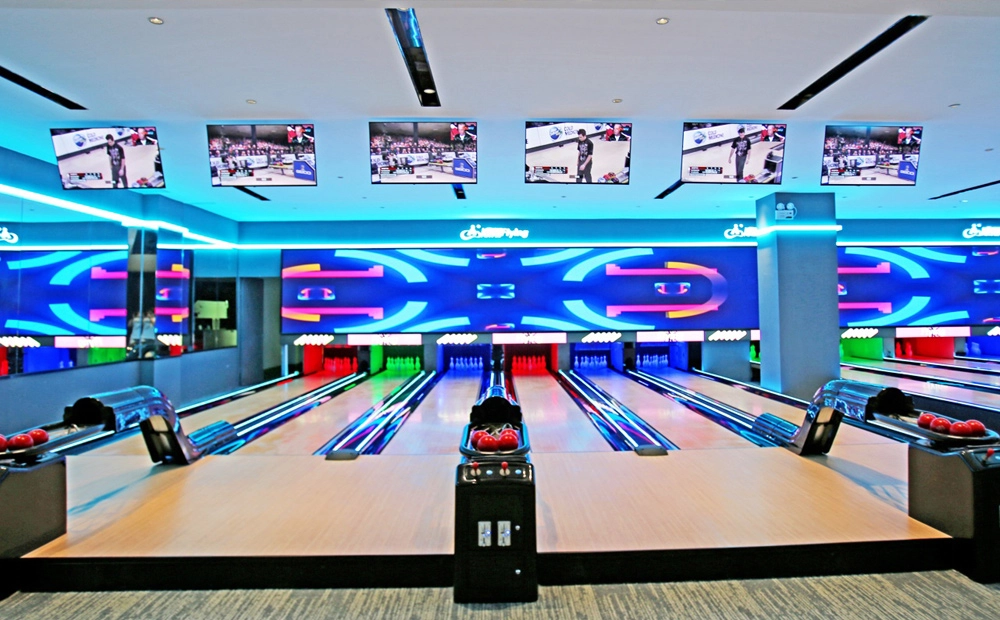
Flying Cute Mini Bowling is a compact mini bowling equipment system designed for children, families, and indoor entertainment venues. With a fixed 12-meter lane, 1.25kg small balls without finger holes, smaller pins, string pinsetter technology, and an automatic scoring system, it creates an easy, safe, and engaging bowling experience for younger players.
This mini bowling system is suitable for children’s playgrounds, family entertainment centers, theme parks, shopping malls, parent-child centers, hotels, resorts, and indoor amusement venues looking to add a fun, space-efficient attraction.
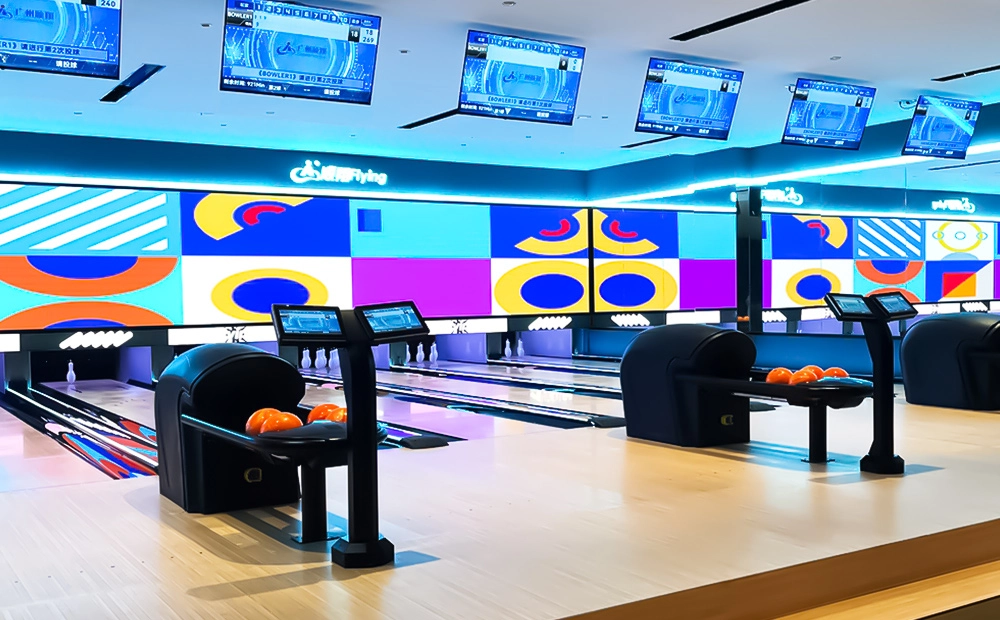
Flying Social Medium Bowling is a compact medium bowling equipment system designed for bars, cafes, family entertainment centers, community leisure venues, hotels, resorts, and small indoor entertainment spaces. With customizable lane lengths from 9.6m to 18m, small balls, lighter pins, string pinsetter technology, ball return, and automatic scoring, it creates an easy-to-play social bowling experience for players of different ages and skill levels.
Compared with full-size standard bowling, medium bowling requires less space and offers a more casual, interactive format. It is a practical choice for venues that want to add a bowling attraction without building a full commercial bowling alley.
Contact Flying
Start Your Custom Bowling Alley Project
If you contact us now for more details, we can provide you with a custom bowling alley service. Our service team will get back to you within 24 hours normally!
© 2026 Flying BOWLING. Designed by gooeyun.
FOLLOW US:
Flying Bowling
Flying Bowling
Flyingbowling
Flyingbowling