

Quick Overview
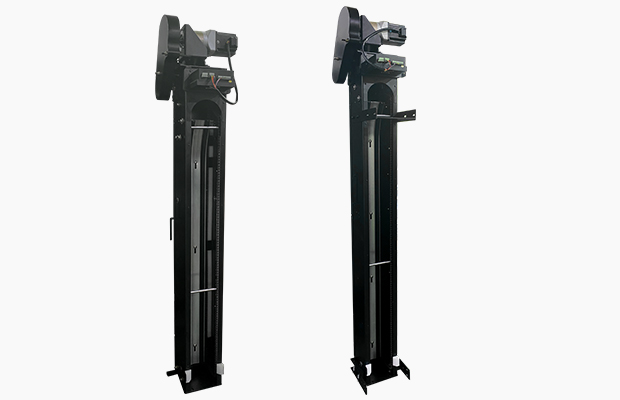
The Flying bowling ball-up machine lifts the bowling ball from the lane-end return area to the height required by the return track. It functions as the lifting stage inside the complete bowling ball return system.
The machine uses a vertical lifting structure together with driven conveying components and, depending on the configuration, sensors and motor controls to coordinate ball transfer.
Rather than representing the entire bowling ball return system, the ball-up machine performs one specific but important task: receiving the ball from the lower return area, lifting it smoothly, and transferring it into the return track.
What Is the Flying Bowling Ball-Up Machine?
The Flying bowling ball-up machine is designed to lift bowling balls from a lower position in the lane-end return area to the return track.
The design and operating configuration can vary according to the bowling alley layout and project requirements. Flying Bowling develops different ball-up machine configurations for standard bowling, medium bowling, and duckpin bowling applications.
Within a complete ball return system, the ball-up machine works between the lane-end receiving area and the return track.
ball return area → ball-up machine → ball return track → player-side ball collection area
This distinction is important because a ball-up machine, ball lift, or ball elevator is a component of the complete bowling ball return system, not another name for the entire system.
Key Features of the Flying Bowling Ball-Up Machine
Vertical Design
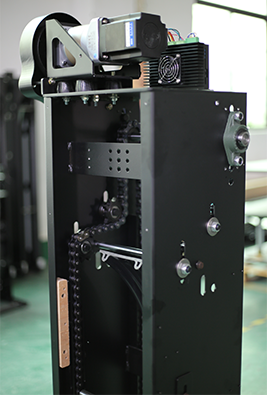
The Flying bowling ball-up machine uses a vertical design to move the bowling ball from a lower return position to a higher position required by the return track.
This vertical transfer is particularly useful where the return system needs to overcome a height difference between the lane-end receiving area and the main return route.
The purpose is not simply to make the ball move faster. The lift must also transfer the ball smoothly and place it correctly at the entrance to the next section of the return system.
Conveyor Mechanism
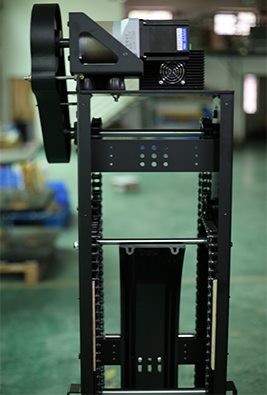
Depending on the configuration, the lifting mechanism may use belts, chains, rollers, or other driven components to move the bowling ball upward toward the designated exit position.
These components provide the mechanical force needed to lift the ball and guide it through the vertical transfer process.
For reliable operation, the conveying mechanism must maintain sufficient contact with the ball while keeping the movement stable throughout the lifting path.
Automatic Control
Depending on the selected configuration, the Flying bowling ball-up machine may use an automated control system involving sensors and motors.
When the bowling ball reaches the entrance of the ball-up machine, the sensor can detect its arrival and coordinate the lifting process. The ball is then transferred upward and delivered toward the ball return track.
This coordination allows the lifting section to operate as part of the complete automated ball return process.
Durable Structural Design
Because the ball-up machine repeatedly handles bowling balls during normal venue operation, its structure needs to withstand frequent mechanical loading and repeated contact.
Depending on the selected configuration, structural components may use steel or other durable engineering materials to support equipment stability and service life.
The exact material and component configuration should be confirmed from the specification of the selected machine.
How Does the Flying Bowling Ball-Up Machine Work?
The Flying ball-up machine follows a multi-stage process that connects the lane-end return area with the return track.
1. The Bowling Ball Enters the Ball Return Box
After the player's bowling ball reaches the end of the lane, it moves into the ball return area.
In the Flying system described here, a buffer rubber device helps reduce the ball's speed before the ball enters the ball return box.
This receiving stage prepares the ball for transfer into the lifting mechanism.
2. The Bowling Ball Enters the Ball-Up Machine
From the ball return box, the bowling ball is guided toward the entrance of the ball-up machine.
Where a sensor-based control arrangement is used, the arrival of the ball can trigger or coordinate the lifting process.
This transition is important because the ball must enter the lift correctly before it can be transferred upward.
3. The Bowling Ball Is Lifted
The conveying mechanism then moves the bowling ball from the lower receiving position to the higher exit position.
Depending on the configuration, belts, chains, rollers, or related driven components may provide this lifting force.
The objective is to move the ball through the vertical path smoothly and deliver it to the predetermined height required by the return track.
4. The Bowling Ball Enters the Return Track
After reaching the upper section of the ball-up machine, the bowling ball is transferred to the entrance of the ball return track.
At this point, the lifting function of the ball-up machine is essentially complete.
The remaining return path then carries the ball toward the player-side collection area.
How Does the Ball Lift Support Fast Ball Return?
The ball-up machine can influence return efficiency because it represents a critical transfer point between the lower receiving area and the main return track.
The ball must enter the lift correctly, the conveying surfaces need sufficient contact with the ball, the lifting path should remain aligned, and the transition between the lift exit and the return track should allow the ball to continue moving without unnecessary hesitation.
Contamination, slipping contact surfaces, poor alignment, obstruction, or inconsistent drive operation at this stage can delay the ball before it reaches the return track.
Overall ball return speed is not determined by the ball-up machine alone. The receiving area, return track, routing components, ball condition, alignment, and other mechanical sections also affect the complete return cycle.
For this reason, a well-designed ball lift should be evaluated by the quality and consistency of its transfer rather than by lifting speed alone.
Ball-Up Machine vs. Bowling Ball Return System: What Is the Difference?
| Equipment | Main Function |
|---|---|
| Ball return area / box | Receives and directs the ball after the shot |
| Ball-up machine / ball lift | Raises the ball from the lower return area |
| Ball return track | Carries the ball toward the approach |
| Player-side ball return | Presents the returned ball to the player |
| Bowling ball return system | Combines the return stages into the complete process |
The Flying ball-up machine is therefore one mechanical subsystem inside the complete bowling ball return system.
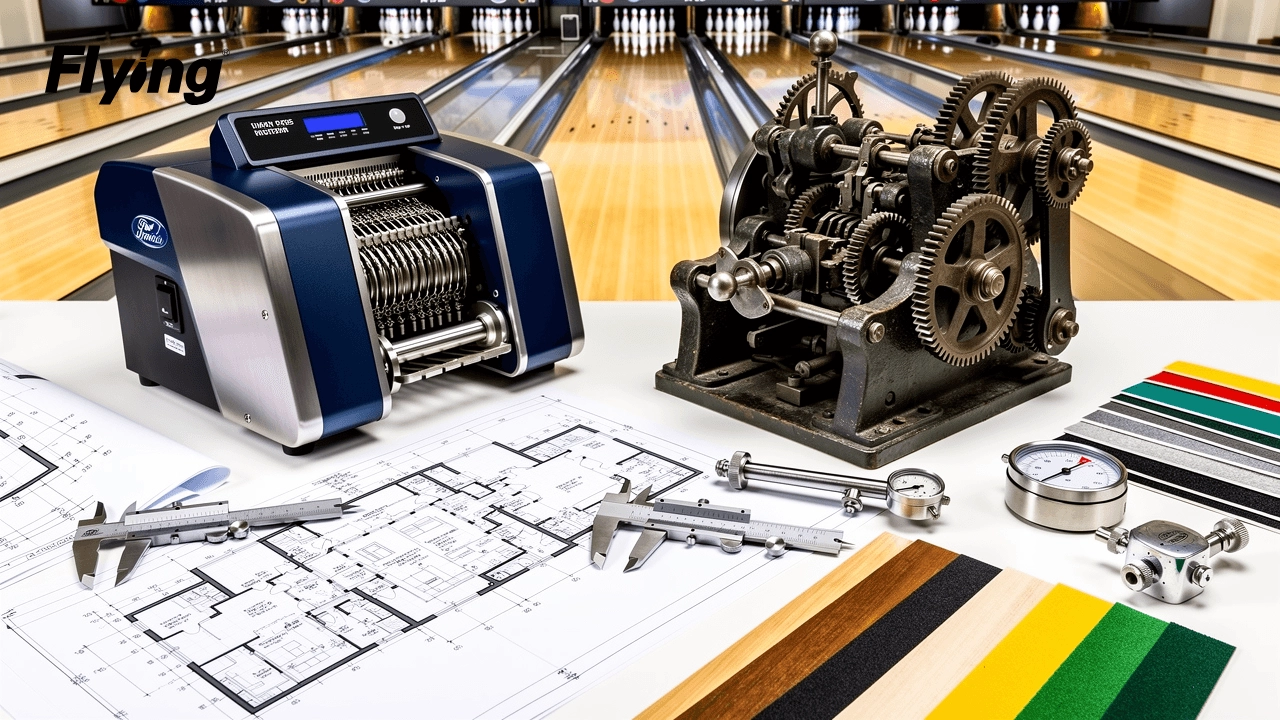
This distinction is especially important when planning replacement equipment or discussing a new bowling project. A buyer looking for a complete ball return system needs to consider more than the lifting unit alone.
What Can Affect Ball Lift Performance?
Because the ball-up machine relies on repeated mechanical transfer, several areas can influence its operation.
The entrance transition must guide the ball into the lift correctly. Belts, chains, rollers, or other driven contact surfaces need to maintain appropriate mechanical contact. The lifting path and exit transition should remain aligned with the return track.
Where sensors and automatic controls are used, they must also detect and coordinate the ball correctly.
Changes in lifting speed, repeated hesitation, unusual noise, or balls failing to transfer cleanly into the return track can indicate that the lifting section needs inspection.
Detailed diagnosis and maintenance procedures should follow the service documentation for the specific equipment rather than relying on one generic repair method.
Why the Ball-Up Machine Matters in a Bowling Alley
The Flying bowling ball-up machine is an integral component of the bowling ball return process, particularly where the ball must be raised from the lane-end return area to a higher return track.
Its main operational value is straightforward: it moves the ball from the lower receiving section into the return route efficiently and consistently.
A reliable lifting stage can help reduce interruptions between deliveries and support smoother venue operation.
Serviceability also matters. A ball-up machine that repeatedly stalls, transfers poorly, or is difficult to access for inspection can create operational interruptions even when the rest of the return system remains functional.
What Should Buyers Confirm When Selecting a Ball-Up Machine?
Because the ball-up machine must connect with other bowling equipment, it should not be selected as an isolated component.
Ball format compatibility: Confirm that the lift is suitable for the bowling format used by the project.
Receiving-area interface: Check how the ball enters the lifting mechanism from the lane-end return area.
Exit position: Confirm that the lift reaches the height and position required by the return track.
Drive and control compatibility: Confirm the relevant motor, sensor, electrical, and control arrangement for the selected configuration.
Maintenance access: Ensure that wear and conveying components remain accessible for inspection and service.
Documentation and spare parts: Confirm the applicable technical documentation and compatible replacement parts.
For replacement projects, buyers should also confirm the existing entrance position, exit position, installation space, electrical requirements, and mechanical interface before assuming that another lift can be installed directly.
For complete system selection, see our Bowling Ball Return System Guide .
When Should the Ball-Up Machine Be Inspected?
The lifting section deserves attention when the ball repeatedly hesitates at the lift entrance, stalls during vertical transfer, produces a new mechanical noise, slips on the conveying surfaces, fails to reach the return track correctly, or shows inconsistent sensor or drive behavior.
These symptoms do not identify one universal failure. They indicate where inspection should begin.
For maintenance and troubleshooting of the complete return machine, see our Bowling Ball Return Machine Mechanics & Maintenance Guide .
Conclusion
The Flying bowling ball-up machine performs a specific and important function inside the bowling ball return system: it lifts the bowling ball from the lane-end return area and transfers it to the return track.
Its vertical structure, conveying mechanism, automatic control configuration, and connection with the ball return box and return track allow the lifting stage to operate as part of the complete return process.
For bowling alley projects, reliable ball lift performance depends on more than speed. Smooth ball entry, stable lifting, correct alignment, clean transfer, equipment compatibility, and maintenance accessibility all contribute to efficient operation.
Understanding the ball-up machine as a dedicated lifting component also helps buyers distinguish it from the complete bowling ball return system and evaluate the right equipment for their project.
Planning a Bowling Equipment Project?
Explore Flying Bowling’s equipment solutions or discuss ball-up machine compatibility, ball return integration, and project requirements with our team.
Explore Bowling Solutions Discuss Your Project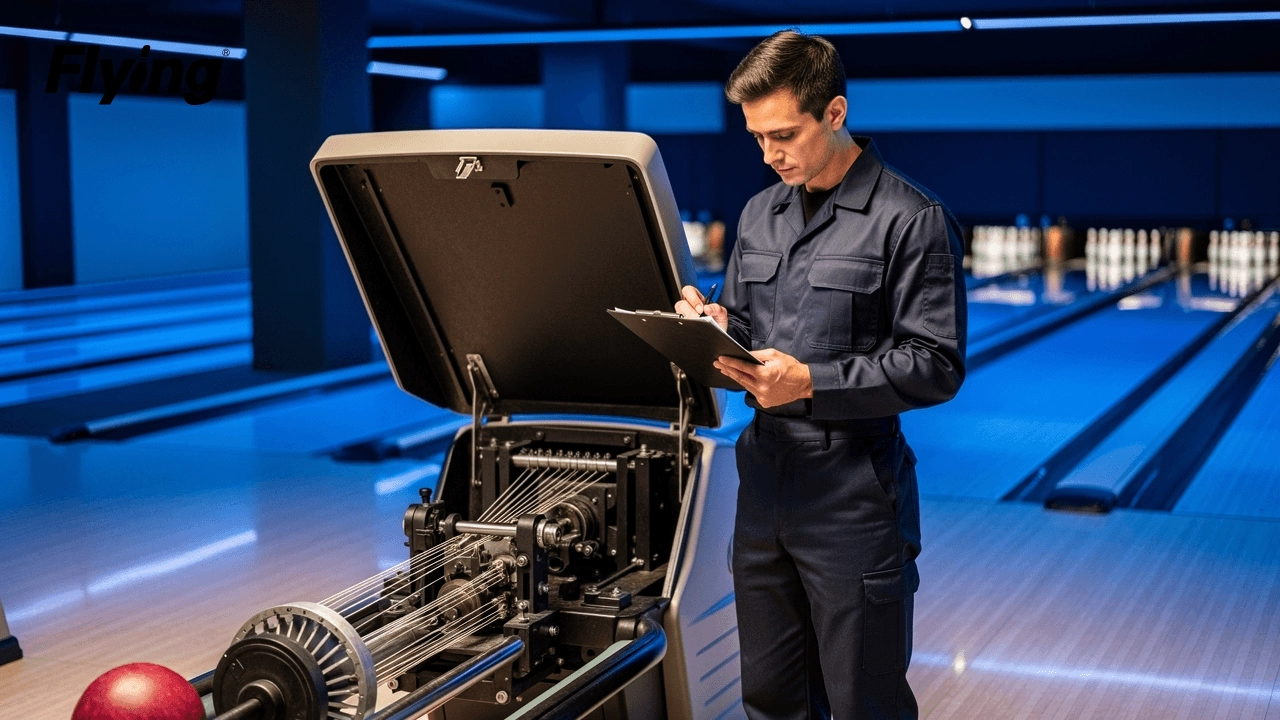


Flying Bowling
Flying Bowling
Flyingbowling
Flyingbowling
Flyingbowling