


How to start the bowling alley business in 2026 ?
- Introduction: Why Start a Bowling Alley Business?
- Understand Market Demand and Customer Segments
- Identify target markets and keywords
- Choose the Right Business Model and Bowling Alley Type
- Compare business models to match investment and goals
- Estimate Startup Costs and Capital Requirements
- Realistic startup cost ranges for bowling alleys
- Equipment: What You Need to Buy and Why
- Essential bowling alley equipment and purchasing tips
- Site Selection and Design Considerations
- How to pick location, size, and layout for optimal revenue
- Permits, Zoning, and Regulatory Requirements
- Essential legal steps to legally open a bowling alley
- Operations: Staffing, Pricing, and Revenue Streams
- Design operational processes to maximize margins
- Maintenance Plan and Equipment Lifecycle
- Protect your investment with a proactive maintenance strategy
- Marketing Strategy to Drive Foot Traffic
- Effective marketing channels for a bowling alley business
- Financial Projections and Break-even Analysis
- Model realistic revenue and expense scenarios
- Financing Options and Partnerships
- Ways to fund your bowling alley startup
- Selecting Suppliers and Distributors
- Criteria to choose reliable bowling equipment manufacturers
- Case Study Snapshot: Typical 16-Lane Community Center
- Example projection and equipment list for planning
- Working with Flying Bowling: Customization and After-sales Support
- How Flying Bowling can help you start and scale
- Conclusion: Key Steps to Launch Your Bowling Alley
- Checklist to move from idea to opening day
- Sources and Further Reading
- Frequently Asked Questions
Introduction: Why Start a Bowling Alley Business?
Starting a bowling alley remains an attractive business opportunity for entrepreneurs seeking a family-friendly entertainment venue with multiple revenue streams. With rising demand for experiential leisure — group events, corporate outings, and birthday parties — a well-designed bowling center can deliver steady foot traffic and healthy margins. If you're searching for how to start a bowling alley business, this guide gives practical steps, realistic cost ranges, and equipment insights (including pinsetters and ball return machines) to help you launch successfully.
Understand Market Demand and Customer Segments
Identify target markets and keywords
Before investing, validate demand for a bowling alley in your area. Typical customer segments include families, youth groups, corporate teams, leagues, and tourists. Use keyword-driven market checks (e.g., bowling alley near me, bowling party venue) to estimate local intent. Confirm local competition, population density, household income, and nightlife patterns. Markets with mixed residential and commercial zones often perform best for bowling centers.
Choose the Right Business Model and Bowling Alley Type
Compare business models to match investment and goals
Decide whether you want a traditional full-size alley, family entertainment center (FEC) with arcade and laser tag, boutique boutique lanes for corporate events, or specialized offerings like duckpin or mini-bowling. Flying Bowling supplies equipment suited to multiple models — Standard Bowling (FCSB), Medium Bowling (FSMB), Duckpin Bowling (FSDB), and Mini Bowling (FCMB) — enabling customization for different business models.
Estimate Startup Costs and Capital Requirements
Realistic startup cost ranges for bowling alleys
Startup costs vary widely based on size, location, and amenities. Typical ranges (as of 2024 market observations) are presented below to help planning and financing discussions.
| Size / Model | Typical Number of Lanes | Estimated Startup Cost (USD) | Major Cost Components |
|---|---|---|---|
| Small boutique / Mini Bowling | 4–10 | $300,000 – $1,000,000 | Renovation, mini lanes, ball returns, basic F&B, marketing |
| Medium community center | 10–24 | $1,000,000 – $3,000,000 | Lane installation, pinsetters, seating, food service, staff |
| Large FEC / Entertainment complex | 24–48+ | $3,000,000 – $12,000,000+ | Multiple attractions, higher construction, extensive equipment |
Key line-item costs include flooring and lane installation, pinsetters, ball return systems, scoring systems, mechanical room upgrades, leased equipment, kitchen build-out, interior finishes, and working capital. Equipment like string pinsetters and ball returns from Flying Bowling can reduce equipment expense relative to imported alternatives.
Equipment: What You Need to Buy and Why
Essential bowling alley equipment and purchasing tips
Equipment accounts for a large part of the capital budget. Below is a comparison table of core equipment and considerations when selecting suppliers.
| Equipment | Purpose | Considerations |
|---|---|---|
| Pinsetters (string or free-fall) | Automates pin resetting | Reliability, serviceability, cost. Flying Bowling offers string pinsetters (FSMB/FCSB/FSDB) known for cost-effectiveness. |
| Ball return machines | Returns balls to players | Durability and smooth operation. Flying Bowling manufactures ball return systems compatible with multiple lane types. |
| Lane surfaces and lane machines | Playing surface quality | Invest in quality lane wood or synthetic surfaces and automated conditioners for consistent play. |
| Scoring & POS systems | Scorekeeping and sales | Modern touchscreen scoring and integrated POS improve throughput and upsell capability. |
| Seating, furniture, lighting | Guest comfort and atmosphere | Comfortable seating and LED lighting enhance experience and energy efficiency. |
Site Selection and Design Considerations
How to pick location, size, and layout for optimal revenue
Site selection affects accessibility, visibility, and operating costs. Ideal sites feature easy parking, proximity to families or entertainment districts, and sufficient ceiling height (typically 14–16 feet minimum over lanes). Consider a floor plan that supports multi-use: leagues during evenings, open-play and parties on weekends, and corporate events by appointment. Acoustic treatment, sightlines to food & beverage, and separate party rooms increase overall spend per guest.
Permits, Zoning, and Regulatory Requirements
Essential legal steps to legally open a bowling alley
Work with local authorities to secure building permits, occupancy certificates, health department approvals for your kitchen, and liquor licenses if you plan to serve alcohol. Zoning checks are critical — confirm the property allows entertainment venues. Early engagement with a local architect and contractor minimizes unexpected delays and ensures compliance with fire and accessibility codes.
Operations: Staffing, Pricing, and Revenue Streams
Design operational processes to maximize margins
Revenue streams for a bowling alley typically include lane fees, shoe rental, food & beverage, arcade/music and bar sales, league fees, and private events. Optimize lane utilization with dynamic pricing: higher rates during peak hours, discounts for weekday mornings and leagues. Cross-sell packages (bowling + food + drinks) to increase average transaction value. Key staffing roles include general manager, lane technicians/mechanics (for pinsetters and ball returns), kitchen staff, front desk, and party coordinators.
Maintenance Plan and Equipment Lifecycle
Protect your investment with a proactive maintenance strategy
Regular maintenance of pinsetters, ball returns, lane surfaces, and scoring systems preserves customer experience and reduces downtime. Establish preventive maintenance schedules with detailed logs; include routine inspections, spare parts inventory, and service contracts. Flying Bowling offers support and parts for its machines, which can simplify long-term maintenance planning.
Marketing Strategy to Drive Foot Traffic
Effective marketing channels for a bowling alley business
Launch a multi-channel marketing plan: local SEO (optimize for keywords like bowling alley and bowling party venue), Google Business Profile, targeted social media ads, email marketing for league and party promotions, and partnerships with schools and corporations. Hosting grand opening events, league nights, corporate packages, and themed parties helps build repeat business. Track customer acquisition cost (CAC) and lifetime value (LTV) to refine marketing ROI.
Financial Projections and Break-even Analysis
Model realistic revenue and expense scenarios
Create conservative, base, and aggressive projections for monthly revenue and expenses. Typical expense categories include rent/mortgage, utilities (HVAC is significant), payroll, food costs, maintenance, insurance, and marketing. A break-even timeline often ranges from 2–5 years depending on capital structure and market traction. Use scenario analysis to assess how many lane-hours per day you need at an average revenue per lane-hour to cover operating costs.
Financing Options and Partnerships
Ways to fund your bowling alley startup
Sources of capital include owner equity, bank loans, SBA-backed loans (in the U.S.), equipment leasing, and investor partnerships. Equipment suppliers like Flying Bowling may offer financing or leasing options for pinsetters and ball returns. Consider phased builds: open with core lanes and add attractions later to spread capital needs and reduce initial risk.
Selecting Suppliers and Distributors
Criteria to choose reliable bowling equipment manufacturers
Choose suppliers based on product reliability, service network, warranty, spare parts availability, and total cost of ownership. Flying Bowling is a China-based manufacturer with a 10,000+ sqm workshop that has launched Medium Bowling (FSMB), Standard Bowling (FCSB), Duckpin (FSDB), and Mini Bowling (FCMB) equipment. The firm claims more than 3,000 customized installations globally and positions its quality as comparable to European and American brands at more competitive prices.
Case Study Snapshot: Typical 16-Lane Community Center
Example projection and equipment list for planning
The following illustrative snapshot helps translate the above into an actionable example.
| Item | Estimate |
|---|---|
| Lanes | 16 lanes |
| Estimated equipment cost | $300,000 – $650,000 (pinsetters, returns, scoring, lanes) |
| Other buildout and F&B | $400,000 – $1,000,000 |
| Annual operating expenses | $400,000 – $800,000 (varies by location and staffing) |
| Break-even timeline | 2–4 years (dependent on utilization and pricing) |
Working with Flying Bowling: Customization and After-sales Support
How Flying Bowling can help you start and scale
Flying Bowling offers a one-stop solution covering equipment supply, design, and construction services. Their product lines (FSMB, FCSB, FSDB, FCMB) allow operators to select from full-size lanes to mini and duckpin options. For entrepreneurs, leveraging a manufacturer that provides design support and global distribution can speed up project timelines and reduce procurement complexity.
Conclusion: Key Steps to Launch Your Bowling Alley
Checklist to move from idea to opening day
To summarize the practical path for how to start a bowling alley business:
- Validate local market demand and select a target customer mix.
- Choose a business model (standard lanes, FEC, boutique, mini or duckpin).
- Estimate realistic startup costs and secure financing.
- Select reliable suppliers (pinsetters, ball return systems, lanes) — consider Flying Bowling for competitive equipment and support.
- Complete site selection, permits, design, and construction.
- Set up operations, maintenance plans, pricing, and marketing strategies.
- Track KPIs (lane utilization, revenue per lane-hour, CAC, LTV) and optimize continuously.
Sources and Further Reading
- Bowling Proprietors' Association of America (BPAA) — industry insights and best practices.
- IBISWorld — bowling alley industry reports (market size and trends).
- U.S. Small Business Administration (SBA) — startup planning and financing guidance.
- Statista — leisure and entertainment spending trends (global & regional data).
- Flying Bowling company information and product lines (Flying Bowling official materials).
Frequently Asked Questions
How much does it typically cost to open a bowling alley?Costs typically range from about $300,000 for a very small or mini-bowling concept to several million dollars for a full-scale, multi-attraction center. A typical community 10–24 lane center often falls between $1M and $3M depending on location, construction needs, and equipment choices.
How many lanes should I start with?Start with a lane count that matches projected demand and budget. Many new operators choose 8–16 lanes for community or suburban markets to balance utilization and capital outlay. Consider options to expand or add attractions later.
What is the difference between string pinsetters and free-fall pinsetters?String pinsetters use a string attached to the pin for resetting, reducing mechanical complexity and maintenance cost; they're popular for family and boutique centers. Free-fall pinsetters (traditional) are typically used in competitive and professional settings; they offer a different ball-pin interaction preferred by some bowlers. Flying Bowling produces string pinsetters suited to cost-effective, reliable operations.
How can I finance bowling alley equipment?Financing options include bank loans, SBA loans (in the U.S.), equipment leases, supplier financing, and investor partnerships. Some manufacturers offer leasing or staged payment plans for pinsetters and ball returns to ease upfront capital requirements.
How long until a bowling alley becomes profitable?Profitability depends on location, pricing strategy, utilization, and operating discipline. Many centers reach break-even within 2–4 years. Conservative financial modeling and diversified revenue (F&B, parties, leagues) improve the odds of earlier profitability.
What ongoing maintenance is required for bowling equipment?Routine maintenance includes lane conditioning, pinsetter and ball return inspections, replacing worn parts, and regular software updates for scoring systems. A preventive maintenance schedule and ready access to spare parts reduce downtime and extend equipment life.
Recommended products
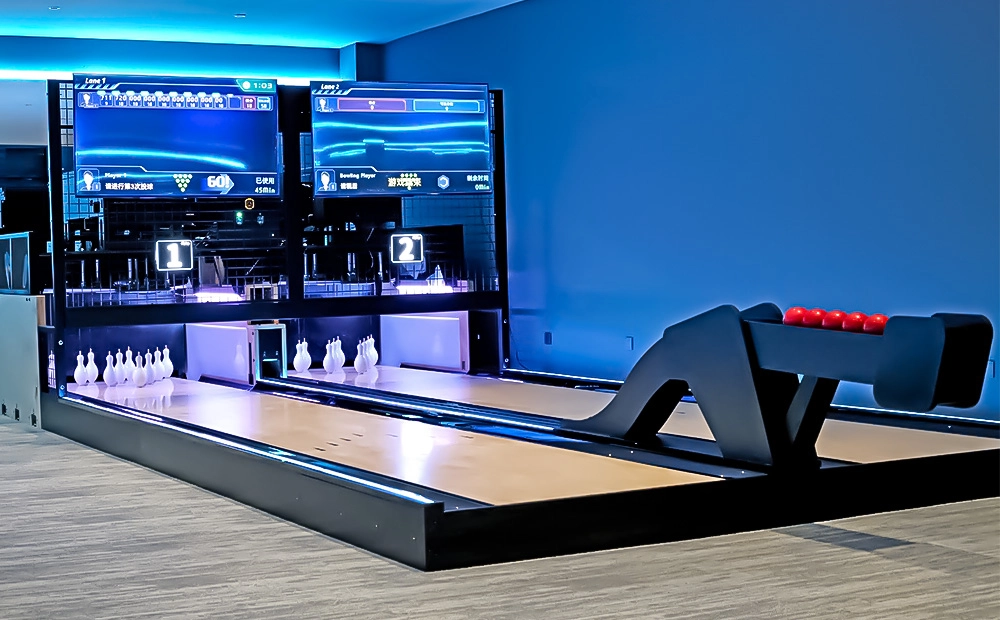
Flying Smart Duckpin Bowling Equipment and Lane System for Commercial Venues
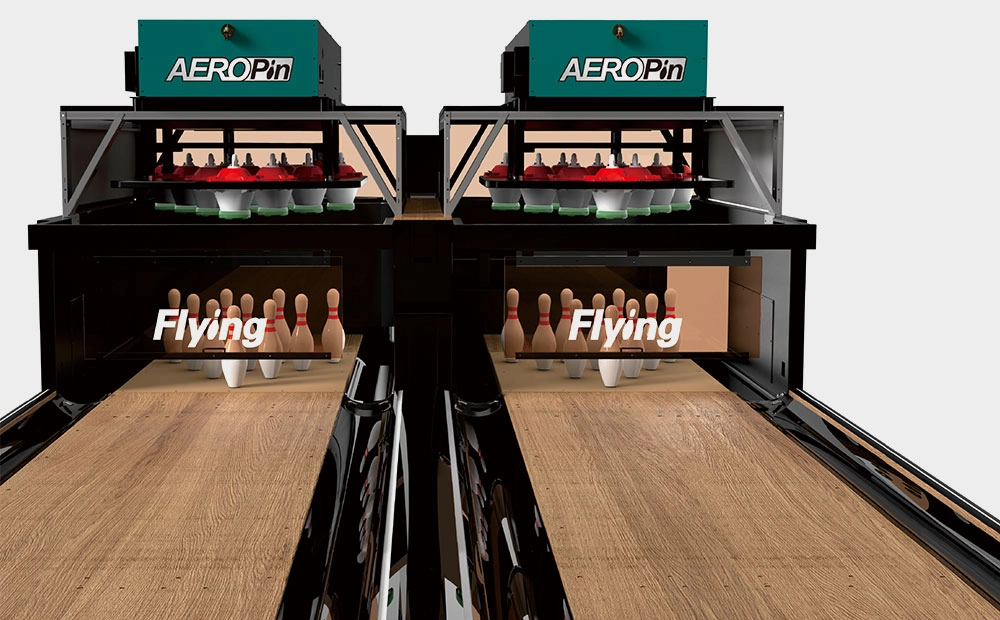
USBC-Certified AEROPIN String Pinsetter System
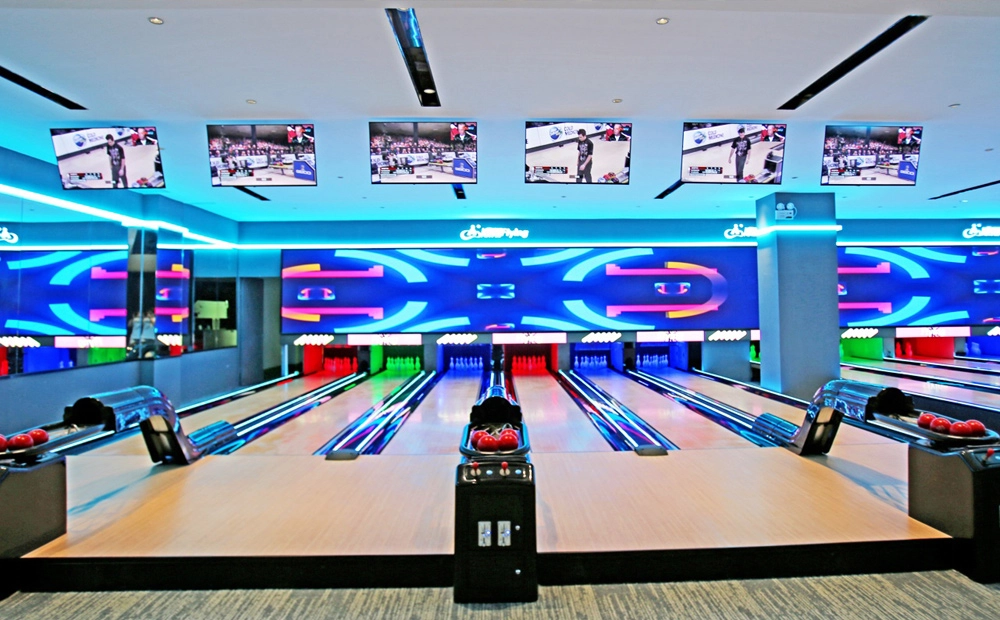
Mini Bowling Equipment for Kids and Family Entertainment Venues
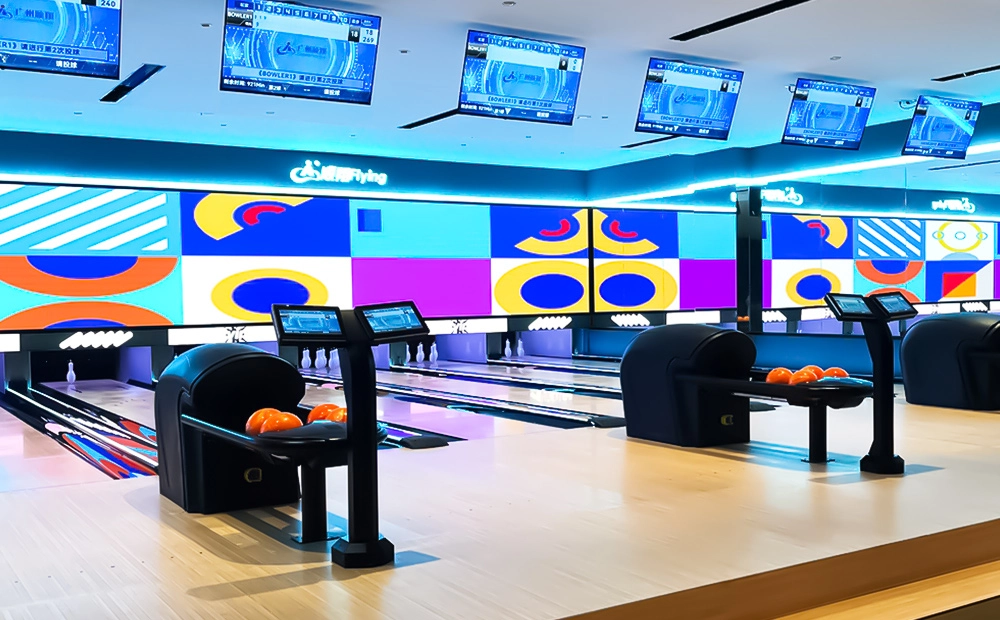
Medium Bowling Equipment for Social Entertainment Venues
Complete String Pinsetter Bowling Alley Equipment System
You may also like
Flying Smart Duckpin Bowling (FSDB) innovative design, standard 9.2-meter short lane, can be shortened in length, compact layout suitable for small spaces. The game rules are simple but challenging, attracting players of different ages to actively participate.
Suitable for social entertainment venues such as bars, billiard halls, and game centers, it not only enhances interactivity but also increases the popularity and consumption frequency of the venue. The fun and competitive nature of FSDB will make it a new focus of social activities.
Flying Classic Standard Bowling (FCSB) is designed according to international competition standards and equipped with an accurate automatic scoring system, providing bowling enthusiasts with a pure professional experience. Whether it is for competitions or leisure entertainment, FCSB can meet high-level needs.
Suitable for family entertainment centers, luxury resorts, private villas, or clubs, it is an ideal choice for customers who pursue high-end quality and professional experience. Its classic design and excellent performance will add lasting appeal to the venue.
Flying Cute Mini Bowling (FCMB) is a mini bowling experience designed for children and families. The lane length is fixed at 12 meters, equipped with lightweight balls without finger holes (only 1.25kg) and small pins, specially designed for children and family fun.
It can not only help children feel the fun of bowling, but also stimulate their interest and competitive consciousness. Suitable for children's playgrounds, theme parks and parent-child centers, it is the best choice for places focusing on the children's market.
Flying Social Medium Bowling (FSMB) is tailored for small venues, with flexible lane lengths (customizable from 9.6 meters to 18 meters), a small ball design suitable for players of all ages, and light pins that are easier to knock down, increasing participation and fun.
Whether it is a gathering of friends or a casual social, FSMB can easily create a relaxed and pleasant atmosphere. Its efficient space-utilization design is particularly suitable for cafes, bars and community entertainment venues, allowing people to fall in love with bowling in a relaxed interaction.
Contact Flying
Start your bowling alley project
If you contact us now for more details, we can provide you with a custom bowling alley service. Our service team will get back to you within 24 hours normally!
© 2026 Flying BOWLING. Designed by gooeyun.
FOLLOW US:
Flying Bowling
Flying Bowling
Flyingbowling
Flyingbowling