


How Much to Build a Bowling Alley in Zimbabwe? 2026 USD & ZiG Cost Guide
- Quick Answer: Bowling Alley Cost in Zimbabwe
- Section 1: USD and ZiG Budgeting for Zimbabwe Projects
- Section 2: What the Cost Estimates Include
- Section 3: Importing Bowling Equipment to Zimbabwe — Freight, Duty, and VAT
- Import Duties and VAT in Zimbabwe
- Section 4: Bowling Equipment Options for Zimbabwe Venues
- Section 5: Best Bowling Format for Different Zimbabwe Venue Types
- Section 6: Zimbabwe City and Location Planning
- Section 7: Startup Cost Breakdown
- 7.1 Building Lease or Purchase
- 7.2 Construction and Site Preparation
- 7.3 Bowling Equipment (FOB)
- 7.4 Freight, Import, and Customs
- 7.5 Installation and Commissioning
- 7.6 Furniture, Lighting, and Interior Fit-Out
- 7.7 Permits, Licenses, and Pre-Opening
- Section 8: Monthly Operating Costs
- Section 9: Build New vs. Buy an Existing Bowling Alley in Zimbabwe
- Building New
- Buying an Existing Bowling Alley
- Section 10: Revenue and ROI Planning
- Section 11: How Flying Bowling Supports Zimbabwe Projects
- Related Reading
- FAQ: Building a Bowling Alley in Zimbabwe
Quick Answer: Bowling Alley Cost in Zimbabwe
A 2-lane compact bowling setup in Zimbabwe may require approximately $90,000–$170,000+ as a complete project estimate, while a 4-lane commercial venue may require $220,000–$420,000+, depending on equipment format, freight, customs clearance, site preparation, and interior fit-out. Larger 6–12 lane bowling centers can range from $350,000 to over $1,500,000 depending on venue size and specification.
| Setup Type | FOB Equipment Package Estimate | Complete Project Estimate | Best For |
|---|---|---|---|
| 2-Lane Mini / Duckpin | $22,000–$40,000 | $90,000–$170,000+ | Cafés, kids zones, hotel amenity, small FEC |
| 4-Lane Compact Venue | $60,000–$85,000 | $220,000–$420,000+ | Mall entertainment, hotel, private club |
| 6-Lane Standard / Medium | $90,000–$130,000 | $350,000–$700,000+ | Commercial bowling venue |
| 8–12 Lane Bowling Center | $140,000–$300,000+ | $800,000–$1,500,000+ | FEC, large entertainment center |
FOB package estimates may include lane equipment, pinsetters, scoring, ball return, accessories, and basic project configuration; per-lane figures in Section 4 are used for equipment format comparison.
Planning note: FOB equipment cost is not the full project cost. A complete Zimbabwe bowling alley project typically also includes sea freight, inland transport from the regional port to your site, customs duty, VAT, site preparation, electrical work, installation, staff training, and interior fit-out. These add-on costs can represent a major share of the final project budget and may exceed the FOB equipment value in projects with complex site preparation, inland transport, premium fit-out, or high local construction costs.
All estimates above are indicative planning figures. Actual costs vary by equipment format, site condition, Harare or regional location, contractor pricing, and prevailing import duties. Verify all cost components with local advisors and a licensed customs clearing agent before committing to a budget.
→ Request a Zimbabwe bowling alley equipment quotation: Contact Flying Bowling
Section 1: USD and ZiG Budgeting for Zimbabwe Projects
Most bowling equipment is manufactured and exported from China and quoted in USD. International freight, port handling, and insurance are also priced in foreign currency. For this reason, all cost estimates in this guide are presented in USD.
Zimbabwe investors can convert USD estimates to Zimbabwe Gold (ZiG) using the prevailing Reserve Bank of Zimbabwe (RBZ) exchange rate at the time of quotation. The RBZ publishes official exchange rates at rbz.co.zw. As of June 2026, the USD/ZWG mid-rate was approximately 26.80, but exchange rates fluctuate — always verify the current rate before finalizing a project budget in local currency.
Important: Do not build a long-term financial model using a fixed ZiG cost figure. Equipment quotes, freight costs, and customs duties are USD-denominated. ZiG figures should be treated as reference estimates only and recalculated at the time of order placement.
Section 2: What the Cost Estimates Include
Zimbabwe bowling projects involve more cost components than a domestic purchase. The table below covers the full scope of a typical project:
| Cost Component | What It Covers |
|---|---|
| Bowling equipment (FOB) | Lanes, string pinsetter, ball return, scoring system, pins, balls, and accessories |
| Sea freight | Ocean freight from Flying Bowling's manufacturing/export location in Guangdong, China to regional seaport |
| Inland transport | Delivery from the regional port (Durban, Beira, or Dar es Salaam) to site in Zimbabwe |
| Customs duty | Applicable ZIMRA import tariff based on HS code classification |
| VAT on imports | VAT levied on CIF value plus customs duty per ZIMRA rules |
| Customs clearing fees | Agent fees for import documentation and ZIMRA clearance |
| Site preparation | Subfloor leveling, dedicated electrical circuits, HVAC, and structural work |
| Installation | Lane placement, pinsetter calibration, scoring system setup, and safety testing |
| Interior fit-out | Seating, lighting, F&B counter, reception, acoustic treatment, and interior finishes |
| Staff training | Operator handover, daily operation procedures, and basic maintenance training |
| Spare parts | Initial parts inventory recommended for post-installation support |
Section 3: Importing Bowling Equipment to Zimbabwe — Freight, Duty, and VAT
Zimbabwe is a landlocked country. Bowling equipment shipped from China typically enters via one of three regional seaports: Durban (South Africa), Beira (Mozambique), or Dar es Salaam (Tanzania). The choice of port affects inland transport time and cost to Harare, Bulawayo, or other destinations. The final logistics route should be confirmed with a freight forwarder based on current freight rates, transit time, border procedures, and inland trucking availability.
Typical freight and logistics planning allowance: 20–30% of FOB equipment value, covering sea freight, port handling, inland trucking, customs agent fees, and import duties. This is a planning estimate only — actual costs depend on container size, shipping route, port selection, and prevailing freight rates.
Import Duties and VAT in Zimbabwe
Bowling equipment imported into Zimbabwe may be subject to import duty, surtax, and VAT levied by the Zimbabwe Revenue Authority (ZIMRA). The applicable rates depend on the HS code classification of the specific goods. Zimbabwe's standard VAT rate is 15%, applied to the CIF (cost, insurance, and freight) value plus applicable duties.
Buyers should confirm the correct HS code, CIF valuation methodology, duty rate, VAT treatment, and required import documentation with ZIMRA or a licensed customs clearing agent before placing an equipment order. Flying Bowling provides commercial invoices, packing lists, and HS code guidance to support customs clearance.
As noted in Zimbabwe import tariff guidance, most commercial imports involve a combination of customs duty, potential surtax, and VAT. Exact calculations require HS code confirmation with a licensed broker before finalizing landed cost.
Section 4: Bowling Equipment Options for Zimbabwe Venues
Flying Bowling supplies four equipment formats suited to different project types and investment budgets. All four use string pinsetter technology, which can reduce daily maintenance complexity and may lower pinsetter-related energy use compared with traditional free-fall mechanical pinsetters, depending on lane count, usage hours, and equipment configuration — important factors for Zimbabwe venues where imported spare parts and specialized technical staff can be harder to source.
| Equipment Format | FOB Per Lane | Min. Lane Length | Best Zimbabwe Application |
|---|---|---|---|
| Mini Bowling (FCMB) | $9,000–$12,000 | 12 m (fixed) | Kids' entertainment rooms, family FECs, mall attractions |
| Duckpin Bowling (FSDB) | $11,000–$16,000 | 9.2 m | Bars, cafés, hotel recreation, boutique venues |
| Medium Bowling (FSMB) | $14,000–$18,000 | 9.6–18 m (flexible) | Mid-size FECs, shopping mall entertainment zones |
| Standard Bowling (FCSB) | $18,000–$25,000 | 26–28 m | Full commercial centers, private clubs, resort facilities |
String pinsetter systems are particularly well-suited to the Zimbabwe operating environment. Because they have fewer moving parts than free-fall systems, they can generally be maintained by trained venue staff without a specialist bowling mechanic — reducing dependency on imported technical support. For a detailed comparison of the two systems, see: String Pinsetter vs. Free-Fall Pinsetter: Complete Comparison
For a complete equipment pricing breakdown including scoring systems, ball returns, and accessories, see: Bowling Equipment Cost Guide 2026
→ Get an itemized equipment quotation for your Zimbabwe project: Contact Flying Bowling
Section 5: Best Bowling Format for Different Zimbabwe Venue Types
| Venue Type | Recommended Format | Why It Works |
|---|---|---|
| Kids' entertainment room | Mini Bowling (FCMB) | Compact, child-friendly, minimal staffing required |
| Café or bar attraction | Duckpin Bowling (FSDB) | Short lane fits existing spaces, social gameplay, no specialist shoes |
| Hotel or lodge recreation | Duckpin or Mini Bowling | Family-friendly leisure amenity; low maintenance overhead |
| Shopping mall FEC | 4–8 lane Medium or Standard | Higher throughput; attracts group and family bookings |
| Private club or resort | Duckpin, Medium, or Standard | Premium guest experience; flexible format options |
| Full commercial bowling center | Standard Bowling + AEROPIN™ | Full tenpin experience; suitable for league and tournament play |
For most first-time Zimbabwe investors, duckpin or medium bowling offers the most practical entry point: lower total project cost, smaller space requirement, and lower maintenance complexity than standard tenpin.
Section 6: Zimbabwe City and Location Planning
Commercial rent and construction costs in Zimbabwe vary by city and location type. The planning notes below are based on general market knowledge and should be verified with local property advisors and contractors before committing to a site.
| Location | Planning Notes |
|---|---|
| Harare | Strongest urban demand; highest commercial rent expectations; suitable for boutique lounges, mall FECs, and hotel venues |
| Bulawayo | Lower cost pressure than Harare; suitable for mid-size commercial venues and FEC-style entertainment |
| Victoria Falls | Hotel and resort leisure potential; strong tourism-driven demand; premium guest experience format recommended |
| Mutare / Gweru | Smaller local markets; compact format (2–4 lanes) more appropriate; lower startup cost threshold |
| Shopping mall location | Higher foot traffic and brand visibility; fit-out expectations are typically higher; landlord contribution may be negotiable |
| Standalone venue | More layout control; lower fit-out standard may be acceptable; higher marketing investment needed to drive initial traffic |
Before selecting a site, confirm: ceiling height (minimum 2.44 m for standard bowling, 2.25 m for duckpin and mini), column-free lane span, subfloor load bearing, electrical capacity, loading access for container delivery, and zoning compliance for entertainment use. Flying Bowling can review floor plans and confirm technical suitability before you commit to a lease.
Section 7: Startup Cost Breakdown
7.1 Building Lease or Purchase
Planning range: $15,000–$80,000/year (lease) or $100,000–$500,000+ (purchase)
Commercial lease rates in Harare and Bulawayo are typically quoted in USD. Verify rental terms, lease duration, escalation clauses, maintenance responsibilities, and whether the landlord will contribute to fit-out costs for a long-term entertainment anchor tenant.
7.2 Construction and Site Preparation
Planning range: $60,000–$300,000+
Typical scope includes: subfloor leveling, dedicated electrical circuits for bowling equipment, HVAC and ventilation, restroom and accessibility compliance, acoustic treatment, and bar or F&B area construction if included. Construction costs in Zimbabwe vary by city, contractor pricing, material availability, and specification level.
7.3 Bowling Equipment (FOB)
Planning range: $30,000–$300,000+ depending on format and lane count
See Section 4 for per-lane FOB pricing by equipment format.
7.4 Freight, Import, and Customs
Planning range: 20–30% of FOB equipment value
Includes sea freight, inland transport from regional port to site, ZIMRA customs duty, VAT, and clearing agent fees. Confirm with a licensed Zimbabwean customs broker before ordering.
7.5 Installation and Commissioning
Planning range: $5,000–$25,000+
Flying Bowling provides installation guidance and commissioning support. For Zimbabwe projects, an experienced local contractor familiar with electrical and civil work is recommended for site preparation prior to equipment arrival.
7.6 Furniture, Lighting, and Interior Fit-Out
Planning range: $20,000–$120,000
Seating, lane lighting, reception counter, bar furniture, and interior branding. Atmosphere quality affects social media visibility, repeat visit frequency, and event booking rates.
7.7 Permits, Licenses, and Pre-Opening
Planning range: $5,000–$30,000+
Business registration, entertainment license, building permit, fire safety approval, food service permit (if applicable), and liquor license (if alcohol is served). Pre-opening marketing, POS systems, and staff training should also be budgeted.
Section 8: Monthly Operating Costs
Monthly operating costs for a 4-lane commercial venue in Zimbabwe will vary by city, lease rate, staffing model, and operating hours. The planning ranges below are indicative only.
| Cost Category | Monthly Planning Range | Notes |
|---|---|---|
| Rent / lease | $1,200–$8,000+ | Varies significantly by city and venue size |
| Staff salaries | $2,000–$10,000+ | Depends on operating hours and staffing model |
| Electricity and utilities | $500–$3,000+ | Pinsetter, HVAC, lighting, kitchen |
| Equipment maintenance | $200–$1,200+ | Parts, consumables, service |
| Insurance and licenses | $200–$1,000+ | Varies by venue type and jurisdiction |
| Marketing | $300–$2,000+ | Local advertising and social media |
| Total monthly operating cost | $4,400–$25,000+ | Excluding loan repayment and owner compensation |
String pinsetter technology is particularly relevant for Zimbabwe operations because it may lower pinsetter-related electricity use, reduce routine maintenance part requirements, and can usually be managed by trained venue staff without importing specialist technicians. All of these factors improve the monthly operating P&L in a market where imported technical support can be both slow and expensive.
Section 9: Build New vs. Buy an Existing Bowling Alley in Zimbabwe
GSC data shows that some visitors to this page are searching for existing bowling alleys for sale or to buy in Zimbabwe. The decision between building new and buying an existing venue involves practical trade-offs worth evaluating carefully.
Building New
Gives full control over equipment format, layout, lane count, branding, and long-term operating cost structure. Better suited for investors who want modern string pinsetter equipment and the ability to design the guest experience from the start.
The main risks are construction timelines, permitting complexity, and the time from project start to first revenue.
Buying an Existing Bowling Alley
Can reduce time to revenue and may provide an established customer base. However, investors must carefully inspect:
- Age and mechanical condition of existing pinsetters
- Lane surface condition and subfloor integrity
- Scoring system age and software compatibility
- Ball return equipment wear
- Electrical and HVAC condition
- Lease terms and remaining lease duration
- Renovation cost required to bring venue to operating standard
- Spare parts availability for existing equipment brand
Older free-fall mechanical pinsetters in particular may carry high ongoing maintenance costs and parts availability challenges. In some Zimbabwe acquisition scenarios, replacing legacy equipment with string pinsetter systems — even as part of the acquisition cost — can reduce long-term operating complexity and improve the business case for the purchase.
Section 10: Revenue and ROI Planning
A bowling alley in Zimbabwe can generate revenue from multiple streams. Planning for all of them from the start — rather than relying on lane fees alone — significantly improves the business case.
| Revenue Stream | Planning Notes |
|---|---|
| Lane fees and game charges | Primary revenue driver; pricing should reflect local consumer purchasing power |
| Birthday parties and group bookings | Strong weekend and school holiday demand in family markets |
| Corporate events | Suitable for 4-lane and larger venues in Harare and Bulawayo |
| Food and beverage | May become a significant share of per-visit revenue when well executed |
| Arcade and redemption games | Increases dwell time and spend per family visit |
| Memberships and packages | Builds repeat visits and more predictable monthly income |
| Hotel or resort amenity uplift | Indirect revenue through improved room rate or occupancy; measurable via RevPAR or guest satisfaction |
ROI depends on rent-to-revenue ratio, lane utilization, F&B margin, staffing efficiency, and local competition. Many operators plan for a 3–5 year equipment payback as an initial benchmark, but this range is more realistic when rent is controlled, F&B performs well, and weekend or group booking utilization is strong. Actual results will depend on location, pricing, operating quality, and market development. These are planning scenarios, not guarantees.
For a detailed ROI comparison by business model, see: Bowling Business Models Compared: Equipment, Startup Cost & ROI Breakdown
Section 11: How Flying Bowling Supports Zimbabwe Projects
Flying Bowling has supported bowling projects across Africa and more than 60 countries globally since 2005, supplying equipment for commercial centers, FECs, hotels, private clubs, and residential installations.
For Zimbabwe investors, Flying Bowling provides:
- Remote floor plan review and lane configuration recommendation
- Itemized FOB equipment quotation with HS code guidance for ZIMRA customs pre-estimation
- Shipping coordination from Guangzhou, China to your preferred regional port
- Export documentation: commercial invoice, packing list, certificate of origin
- Installation guidance and commissioning support
- Staff operation and maintenance training
- Spare parts supply and standard warranty service
- Product options covering Mini Bowling, Duckpin, Medium, and Standard Bowling formats
To receive a quotation for a Zimbabwe project, prepare: your project city, available floor dimensions (length, width, ceiling height), preferred bowling format, planned lane count, photos of the space and delivery access, and a brief description of your venue concept.
Jackson Qin — Flying Bowling Email: jackson@flyingbowling.com WhatsApp: +86 150 1310 7020 Request a Zimbabwe Project Quote →
Related Reading
- How Much Money to Open a Bowling Alley? 2026 Startup Cost & ROI Guide
- Bowling Business Models Compared: Equipment, Startup Cost & ROI Breakdown
- Bowling Equipment Cost Guide 2026: Complete Price Breakdown
- String Pinsetter vs. Free-Fall Pinsetter: Complete Comparison
- USBC Approved String Pinsetters: Complete Guide
- Build a Bowling Center: Planning Guide
FAQ: Building a Bowling Alley in Zimbabwe
How much does it cost to build a bowling alley in Zimbabwe?
A 2-lane compact setup may require approximately $90,000–$170,000+ as a complete project estimate. A 4-lane commercial venue typically requires $220,000–$420,000+. A 6-lane standard bowling center may require $350,000–$700,000+. These are indicative planning estimates including FOB equipment, freight, customs, site preparation, installation, and basic fit-out. Actual costs vary by location, equipment format, and site condition.
What is the cheapest bowling alley setup for Zimbabwe?
A 2-lane mini bowling or duckpin bowling installation typically represents the lowest entry point. FOB equipment for a 2-lane mini or duckpin setup starts around $18,000–$32,000. A complete project including freight, customs, site preparation, installation, and basic fit-out may be achievable for $90,000–$130,000 in a suitable existing space.
How much does a 4-lane bowling alley cost in Zimbabwe?
A 4-lane commercial venue in Zimbabwe typically requires a total project investment of $220,000–$420,000+, depending on equipment format, site condition, city, and fit-out specification. FOB equipment for a 4-lane setup ranges from $44,000 (duckpin) to $100,000 (standard bowling). Freight, customs, construction, and fit-out add the remainder.
What import duty and VAT apply to bowling equipment in Zimbabwe?
Bowling equipment imported into Zimbabwe is subject to ZIMRA customs duty and 15% VAT applied to the CIF value plus applicable duties. The exact duty rate depends on HS code classification of the specific equipment. Importers should confirm the applicable HS code, duty rate, VAT treatment, and required documentation with ZIMRA or a licensed Zimbabwean customs clearing agent before placing an order. Flying Bowling provides commercial invoices, packing lists, and HS code guidance to support clearance.
Should I build a new bowling alley or buy an existing one in Zimbabwe?
Building new gives full control over equipment, layout, and guest experience. Buying an existing venue can reduce time to revenue but requires careful inspection of pinsetter age and condition, scoring system, lane surfaces, lease terms, and renovation requirements. In some cases, replacing old equipment in an acquired venue with string pinsetter systems reduces long-term operating complexity and may justify a lower acquisition price.
Which bowling format is best for a small venue in Zimbabwe?
For a small venue — a café, bar, hotel recreation room, or compact FEC — duckpin bowling (FSDB) or mini bowling (FCMB) are generally the most practical choices. Both require significantly less floor space than standard tenpin bowling, have lower FOB equipment cost, and can typically be operated by trained existing venue staff without a dedicated bowling technician.
How long does it take to install bowling equipment in Zimbabwe?
A typical Zimbabwe project timeline from order confirmation to operational opening is approximately 4–7 months, covering: equipment manufacturing (6–10 weeks), sea freight to regional port (3–5 weeks), inland transport and customs clearance in Zimbabwe (2–4 weeks), site preparation (variable — ideally completed before equipment arrival), installation and commissioning (1–3 weeks), and staff training. Projects with completed site preparation before equipment arrival typically achieve faster opening timelines.
What cities in Zimbabwe are best for a bowling venue?
Harare offers the strongest urban demand and the largest consumer market but also the highest commercial rent expectations. Bulawayo is the second-largest city with lower cost pressure and is suitable for mid-size entertainment venues. Victoria Falls is well-suited for hotel and resort leisure concepts due to strong tourism-driven demand. Mutare and Gweru can support smaller, compact format installations where capital is more constrained.
What information do I need to get a bowling alley quotation?
To receive an accurate quotation, prepare your project city and country; available space dimensions (floor length, width, and ceiling height); preferred bowling format (mini, duckpin, medium, or standard); planned number of lanes; photos of the space and delivery access; and a brief description of the venue concept (hotel, bar, FEC, commercial center, etc.). Flying Bowling can also provide a remote floor plan feasibility review before issuing a formal quotation.
Does Flying Bowling support bowling projects in Zimbabwe?
Yes. Flying Bowling supplies equipment and project support for commercial venues, FECs, hotels, private clubs, and residential installations across Africa and globally. Flying Bowling has delivered more than 3,000 projects worldwide and provides FOB quotations, export documentation, shipping coordination, installation guidance, and staff training for international projects, including Zimbabwe. Contact [jackson@flyingbowling.com](mailto:jackson@flyingbowling.com) or visit the [Build a Center page](https://www.flyingbowling.com/build-a-center.html) to start a project inquiry.
Recommended products
Flying Smart Duckpin Bowling Equipment and Lane System for Commercial Venues
USBC-Certified AEROPIN String Pinsetter System
Mini Bowling Equipment for Kids and Family Entertainment Venues
Medium Bowling Equipment for Social Entertainment Venues
Complete String Pinsetter Bowling Alley Equipment System
You may also like
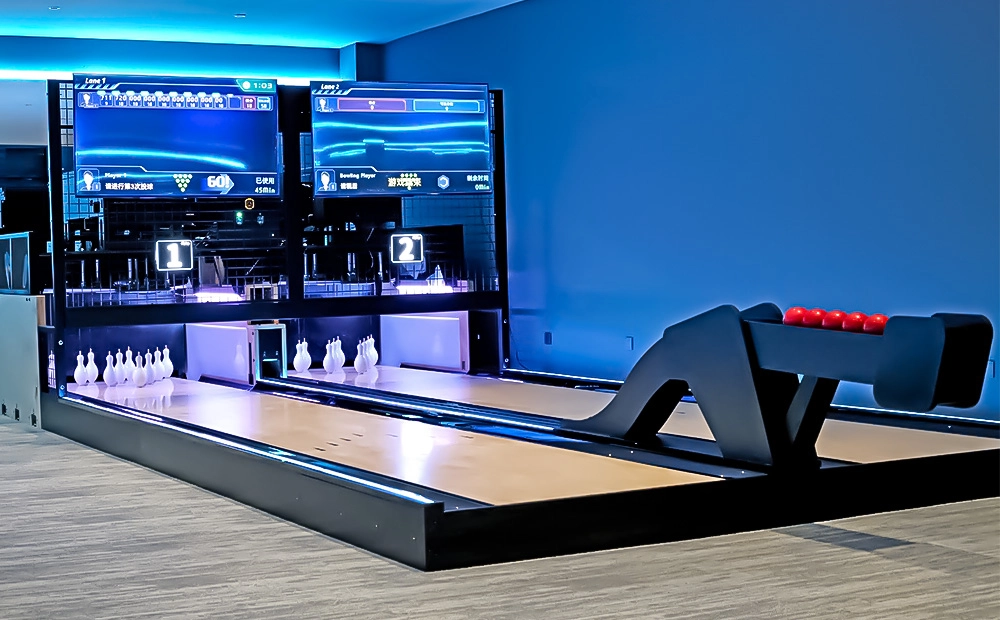
Flying Smart Duckpin Bowling (FSDB) innovative design, standard 9.2-meter short lane, can be shortened in length, compact layout suitable for small spaces. The game rules are simple but challenging, attracting players of different ages to actively participate.
Suitable for social entertainment venues such as bars, billiard halls, and game centers, it not only enhances interactivity but also increases the popularity and consumption frequency of the venue. The fun and competitive nature of FSDB will make it a new focus of social activities.
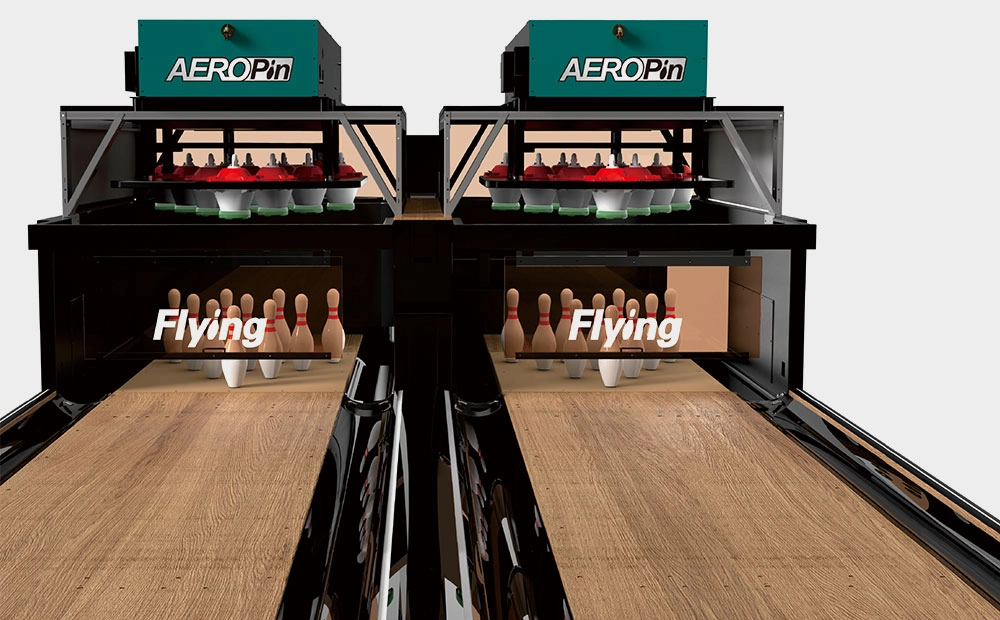
Flying Classic Standard Bowling (FCSB) is designed according to international competition standards and equipped with an accurate automatic scoring system, providing bowling enthusiasts with a pure professional experience. Whether it is for competitions or leisure entertainment, FCSB can meet high-level needs.
Suitable for family entertainment centers, luxury resorts, private villas, or clubs, it is an ideal choice for customers who pursue high-end quality and professional experience. Its classic design and excellent performance will add lasting appeal to the venue.
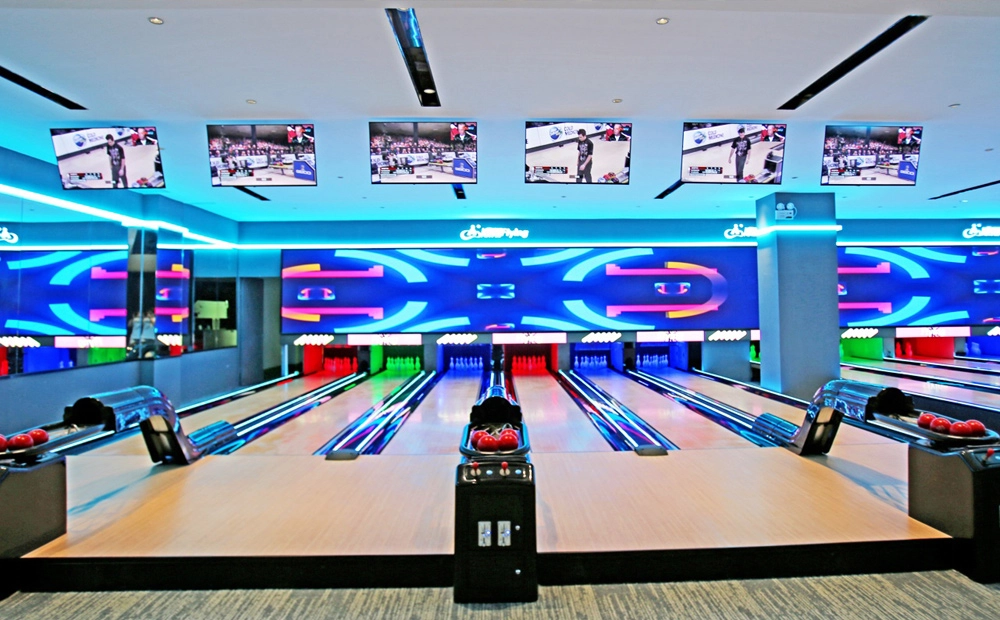
Flying Cute Mini Bowling (FCMB) is a mini bowling experience designed for children and families. The lane length is fixed at 12 meters, equipped with lightweight balls without finger holes (only 1.25kg) and small pins, specially designed for children and family fun.
It can not only help children feel the fun of bowling, but also stimulate their interest and competitive consciousness. Suitable for children's playgrounds, theme parks and parent-child centers, it is the best choice for places focusing on the children's market.
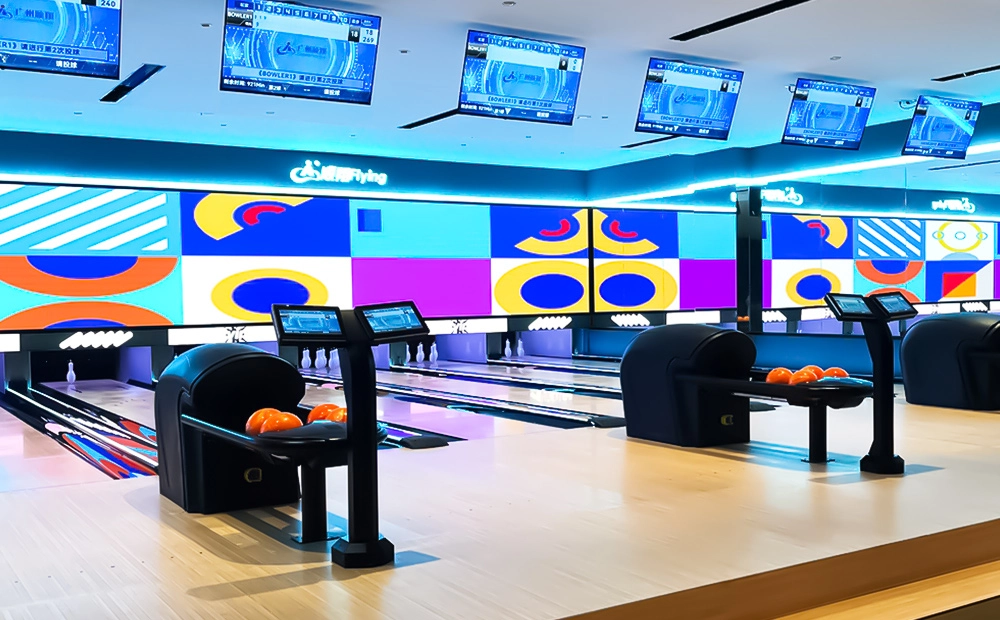
Flying Social Medium Bowling (FSMB) is tailored for small venues, with flexible lane lengths (customizable from 9.6 meters to 18 meters), a small ball design suitable for players of all ages, and light pins that are easier to knock down, increasing participation and fun.
Whether it is a gathering of friends or a casual social, FSMB can easily create a relaxed and pleasant atmosphere. Its efficient space-utilization design is particularly suitable for cafes, bars and community entertainment venues, allowing people to fall in love with bowling in a relaxed interaction.
Contact Flying
Start your bowling alley project
If you contact us now for more details, we can provide you with a custom bowling alley service. Our service team will get back to you within 24 hours normally!
© 2026 Flying BOWLING. Designed by gooeyun.
FOLLOW US:
Flying Bowling
Flying Bowling
Flyingbowling
Flyingbowling