


Introduction: How Many Bowling Lanes Does Your Venue Need?
The ideal number of bowling lanes depends on your venue type, available space, target customers, investment plan, and long-term business goals.
There is no single standard lane number that works for every bowling project. A small entertainment venue may only need a few lanes to create a social attraction, while a traditional commercial bowling center may require dozens of lanes to support leagues, events, and high customer traffic.
As a general planning reference:
- Small entertainment venues, hotels, and resorts may consider **2–8 bowling lanes**.
- Family entertainment centers (FECs) commonly use **6–16 bowling lanes**.
- Commercial bowling centers often require **16–32+ bowling lanes**.
- Large competition facilities may require **32+ lanes**.
The right bowling lane configuration should balance available space, customer demand, business model, equipment selection, and expected return on investment.
Flying Bowling helps commercial customers evaluate bowling project requirements, including lane quantity, bowling system selection, equipment configuration, and complete bowling center planning.
Quick Answer: How Many Lanes Should a Bowling Alley Have?
The number of lanes required depends mainly on the purpose of the venue.
| Venue Type Recommended Bowling Lanes | |
| Hotel or Resort Entertainment Area | 2–6 lanes |
| Restaurant, Bar, or Boutique Venue | 2–8 lanes |
| Family Entertainment Center (FEC) | 6–16 lanes |
| Shopping Mall Entertainment Zone | 4–12 lanes |
| Community Bowling Center | 12–28 lanes |
| Large Commercial Bowling Center | 16–32+ lanes |
| Competition / Tournament Facility | 32+ lanes |
These numbers are general planning recommendations. The final lane quantity should consider the available floor area, local market demand, customer profile, and revenue model.
Factors That Determine the Right Number of Bowling Lanes
Choosing the correct number of bowling lanes is one of the most important decisions when planning a bowling center. A suitable lane count can improve customer experience, optimize investment, and support long-term operation.
1. Venue Type and Business Model
The type of venue determines how bowling will be used.
Different businesses have different goals:
Hotels and Resorts
Hotels and resorts usually use bowling as an additional entertainment attraction rather than the only business.
Typical considerations:
- Guest experience
- Family activities
- Premium leisure services
- Space efficiency
Compact bowling systems with fewer lanes can often create an attractive entertainment area without requiring a large dedicated bowling facility.
Family Entertainment Centers (FECs)
FECs usually combine multiple attractions:
- Bowling
- Arcade games
- Party rooms
- Food and beverage
- Other indoor entertainment
Because bowling is one part of the overall entertainment experience, the ideal lane number depends on the complete attraction mix.
Many FEC projects choose:
- 6–16 lanes
to balance bowling capacity with other activities.
Commercial Bowling Centers
Traditional bowling centers usually depend heavily on bowling revenue.
They may need more lanes to support:
- League activities
- Group events
- Corporate bookings
- Tournaments
- Daily customer traffic
Commercial bowling centers commonly use:
- 16–32+ lanes
depending on market demand.
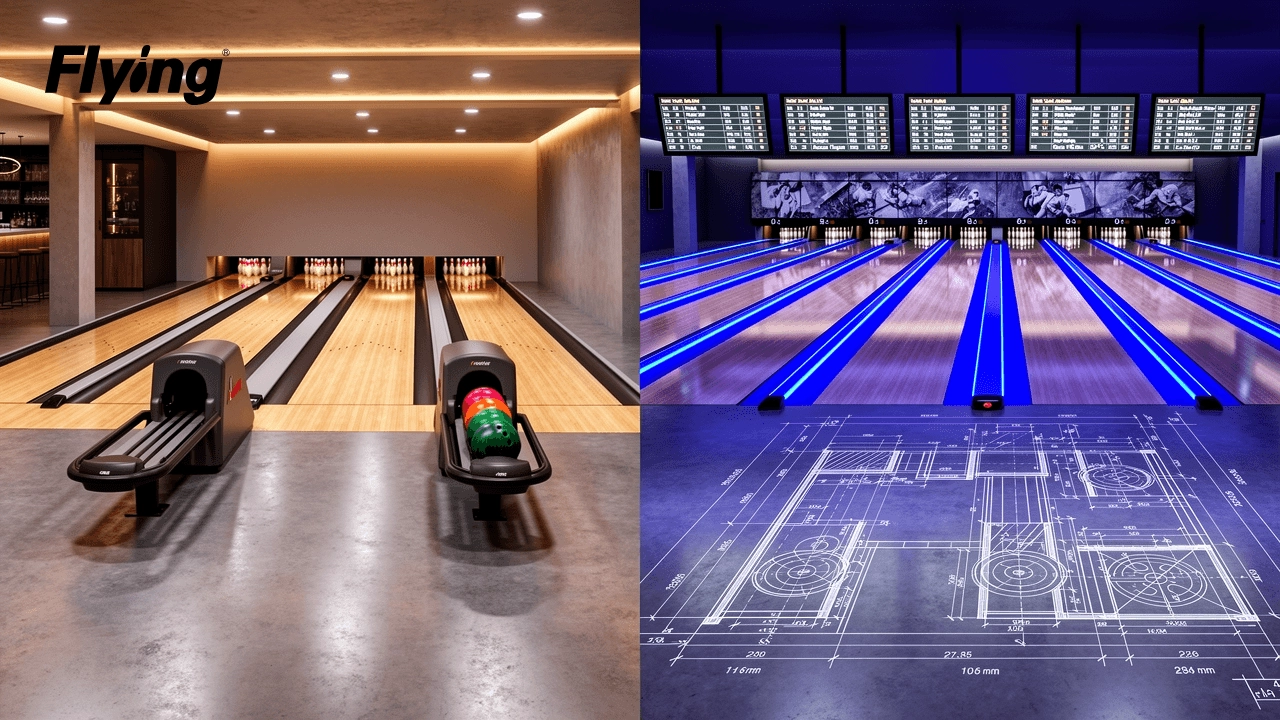
2. Available Space and Bowling Alley Layout
Space is one of the biggest factors affecting lane quantity.
A complete bowling project requires more than just lanes.
The layout should consider:
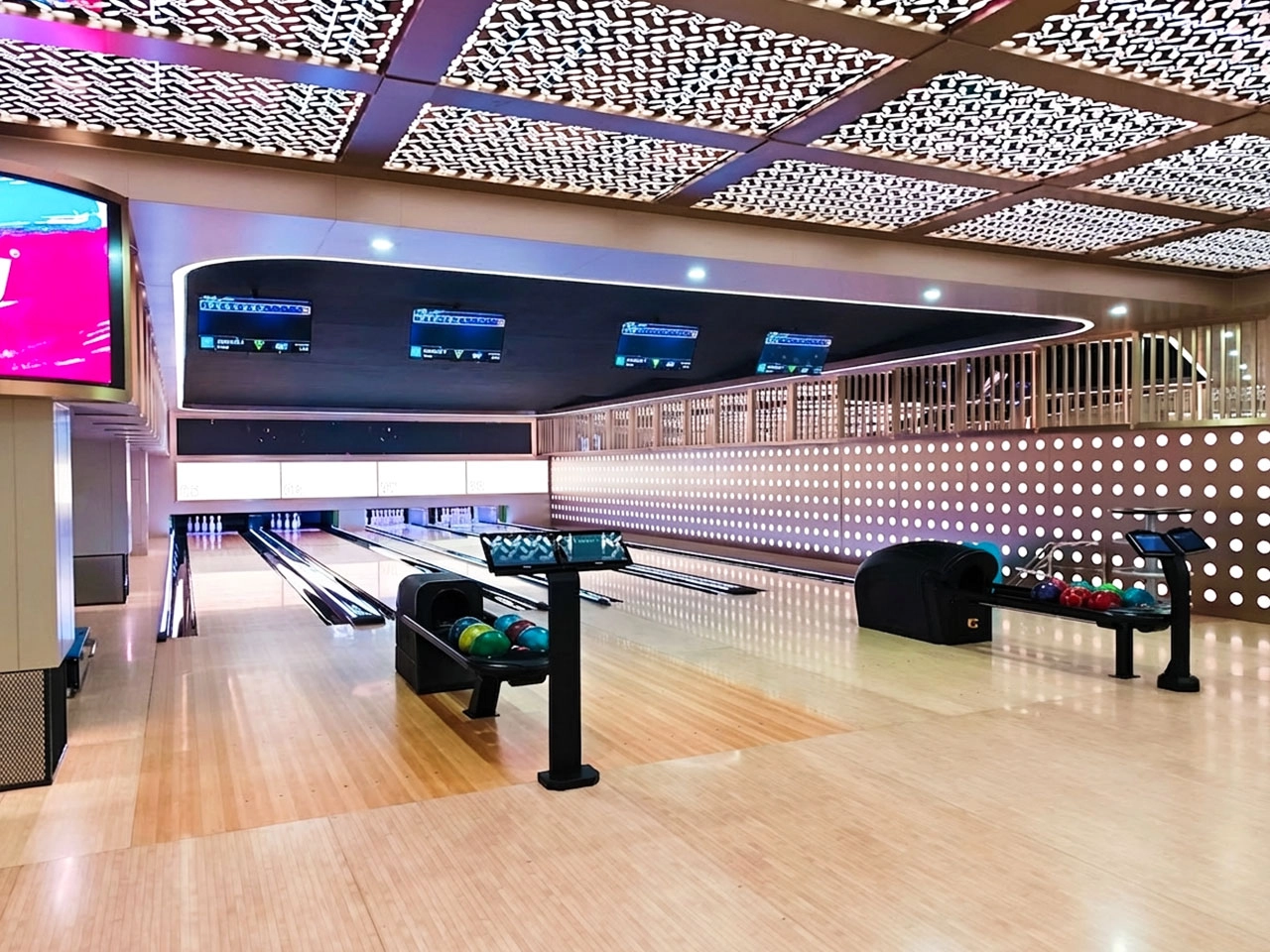
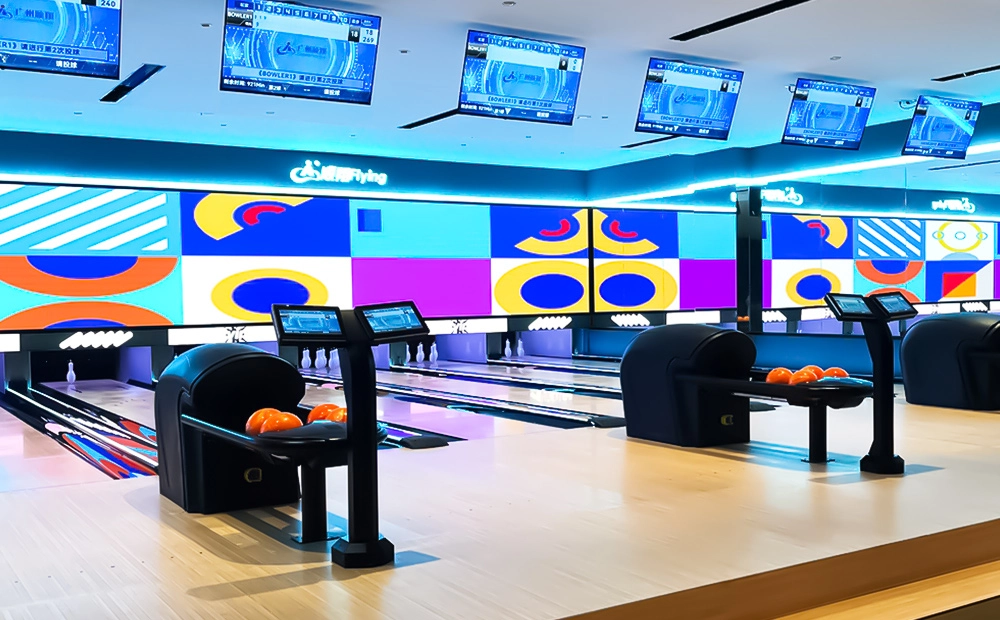
- Bowling lanes
- Player approach area
- Seating area
- Ball return systems
- Bowling equipment area
- Pinsetter space
- Customer circulation
- Service and maintenance access
A well-designed bowling alley layout improves:
- Customer flow
- Operating efficiency
- Player comfort
- Future expansion possibilities
Before deciding the number of lanes, investors should evaluate the complete venue layout rather than only measuring available lane space.
3. Customer Demand and Traffic Expectations
The right number of lanes should match expected customer demand.
Important questions include:
- How many visitors can the venue attract daily?
- Is bowling the main attraction or an additional activity?
- Will the venue host parties or corporate events?
- Is there demand for leagues or competitions?
- What are peak operating hours?
A smaller venue may achieve better results with fewer lanes and higher utilization, while a large commercial center may require more lanes to handle customer volume.
4. Investment and Operating Planning
More lanes generally mean:
- Higher initial investment
- More equipment requirements
- Larger operating space
- Greater maintenance needs
However, more lanes can also provide:
- Higher customer capacity
- More event opportunities
- Greater revenue potential
The best solution is not always the maximum number of lanes.
A successful bowling project balances:
**Investment → Space → Customer Demand → Operating Model**
Recommended Bowling Lane Numbers by Venue Type
Small Boutique Bowling Venue: 2–8 Lanes
Small bowling concepts are becoming popular in:
- Hotels
- Resorts
- Restaurants
- Bars
- Boutique entertainment venues
These venues usually focus on:
- Social entertainment
- Casual players
- Family activities
- Food and beverage experiences
A compact bowling setup can provide an attractive experience while using limited space.
Family Entertainment Center Bowling: 6–16 Lanes
FEC projects often combine bowling with other attractions.
A suitable bowling area should support:
- Birthday parties
- Family entertainment
- Group activities
- Casual visitors
The lane quantity should match the overall entertainment center size.
Commercial Bowling Center: 16–32+ Lanes
Traditional bowling centers often require larger lane configurations.
Typical users include:
- League players
- Regular customers
- Corporate events
- Tournament participants
More lanes allow the venue to support higher customer capacity and multiple activities at the same time.
Large Competition Bowling Facility: 32+ Lanes
Competition facilities require additional capacity for:
- Tournament organization
- Multiple groups
- Professional events
- High-volume operation
These projects usually require detailed planning for:
- Lane specifications
- Scoring systems
- Seating
- Player circulation
- Technical requirements
Choosing the Right Bowling System for Your Lane Count
Lane quantity is only one part of bowling center planning. The bowling system should also match the venue type, available space, and target customers.
Standard Bowling System
Standard bowling systems are commonly used for:
- Traditional bowling centers
- Commercial bowling venues
- League-focused facilities
They provide the classic bowling experience expected by regular bowlers.
Medium Bowling System
Medium bowling systems are suitable for venues with limited space.
They can work well for:
- Hotels
- Resorts
- Social entertainment venues
- Smaller indoor attractions
Compared with full-size bowling, medium bowling requires less space while maintaining an engaging bowling experience.
Duckpin Bowling System
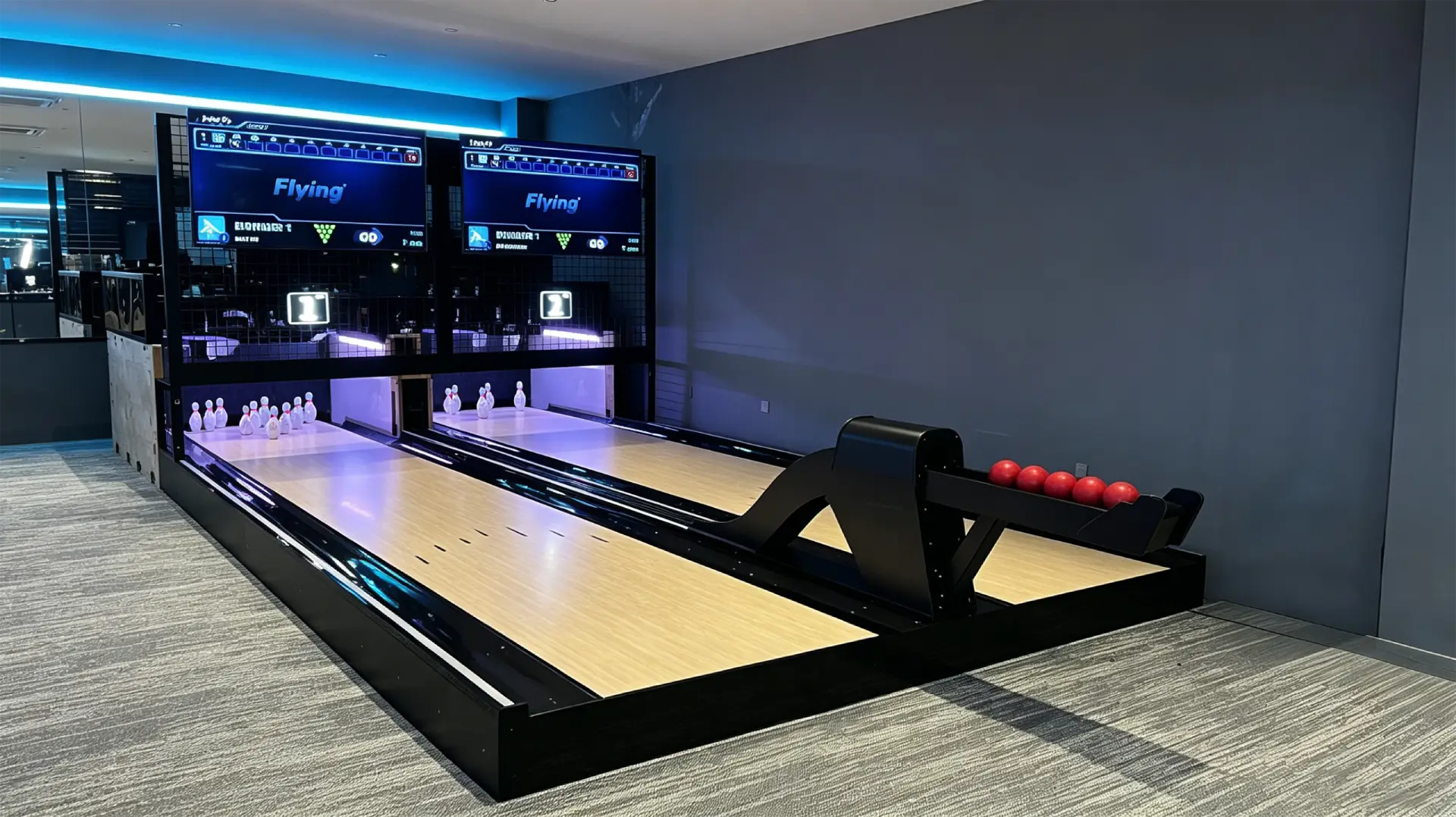
Duckpin bowling systems are designed for compact entertainment environments.
They are often considered for:
- Bars
- Restaurants
- FECs
- Shopping malls
- Boutique entertainment spaces
Duckpin bowling offers a different playing experience with smaller balls and a compact setup.
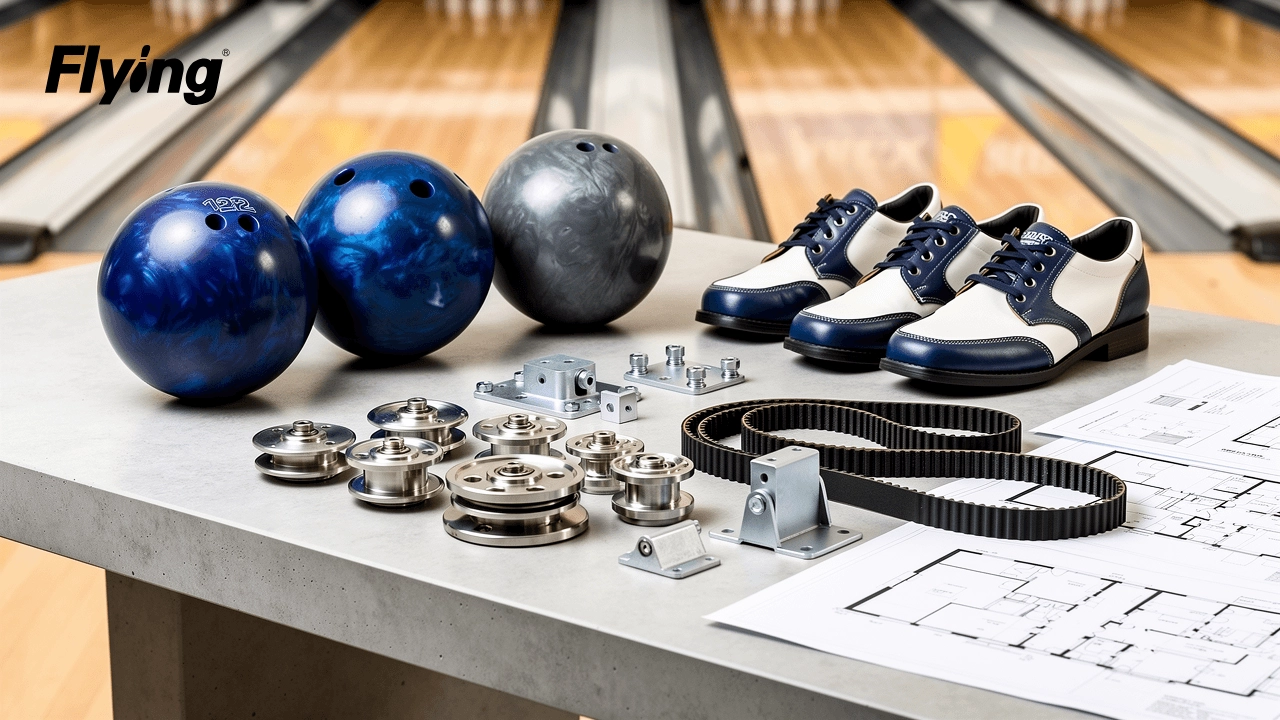
How Bowling Equipment Affects Lane Planning
A complete bowling project requires more than bowling lanes.
Important equipment considerations include:
Bowling Lanes
Lane design affects:
- Player experience
- Venue appearance
- Long-term operation
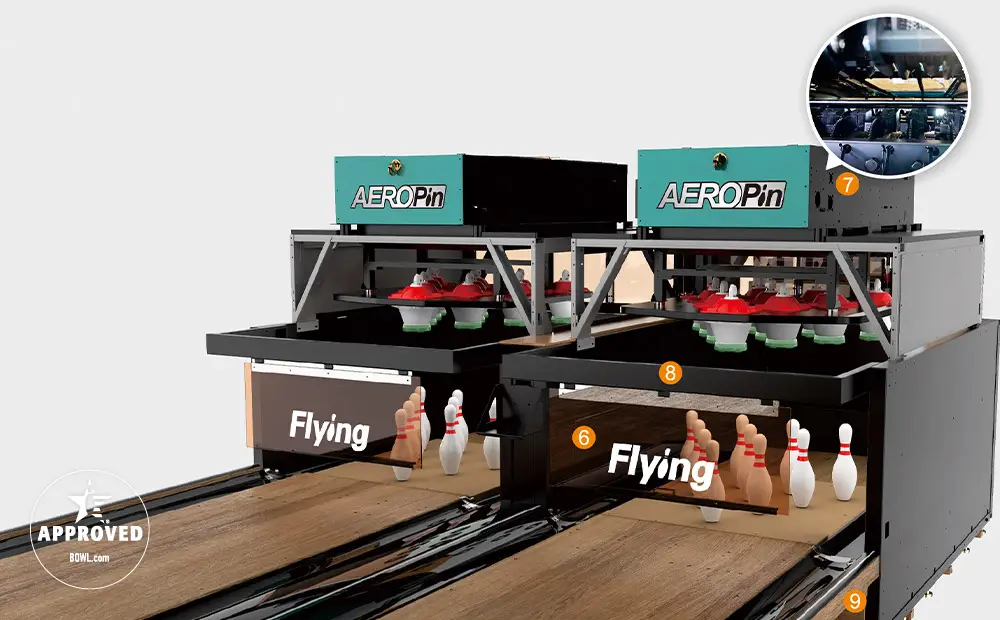
String Pinsetter Systems
String pinsetter technology can provide an alternative solution for commercial projects looking for efficient operation and simplified maintenance.
Bowling Scoring Systems
Automatic scoring improves:
- Customer experience
- Operational efficiency
- Entertainment value
Ball Return Systems
A suitable ball return solution improves player flow and venue usability.
Need Help Planning Your Bowling Center?
Choosing the right number of bowling lanes is the first step in creating a successful bowling project.
A complete bowling center plan should also consider:
- Venue dimensions
- Bowling system selection
- Equipment configuration
- Layout design
- Installation requirements
- Customer experience
- Future business goals
Flying Bowling supports commercial bowling projects with:
- Bowling equipment solutions
- Lane configuration guidance
- Bowling system recommendations
- Project planning support
- Installation guidance
- Technical assistance
If you are planning to build a bowling center, share your venue size, location, business model, and expected customer type. Flying Bowling can help evaluate a suitable bowling solution.
**Explore our bowling center planning solutions →**
Frequently Asked Questions
How many lanes should a small bowling alley have?
A small bowling venue may use 2–8 lanes depending on available space, business model, and target customers. Hotels, resorts, restaurants, and boutique entertainment venues often choose compact lane configurations.
How many lanes does an FEC bowling center need?
Many family entertainment centers use 6–16 bowling lanes, but the ideal number depends on the overall attraction mix, venue size, customer demand, and operating strategy.
What is the minimum space needed for a bowling alley?
The required space depends on lane quantity, bowling system type, seating requirements, equipment area, and overall layout design.
Is 4 lanes enough for a commercial bowling venue?
A 4-lane bowling setup can work for smaller commercial entertainment venues, hotels, resorts, and social bowling concepts. Larger bowling centers usually require more lanes to support higher traffic and events.
Should I choose standard bowling, medium bowling, or duckpin bowling?
The best choice depends on venue size, customer profile, available space, and business goals. Standard bowling suits traditional centers, while medium and duckpin bowling systems can be effective solutions for compact entertainment spaces.
How do I start planning a bowling center?
Start by evaluating:
1. Venue size
2. Target customers
3. Expected traffic
4. Lane quantity
5. Bowling system
6. Equipment requirements
7. Installation and operation planning
A professional bowling equipment supplier can help develop a suitable project plan.
Conclusion
The right number of bowling lanes depends on more than available space. Successful bowling projects combine venue planning, customer demand analysis, equipment selection, and operational strategy.
Whether you are developing a small hotel attraction, an FEC entertainment zone, or a full commercial bowling center, choosing the right lane configuration is the foundation of a successful project.
Flying Bowling provides bowling equipment solutions and project support for commercial venues worldwide, helping partners create practical bowling experiences for different markets and business models.


Flying Bowling
Flying Bowling
Flyingbowling
Flyingbowling
Flyingbowling