

Bowling Alley Operating Costs: Expenses and Maintenance Guide
Running a bowling center involves far more than paying rent and keeping the lights on. Bowling alley operating costs typically include labor, utilities, equipment maintenance, lane care, technology, insurance, marketing, and any food, beverage, or entertainment services offered by the venue. The final monthly expense depends on lane count, facility size, operating hours, local labor and energy prices, equipment configuration, and the overall business model.
For owners and investors, understanding these recurring expenses before opening is essential. Equipment that costs less initially may require more maintenance over time, while a more efficient system may reduce technician hours, spare-parts consumption, energy use, or unexpected downtime. A realistic operating budget should therefore consider both visible monthly expenses and the long-term cost of keeping the bowling equipment reliable.
What Are the Main Bowling Alley Operating Costs?
Most bowling centers have the same major expense categories, although their relative importance varies by business model.
| Operating Cost | Typical Expenses |
|---|---|
| Staffing | Front desk, technicians, management, cleaning and food service |
| Facility | Rent, property expenses, repairs, security and waste management |
| Utilities | Electricity, HVAC, lighting, water and kitchen equipment |
| Equipment maintenance | Pinsetters, ball returns, scoring systems and replacement parts |
| Lane maintenance | Cleaning, conditioning and consumables |
| Technology | Scoring, POS, reservations, network services and software |
| Insurance and administration | Insurance, permits, payment processing and accounting |
| Marketing | Advertising, promotions, leagues and event acquisition |
Traditional bowling centers may devote more resources to technical maintenance and lane conditioning, while family entertainment centers with restaurants, bars, and arcades often have higher staffing and inventory expenses.
This is why bowling center operating costs should always be evaluated according to the actual facility rather than copied from another venue.
Staffing and Labor Costs
Labor is often one of the largest recurring expenses in a bowling business. Depending on the operation, a center may require front-desk employees, lane attendants, technicians, cleaners, food service staff, event coordinators, and management.
Staffing requirements are influenced by:
- Number of lanes and opening hours
- Food and beverage operations
- Number of entertainment attractions
- Equipment automation
- Maintenance requirements
- Customer traffic patterns
Equipment reliability can also affect labor costs. Systems that require frequent adjustment or technical intervention may increase the need for specialist staff, while reliable and easier-to-maintain equipment can reduce some routine service requirements.
Operators should budget beyond basic wages and include employee training, overtime, payroll-related expenses, and seasonal staffing needs.
Facility, Rent and Utility Expenses
A bowling center requires considerable floor space, making rent or property expenses an important part of the operating budget. Location, building size, parking requirements, and local commercial property rates can all affect monthly costs.
Facility expenses may also include building repairs, cleaning, security, waste management, and common-area charges.
Utilities are another major consideration. Electricity may be used by:
- Pinsetter systems
- Ball returns
- Scoring monitors
- Lane and architectural lighting
- HVAC systems
- Kitchen equipment
- Arcade machines
Operating hours have a direct impact on consumption. Energy-efficient lighting and equipment shutdown procedures can help control expenses, but equipment decisions should never be based on electricity use alone. Maintenance requirements, reliability, spare-parts availability, and downtime also contribute to total ownership cost.
Bowling Equipment Maintenance Costs
Maintenance is one of the most distinctive components of bowling alley operating costs.
A commercial center may need regular servicing for:
- Pinsetters
- Ball return systems
- Scoring equipment
- Sensors and controllers
- Lane maintenance machines
- Mechanical and electrical wear parts
Preventive maintenance is generally more effective than waiting for a failure during operating hours. An unexpected breakdown can create more than a repair bill: it may also reduce lane availability, interrupt reservations, and negatively affect the customer experience.
Operators should therefore create a preventive maintenance schedule and maintain a basic inventory of frequently used spare parts.
When planning a new facility, equipment purchase price should also be evaluated alongside future service requirements. Understanding what is included in the initial package can help investors compare upfront and long-term costs more accurately. Our guide to turnkey bowling equipment solution cost explains how complete equipment packages are typically structured.
String vs. Free-Fall Pinsetter Operating Costs
Pinsetter selection can significantly affect long-term maintenance requirements.
Traditional free-fall pinsetters contain numerous mechanical components and require regular inspection, adjustment, lubrication, and replacement of wear parts. Their actual operating cost depends on equipment condition, usage intensity, technician availability, and spare-parts pricing.
String pinsetters generally use fewer moving components, which can reduce routine mechanical maintenance and technician intervention. However, actual ownership costs still vary by model, supplier, local service availability, and operating conditions.
Operators should compare pinsetter systems using several factors:
- Initial purchase price
- Routine maintenance requirements
- Spare-parts availability
- Technician requirements
- Energy consumption
- Expected downtime
- Service and technical support
Lane Maintenance and Consumables
Bowling lanes require regular cleaning and conditioning to maintain consistent playing conditions and protect the lane surface.
Routine work may include:
- Lane cleaning
- Oil application and conditioning
- Approach inspection
- Gutter inspection
- Lane-machine maintenance
- Replacement of cleaning and conditioning consumables
The required maintenance frequency varies according to customer volume and the type of bowling offered. League and competitive venues may require more controlled lane conditions than entertainment-focused facilities.
Scheduling maintenance during lower-traffic periods helps protect playing quality without unnecessarily reducing lane availability.
Scoring Systems and Technology Costs
Technology is now an essential part of bowling center operations.
Depending on the system, ongoing technology expenses may include:
- Scoring software
- Lane management systems
- POS integration
- Reservation platforms
- Network infrastructure
- Cloud services
- Technical support
- Hardware replacement
Some systems use recurring software or support fees, while others rely more heavily on initial hardware investment. Before choosing a scoring platform, operators should understand whether subscriptions apply, how updates are delivered, whether offline operation is possible, and how replacement components are supported.
Technology may represent a smaller percentage of total expenses than payroll or rent, but system failures can affect multiple lanes simultaneously and disrupt daily operations.
Food, Beverage and Additional Entertainment
Many modern bowling centers generate revenue from more than bowling. Restaurants, bars, party rooms, and arcades can improve customer spending but also introduce additional costs.
Typical expenses include food inventory, kitchen labor, equipment servicing, cleaning supplies, arcade maintenance, transaction fees, and inventory waste.
These costs should not be viewed in isolation. A business area with higher operating expenses may still be valuable if it generates strong margins or improves customer dwell time. Operators should therefore compare each activity's costs with the revenue it contributes.
How Much Does It Cost to Keep a Bowling Alley Operating?
There is no universal monthly operating figure because a four-lane boutique venue and a large family entertainment center have completely different cost structures.
A practical operating budget should begin with actual project variables:
- Lane count and facility size
- Monthly rent or property expense
- Operating hours
- Staffing requirements
- Equipment type and condition
- Preventive maintenance budget
- Local electricity and utility rates
- Technology and software fees
- Marketing requirements
- Food and entertainment operations
| Cost Type | Typical Examples |
|---|---|
| Fixed costs | Rent, management salaries, insurance and recurring service contracts |
| Variable costs | Hourly labor, utilities, maintenance parts, consumables, food inventory and marketing |
This structure gives operators a clearer answer to how much it costs to keep a bowling alley operating and helps determine the monthly revenue required to cover expenses.
How Equipment Choices Affect Long-Term Operating Costs
Equipment decisions made during project development can influence operating costs for many years.
How much routine maintenance does it require?
A low purchase price may become less attractive if the equipment requires frequent technical intervention.
Are replacement parts readily available?
A small failure can cause extended downtime when parts are difficult to obtain.
Can the equipment be serviced efficiently?
Local technician availability and remote technical support can strongly affect maintenance costs.
Can the system support future upgrades?
Scoring systems and other digital equipment may need expansion as customer expectations and facility requirements change.
For new projects, comparing long-term ownership cost is generally more useful than comparing equipment prices alone.
How to Reduce Bowling Alley Operating Costs
Cost reduction should focus on efficiency rather than simply cutting services.
Use preventive maintenance
Regular inspections help identify wear before it develops into a major breakdown.
Track equipment downtime
Frequent failures can reveal equipment or maintenance problems that increase both repair costs and lost revenue.
Optimize staffing
Staff schedules should follow customer traffic rather than remaining identical every day.
Monitor energy use
HVAC, lighting, pinsetters, and entertainment equipment should operate according to actual demand where practical.
Keep maintenance records
Clear service histories help technicians identify recurring problems and plan spare-parts purchases.
Evaluate total cost of ownership
Purchase price, maintenance, energy, labor, parts, and potential downtime should all influence future equipment decisions.
Common Operating Budget Mistakes
One common mistake is budgeting only for visible expenses such as rent, payroll, and utilities while ignoring major repairs, spare parts, technology upgrades, and staff training.
Another is assuming every bowling center has a similar cost structure. Location, equipment, lane count, facility age, and business model can all change the operating budget substantially.
Operators should also avoid postponing preventive maintenance solely to reduce short-term spending. Deferred maintenance can lead to more expensive repairs and greater disruption later.
Final Thoughts
Bowling alley operating costs are shaped by staffing, facility expenses, utilities, equipment maintenance, lane care, technology, and the services offered beyond bowling.
The most effective approach is to build an operating budget around the actual project and evaluate equipment according to long-term ownership cost rather than purchase price alone. Reliable systems, preventive maintenance, realistic staffing, and careful cost tracking can improve operating efficiency without weakening the customer experience.
For investors developing a new bowling center or operators planning an upgrade, evaluating maintenance requirements and operating expenses during the equipment-selection stage can help prevent avoidable costs later. A well-planned bowling facility is not simply the one with the lowest expenses, but the one that understands where its operating budget creates value and where better equipment or management can improve long-term efficiency.
Planning a New Bowling Center or Equipment Upgrade?
Compare bowling equipment configurations, maintenance requirements, and long-term operating considerations before making an investment decision. FlyingBowling can help you plan a solution around your lane count, venue type, and project requirements.
Discuss Your Project →FAQ
1. What are the main bowling alley operating costs?
The main bowling alley operating costs usually include staffing, rent or property expenses, utilities, equipment maintenance, lane care, scoring and management software, insurance, marketing, and any food or entertainment operations. The exact cost structure depends on lane count, venue size, operating hours, local labor rates, equipment configuration, and the type of business model.
2. How much does it cost to keep a bowling alley operating?
There is no single monthly figure that applies to every bowling center. A practical budget should be based on the actual number of lanes, rent, staffing, utility rates, maintenance requirements, software fees, and additional services such as food, beverage, or arcade operations. Separating fixed costs from variable expenses makes monthly budgeting more accurate.
3. What is the biggest ongoing expense for a bowling alley?
For many bowling centers, labor and facility-related expenses are among the largest recurring costs. However, the balance varies by location and business model. Equipment maintenance can also become a significant expense, especially when pinsetters, scoring systems, ball returns, or other systems require frequent repairs or specialist technical support.
4. How does bowling equipment affect long-term operating costs?
Equipment affects operating costs through maintenance requirements, energy consumption, technician needs, spare-parts availability, and potential downtime. A system with a lower purchase price may cost more over time if it requires frequent repairs. Operators should therefore compare total cost of ownership rather than focusing only on the initial equipment price.
5. Are string pinsetters cheaper to operate than free-fall pinsetters?
String pinsetters generally have fewer moving mechanical components, which can reduce some routine maintenance requirements and technician intervention. Free-fall systems may require more regular inspection, adjustment, lubrication, and wear-part replacement. Actual operating costs still depend on the equipment model, usage level, local service support, and spare-parts pricing.
6. How can a bowling center reduce operating costs?
The most effective methods include preventive equipment maintenance, tracking downtime, optimizing staff schedules, monitoring energy consumption, maintaining detailed service records, and keeping commonly used spare parts available. Cost reduction should focus on improving efficiency rather than reducing service quality, because poor maintenance or understaffing can create larger costs later.
7. What operating costs are most often overlooked when planning a bowling center?
Commonly overlooked expenses include major equipment repairs, replacement parts, staff training, scoring software upgrades, lane maintenance consumables, seasonal marketing, payment processing fees, and unexpected facility repairs. Including these less visible expenses in the operating budget helps reduce financial surprises and provides a more realistic picture of long-term business performance.
More Articles
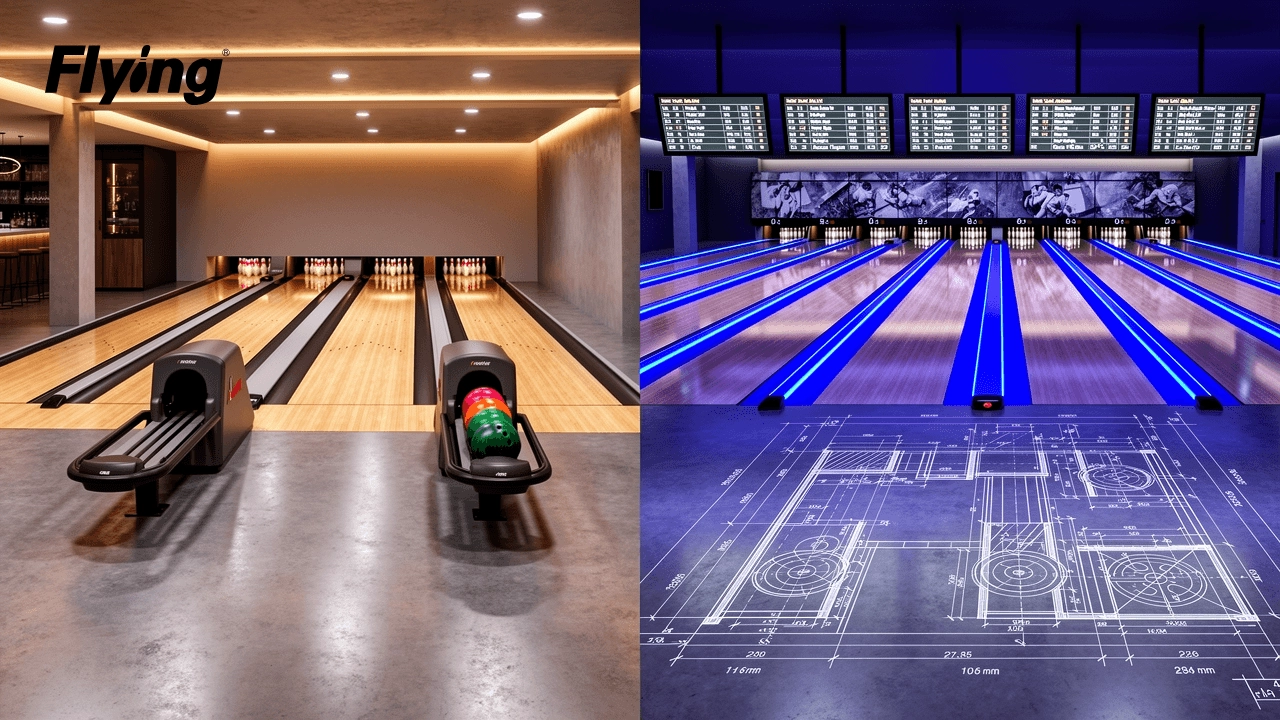

Let’s Build a center Together
Partner With a Trusted Bowling Alley Design, One-Stop Solution Manufacturer.
Flying has successfully built ideal bowling alleys for more than 3,000 customers.
Technical Expert
You may also like our products
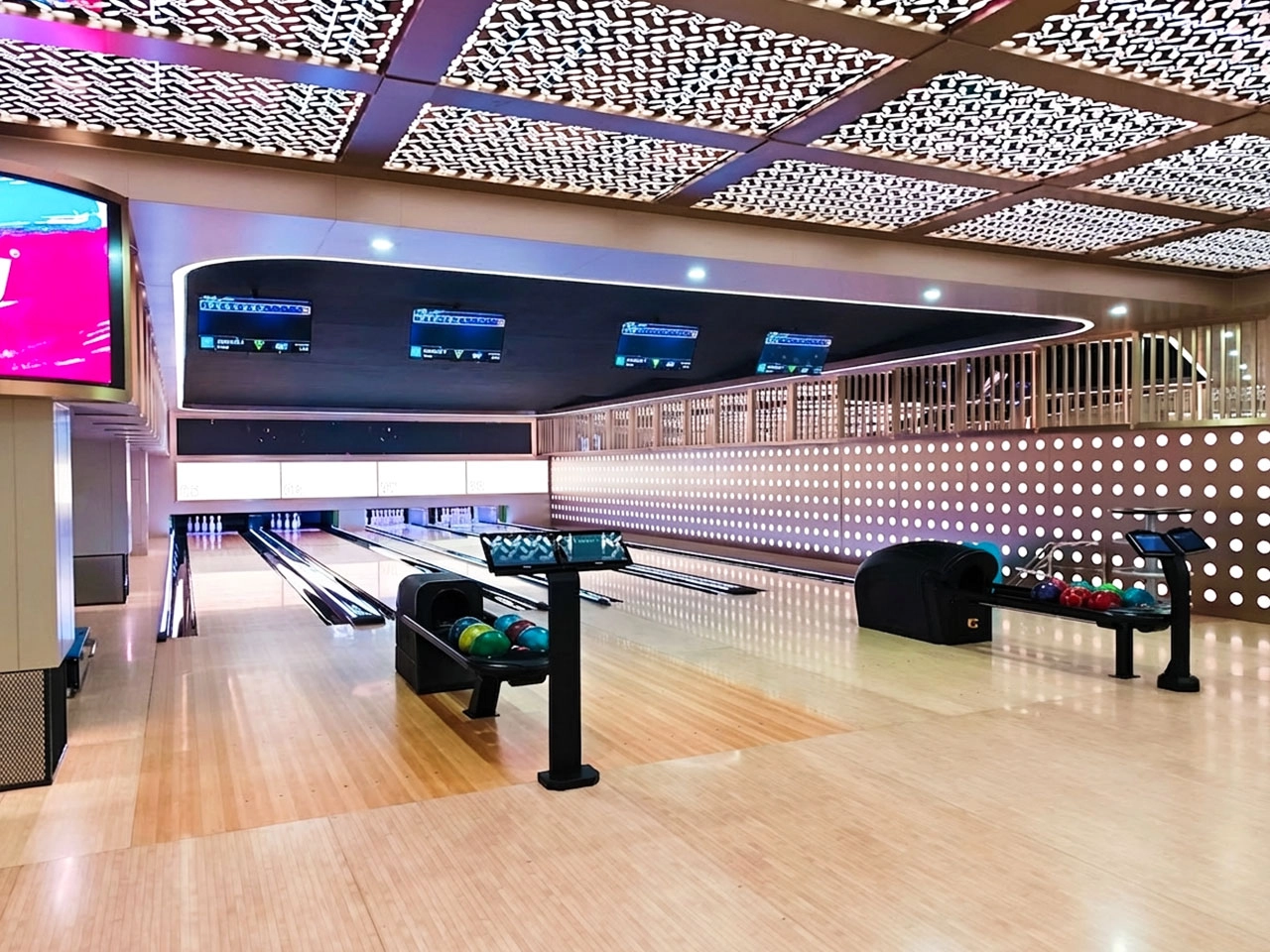
Build a commercial bowling venue with Flying’s complete string pinsetter bowling alley equipment package. The system includes the AEROPIN™ USBC-certified string pinsetter, customizable lanes, automatic scoring, ball return, lane lighting, pins, control hardware, and overseas installation support.
Designed for commercial bowling centers, family entertainment venues, hotels, resorts, bars, and premium private projects, this turnkey bowling system helps operators reduce sourcing complexity and prepare for reliable long-term operation.
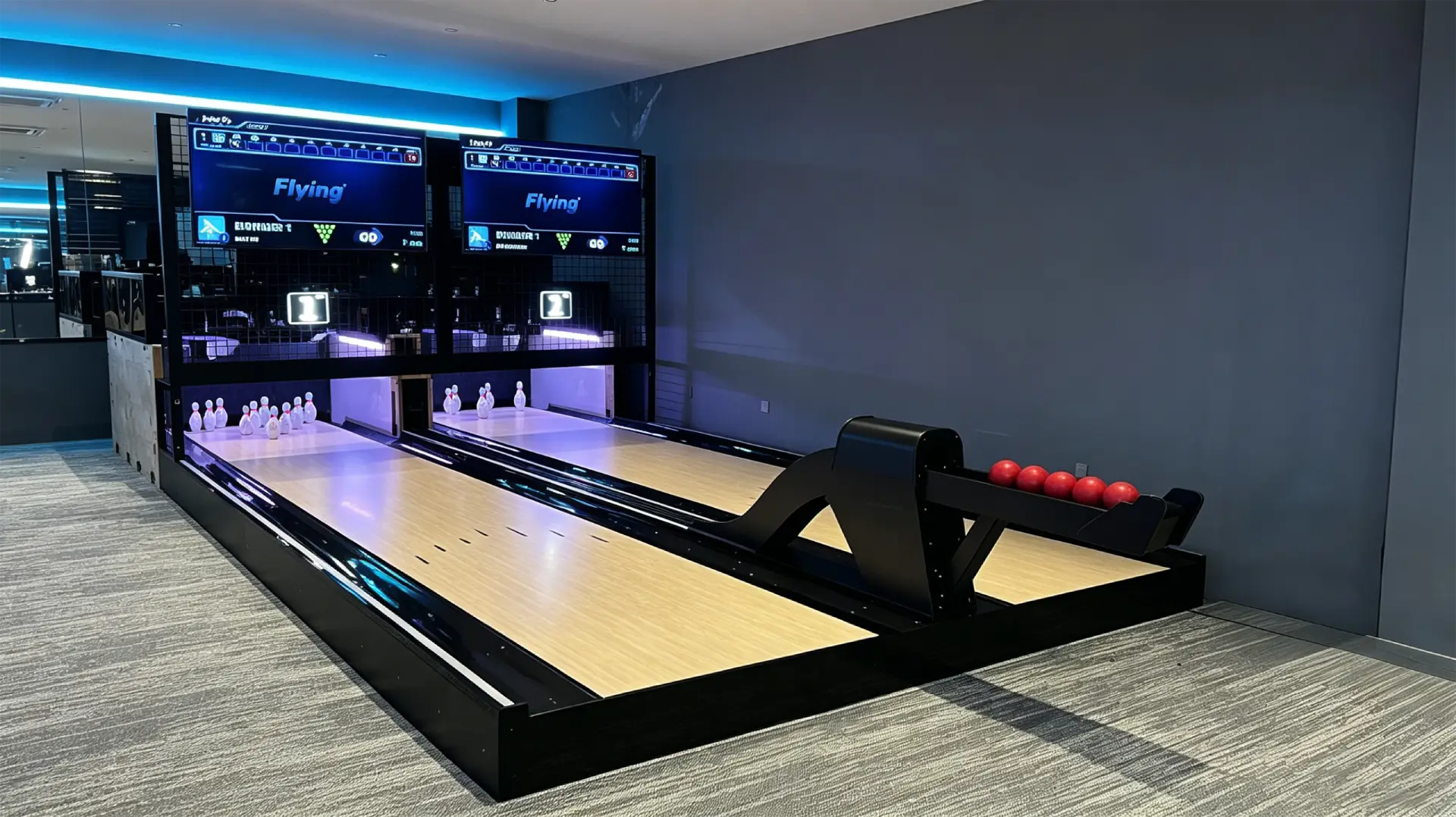
Flying Smart Duckpin Bowling is a compact duckpin bowling equipment system designed for bars, family entertainment centers, hotels, resorts, cinemas, boutique bowling alleys, and social entertainment venues. With a standard 9.13m duckpin bowling lane, 1.25kg lightweight balls, automatic scoring, ball return, LED lighting, and a smart string pinsetter, it creates a fast-paced and easy-to-play bowling experience in a smaller footprint than traditional bowling.
The system is available as a turnkey duckpin bowling package, including lane equipment, a string pinsetter system, scoring hardware, control software, global shipping, installation guidance, and technical support.
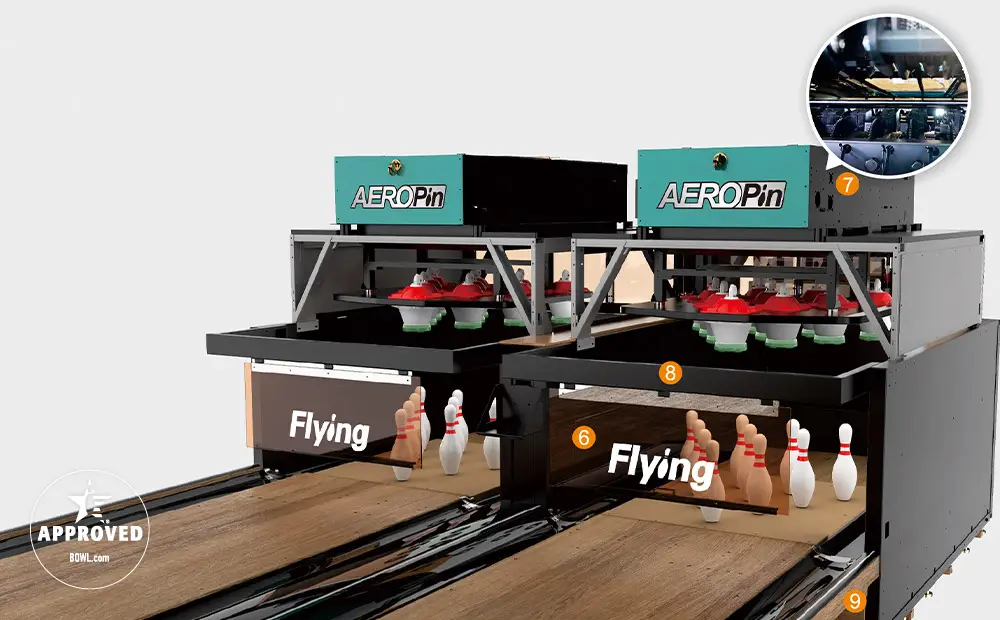
AEROPIN is Flying Bowling’s USBC-certified string pinsetter system for modern commercial bowling centers. Designed for fast pin setting, smooth ball return, low maintenance, and stable daily operation, it helps venue operators build league-ready and entertainment-focused bowling projects with confidence.
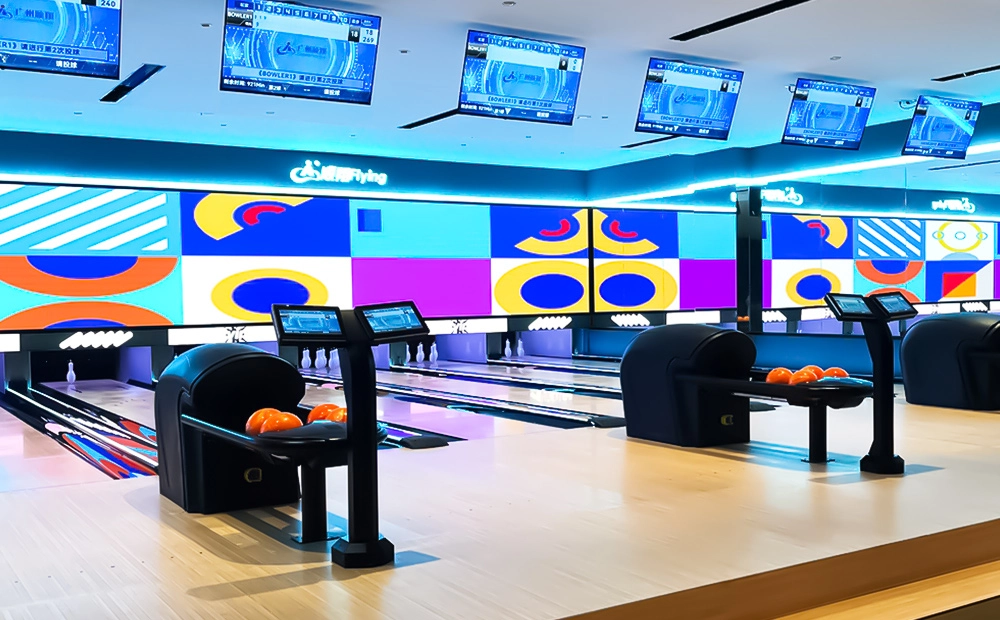
Flying Social Medium Bowling is a compact medium bowling equipment system designed for bars, cafes, family entertainment centers, community leisure venues, hotels, resorts, and small indoor entertainment spaces. With customizable lane lengths from 9.6m to 18m, small balls, lighter pins, string pinsetter technology, ball return, and automatic scoring, it creates an easy-to-play social bowling experience for players of different ages and skill levels.
Compared with full-size standard bowling, medium bowling requires less space and offers a more casual, interactive format. It is a practical choice for venues that want to add a bowling attraction without building a full commercial bowling alley.
Contact Flying
Start Your Custom Bowling Alley Project
If you contact us now for more details, we can provide you with a custom bowling alley service. Our service team will get back to you within 24 hours normally!
© 2026 Flying BOWLING. Designed by gooeyun.
FOLLOW US:

Flying Bowling
Flying Bowling
Flyingbowling
Flyingbowling
Flyingbowling