

Mini Bowling Alley Dimensions: Complete Space Planning Guide (2026)
Mini bowling's appeal is its compact footprint — but "compact" still has precise numbers. A single FCMB lane is 12 meters long and 1.5 meters wide. Four lanes need a minimum room of 15.3 m × 11 m. Ceiling clearance can be as low as 2.8 meters. This guide gives you every dimension you need for space planning: lane specs, total room requirements by lane count (2 to 12 lanes), floor and electrical requirements, and three real venue layout scenarios showing how the numbers work in practice.
- 1. FCMB Mini Bowling: Core Lane Dimensions
- 2. Full Room Requirements by Lane Count
- 3. Floor, Ceiling, and Structural Requirements
- 4. Electrical Requirements
- 5. How Mini Bowling Dimensions Compare to Other Formats
- 6. Space Planning Scenarios: Real Venue Layouts
- 7. FAQ: 8 Questions About Mini Bowling Dimensions
- Plan Your Space with Flying's Project Team
-
Before you order equipment or sign a lease, you need one thing above everything else: accurate dimension data. Mini bowling is one of the most space-efficient commercial entertainment formats available, but "space-efficient" still has precise requirements — and getting them wrong before construction starts is an expensive mistake.
This guide gives you every number you need: lane dimensions, room requirements by lane count, floor and ceiling specifications, electrical requirements, and how mini bowling compares to other formats in terms of footprint.
All dimensions reflect Flying Bowling's FCMB (Flying Cute Mini Bowling) commercial specifications — the standard for commercial mini bowling installations across 40+ countries.
-
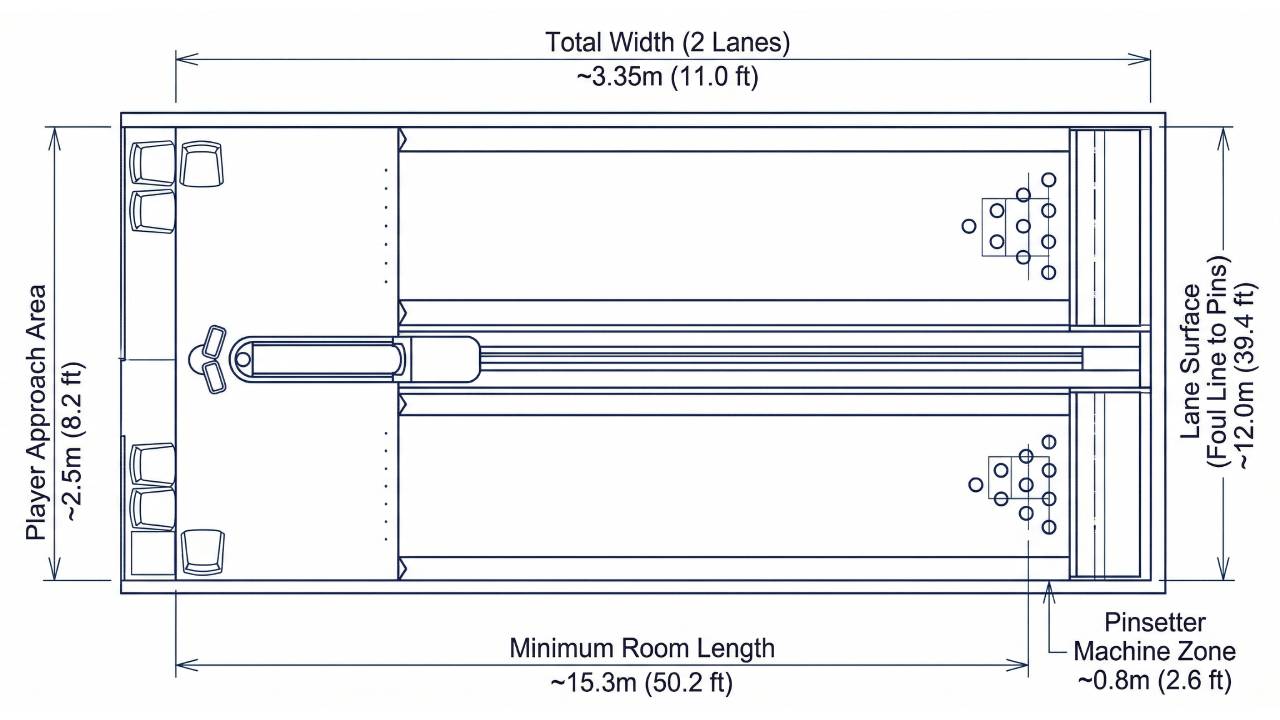
1. FCMB Mini Bowling: Core Lane Dimensions
The Lane Itself
The Flying FCMB commercial mini bowling system uses a fixed 12-meter lane length. This is the standard for commercial mini bowling — it is not customizable, unlike some medium bowling formats.
| Dimension | Metric | Imperial |
|---|---|---|
| Lane length (foul line to headpin) | 12.0 m | 39.4 ft |
| Approach area (behind foul line) | 2.5 m minimum | 8.2 ft minimum |
| Pin deck area (beyond headpin) | 0.8 m | 2.6 ft |
| Total room length (minimum) | 15.3 m | 50.2 ft |
| Lane width (single lane, incl. gutters) | 1.5 m | 4.9 ft |
| Ball return channel width | 0.35 m | 1.1 ft |
| Total width per lane pair (2 lanes + 1 return) | 3.35 m | 11.0 ft |
Recommended vs. minimum: The 15.3-meter minimum room length gives players a functional approach area. For a comfortable, premium playing experience, allow at least 16–17 meters total room length, which provides a 3.0–3.5 meter approach area. Players with a longer run-up produce a better playing experience and the venue feels less cramped.
Ball Specifications
| Specification | Value |
|---|---|
| Ball weight | 1.25 kg (2.75 lbs) |
| No finger holes | Correct — palm grip only |
| Ball diameter | Approximately 12–13 cm (4.7–5.1 in) |
| Material | Hard rubber composite |
The absence of finger holes is a defining feature of commercial mini bowling balls — and a deliberate design decision. It eliminates the fitting barrier that excludes young children from standard Tenpin bowling, removes the safety risk of finger entrapment, and allows players of any hand size to participate without assistance. A player who has never bowled before can pick up a mini bowling ball and compete within their first delivery.
Pin Specifications
| Specification | Value |
|---|---|
| Pin count | 10 pins in standard triangular formation |
| Pin height | Approximately 24 cm (9.4 in) — scaled to lane |
| Pin material | Synthetic composite |
| Pin formation width | Scaled proportionally to lane width |
| Formation depth | Standard triangle: 4 rows (1-2-3-4) |
2. Full Room Requirements by Lane Count
This is the section most venue operators need first: how much total room space do you need for a given number of lanes, including all the area required for players, staff, and basic seating?
Minimum vs. Recommended Room Area
| Lane Count | Min. Room Length | Min. Total Width | Min. Floor Area | Recommended Floor Area |
|---|---|---|---|---|
| 2 lanes | 15.3 m (50 ft) | 6.7 m (22 ft) | ~102 sqm | ~130–145 sqm |
| 4 lanes | 15.3 m (50 ft) | 10.1 m (33 ft) | ~154 sqm | ~190–215 sqm |
| 6 lanes | 15.3 m (50 ft) | 13.4 m (44 ft) | ~205 sqm | ~255–285 sqm |
| 8 lanes | 15.3 m (50 ft) | 16.7 m (55 ft) | ~256 sqm | ~315–355 sqm |
| 12 lanes | 15.3 m (50 ft) | 23.4 m (77 ft) | ~358 sqm | ~440–490 sqm |
How "recommended" is calculated: Minimum area covers the lane footprint and a basic 60cm player circulation corridor. Recommended area adds: seating for waiting players (approximately 0.5 sqm per seat, 2 seats per active lane), ball storage racks, adequate approach lighting, and a 1-meter front service corridor. For FEC installations where mini bowling is one of several attractions, minimum area is often adequate because players flow in and out. For standalone or premium mini bowling venues, recommended area delivers a meaningfully better experience.
Width Calculation Logic
The 3.35-meter width per lane pair (2 lanes sharing one ball return) is the standard configuration. If you're planning a single odd number of lanes — say, 3 or 5 — the last lane gets its own dedicated ball return, adding approximately 1.85 meters of width for that lane rather than the 1.675 meters per lane in a paired configuration.
Simple formula: For an even number of lanes: Total width = (Lane count ÷ 2) × 3.35 m + perimeter clearance (allow 0.5 m each side)
3. Floor, Ceiling, and Structural Requirements
Floor Requirements
- Flatness tolerance: This is the single most critical structural requirement for mini bowling. The lane surface must be installed on a base that is level within ±3 mm over the full 12-meter length. A gradient of even 5 mm over 12 meters is perceptible to players — the ball will curve toward the low side of the lane, producing a frustrating and unfair playing experience.
- Recommended base: Concrete slab, minimum 100 mm thickness. Most commercial building concrete floors meet this requirement without modification.
- Timber/suspended floors: Can work if the structural loading capacity is confirmed (minimum 200 kg/sqm) and the floor is level within tolerance. A structural assessment is recommended before ordering equipment for timber floor installations.
- Leveling options: If your existing floor is within 8–10 mm of level, self-leveling compound ($15–$25 per sqm applied) brings it within tolerance before lane installation. If it's further out of level, a screed layer is required.
- Floor surface under and around lanes: The lane panels themselves are supplied as part of the equipment. You need to specify the approach area surface separately — a smooth, low-friction surface (vinyl, sealed concrete, or commercial carpet) that allows players to slide slightly during delivery.
Ceiling Height
| Requirement | Measurement | Notes |
|---|---|---|
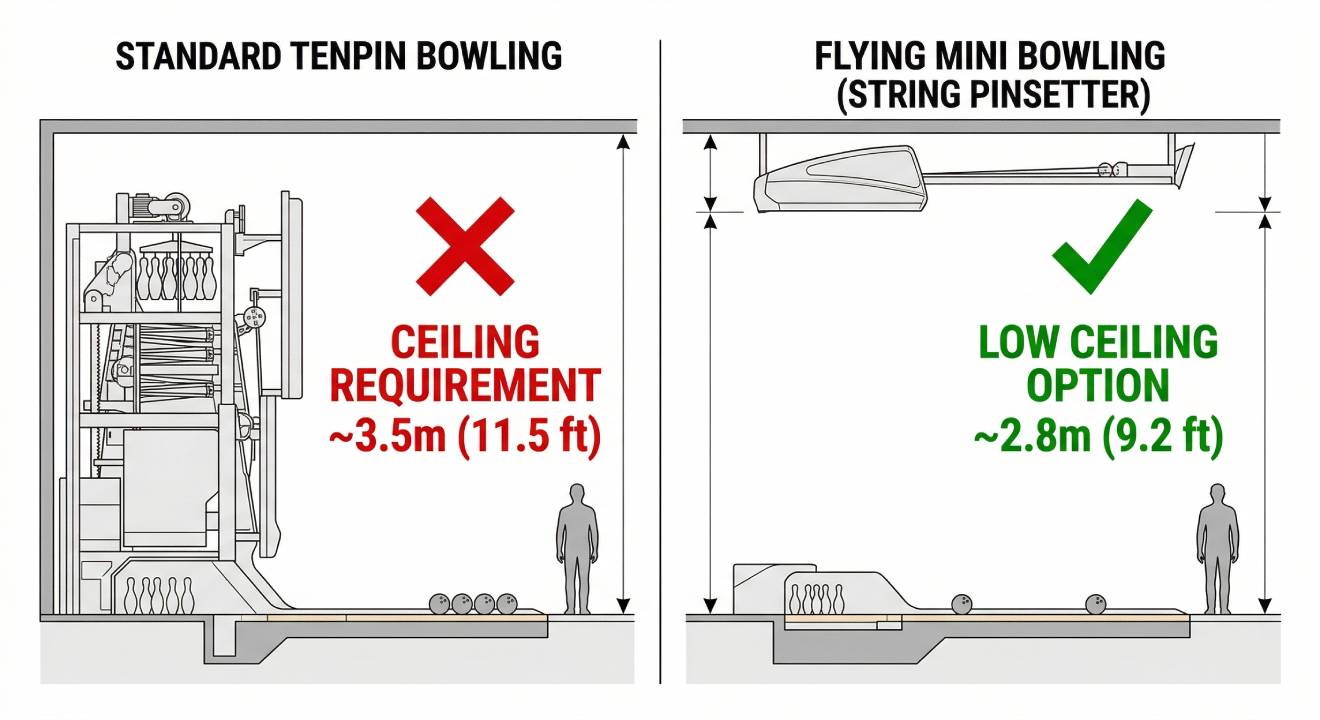
| Absolute minimum clear height | 2.8 m (9.2 ft) | Pinsetter mechanism requires this clearance |
| Recommended clear height | 3.2–3.5 m (10.5–11.5 ft) | Allows overhead scoring displays and lighting |
| Optimal for UV/glow bowling | 3.5 m+ | Better atmosphere and display visibility |
Unlike Standard Tenpin (which requires 3.5 m minimum), mini bowling's lower pin height and smaller overhead mechanism allow a 2.8 m ceiling — a meaningful advantage for venues in existing buildings with lower floor-to-ceiling heights.
Structural Loading
The combined weight of lane panels, pinsetter mechanism, and typical player load across a 4-lane mini bowling setup is approximately 600–800 kg distributed over the lane area. Standard commercial concrete slab construction typically handles this comfortably. For upper floor installations (mezzanines, second floors), confirm load capacity with a structural engineer before proceeding.
4. Electrical Requirements
| Requirement | Specification |
|---|---|
| Supply per lane | 220V / 10A dedicated circuit |
| Circuit type | Single phase |
| 4-lane total minimum | 40A supply to the zone |
| 8-lane total minimum | 80A supply to the zone |
| Additional for scoring displays | 5–10A per scoring terminal |
| Lighting (glow bowling option) | Additional 15–30A for UV lighting rig |
- Why dedicated circuits matter: Each lane's pinsetter motor draws current during the reset cycle. Shared circuits cause voltage drops that can trigger thermal protection on adjacent lane motors — resulting in the most common electrical-related fault: lanes shutting down during peak play periods.
- Earthing/grounding: Ensure adequate earthing for all equipment circuits. Flying's systems include built-in surge protection, but a properly earthed installation is the first layer of protection against power quality issues that are particularly common in some emerging markets.
- Power quality: In markets with unstable power supply (common in parts of Africa, South and Southeast Asia), a voltage stabilizer or UPS for the scoring system electronics is recommended. The pinsetter motors are tolerant of moderate voltage variation; the scoring computers are less so.
5. How Mini Bowling Dimensions Compare to Other Formats
Understanding where mini bowling sits relative to other formats helps you make the right choice for your available space.
| Format | Lane Length | Total Room Length | Width per Lane | Min. Area (8 lanes) | Notes |
|---|---|---|---|---|---|
| Standard Tenpin | 18.3 m | 26–28 m | 1.8 m | ~600 sqm | Requires pit space below lane |
| Duckpin (FSDB) | 9.2 m | 13–14 m | 1.5 m | ~210 sqm | Customizable length |
| Mini Bowling (FCMB) | 12.0 m | 15–16 m | 1.5 m | ~260 sqm | Fixed length, no pit |
| Children's Bowling | ~4.3 m | 7–8 m | 0.9 m | ~85 sqm | Very light, limited commercial use |
- The key takeaway: Mini bowling requires approximately 43% of the floor area of Standard Tenpin for the same lane count. For a venue with 300 sqm available, Standard Tenpin allows 4 lanes; Mini Bowling allows 8–9 lanes in the same space. More lanes means more simultaneous players, more revenue capacity, and better utilization during peak periods.
- Mini bowling vs. Duckpin: Mini bowling's 12-meter lane is longer than Duckpin's 9.2 meters, but the difference in total room length is only about 2 meters per lane because the approach area requirements are similar. The choice between the two formats is more about audience (Duckpin suits adult social venues; Mini Bowling suits family and children's venues) than about floor area.
6. Space Planning Scenarios: Real Venue Layouts
Scenario 1: Shopping Mall Unit (200 sqm available)
Available space: 15.5 m × 13 m (approximately 200 sqm)
Mini bowling configuration: 6 lanes arranged as 3 pairs
Lane area: 15.3 m × 10.1 m = 154 sqm
Remaining for approach, seating, front desk: 46 sqm
Verdict: Viable with compact seating. 6 lanes generates approximately $3,200–$5,400 monthly lane revenue at 55% utilization ($25/lane/hour, 8 hrs/day, 6 days/week). Best suited to a mall with existing F&B service — revenue diversification in 46 sqm of free space is limited.
Scenario 2: FEC Attraction Addition (130 sqm available)
Available space: 16 m × 8 m (approximately 128 sqm)
Mini bowling configuration: 4 lanes in 2 pairs
- Lane area: 15.3 m × 6.7 m = 102 sqm
- Remaining for seating and circulation: 26 sqm
Verdict: This is the minimum viable commercial configuration. At 4 lanes with existing FEC foot traffic, this setup typically achieves payback in 12–18 months. The limited seating requires that the broader FEC environment provides the social/waiting space.
Scenario 3: Standalone Mini Bowling Venue (400 sqm available)
Available space: 20 m × 20 m (400 sqm)
Mini bowling configuration: 8 lanes in 4 pairs + seating area
- Lane area: 15.3 m × 16.7 m = 256 sqm
- Remaining for seating, front desk, F&B counter, storage: 144 sqm
Verdict: Comfortable configuration with room for a proper waiting/seating area, ball storage, and a small F&B counter. At 8 lanes with a standalone venue, adequate marketing and a diversified revenue strategy (parties, memberships, corporate events) is required to reach sustainable utilization rates.
7. FAQ: 8 Questions About Mini Bowling Dimensions
Q1: What is the standard length of a mini bowling lane?
The standard commercial mini bowling lane (Flying FCMB) is 12 meters (39.4 feet) from the foul line to the headpin. Add 2.5 meters for the approach area and 0.8 meters for the pin deck area behind the pins, and the total room length required is a minimum of 15.3 meters (50.2 feet).
Q2: How wide does a room need to be for 4 lanes of mini bowling?
Four lanes arranged as two pairs (each pair sharing a ball return) requires a minimum width of approximately 10.1 meters (33 feet) for the lane area itself, plus 0.5 meters clearance on each side wall — so a practical minimum room width of about 11 meters. Recommended width is 12–13 meters to allow comfortable seating alongside the lanes.
Q3: What is the minimum ceiling height for mini bowling?
The absolute minimum ceiling height is 2.8 meters (9.2 feet) clear — this is the headroom required for the string pinsetter overhead mechanism. A recommended height of 3.2–3.5 meters allows for overhead scoring displays, better lighting, and a more open atmosphere. If you want to add UV/glow bowling lighting effects, 3.5 meters is the practical minimum for good visual impact.
Q4: Can mini bowling be installed on an upper floor or mezzanine?
Yes, provided the structural loading capacity of the floor is confirmed. The combined equipment and player load across a 4-lane mini bowling setup is approximately 600–800 kg over the lane area. Most commercial mezzanine structures are designed for 400–500 kg/sqm and handle this without modification. A structural engineer assessment is recommended before proceeding with upper-floor installations.
Q5: How much space does each mini bowling lane need?
Per lane: 1.5 meters wide × 15.3 meters long = approximately 23 sqm of lane footprint. However, lanes are always installed in pairs sharing a single ball return, so the effective footprint per lane pair is 3.35 meters × 15.3 meters = approximately 51 sqm for two lanes. Total area per lane (including approach, seating, and circulation) in a practical commercial installation is approximately 30–40 sqm per lane.
Q6: What floor type is required for mini bowling?
The lane panels are supplied as part of the equipment package. What you need to provide is a structurally sound, level base — ideally a concrete slab that is level within ±3 mm over the 12-meter lane length. Timber suspended floors can work if structurally confirmed but require more careful leveling. The approach area surface (where players walk and slide) should be smooth, low-friction flooring — sealed concrete, vinyl, or low-pile commercial carpet all work well.
Q7: How does mini bowling lane length compare to standard bowling?
Standard Tenpin bowling lanes are 18.29 meters (60 feet) from foul line to headpin — 52% longer than mini bowling's 12 meters. The total room length required for Standard Tenpin is 26–28 meters versus 15–16 meters for mini bowling. This means mini bowling fits in spaces where standard bowling is physically impossible — hotel lobbies, shopping mall units, FEC floor additions, and upper-floor entertainment spaces.
Q8: Can mini bowling lanes be installed outdoors or in covered outdoor spaces?
The FCMB system is designed for indoor installation. Covered outdoor installation (e.g., a pergola-covered entertainment terrace) is possible in dry climates with adequate weather protection, but requires: full weatherproofing of the electronic scoring components, humidity control for the lane surface (wood-look synthetic panels can warp in high-humidity environments without climate control), and protection of the pinsetter mechanism from dust and debris. Flying recommends discussing specific outdoor installation requirements with our project team before ordering.
Plan Your Space with Flying's Project Team
If you have floor plans or dimensions ready, Flying's project team will provide a free CAD layout showing how many lanes fit in your space, with recommended seating, approach area, and service corridor positioning.
For space planning and equipment quotation:
→ Submit your venue dimensions for a free layout assessment
Further reading — Mini Bowling topic cluster:
→ Mini Bowling Alley Cost: Complete Breakdown for Commercial Venues (2026)
→ Mini Bowling Alley for Home: What It Actually Takes to Install One
→ View Flying FCMB Mini Bowling product specifications
Flying Bowling has manufactured and installed FCMB mini bowling systems across 40+ countries since 2005. Our project team provides free space planning support for all venue enquiries.
Recommended products
Flying Smart Duckpin Bowling Equipment for Commercial Venues
AEROPIN™ USBC-Certified String Pinsetter System
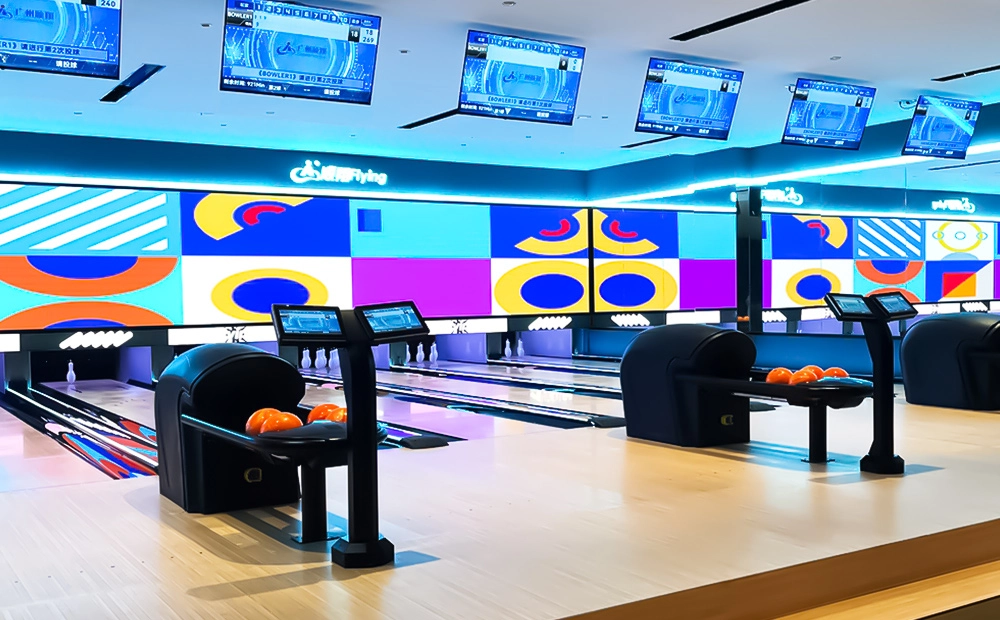
Medium Bowling Equipment for Compact Social Venues
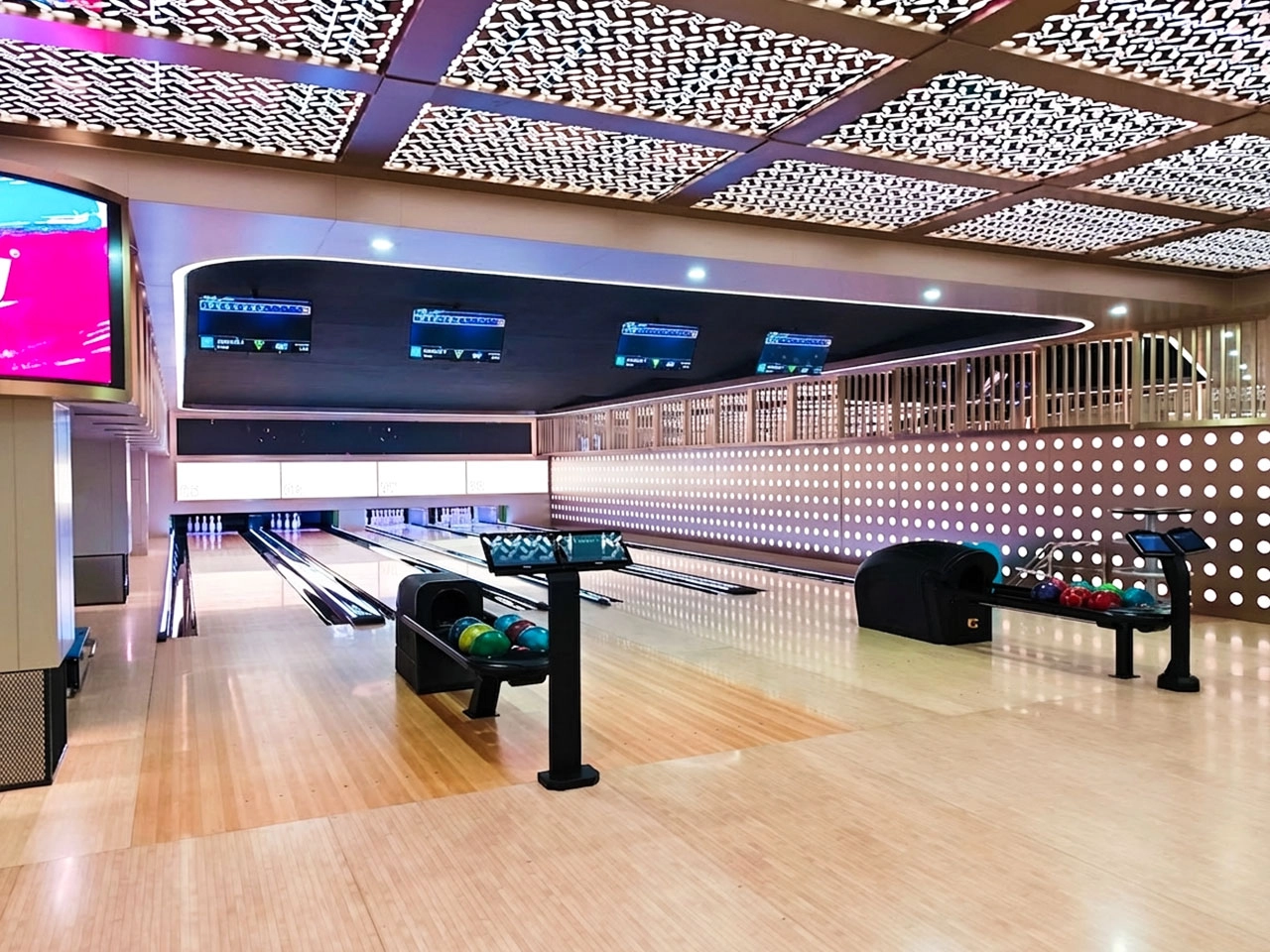
Complete Bowling Alley Equipment Package for Commercial Bowling Centers
You may also like
Build a commercial bowling venue with Flying’s complete string pinsetter bowling alley equipment package. The system includes the AEROPIN™ USBC-certified string pinsetter, customizable lanes, automatic scoring, ball return, lane lighting, pins, control hardware, and overseas installation support.
Designed for commercial bowling centers, family entertainment venues, hotels, resorts, bars, and premium private projects, this turnkey bowling system helps operators reduce sourcing complexity and prepare for reliable long-term operation.
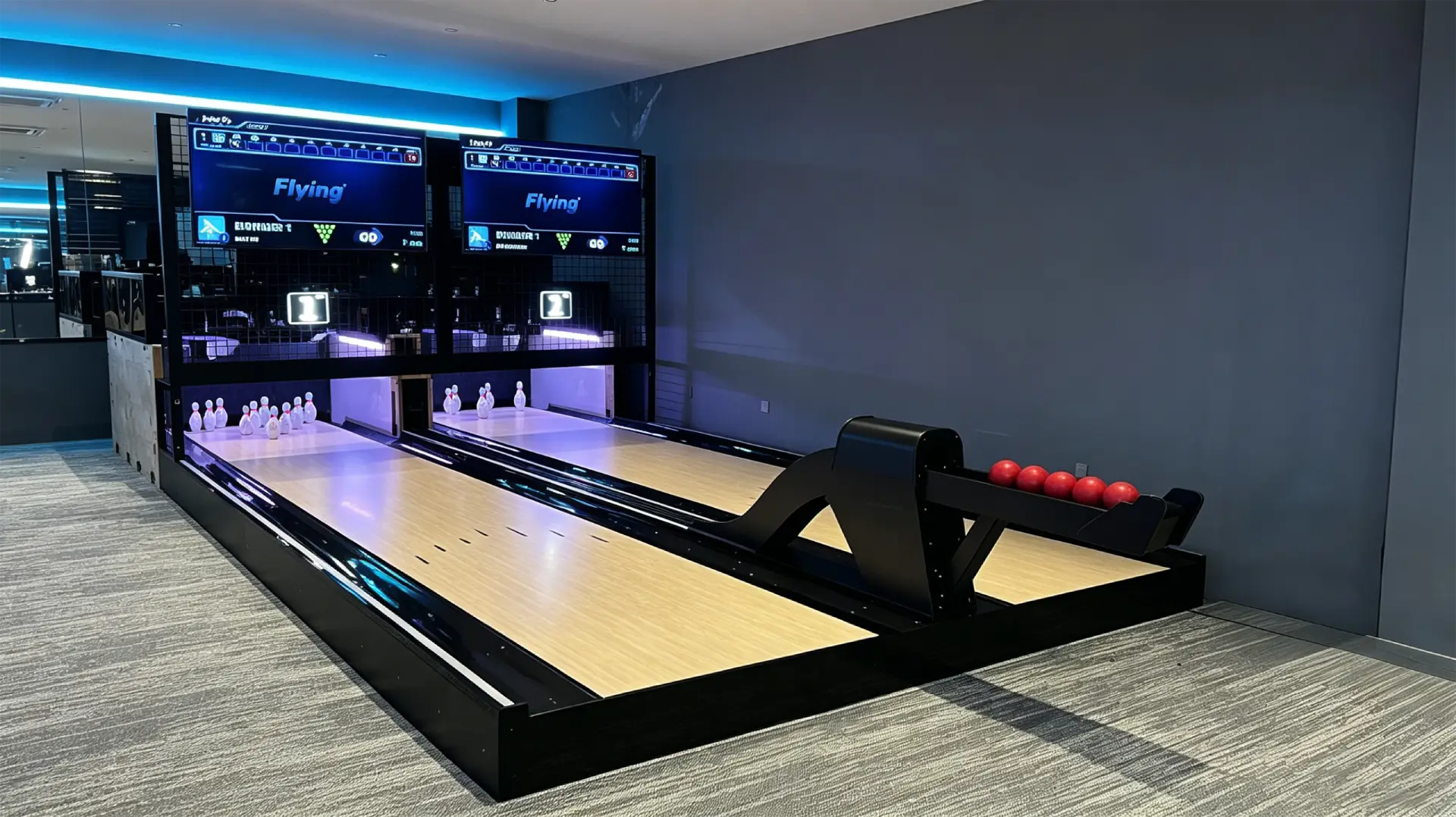
Flying Smart Duckpin Bowling is a compact duckpin bowling equipment system designed for bars, family entertainment centers, hotels, resorts, cinemas, boutique bowling alleys, and social entertainment venues. With a standard 9.13m duckpin bowling lane, 1.25kg lightweight balls, automatic scoring, ball return, LED lighting, and a smart string pinsetter, it creates a fast-paced and easy-to-play bowling experience in a smaller footprint than traditional bowling.
The system is available as a turnkey duckpin bowling package, including lane equipment, a string pinsetter system, scoring hardware, control software, global shipping, installation guidance, and technical support.
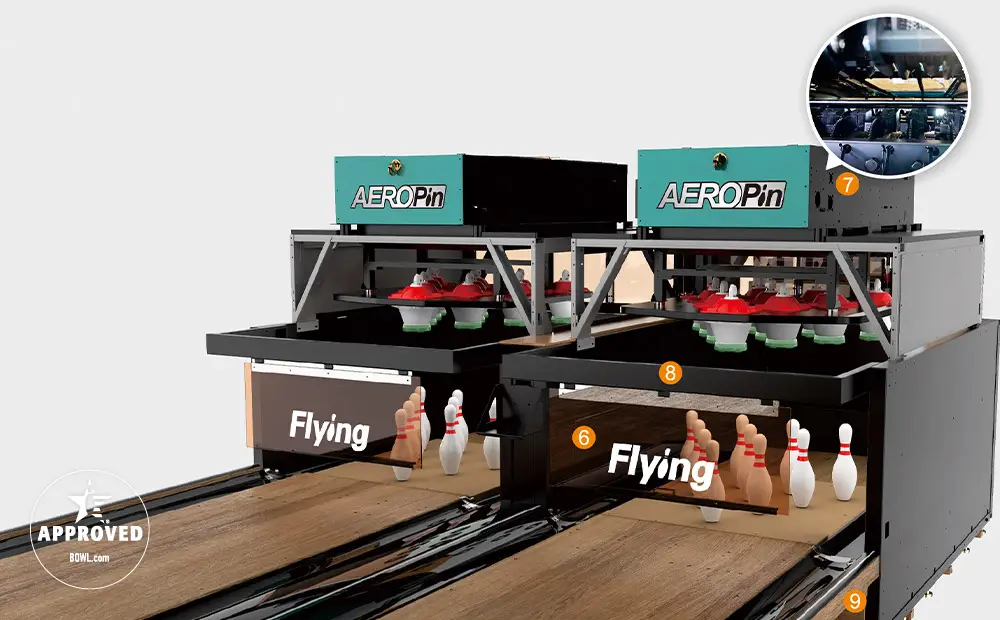
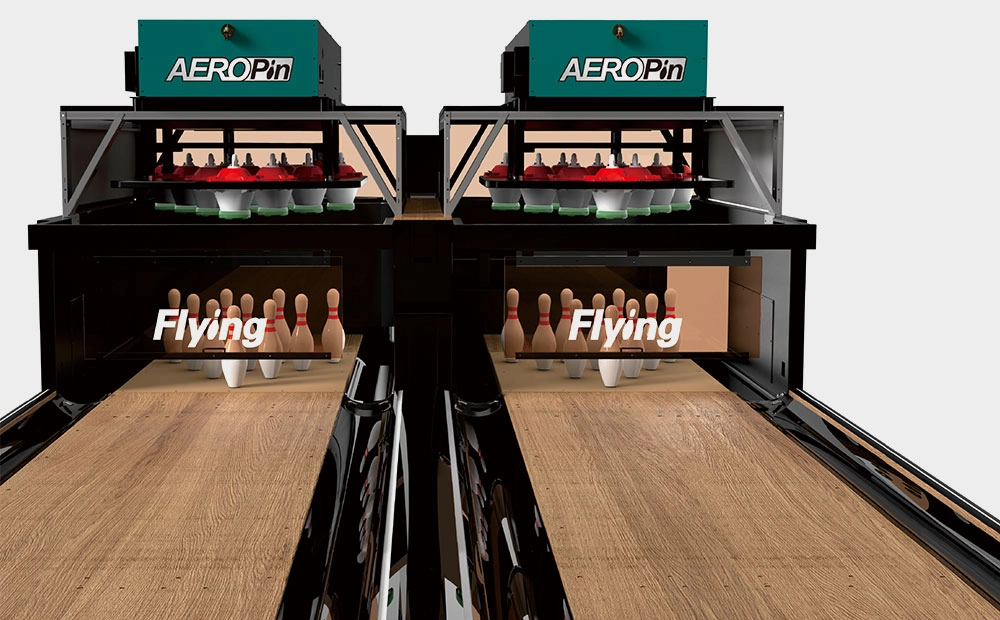
AEROPIN is Flying Bowling’s USBC-certified string pinsetter system for modern commercial bowling centers. Designed for fast pin setting, smooth ball return, low maintenance, and stable daily operation, it helps venue operators build league-ready and entertainment-focused bowling projects with confidence.
Flying Social Medium Bowling is a compact medium bowling equipment system designed for bars, cafes, family entertainment centers, community leisure venues, hotels, resorts, and small indoor entertainment spaces. With customizable lane lengths from 9.6m to 18m, small balls, lighter pins, string pinsetter technology, ball return, and automatic scoring, it creates an easy-to-play social bowling experience for players of different ages and skill levels.
Compared with full-size standard bowling, medium bowling requires less space and offers a more casual, interactive format. It is a practical choice for venues that want to add a bowling attraction without building a full commercial bowling alley.
Contact Flying
Start your bowling alley project
If you contact us now for more details, we can provide you with a custom bowling alley service. Our service team will get back to you within 24 hours normally!
© 2026 Flying BOWLING. Designed by gooeyun.
FOLLOW US:

Flying Bowling
Flying Bowling
Flyingbowling
Flyingbowling
Flyingbowling