

Mini Bowling Alley Cost 2026: Equipment, Space, Installation & ROI Guide
This guide explains how much a commercial mini bowling alley may cost in 2026, including 2-lane, 4-lane and 6-lane equipment planning ranges, shipping, installation, flooring preparation, space requirements, annual operating costs, ROI planning factors and venue-type considerations for FECs, malls, hotels, resorts and compact entertainment venues.
- Quick Answer: How Much Does a Mini Bowling Alley Cost?
- Key Takeaways
- Mini Bowling Alley Cost by Lane Count
- What Is Included in the Equipment Price?
- What Costs Are Usually Not Included?
- Mini Bowling Space Requirements
- Flooring, Electrical, and Site Preparation Costs
- Annual Operating Costs After Opening
- String Pinsetter Maintenance and OpEx Factors
- ROI Planning: How to Estimate Payback Safely
- Example Project Scenarios
- Mini Bowling Cost by Venue Type
- Mini Bowling vs Duckpin vs Standard Bowling Cost
- Commercial vs Home Mini Bowling Cost
- What Flying Bowling’s Mini Bowling Package May Include
- Questions to Ask Before Requesting a Quote
- Common Mini Bowling Budget Mistakes
- Conclusion: Mini Bowling Cost Depends on More Than Lane Count
- Request a Mini Bowling Project Cost Review
- Frequently Asked Questions
Quick Answer: How Much Does a Mini Bowling Alley Cost?
A commercial mini bowling alley can cost about $23,500–$106,000+ for a 2–6 lane setup, depending on lane count, equipment package, shipping, import duties, flooring preparation, installation, seating, décor, and local site conditions.
A 2-lane mini bowling setup may fall in the $23,500–$40,500 planning range. A 4-lane commercial setup may fall in the $42,000–$74,000 planning range. A 6-lane setup may fall in the $61,000–$106,000 planning range.
These ranges are not fixed quotations. Final project cost depends on the equipment model, destination country, freight, customs, local labor, interior fit-out, site preparation, taxes, exchange rate, installation support, and optional features.
For investors, the key question is not only “how much does mini bowling equipment cost?” A better question is, "What is the total project budget required to install, operate, and monetize mini bowling in my venue?"
Key Takeaways
- A commercial mini bowling alley may cost about $23,500–$106,000+ for a 2–6 lane setup.
- A 4-lane mini bowling setup often falls in the $42,000–$74,000 planning range before rent, permits, F&B buildout, and country-specific taxes.
- Equipment cost is only one part of the budget. Freight, import duties, installation, flooring, seating, décor, and local contractor work can materially change total cost.
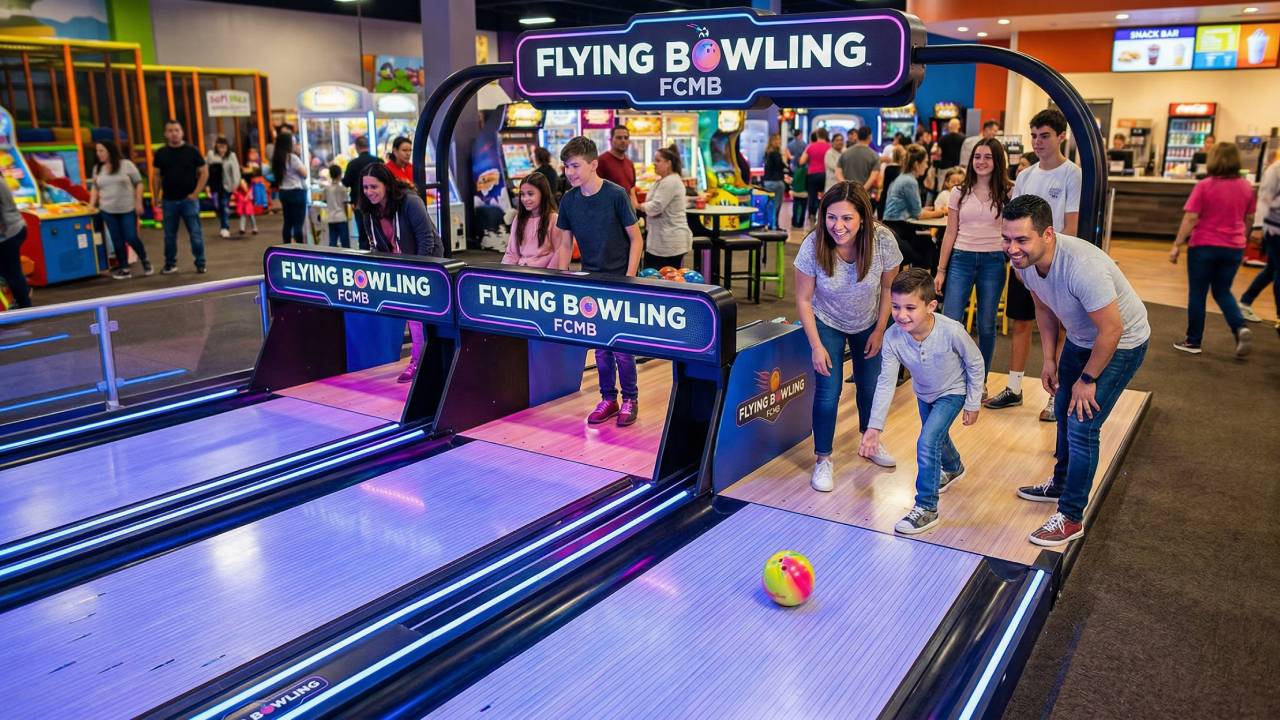
- Mini bowling is often used in family entertainment centers, malls, hotels, resorts, indoor play parks, and compact entertainment venues.
- A 4-lane setup may need about 96 sqm for equipment footprint and about 125–130 sqm after adding player area, seating, and circulation.
- Annual operating cost may include maintenance, string pinsetter service, ball and pin replacement, electricity, staff, insurance, and marketing.
- ROI should be modeled with conservative, base, and optimistic scenarios, not promised as a fixed payback period.
- The best way to estimate cost is to prepare a project-specific quote with lane count, venue type, floor plan, country, installation expectations, and target opening date.
Mini Bowling Alley Cost by Lane Count
Mini bowling cost usually scales by lane count, equipment package, shipping volume, installation scope, and venue fit-out. A 2-lane setup may suit a compact venue or hotel amenity. A 4-lane setup is common for FECs and mall attractions. A 6-lane setup may work for venues expecting higher traffic, parties, or group bookings.
| Cost Category | 2-Lane Setup | 4-Lane Setup | 6-Lane Setup |
|---|---|---|---|
| Equipment (FOB China) | $14,000–$22,000 | $26,000–$42,000 | $38,000–$60,000 |
| Ocean freight + import duties | $2,500–$4,000 | $3,500–$6,000 | $5,000–$8,500 |
| On-site installation + labor | $3,000–$5,000 | $5,000–$9,000 | $7,000–$13,000 |
| Flooring preparation | $2,000–$4,500 | $3,500–$8,000 | $5,000–$11,500 |
| Scoring system + displays | Included in many standard packages | Included in many standard packages | Included in many standard packages |
| Seating + lane décor estimate | $2,000–$5,000 | $4,000–$9,000 | $6,000–$13,000 |
| Total Estimated Investment | $23,500–$40,500 | $42,000–$74,000 | $61,000–$106,000 |
Cost note: These are planning ranges, not fixed quotations. Final cost depends on equipment model, lane count, destination country, freight, customs, installation scope, local contractor work, interior fit-out, tax, exchange rate, and optional features.
2-Lane Mini Bowling Setup
A 2-lane mini bowling setup may be suitable for small FECs, hotel amenities, resort activity rooms, kids’ play zones, compact entertainment corners, private club entertainment areas, and small mall attractions.
A 2-lane setup has the lowest upfront investment, but it also has lower peak-hour capacity. It may work well when mini bowling is used as a supporting attraction rather than the main revenue driver.
4-Lane Mini Bowling Setup
A 4-lane setup is often a practical starting point for commercial venues. It gives enough capacity for families, birthday parties, school groups, and casual walk-in customers while still fitting into a compact footprint.
A 4-lane setup may be suitable for family entertainment centers, shopping mall attractions, indoor play parks, arcade centers, hotel entertainment zones, resort activity areas, and mixed-use leisure venues.
6-Lane Mini Bowling Setup
A 6-lane mini bowling setup may be suitable for venues that expect stronger traffic or want to use mini bowling as a major attraction rather than a side feature.
A 6-lane setup may be considered for large FECs, high-footfall malls, indoor amusement centers, birthday party-focused venues, entertainment venues with food and beverage packages, and operators planning group events or corporate bookings.
What Is Included in the Equipment Price?
A mini bowling equipment package may include different items depending on the supplier and quotation scope. Buyers should not assume that every quote includes the same components.
A standard commercial mini bowling package may include:
- Mini bowling lane equipment
- String pinsetter mechanism
- Ball return system
- Scoring system
- Display screens or scoring monitors
- Pins and mini bowling balls
- Basic lane control system
- Basic spare parts
- Installation guidance
- Technical documentation
The exact inclusion list should always be confirmed in writing. For product configuration, review the mini bowling equipment page and request a project-specific quote.
What Costs Are Usually Not Included?
Many mini-bowling budget mistakes happen because investors focus on equipment price only. A commercial venue normally needs a broader project budget.
Costs that may not be included in the equipment price include
- Rent, permits, and business licenses
- Architectural design and interior design
- Local construction and flooring preparation
- Electrical work, HVAC adjustment, and acoustic treatment
- Fire safety work, seating, tables, décor, lighting, and signage
- F&B buildout, POS system, and payment system
- Local taxes, customs, and import duties
- Insurance, staff, training, and marketing
- Financing cost and ongoing maintenance
Mini Bowling Space Requirements
Space planning is one of the first filters for a mini bowling project. A mini bowling alley is more compact than a standard bowling center, but it still needs enough room for the lanes, approach area, ball return, players, seating, and circulation.
| Space item | Planning reference |
|---|---|
| Single lane length | About 12 meters |
| Lane width | About 1.5–1.8 meters per lane, including gutters |
| 4-lane equipment footprint | About 12 m × 8 m = 96 sqm |
| Additional player and seating area | Add about 25–35% |
| Practical 4-lane commercial minimum | About 125–130 sqm total |
Buyers should not plan only around the lane footprint. A commercial venue also needs player approach space, a seating area, a circulation path, queue space, staff access, emergency access, ball return clearance, and maintenance access. For detailed space planning, read the mini bowling alley dimensions guide.
Flooring, Electrical, and Site Preparation Costs
Flooring and site preparation are often underestimated. Even compact mini bowling equipment needs a stable, level, and structurally suitable base.
Common flooring considerations include:
- Concrete slab condition
- Floor flatness and load capacity
- Surface leveling and moisture condition
- Existing tile or hardwood
- Reinforcement needs
- Local contractor cost
A typical planning reference for lane-area flooring preparation may be about $15–$30 per sqm, but actual cost depends on the country, venue condition, contractor pricing, and scope of work.
Annual Operating Costs After Opening
The setup cost is a one-time investment. Operating cost determines whether mini bowling can perform well year after year.
| Expense Category | Annual Planning Estimate |
|---|---|
| Equipment maintenance (preventive) | $600–$1,200 |
| String pinsetter service | $800–$1,600 |
| Ball and pin replacement (amortized) | $400–$700 |
| Electricity | $1,200–$2,500 |
| Staff | $18,000–$30,000 |
| Insurance | $1,200–$3,000 |
| Marketing and promotions | $2,400–$6,000 |
| Total Annual Operating Cost | $24,600–$45,000 |
These operating cost estimates are planning references only. Staff cost is usually the largest variable and depends heavily on country, wage level, operating hours, and whether mini bowling is managed as a standalone attraction or part of a larger FEC.
String Pinsetter Maintenance and OpEx Factors
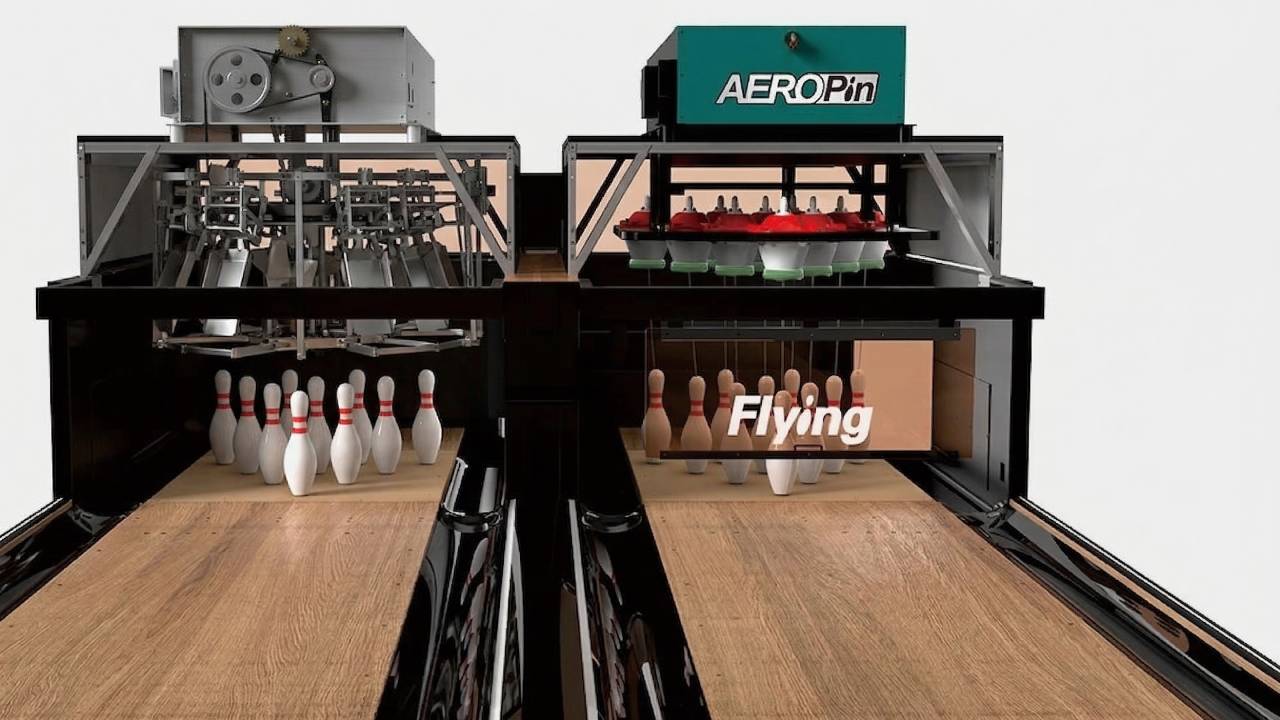
Many commercial mini bowling systems use string pinsetter technology because it can be suitable for compact, recreational, and family entertainment environments.
Compared with traditional free-fall systems, string pinsetter systems may offer the following:
- Fewer moving parts
- Simpler reset mechanism
- Lower maintenance complexity in many recreational setups
- Less need for highly specialized mechanical service in some venues
- Potentially lower operating noise
- Practical fit for FEC and hotel environments
Buyers should avoid assuming that every string system has the same cost, lifespan, or service requirement. For a deeper technical comparison, review the string pinsetter vs. free-fall pinsetter guide.
ROI Planning: How to Estimate Payback Safely
Mini bowling ROI should be calculated, not assumed. Instead of asking “what is the guaranteed payback period?" investors should build conservative, base, and optimistic scenarios using local numbers.
Important ROI variables include:
- Total setup investment and lane count
- Revenue per lane per hour and utilization rate
- Operating days and operating hours
- Staff cost, rent, electricity, insurance, and marketing
- Maintenance, F&B revenue, birthday packages, and group bookings
- Financing cost, seasonality, and local competition
| Variable | Conservative | Base | Optimistic |
|---|---|---|---|
| Utilization | 30–40% | 45–55% | 60–70% |
| Revenue per lane hour | Use local market input | Use local market input | Use local market input |
| Staff cost | Local wage | Local wage | Local wage |
| Rent | Actual lease | Actual lease | Actual lease |
| Payback | Calculate; do not assume | Calculate; do not assume | Calculate; do not assume |
No supplier should promise a fixed ROI timeline without knowing your rent, local pricing, labor cost, venue traffic, and marketing plan. For broader venue budgeting, read the bowling equipment cost guide.
Example Project Scenarios
The following examples show how venue context can affect mini bowling economics. They should be treated as planning scenarios, not guaranteed financial outcomes.
Scenario 1: Shopping Mall FEC
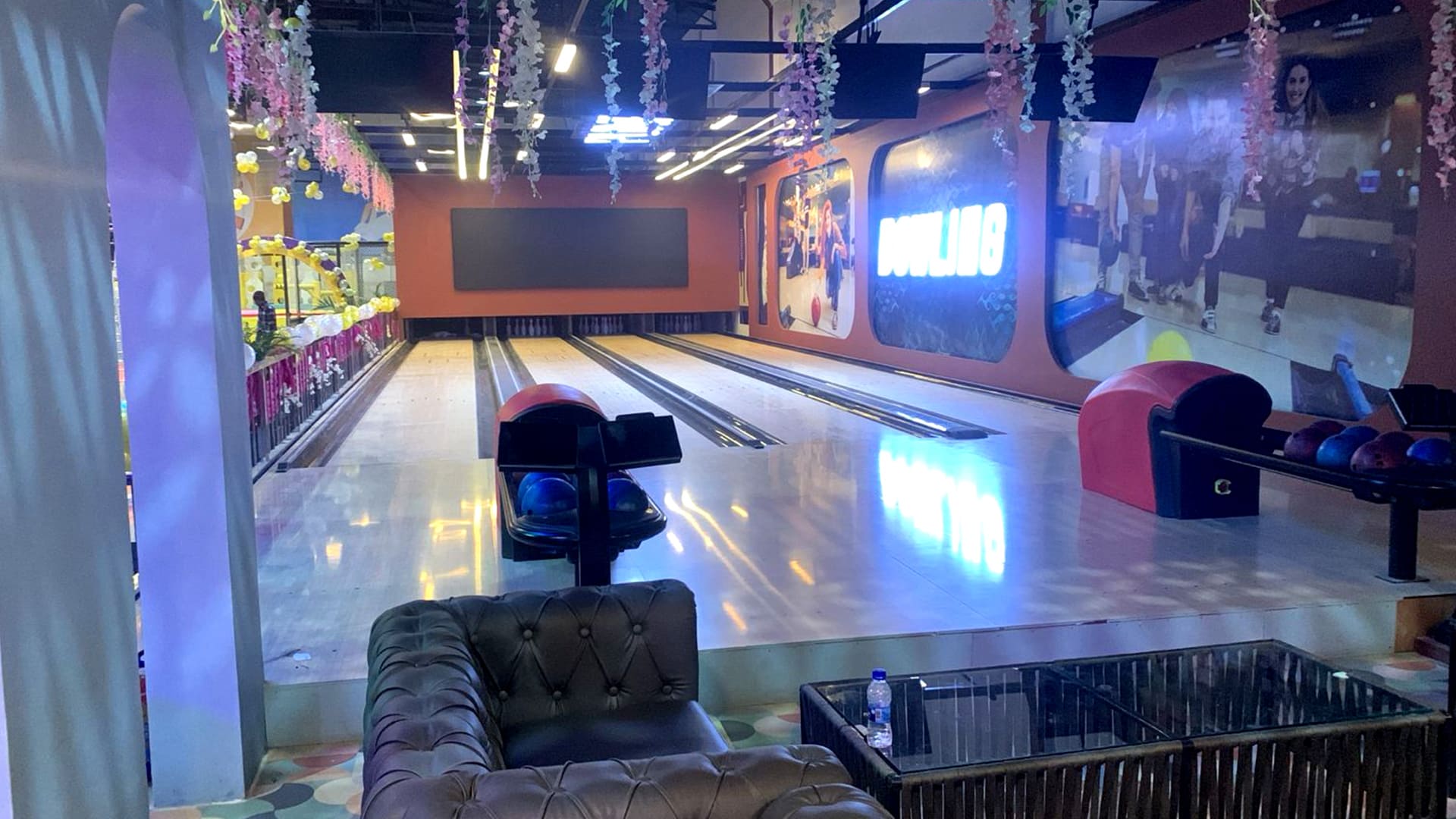
A family entertainment center adds mini bowling to an existing arcade floor. The operator already has mall foot traffic and can bundle lane play with food, beverage, and birthday party packages.
This model may work when the venue has existing customer flow, a family audience, shared staff, and cross-selling opportunities.
Scenario 2: Indoor Play Park
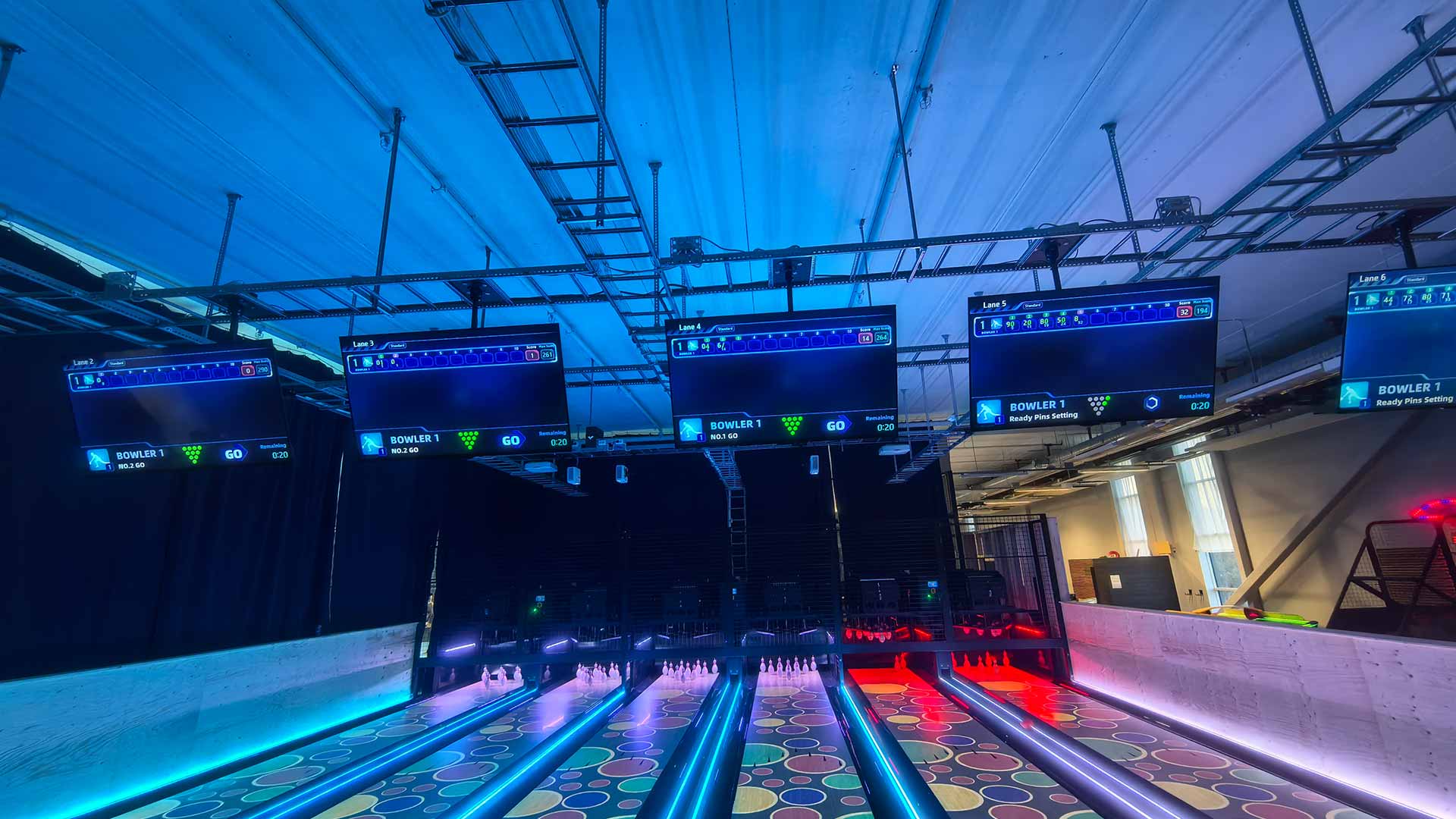
An indoor play park replaces or supplements another attraction with mini bowling. The venue already serves children and families, so mini bowling becomes a group activity that may increase dwell time.
This model depends on floor readiness, staff sharing, party packages, pricing, and how the attraction is promoted to existing visitors.
Mini Bowling Cost by Venue Type
| Venue type | Cost impact | Planning notes |
|---|---|---|
| New dedicated FEC | Higher total project cost | More design control, but more construction and launch costs |
| Existing FEC | Often faster setup | Existing foot traffic may reduce customer acquisition pressure |
| Shopping mall | Higher fit-out requirements | Contractor rules, fire safety, delivery access, and rent must be checked |
| Hotel or resort | May need acoustic treatment | Guest experience, noise, and design integration matter |
| Indoor play park | Good family fit | Floor condition, safety, and party flow are important |
Mini Bowling vs Duckpin vs Standard Bowling Cost
Some buyers compare mini bowling with duckpin bowling or standard tenpin bowling. These formats are related, but their cost logic is different.
| Format | Typical use | Cost logic |
|---|---|---|
| Mini bowling | Kids, FECs, malls, hotels, compact entertainment | Smaller footprint, lighter balls, compact lane system |
| Duckpin bowling | Bars, boutique venues, social entertainment, compact concepts | Different lane, pin, and ball configurations; cost depends on format and system |
| Standard tenpin bowling | Full bowling centers, league play, larger entertainment venues | Higher space requirement, larger fit-out, and more traditional bowling infrastructure |
If you are comparing compact formats, read the mini bowling vs. duckpin bowling guide. If your search intent is mainly duckpin cost, review a dedicated duckpin cost page instead of relying only on mini-bowling cost data.
Commercial vs Home Mini Bowling Cost
Commercial mini bowling and home mini bowling have different cost logic. A commercial venue must plan for higher usage hours, public safety, staff operation, customer flow, business insurance, revenue modeling, and maintenance access.
A private home installation may focus more on interior finish, room design, noise control, custom layout, lower daily usage, and personal preferences. If you are planning a private home installation, read the home mini bowling alley guide.
What Flying Bowling’s Mini Bowling Package May Include
Flying Bowling’s mini bowling equipment can be considered by buyers planning commercial compact bowling projects such as FECs, malls, hotels, resorts, and indoor entertainment venues.
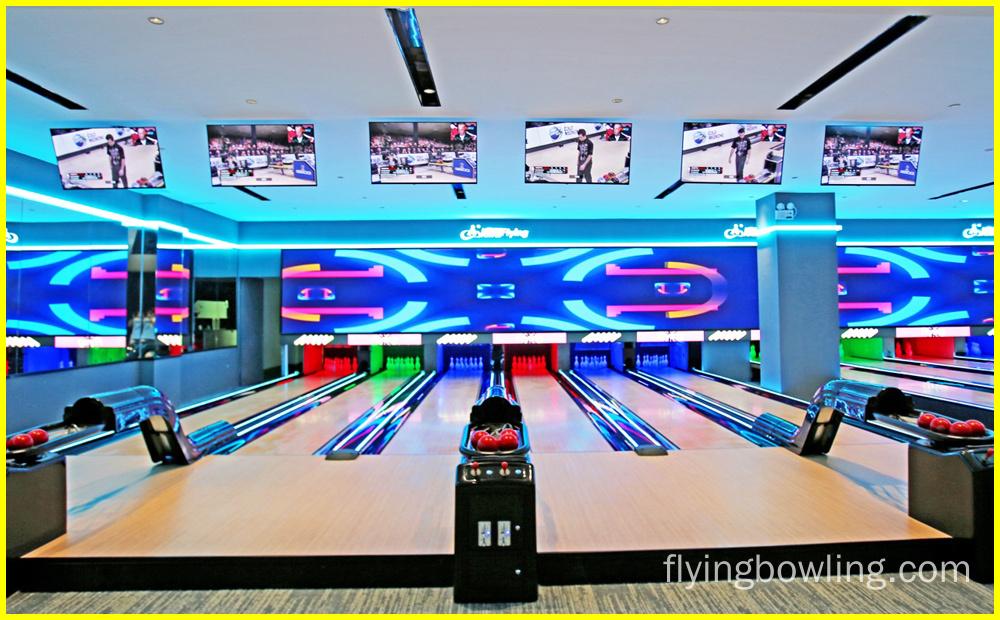
A mini bowling package may include lane equipment, a string pinsetter system, a ball return system, a scoring system, a display system, mini bowling balls, mini bowling pins, basic spare parts, installation guidance, and technical support materials.
| Specification | Planning reference |
|---|---|
| Lane length | 12 meters |
| Ball weight | 1.25 kg |
| Pinsetter type | String pinsetter system |
| Power reference | 220V / 10A per lane |
Specification note: Final specifications should be confirmed in the official quotation because lane configuration, voltage, accessories, and installation requirements may vary by project.
Questions to Ask Before Requesting a Quote
To get an accurate mini bowling cost estimate, prepare clear project details.
- Country and city
- Venue type
- New build or existing venue
- Lane count
- Available floor area
- Ceiling height
- Floor condition
- Target customers
- Expected operating hours
- Commercial or private use
- Target opening date
- Budget range
- Installation support needs
If you are comparing mini bowling alleys for sale, compare not only equipment price but also lane count, scoring, ball return, spare parts, installation support, freight, customs, and after-sales service.
Common Mini Bowling Budget Mistakes
- Comparing equipment prices only. Two quotes may look different because one includes scoring, ball return, spare parts, or installation while another excludes them.
- Forgetting freight and import duties. Ocean freight, customs, import duties, inland delivery, and taxes can significantly affect total cost.
- Ignoring flooring preparation. Mini bowling needs a stable, level base. Existing floors may need repair, leveling, or structural review.
- Underestimating seating and circulation. The lane footprint is not the full venue footprint.
- Assuming ROI is guaranteed. Payback depends on utilization, ticket price, rent, labor, F&B, marketing, and financing costs.
- Copying another venue’s budget. A mall FEC, hotel, resort, and indoor play park have different rent, fit-out, and staffing conditions.
- Not planning spare parts. Spare parts planning helps reduce downtime after opening.
- Choosing format before confirming space. Mini bowling, duckpin, and standard bowling have different space and equipment requirements.
Conclusion: Mini Bowling Cost Depends on More Than Lane Count
A mini bowling alley can be a practical commercial attraction for FECs, malls, hotels, resorts, indoor play parks, and compact entertainment venues. It uses less space than standard bowling and can be positioned for kids, families, parties, and casual social play.
However, mini bowling cost is not just the equipment's price. A realistic budget should include lane equipment, a string pinsetter system, ball return, scoring, freight, import duties, installation, flooring, electrical work, seating, décor, staff, insurance, maintenance, marketing, local taxes, and contingency.
For early planning, a 2-lane mini bowling setup may cost about $23,500–$40,500, a 4-lane setup may cost about $42,000–$74,000, and a 6-lane setup may cost about $61,000–$106,000. Use these figures as planning ranges, not final quotes.
Request a Mini Bowling Project Cost Review
If you are planning a mini bowling alley for a family entertainment center, mall, hotel, resort, indoor play park, arcade, or compact commercial venue, Flying Bowling can help review your lane count, floor area, equipment configuration, and project requirements.
To receive a more useful estimate, prepare your country, city, venue type, planned lane count, available floor area, ceiling height, floor condition, target customers, expected operating hours, installation support needs, budget range, and target opening date.
Frequently Asked Questions
How much does a mini bowling alley cost?
A commercial mini bowling alley may cost about $23,500–$106,000+ for a 2–6 lane setup. The final cost depends on lane count, equipment package, shipping, import duties, installation, flooring, seating, décor and local site conditions.
décor,How much does a 4-lane mini bowling alley cost?
A 4-lane commercial mini bowling setup may fall in the $42,000–$74,000 planning range. This estimate may include equipment, freight, installation, flooring preparation and basic seating or décor assumptions, but final cost depends on the project scope.
preparation,the finalWhat is included in a mini bowling equipment package?
A mini bowling equipment package may include lane equipment, string pinsetter system, ball return, scoring system, display system, pins, balls, spare parts and installation guidance. Buyers should confirm the exact inclusion list in writing.
a stringa balla scoringa displayparts,What costs are usually not included in the equipment price?
Equipment price may not include rent, permits, local construction, interior design, seating, F&B buildout, acoustic treatment, customs, taxes, insurance, staffing, marketing and local contractor work.
marketing,How much space do you need for a mini bowling alley?
A 4-lane commercial mini bowling setup may need about 12m × 8m, or 96 sqm, for the equipment footprint. After adding player area, seating and circulation, a practical planning minimum may be about 125–130 sqm.
12 m8 m,a playerseating,How much does mini bowling installation cost?
Installation cost depends on lane count, destination, local labor and support scope. Planning ranges may be about $3,000–$5,000 for 2 lanes, $5,000–$9,000 for 4 lanes and $7,000–$13,000 for 6 lanes.
labor,Is mini bowling cheaper than standard bowling?
Mini bowling usually requires less space and a more compact equipment package than full-size standard bowling. However, total cost still depends on lane count, fit-out, installation, freight, local contractor work and venue requirements.
work,What is the difference in cost between mini bowling and duckpin bowling?
Mini bowling and duckpin bowling use different lane formats, balls, pins and equipment configurations. Mini bowling is often used for kids, FECs and compact spaces, while duckpin may fit bars, boutique venues and social entertainment concepts. Each format needs its own quotation.
pins,FECs,venues,Is mini bowling suitable for family entertainment centers?
Yes, mini bowling can be suitable for many family entertainment centers because it is compact, beginner-friendly and easy for children and casual players to understand. Operators should still verify space, staffing, maintenance and revenue assumptions.
beginner-friendly,maintenance,How should investors estimate mini bowling ROI?
Investors should build conservative, base and optimistic scenarios using local ticket price, lane utilization, rent, staff cost, electricity, maintenance, insurance, marketing, F&B revenue and financing cost. ROI should be calculated, not assumed.
base,revenue,How long does mini bowling installation take?
Installation time depends on lane count, site readiness and support scope. A prepared 4-lane space may require several days for equipment installation, but production, shipping, customs and local preparation are separate from on-site installation time.
readiness,customs,What information should I provide for a mini bowling quote?range,
Provide your country, city, venue type, lane count, available floor area, ceiling height, floor condition, target customers, operating hours, installation support needs, budget range and target opening date.
Recommended products
Flying Smart Duckpin Bowling Equipment for Commercial Venues
AEROPIN™ USBC-Certified String Pinsetter System
Medium Bowling Equipment for Compact Social Venues
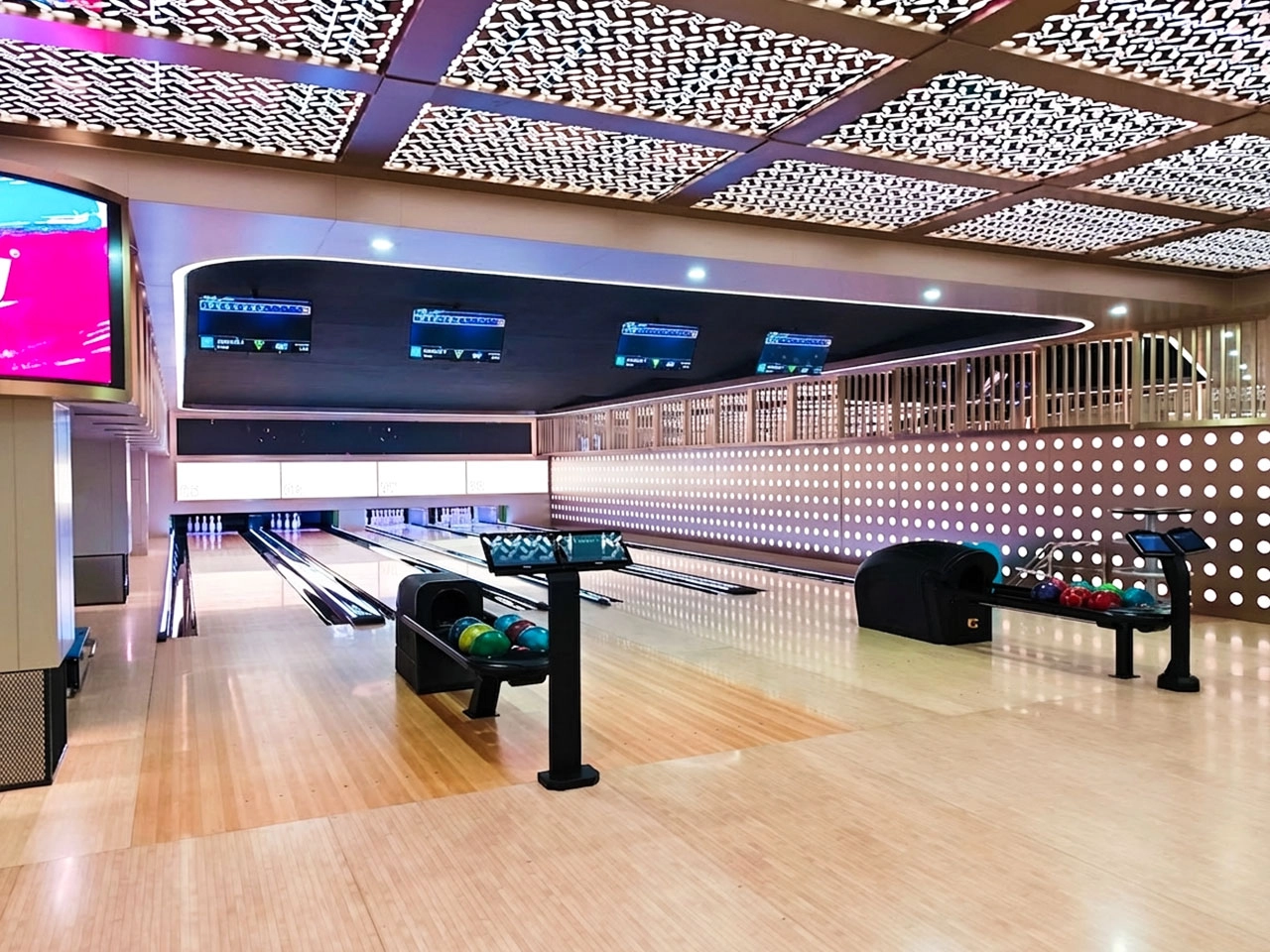
Complete Bowling Alley Equipment Package for Commercial Bowling Centers
You may also like
Build a commercial bowling venue with Flying’s complete string pinsetter bowling alley equipment package. The system includes the AEROPIN™ USBC-certified string pinsetter, customizable lanes, automatic scoring, ball return, lane lighting, pins, control hardware, and overseas installation support.
Designed for commercial bowling centers, family entertainment venues, hotels, resorts, bars, and premium private projects, this turnkey bowling system helps operators reduce sourcing complexity and prepare for reliable long-term operation.
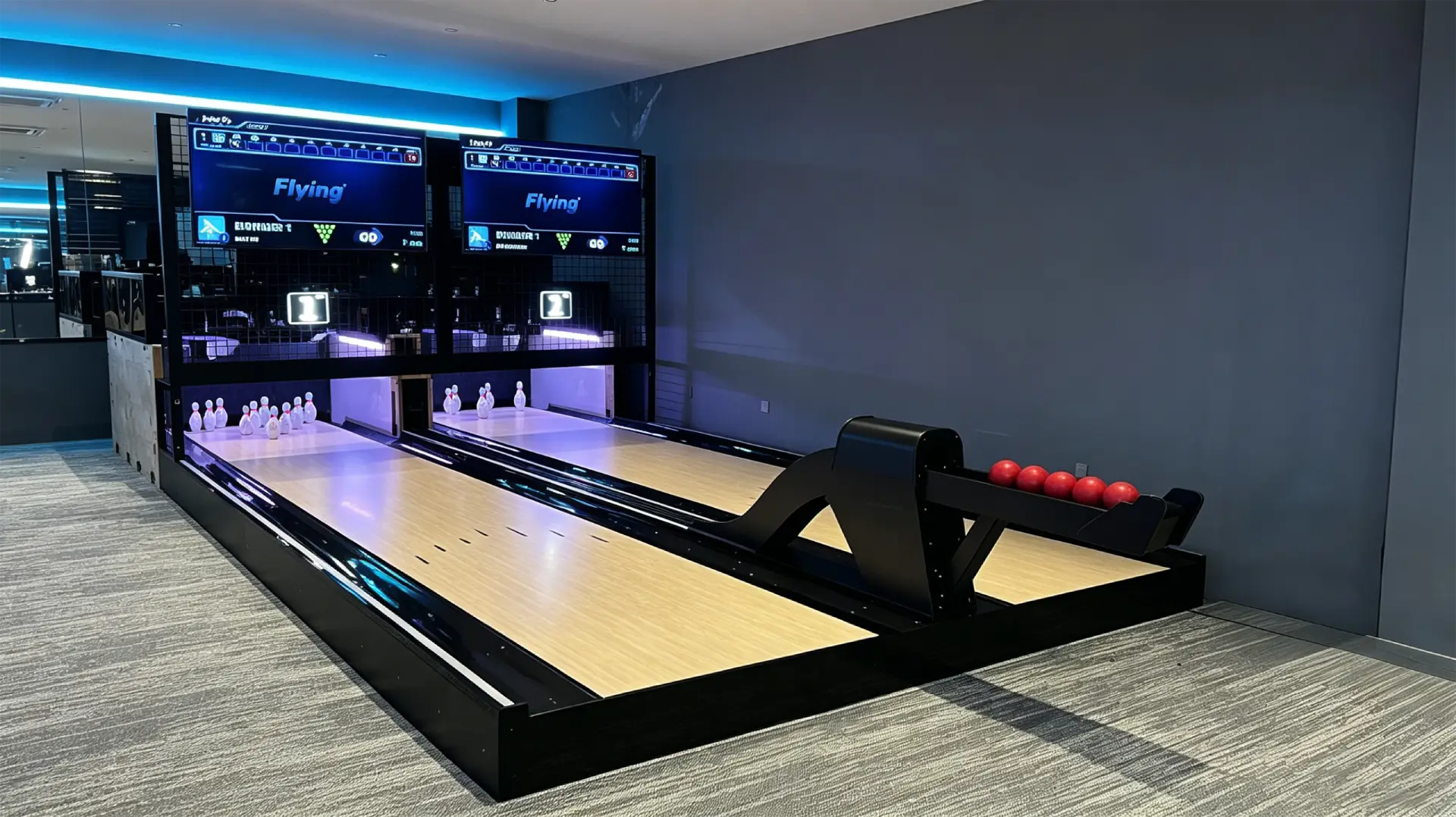
Flying Smart Duckpin Bowling is a compact duckpin bowling equipment system designed for bars, family entertainment centers, hotels, resorts, cinemas, boutique bowling alleys, and social entertainment venues. With a standard 9.13m duckpin bowling lane, 1.25kg lightweight balls, automatic scoring, ball return, LED lighting, and a smart string pinsetter, it creates a fast-paced and easy-to-play bowling experience in a smaller footprint than traditional bowling.
The system is available as a turnkey duckpin bowling package, including lane equipment, a string pinsetter system, scoring hardware, control software, global shipping, installation guidance, and technical support.
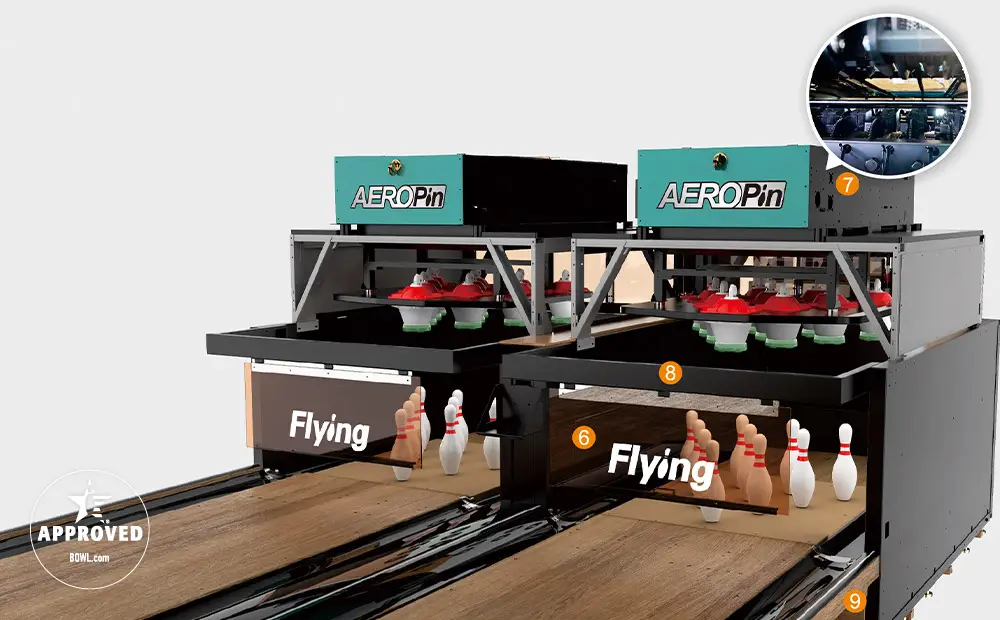
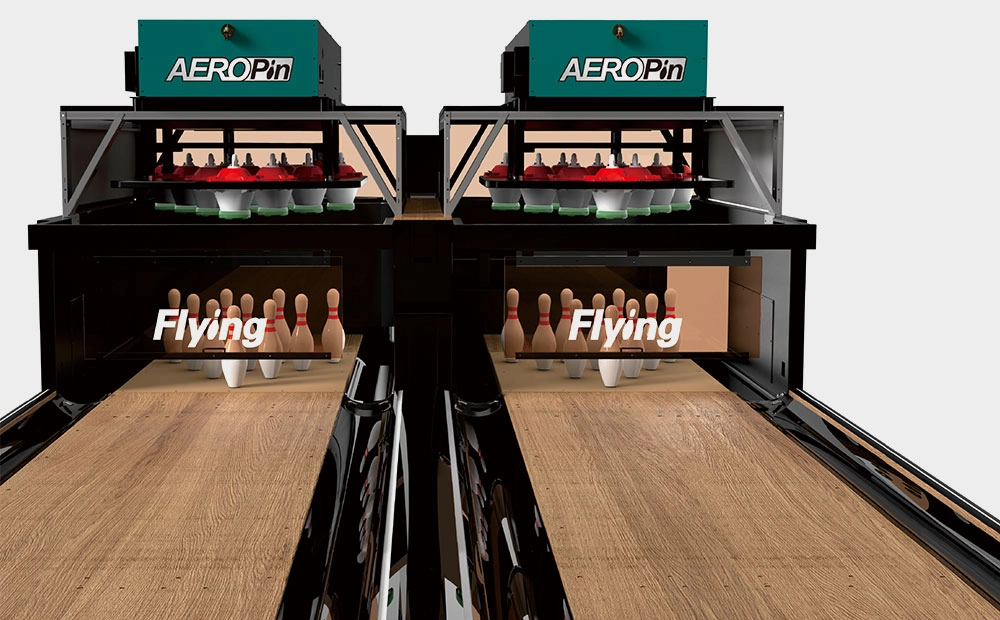
AEROPIN is Flying Bowling’s USBC-certified string pinsetter system for modern commercial bowling centers. Designed for fast pin setting, smooth ball return, low maintenance, and stable daily operation, it helps venue operators build league-ready and entertainment-focused bowling projects with confidence.
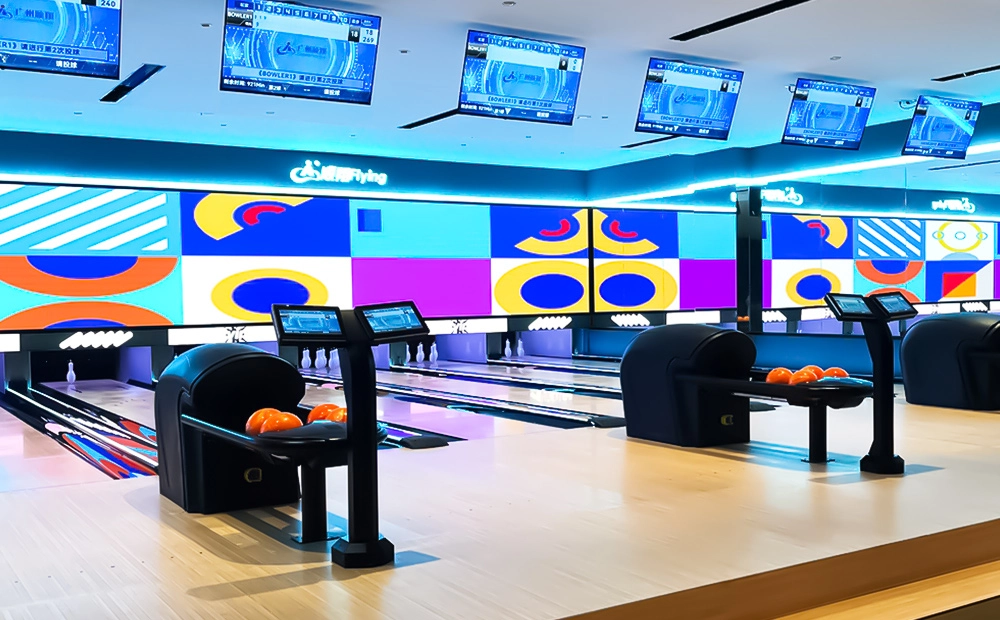
Flying Social Medium Bowling is a compact medium bowling equipment system designed for bars, cafes, family entertainment centers, community leisure venues, hotels, resorts, and small indoor entertainment spaces. With customizable lane lengths from 9.6m to 18m, small balls, lighter pins, string pinsetter technology, ball return, and automatic scoring, it creates an easy-to-play social bowling experience for players of different ages and skill levels.
Compared with full-size standard bowling, medium bowling requires less space and offers a more casual, interactive format. It is a practical choice for venues that want to add a bowling attraction without building a full commercial bowling alley.
Contact Flying
Start your bowling alley project
If you contact us now for more details, we can provide you with a custom bowling alley service. Our service team will get back to you within 24 hours normally!
© 2026 Flying BOWLING. Designed by gooeyun.
FOLLOW US:

Flying Bowling
Flying Bowling
Flyingbowling
Flyingbowling
Flyingbowling